

 Download PDF
Market Overview
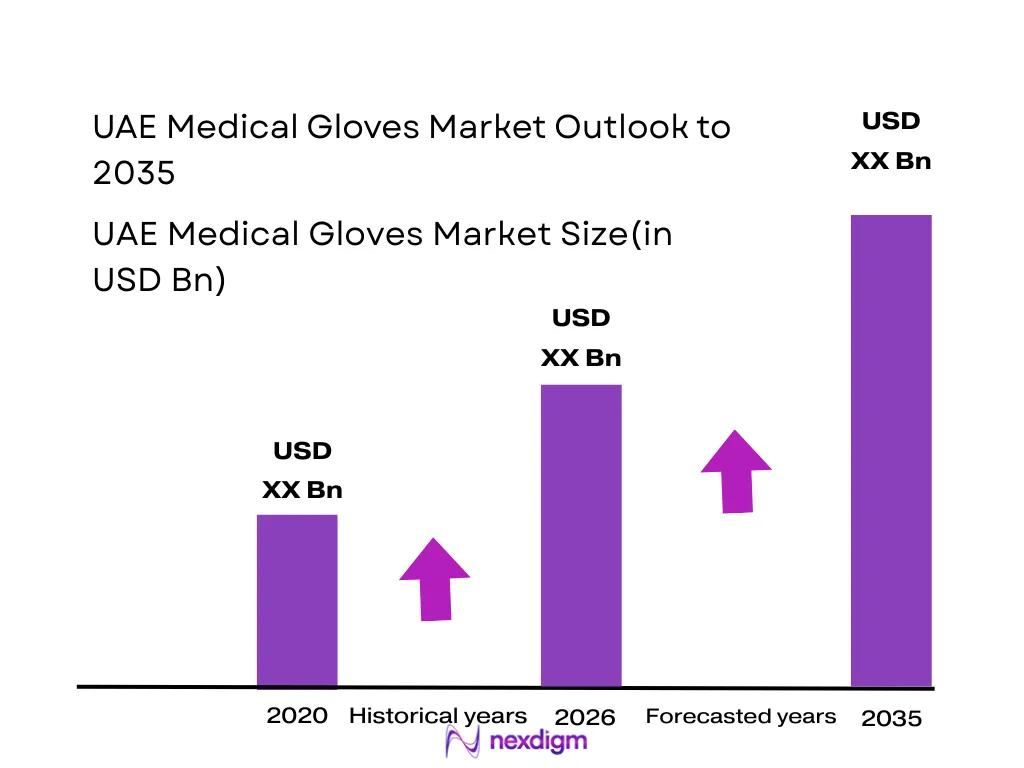
The UAE Medical Gloves Market was valued at USD ~ billion based on a recent historical assessment, supported by rising hospital admissions, infection control protocols, and increased use of disposable personal protective equipment across healthcare environments. Demand has been reinforced by expanding diagnostic services, surgical volumes, and outpatient procedures, while regulatory hygiene mandates and healthcare infrastructure expansion have further supported procurement of examination and surgical gloves across public and private medical institutions.
Dubai, Abu Dhabi, and Sharjah dominate the UAE Medical Gloves Market due to their concentration of multispecialty hospitals, medical tourism infrastructure, and large diagnostic laboratory networks. These cities benefit from strong healthcare investments, high patient inflow, and advanced regulatory compliance standards that promote consistent glove usage. Their leadership is also supported by logistics connectivity, centralized procurement systems, and the presence of major medical distributors supporting consistent supply chains across healthcare facilities.
Market Segmentation
By System Type
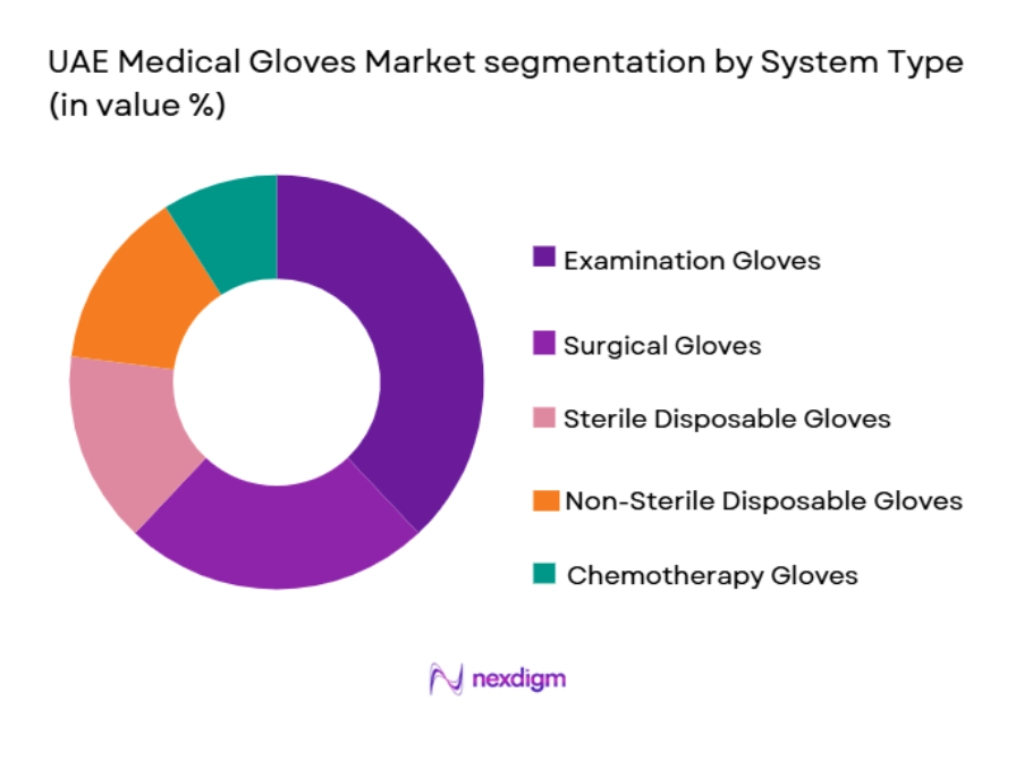
UAE Medical Gloves market is segmented by system type into examination gloves, surgical gloves, chemotherapy gloves, sterile disposable gloves, and non-sterile disposable gloves. Recently, examination gloves have a dominant market share due to factors such as their extensive use across general examinations, diagnostics, and outpatient care where high patient interaction requires frequent glove replacement. Their lower cost compared to surgical gloves also encourages bulk procurement by hospitals and clinics. Furthermore, growing diagnostic testing volumes and preventive health check programs have increased usage frequency. Availability across multiple material types and sizes also improves procurement flexibility. Continuous consumption cycles due to single-use requirements further strengthen demand. Healthcare institutions also prioritize stocking examination gloves due to their universal application across departments. Strong distributor availability and quick replenishment cycles also support their continued leadership in the segment.
By Platform Type
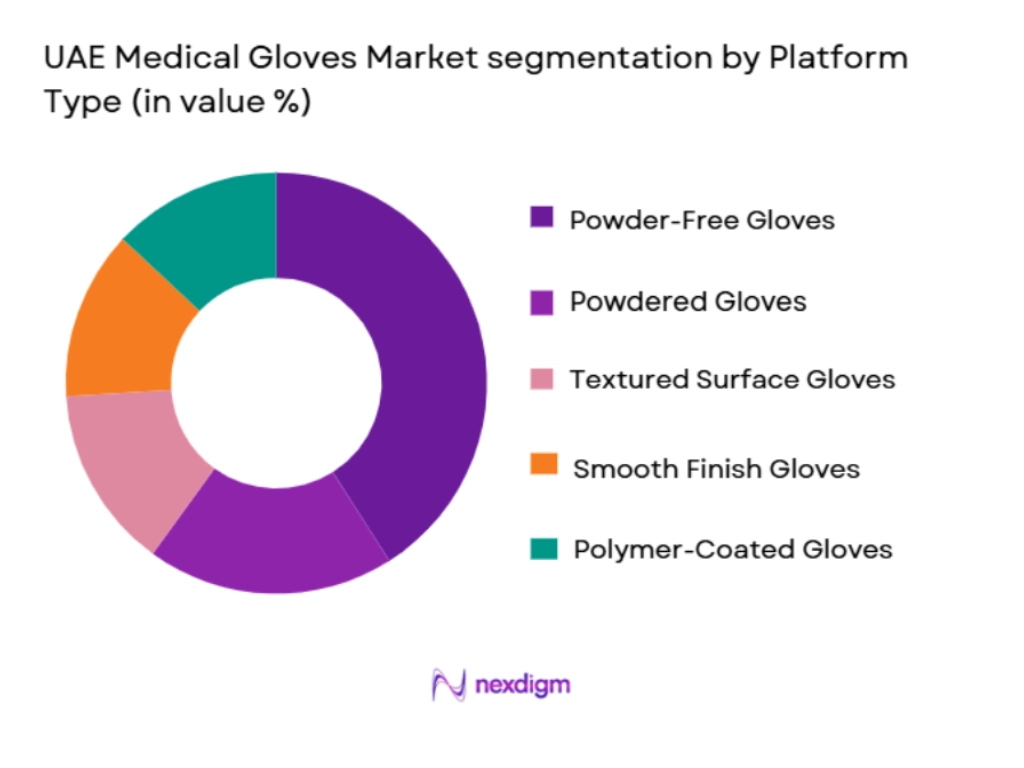
UAE Medical Gloves market is segmented by platform type into powdered gloves, powder-free gloves, textured surface gloves, smooth finish gloves, and polymer-coated gloves. Recently, powder-free gloves have a dominant market share due to factors such as increasing regulatory preference for contamination-free environments and reduced risk of allergic reactions associated with glove powder. Healthcare facilities are also shifting toward powder-free alternatives to comply with international safety standards and accreditation requirements. Their improved comfort, enhanced grip technology, and reduced skin irritation have also improved user preference among healthcare workers. Additionally, increased surgical procedures and laboratory testing have encouraged the use of powder-free variants due to their safety advantages. Procurement policies in large hospitals also favor powder-free options due to better infection control compliance. Supplier innovation in nitrile powder-free variants has further accelerated segment growth.
Competitive Landscape
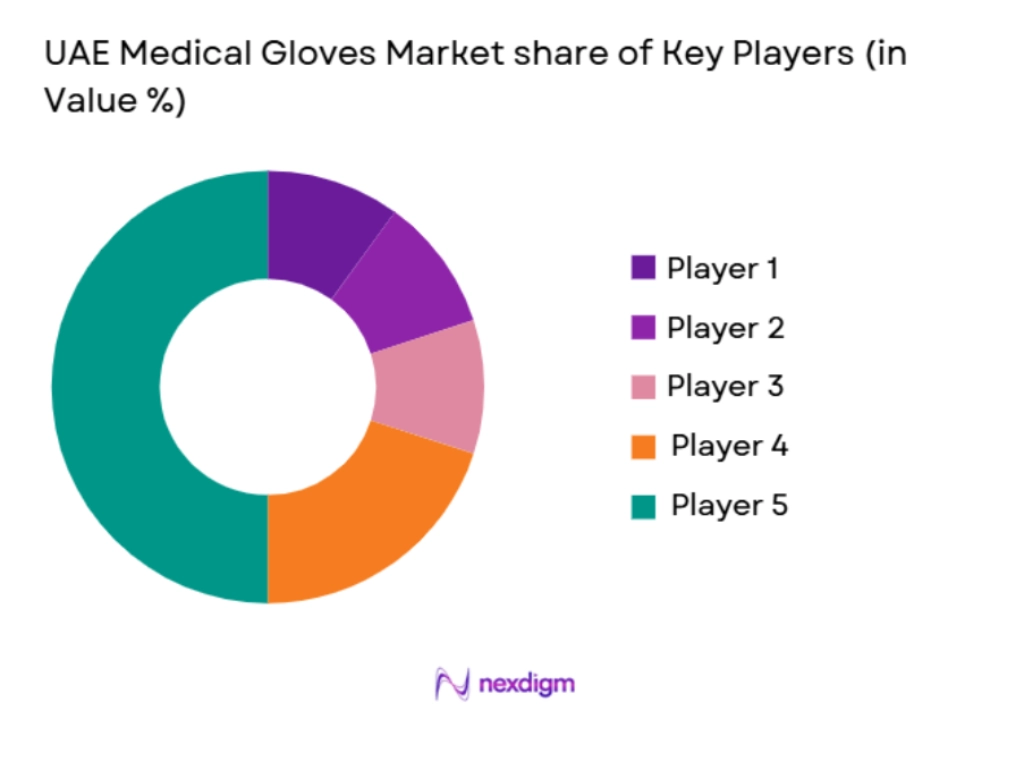
The UAE Medical Gloves Market shows moderate consolidation with global manufacturers dominating premium product segments while regional distributors maintain strong presence in bulk procurement channels. Large international PPE producers benefit from scale, product certifications, and supply agreements, while domestic suppliers compete through pricing and distribution efficiency. Market competition is shaped by product quality, compliance certifications, pricing strategies, and the ability to maintain uninterrupted supply contracts with hospital networks and government healthcare buyers.
| Company Name | Establishment Year | Headquarters | Technology Focus | Market Reach | Key Products | Revenue | Primary Distribution Strength |
| Ansell Limited | 1929 | Australia | ~ | ~ | ~ | ~ | ~ |
| Top Glove Corporation | 1991 | Malaysia | ~ | ~ | ~ | ~ | ~ |
| Hartalega Holdings | 1988 | Malaysia | ~ | ~ | ~ | ~ | ~ |
| Cardinal Health | 1971 | USA | ~ | ~ | ~ | ~ | ~ |
| B. Braun Melsungen | 1839 | Germany | ~ | ~ | ~ | ~ | ~ |
UAE Medical Gloves Market Market Analysis
Growth Drivers
Rising Healthcare Infrastructure Investments Across UAE Emirates
The expansion of healthcare infrastructure in the UAE is a key driver for medical glove demand, supported by strong public spending and macroeconomic stability. According to the World Bank, the UAE’s current health expenditure reached USD 20.3 billion in 2023, up from USD 18.7 billion in 2022, reflecting sustained investment in hospitals, clinics, and diagnostic centers. Government initiatives such as Dubai Health Strategy and Abu Dhabi’s healthcare expansion have led to an increase in healthcare facilities, with the UAE Ministry of Health reporting over 150 hospitals and more than 5,000 healthcare centers in 2024. Additionally, the International Monetary Fund notes that the UAE’s GDP stood at USD 504.2 billion in 2024, providing fiscal capacity to support healthcare infrastructure development. Population growth, reaching 10.2 million in 2024 (World Bank), further increases patient volumes and procedural requirements, directly boosting the consumption of disposable medical gloves in both public and private healthcare settings.
Increasing Infection Prevention Awareness in Healthcare Facilities
Heightened awareness of infection prevention and control (IPC) practices across UAE healthcare facilities is significantly driving demand for medical gloves. The UAE Ministry of Health reported over 8.4 million outpatient visits and 1.2 million inpatient admissions in 2023, necessitating strict adherence to hygiene protocols. The World Health Organization emphasizes that healthcare-associated infections affect 7 out of every 100 hospitalized patients globally, reinforcing the need for protective equipment such as gloves. In response, UAE regulatory bodies have strengthened compliance frameworks, mandating PPE usage across all healthcare interactions. Furthermore, the UAE’s healthcare workforce exceeded 140,000 professionals in 2024 (MOHAP), increasing glove utilization per procedure. Rising chronic disease prevalence, including over 1 million diabetes cases in the UAE (WHO, 2023), leads to frequent patient interactions and medical procedures, further amplifying glove consumption. These factors collectively reinforce infection control practices, making medical gloves an essential component of routine healthcare operations.
Market challenges
Volatility in Raw Material Prices Such as Nitrile and Latex
Fluctuations in the prices of key raw materials like nitrile and natural rubber latex pose a major challenge for the UAE medical gloves market. The World Bank Commodity Markets Outlook indicates that natural rubber prices ranged between USD 1.3 and USD 1.8 per kilogram during 2022–2024, driven by supply disruptions in major producing countries such as Thailand and Indonesia. Additionally, petrochemical derivatives used in nitrile production are influenced by crude oil price volatility, with Brent crude averaging USD 82 per barrel in 2024 (IMF) compared to USD 100 per barrel in 2022, creating uncertainty in production costs. The UAE, being heavily import-dependent for raw materials, is exposed to global supply chain disruptions, with total imports of rubber products exceeding USD 3.5 billion in 2023 (UAE Federal Competitiveness and Statistics Centre). Currency fluctuations and logistics costs further add to procurement challenges, impacting manufacturers and distributors of medical gloves in maintaining stable supply and pricing structures.
Environmental Concerns Related to Medical Glove Disposal
Environmental sustainability issues associated with the disposal of single-use medical gloves present a growing challenge in the UAE market. According to the United Nations Environment Programme, global medical waste increased to over 30 million tonnes annually by 2023, with a significant portion comprising disposable PPE such as gloves. In the UAE, the Ministry of Climate Change and Environment reported over 2.5 million tonnes of medical and hazardous waste generated in 2023, highlighting the scale of waste management requirements. Most medical gloves, especially nitrile-based ones, are non-biodegradable and contribute to landfill accumulation and environmental pollution. Additionally, the UAE’s total waste generation exceeded 39 million tonnes in 2024 (World Bank estimate), putting pressure on waste management infrastructure. Regulatory push toward sustainable healthcare practices is increasing compliance costs for hospitals and suppliers, requiring investments in eco-friendly alternatives and advanced disposal systems, thereby challenging market growth and operational efficiency.
Market opportunity
Expansion of Local Medical Consumables Manufacturing Initiatives
The UAE’s push toward domestic manufacturing of medical consumables presents a strong opportunity for the medical gloves market, supported by industrial diversification policies and macroeconomic strength. According to the World Bank, the UAE’s manufacturing value added reached USD 49.4 billion in 2023, increasing from USD 45.7 billion in 2022, reflecting growing industrial capacity. The International Monetary Fund reports total GDP at USD 504.2 billion in 2024, enabling continued investment in local production ecosystems under initiatives such as Operation 300bn. The UAE Federal Competitiveness and Statistics Centre recorded over 7,000 industrial establishments in 2023, including healthcare product manufacturing units. Additionally, merchandise imports of pharmaceutical and medical products exceeded USD 20 billion in 2023 (World Bank), indicating a heavy reliance on imports and a clear gap for local glove production. Increasing localization reduces supply chain risks and supports healthcare resilience, positioning domestic glove manufacturing as a key growth avenue.
Growth of Telehealth and Home Care Increasing Glove Consumption
The rapid expansion of telehealth and home healthcare services in the UAE is creating new avenues for medical glove consumption beyond traditional hospital settings. According to the World Bank, the UAE population reached 10.2 million in 2024, increasing healthcare demand across decentralized care models. The UAE Ministry of Health reported over 8.4 million outpatient visits in 2023, with a growing portion supported by remote consultations and follow-up home care services. The World Health Organization highlights that chronic diseases account for over 70 out of 100 deaths in the UAE, driving long-term care needs that often involve home-based treatment requiring disposable gloves. Additionally, mobile cellular subscriptions exceeded 20 million in 2023 (World Bank), supporting digital health adoption and remote monitoring. The expansion of home nursing services and teleconsultations increases the frequency of patient interactions outside hospitals, thereby driving consistent usage of protective gloves in non-clinical environments.
Major Players
- Ansell Limited
- Top Glove Corporation
- Hartalega Holdings
- Supermax Corporation
- Kossan Rubber Industries
- Cardinal Health
- B. Braun Melsungen
- Medline Industries
- Semperit AG Holding
- Kimberly Clark Corporation
- Mölnlycke Health Care
- Dynarex Corporation
- Rubberex Corporation
- Unigloves
- Gulf East Paper and Plastic Industries
Key Target Audience
- Hospital procurement groups
- Medical device distributors
- Pharmaceutical manufacturers
- Healthcare supply chain companies
- Private hospital networks
- Government and regulatory bodies
- Investments and venture capitalist firms
- Healthcare equipment importers
Research Methodology
Step 1: Identification of Key Variables
Primary variables included healthcare consumption rates, PPE procurement volumes, infection control protocols, and distribution network structure. Secondary variables included import dependency and regulatory compliance standards affecting market demand.
Step 2: Market Analysis and Construction
Market sizing was derived through healthcare infrastructure data, procurement patterns, and PPE consumption benchmarks. Segment structures were validated using supply chain distribution patterns and product demand mapping.
Step 3: Hypothesis Validation and Expert Consultation
Industry assumptions were validated through interviews with distributors, procurement managers, and healthcare administrators. Additional validation was performed through comparison with PPE consumption ratios.
Step 4: Research Synthesis and Final Output
Data synthesis involved triangulation of supply, demand, and pricing indicators. Final insights were structured into segmentation, competition, and growth outlook frameworks to ensure analytical consistency.

- Executive Summary
- Research Methodology (Definitions, Scope, Industry Assumptions, Market Sizing Approach, Primary & Secondary Research Framework, Data Collection & Verification Protocol, Analytic Models & Forecast Methodology, Limitations & Research Validity Checks)

- Market Definition and Scope
- Value Chain & Stakeholder Ecosystem
- Regulatory / Certification Landscape
- Sector Dynamics Affecting Demand
- Strategic Initiatives & Infrastructure Growth

- Growth Drivers
Rising healthcare infrastructure investments across UAE emirates
Increasing infection prevention awareness in healthcare facilities
Growth in surgical procedures and diagnostic testing volumes
Government healthcare expansion under national health strategies
Growing demand from pharmaceutical and biotechnology sectors - Market Challenges
Volatility in raw material prices such as nitrile and latex
Environmental concerns related to medical glove disposal
Dependence on imports from Southeast Asian manufacturers
Stringent product certification and compliance requirements
Price competition due to commoditized product categories - Market Opportunities
Expansion of local medical consumables manufacturing initiatives
Growth of telehealth and home care increasing glove consumption
Rising demand for premium nitrile and hypoallergenic gloves - Trends
Shift toward powder free gloves due to safety regulations
Growing preference for nitrile over latex due to allergy concerns
Adoption of sustainable and biodegradable glove materials
Digital procurement platforms gaining popularity among hospitals
Increased stockpiling strategies after pandemic supply disruptions - Government Regulations & Defense Policy
UAE Ministry of Health medical consumables quality regulations
Infection control mandates across public healthcare networks
Import certification and conformity assessment programs - SWOT Analysis
- Stakeholder and Ecosystem Analysis
- Porter’s Five Forces Analysis
- Competition Intensity and Ecosystem Mapping

- By Market Value, 2020-2025
- By Installed Units, 2020-2025
- By Average System Price, 2020-2025
- By System Complexity Tier, 2020-2025

- By System Type (In Value%)
Examination Gloves
Surgical Gloves
Chemotherapy Gloves
Sterile Disposable Gloves
Non-Sterile Disposable Gloves - By Platform Type (In Value%)
Powdered Gloves
Powder Free Gloves
Textured Surface Gloves
Smooth Finish Gloves
Polymer Coated Gloves - By Fitment Type (In Value%)
Powdered Gloves
Powder Free Gloves
Textured Grip Gloves
Beaded Cuff Gloves
Extended Cuff Gloves - By EndUser Segment (In Value%)
Public Hospitals
Private Hospitals
Diagnostic Laboratories
Outpatient Clinics
Home Healthcare Providers - By Procurement Channel (In Value%)
Direct Manufacturer Contracts
Medical Device Distributors
Group Purchasing Organizations
Online B2B Procurement Platforms
Government Healthcare Tenders - By Material / Technology (in Value %)
Nitrile Gloves
Latex Gloves
Vinyl Gloves
Neoprene Gloves
Polyisoprene Gloves

- Market structure and competitive positioning
- Market share snapshot of major players
- Cross Comparison Parameters (Product Portfolio Diversity, Pricing Strategy, Distribution Network Strength, UAE Market Presence, Production Capacity, Certification Compliance, Innovation Capability, Strategic Partnerships, Supply Reliability, After Sales Support))
- SWOT Analysis of Key Players
- Pricing & Procurement Analysis
- Key Players
Top Glove Corporation
Hartalega Holdings
Kossan Rubber Industries
Supermax Corporation
Ansell Limited
Semperit AG Holding
Medline Industries
Cardinal Health
Dynarex Corporation
Unigloves GmbH
B. Braun Melsungen AG
Paul Hartmann AG
Kimberly Clark Corporation
Mölnlycke Health Care
Abu Dhabi Medical Devices Company

- Hospitals represent the largest demand due to continuous patient flow
- Diagnostic laboratories show consistent consumption through testing expansion
- Ambulatory surgical centers increasing glove utilization rates
- Home healthcare segment showing gradual increase in disposable glove demand

- Forecast Market Value, 2026-2035
- Forecast Installed Units, 2026-2035
- Price Forecast by System Tier, 2026-2035
- Future Demand by Platform, 2026-2035


 Request a Sample
 Ask for Customization
 Get a Quote
 Enquire Now