
 Download PDF
Market Overview
The UAE micro irrigation systems market is valued at approximately USD ~ million, supported by increasing adoption of water-efficient agricultural technologies, protected cultivation practices, and government-led food security initiatives. The market is driven by the country’s requirement to optimize limited freshwater resources for agricultural production. UAE agriculture operates under severe climatic constraints, with limited arable land and high dependence on advanced irrigation methods. The country has promoted drip irrigation, smart irrigation controllers, and precision fertigation solutions to improve agricultural productivity while reducing water consumption.
The UAE micro irrigation systems market is concentrated in Abu Dhabi, Dubai, Al Ain, Ras Al Khaimah, and Sharjah due to their strong agricultural activity, greenhouse farming expansion, and government-supported irrigation modernization programs. Abu Dhabi and Al Ain remain major agricultural hubs because of extensive date palm cultivation, commercial farms, and controlled-environment agriculture projects. Dubai has emerged as a technology-driven market due to investments in vertical farming, landscaping, and smart irrigation solutions. Ras Al Khaimah and Sharjah contribute through horticulture activities and farm-based irrigation adoption.
Market Segmentation
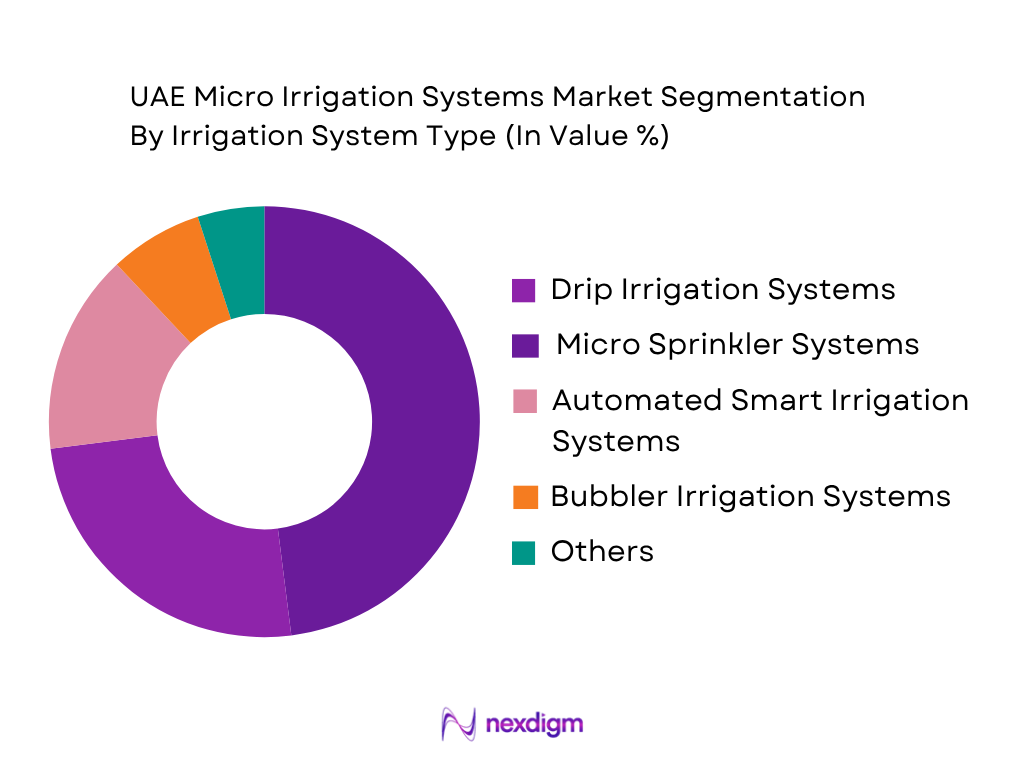
By Irrigation System Type
The UAE micro irrigation systems market is segmented by irrigation system type into drip irrigation systems, micro sprinkler irrigation systems, automated smart irrigation systems, bubbler irrigation systems, and other micro irrigation solutions. Drip irrigation systems account for the dominant market share due to their suitability for desert agriculture, greenhouse farming, date palm cultivation, and high-value crop production. Drip systems provide direct water delivery to plant roots, reducing evaporation losses and improving irrigation efficiency under arid climatic conditions. The increasing focus on water conservation, precision agriculture adoption, and controlled farming environments has strengthened demand for drip irrigation technologies across commercial farms and government-supported agricultural projects.
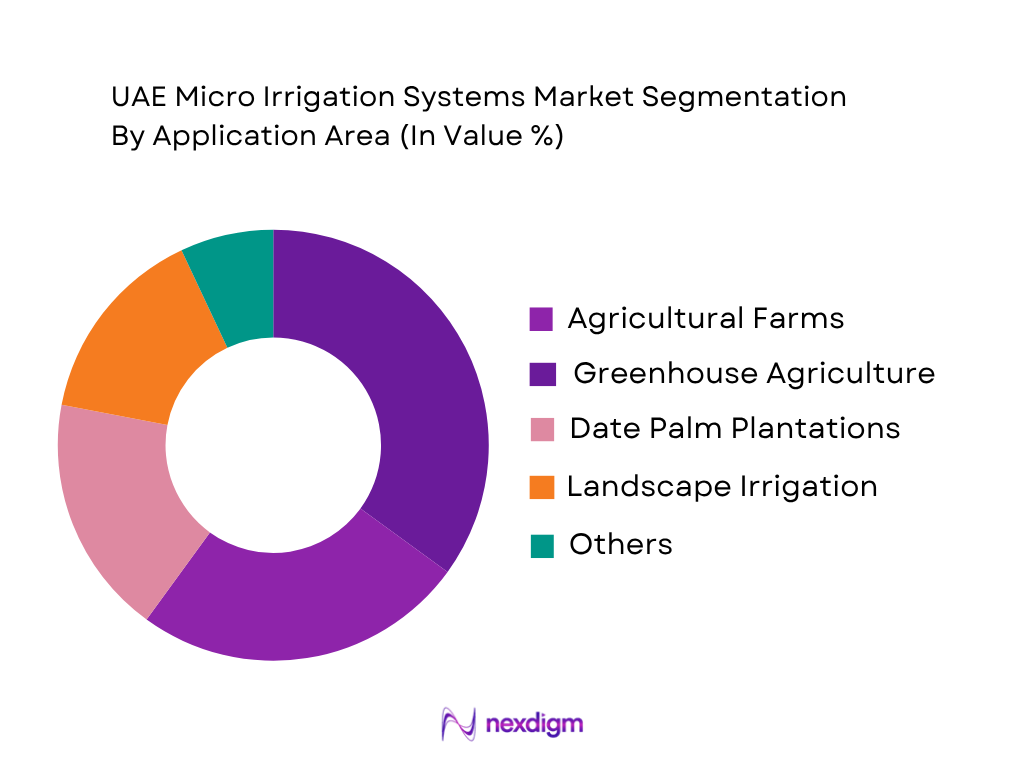
By Application Area
The UAE micro irrigation systems market is segmented by application area into agricultural farms, greenhouse agriculture, date palm plantations, landscape irrigation, and nurseries and horticulture. Agricultural farms represent the leading application segment due to the country’s continuous efforts toward improving domestic food production and reducing dependence on imported agricultural products. Commercial farms require efficient irrigation solutions for vegetables, fruits, and specialty crops cultivated in water-constrained environments. Greenhouse agriculture is also expanding due to investments in controlled farming technologies that require precise irrigation and fertigation management. The adoption of micro irrigation across agricultural applications is supported by national food security initiatives and increasing investments in sustainable farming systems.
Competitive Landscape
The UAE micro irrigation systems market is characterized by the presence of global irrigation technology providers, regional agricultural solution companies, and specialized landscape irrigation suppliers. The competitive environment includes companies offering drip irrigation equipment, filtration systems, fertigation solutions, automated controllers, and smart irrigation platforms. Major players compete through technology innovation, project execution capabilities, distribution networks, and customized irrigation solutions for agricultural and landscaping applications.
| Company | Establishment Year | Headquarters | Major Product Categories | Smart Irrigation Capability | Agricultural Application | Filtration Solutions | UAE Market Presence | Distribution Network |
| Netafim | 1965 | Israel | ~ | ~ | ~ | ~ | ~ | ~ |
| Jain Irrigation Systems | 1986 | India | ~ | ~ | ~ | ~ | ~ | ~ |
| Rain Bird Corporation | 1933 | USA | ~ | ~ | ~ | ~ | ~ | ~ |
| The Toro Company | 1914 | USA | ~ | ~ | ~ | ~ | ~ | ~ |
| Rivulis Irrigation | 1966 | Israel | ~ | ~ | ~ | ~ | ~ | ~ |
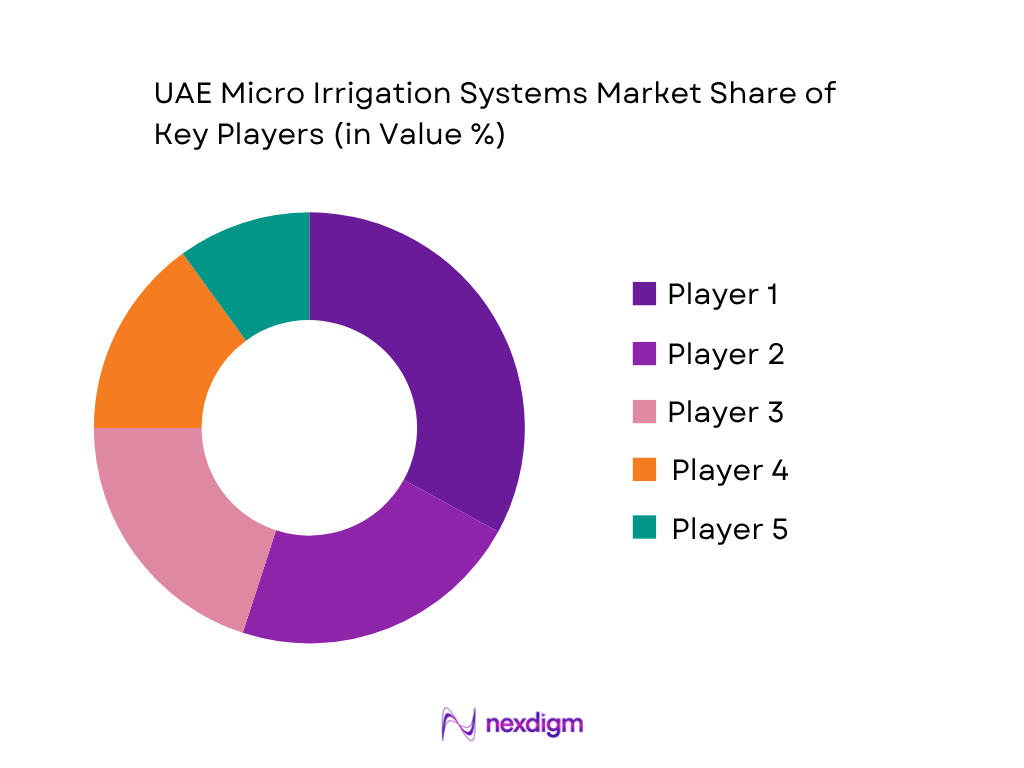
UAE Micro Irrigation Systems Market Analysis
Growth Drivers
Increasing Water Scarcity and Water Conservation Requirements
The UAE micro irrigation systems market is strongly supported by increasing pressure to optimize agricultural water usage due to the country’s arid climate and limited freshwater availability. The UAE receives less than 100 mm of rainfall annually, creating significant dependence on desalination and groundwater resources for agricultural activities. According to the UAE Ministry of Climate Change and Environment, agriculture remains one of the major water-consuming sectors, encouraging adoption of drip irrigation, fertigation, and automated irrigation technologies. The World Bank reported that the UAE population reached approximately 11.3 million people in 2024, increasing pressure on food and water resources. The country’s National Food Security Strategy emphasizes improving domestic agricultural productivity through efficient resource utilization. Micro irrigation systems enable farms, greenhouses, and landscaping projects to reduce water losses caused by evaporation and over-irrigation. The expansion of precision irrigation is further supported by the UAE’s investment in sustainable agriculture technologies, including controlled-environment farming and smart water management systems. Increasing adoption among commercial farms and landscape operators is expected to continue as water conservation becomes a strategic priority across agricultural and urban development sectors.
Expansion of Controlled Environment Agriculture
The expansion of controlled environment agriculture is a significant growth driver for the UAE micro irrigation systems market as greenhouse farming requires precise water delivery, nutrient management, and automated irrigation control. The UAE has increased investments in vertical farming, hydroponics, and greenhouse cultivation to strengthen domestic food production under challenging climatic conditions. According to the UAE Ministry of Climate Change and Environment, the country has promoted modern farming systems to improve agricultural productivity while reducing dependence on traditional water-intensive practices. The UAE economy recorded GDP growth supported by non-oil sectors, with the World Bank reporting continued economic diversification efforts and infrastructure development in 2024. Controlled farming facilities require advanced irrigation technologies such as drip systems, fertigation units, sensors, and automated controllers to maintain crop growth conditions. Abu Dhabi and Dubai have become major centers for greenhouse and technology-enabled agriculture projects due to government support and private investment. The rising focus on locally produced vegetables, fruits, and specialty crops is increasing demand for efficient irrigation solutions that support year-round cultivation and optimized resource utilization in controlled environments.
Market Challenges
High Installation Costs
High installation costs remain a major challenge for the UAE micro irrigation systems market, particularly among small and medium-sized agricultural operators. Advanced irrigation systems require investment in drip lines, pumps, filtration units, automation controllers, sensors, and professional installation services. The UAE agricultural sector consists of diverse farm sizes, and smaller farms may face difficulties in adopting technology-intensive irrigation solutions due to capital requirements. According to the Food and Agriculture Organization data, water-efficient irrigation technologies require proper infrastructure investment and technical management to achieve maximum efficiency. The UAE’s agricultural modernization initiatives have encouraged adoption of advanced systems, but affordability remains a factor influencing adoption speed. The World Bank reported that the UAE’s GDP reached approximately USD 504 billion in current prices in 2024, reflecting strong economic capacity, but agricultural operators still evaluate technology investments based on productivity improvements and operational returns. Additional expenses related to system maintenance, replacement of emitters, filtration components, and automation equipment can increase the overall ownership burden. These factors create adoption barriers, especially for smaller farms that rely on conventional irrigation methods.
Salinity and Water Quality Challenges
Salinity and water quality challenges significantly affect the performance and maintenance requirements of micro irrigation systems in the UAE. Agricultural activities in arid regions often face issues related to saline groundwater, mineral accumulation, and clogging of irrigation components. The UAE’s dependence on groundwater and desalinated water resources requires advanced filtration and water treatment systems to ensure efficient irrigation operations. According to environmental assessments by UAE authorities, groundwater resources in several agricultural areas face quality challenges due to natural salinity and intensive agricultural usage. Micro irrigation systems require regular monitoring of filters, emitters, and pipelines to prevent blockage and maintain uniform water distribution. The UAE’s agricultural sector, particularly date palm farms and horticulture operations, requires specialized irrigation management because crops have varying tolerance levels toward saline conditions. Rising adoption of precision irrigation technologies increases the need for technical expertise in water analysis, filtration management, and system maintenance. These operational requirements can increase complexity for farmers and create additional costs compared with traditional irrigation methods, influencing adoption decisions among smaller agricultural users.
Market Opportunities
Expansion of Smart Irrigation Technologies
The expansion of smart irrigation technologies presents a major opportunity for the UAE micro irrigation systems market as agricultural operators increasingly adopt digital solutions for water management. Smart irrigation systems integrate sensors, automation controllers, weather monitoring tools, and remote management platforms to optimize irrigation schedules. The UAE government has emphasized digital transformation across agriculture through smart farming initiatives aimed at improving productivity and resource efficiency. According to the UAE Ministry of Climate Change and Environment, technology adoption is a key component of sustainable agriculture development. The country’s advanced digital infrastructure supports implementation of IoT-enabled irrigation platforms across farms, greenhouses, and landscaping projects. The World Bank reported that internet penetration in the UAE remained among the highest globally, supporting technology adoption across industries. Smart irrigation solutions enable farmers to monitor soil moisture, adjust irrigation cycles, and reduce unnecessary water application. Growing demand from commercial farms, controlled environment agriculture operators, and municipal landscaping projects creates opportunities for companies offering connected irrigation systems, automated fertigation solutions, and digital farm management platforms.
Expansion of Greenhouse Farming Systems
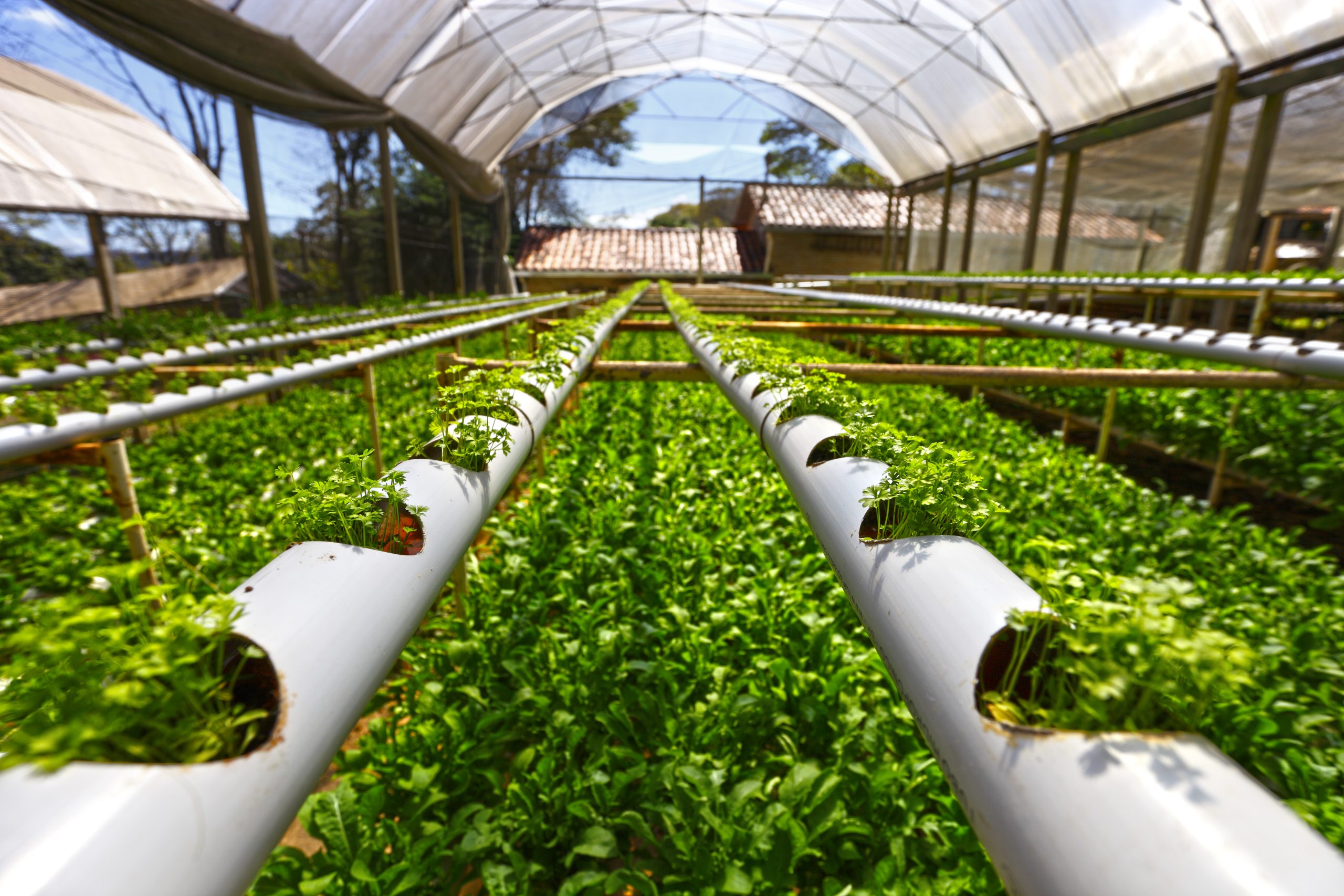
Expansion of greenhouse farming systems creates significant opportunities for micro irrigation system providers in the UAE due to increasing demand for controlled agricultural production. Greenhouses require precise irrigation management to maintain crop health, improve productivity, and optimize water usage under desert conditions. The UAE has promoted protected agriculture as part of broader food security initiatives aimed at increasing domestic production capacity. According to UAE government agricultural development programs, greenhouse cultivation and modern farming technologies are being encouraged to improve agricultural efficiency. The UAE’s investment environment and infrastructure capabilities have supported development of advanced farming facilities in regions including Abu Dhabi and Dubai. Micro irrigation technologies, including drip irrigation, fertigation systems, and automated controllers, are essential components of greenhouse operations because they provide accurate water and nutrient delivery. Increasing cultivation of vegetables, herbs, and specialty crops within controlled environments is expected to generate demand for advanced irrigation solutions. The adoption of greenhouse farming also aligns with sustainability goals by reducing water consumption and improving resource management in agricultural production systems.
Future Outlook
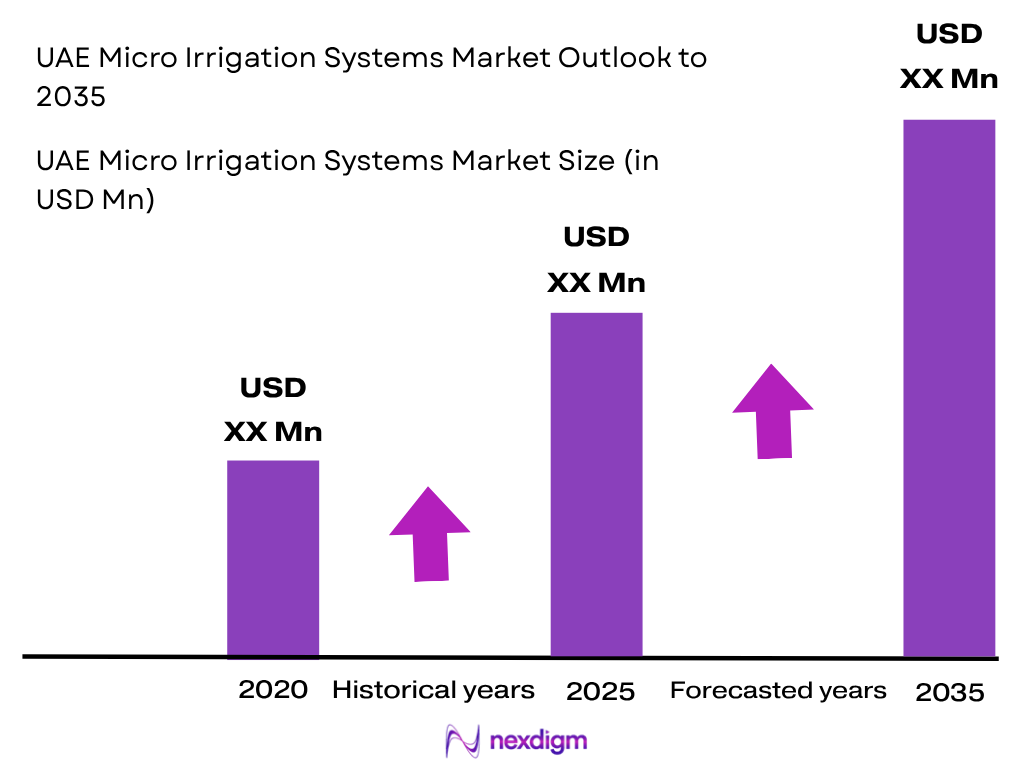
Over the next decade, the UAE micro irrigation systems market is expected to witness continued expansion driven by water conservation requirements, agricultural technology adoption, and increasing investments in sustainable food production. Growth will be supported by smart irrigation systems, IoT-enabled monitoring solutions, precision fertigation, and controlled environment agriculture. Government initiatives focused on food security and efficient resource utilization are expected to encourage adoption among commercial farms, greenhouse operators, and landscaping projects.
Major Players
- Netafim
- Jain Irrigation Systems
- Rain Bird Corporation
- The Toro Company
- Hunter Industries
- Rivulis Irrigation
- Metzer Group
- Kifco Irrigation
- Valmont Industries
- Lindsay Corporation
- T-L Irrigation
- Mahindra EPC Irrigation
- Alkhorayef Group
- Emirates Landscape LLC
- Agriculture Development Company UAE
Key Target Audience
- Micro irrigation equipment manufacturers
- Agricultural technology companies
- Greenhouse farming operators
- Commercial agricultural farms
- Landscape management companies
- Investments and venture capitalist firms
- Government and regulatory bodies (Ministry of Climate Change and Environment, Abu Dhabi Agriculture and Food Safety Authority, Dubai Municipality)
- Irrigation system distributors and agricultural equipment suppliers
Research Methodology
Step 1: Identification of Key Variables
The initial phase involves developing an ecosystem map covering irrigation manufacturers, agricultural producers, government agencies, technology providers, and distribution stakeholders within the UAE Micro Irrigation Systems Market. Secondary research is conducted to identify critical market variables including irrigation adoption, agricultural applications, technology integration, and water management requirements.
Step 2: Market Analysis and Construction
This phase involves analyzing historical market trends, irrigation system deployment patterns, application-wise demand, and technology adoption across agricultural and landscaping segments. Supply-side and demand-side assessments are combined to evaluate market dynamics and identify major factors influencing market development.
Step 3: Hypothesis Validation and Expert Consultation
Market assumptions are validated through discussions with irrigation manufacturers, agricultural technology providers, farm operators, and industry participants. These consultations provide operational insights related to installation practices, system preferences, customer requirements, and technology adoption barriers.
Step 4: Research Synthesis and Final Output
The final stage integrates findings from primary and secondary research to develop a comprehensive UAE Micro Irrigation Systems Market assessment. Data points related to irrigation technologies, applications, competitive positioning, and future opportunities are reviewed to ensure analytical accuracy.

- Executive Summary
- Research Methodology (Market Definitions and Assumptions, Abbreviations, Market Sizing Approach, Top-Down Analysis, Bottom-Up Analysis, Demand-Side Assessment, Supply-Side Assessment, Primary Industry Interviews, Data Triangulation, Forecasting Framework, Limitations and Future Conclusions)

- Definition and Scope
- UAE Micro Irrigation Systems Industry Evolution
- Micro Irrigation Systems Value Chain Analysis
- Micro Irrigation Systems Supply Chain Analysis

- Growth Drivers (Increasing Water Scarcity and Water Conservation Requirements, Expansion of Controlled Environment Agriculture, Rising Government Focus on Food Security, Increasing Adoption of Precision Agriculture, Growth of Date Palm and Horticulture Farming, Expansion of Smart Farming Technologies, Increasing Demand for Water Efficient Irrigation Solutions, Growth of Commercial Landscaping Projects, Climate Adaptation Requirements, Agricultural Productivity Improvement Initiatives)
- Market Challenges (High Installation Costs, Dependence on Imported Irrigation Equipment, Limited Availability of Agricultural Water Resources, Maintenance Requirements for Filtration and Emitters, Need for Technical Expertise, High System Design Complexity, Limited Adoption Among Small Farmers, Salinity and Water Quality Challenges, Replacement Requirements of Irrigation Components, Competition from Conventional Irrigation Practices)
- Market Opportunities (Expansion of Smart Irrigation Technologies, Integration of IoT-Based Irrigation Management, AI-Based Water Optimization Solutions, Growth of Sustainable Desert Agriculture, Expansion of Greenhouse Farming Systems, Solar-Powered Irrigation Solutions, Precision Fertigation Adoption, Digital Agriculture Platforms, Municipal Water Conservation Projects, Advanced Landscape Irrigation Solutions)
Market Trends (Shift Toward Automated Irrigation Systems, Adoption of Sensor-Based Water Management, Growth of Controlled Environment Agriculture, Increasing Use of Fertigation Technologies, Expansion of Hydroponic Farming, Sustainable Water Management Practices, Smart Agriculture Adoption, Remote Irrigation Monitoring, Integration of Weather Data Analytics, Low-Water Landscaping Solutions) - Government Regulations and Initiatives (UAE National Food Security Strategy, Ministry of Climate Change and Environment Agricultural Programs, Abu Dhabi Agriculture and Food Safety Authority Regulations, Dubai Food Security Initiatives, Water Conservation Regulations, Sustainable Agriculture Guidelines, Smart Farming Support Programs, Agricultural Technology Development Initiatives)
- SWOT Analysis
- Porter’s Five Forces Analysis
- PESTLE Analysis
- Stakeholder Ecosystem
- Competition Ecosystem

- By Market Value (2020-2025)
- By Installed System Volume (2020-2025)
- By Irrigated Agricultural Area Coverage (2020-2025)
- By Drip Irrigation System Installation Volume (2020-2025)
- By Sprinkler Irrigation System Installation Volume (2020-2025)

- By Irrigation System Type (In Value %)
Drip Irrigation Systems
Surface Drip Irrigation
Subsurface Drip Irrigation
Inline Drip Irrigation Systems
Online Drip Irrigation Systems
Micro Sprinkler Irrigation Systems
Mini Sprinkler Systems
Fogging Irrigation Systems
Bubbler Irrigation Systems
Spray Irrigation Systems - By Application Area (In Value %)
Agricultural Farms
Date Palm Plantations
Vegetable Cultivation
Fruit Orchards
Greenhouse Agriculture
Nursery and Horticulture Farms
Landscape Irrigation
Commercial Landscaping
Golf Course Irrigation - By Component Type (In Value %)
Drip Tubes and Pipes
Emitters and Drippers
Sprinklers and Sprinkler Heads
Filters and Filtration Units
Pumps and Pumping Systems
Valves and Pressure Regulators
Fertigation Equipment
Sensors and Automation Controllers - By Technology Type (In Value %)
Conventional Micro Irrigation Systems
Automated Irrigation Systems
IoT-Based Smart Irrigation Systems
Sensor-Based Irrigation Solutions
Weather-Based Irrigation Controllers
Remote Monitoring Irrigation Platforms - By End User (In Value %)
Commercial Agricultural Farms
Government Agricultural Projects
Greenhouse Operators
Landscape Management Companies
Municipal Authorities
Residential Property Developers
Sports Facilities and Golf Courses - By Region (In Value %)
Abu Dhabi
Dubai
Sharjah
Ras Al Khaimah
Ajman
Fujairah
Umm Al Quwain

- Market Share of Major Players (By UAE Revenue, Irrigation System Type, Application Segment, Component Portfolio, Smart Irrigation Capability, Distribution Network, Installation Coverage, Customer Base, Project Portfolio, Regional Presence)
- Cross Comparison Parameters (Drip Irrigation Portfolio Breadth, Smart Irrigation Technology Capability, Automated Controller Offering, Filtration System Integration, Fertigation System Capability, Agricultural Project Execution Experience, Landscape Irrigation Expertise, Distribution and Service Network Reach)
- SWOT Analysis of Major Players
- Detailed Profiles of Major Companies
Netafim
Jain Irrigation Systems
Rain Bird Corporation
The Toro Company
Hunter Industries
Rivulis Irrigation
Metzer Group
Kifco Irrigation
Valmont Industries
Lindsay Corporation
T-L Irrigation
Mahindra EPC Irrigation
Alkhorayef Group
Emirates Landscape LLC
Agriculture Development Company UAE

- Agricultural Producer Assessment
- Commercial Farm Irrigation Requirement Analysis
- Date Palm Plantation Irrigation Assessment
- Greenhouse Operator Technology Preference Analysis
- Controlled Environment Agriculture Adoption Assessment
- Landscape Irrigation Demand Analysis
- Municipal Irrigation Management Assessment

- By Market Value (2026-2035)
- By Installed System Volume (2026-2035)
- By Irrigated Agricultural Area Coverage (2026-2035)
- By Drip Irrigation System Installation Volume (2026-2035)
- By Sprinkler Irrigation System Installation Volume (2026-2035)


 Request a Sample
 Ask for Customization
 Get a Quote
 Enquire Now