
 Download PDF
Market Overview
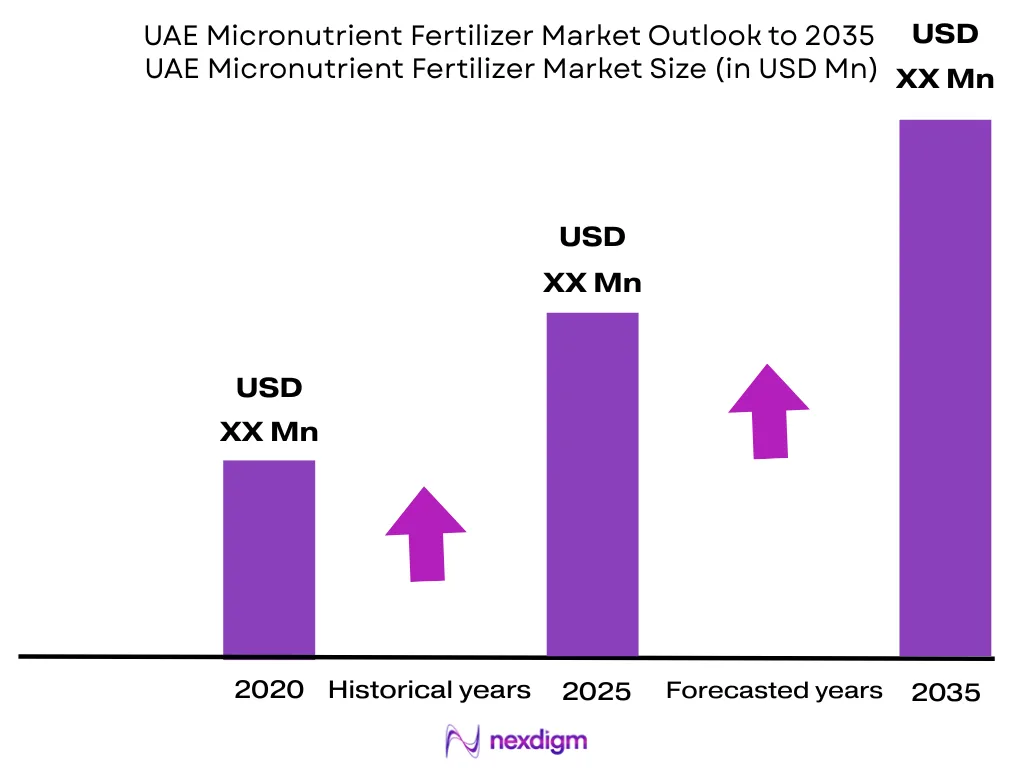
The UAE Micronutrient Fertilizer Market was valued at approximately USD ~ million in 2024, compared to USD ~ million in 2023, based on industry trade statistics, fertilizer import records, and specialty plant nutrition consumption trends. The market is driven by the expansion of protected agriculture, hydroponic farming, and government-led food security initiatives. According to the UAE Ministry of Climate Change and Environment, greenhouse cultivation exceeded 1,300 hectares, while hydroponic projects continued expanding across Abu Dhabi and Dubai. Rising demand for high-value fruits, vegetables, and date palm cultivation has increased the adoption of zinc, iron, boron, and chelated micronutrient fertilizers to address nutrient deficiencies prevalent in arid soils.
Market Segmentation
By Nutrient Type
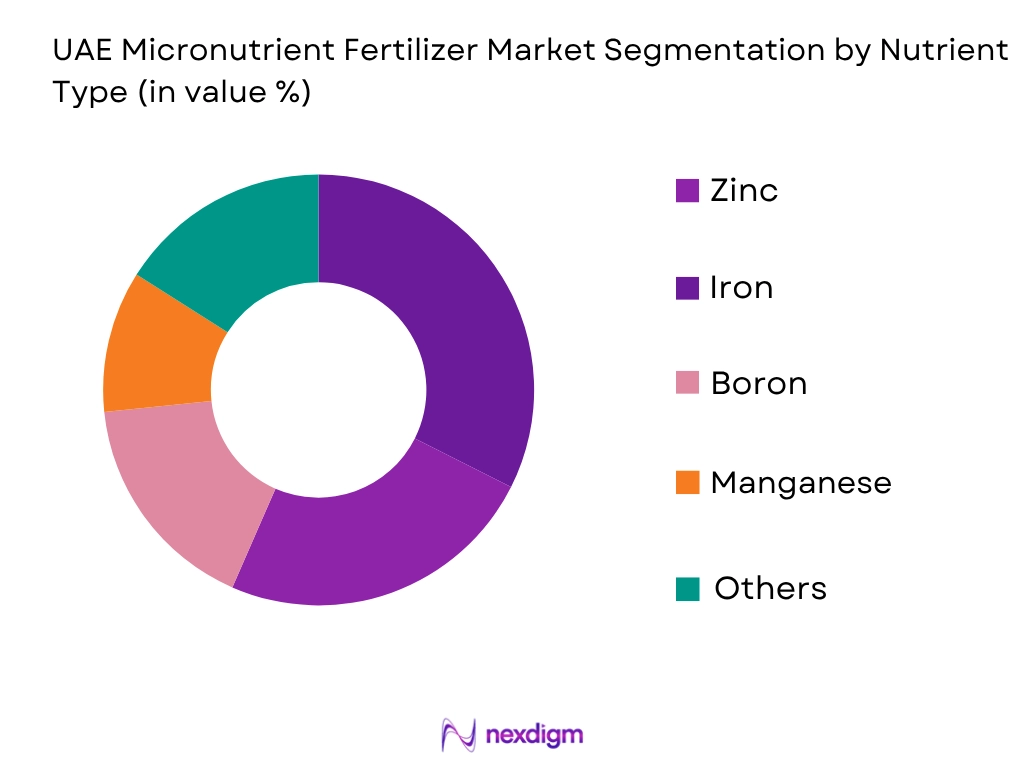
UAE Micronutrient Fertilizer Market is segmented into zinc fertilizers, iron fertilizers, boron fertilizers, manganese fertilizers, and others. Recently, zinc fertilizers hold the dominant market share due to widespread zinc deficiencies observed in alkaline and calcareous soils across the UAE. Zinc plays a critical role in plant growth, enzyme activation, and crop productivity, making it indispensable for horticultural crops, vegetables, and date palms. The increasing adoption of fertigation systems and protected cultivation has further enhanced the demand for water-soluble zinc formulations. Major suppliers including Yara, Haifa Group, and ICL offer specialized zinc-based products tailored for arid farming conditions. Furthermore, government-supported agricultural modernization programs encourage balanced nutrient application, contributing to the strong position of zinc fertilizers in the UAE agricultural nutrient management ecosystem.
By Crop Type
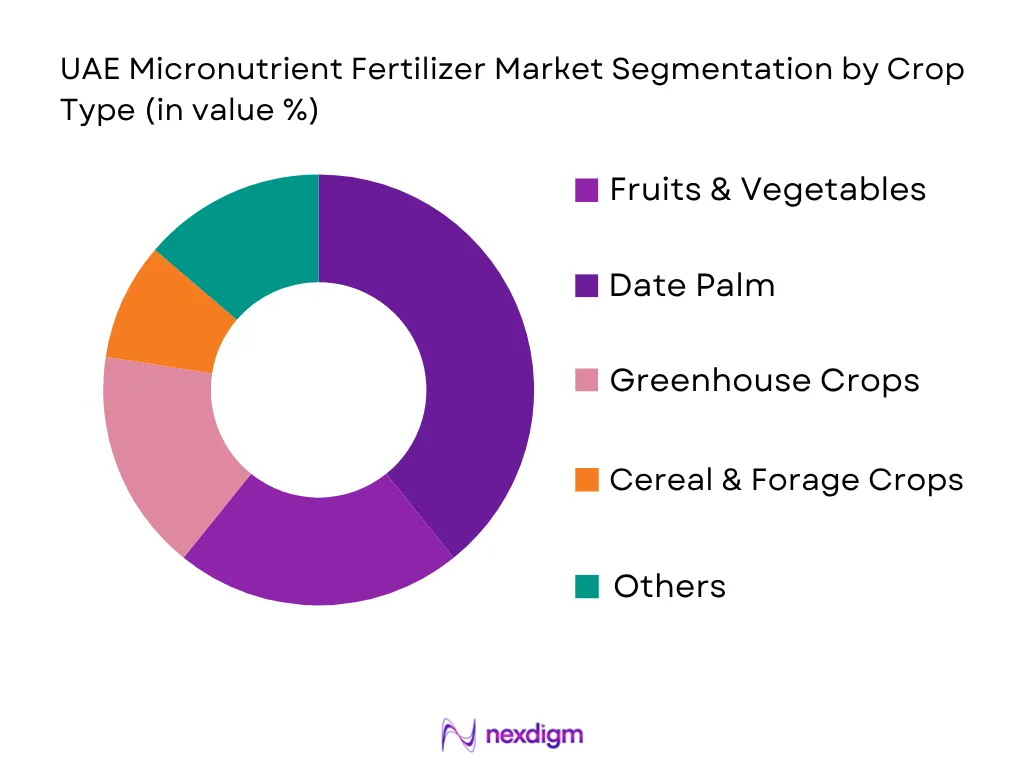
UAE Micronutrient Fertilizer Market is segmented into fruits & vegetables, date palm, greenhouse crops, cereals & forage crops, and others. Recently, fruits and vegetables account for the dominant market share due to the country’s strategic focus on enhancing domestic food production. Greenhouse-grown tomatoes, cucumbers, peppers, and leafy vegetables require precise micronutrient management because intensive cultivation systems rapidly deplete available nutrients. Farmers increasingly utilize chelated iron, zinc, and boron fertilizers to improve crop quality, yield, and shelf life. The segment also benefits from expanding hydroponic farms and controlled-environment agriculture projects in Abu Dhabi and Dubai. Since fruits and vegetables generate higher economic returns per hectare than traditional crops, growers are more willing to invest in specialty micronutrient products, supporting the segment’s leadership position within the UAE micronutrient fertilizer industry.
Competitive Landscape
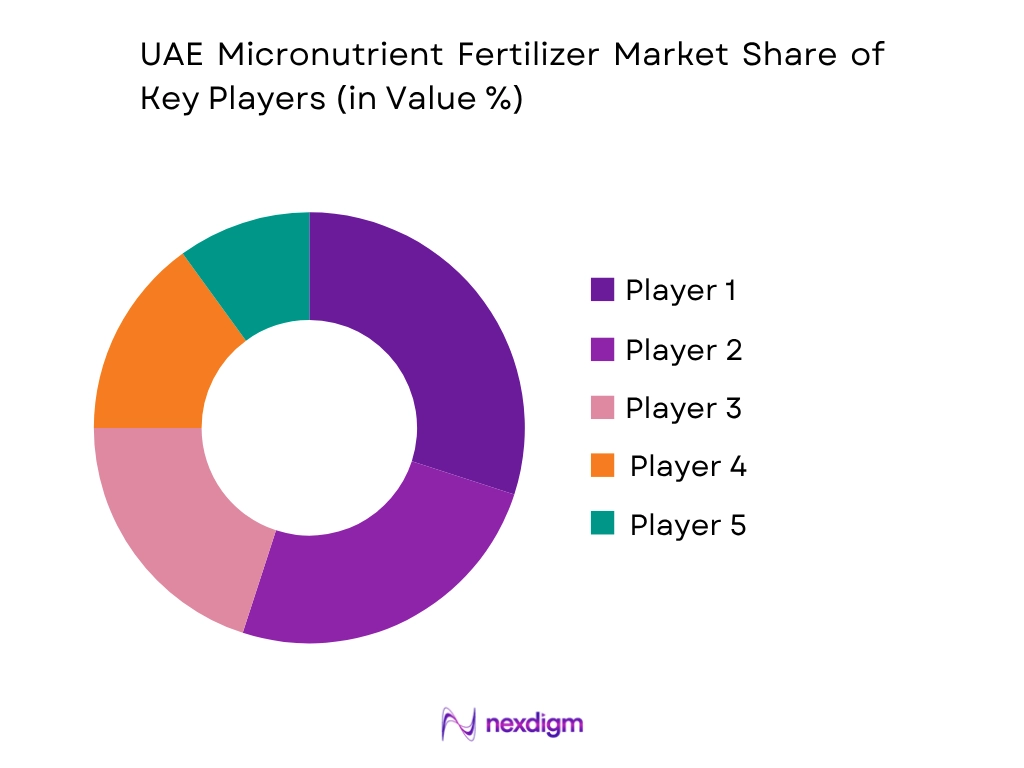
The UAE Micronutrient Fertilizer Market is moderately consolidated and characterized by the presence of global specialty fertilizer manufacturers and regional distributors. International players such as Yara International, Haifa Group, ICL Group, and SQM dominate through strong distribution networks, advanced chelated nutrient portfolios, and technical agronomy support. Competition increasingly revolves around crop-specific nutrient solutions, fertigation compatibility, greenhouse applications, and sustainable nutrient management programs.
| Company | Establishment Year | Headquarters | Key Micronutrients | Chelated Portfolio | UAE Distribution Network | Greenhouse Solutions | Technical Support | Hydroponic Focus |
| Yara International | 1905 | ~ | ~ | ~ | ~ | ~ | ~ | ~ |
| Haifa Group | 1966 | ~ | ~ | ~ | ~ | ~ | ~ | ~ |
| ICL Group | 1968 | ~ | ~ | ~ | ~ | ~ | ~ | ~ |
| SQM | 1968 | ~ | ~ | ~ | ~ | ~ | ~ | ~ |
| COMPO Expert | 1976 | ~ | ~ | ~ | ~ | ~ | ~ | ~ |
UAE Micronutrient Fertilizer Market Analysis
Growth Drivers
Expansion of Controlled Environment Agriculture and Food Security Programs
The UAE Micronutrient Fertilizer Market is being significantly driven by the rapid expansion of controlled-environment agriculture, greenhouse farming, and national food security initiatives. According to the UAE Ministry of Climate Change and Environment, the country operates more than 1,300 hectares of greenhouse cultivation area, while hydroponic farming projects continue expanding across Abu Dhabi and Dubai. The UAE’s population exceeded 11.3 million people in 2024, increasing pressure on domestic food production systems. According to the World Bank, the UAE’s GDP reached approximately USD 548 billion in 2024, reflecting substantial investment capacity for advanced agricultural technologies. The Food Security Strategy focuses on increasing local production of vegetables, fruits, and high-value crops, all of which require intensive micronutrient management. Date palm cultivation remains a major agricultural activity with over 40 million date palm trees maintained across the country. Greenhouse-grown tomatoes, cucumbers, peppers, and leafy vegetables require regular application of zinc, iron, boron, and manganese fertilizers due to nutrient depletion under intensive cultivation systems. Additionally, the UAE has less than 1% arable land availability, making high-yield agriculture essential. This reliance on precision farming, fertigation systems, and protected cultivation is creating sustained demand for specialty micronutrient fertilizers that enhance crop productivity under desert farming conditions.
Rising Soil Salinity Management and Adoption of Precision Agriculture
The widespread presence of saline and alkaline soils across the UAE is increasing the need for micronutrient fertilizers. According to FAO and UAE agricultural authorities, a substantial portion of cultivated land experiences nutrient lock-up due to high soil pH levels, limiting plant uptake of iron, zinc, and manganese. The UAE’s agricultural land covers approximately 749,000 hectares, with much of this area requiring nutrient supplementation to sustain productivity. The World Bank reports that renewable freshwater resources remain below 20 cubic meters per capita annually, encouraging adoption of fertigation and precision irrigation systems that maximize nutrient-use efficiency. UAE agricultural enterprises increasingly use drip irrigation networks covering thousands of hectares of cultivated land, where water-soluble and chelated micronutrients are preferred due to higher absorption rates. According to IMF economic projections, the UAE economy continues to benefit from diversification investments supporting agritech and sustainable agriculture. Precision agriculture technologies, including sensor-based irrigation, nutrient monitoring systems, and automated fertigation platforms, are becoming more common in commercial farms. As crop producers focus on maximizing yields from limited cultivable land while addressing nutrient deficiencies caused by salinity, demand for specialized micronutrient fertilizers is expanding across horticulture, date palm cultivation, and protected agriculture operations.
Market Challenges
High Dependence on Imported Specialty Micronutrients
One of the major challenges facing the UAE Micronutrient Fertilizer Market is the country’s strong dependence on imported specialty fertilizer products. The UAE imports a significant proportion of its agricultural inputs because domestic fertilizer manufacturing is primarily concentrated on bulk nutrients and petrochemical derivatives rather than specialty micronutrient formulations. According to UN Comtrade trade statistics, the UAE continues to import substantial volumes of specialty agricultural chemicals from countries including Spain, Netherlands, Israel, India, and Germany. The UAE’s merchandise imports exceeded USD 430 billion in 2024, highlighting the broader dependence on international supply chains. Global shipping disruptions, geopolitical tensions, and fluctuations in freight availability can affect product accessibility and inventory management for agricultural distributors. Since many micronutrient products used in hydroponics and greenhouse systems are highly specialized, substitution options are often limited. Furthermore, the UAE’s agricultural sector serves a relatively small cultivated area compared to major farming economies, reducing economies of scale in local production. Import dependency also creates longer procurement cycles for growers who require crop-specific formulations. Consequently, distributors and farm operators face challenges maintaining consistent product availability, particularly for advanced chelated micronutrients designed for high-value crops and controlled-environment agriculture.
Limited Arable Land and Harsh Agro-Climatic Conditions
The UAE possesses one of the most challenging agricultural environments globally due to limited arable land, high temperatures, water scarcity, and saline soils. According to the World Bank, arable land represents less than 1% of total land area, significantly restricting conventional agricultural expansion. Annual temperatures frequently exceed 45 degrees Celsius during summer months, creating stress conditions that reduce nutrient uptake efficiency in crops. Renewable freshwater availability remains among the lowest globally, with less than 20 cubic meters per person annually, requiring heavy reliance on desalinated water and efficient irrigation systems. These environmental conditions increase the complexity of micronutrient management because nutrient availability and absorption can vary considerably under saline and alkaline conditions. Farmers often require customized nutrient programs and multiple applications throughout the growing cycle to achieve optimal crop performance. Additionally, water quality issues may influence micronutrient compatibility within fertigation systems. While micronutrient fertilizers can help address nutrient deficiencies, environmental constraints increase the technical expertise required for proper product selection and application. These factors limit adoption among smaller agricultural operators and create operational challenges across the UAE’s agricultural production ecosystem.
Market Opportunities
Expansion of Hydroponics, Vertical Farming, and Smart Agriculture
A major opportunity for the UAE Micronutrient Fertilizer Market lies in the rapid growth of hydroponics, vertical farming, and smart agriculture projects. The UAE has become one of the leading adopters of controlled-environment agriculture in the Middle East due to its food security priorities and technological investment capabilities. According to the UAE Ministry of Climate Change and Environment, hundreds of hydroponic and greenhouse farming operations are active across Abu Dhabi, Dubai, and northern emirates. The UAE’s GDP exceeded USD 548 billion in 2024, enabling substantial investments in agritech infrastructure and precision farming solutions. Hydroponic systems rely entirely on nutrient solutions, creating continuous demand for highly soluble micronutrients such as zinc, iron, boron, copper, and manganese. Vertical farms and climate-controlled facilities require specialized formulations with precise nutrient concentrations, supporting the premium segment of the micronutrient fertilizer market. Additionally, smart agriculture projects increasingly integrate nutrient monitoring systems, automated fertigation, and AI-driven crop management tools. These technologies improve nutrient efficiency while creating opportunities for manufacturers to supply customized micronutrient products specifically designed for controlled-environment farming systems operating throughout the UAE.
Development of Sustainable Agriculture and Specialty Crop Production
The UAE’s transition toward sustainable agriculture and high-value specialty crop production presents significant opportunities for micronutrient fertilizer suppliers. Government initiatives increasingly encourage cultivation of fruits, vegetables, medicinal plants, and premium horticultural products to reduce dependence on food imports. According to FAOSTAT data, vegetable production and protected agriculture acreage have expanded steadily as growers seek higher productivity from limited land resources. The UAE population exceeded 11.3 million people in 2024, creating sustained demand for locally produced fresh food. Specialty crops generally require intensive nutrient management and are more responsive to micronutrient applications than traditional field crops. Demand is also increasing for environmentally friendly nutrient solutions that improve nutrient-use efficiency while minimizing environmental impacts. Sustainable agriculture programs emphasize soil health improvement, efficient water usage, and optimized fertilizer application. As a result, growers are adopting advanced chelated micronutrients, bio-based formulations, and crop-specific nutrient blends. The expansion of premium horticulture and sustainable farming systems creates long-term opportunities for companies capable of delivering innovative micronutrient solutions tailored to desert agriculture, greenhouse production, and water-efficient farming environments across the UAE.
Future Outlook
The UAE Micronutrient Fertilizer Market is expected to experience steady growth throughout the forecast period, supported by the country’s commitment to food security, water-efficient farming systems, and agricultural diversification. Expansion of greenhouse farming, hydroponics, and vertical agriculture will continue driving demand for specialized micronutrient products. Increasing awareness regarding soil health and nutrient management is expected to encourage broader adoption of chelated and water-soluble formulations. Furthermore, technological integration through precision agriculture and smart fertigation systems will create opportunities for premium micronutrient fertilizer suppliers. Government initiatives promoting sustainable agriculture and local food production are anticipated to remain key growth catalysts.
Major Players
- Yara International
- Haifa Group
- ICL Group
- SQM
- COMPO Expert
- EuroChem Group
- Nutrien Ltd.
- Coromandel International
- Aries Agro Limited
- BASF Agricultural Solutions
- Koch Agronomic Services
- Van Iperen International
- Tradecorp International
- Valagro
- Agrico UAE
Key Target Audience
- Micronutrient Fertilizer Manufacturers
- Specialty Plant Nutrition Producers
- Greenhouse and Hydroponic Farm Operators
- Agricultural Input Distributors and Retailers
- Date Palm and Horticulture Growers
- Food Security and Agritech Developers
- Investments and Venture Capitalist Firms
- Government and Regulatory Bodies
Research Methodology
Step 1: Identification of Key Variables
The initial phase involves constructing a comprehensive ecosystem map of the UAE Micronutrient Fertilizer Market. Extensive secondary research is conducted through agricultural databases, fertilizer trade statistics, government publications, and company reports. Key variables such as micronutrient consumption, crop coverage, import dependency, and farming systems are identified and evaluated.
Step 2: Market Analysis and Construction
Historical market data is compiled through a bottom-up and top-down analytical framework. Market revenues are assessed by analyzing micronutrient fertilizer consumption across major crop categories, application methods, and farming systems. Import-export trends, product penetration, and nutrient deficiency patterns are incorporated into the analysis.
Step 3: Hypothesis Validation and Expert Consultation
Preliminary market assumptions are validated through interviews with fertilizer manufacturers, distributors, agronomists, greenhouse operators, and agricultural authorities. These discussions provide practical insights into demand drivers, adoption trends, product preferences, and competitive positioning.
Step 4: Research Synthesis and Final Output
The final stage integrates primary and secondary findings into a consolidated market model. Data triangulation techniques are applied to validate market estimates, segment shares, and forecast assumptions. The resulting report provides a comprehensive assessment of the UAE Micronutrient Fertilizer Market and its future growth potential.

- Executive Summary
- Research Methodology (Market Definitions and Assumptions, Abbreviations, Market Sizing Approach, Bottom-Up and Top-Down Analysis, Industry Expert Interviews, Primary and Secondary Research Framework, Data Triangulation, Limitations and Forecasting Methodology)

- Definition and Scope
- Market Evolution and Industry Genesis
- Timeline of Micronutrient Fertilizer Adoption in UAE Agriculture
- Agricultural Input Ecosystem Overview
- Supply Chain and Value Chain Analysis

- Growth Drivers (Protected Agriculture Expansion, Soil Nutrient Deficiency Management, Food Security Strategy, High-Value Crop Production, Precision Agriculture Adoption)
- Market Challenges (Import Dependence, Salinity Issues, Limited Arable Land, Farmer Awareness, Regulatory Compliance)
- Market Opportunities (Controlled Environment Agriculture, Specialty Crops, Bio-Stimulants, Smart Fertigation, Sustainable Agriculture)
- Market Trends (Hydroponics Growth, Water-Soluble Nutrients, Smart Farming, Climate-Smart Agriculture, Customized Nutrition Programs)
- Government Regulations (UAE National Food Security Strategy, Ministry of Climate Change and Environment Fertilizer Regulations, Agricultural Input Registration Framework
- Sustainable Agriculture and Water Conservation Policies, Organic Farming Standards and Certification Requirements)
- SWOT Analysis
- Stakeholder Ecosystem
- PESTLE Analysis
- Porter’s Five Forces Analysis
- Competition Ecosystem

- By Market Value (2020-2025)
- By Volume Consumption (2020-2025)
- By Average Selling Price (2020-2025)

- By Nutrient Type (In Value %)
Zinc Fertilizers
Iron Fertilizers
Boron Fertilizers
Manganese Fertilizers
Copper Fertilizers
Molybdenum Fertilizers
Multi-Micronutrient Blends - By Crop Type (In Value %)
Fruits & Vegetables
Date Palm Cultivation
Greenhouse Crops
Cereals & Forage Crops
Turf & Landscaping
Ornamental Plants - By Form Type (In Value %)
Chelated Micronutrients
Sulphate-Based Micronutrients
Oxide-Based Micronutrients
EDTA-Based Formulations
Amino Acid Chelated Micronutrients
Others - By Application Method (In Value %)
Foliar Application
Fertigation
Soil Application
Seed Treatment - By Emirate (In Value %)
Abu Dhabi
Dubai
Sharjah
Ras Al Khaimah
Fujairah
Ajman
Umm Al Quwain

- Market Share of Major Players (Value, Volume, Product Portfolio, Import Presence, Distribution Reach)
- Cross Comparison Parameters (Product Portfolio Strength, Chelated Micronutrient Portfolio, UAE Distribution Network Reach, Hydroponic & Greenhouse Solutions, Import and Supply Chain Capabilities, Crop-Specific Nutrient Programs, Technical Agronomy Support, Regulatory Registration Portfolio)
- SWOT Analysis of Major Players
- Pricing Analysis Basis SKUs (Zinc EDTA, Iron EDDHA, Boron Ethanolamine, Manganese EDTA, Copper EDTA, Molybdenum Formulations, Multi-Micronutrient Mixes, Water-Soluble Micronutrient Products)
- Detailed Profiles of Major Companies
ICL Group
Yara International
Haifa Group
SQM
Valagro
COMPO Expert
EuroChem Group
Nutrien Ltd.
Coromandel International
Aries Agro Limited
Koch Agronomic Services
BASF Agricultural Solutions
Van Iperen International
Tradecorp International
Agrico UAE

- Nutrient Deficiency Assessment Across Crop Categories
- Fertilizer Consumption and Utilization Analysis
- Purchasing Power and Farm Input Spending Patterns
- Adoption Rate of Precision Nutrient Management
- Farmer Awareness and Technical Knowledge Assessment
- Pain Point Analysis in Crop Nutrition Management
- Decision-Making Framework for Fertilizer Selection
- Brand Awareness and Loyalty Assessment
- Water Scarcity Impact on Fertilizer Preferences

- By Market Value (2026-2035)
- By Volume Consumption (2026-2035)
- By Average Selling Price (2026-2035)


 Request a Sample
 Ask for Customization
 Get a Quote
 Enquire Now