
 Download PDF
 Download PDF
Market Overview
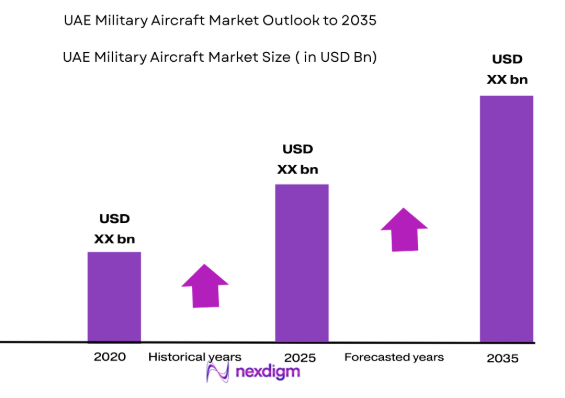
The UAE military aircraft market is driven by the growing demand for advanced defense capabilities, with investments in the modernization of air forces and the procurement of sophisticated systems. Based on a recent historical assessment, the market size is expected to reach USD ~ billion in 2025, driven by the necessity for superior fighter jets, surveillance aircraft, and combat helicopters to ensure national security. Factors such as increasing geopolitical tensions and regional security concerns play a significant role in this market’s expansion, prompting governments to prioritize defense spending.
The UAE’s dominance in the military aircraft market is largely attributed to its strategic location in the Middle East and its significant investments in defense infrastructure. The nation has formed key defense partnerships with global powers, such as the United States and France, facilitating access to cutting-edge technology. The UAE’s defense modernization programs, backed by substantial government budgets, enable the acquisition of state-of-the-art military aircraft. Its robust aviation industry infrastructure, coupled with increasing demand for high-tech military capabilities, further consolidates the country’s position as a leader in the region.
Market Segmentation
By Product Type
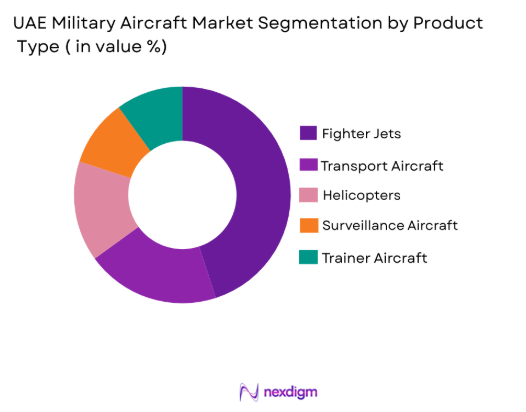
The UAE military aircraft market is segmented by product type into fighter jets, transport aircraft, helicopters, surveillance aircraft, and trainer aircraft. Fighter jets hold a dominant market share, driven by the need for superior defense capabilities and deterrence against regional threats. With an increasing emphasis on advanced, multi-role aircraft that offer flexibility in various combat situations, fighter jets are a core focus of the UAE’s military strategy. Additionally, fighter jets are central to the UAE’s partnerships with leading global defense contractors, which supply cutting-edge technology to maintain a competitive edge in the region.
By Platform Type
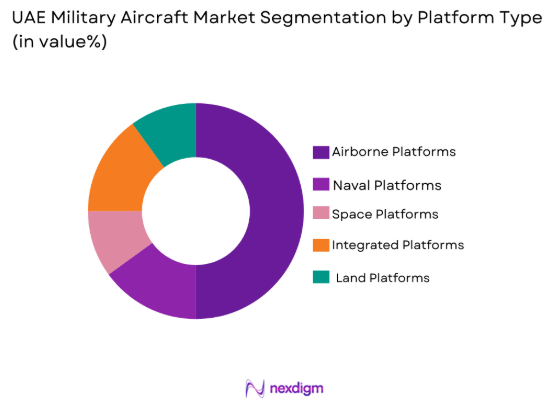
The UAE military aircraft market is segmented by platform type into airborne platforms, naval platforms, space platforms, integrated platforms, and land platforms. Among these, airborne platforms dominate the market due to their critical role in national defense and security operations. Airborne platforms, particularly fighter jets, surveillance aircraft, and transport aircraft, are essential for securing airspace, providing rapid response capabilities, and conducting strategic military missions. The UAE’s focus on modernizing its air force with advanced airborne platforms ensures their continued dominance in the market, supported by international partnerships and technological advancements in aerospace.
Competitive Landscape
The UAE military aircraft market is highly competitive, with global aerospace giants like Boeing, Lockheed Martin, and Dassault Aviation dominating the landscape. Consolidation in the market has occurred through joint ventures and partnerships, ensuring a steady flow of advanced technology. These companies continue to influence the market through their established product lines and innovation. Major players have a substantial impact on market dynamics, including technological advancements, pricing strategies, and procurement policies.
| Company Name | Establishment Year | Headquarters | Technology Focus | Market Reach | Key Products | Revenue (USD) | Additional Parameter |
| Boeing | 1916 | Chicago, USA | ~ | ~ | ~ | ~ | ~ |
| Lockheed Martin | 1912 | Bethesda, USA | ~ | ~ | ~ | ~ | ~ |
| Dassault Aviation | 1929 | Paris, France | ~ | ~ | ~ | ~ | ~ |
| Saab Group | 1937 | Linköping, Sweden | ~ | ~ | ~ | ~ | ~ |
| Northrop Grumman | 1939 | Falls Church, USA | ~ | ~ | ~ | ~ | ~ |
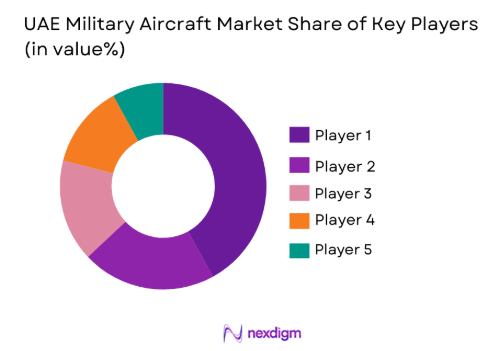
UAE Military Aircraft Market Analysis
Growth Drivers
Increasing Defense Budgets
The growth of the UAE military aircraft market is significantly driven by the increasing defense budgets, which have risen steadily over the years. The UAE government has continuously allocated substantial portions of its national budget to defense, reflecting its commitment to ensuring military superiority in the region. This strategic focus is aimed at fortifying air defense systems, purchasing advanced fighter jets, and modernizing current fleets. High expenditure on defense initiatives, including advanced military aircraft, is vital to maintaining the UAE’s position as a regional power. Furthermore, the substantial defense budget also supports research and development initiatives in aviation technology, fostering innovation in military aircraft production. The UAE’s defense spending serves as a primary catalyst for the expansion of the military aircraft market, creating an environment conducive to the growth of both domestic and international aerospace manufacturers. With regional instability and shifting security concerns, the government’s increased investment in defense highlights the necessity for upgrading military capabilities. The continuous improvement in defense technology and aircraft systems also contributes to expanding the market, providing both direct and indirect job opportunities, fostering economic growth, and strengthening security infrastructure.
Technological Advancements in Military Aircraft
Technological advancements play a crucial role in driving the growth of the military aircraft market in the UAE. The adoption of cutting-edge technologies such as stealth capabilities, advanced avionics, and artificial intelligence in military aircraft is a significant driver of demand. The UAE’s military forces have increasingly prioritized acquiring the latest generation of fighter jets, surveillance aircraft, and helicopters that offer enhanced capabilities such as longer operational ranges, advanced radar systems, and improved survivability. As global aerospace manufacturers continue to develop next-generation aircraft systems, the UAE’s government ensures that its defense systems remain modern and effective in the face of evolving regional threats. Moreover, technological advancements have enhanced the operational efficiency of aircraft, making them more cost-effective in the long term. These developments have led to increased procurement of advanced military aircraft, ensuring that the UAE maintains a strategic advantage in both defense and offense capabilities. With technological innovation at the forefront of military strategy, the continuous upgrading of aircraft systems has become essential to sustaining the UAE’s defense objectives.
Market Challenges
High Procurement Costs
One of the primary challenges hindering the growth of the UAE military aircraft market is the high procurement costs associated with advanced military aircraft. The process of acquiring cutting-edge aircraft systems requires substantial financial investment, which poses a barrier for many nations, including the UAE. The high upfront costs of purchasing fighter jets, transport aircraft, and surveillance systems, along with their maintenance and operational costs, can strain defense budgets. Additionally, the need for extensive training, technical support, and integration of new aircraft with existing defense infrastructure further increases expenses. Despite the UAE’s robust economy, the significant financial burden of military aircraft procurement continues to challenge defense planners, necessitating careful budget allocation and strategic investments. Moreover, the long lifecycle of these systems and the need for regular upgrades add to the financial complexities. Although the UAE is committed to ensuring its military preparedness, the challenge of managing these procurement costs remains an ongoing concern for policymakers and defense contractors alike.
Complexity of Aircraft Integration
The complexity of integrating advanced military aircraft into existing defense systems presents another major challenge for the UAE market. Integrating newly procured aircraft into a nation’s defense infrastructure requires overcoming technical and operational hurdles, as the compatibility of new systems with legacy aircraft and defense systems must be ensured. The task involves upgrading radar systems, air control mechanisms, and communication networks to handle the advanced features of modern aircraft. Moreover, the integration process requires specialized expertise and extensive testing to ensure interoperability, security, and optimal performance. This complexity not only extends the deployment timelines but also adds to the costs, making the integration of advanced military aircraft a daunting task. The rapid pace of technological advancements further complicates integration, as defense contractors must keep up with innovations while maintaining the operational efficiency of the entire fleet. Addressing these integration challenges is critical for the UAE to maintain its competitive edge in the military aircraft market.
Opportunities
Partnerships with Global Defense Contractors
The UAE’s growing defense sector presents a significant opportunity for international aerospace and defense companies to expand their market presence through partnerships with local firms. The UAE government has historically formed strategic alliances with leading global defense manufacturers, which has facilitated the transfer of technology and know-how to local defense companies. These collaborations enable the UAE to modernize its military aircraft fleet while also fostering innovation within the domestic aerospace industry. Additionally, such partnerships create opportunities for joint ventures in research and development, leading to the creation of next-generation aircraft systems tailored to the specific needs of the UAE. As the UAE continues to prioritize defense modernization, these partnerships are expected to become even more prevalent, providing a solid foundation for both technological advancements and business growth in the military aircraft sector. For international companies, entering into joint ventures with UAE-based firms offers access to a growing and lucrative market, enhancing global competitiveness and creating a platform for expanding product offerings in the region.
Expansion of UAV Technologies in Military Operations
The increasing use of unmanned aerial vehicles (UAVs) in military operations presents a unique opportunity for the UAE military aircraft market. UAVs are becoming integral to modern defense strategies due to their versatility in surveillance, reconnaissance, and combat missions. The UAE has shown strong interest in integrating UAVs into its defense systems, driven by the need for more efficient, cost-effective, and flexible solutions. UAVs can perform high-risk missions without putting human lives at risk, making them ideal for intelligence gathering and border surveillance. As the demand for UAVs continues to rise, there is a growing opportunity for manufacturers to develop advanced drone technologies for the UAE market. Furthermore, the integration of AI and autonomous systems in UAVs provides the UAE with cutting-edge capabilities that align with its vision for a technologically advanced military force. Expanding UAV technologies will enhance operational efficiency and allow the UAE to address emerging security threats in an increasingly dynamic geopolitical landscape.
Future Outlook
The UAE military aircraft market is expected to experience steady growth over the next five years, driven by technological advancements, increased defense budgets, and evolving geopolitical dynamics. Key growth factors include the modernization of existing fleets, the adoption of cutting-edge aircraft technologies, and the increasing use of UAVs and AI in military operations. Strategic collaborations with global defense contractors will continue to play a crucial role in acquiring advanced systems, while demand for fighter jets, surveillance aircraft, and helicopters remains strong. Furthermore, regulatory support for defense spending and innovation will bolster the market, ensuring that the UAE maintains its air superiority in the region.
Major Players
- Boeing
- Lockheed Martin
- Dassault Aviation
- Saab Group
- Northrop Grumman
- Airbus
- Thales Group
- BAE Systems
- General Dynamics
- Raytheon Technologies
- Leonardo
- Embraer
- Elbit Systems
- Rheinmetall AG
- Harris Corporation
Key Target Audience
- Investments and venture capitalist firms
- Government and regulatory bodies
- Military contractors
- Aerospace and defense manufacturers
- Defense technology developers
- Security agencies
- Military forces
- Aviation service providers
Research Methodology
Step 1: Identification of Key Variables
Identify the key variables that influence the market such as defense spending, technological advancements, and geopolitical dynamics.
Step 2: Market Analysis and Construction
Analyze market data, historical trends, and forecast methodologies to construct the overall market analysis framework.
Step 3: Hypothesis Validation and Expert Consultation
Validate the hypotheses by consulting industry experts and conducting primary and secondary research.
Step 4: Research Synthesis and Final Output
Synthesize the data, draw conclusions, and create the final market report based on the gathered insights.

- Executive Summary
- Research Methodology (Definitions, Scope, Industry Assumptions, Market Sizing Approach, Primary & Secondary Research Framework, Data Collection & Verification Protocol, Analytic Models & Forecast Methodology, Limitations & Research Validity Checks)

- Market Definition and Scope
- Value Chain & Stakeholder Ecosystem
- Regulatory / Certification Landscape
- Sector Dynamics Affecting Demand
- Strategic Initiatives & Infrastructure Growth

- Growth Drivers
Increasing Defense Budgets
Technological Advancements in Aircraft Systems
Rising Geopolitical Tensions in the Middle East
Modernization of UAE Armed Forces
Partnerships with International Defense Contractors - Market Challenges
High Capital Expenditure in Aircraft Procurement
Complexity in Aircraft Integration and Interoperability
Regulatory and Compliance Barriers
Cybersecurity Threats in Aircraft Systems
Political and Social Resistance to Military Expansion - Market Opportunities
Growth in AI-Driven Defense Solutions
Expanding Defense Collaborations with Global Players
Emerging Demand for Autonomous Aircraft Systems - Trends
Increased Integration of AI in Military Aircraft Operations
Growth in Cybersecurity Investments for Aircraft Systems
Rising Demand for Multi-Role Aircraft
Increased Use of UAVs in Military Operations
Technological Advancements in Aircraft Materials - Government Regulations & Defense Policy
Export Control and Compliance Policies
Government Funding and Grants for Aircraft Technologies
National Security and Aircraft Procurement Policies

- By Market Value, 2020-2025
- By Installed Units, 2020-2025
- By Average System Price, 2020-2025
- By System Complexity Tier, 2020-2025

- By System Type (In Value%)
Fighter Jets
Transport Aircraft
Helicopters
Surveillance Aircraft
Trainer Aircraft - By Platform Type (In Value%)
Airborne Platforms
Naval Platforms
Space Platforms
Integrated Platforms
Land Platforms - By Fitment Type (In Value%)
On-premise Solutions
Cloud-based Solutions
Hybrid Solutions
Modular Solutions
Integrated Solutions - By End User Segment (In Value%)
Military Forces
Defense Contractors
Government Agencies
Private Sector / Technology Firms
Security Services - By Procurement Channel (In Value%)
Direct Procurement
Government Tenders
Private Sector Procurement
Online Bidding Platforms
Third-party Distributors - By Material / Technology (In Value%)
Composite Materials
Stealth Technology
Radar Systems
Avionics Systems
Weapon Systems

- Market structure and competitive positioning
- Market share snapshot of major players
- Cross Comparison Parameters (System Type, Platform Type, Procurement Channel, EndUser Segment, Fitment Type)
- SWOT Analysis of Key Competitors
- Pricing & Procurement Analysis
- Porter’s Five Forces
- Key Players
Lockheed Martin
Boeing
Northrop Grumman
Raytheon Technologies
General Dynamics
BAE Systems
Leonardo
Thales Group
Saab Group
Airbus
Dassault Aviation
Embraer
Rheinmetall AG
Elbit Systems
Harris Corporation

- Military Forces’ Increasing Demand for Advanced Aircraft
- Government Agencies’ Role in Regulating and Procuring Aircraft
- Private Sector’s Growing Interest in Aircraft Maintenance
- Defense Contractors’ Focus on Aircraft Innovation and Integration

- Forecast Market Value, 2026-2035
- Forecast Installed Units, 2026-2035
- Price Forecast by System Tier, 2026-2035
- Future Demand by Platform, 2026-2035


 Request a Sample
 Ask for Customization
 Get a Quote
 Enquire Now