
 Download PDF
 Download PDF
Market Overview
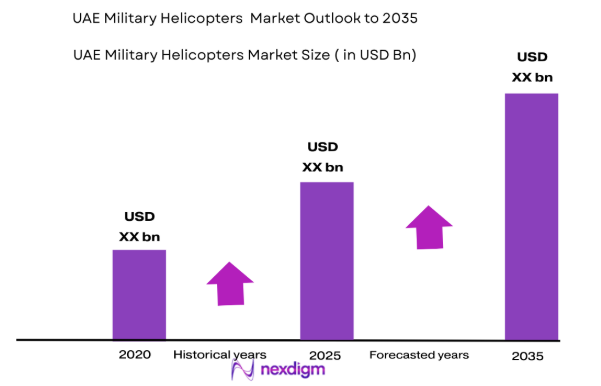
The UAE military helicopters market is valued at approximately USD ~ billion in recent historical assessments, primarily driven by rising defense spending, modernization of military equipment, and increasing geopolitical tensions in the region. These helicopters are pivotal for the UAE’s defense strategy, ensuring superior tactical and logistical capabilities. The market benefits from both government defense budgets and growing investments in cutting-edge technology, including advanced rotorcraft and surveillance systems, which are expected to expand the market further. The increasing demand for multi-role helicopters is another key growth factor.
The UAE, particularly its capital, Abu Dhabi, dominates the regional military helicopters market due to its strategic location, advanced infrastructure, and strong defense initiatives. The country benefits from substantial government support and strong partnerships with leading international defense manufacturers. The UAE’s defense policies focus on cutting-edge technology, including autonomous systems and next-generation rotorcraft, positioning the nation as a regional leader. These factors, combined with a large defense budget, ensure the UAE’s dominance in the market for military helicopters.
Market Segmentation
By Product Type
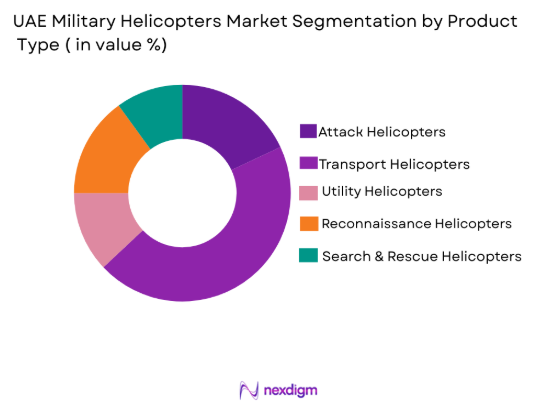
The UAE military helicopters market is segmented by product type into attack helicopters, transport helicopters, utility helicopters, reconnaissance helicopters, and search & rescue helicopters. Among these, transport helicopters dominate the market due to their versatility and critical role in military operations, particularly in troop deployment, logistics, and humanitarian missions. The demand for multi-role capabilities has made transport helicopters indispensable, offering flexibility in various operational scenarios. Additionally, their ability to carry heavy loads and personnel has further solidified their position as the leading sub-segment in the UAE’s military helicopter market.
By Platform Type
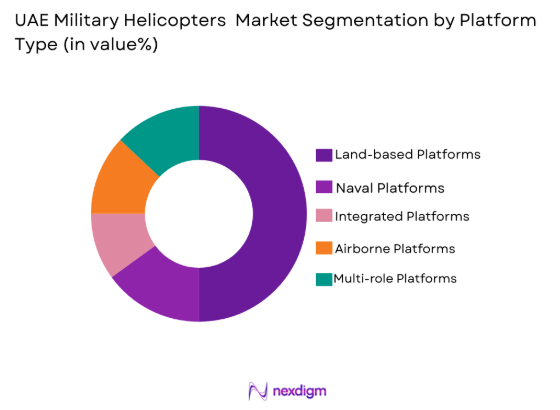
The UAE military helicopters market is segmented by platform type into land-based platforms, naval platforms, integrated platforms, airborne platforms, and multi-role platforms. The land-based platform sub-segment holds a dominant position in the market, largely driven by its widespread use in operational roles such as troop transport, battlefield surveillance, and logistics support. These platforms are versatile and adaptable to various mission requirements, making them crucial for land-based military operations. Additionally, the UAE’s strategic military requirements and terrain suitability for land-based platforms further contribute to their market dominance.
Competitive Landscape
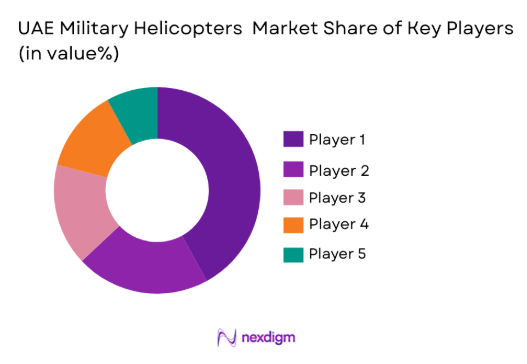
The UAE military helicopters market is highly competitive, with major players in the industry investing in technological advancements and strategic partnerships to expand their presence. The influence of global players such as Boeing, Airbus, and Sikorsky remains strong, contributing to market consolidation. Local manufacturers also play a vital role, with increasing collaborations between international and domestic defense firms to develop region-specific solutions. The competitive environment fosters continuous innovation in rotorcraft technology, ensuring that the UAE remains at the forefront of military aviation capabilities.
|
Company Name |
Establishment Year | Headquarters | Technology Focus | Market Reach | Key Products | Revenue | Additional Parameter |
| Lockheed Martin | 1912 | USA | ~ | ~ | ~ | ~ | ~ |
| Boeing | 1916 | USA | ~ | ~ | ~ | ~ | ~ |
| Airbus | 1970 | France | ~ | ~ | ~ | ~ | ~ |
| Sikorsky Aircraft | 1923 | USA | ~ | ~ | ~ | ~ | ~ |
| Bell Helicopter | 1935 | USA | ~ | ~ | ~ | ~ | ~ |
UAE Military Helicopters Market Analysis
Growth Drivers
Increasing Military Expenditure
The rising defense budgets across the UAE’s military forces are a major growth driver for the military helicopters market. With escalating regional security concerns and shifting military priorities, the UAE has heavily invested in modernizing its defense systems. The country’s defense spending has consistently grown, with a strong focus on cutting-edge technologies to address emerging security threats. The large-scale procurement of military helicopters, especially multi-role and attack helicopters, plays a key role in enhancing the UAE’s operational capabilities across land, air, and sea. Additionally, military helicopters are pivotal for rapid deployment in military operations, providing significant operational flexibility. These assets have become essential in ensuring quick response times to domestic and regional threats, fueling demand further. The continuous growth in military budgets ensures steady funding for procurement, maintenance, and technological advancements, which directly influences the market’s expansion. This driver underscores the growing recognition of the strategic importance of military helicopters within UAE defense planning.
Technological Advancements
The integration of advanced rotorcraft technology into the UAE military helicopter market has significantly contributed to its growth. These innovations have allowed for improvements in performance, operational range, and multi-role functionality, making modern military helicopters indispensable for diverse mission types. As technology advances, the demand for helicopters equipped with enhanced avionics, increased automation, and improved rotor technology continues to grow. These helicopters are not only capable of performing traditional transport and reconnaissance roles but are also adapted for more complex operations, including electronic warfare and surveillance. The UAE is investing in advanced helicopter systems capable of meeting modern-day defense requirements, including stealth capabilities and superior weapon integration. The transition to more advanced systems ensures that the UAE’s military remains capable of responding to a wide range of threats. With innovations in AI and autonomous systems, military helicopters in the UAE are poised to become even more efficient in carrying out high-risk operations. These technological advances are expected to drive market growth in the coming years, enabling the UAE to maintain its strategic edge in the region.
Market Challenges
High Maintenance Costs
One of the significant challenges facing the UAE military helicopters market is the high operational and maintenance costs associated with modern rotorcraft. Military helicopters require extensive maintenance and support to ensure operational readiness, which involves a considerable financial investment in parts, repairs, and skilled labor. The complexity of maintaining these advanced systems can strain the budgets of defense organizations, limiting the number of helicopters that can be deployed effectively. As military helicopters become more advanced, their maintenance requires specialized knowledge and parts, driving up costs even further. These high costs pose a challenge for military forces in maintaining a large fleet while balancing other defense priorities. Although advancements in technology have led to the development of more reliable systems, the expense of keeping the helicopters operational remains a significant hurdle for market participants. Moreover, the availability of spare parts and the logistics involved in the maintenance of these sophisticated systems contribute to increased costs. The increasing dependency on these helicopters in critical military operations further adds pressure on maintenance budgets.
Regulatory and Compliance Barriers
The UAE military helicopters market also faces challenges related to regulatory compliance and the approval process for acquiring new technologies. International export controls and defense regulations limit the procurement and sale of advanced rotorcraft systems, especially for cutting-edge military technologies. Governments must navigate complex regulatory frameworks, which may delay procurement and limit flexibility in response to evolving defense needs. Moreover, the integration of newer, technologically advanced systems into existing helicopter fleets often requires compliance with rigorous military standards, which can add significant time and cost to the acquisition process. This regulatory environment often slows down the process of enhancing fleet capabilities, as it requires thorough vetting and testing before deployment. Additionally, international regulations governing the transfer of military technologies between countries can present obstacles for market participants, making it difficult to secure the latest systems or parts needed to maintain a competitive advantage. As defense policies tighten, these regulatory barriers couldcontinue to limit market growth, especially as the demand for advanced systems increases.
Opportunities
Expansion of Autonomous Systems
The integration of autonomous technologies into military helicopters presents a unique opportunity for growth in the UAE’s defense market. With increasing interest in reducing human intervention and enhancing operational efficiency, autonomous systems offer significant potential. These systems can perform complex missions with minimal pilot input, improving response times and reducing the risk to personnel in dangerous environments. Autonomous helicopters can be utilized in a variety of roles, from surveillance and reconnaissance to logistics and combat support, providing flexibility and operational advantages. This opportunity aligns with the UAE’s broader defense strategy of enhancing technological capabilities while maintaining cost-efficiency. As the UAE looks to maintain its defense superiority, the adoption of autonomous rotorcraft systems will play a key role in advancing its military capabilities. The investment in these technologies is expected to drive demand for military helicopters in the coming years. Additionally, the UAE has shown a keen interest in AI and automation, positioning itself well to become a leader in the development and deployment of autonomous systems within military operations.
Partnerships with Private Tech Firms
Another significant opportunity in the UAE military helicopters market is the growing trend of partnerships with private tech firms to develop cutting-edge helicopter systems. These collaborations enable the development of advanced technology solutions that can significantly enhance the performance of military helicopters. The partnership with private sector companies brings in specialized expertise in areas such as artificial intelligence, cyber defense, and advanced materials, which are crucial for improving the capabilities of military helicopters. Furthermore, these partnerships allow for the development of customized solutions tailored to the unique operational needs of the UAE military. By tapping into the innovative capabilities of private tech firms, the UAE can ensure its fleet remains at the forefront of global defense technology. These collaborations also provide an avenue for the development of hybrid and electric helicopter systems, which are more energy-efficient and cost-effective in the long term. As global defense spending rises and the demand for more sophisticated military systems increases, the UAE’s engagement with the private sector will help drive technological advancements in the helicopter market.
Future Outlook
The future outlook for the UAE military helicopters market is poised for steady growth, driven by technological advancements, rising defense budgets, and increasing geopolitical instability in the region. Over the next five years, the UAE is expected to continue its investments in advanced helicopter systems, with a focus on multi-role platforms, autonomous capabilities, and cutting-edge rotorcraft technology. Government support for military modernization, combined with partnerships with global aerospace companies, will further bolster market expansion. Additionally, the rising demand for enhanced security capabilities, including border and maritime surveillance, will drive the need for more specialized helicopters. The market is also likely to benefit from regulatory support aimed at strengthening defense readiness, which will contribute to growth in the medium term.
Major Players
- Lockheed Martin
- Boeing
- Airbus
- Sikorsky Aircraft
- Bell Helicopter
- Northrop Grumman
- MD Helicopters
- Textron
- Russian Helicopters
- Kawasaki Heavy Industries
- Hindustan Aeronautics Limited
- Chinese Aviation Industry Corporation
- AgustaWestland
- Mitsubishi Heavy Industries
- Leonardo
Key Target Audience
- Investments and venture capitalist firms
- Government and regulatory bodies
- Military procurement agencies
- Aerospace and defense contractors
- Private defense contractors
- Military contractors and suppliers
- UAV and autonomous systems manufacturers
- Helicopter technology developers
Research Methodology
Step 1: Identification of Key Variables
We identify key market variables that influence the growth and dynamics of the market, including technological, economic, and regulatory factors.
Step 2: Market Analysis and Construction
The market structure is analyzed through primary and secondary research, building the foundation for market size estimations and forecasts.
Step 3: Hypothesis Validation and Expert Consultation
We validate our assumptions through consultations with industry experts and market leaders, ensuring the accuracy of the findings.
Step 4: Research Synthesis and Final Output
We synthesize all data into a coherent market report, including validated forecasts, and provide actionable insights for stakeholders.

- Executive Summary
- Research Methodology (Definitions, Scope, Industry Assumptions, Market Sizing Approach, Primary & Secondary Research Framework, Data Collection & Verification Protocol, Analytic Models & Forecast Methodology, Limitations & Research Validity Checks)

- Market Definition and Scope
- Value Chain & Stakeholder Ecosystem
- Regulatory / Certification Landscape
- Sector Dynamics Affecting Demand
- Strategic Initiatives & Infrastructure Growth

- Growth Drivers
Increasing Military Expenditure
Modernization of Armed Forces
Enhanced Border and Maritime Security
Technological Advancements in Rotorcraft
Geopolitical Tensions in the Region - Market Challenges
High Maintenance and Operational Costs
Cybersecurity Vulnerabilities
Regulatory and Compliance Barriers
Technological Integration Issues
Political and Social Resistance to Military Expansion - Market Opportunities
Partnerships with Private Tech Firms for Enhanced Helicopter Systems
Expansion in Autonomous and AI-Driven Aircraft
Rising Demand for Multi-role Helicopters - Trends
Integration of AI and Machine Learning in Military Helicopters
Shift towards Hybrid and Electric Propulsion Systems
Focus on Autonomous Flight Capabilities
Surge in Cybersecurity Investments for Defense Systems
Increased Demand for Advanced Reconnaissance Capabilities - Government Regulations & Defense Policy
Export Control and Compliance Policies
Government Funding and Grants for Defense Technologies
Regulations on Military Equipment Maintenance

- By Market Value, 2020-2025
- By Installed Units, 2020-2025
- By Average System Price, 2020-2025
- By System Complexity Tier, 2020-2025

- By System Type (In Value%)
Attack Helicopters
Transport Helicopters
Utility Helicopters
Reconnaissance Helicopters
Search & Rescue Helicopters - By Platform Type (In Value%)
Land-based Platforms
Naval Platforms
Integrated Platforms
Airborne Platforms
Multi-role Platforms - By Fitment Type (In Value%)
On-premise Solutions
Cloud-based Solutions
Hybrid Solutions
Modular Solutions
Integrated Solutions - By EndUser Segment (In Value%)
Military Forces
Defense Contractors
Government Agencies
Security Services
Private Sector / Technology Firms - By Procurement Channel (In Value%)
Direct Procurement
Government Tenders
Private Sector Procurement
Online Bidding Platforms
Third-party Distributors - By Material / Technology (in Value%)
Lightweight Materials
Carbon Fiber Composites
Rotorcraft Technology
Stealth Technology
Communication Systems

- Market structure and competitive positioning
- Market share snapshot of major players
- Cross Comparison Parameters (Attack Helicopters, Transport Helicopters, Utility Helicopters, Reconnaissance Helicopters, Search & Rescue Helicopters)
- SWOT Analysis of Key Competitors
- Pricing & Procurement Analysis
- Porter’s Five Forces
- Key Players
Lockheed Martin
Boeing
Airbus
Sikorsky Aircraft
Leonardo
Bell Helicopter
Northrop Grumman
MD Helicopters
Textron
Russian Helicopters
Kawasaki Heavy Industries
Hindustan Aeronautics Limited
Chinese Aviation Industry Corporation
AgustaWestland
Mitsubishi Heavy Industries

- Increasing Demand for Multi-functional Aircraft
- Government Agencies’ Role in Regulating and Procuring Military Helicopters
- Military Forces’ Focus on Enhanced Capabilities
- Defense Contractors’ Innovation in Rotorcraft Systems

- Forecast Market Value, 2026-2035
- Forecast Installed Units, 2026-2035
- Price Forecast by System Tier, 2026-2035
- Future Demand by Platform, 2026-2035


 Request a Sample
 Ask for Customization
 Get a Quote
 Enquire Now