

 Download PDF
Market Overview
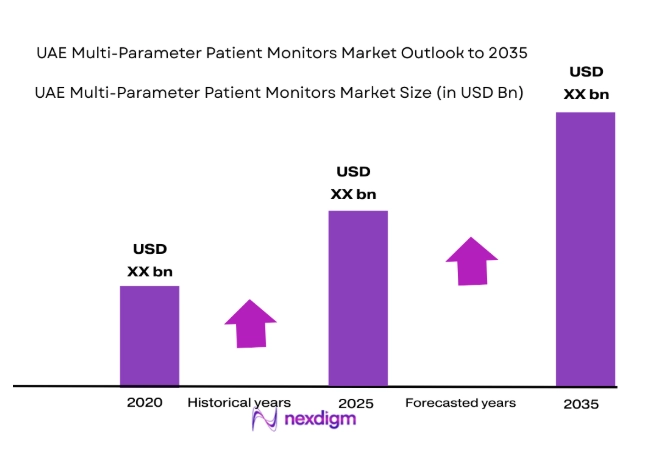
The UAE Multi-Parameter Patient Monitors Market is experiencing strong growth, driven by advancements in healthcare infrastructure and increased demand for real-time patient monitoring solutions. The market size for these systems is expected to be USD ~ billion, based on a recent historical assessment, reflecting the adoption of technology in hospitals and homecare settings. Key drivers include technological innovation in monitoring devices, regulatory support, and an increasing focus on patient-centric healthcare.
The UAE, particularly in cities like Dubai and Abu Dhabi, leads the region in healthcare technology adoption. The demand is driven by well-established healthcare infrastructure, government investments, and a growing number of medical facilities. As healthcare standards rise, these cities remain key players in the market, setting trends that influence regional healthcare advancements.
Market Segmentation
By Product Type
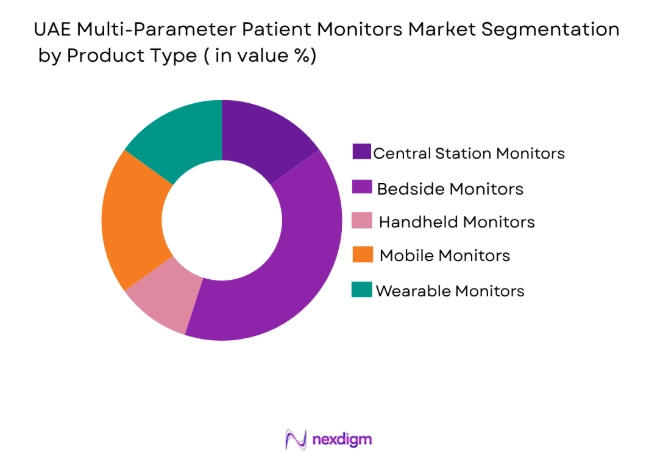
The UAE Multi-Parameter Patient Monitors market is segmented by product type into central station monitors, bedside monitors, handheld monitors, mobile monitors, and wearable monitors. Recently, the dominant sub-segment is the bedside monitors, owing to the high demand in hospitals for in-patient monitoring solutions. Bedside monitors are essential for continuous patient observation, especially in critical care units where real-time data is crucial for patient management. Their reliability, ease of use, and integration with hospital IT systems contribute significantly to their market share.
By Platform Type
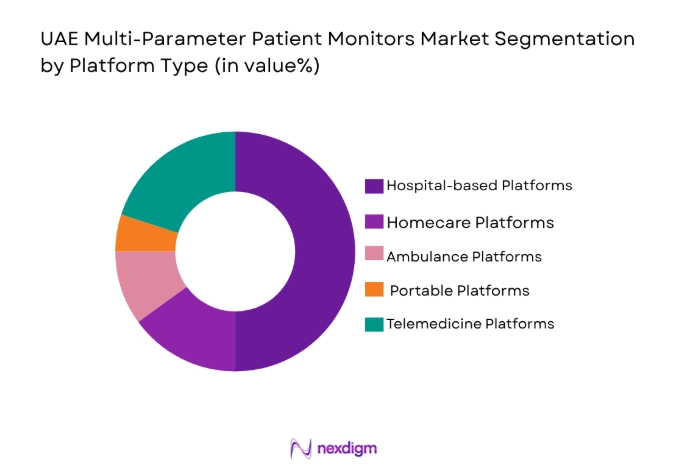
The market is segmented into hospital-based platforms, homecare platforms, ambulance platforms, portable platforms, and telemedicine platforms. The hospital-based platforms sub-segment dominates, as hospitals are the primary users of multi-parameter monitors. These systems are integral to patient care, allowing healthcare providers to monitor patients in real-time. With increasing investments in healthcare infrastructure and hospital modernization, the demand for advanced hospital-based monitoring systems remains high in the UAE, contributing to its significant market share.
Competitive Landscape
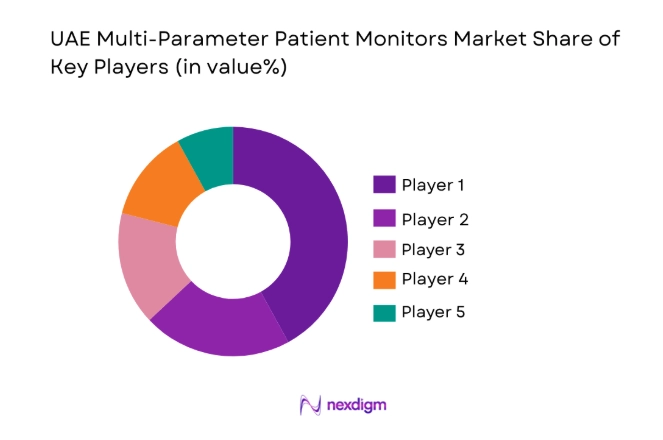
The competitive landscape of the UAE Multi-Parameter Patient Monitors market is highly dynamic, with major players offering advanced technology solutions. Companies are increasingly focusing on product differentiation, and the market is consolidating with leading global brands expanding their presence in the UAE. The role of regulatory bodies is crucial in setting the standards, and partnerships between healthcare providers and technology companies continue to drive market expansion.
| Company Name | Establishment Year | Headquarters | Technology Focus | Market Reach | Key Products | Revenue | Market-Specific Parameter |
| Philips Healthcare | 1891 | Netherlands | ~ | ~ | ~ | ~ | |
| GE Healthcare | 1892 | USA | ~ | ~ | ~ | ~ | ~ |
| Mindray | 1991 | China | ~ | ~ | ~ | ~ | ~ |
| Dräger Medical | 1889 | Germany | ~ | ~ | ~ | ~ | ~ |
| Siemens Healthineers | 1847 | Germany | ~ | ~ | ~ | ~ | ~ |
UAE Multi-Parameter Patient Monitors Market Analysis
Growth Drivers
Government Healthcare Investment
The UAE government has significantly invested in healthcare infrastructure, fostering an environment that supports the growth of multi-parameter patient monitoring systems. These investments have led to improvements in both public and private healthcare facilities, with an emphasis on adopting advanced technologies. With a growing focus on improving patient care, the demand for real-time patient monitoring solutions has surged, contributing to the expansion of the market. This governmental push has created a robust market for innovative patient monitoring solutions, especially as hospitals aim to integrate digital healthcare systems and improve care efficiency. Government-backed funding and collaborations with global healthcare companies have accelerated the adoption of multi-parameter monitoring technology, ensuring its market dominance. This trend is expected to continue, further boosting the market’s growth trajectory.
Technological Advancements in Monitoring Systems
Another critical growth driver is the continuous technological innovation in multi-parameter monitoring systems. The integration of AI, machine learning, and wireless connectivity has transformed these systems into real-time, data-driven solutions. These advancements offer enhanced monitoring accuracy, predictive analytics, and remote patient management, which are particularly crucial in critical care settings. The rising demand for such high-tech solutions is further amplified by the growing need for patient-centric care and personalized medicine. Healthcare providers in the UAE are increasingly incorporating AI-driven monitoring systems, leading to a rapid increase in system deployments. These advancements are key enablers of market growth, improving both healthcare outcomes and operational efficiency.
Market Challenges
High Equipment Costs
One significant challenge facing the UAE Multi-Parameter Patient Monitors market is the high cost of these advanced monitoring systems. Despite their numerous benefits, the upfront capital required for purchasing, installing, and maintaining multi-parameter monitors remains a barrier for smaller healthcare institutions. These costs are often prohibitive, especially for smaller hospitals and clinics in the region, limiting their access to state-of-the-art technology. Although the UAE government has provided financial support for healthcare modernization, the overall expense of acquiring and operating high-tech monitoring systems remains a significant challenge. In addition, the costs associated with training healthcare professionals to use these advanced systems further raise operational expenses, posing an ongoing challenge for market growth. The need for cost-effective, affordable solutions has led to a demand for financing options and alternative technologies, which could help mitigate these challenges in the future.
Regulatory Compliance and Standards
The regulatory landscape for medical devices in the UAE can also present challenges to the adoption of multi-parameter patient monitoring systems. Strict regulations and standards for the approval, certification, and use of medical devices in the UAE often slow down the introduction of new technologies into the market. While the UAE has a robust healthcare regulatory framework that ensures patient safety, these regulations can delay the market entry of innovative monitoring systems. This is particularly problematic for healthcare providers looking to adopt cutting-edge technology that could improve patient care. Companies in the market must navigate complex approval processes, adding to the cost and time required to introduce new solutions. These regulatory barriers, coupled with the need to meet both international and local standards, can hinder the growth potential of the market.
Opportunities
Adoption of Homecare Monitoring Systems
One of the major opportunities in the UAE Multi-Parameter Patient Monitors market is the increasing adoption of homecare monitoring systems. As healthcare providers aim to reduce hospital readmissions and provide more personalized care, home monitoring solutions are becoming more prevalent. These solutions allow healthcare professionals to monitor patients remotely, providing a convenient and cost-effective alternative to in-hospital care. The trend toward homecare services is expected to increase, particularly for patients with chronic conditions who require continuous monitoring. The government’s push for digital health initiatives and telemedicine further supports the growth of this segment. This shift to homecare monitoring not only creates an additional revenue stream for healthcare providers but also offers greater flexibility and accessibility for patients. The increasing demand for at-home healthcare solutions is expected to drive market expansion, making this a prime opportunity for companies in the UAE market.
Government Initiatives for Digital Health
Another significant opportunity lies in the UAE government’s initiatives to encourage digital healthcare solutions. With the UAE’s Vision 2021 aiming to position the country as a leader in digital healthcare innovation, there is substantial support for technologies that improve patient outcomes and healthcare efficiency. These initiatives focus on advancing telemedicine, remote patient monitoring, and the integration of artificial intelligence in healthcare. Such government backing plays a crucial role in accelerating the deployment of multi-parameter patient monitoring systems, especially in underserved regions. The regulatory framework in the UAE supports the growth of digital health platforms, and the increasing focus on smart hospitals and telemedicine further boosts the demand for multi-parameter monitors. Companies offering solutions in line with government priorities are well-positioned to capitalize on this opportunity.
Future Outlook
The UAE Multi-Parameter Patient Monitors Market is expected to continue its strong growth trajectory over the next five years, driven by technological advancements, increasing demand for homecare monitoring, and supportive government policies. The integration of AI and machine learning will enhance real-time data analytics and predictive monitoring, enabling healthcare providers to offer more personalized care. As healthcare infrastructure continues to improve, there will be a surge in the adoption of advanced monitoring systems, particularly in both public and private hospitals. Regulatory support for digital health and telemedicine will further accelerate market expansion, ensuring long-term growth for the industry.
Major Players
- Philips Healthcare
- GE Healthcare
- Mindray
- Dräger Medical
- Siemens Healthineers
- Nihon Kohden
- Schiller
- FUJIFILM Medical Systems
- Invacare Corporation
- Boston Scientific
- Honeywell Life Care Solutions
- Medtronic
- Carestream Health
- Zoll Medical Corporation
- Johnson & Johnson
Key Target Audience
- Investments and venture capitalist firms
- Government and regulatory bodies
- Healthcare providers
- Medical device manufacturers
- Hospitals and medical centers
- Telemedicine service providers
- Homecare service providers
Research Methodology
Step 1: Identification of Key Variables
In this step, we identified the main market drivers, challenges, and trends impacting the UAE Multi-Parameter Patient Monitors market, including technological, regulatory, and demand-side factors.
Step 2: Market Analysis and Construction
This involved gathering data from primary and secondary sources, focusing on industry reports, company profiles, and market statistics, followed by in-depth analysis to construct the market model.
Step 3: Hypothesis Validation and Expert Consultation
Through discussions with industry experts, key stakeholders, and regulatory bodies, we validated the assumptions and refined our market models.
Step 4: Research Synthesis and Final Output
In the final step, the findings were synthesized, and the report was structured to provide actionable insights for stakeholders in the UAE Multi-Parameter Patient Monitors market.

- Executive Summary
- Research Methodology (Definitions, Scope, Industry Assumptions, Market Sizing Approach, Primary & Secondary Research Framework, Data Collection & Verification Protocol, Analytic Models & Forecast Methodology, Limitations & Research Validity Checks)

- Market Definition and Scope
- Value Chain & Stakeholder Ecosystem
- Regulatory / Certification Landscape
- Sector Dynamics Affecting Demand
- Strategic Initiatives & Infrastructure Growth

- Growth Drivers
Rising Prevalence of Chronic Diseases
Increase in Healthcare Expenditure
Technological Advancements in Monitoring Systems - Market Challenges
High Equipment Costs
Lack of Skilled Professionals
Regulatory and Compliance Hurdles - Market Opportunities
Emerging Homecare Market
Government Investments in Healthcare
Adoption of AI and Machine Learning - Trends
Growth in Telemedicine
Rise in Wearable Monitoring Devices - Government Regulations
Data Protection and Privacy Regulations
Medical Device Regulations in the UAE
Compliance with International Standards - SWOT Analysis
- Porter’s Five Forces

- By Market Value, 2020-2025
- By Installed Units, 2020-2025
- By Average System Price, 2020-2025
- By System Complexity Tier, 2020-2025

- By System Type (In Value%)
Central Station Monitors
Handheld Monitors
Mobile Monitors
Bedside Monitors
Wearable Monitors - By Platform Type (In Value%)
Hospital-based Platforms
Homecare Platforms
Ambulance Platforms
Portable Platforms
Telemedicine Platforms - By Fitment Type (In Value%)
On-premise Solutions
Cloud-based Solutions
Hybrid Solutions
Integrated Solutions - By End User Segment (In Value%)
Hospitals
Ambulances
Homecare Providers

- Market Share Analysis
- Cross Comparison Parameters (System Type, Platform Type, Fitment Type, End User Segment, Technology Integration, Pricing Model, Market Reach)
- SWOT Analysis of Key Competitors
- Pricing & Procurement Analysis
- Key Players
Philips Healthcare
GE Healthcare
Siemens Healthineers
Mindray
Nihon Kohden
Schiller
Fujifilm Medical Systems
Dräger Medical
Zoll Medical Corporation
Beijing Choice Electronic Technology Co., Ltd.
Boston Scientific
Honeywell Life Care Solutions
Medtronic
Invacare Corporation
Carestream Health

- Growing Demand from Hospitals for Advanced Monitoring Solutions
- Increased Use of Patient Monitors in Homecare Settings
- Rising Demand for Mobile Monitoring Devices
- Need for Continuous Monitoring in Emergency Medical Services

- Forecast Market Value, 2026-2035
- Forecast Installed Units, 2026-2035
- Price Forecast by System Tier, 2026-2035
- Future Demand by Platform, 2026-2035


 Request a Sample
 Ask for Customization
 Get a Quote
 Enquire Now