

 Download PDF
Market Overview
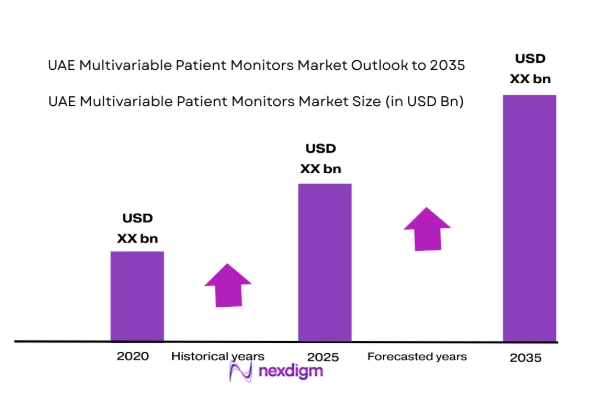
The UAE multivariable patient monitors market is valued at USD ~ billion based on a recent historical assessment. This market is primarily driven by advancements in healthcare infrastructure and a growing demand for real-time patient monitoring systems. Factors such as the rising prevalence of chronic diseases and increased healthcare spending have contributed to the market’s growth. Additionally, the adoption of advanced technologies such as cloud-based platforms and wearable monitoring systems is expected to propel the market forward in the coming years.
The UAE market is dominated by cities like Dubai and Abu Dhabi, known for their highly advanced healthcare facilities and a growing number of medical tourists. The country’s strategic location, paired with significant investments in healthcare technology, makes these cities major hubs for medical services. Additionally, government initiatives promoting healthcare sector growth and the increasing number of private hospitals contribute to the dominance of these areas in the market. These cities attract both local and international companies, ensuring that the market remains competitive and innovative.
Market Segmentation
By System Type
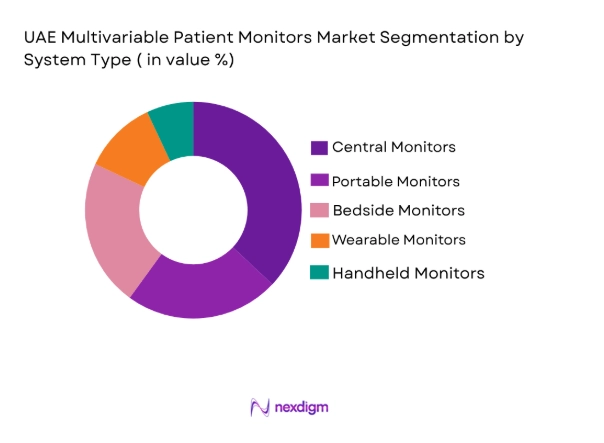
The UAE multivariable patient monitors market is segmented by system type into central monitors, portable monitors, bedside monitors, wearable monitors, and handheld monitors. Recently, central monitors have a dominant market share due to their extensive deployment in intensive care units and large hospitals where continuous, multi-patient surveillance is critical. These systems offer centralized monitoring, advanced alarm systems, and seamless integration with hospital IT infrastructure. Increasing investments in hospital expansion and demand for high-acuity care further strengthen their leadership position in the UAE healthcare ecosystem.
By Platform Type
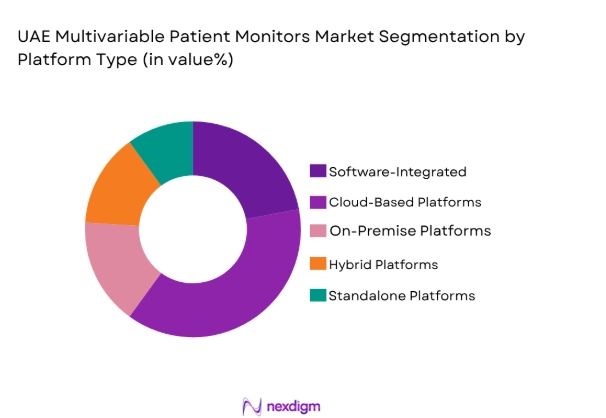
The UAE multivariable patient monitors market is segmented by platform type into software-integrated platforms, cloud-based platforms, on-premise platforms, hybrid platforms, and standalone systems. Recently, cloud-based platforms have emerged as the dominant segment due to their scalability, remote accessibility, and ability to integrate with electronic health records. These platforms enable real-time patient monitoring across multiple locations, supporting telemedicine and home healthcare services. Growing demand for data-driven healthcare and centralized patient information systems continues to drive adoption of cloud-enabled monitoring solutions.
Competitive Landscape
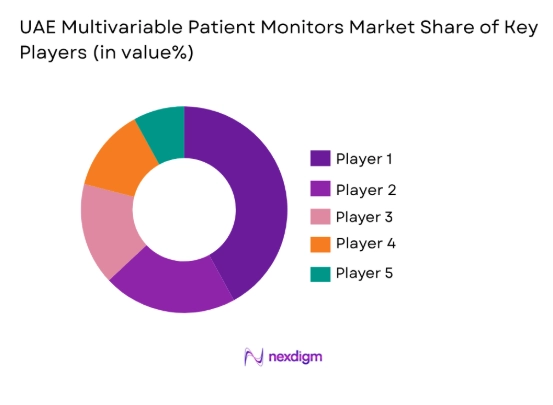
The UAE multivariable patient monitors market exhibits a moderately fragmented yet increasingly consolidating competitive structure, characterized by the presence of both global medical device leaders and regional distributors. Major multinational companies such as Philips, GE Healthcare, and Abbott dominate through strong brand equity, advanced product portfolios, and established hospital partnerships, while mid-tier and emerging players compete on cost efficiency and niche innovations. The market is driven by continuous technological advancements, including AI-enabled monitoring and cloud integration, prompting strategic collaborations, product launches, and service-based differentiation. Additionally, growing healthcare investments and digital transformation initiatives in the UAE are encouraging both consolidation and competitive intensity among players.
| Company Name | Establishment Year | Headquarters | Technology Focus | Market Reach | Key Products | Revenue | Hospital Integration Capability |
| GE Healthcare | 1892 | USA | ~ | ~ | ~ | ~ | ~ |
| Philips Healthcare | 1891 | Netherlands | ~ | ~ | ~ | ~ | ~ |
| Abbott Laboratories | 1888 | USA | ~ | ~ | ~ | ~ | ~ |
| Siemens Healthineers | 1847 | Germany | ~ | ~ | ~ | ~ | ~ |
| Mindray Medical | 1991 | China | ~ | ~ | ~ | ~ | ~ |
UAE Multivariable Patient Monitors Market Analysis
Growth Drivers
Expansion of Advanced Healthcare Infrastructure and Smart Hospitals Initiatives
The UAE has been actively investing in the modernization and expansion of its healthcare infrastructure, which has significantly accelerated the adoption of advanced medical technologies such as multivariable patient monitors. Government-led initiatives focused on smart hospitals, digital health ecosystems, and integrated care delivery models are enabling healthcare providers to deploy sophisticated monitoring systems across critical care units and general wards. The increasing number of multispecialty hospitals and specialty clinics has further strengthened demand for centralized and high-precision monitoring solutions. In addition, private sector participation and foreign investments in healthcare infrastructure have intensified competition, prompting facilities to upgrade to technologically advanced monitoring systems. The integration of Internet of Things-enabled devices and interoperability with hospital information systems is enhancing patient outcomes and operational efficiency. This structural transformation in healthcare delivery is creating sustained demand for high-end monitoring equipment. As hospitals continue to focus on quality care and accreditation standards, the need for reliable and continuous patient monitoring systems is becoming essential, thereby driving long-term growth in the UAE multivariable patient monitors market.
Rising Prevalence of Chronic and Lifestyle-Related Diseases
The increasing burden of chronic diseases such as cardiovascular disorders, diabetes, and respiratory conditions is a major factor driving demand for multivariable patient monitoring systems in the UAE. Changing lifestyle patterns, including sedentary behavior and dietary shifts, have contributed to a higher incidence of long-term health conditions that require continuous monitoring and early intervention. Healthcare providers are increasingly relying on multi-parameter monitoring devices to track vital signs and detect complications in real time. The aging population also plays a critical role, as elderly patients often require prolonged and intensive monitoring across healthcare settings. Furthermore, there is a growing emphasis on preventive healthcare and early diagnosis, which is encouraging the use of advanced monitoring technologies in both hospital and homecare environments. Public health awareness campaigns and screening programs are further increasing patient engagement with monitoring solutions. This shift toward proactive and continuous care is reinforcing the demand for multivariable patient monitors, making chronic disease management a key growth catalyst in the UAE market.
Market Challenges
High Capital Investment and Total Cost of Ownership Constraints
The adoption of multivariable patient monitoring systems in the UAE is significantly impacted by the high initial capital investment required for procurement and installation. Advanced monitoring systems, particularly those with integrated software, connectivity features, and AI-enabled analytics, involve substantial upfront costs that may limit accessibility for smaller healthcare facilities and clinics. Beyond procurement, the total cost of ownership includes expenses related to staff training, system integration, software upgrades, and regular maintenance. These ongoing costs create financial pressure, particularly for mid-sized healthcare providers operating under budget constraints. Additionally, rapid technological advancements often lead to shorter product life cycles, compelling healthcare institutions to frequently upgrade their systems to remain competitive. This continuous investment requirement can slow down adoption rates, especially in non-premium healthcare segments. The disparity in purchasing capacity between large hospitals and smaller facilities further creates uneven market penetration. As a result, cost-related barriers remain a significant challenge, restricting widespread adoption and limiting the scalability of advanced patient monitoring technologies across the UAE healthcare ecosystem.
Complex Regulatory Compliance and Data Security Requirements
The regulatory environment governing medical devices in the UAE presents a complex challenge for manufacturers and suppliers of multivariable patient monitors. Devices must comply with stringent approval processes established by national health authorities, which require adherence to quality, safety, and performance standards. The certification process can be time-consuming and resource-intensive, delaying product launches and market entry. In addition to device approval, there is increasing emphasis on data protection and cybersecurity, particularly for connected and cloud-based monitoring systems that handle sensitive patient information. Compliance with data privacy regulations and secure integration with hospital information systems adds another layer of complexity for manufacturers. Frequent updates to regulatory frameworks and evolving compliance standards further increase operational uncertainty. Companies must continuously invest in regulatory expertise and compliance infrastructure to remain aligned with local requirements. These challenges can limit innovation speed and increase operational costs, making regulatory compliance and data security a critical constraint in the UAE multivariable patient monitors market.
Opportunities
Growth of Remote Patient Monitoring and Home Healthcare Ecosystem
The increasing shift toward remote patient monitoring and home healthcare services presents a significant opportunity for the UAE multivariable patient monitors market. As healthcare systems focus on reducing hospital congestion and improving patient convenience, there is growing adoption of monitoring solutions that enable continuous tracking of patient health outside clinical settings. Multivariable patient monitors equipped with wireless connectivity and cloud integration allow healthcare professionals to access real-time data remotely, enhancing care delivery and reducing the need for frequent hospital visits. The rising prevalence of chronic diseases and the need for long-term monitoring are further supporting this trend. Government initiatives promoting telehealth services and digital health transformation are accelerating the development of home healthcare infrastructure. Additionally, increasing patient preference for personalized and cost-effective care is encouraging the adoption of portable and wearable monitoring devices. This transition toward decentralized healthcare delivery is expected to create substantial growth opportunities for manufacturers and service providers in the UAE market.
Integration of Artificial Intelligence and Predictive Analytics in Monitoring Systems
The incorporation of artificial intelligence and predictive analytics into multivariable patient monitoring systems is emerging as a key opportunity in the UAE market. AI-enabled monitoring solutions can analyze large volumes of patient data in real time, providing early warnings for potential health complications and enabling proactive clinical interventions. These advanced capabilities improve diagnostic accuracy, enhance patient outcomes, and support decision-making for healthcare professionals. Hospitals and healthcare providers in the UAE are increasingly investing in smart technologies to optimize operational efficiency and improve quality of care. The integration of predictive analytics with monitoring systems also supports personalized treatment plans and risk assessment models. Furthermore, partnerships between technology firms and healthcare providers are accelerating the development and deployment of AI-driven monitoring solutions. As the UAE continues to position itself as a hub for healthcare innovation, the adoption of intelligent monitoring technologies is expected to expand, creating
Future Outlook
The UAE multivariable patient monitors market is poised for significant growth over the next five years. The growing adoption of advanced technologies, including AI and cloud-based systems, will drive market expansion. Additionally, the ongoing efforts to enhance healthcare infrastructure, along with regulatory support, will provide a conducive environment for further market development. Rising demand for personalized healthcare and continuous monitoring of chronic conditions will also boost the need for multivariable patient monitors, making this market an attractive segment for investment.
Major Players
- GE Healthcare
- Philips Healthcare
- Mindray Medical
- Siemens Healthineers
- Nihon Kohden
- Medtronic
- Smiths Medical
- Hill-Rom
- Schiller AG
- Spacelabs Healthcare
- Omron Healthcare
- Biolight Medical Technology
- Fujifilm Holdings
- Skanray Technologies
- Bionet Co.
Key Target Audience
- Investments and venture capitalist firms
- Government and regulatory bodies
- Healthcare providers
- Hospitals and clinics
- Medical equipment distributors
- Home healthcare service providers
Insurance companies
Research Methodology
Step 1: Identification of Key Variables
Identification of critical variables such as market size, growth rate, and segmentation factors is the first step. These variables are key to understanding the market dynamics. Additional parameters such as pricing trends, regulatory frameworks, and technology adoption rates are also identified to ensure a comprehensive analysis. Furthermore, macroeconomic indicators and healthcare expenditure patterns are considered to strengthen the variable selection process.
Step 2: Market Analysis and Construction
We analyze the collected data to construct market models, considering factors such as regional growth trends, technological advancements, and market competition. Quantitative and qualitative techniques are applied to interpret data patterns and identify market behavior. Advanced analytical tools and forecasting models are used to build accurate projections. Additionally, scenario-based modeling is incorporated to evaluate potential market shifts under varying conditions.
Step 3: Hypothesis Validation and Expert Consultation
Experts in the field are consulted to validate the hypotheses and refine the analysis based on real-time industry feedback. Inputs from healthcare professionals, industry executives, and regulatory authorities are incorporated to enhance accuracy. Cross-verification with secondary data sources ensures reliability of findings. Continuous feedback loops are maintained to adjust assumptions and align insights with current market realities.
Step 4: Research Synthesis and Final Output
The synthesized data is analyzed and presented in the final output to provide actionable insights for stakeholders. Key findings are structured to highlight strategic implications and decision-making support. Visual representations such as charts and tables are used to improve clarity and usability. The final report undergoes multiple validation checks to ensure consistency, accuracy, and completeness of the information presented.

- Executive Summary
- Research Methodology (Definitions, Scope, Industry Assumptions, Market Sizing Approach, Primary & Secondary Research Framework, Data Collection & Verification Protocol, Analytic Models & Forecast Methodology, Limitations & Research Validity Checks)

- Market Definition and Scope
- Value Chain & Stakeholder Ecosystem
- Regulatory / Certification Landscape
- Sector Dynamics Affecting Demand
- Strategic Initiatives & Infrastructure Growth

- Growth Drivers
Rising Healthcare Infrastructure Investments
Increasing Burden of Chronic Diseases
Expansion of Remote Patient Monitoring - Market Challenges
High Capital and Maintenance Costs
Regulatory Compliance Complexities
Interoperability and Data Integration Issues - Market Opportunities
Growth of Home Healthcare Ecosystem
Integration of AI and Predictive Monitoring
Public-Private Healthcare Partnerships - Trends
Shift Toward Wearable Monitoring Devices
Adoption of Cloud-Connected Monitoring Systems - Government Regulations
- SWOT Analysis
- Porter’s Five Forces

- By Market Value, 2020-2025
- By Installed Units, 2020-2025
- By Average System Price, 2020-2025
- By System Complexity Tier, 2020-2025

- By System Type (In Value%)
Central Monitors
Portable Monitors
Bedside Monitors
Wearable Monitors
Handheld Monitors - By Platform Type (In Value%)
Software-Integrated Platforms
Cloud-Based Platforms
On-Premises Platforms
Hybrid Platforms
Standalone Systems - By Fitment Type (In Value%)
Hospital Fitments
Home Healthcare Fitments
Ambulance/EMS Fitments
Clinic Fitments - By End User Segment (In Value%)
Hospitals
Home Healthcare Providers
Ambulatory Surgical Centers
Clinics
Emergency Medical Services (EMS)

- Market Share Analysis
- Cross Comparison Parameters (Market Share by Revenue, Installed Base Volume, Average Selling Price, Product Portfolio Breadth, Technological Innovation Index, AI Integration Capability, System Accuracy, System Reliability, System Complexity Levels, ICU vs Non-ICU Penetration, End User Adoption Rate, Hospital Procurement Patterns, Homecare Adoption Trends, Distribution Network Strength, After-Sales Service Quality, Regulatory Compliance Capability, Data Security Standards, Interoperability with EHR Systems, Cloud Integration Capability, Remote Monitoring Capability)
- SWOT Analysis of Key Competitors
- Pricing & Procurement Analysis
- Key Players
GE Healthcare
Philips Healthcare
Mindray Medical
Siemens Healthineers
Nihon Kohden
Medtronic
Smiths Medical
Hill-Rom
Schiller AG
Drägerwerk AG
Spacelabs Healthcare
Omron Healthcare
Biolight Medical Technology
Fujifilm Holdings
Skanray Technologies

- Hospitals as Primary Demand Centers
- Growth of Home Healthcare Monitoring
- Adoption in Ambulatory Surgical Centers
- Role of Clinics in Routine Monitoring

- By Market Value, 2026-2035
- By Installed Units, 2026-2035
- By Average System Price, 2026-2035
- By System Complexity Tier, 2026-2035


 Request a Sample
 Ask for Customization
 Get a Quote
 Enquire Now