
 Download PDF
 Download PDF
Market Overview
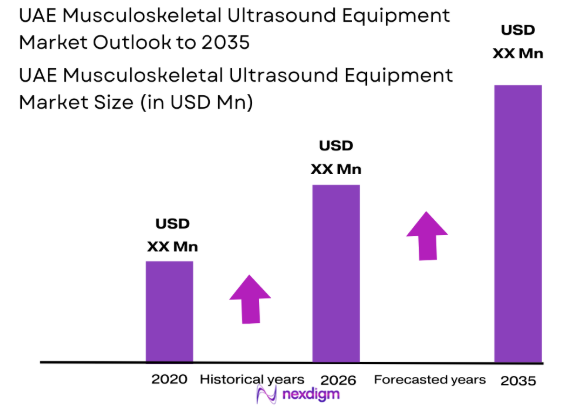
The UAE Musculoskeletal Ultrasound Equipment market is poised for steady growth in the coming years. With advancements in ultrasound technology, the market is expected to see significant demand driven by the increasing prevalence of musculoskeletal disorders and the rising adoption of non-invasive diagnostic methods. The market size is anticipated to be valued at approximately USD ~ million, bolstered by a growing emphasis on point-of-care diagnostics and rehabilitation applications.
The UAE, along with key cities like Dubai and Abu Dhabi, is at the forefront of this growth due to its advanced healthcare infrastructure, high adoption of medical technologies, and significant investments in healthcare initiatives. These regions, being healthcare hubs, are seeing a growing number of diagnostic centers, hospitals, and rehabilitation clinics integrating musculoskeletal ultrasound devices. Furthermore, government support and increasing awareness regarding early diagnosis play a pivotal role in driving this dominance.
Market Segmentation
By Product Type
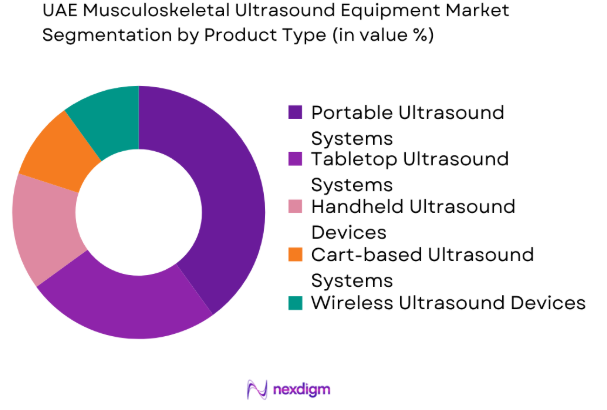
The UAE Musculoskeletal Ultrasound Equipment market is segmented by product type into portable ultrasound systems, tabletop ultrasound systems, handheld ultrasound devices, cart-based ultrasound systems, and wireless ultrasound devices. Among these, portable ultrasound systems dominate the market due to the rising demand for mobility in diagnostic tools, particularly in point-of-care settings. The compact size, ease of use, and affordability of portable systems make them highly preferred by healthcare providers, especially in rural areas and small clinics where space is limited.
By End-User Segment
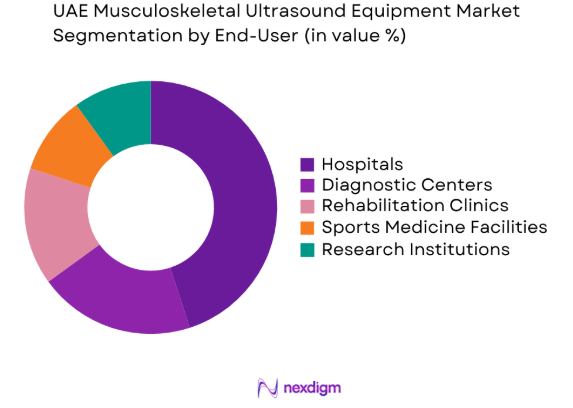
The UAE Musculoskeletal Ultrasound Equipment market is segmented into hospitals, diagnostic centers, rehabilitation clinics, sports medicine facilities, and research institutions. Recently, hospitals have captured the largest market share due to their well-established infrastructure, large patient volume, and high demand for diagnostic imaging. Hospitals play a critical role in diagnosing musculoskeletal disorders, with musculoskeletal ultrasound devices being integrated into their routine diagnostic equipment, driving significant growth in this segment.
Competitive Landscape
The UAE Musculoskeletal Ultrasound Equipment market is characterized by intense competition, with a strong presence of multinational companies that dominate the technological landscape. Key players in the market are continuously innovating to offer advanced solutions with high diagnostic accuracy, portability, and cost-effectiveness. Consolidation among these players is also observed as companies focus on strategic acquisitions and collaborations to expand their product offerings and market reach.
| Company Name | Establishment Year | Headquarters | Technology Focus | Market Reach | Key Products | Revenue (USD) | Additional Parameter |
| GE Healthcare | 1892 | Chicago, USA | ~ | ~ | ~ | ~ | ~ |
| Siemens Healthineers | 1847 | Erlangen, Germany | ~ | ~ | ~ | ~ | ~ |
| Philips Healthcare | 1891 | Amsterdam, Netherlands | ~ | ~ | ~ | ~ | ~ |
| Mindray Medical | 1991 | Shenzhen, China | ~ | ~ | ~ | ~ | ~ |
| Fujifilm Holdings | 1934 | Tokyo, Japan | ~ | ~ | ~ | ~ | ~ |
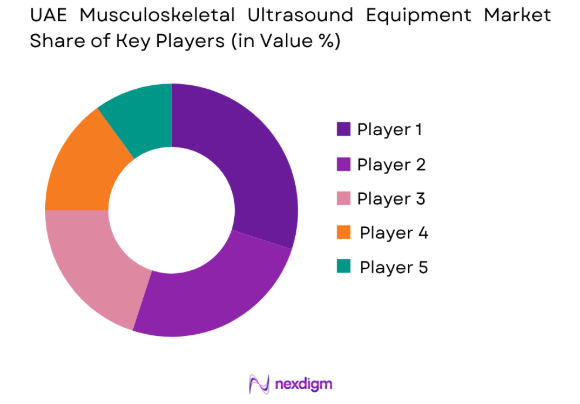
UAE Musculoskeletal Ultrasound Equipment Market Analysis
Growth Drivers
Increasing prevalence of musculoskeletal disorders
As the population in the UAE ages, the prevalence of musculoskeletal diseases, including arthritis, osteoporosis, and tendonitis, has risen sharply, leading to an increased demand for diagnostic imaging. This surge in demand is a major factor driving the growth of the musculoskeletal ultrasound market. The UAE’s healthcare sector is rapidly evolving, with significant investments in medical technology and infrastructure. As healthcare facilities adopt advanced diagnostic tools to address the growing burden of musculoskeletal disorders, the need for efficient, non-invasive imaging solutions like musculoskeletal ultrasound has become more pronounced. This shift has led to widespread adoption of ultrasound technology for early detection and accurate diagnosis of musculoskeletal conditions in the region.
Technological advancements
Advancements in ultrasound technology, including the integration of artificial intelligence, portable devices, and cloud capabilities, are transforming diagnostic practices. These innovations allow healthcare providers to deliver more accurate and real-time diagnoses, enhancing patient care. The introduction of portable and cloud-connected ultrasound systems has made these technologies more accessible and affordable, enabling wider adoption in hospitals and diagnostic centers. As a result, healthcare providers can now offer non-invasive, cost-effective imaging solutions for musculoskeletal conditions. The continuous evolution of ultrasound technology is not only improving diagnostic efficiency but also ensuring that high-quality imaging is available across a wider range of healthcare facilities, promoting better outcomes for patients.
Market Challenges
High cost of ultrasound systems
Although ultrasound systems are essential for diagnosing musculoskeletal conditions, their high initial cost remains a significant barrier for many healthcare providers in the UAE. This challenge is particularly felt by small clinics and public healthcare institutions with limited budgets. The upfront investment required to purchase advanced ultrasound equipment can be prohibitive, limiting access to these diagnostic tools in certain healthcare settings. As a result, many providers are unable to integrate ultrasound technology into their services, hindering their ability to offer accurate and timely diagnoses. The financial constraints faced by these organizations highlight the need for affordable solutions or alternative funding models to facilitate the adoption of ultrasound systems across the healthcare sector.
Lack of trained professionals
The demand for skilled professionals to operate advanced musculoskeletal ultrasound systems presents a challenge in the UAE. While the technology has evolved significantly, there is a shortage of trained personnel capable of utilizing these systems effectively and interpreting the results accurately. Developing expertise in musculoskeletal ultrasound requires substantial investment in education and training programs, which may strain healthcare budgets. As a result, many healthcare providers face difficulties in adopting these systems fully, hindering the overall growth of the market. To address this issue, it is crucial to establish more comprehensive training initiatives and support systems for healthcare professionals, ensuring they are well-equipped to handle the advanced ultrasound technology.
Opportunities
Expansion of healthcare infrastructure
The UAE government has made substantial investments in expanding healthcare infrastructure, including the construction of new hospitals, diagnostic centers, and rehabilitation facilities. This growth creates significant opportunities for the adoption of advanced musculoskeletal ultrasound equipment, as healthcare providers look to incorporate the latest diagnostic technologies into their services. The expansion of healthcare facilities is driving demand for state-of-the-art diagnostic tools, including musculoskeletal ultrasound systems, to improve patient care and support efficient diagnosis. As new healthcare projects emerge, the integration of these systems becomes a priority, ensuring that medical providers are equipped with the most advanced technologies available to meet the growing needs of the population.
Increased focus on non-invasive diagnostic methods
There is a growing shift towards non-invasive diagnostic methods, driven by the increasing demand for procedures that minimize patient discomfort and reduce recovery times. Musculoskeletal ultrasound technology is at the forefront of this trend, offering a less invasive alternative to traditional diagnostic methods such as MRI or CT scans. Ultrasound provides real-time imaging without the need for injections or radiation, making it a preferred choice for both patients and healthcare providers. As the demand for safer, quicker, and more accessible diagnostic options rises, musculoskeletal ultrasound systems are becoming an essential tool in diagnosing musculoskeletal conditions, improving patient experience, and enhancing healthcare efficiency.
Future Outlook
The UAE Musculoskeletal Ultrasound Equipment market is expected to experience substantial growth in the next five years. Key factors such as ongoing technological advancements in ultrasound devices, a growing emphasis on non-invasive diagnostic techniques, and an increase in musculoskeletal disorder cases will drive market expansion. Regulatory support from the UAE government and healthcare initiatives aimed at enhancing medical diagnostic capabilities will also contribute to the overall market growth. Additionally, rising consumer demand for mobile and portable ultrasound systems is anticipated to create new opportunities for innovation and market penetration.
Major Players
- GE Healthcare
- Siemens Healthineers
- Philips Healthcare
- Mindray Medical
- Fujifilm Holdings
- Canon Medical Systems
- Samsung Medison
- Esaote
- Hitachi Medical Corporation
- Acuson
- SonoSite Inc.
- Shimadzu Corporation
- B. Braun Melsungen AG
- Butterfly Network Inc.
- Analogic Corporation
Key Target Audience
- Healthcare providers
- Hospitals and diagnostic centers
- Rehabilitation clinics
- Medical imaging companies
- Healthcare equipment distributors
- Investments and venture capitalist firms
- Government and regulatory bodies
- Regulatory authorities in healthcare
Research Methodology
Step 1: Identification of Key Variables
The first step involves identifying key variables impacting the UAE Musculoskeletal Ultrasound Equipment market, such as system type, end-user demand, and technological advancements.
Step 2: Market Analysis and Construction
In this phase, a comprehensive analysis of the market’s historical performance, trends, and current size is performed to construct the market model, including forecasts and projections.
Step 3: Hypothesis Validation and Expert Consultation
Expert consultation and hypothesis testing are conducted to ensure that the formulated assumptions about market drivers and trends align with current industry insights and the latest developments.
Step 4: Research Synthesis and Final Output
The final research output synthesizes all the collected data, models, and expert insights, providing a detailed and accurate market analysis ready for publication.

- Executive Summary
- Research Methodology (Definitions, Scope, Industry Assumptions, Market Sizing Approach, Primary & Secondary Research Framework, Data Collection & Verification Protocol, Analytic Models & Forecast Methodology, Limitations & Research Validity Checks)

- Market Definition and Scope
- Value Chain & Stakeholder Ecosystem
- Regulatory / Certification Landscape
- Sector Dynamics Affecting Demand
- Strategic Initiatives & Infrastructure Growth

- Growth Drivers
Increasing prevalence of musculoskeletal disorders
Rising adoption of non-invasive diagnostic technologies
Growing awareness of early detection of musculoskeletal conditions - Market Challenges
High initial cost of ultrasound systems
Lack of skilled professionals for operating advanced systems
Limited reimbursement policies for ultrasound imaging - Market Opportunities
Expansion of healthcare infrastructure in emerging markets
Technological advancements in ultrasound imaging systems
Growing demand for portable ultrasound devices - Trends
Increasing integration of artificial intelligence in ultrasound diagnostics
Shift toward mobile and handheld ultrasound devices
Rise in the use of ultrasound in point-of-care settings - Government Regulations
- SWOT Analysis of Key Competitors
- Porter’s Five Forces

- By Market Value, 2020-2025
- By Installed Units, 2020-2025
- By Average System Price, 2020-2025
- By System Complexity Tier, 2020-2025

- By System Type (In Value%)
Portable Ultrasound Systems
Tabletop Ultrasound Systems
Handheld Ultrasound Devices
Cart-based Ultrasound Systems
Wireless Ultrasound Devices - By Platform Type (In Value%)
Analog Ultrasound Systems
Digital Ultrasound Systems
Hybrid Ultrasound Systems
3D/4D Ultrasound Systems
Ultrasound Systems with Cloud Integration - By Fitment Type (In Value%)
Fixed Systems
Mobile/Portable Systems
Handheld Units
Desktop Systems
Retrofit Systems - By End User Segment (In Value%)
Hospitals
Diagnostic Centers
Rehabilitation Clinics
Sports Medicine Facilities
Research Institutions - By Procurement Channel (In Value%)
Direct Sales
Online Sales
Distributors
Tender-Based Procurement
Group Purchasing Organizations (GPOs)

- Market Share Analysis
- Cross Comparison Parameters(System Type, Platform Type, Fitment Type, End-User Segment, Procurement Channel, Pricing Strategy, Technological Advancements, Regional Distribution, Customer Preferences, Regulatory Compliance)
- SWOT Analysis of Key Competitors
- Pricing & Procurement Analysis
- Key Players
GE Healthcare
Siemens Healthineers
Philips Healthcare
Mindray Medical International
Fujifilm Holdings Corporation
Canon Medical Systems
Samsung Medison
Esaote
Hitachi Medical Corporation
Acuson
SonoSite Inc.
Shimadzu Corporation
Toshiba Medical Systems
B. Braun Melsungen AG
Butterfly Network Inc.

- Growth of diagnostic and imaging centers in the UAE
- Rising number of outpatient clinics adopting musculoskeletal ultrasound
- Increasing adoption of ultrasound in rehabilitation centers
- Demand for advanced diagnostic tools in sports medicine

- Forecast Market Value, 2026-2035
- Forecast Installed Units, 2026-2035
- Price Forecast by System Tier, 2026-2035
- Future Demand by Platform, 2026-2035


 Request a Sample
 Ask for Customization
 Get a Quote
 Enquire Now