
 Download PDF
Market Overview
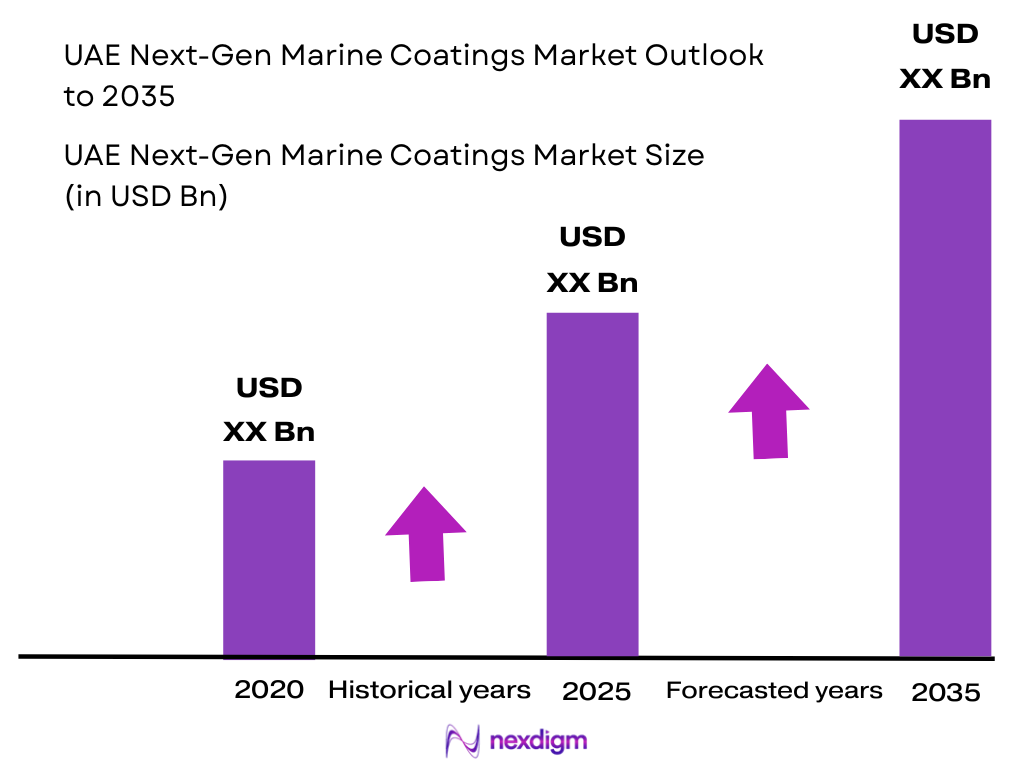
The UAE Next-Gen Marine Coatings Market is valued at ~USD XX million, driven by increasing demand from commercial shipping, offshore oil and gas, ship repair, yacht manufacturing, and coastal infrastructure applications. The UAE recorded GDP of approximately USD 537 billion in 2023 and continued economic expansion in 2024, supporting maritime logistics and industrial activities. The country’s ports, including Jebel Ali and Khalifa Port, handle significant regional trade flows, creating recurring requirements for corrosion protection, antifouling, and durability-enhancing coatings.
Dubai, Abu Dhabi, and Fujairah dominate the UAE Next-Gen Marine Coatings Market due to their concentration of ports, shipyards, offshore facilities, and marine service providers. Dubai benefits from Jebel Ali Port, Dubai Maritime City, and a strong yacht maintenance ecosystem, while Abu Dhabi is supported by offshore energy operations and maritime manufacturing investments. Fujairah remains strategically important due to its location outside the Strait of Hormuz and its role as a bunkering and ship-service hub. The UAE maritime sector includes more than 50 shipyards and marine fabrication facilities, supporting continuous coating demand from repair and maintenance activities.
Market Segmentation
By Technology Type
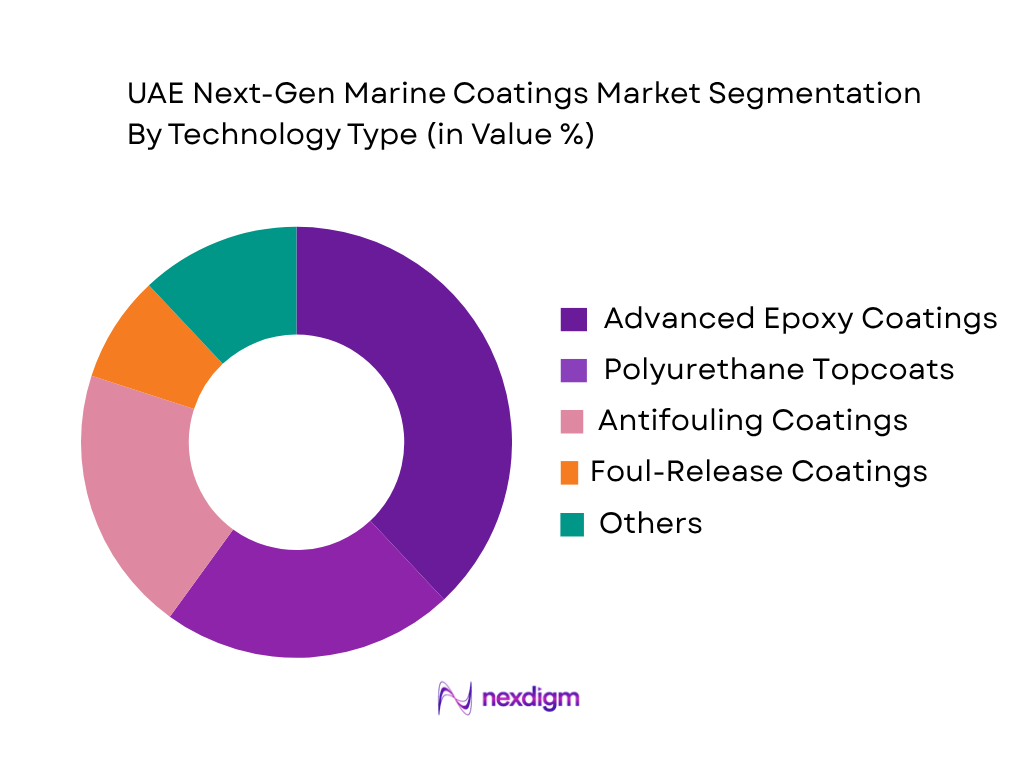
The UAE Next-Gen Marine Coatings Market is segmented into advanced epoxy coatings, polyurethane topcoats, antifouling coatings, foul-release coatings, zinc-rich protective coatings, and other specialty marine coating technologies. Advanced epoxy coatings represent the leading segment due to their extensive application across commercial vessels, offshore structures, ballast tanks, and port infrastructure requiring high corrosion resistance. UAE marine assets operate under severe environmental conditions involving saltwater exposure, humidity, high temperatures, and UV radiation, increasing the adoption of durable epoxy systems. Shipyards and offshore operators prefer epoxy-based solutions because of their strong adhesion, chemical resistance, and compatibility with multi-layer coating systems. Increasing maintenance activities at UAE ports and dry-dock facilities further support demand for advanced epoxy technologies.
By Application Area
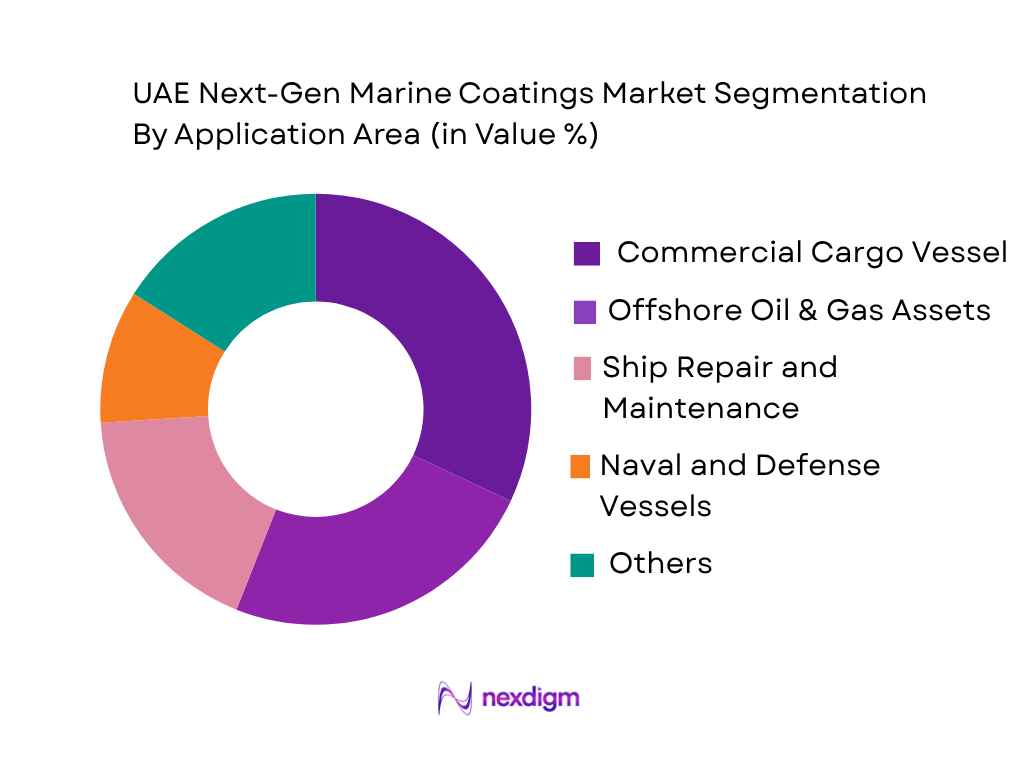
The UAE Next-Gen Marine Coatings Market is segmented into commercial vessels, offshore oil and gas assets, ship repair and maintenance, naval vessels, yachts, and marine infrastructure. Commercial vessels and ship repair activities account for a dominant portion of demand due to the UAE’s position as a maritime logistics hub connecting Asia, Europe, and Africa. Regular dry-docking cycles, vessel refurbishment programs, and corrosion prevention requirements create recurring demand for high-performance coatings. Offshore oil and gas assets also contribute significantly because platforms, support vessels, and marine structures require specialized coatings capable of operating in aggressive marine environments. The expansion of offshore services and maritime operations in Abu Dhabi further strengthens demand for advanced protective coating systems.
Competitive Landscape
The UAE Next-Gen Marine Coatings Market is moderately consolidated, with major global coating manufacturers supplying advanced marine protection systems for commercial shipping, offshore energy assets, shipyards, and marine infrastructure. The market is influenced by international players with established technology portfolios in antifouling, corrosion protection, epoxy systems, polyurethane coatings, and environmentally compliant solutions. Companies such as AkzoNobel, PPG Industries, Jotun, Hempel, and Sherwin-Williams maintain strong positions through technical support networks, marine certifications, and relationships with UAE shipyards and vessel operators. Demand is concentrated around major maritime hubs including Dubai, Abu Dhabi, and Fujairah due to ship repair activities, offshore operations, and port infrastructure requirements.
| Company | Establishment Year | Headquarters | Key Marine Coating Portfolio | Major UAE Applications | Technology Focus | Distribution Presence |
| AkzoNobel | 1994 | Amsterdam, Netherlands | ~ | ~ | ~ | ~ |
| PPG Industries | 1883 | Pittsburgh, USA | ~ | ~ | ~ | ~ |
| Jotun | 1926 | Sandefjord, Norway | ~ | ~ | ~ | ~ |
| Hempel | 1915 | Lyngby, Denmark | ~ | ~ | ~ | ~ |
| Sherwin-Williams Protective & Marine | 1866 | Cleveland, USA | ~ | ~ | ~ | ~ |
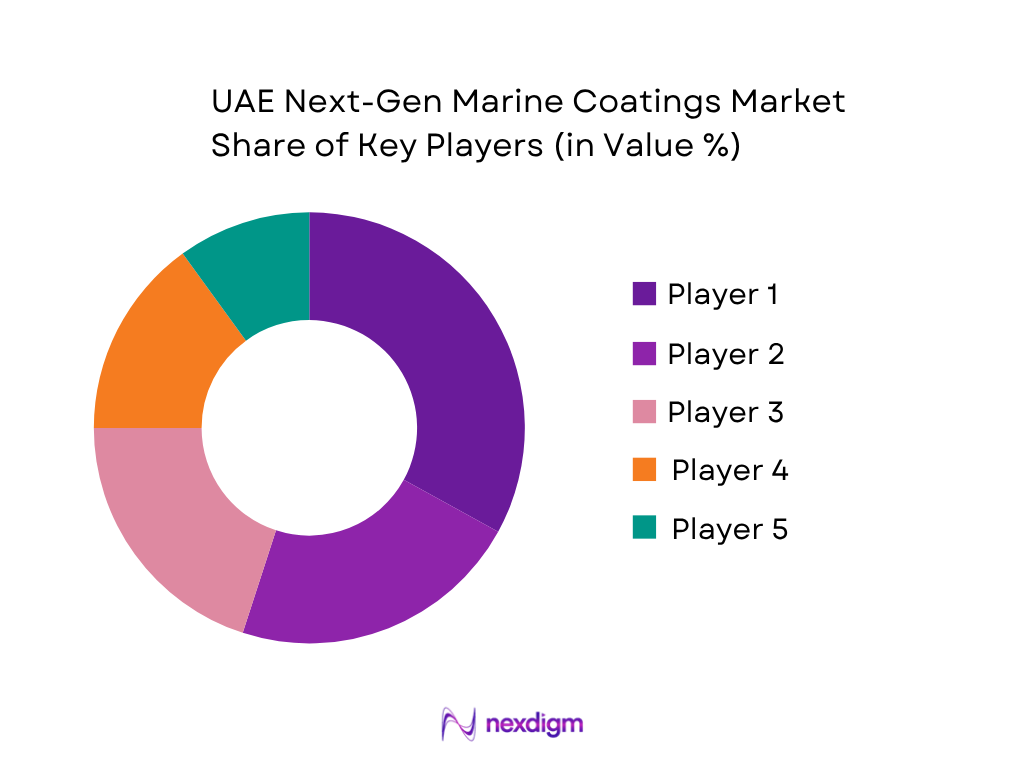
UAE Next-Gen Marine Coatings Market Analysis
Growth Drivers
Expansion of UAE Maritime Trade
The expansion of UAE maritime trade is a major growth driver for the Next-Gen Marine Coatings Market as increased vessel movement, port activity, and fleet maintenance requirements generate recurring demand for protective marine coating systems. The UAE economy recorded a GDP of approximately USD 537 billion in 2023, while economic activity continued expanding in 2024, supported by logistics, transportation, energy, and industrial sectors. According to UAE government maritime statistics, the country operates major international ports including Jebel Ali Port, Khalifa Port, and Fujairah Port, which collectively support large-scale cargo handling and regional maritime connectivity. Jebel Ali Port has a handling capacity exceeding 19.3 million TEUs annually, creating continuous requirements for vessel protection, corrosion prevention, and antifouling applications. The UAE’s strategic position between Asia, Europe, and Africa increases vessel traffic, supporting demand for advanced epoxy coatings, polyurethane systems, and fuel-efficient foul-release technologies. Expansion of commercial shipping, container operations, and marine logistics creates sustained opportunities for next-generation coatings designed to extend vessel life, reduce maintenance cycles, and improve operational efficiency in demanding marine environments.
Offshore Oil and Gas Activities
Offshore oil and gas activities remain a significant growth driver for the UAE Next-Gen Marine Coatings Market due to extensive offshore infrastructure requiring advanced corrosion protection solutions. The UAE produced approximately 4.2 million barrels of crude oil per day in 2024, according to international energy statistics, with Abu Dhabi accounting for the majority of national production capacity. Offshore operations involve platforms, offshore support vessels, pipelines, subsea equipment, and marine structures exposed continuously to seawater, temperature variations, and aggressive corrosion conditions. ADNOC’s offshore operations include large-scale assets such as offshore production facilities and artificial islands requiring high-performance protective coatings. The UAE also maintained proven crude oil reserves of approximately 113 billion barrels, creating long-term demand for offshore asset maintenance. Marine coatings used in offshore applications require resistance against saltwater corrosion, chemical exposure, and extreme operating conditions, increasing adoption of advanced epoxy, zinc-rich, and polyurethane coating technologies. Continued investment in offshore energy infrastructure supports demand for specialized coating systems that improve asset durability, reduce downtime, and enhance operational reliability.
Market Challenges
Extreme Marine Climate Conditions
Extreme marine climate conditions present a major challenge for the UAE Next-Gen Marine Coatings Market because vessels and offshore assets operate under high temperatures, intense UV exposure, humidity, and saline environments. The UAE experiences some of the world’s harshest coastal operating conditions, with summer temperatures frequently exceeding 45°C and seawater temperatures reaching above 30°C in coastal regions. These environmental factors accelerate coating degradation, blistering, corrosion, and biofouling, requiring advanced formulation technologies and frequent maintenance cycles. According to climate observations, the UAE receives limited annual rainfall of approximately 100 mm, resulting in high evaporation rates and concentrated salt deposits on marine structures. These conditions increase performance requirements for antifouling coatings, corrosion-resistant epoxy systems, and protective topcoats. Marine coating manufacturers must develop products capable of maintaining adhesion, chemical resistance, and durability under continuous exposure to extreme weather conditions. The requirement for specialized formulations increases technology complexity and application costs for ship operators, offshore companies, and marine infrastructure owners.
Dependence on Imported Specialty Coatings
Dependence on imported specialty coating technologies is a key challenge for the UAE Next-Gen Marine Coatings Market due to limited domestic manufacturing capacity for advanced marine coating formulations. The UAE has a highly developed industrial sector; however, many high-performance marine coating technologies, including advanced antifouling systems, foul-release coatings, and specialized offshore protection systems, are supplied by international manufacturers. The country imported approximately USD 1.4 billion worth of paints, varnishes, and related coating products in 2023, reflecting significant reliance on global supply chains for coating materials. Specialty marine coatings require advanced raw materials such as epoxy resins, silicone polymers, biocides, and performance additives, which are often produced outside the UAE. Supply chain disruptions, shipping delays, and fluctuations in international chemical availability can affect product availability and project timelines. This dependency increases procurement complexity for shipyards, offshore operators, and marine maintenance companies. Expansion of local formulation and blending capabilities represents an opportunity to reduce dependency while strengthening regional marine coating supply resilience.
Market Opportunities
Advanced Anti-Fouling Technologies
Advanced antifouling technologies represent a major opportunity for the UAE Next-Gen Marine Coatings Market due to increasing requirements for vessel efficiency, maintenance reduction, and environmental compliance. UAE waters experience significant marine biofouling pressure because of warm seawater conditions that accelerate algae, barnacle, and microorganism growth on submerged surfaces. The UAE maritime sector includes thousands of commercial vessels, offshore support vessels, and recreational boats requiring continuous hull protection. Global maritime regulations focusing on operational efficiency and reduced emissions are encouraging ship operators to adopt advanced antifouling solutions such as silicone-based foul-release coatings and low-biocide systems. UAE ports including Jebel Ali, Khalifa Port, and Fujairah support extensive vessel operations, creating demand for coatings that reduce drag, improve fuel efficiency, and extend dry-docking intervals. Development of environmentally sustainable antifouling technologies provides opportunities for coating manufacturers to introduce low-toxicity solutions suitable for commercial vessels, offshore platforms, and luxury marine applications. Increasing focus on sustainable shipping practices strengthens adoption potential for next-generation antifouling technologies.
Low-Friction Fuel-Efficient Coatings
Low-friction fuel-efficient coatings provide significant growth opportunities for the UAE Next-Gen Marine Coatings Market as shipping companies increasingly focus on reducing operational costs and improving vessel performance. Marine transportation remains critical to UAE trade, with ports handling substantial container, bulk, and energy-related cargo movements. The International Maritime Organization’s greenhouse gas reduction targets are encouraging vessel operators to adopt technologies that improve hydrodynamic performance and reduce fuel consumption. The UAE maritime ecosystem includes major shipping routes connecting global trade centers, increasing demand for solutions that enhance vessel efficiency. Advanced foul-release coatings using silicone-based technologies can reduce hull resistance by maintaining smoother underwater surfaces and minimizing marine organism attachment. The UAE’s offshore energy sector, which operates hundreds of marine assets and support vessels, also creates opportunities for fuel-saving coating applications. Adoption of low-friction coatings aligns with national sustainability initiatives and maritime efficiency objectives, creating demand for innovative solutions that combine performance improvement with reduced environmental impact.
Future Outlook
The UAE Next-Gen Marine Coatings Market is expected to witness steady expansion driven by maritime infrastructure development, offshore energy maintenance, increasing vessel traffic, and the transition toward environmentally compliant coating technologies. Growth will be supported by demand for advanced antifouling systems, low-VOC formulations, fuel-efficiency-enhancing foul-release coatings, and corrosion-resistant solutions for marine assets. The UAE’s position as a regional shipping and ship-repair hub, supported by ports such as Jebel Ali, Khalifa Port, and Fujairah Port, will continue generating demand for advanced coating systems. Increasing environmental regulations from international maritime authorities are expected to accelerate adoption of sustainable marine coatings. Ship operators are increasingly focusing on coatings that reduce hull friction, improve operational efficiency, extend maintenance intervals, and lower environmental impact. Silicone-based foul-release technologies and advanced low-biocide antifouling solutions are expected to gain importance as operators seek alternatives to traditional coating systems.
Major Players
- AkzoNobel N.V.
- PPG Industries Inc.
- Jotun A/S
- Hempel A/S
- The Sherwin-Williams Company
- Nippon Paint Marine Coatings Co., Ltd.
- Chugoku Marine Paints Ltd.
- Kansai Paint Marine Co., Ltd.
- BASF Coatings GmbH
- RPM International Inc.
- Axalta Coating Systems
- Sika AG
- International Paint Ltd.
- Carboline Company
- Tnemec Company Inc.
Key Target Audience
- Shipbuilding and ship repair companies
- Commercial shipping operators and fleet management companies
- Offshore oil and gas operators (ADNOC Group, offshore service contractors)
- Port operators and maritime infrastructure companies (DP World, Abu Dhabi Ports Group)
- Investments and venture capitalist firms (maritime technology and specialty chemicals investors)
- Government and regulatory bodies (UAE Ministry of Energy and Infrastructure, Federal Transport Authority – Land & Maritime Transport)
- Marine coating manufacturers and specialty chemical suppliers
- Yacht builders, marine leisure operators, and luxury vessel maintenance companies
Research Methodology
Step 1: Identification of Key Variables
The initial phase involves defining the UAE Next-Gen Marine Coatings Market ecosystem, including coating manufacturers, distributors, shipyards, vessel operators, offshore companies, ports, and regulatory stakeholders. Secondary research is conducted to identify demand factors, technology adoption patterns, application segments, and market-specific variables influencing marine coating consumption.
Step 2: Market Analysis and Construction
Historical market information is analyzed through supply-side and demand-side assessment covering vessel maintenance cycles, ship repair activities, offshore asset requirements, coating technology adoption, and application trends. Market sizing is developed using industry consumption patterns, coating application volumes, and end-user demand analysis.
Step 3: Hypothesis Validation and Expert Consultation
Market assumptions are validated through discussions with industry participants including coating manufacturers, marine applicators, shipyards, and offshore service providers. These consultations provide insights into product preferences, technology shifts, procurement practices, and operational requirements across UAE maritime sectors.
Step 4: Research Synthesis and Final Output
The final stage integrates primary and secondary findings to develop a comprehensive market assessment. Data is triangulated across marine applications, coating technologies, competitive positioning, and regulatory developments to provide a validated outlook of the UAE Next-Gen Marine Coatings Market.

- Executive Summary
- Research Methodology (Market Definition and Scope, Next-Gen Marine Coatings Classification, Market Sizing Framework, Top-Down Analysis, Bottom-Up Analysis, Demand-Side Assessment, Supply-Side Assessment, Vessel Fleet Assessment, Shipyard Capacity Assessment, Port Infrastructure Mapping, Offshore Energy Evaluation, Import-Export Assessment, Manufacturer Interviews, Marine Applicator Validation, Distributor Assessment, Data Triangulation, Forecasting Framework, Assumptions and Limitations)

- Definition and Scope
- Evolution of UAE Marine Coatings Industry
- Development Timeline of UAE Maritime Sector and Coating Applications
- UAE Maritime Industry Ecosystem Analysis
- Marine Coatings Value Chain Analysis
- Raw Material Supply Ecosystem
- Marine Coating Manufacturing and Formulation Ecosystem
- Shipyard Application and Maintenance Ecosystem

- Market Growth Drivers (Expansion of UAE Maritime Trade, Port Infrastructure Development, Offshore Oil and Gas Activities, Ship Repair Growth, Yacht and Luxury Marine Industry Expansion, Corrosion Protection Requirements in Harsh Marine Climate, Adoption of Fuel-Saving Coatings, Offshore Renewable Energy Development)
- Market Challenges (Extreme Marine Climate Conditions, High Salinity Exposure, Dependence on Imported Specialty Coatings, Advanced Technology Adoption Costs, Limited Domestic Marine Coating Manufacturing, Regulatory Compliance Requirements, Skilled Application Workforce Availability, Raw Material Supply Dependency)
- Market Opportunities (Advanced Anti-Fouling Technologies, Low-Friction Fuel-Efficient Coatings, Offshore Platform Protection Systems, LNG Vessel Coatings, Yacht Premium Coatings, Smart Marine Coatings, Bio-Based Marine Coatings, Sustainable Port Infrastructure Coatings, Nanotechnology Applications, Local Coating Manufacturing Expansion)
- Market Trends (Sustainable Marine Coating Adoption, Low-VOC Formulations, Silicone Foul-Release Technology, Smart Surface Monitoring, Digital Coating Inspection, Fuel Efficiency Optimization, Bio-Based Chemistry, Advanced Corrosion Protection Systems)
- UAE Next-Gen Marine Coatings Regulatory Analysis
- Government Initiatives and Regulatory Framework
- SWOT Analysis
- Porter’s Five Forces Analysis
- PESTLE Analysis

- By Market Value (2020-2025)
- By Consumption Volume (2020-2025)
- By Domestic Production Volume (2020-2025)
- By Import Volume (2020-2025)
- By Export Volume (2020-2025)
- By Average Selling Price (2020-2025)
- By Resin Consumption (2020-2025)
- By Technology Type (2020-2025)
- By Vessel Type (2020-2025)
- By Application Area (2020-2025)
- By End-Use Industry (2020-2025)
- By Geographic Region (2020-2025)

- By Coating Technology (In Value %)
Anti-Corrosion Coatings
Advanced Anti-Fouling Coatings
Silicone Foul-Release Coatings
Low-Friction Marine Coatings
Self-Healing Coatings
Ceramic Marine Coatings
Thermal Barrier Coatings
Antimicrobial Marine Coatings
Conductive Marine Coatings
Nano-Engineered Marine Coatings - By Resin Type (In Value %)
Epoxy Marine Coatings
Polyurethane Marine Coatings
Acrylic Marine Coatings
Silicone-Based Marine Coatings
Fluoropolymer Marine Coatings
Vinyl Marine Coatings
Alkyd Marine Coatings
Hybrid Resin Marine Coatings - By Vessel Type (In Value %)
Commercial Shipping Vessels
Container Ships
Bulk Carriers
Tankers
Offshore Support Vessels
Naval and Defense Vessels
Luxury Yachts
Passenger Vessels
Fishing Vessels
Workboats - By Application Area (In Value %)
Hull Protection Coatings
Underwater Hull Coatings
Deck Coatings
Ballast Tank Coatings
Cargo Hold Coatings
Engine Room Coatings
Offshore Structure Coatings
Propeller and Shaft Coatings
Marine Equipment Coatings - By End-Use Industry (In Value %)
Commercial Maritime Transportation
Shipbuilding and Ship Repair
Oil and Gas Offshore Operations
Offshore Wind and Renewable Energy
Naval Defense
Marine Tourism and Yacht Industry
Fishing and Aquaculture
Port Infrastructure
Marine Logistics - By Formulation Technology (In Value %)
Solvent-Based Marine Coatings
Water-Based Marine Coatings
High-Solids Marine Coatings
Bio-Based Marine Coatings
UV-Curable Marine Coatings
Powder-Based Marine Coatings

- Market Share Analysis of Major Players (By Value, Technology Type, Application, Vessel Type, End-Use Industry, Distribution Channel)
- Cross Comparison Parameters (Marine Coating Technology Portfolio, Anti-Corrosion Capability, Anti-Fouling Technology Expertise, Offshore Coating Experience, Shipyard Network Coverage, Technical Service Capability, Sustainable Coating Portfolio, R&D and Innovation Capability)
- SWOT Analysis of Major Players
- Detailed Profiles of Major Companies
AkzoNobel N.V.
PPG Industries, Inc.
The Sherwin-Williams Company
Jotun A/S
Hempel A/S
Nippon Paint Marine Coatings
Chugoku Marine Paints Ltd.
Kansai Paint Marine Coatings
Axalta Coating Systems
BASF SE
Sika AG
RPM International Inc.
KCC Corporation
Boero Yacht Coatings
Tnemec Company Inc.

- Commercial Shipowner Purchasing Behavior
- International Fleet Operator Purchasing Behavior
- Shipyard Procurement Behavior
- Dry-Dock Procurement Behavior
- Offshore Operator Procurement Behavior
- EPC Contractor Procurement Behavior

- By Market Value (2026-2035)
- By Consumption Volume (2026-2035)
- By Domestic Production Volume (2026-2035)
- By Import Volume (2026-2035)
- By Export Volume (2026-2035)
- By Average Selling Price (2026-2035)
- By Resin Consumption (2026-2035)
- By Technology Type (2026-2035)
- By Vessel Type (2026-2035)
- By Application Area (2026-2035)
- By End-Use Industry (2026-2035)
- By Geographic Region (2026-2035)


 Request a Sample
 Ask for Customization
 Get a Quote
 Enquire Now