
 Download PDF
Market Overview
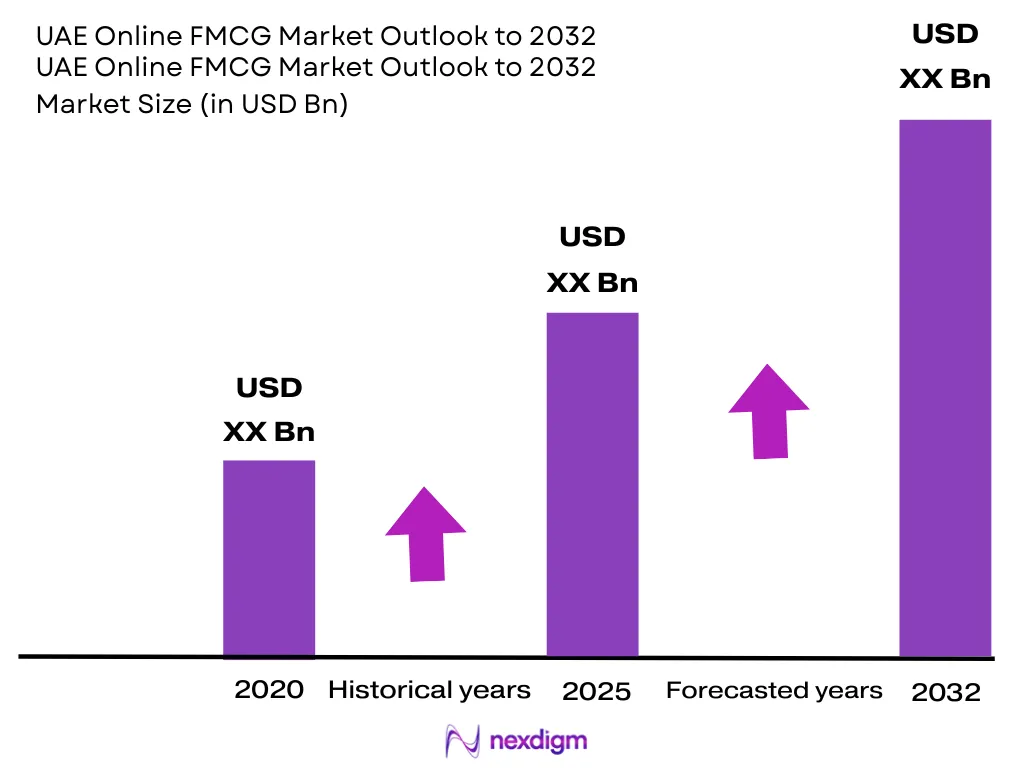
The UAE Online FMCG Market is valued at approximately USD ~ Billion in 2024 and is expected to expand at a CAGR of ~% during the forecast period of 2026–2032. The market has witnessed robust growth due to increasing internet penetration, smartphone adoption, rapid expansion of quick commerce platforms, and rising digital payment transactions. According to the Telecommunications and Digital Government Regulatory Authority (TDRA), the UAE recorded more than 21.7 million mobile subscriptions in 2024, while the World Bank reported a population exceeding 11 million during 2024. Data from the Federal Competitiveness and Statistics Centre (FCSC) also indicates sustained growth in household consumption expenditure during 2023 and 2024, supporting higher online grocery spending and increased demand for digital retail platforms.
Market Segmentation
By Product Type
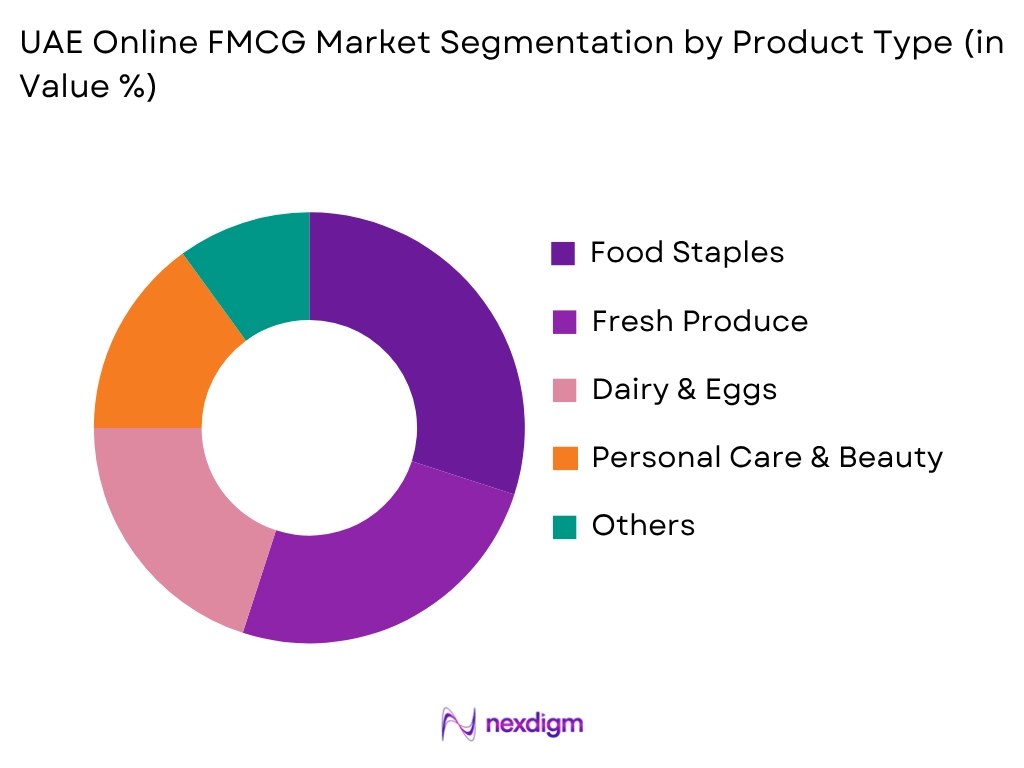
Food Staples dominate the UAE Online FMCG Market owing to their high purchase frequency and essential household nature. Consumers increasingly prefer ordering rice, flour, cooking oil, sugar, pasta, and packaged groceries online because of convenience, recurring demand, and subscription-based purchasing options. The expansion of quick commerce services offering delivery within minutes has further strengthened this segment. Major retailers continue to invest in inventory automation and dark stores specifically for staple products due to predictable demand and larger basket sizes. Promotional campaigns, bulk discounts, and loyalty rewards also encourage repeat purchases, making food staples the largest revenue-generating category across online grocery platforms.
By Platform Type
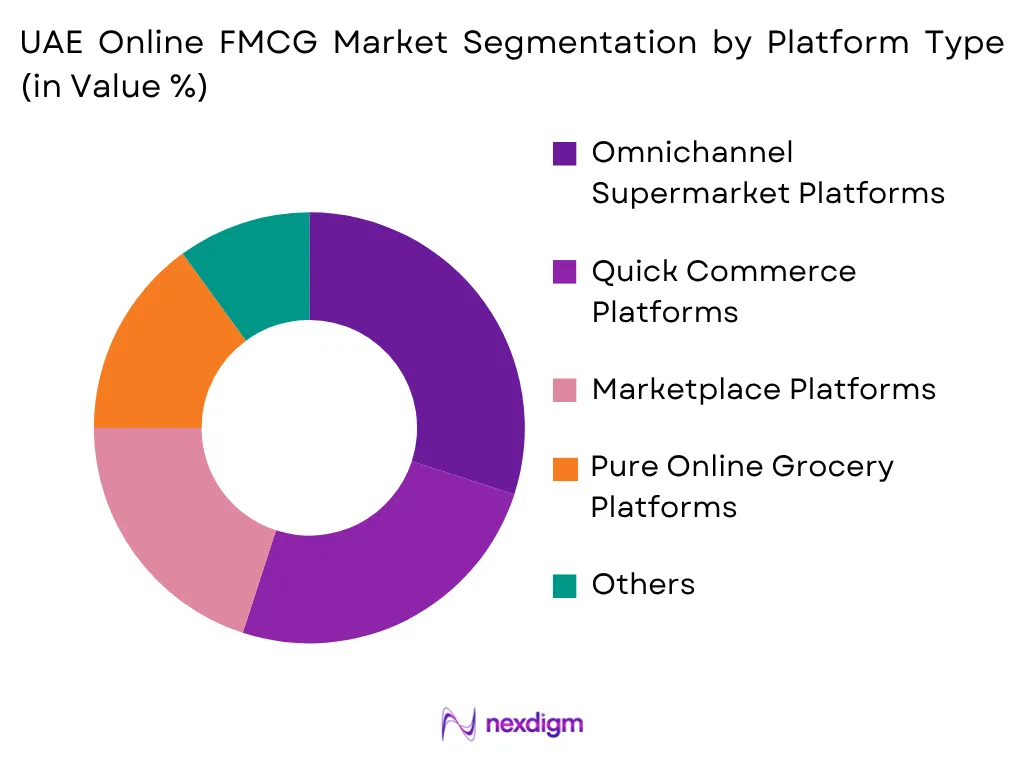
Omnichannel supermarket platforms hold the largest share of the UAE Online FMCG Market because established retailers successfully combine physical stores with digital ordering capabilities. Consumers benefit from broader product assortment, trusted brands, established supply chains, and flexible delivery or click-and-collect options. Companies such as Carrefour UAE, Lulu Hypermarket, and Spinneys leverage their extensive offline presence to fulfill online orders quickly while maintaining inventory availability. Their existing supplier relationships enable competitive pricing and exclusive promotions, attracting both value-conscious and premium shoppers. Additionally, omnichannel retailers continue investing in mobile applications, personalized promotions, loyalty programs, and AI-driven recommendations, strengthening customer retention and increasing average order values.
Competitive Landscape
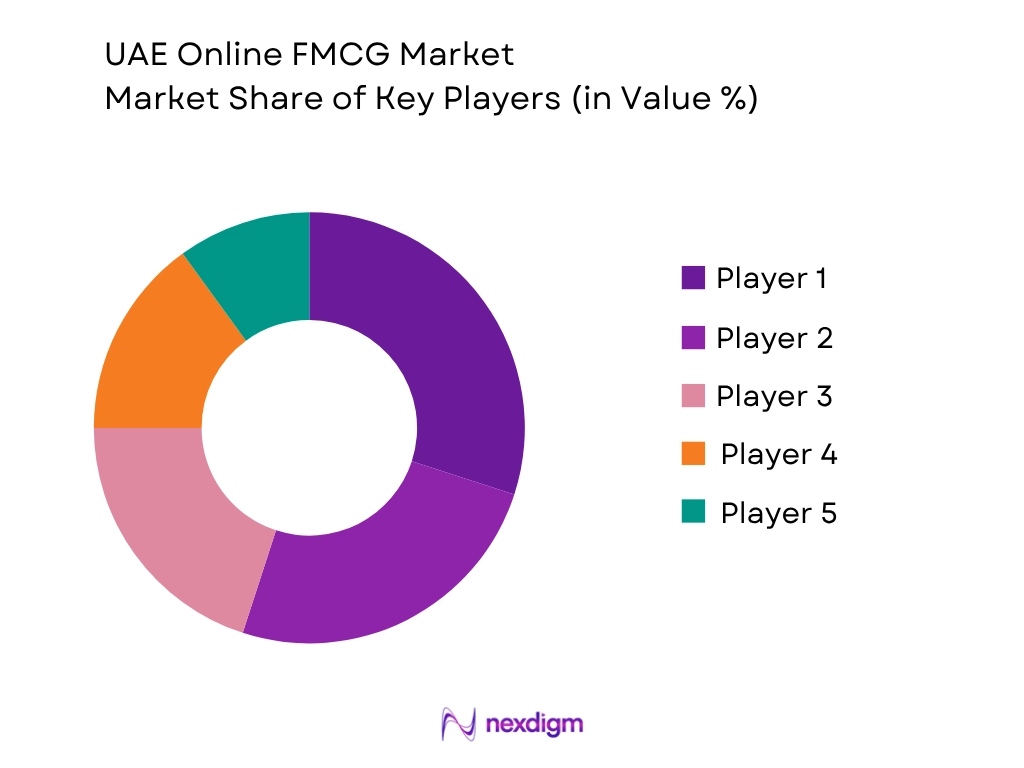
The UAE Online FMCG Market is moderately consolidated with a combination of regional grocery retailers, international e-commerce companies, and dedicated quick commerce platforms competing through delivery speed, assortment breadth, pricing strategies, and digital customer experience. Market competition is increasingly focused on last-mile logistics optimization, dark store expansion, private label development, AI-powered personalization, and subscription-based loyalty programs. Strategic partnerships with FMCG manufacturers and investments in fulfillment infrastructure continue to strengthen competitive positioning.
| Company | Establishment Year | Headquarters | Platform Type | Delivery Model
|
UAE Coverage | Private Label | Mobile App | Loyalty Program |
| Carrefour UAE | 1995 | ~ | ~ | ~ | ~ | ~ | ~ | ~ |
| Noon Minutes | 2021 | ~ | ~ | ~ | ~ | ~ | ~ | ~ |
| Talabat Mart | 2020 | ~ | ~ | ~ | ~ | ~ | ~ | ~ |
| Lulu Hypermarket | 1995 | ~ | ~ | ~ | ~ | ~ | ~ | ~ |
| Amazon UAE | 2019 | ~ | ~ | ~ | ~ | ~ | ~ | ~ |
UAE Online FMCG Market Analysis
Growth Drivers
Rising Digital Infrastructure and Smartphone Penetration
The UAE Online FMCG Market is being strongly supported by the country’s highly developed digital ecosystem, which enables seamless online grocery ordering, digital payments, and rapid last-mile delivery. According to the World Bank, the UAE’s population reached 11.35 million in 2024, creating a sizeable consumer base for digital retail. The International Monetary Fund (IMF) reported that the UAE economy expanded by 4.0 in 2024, reflecting stronger household consumption and business activity. The Telecommunications and Digital Government Regulatory Authority (TDRA) states that mobile penetration remained among the highest globally, with more than 21 million active mobile subscriptions supporting app-based commerce. Government-led digital transformation initiatives under the UAE Digital Economy Strategy have accelerated cloud adoption, AI integration, and smart logistics infrastructure across the retail sector. According to Dubai South’s EZDubai, the UAE’s total e-commerce market reached AED 32.3 billion during 2024, with food, beverages, and home care emerging among the fastest-growing online categories, demonstrating rising consumer acceptance of online FMCG purchases. The expansion of high-speed broadband, extensive 5G coverage, digital identity services, and secure payment infrastructure has significantly reduced transaction friction, allowing retailers to improve delivery efficiency and customer experience. These macroeconomic and digital infrastructure developments collectively create favorable conditions for sustained expansion of online FMCG platforms across all Emirates.
Expansion of Urban Population and High Household Consumption
Rapid urbanization, rising disposable income, and increasing household expenditure continue to strengthen demand for online FMCG services in the UAE. According to the World Bank, the UAE maintains an urbanization level exceeding 88 million people (urban population measured in absolute numbers globally within the country’s demographic dataset) with the overwhelming majority of residents living in cities such as Dubai, Abu Dhabi, and Sharjah, where online grocery platforms have extensive delivery coverage. The IMF reported nominal GDP exceeding USD 540 billion in 2024, supported by growth in non-oil sectors including wholesale and retail trade, logistics, tourism, and digital commerce. The Federal Competitiveness and Statistics Centre (FCSC) continues to report strong private consumption supported by population growth and increasing employment in diversified sectors. The UAE also remains one of the world’s leading logistics hubs through Jebel Ali Port, Dubai International Airport, and Khalifa Port, enabling efficient import and distribution of FMCG products. According to EZDubai, food, beverages, and home care products recorded significant expansion within the country’s e-commerce ecosystem during 2024, supported by efficient fulfillment infrastructure and widespread consumer adoption of digital shopping. Increasing numbers of dual-income households, expatriate professionals, and time-conscious consumers are driving frequent online grocery purchases, encouraging retailers to expand dark stores, fulfillment centers, and rapid delivery networks across the country.
Market Challenges
High Last-Mile Delivery Costs and Complex Fulfilment Requirements
The UAE Online FMCG Market continues to face significant operational challenges due to the high cost of last-mile delivery and the complexity of fulfilling temperature-sensitive FMCG orders. Unlike non-perishable e-commerce products, online grocery retailers must maintain separate cold-chain infrastructure for fresh produce, dairy, frozen foods, and meat while ensuring deliveries are completed within narrow time windows. According to the World Bank, the UAE’s population exceeded 11.35 million in 2024, with a large proportion concentrated in urban centres such as Dubai, Abu Dhabi, and Sharjah. While this concentration supports demand, it also creates intense competition among online grocery operators to provide ultra-fast delivery services. The International Monetary Fund (IMF) reported that private consumption remained strong alongside continued economic expansion in 2024, increasing order volumes but also raising customer expectations for free or low-cost delivery. The UAE Ministry of Economy continues to promote e-commerce growth, compelling retailers to invest heavily in fulfilment centres, automated warehouses, refrigerated vehicles, route optimization technologies, and delivery personnel. Maintaining inventory across multiple dark stores while minimizing spoilage and ensuring product freshness increases operational complexity, particularly for fresh and frozen categories. As consumers increasingly expect deliveries within minutes rather than hours, retailers are required to continuously expand fulfilment infrastructure, making operational efficiency one of the industry’s most significant challenges despite growing online demand.
Intense Price Competition and Low Operating Margins
The rapid expansion of digital grocery platforms has intensified price competition across the UAE Online FMCG Market, making profitability increasingly difficult despite rising order volumes. Established supermarket chains, quick commerce providers, and online marketplaces compete aggressively through discount campaigns, promotional bundles, free delivery offers, cashback incentives, and loyalty rewards. According to the IMF, the UAE’s non-oil economy remained resilient during 2024, encouraging new investment into digital retail and attracting additional market participants. The Federal Competitiveness and Statistics Centre (FCSC) reported continued growth in household final consumption expenditure, creating opportunities for retailers but simultaneously increasing competitive pressure to attract and retain customers. Since many FMCG products are standardized and widely available across multiple platforms, retailers often have limited pricing flexibility and rely on promotions to increase transaction frequency. In addition, imported FMCG products account for a substantial share of grocery assortments in the UAE, exposing retailers to fluctuations in global freight costs, supply chain disruptions, and inventory management challenges. Investments in artificial intelligence, automated warehousing, digital payment integration, cybersecurity, and mobile application development further increase operating expenses. Consequently, maintaining customer loyalty while preserving sustainable margins remains a key challenge for companies operating in the UAE Online FMCG Market, particularly as consumers continue comparing prices across multiple digital platforms before completing purchases.
Market Opportunities
Expansion of Quick Commerce and Dark Store Networks
The continued expansion of quick commerce presents a significant long-term opportunity for the UAE Online FMCG Market as consumers increasingly prioritize convenience and rapid delivery of everyday essentials. According to the World Bank, the UAE’s population exceeded 11.35 million in 2024, with most residents concentrated in highly urbanized emirates such as Dubai, Abu Dhabi, and Sharjah, creating ideal conditions for dense last-mile delivery networks. The International Monetary Fund (IMF) reported continued economic growth during 2024, supported by strong performance in non-oil sectors including retail, logistics, and digital services, which has encouraged additional investment in fulfilment infrastructure. The Telecommunications and Digital Government Regulatory Authority (TDRA) also reported more than 21 million active mobile subscriptions, reflecting widespread smartphone adoption that supports mobile-based grocery purchasing. The growth of dark stores, micro-fulfilment centres, AI-powered inventory management, and route optimization technologies enables retailers to improve delivery efficiency while expanding service coverage into new residential communities. Government initiatives promoting smart cities, digital transformation, and advanced logistics infrastructure further strengthen the operating environment. As urban populations continue demanding shorter delivery times and broader product availability, investments in quick commerce infrastructure provide retailers with substantial opportunities to increase order frequency, improve customer retention, and expand premium grocery offerings without relying solely on traditional supermarket formats.
Growing Demand for Premium, Health-Focused, and Private Label FMCG Products
Changing consumer lifestyles and increasing purchasing power are creating strong opportunities for retailers to expand premium FMCG assortments, health-oriented products, and private label portfolios. According to the IMF, the UAE maintained one of the highest GDP per capita levels globally during 2024, supporting greater consumer spending on premium food, organic products, functional beverages, personal care items, and sustainable household goods. The World Bank also highlights the UAE’s highly urbanized population and strong household consumption, which continue to support demand for differentiated retail offerings. Government initiatives under the National Food Security Strategy 2051 encourage supply chain resilience and food availability, creating favourable conditions for retailers to diversify product portfolios through local sourcing and innovative grocery formats. Growing consumer awareness regarding nutrition, clean-label products, environmentally friendly packaging, and wellness has encouraged online platforms to introduce premium imported brands alongside competitively priced private label products. Retailers are increasingly using artificial intelligence to personalise recommendations, analyse purchasing behaviour, and optimise product assortments for different customer segments. Subscription programmes, loyalty ecosystems, and data-driven merchandising further improve repeat purchase rates while allowing companies to strengthen customer relationships. These structural developments provide significant opportunities for online FMCG platforms to enhance profitability through higher-value product categories and differentiated digital shopping experiences.
Future Outlook
The UAE Online FMCG Market is expected to maintain strong growth throughout the forecast period, supported by increasing digital adoption, expanding quick commerce infrastructure, and continuous investment in fulfillment technologies. AI-powered personalization, predictive inventory management, and automated warehousing are expected to enhance operational efficiency while improving customer experience. Growing demand for premium groceries, organic products, and private labels will further diversify online offerings. Government initiatives promoting digital transformation and cashless payments are also expected to create favorable conditions for long-term market expansion.
Major Players
- Noon Minutes
- Carrefour UAE
- Talabat Mart
- Instashop
- Amazon UAE
- Kibsons
- Lulu Hypermarket
- Spinneys
- Choithrams
- Union Coop
- El Grocer
- Noon Grocery
- NRTC Fresh
- Viva Supermarket UAE
- Grandiose Supermarket
Key Target Audience
- FMCG Manufacturers
- Online Grocery Platforms
- Quick Commerce Companies
- Retail Chain Operators
- Logistics and Last-Mile Delivery Providers
- Investments and Venture Capitalist Firms
- Government and Regulatory Bodies (Ministry of Economy, Telecommunications and Digital Government Regulatory Authority (TDRA), Dubai Economy and Tourism, Federal Competitiveness and Statistics Centre)
- Digital Payment and FinTech Providers
Research Methodology
Step 1: Identification of Key Variables
The research begins by developing a comprehensive ecosystem map covering online grocery platforms, FMCG manufacturers, logistics providers, payment companies, retailers, and regulatory authorities. Extensive secondary research is conducted using industry publications, company reports, government databases, and proprietary datasets to identify the major variables influencing market demand, pricing, digital adoption, and consumer purchasing behavior.
Step 2: Market Analysis and Construction
Historical market information is compiled and analyzed to evaluate revenue generation, order volume, average basket value, digital payment adoption, platform expansion, and fulfillment infrastructure. Both demand-side and supply-side indicators are incorporated to estimate the market size using a combination of bottom-up company revenue analysis and top-down macroeconomic validation techniques.
Step 3: Hypothesis Validation and Expert Consultation
The preliminary market estimates are validated through structured interviews with executives from online grocery platforms, FMCG companies, logistics providers, retail chains, and technology solution providers. Computer-assisted telephone interviews (CATIs) and expert consultations provide operational insights, helping refine assumptions regarding consumer demand, competitive intensity, pricing strategies, and future growth opportunities.
Step 4: Research Synthesis and Final Output
The final stage integrates primary and secondary findings into a unified market model. Data triangulation techniques are applied to validate market estimates across multiple independent sources. Forecasts are prepared after evaluating technological developments, regulatory initiatives, competitive strategies, consumer behavior, and macroeconomic indicators, ensuring a comprehensive and reliable assessment of the UAE Online FMCG Market.

- Executive Summary
- Research Methodology (Market Definitions and Assumptions, Abbreviations, Market Sizing Framework, Top-Down Market Estimation, Bottom-Up Revenue Assessment, Demand-Side Analysis, Supply-Side Analysis, Primary Industry Interviews, Secondary Research Validation, Data Triangulation, Forecasting Framework, Limitations and Future Conclusions)

- Definition and Scope
- Market Evolution and Industry Genesis
- Digital Grocery Ecosystem Overview
- Timeline of Major Industry Developments
- Online FMCG Value Chain Analysis

- Growth Drivers (Internet Penetration, Smartphone Adoption, Quick Commerce Expansion, Digital Payment Adoption, Urban Population, High Disposable Income, Expatriate Population, Premium Grocery Demand)
- Market Challenges (Last-Mile Delivery Cost, Customer Acquisition Cost, Low Margin Structure, Temperature-Controlled Logistics, Inventory Accuracy, Order Fulfilment Cost)
- Market Opportunities (AI Personalization, Subscription Commerce, Private Labels, Retail Media, Cross-Border FMCG, Sustainable Packaging, Hyperlocal Fulfilment)
- Market Trends (Quick Commerce Penetration, Dark Store Expansion, Digital Loyalty Programs, Retail Media Networks, Omnichannel Integration, AI Recommendation Engines, Contactless Delivery)
- Government Regulations (UAE Consumer Protection Laws, Food Safety Regulations, E-Commerce Regulations, VAT Compliance, Digital Payment Regulations, Product Labelling Standards)
- SWOT Analysis
- PESTLE Analysis
- Porter’s Five Forces Analysis
- Stakeholder Ecosystem
- Competition Ecosystem

- By Market Value (2020-2025)
- By Gross Merchandise Value (2020-2025)
- By Order Volume (2020-2025)

- By Product Category (In Value %)
Food Staples
Fresh Produce
Dairy & Eggs
Meat, Poultry & Seafood
Frozen Foods
Snacks & Confectionery
Beverages
Baby Care Products
Personal Care & Beauty
Home Care & Cleaning Products
Health & Wellness Products
Pet Care Products - By Platform Type (In Value %)
Pure Online Grocery Platforms
Quick Commerce Platforms
Omnichannel Supermarket Platforms
Marketplace-Based Grocery Platforms
Brand-Owned Direct-to-Consumer Platforms - By Delivery Model (In Value %)
Instant Delivery (10–30 Minutes)
Express Delivery (30–60 Minutes)
Same-Day Delivery
Scheduled Delivery
Click and Collect - By Consumer Type (In Value %)
Individual Consumers
Family Households
Corporate & Office Buyers
Hospitality & Foodservice Buyers
Institutional Buyers - By Emirate (In Value %)
Dubai
Abu Dhabi
Sharjah
Ajman
Ras Al Khaimah
Fujairah
Umm Al Quwain

- Market Share Analysis (By Revenue, GMV, Order Volume, Active Customers, Product Category, Delivery Model)
- Cross Comparison Parameters (Monthly Active Users (MAU), Average Order Value (AOV), Average Delivery Time, Dark Store Network, SKU Assortment Size, Private Label Portfolio, Mobile App Rating, Fulfilment Coverage Across Emirates)
- Competitive Benchmarking Matrix
- SWOT Analysis of Major Players
- Pricing Analysis (By Product Basket, Private Label vs National Brands, Delivery Charges, Membership Plans)
- Detailed Profiles of Major Companies
Noon Minutes
Carrefour UAE
Talabat Mart
Instashop
Amazon UAE
Kibsons
Lulu Hypermarket
Spinneys
Choithrams
Union Coop
El Grocer
Noon Grocery
NRTC Fresh
Viva Supermarket UAE
Grandiose Supermarket

- Consumer Purchase Behaviour (Purchase Frequency, Basket Size, Repeat Purchase Rate, Brand Switching, Category Preference)
- Household FMCG Spending Analysis (Income Group, Monthly Grocery Budget, Online Spend Share)
- Customer Segmentation Analysis (Age Group, Nationality, Household Size, Lifestyle, Income Level)
- Online Shopping Behaviour (Peak Ordering Time, Preferred Device, Preferred Delivery Window, Order Frequency)
- Consumer Preference Analysis (Freshness, Price, Promotions, Delivery Speed, Product Variety, Brand Preference)

- By Market Value (2026-2032)
- By Volume Consumption (2026-2032)
- By Average Selling Price (2026-2032)


 Request a Sample
 Ask for Customization
 Get a Quote
 Enquire Now