
 Download PDF
Market Overview
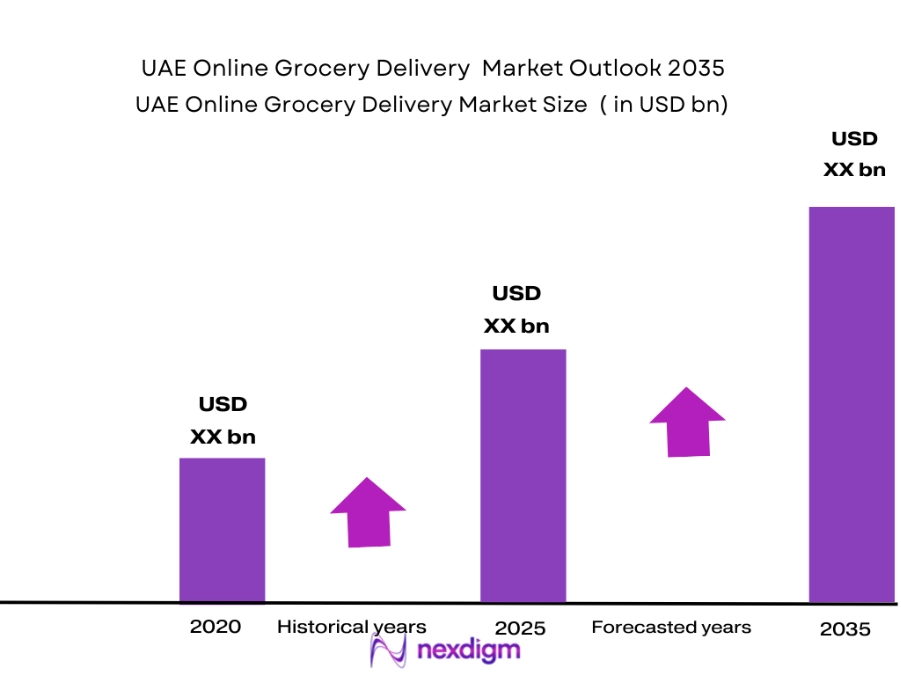
The UAE online grocery delivery market is valued at approximately USD ~ billion, driven by increased internet access and mobile penetration. Consumer preferences for convenience and time-saving solutions have played a significant role in shaping the market dynamics. A shift towards digital platforms for grocery shopping, particularly post-pandemic, has led to higher demand for home deliveries, which is expected to continue growing. The market has been further propelled by the government’s efforts to foster e-commerce and the overall advancement of digital payment systems, creating an ecosystem that supports online grocery shopping.
The UAE’s online grocery delivery market is primarily concentrated in cities like Dubai, Abu Dhabi, and Sharjah. Dubai, being a global hub with high internet penetration and a diverse population, dominates the market due to its thriving e-commerce infrastructure and affluent consumer base. Additionally, the demand for online grocery delivery has risen in these cities as a result of busy lifestyles and convenience-seeking behavior. The availability of same-day delivery services, coupled with high disposable incomes and the growing trend of shopping from home, makes these urban centers key drivers of the market.
Market Segmentation
By Product Type
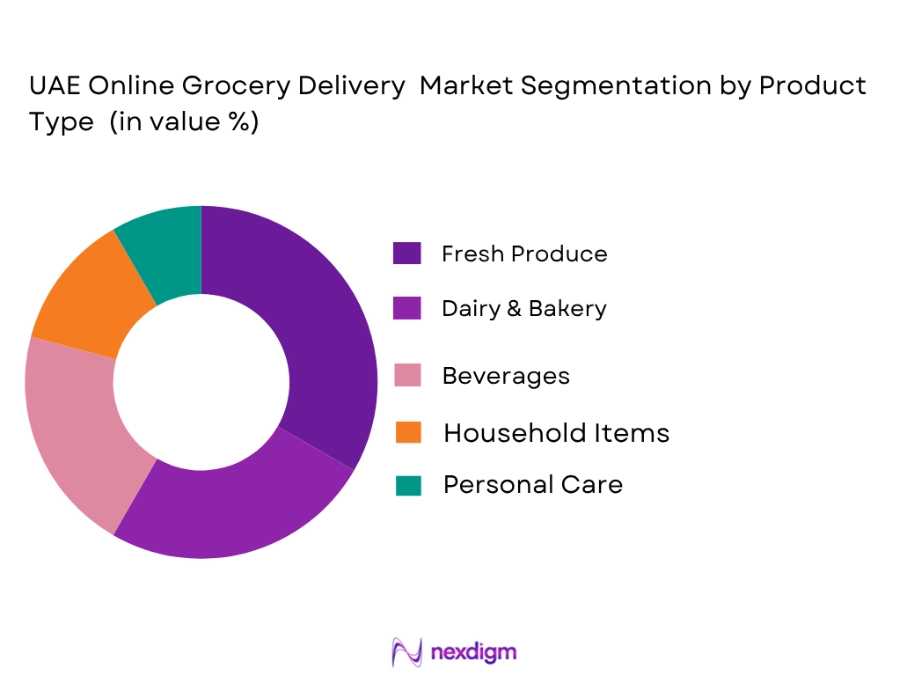
The UAE online grocery delivery market is segmented by product type into fresh produce, dairy and bakery, beverages, packaged foods, frozen foods, household items, and personal care products. Packaged foods dominate the market due to their long shelf life, convenience, and the broad variety available through online platforms. Items such as snacks, canned goods, and ready-to-eat meals are highly popular among consumers who prioritize time-saving and ease of access. This category benefits from the convenience factor, making it a preferred choice for busy households, especially during workdays or weekends.
By Delivery Model
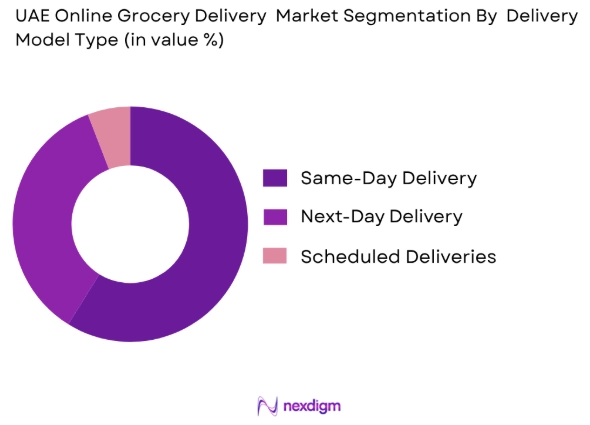
The market is also segmented by delivery model, with same-day delivery and next-day delivery being the most popular choices. Same-day delivery is the dominant sub-segment, especially in urban areas like Dubai and Abu Dhabi, where consumers value fast and efficient service. Same-day delivery caters to the growing consumer need for immediate gratification, enabling online grocery platforms to offer quick, hassle-free solutions. The rising demand for groceries and other essentials to be delivered within hours of ordering further fuels the demand for same-day delivery services, making it the preferred model for many customers.
Competitive Landscape
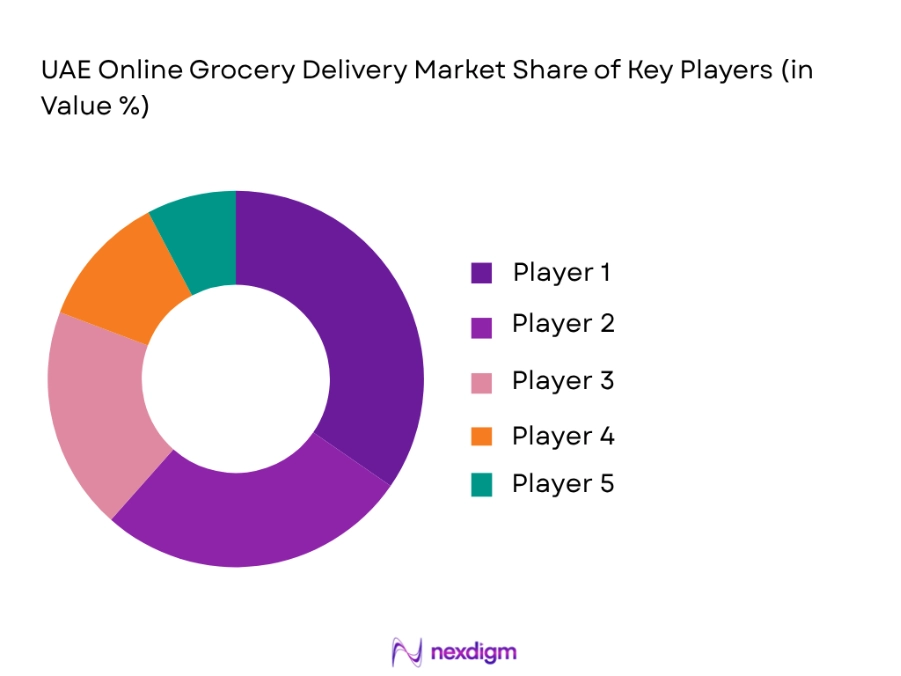
The UAE online grocery delivery market is highly competitive, with several major players vying for dominance. Leading companies include Carrefour, Spinneys, Lulu Hypermarket, and Instashop. Carrefour, a global brand with a strong presence in the UAE, has capitalized on its extensive physical retail network, allowing it to offer a seamless online shopping experience. Local players like Instashop and Lulu Hypermarket have also been aggressively expanding their online presence to meet the rising demand for grocery delivery services. These companies have differentiated themselves through service quality, delivery speed, and a broad product portfolio.
| Company Name | Establishment Year | Headquarters | Product Portfolio | Delivery Network | Revenue (2024) | Customer Base | Market Position |
| Carrefour UAE | 1995 | Dubai, UAE | |||||
| Spinneys | 1950 | Dubai, UAE | |||||
| Lulu Hypermarket | 1995 | Abu Dhabi, UAE | |||||
| Instashop | 2015 | Dubai, UAE | |||||
| BigBasket UAE | 2018 | Dubai, UAE |
UAE Online Grocery Delivery Market Dynamics
Growth Drivers
Increasing Internet Penetration and Smartphone Adoption
The UAE has one of the highest internet penetration rates globally, with over 99% of the population having internet access. This widespread connectivity, coupled with the high adoption of smartphones, has made online grocery shopping increasingly accessible to a large portion of the population. As more consumers in the UAE use smartphones to access e-commerce platforms, the demand for online grocery delivery services continues to grow. The availability of affordable data plans and improved mobile networks further drives this trend, enabling consumers to shop for groceries from the convenience of their smartphones at any time.
Changing Consumer Lifestyles and Preferences for Convenience
The fast-paced lifestyle in urban areas like Dubai and Abu Dhabi has led consumers to seek time-saving solutions, particularly in grocery shopping. With dual-income households and busy work schedules becoming the norm, consumers are increasingly opting for the convenience of online grocery shopping. The ability to shop for groceries online and have them delivered directly to their doorstep saves valuable time and energy, contributing to the rise of online grocery services. This shift towards prioritizing convenience is expected to remain a significant driver of growth in the market.
Market Challenges
Logistics and Supply Chain Issues in Tier 2 and Tier 3 Cities
While the UAE’s major urban areas have robust logistics infrastructure for online grocery deliveries, supply chain challenges persist in Tier 2 and Tier 3 cities. These areas lack the advanced logistical capabilities of larger cities, resulting in slower deliveries and increased operational costs. Issues such as limited cold storage facilities, underdeveloped transportation networks, and logistical inefficiencies pose challenges for expanding services beyond major urban centers. Addressing these supply chain issues is critical for growth and requires investment in infrastructure and better delivery networks to serve smaller cities and rural areas.
Regulatory and Quality Control Concerns
The online grocery market in the UAE faces regulatory and quality control challenges, especially in the delivery of fresh food and perishable items. Regulations surrounding food safety, packaging, and handling are crucial to ensure that products meet the required standards. However, inconsistency in regulatory enforcement and the complexity of complying with evolving laws related to e-commerce, food safety, and labeling can be a barrier to expansion. Moreover, any lapse in quality control can lead to customer dissatisfaction and regulatory scrutiny, making adherence to strict standards essential for market players.
Market Opportunities
Expansion into Rural Markets and Smaller Cities
While the UAE online grocery delivery market is concentrated in major cities, there is substantial growth potential in rural markets and smaller cities. With increasing internet penetration in these areas and an expanding middle class, consumers are becoming more inclined to adopt online grocery services. The growing interest in e-commerce and the convenience it provides, combined with improvements in digital payment systems, presents a significant opportunity for online grocery players to extend their services to these underserved markets. By investing in logistics and regional infrastructure, businesses can capitalize on this untapped potential.
Introduction of Hyperlocal Delivery Solutions
Hyperlocal delivery solutions offer a significant opportunity to meet growing consumer demand for faster deliveries in urban areas. By utilizing local fulfillment centers and smaller delivery hubs, online grocery providers can offer same-day or even within-hours delivery services, catering to consumers’ need for immediate access to fresh groceries. This model reduces delivery time and costs by focusing on local service areas. Additionally, it helps reduce congestion and transportation expenses. Hyperlocal delivery solutions are expected to enhance customer satisfaction and are a critical strategy for businesses looking to gain a competitive edge in the UAE market.
Future Outlook
Over the next five years, the UAE online grocery delivery market is expected to experience significant growth. This will be driven by a combination of factors such as improved internet infrastructure, increasing smartphone penetration, and the growing consumer demand for convenience. As urban populations continue to rise and busy lifestyles become more prevalent, the need for efficient, time-saving solutions like online grocery delivery will increase. The growing adoption of subscription-based models, coupled with the integration of smart technologies such as AI for personalized recommendations and route optimization, will further propel the market. Moreover, the expansion of delivery networks into smaller cities and rural areas will contribute to the market’s sustained growth.
Key Players
- Carrefour UAE
- Spinneys
- Lulu Hypermarket
- Instashop
- BigBasket UAE
- ZAD Khalil
- Choithrams
- Union Coop
- SuperMart UAE
- Noon UAE
- Amazon UAE
- Rakuten UAE
- Wadi.com
- Dubai Fresh
- UAE Fresh
Key Target Audience
- Investments and Venture Capitalist Firms
- Government and Regulatory Bodies
- Private Equity Firms
- Retail and E-commerce Industry Leaders
- Online Grocery Retailers
- Logistics and Delivery Service Providers
- Manufacturers of Packaged and Fresh Foods
- Consumer Goods Brands
Research Methodology
Step 1: Identification of Key Variables
The first step involves identifying the major factors that influence the UAE online grocery delivery market, including consumer preferences, market penetration, and product demand. This process is supported by secondary research and expert interviews to understand the key drivers shaping the market.
Step 2: Market Analysis and Construction
In this phase, historical data related to the market size, growth rates, and distribution channels is analyzed to build a comprehensive view of the market. This also includes understanding the adoption rate of online grocery shopping and the development of delivery networks in key urban centers.
Step 3: Hypothesis Validation and Expert Consultation
Hypotheses about the market’s future performance are validated through expert consultations. Interviews with stakeholders, including industry professionals, e-commerce platforms, and logistics companies, provide insights into operational challenges and growth prospects.
Step 4: Research Synthesis and Final Output
The final phase involves synthesizing all collected data to create a comprehensive market analysis. Detailed insights from interviews and secondary data are integrated to ensure that the market forecast is accurate and reflects current and future trends in the UAE online grocery delivery market.

- Executive Summary
- Research Methodology (Definitions and Scope of Online Grocery Delivery Market Data Sources and Database Calibration, UAE Regulatory Data Collection Framework, Healthcare Provider & Distributor Primary Interviews, Forecasting Model Limitations, Bias Controls, Forecast Confidence Intervals)

- Overview Genesis and Market Evolution
- Healthcare Delivery Models in UAE
- Adoption of Online Grocery Platforms
- Technological Advancements in Online Grocery Services

- Growth Drivers
Increasing Internet Penetration and Smartphone Adoption
Changing Consumer Lifestyles and Preferences for Convenience
Expansion of E-commerce and Digital Payment Systems
Rising Adoption of Subscription Models - Market Challenges
Logistics and Supply Chain Issues in Tier 2 and Tier 3 Cities
Regulatory and Quality Control Concerns
High Competition with Local Grocery Stores
Price Sensitivity and Cost Pressure - Market Opportunities
Expansion into Rural Markets and Smaller Cities
Introduction of Hyperlocal Delivery Solutions - Trends
Increased Demand for Eco-Friendly Packaging
Shift Towards Subscription Models and Customization
Integration of Artificial Intelligence for Personalization
Government Regulations and Support for E-commerce
- Government Regulations
- SWOT Analysis of Key Competitors
- Porter’s Five Forces

- By Value, 2020-2025
- By Unit Shipments, 2020-2025
- By Average Selling Price Trends, 2020-2025
- Market Share by Product Category, 2020-2025

- By Product Type (In Value%)
Fresh Produce
Dairy & Bakery
Beverages
Household Items
Personal Care - By End-User Segment (In Value%)
Urban Consumers
Rural Consumers
Small and Medium Enterprises (SMEs)
Institutional Buyers (Hotels, Restaurants, etc.) - By Platform Type (In Value%)
Direct Online Stores
Mobile Applications
Third-Party Delivery Platforms - By Delivery Model (In Value%)
Same-Day Delivery
Next-Day Delivery
Scheduled Deliveries

- Market Share Analysis
- Cross-Comparison Parameters (Market Size, Product Segment, End-User Adoption, Competitive Positioning, Technological Drivers, Platform Portfolio Breadth, Regional Penetration, Pricing Matrix, Delivery Speed, Customer Support)
- Competitive Benchmarks & Profiles
- SWOT Analysis of Key Competitors
- Pricing & Procurement Analysis
- Porter’s Five Forces
- Key Players
Carrefour UAE
Spinneys
Lulu Hypermarket
Zadkhalil
Choithrams
BigBasket UAE
Instashop
UAE Fresh
Union Coop
SuperMart UAE
Amazon UAE
Rakuten UAE
Noon UAE
Wadi.com
Grocery.ae

- Urban Consumers’ Shift Towards Online Grocery Shopping
- Impact of Rural Population on Online Grocery Growth
- Growth of Subscription-Based Models
- Influence of Institutional Buyers on Market Expansion

- By Value, 2026-2035
- By Unit Shipments, 2026-2035
- By Average Selling Price Trends, 2026-2035
- Market Share by Product Category, 2026-2035


 Request a Sample
 Ask for Customization
 Get a Quote
 Enquire Now