
 Download PDF
Market Overview
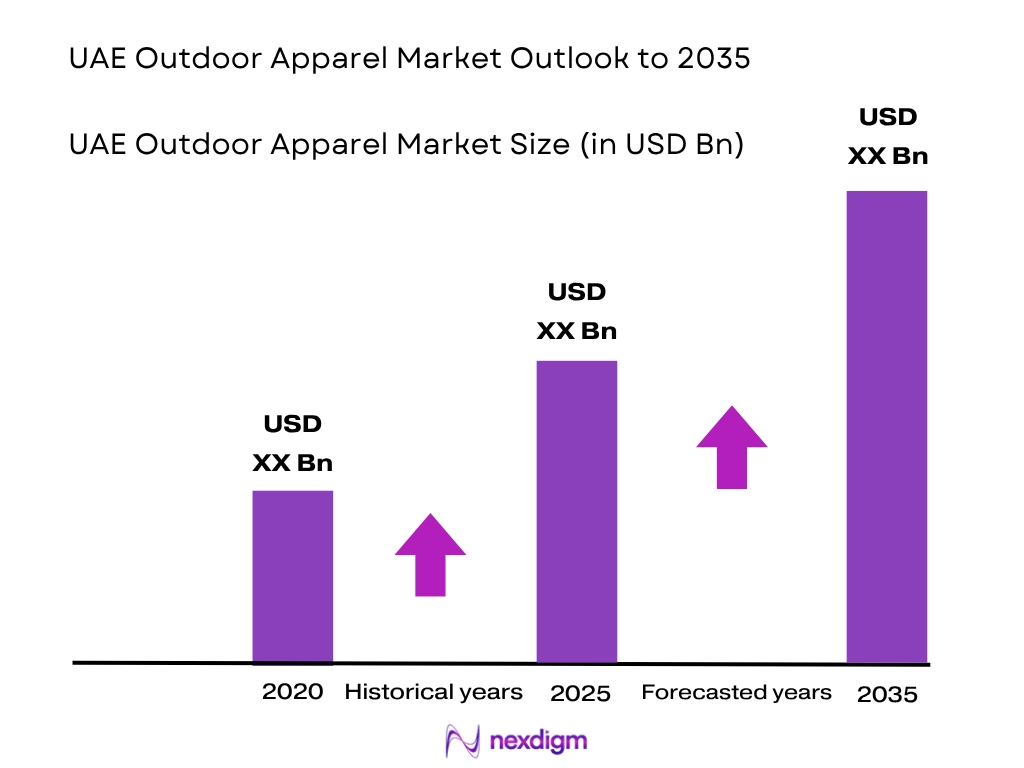
The UAE Outdoor Apparel Market is valued at USD ~ billion for 2025, reflecting historical demand generated by rising participation in outdoor and fitness activities, tourism‑linked apparel needs, and consumer interest in performance‑oriented clothing. This valuation is based on a combination of outdoor gear and sports apparel revenue data that includes outdoor apparel categories. The robust retail environment, high disposable income, and expanding e‑commerce penetration have supported steady expansion, with demand influenced by climate‑adaptive and technical apparel preferences.
Key urban centers such as Dubai and Abu Dhabi dominate the UAE outdoor apparel market due to high population density, strong consumer purchasing power, extensive retail infrastructure, and a thriving tourism sector. Both cities host major shopping destinations with strong apparel brand presence, frequent outdoor events, and affluent expat communities that drive demand for functional outdoor and performance wear aligned with active lifestyles.
Market Segmentation
By Product Type
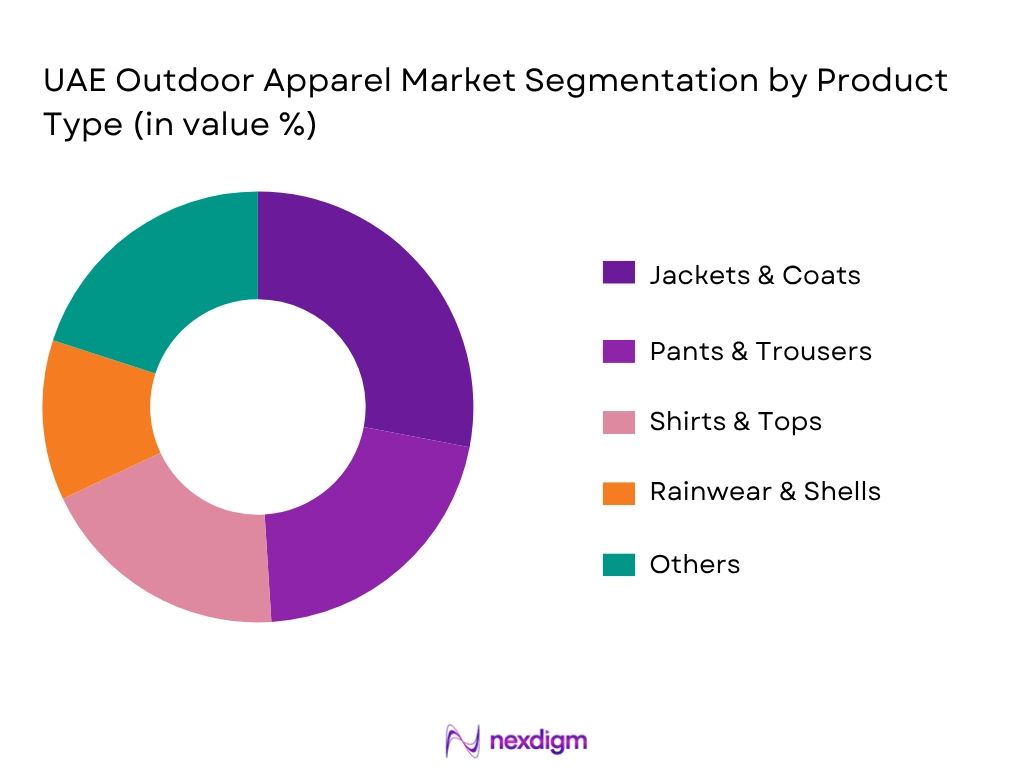
The UAE outdoor apparel market segmented by product category shows Jackets & Coats as the dominant segment. This prominence is driven by the need for versatile outerwear suited to varied temperature zones from early morning desert excursions to air‑conditioned urban environments, aligning with consumer expectations for multifunctional items. Additionally, international brands with strong outerwear portfolios have influenced consumer preferences toward high‑performance jackets and shell layers.
By Distribution Channel
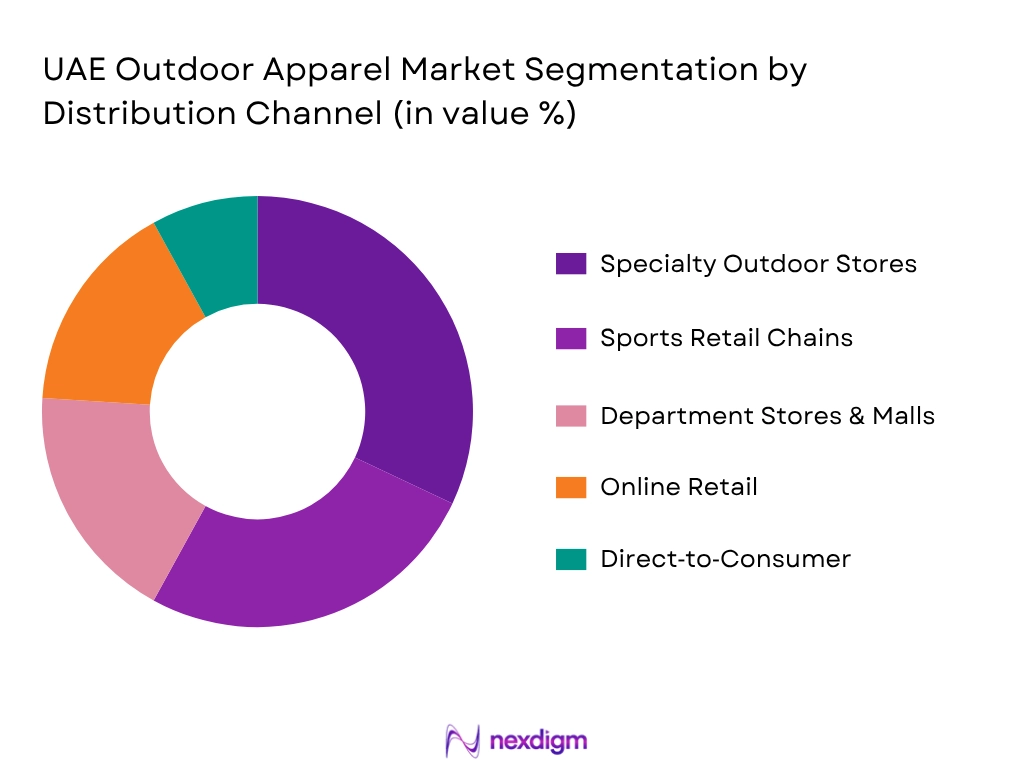
Specialty outdoor stores lead distribution due to curated product ranges and expert staff capable of advising on technical apparel requirements for desert, running, and water‑adapted clothing. Sports retail chains also maintain strong share owing to extensive store networks and brand partnerships that appeal to both locals and expatriate residents. Online retail is rapidly growing, driven by convenience, broader assortments, and digital marketing.
Competitive Landscape
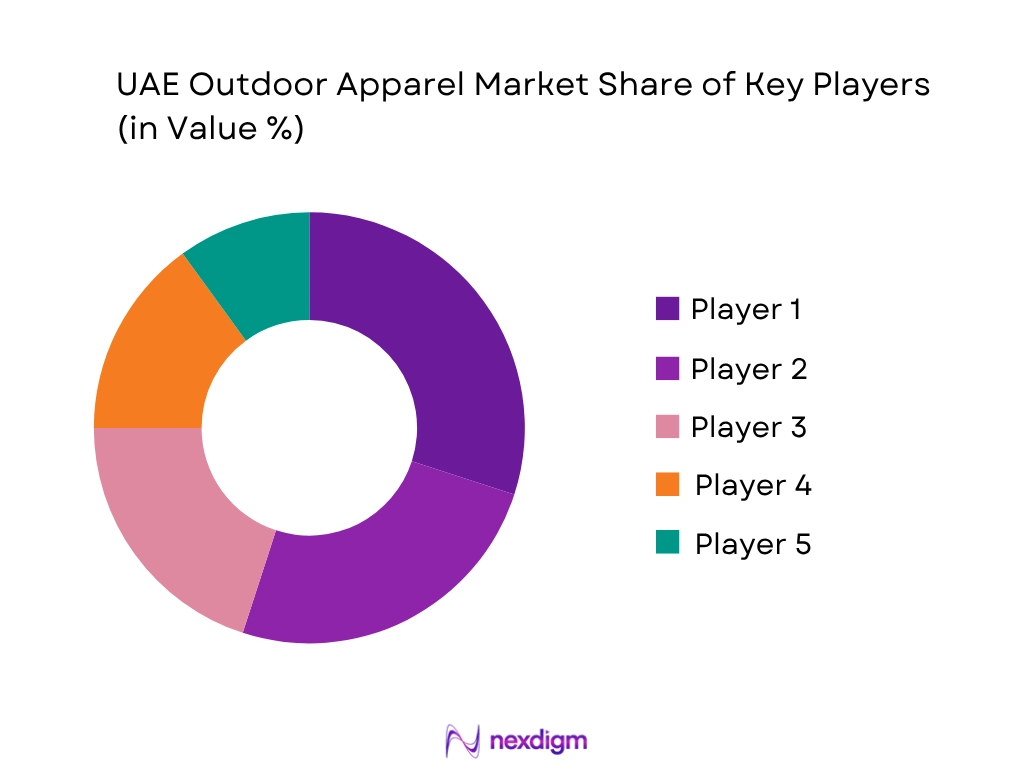
The UAE Outdoor Apparel Market features a mix of global sports and outdoor brands competing across premium, mid‑tier, and niche technical segments. International brand presence, diverse product portfolios, and evolving e‑commerce strategies characterize the competitive ecosystem. Global leaders and highly visible retailers drive market dynamics through strong brand recognition, localized campaigns, and multi‑channel distribution. These players leverage local partnerships, flagship stores, and participation in outdoor events to sustain competitive positioning. Global sportswear heavyweights like Nike and Adidas maintain strong presence given wide category portfolios that span enhanced technical fabrics and outdoor‑inspired collections. Outdoor specialist brands such as The North Face and Columbia hold particular appeal for performance‑centric consumers. Puma maintains relevance with urban‑outdoor hybrids targeting trend‑oriented buyers.
| Company | Establishment | Headquarters | Product Breadth | Distribution Reach | Technical Fabric Use | Retail Footprint | E‑Commerce Strategy | Brand Positioning |
| Nike | 1964 | USA | ~ | ~ | ~ | ~ | ~ | ~ |
| Adidas | 1949 | Germany | ~ | ~ | ~ | ~ | ~ | ~ |
| The North Face | 1966 | USA | ~ | ~ | ~ | ~ | ~ | ~ |
| Columbia | 1938 | USA | ~ | ~ | ~ | ~ | ~ | ~ |
| Puma | 1948 | Germany | ~ | ~ | ~ | ~ | ~ | ~ |
UAE Outdoor Apparel Market Analysis
Growth Drivers
Climate & Seasonal Fit
The UAE’s distinctive climate exerts a strong influence on consumer behaviour toward outdoor performance clothing. The nation experiences extremely high average daily temperatures during peak months, with daily highs routinely going above 40°C and average annual temperatures around 28°C, according to the UAE National Center of Meteorology’s 2024 climate data. This extreme heat necessitates technical apparel designed for heat mitigation, breathability, and UV protection, driving demand for outdoor‑specific garments that manage sweat and reduce heat stress. Moreover, the UAE has an arid desert climate with minimal rainfall, but cooler winter months with average highs near 26°C create a distinct seasonal window favourable to outdoor activity participation, further influencing purchasing cycles of outdoor apparel. These climatic pressures also interact with broader macroeconomic conditions; the UAE’s per capita GDP of USD 43,372 in 2024 reflects significant disposable income capacity for specialized clothing purchases. The combination of high income and climate demands makes climate‑adapted apparel a persistent growth vector for the outdoor apparel market. Local retailers report that technical fabrics with UV protection or moisture–wicking properties are prioritized in store inventories in response to these climatic and economic conditions.
Adventure Tourism
The UAE’s outdoor apparel demand is increasingly backed by robust adventure tourism activity, which requires specialised performance clothing for desert, mountain, and coastal pursuits. Data from the UAE’s Federal Competitiveness and Statistics Authority indicates that international visitor arrivals reached 17.8 million in 2024, up from 16.1 million in the previous comparable annual period, with adventure and cultural tourism segments cited as key drivers of inbound travel. Similarly, the Dubai Corporation for Tourism & Commerce Marketing reported 14.9 million hotel guests in 2024, reflecting strong tourism inflows coinciding with increased outdoor leisure spending. Likewise, the Abu Dhabi Department of Culture and Tourism registered 11.2 million visits to cultural or nature‑oriented attractions, including desert safaris and mountain excursions. These visitation levels correlate with heightened demand for durable and activity‑specific outerwear, hydration gear, and performance accessories. Macroeconomically, tourism contributed approximately 9.6% of the UAE’s GDP in 2024, according to the World Travel & Tourism Council, underpinning substantial consumer participation in outdoor pursuits linked to travel. The combination of volume tourist inflows and diversification of leisure offerings, such as desert trails, mangrove kayaking, and mountain hiking, stimulates outdoor apparel purchases within retail and online channels.
Market Challenges
Import Dependence
The UAE outdoor apparel market is heavily reliant on imports, as the country does not have significant domestic manufacturing in specialized performance fabrics or technical garment production. According to the UAE Federal Customs Authority’s 2024 trade data, apparel imports amounted to USD 15.9 billion for general clothing categories, with high‑value technical and outdoor garments primarily originating from Europe, North America, and East Asia. This import reliance subjects the market to foreign exchange fluctuations and international logistics costs, which directly affect retail pricing structures within the UAE. Additionally, the UAE’s strategic free‑trade zones facilitate re‑export, but they also mean that domestic value‑add in fabric technology remains limited. External supply chain disruptions such as elevated freight rates that averaged around USD 8,240 per 40‑foot container in 2024, according to UNCTAD’s review, exert upward pressure on landed costs for imported apparel. Without robust local production, market participants must absorb or pass on these costs to consumers. This dynamic poses a structural challenge for affordability and supply consistency, particularly for smaller retailers that lack scale in procurement and logistics. Given the macroeconomic context of the UAE’s open trade regime, dependence on imported technical apparel remains a core operational challenge for the outdoor apparel sector.
Seasonal Demand Swings
Seasonality introduces variability in demand for outdoor apparel across the UAE market. Climatic conditions cause consumer demand to spike during milder months and taper during periods of extreme heat, which can dampen sales velocity for certain apparel categories. The UAE National Center of Meteorology’s climate data indicates that temperatures frequently exceed 42°C during summer months, reducing the feasibility of prolonged outdoor activity and thereby softening demand for certain seasonal lines at those times. Retailers report that outerwear and high‑performance technical gear see improved turnover in the cooler months when average temperatures range between 23°C and 28°C, reflecting a pronounced seasonal demand cycle. This oscillation complicates inventory management for both physical stores and e‑commerce platforms, necessitating sophisticated forecasting to balance stock levels and working capital. Meanwhile, UAE macroeconomic indicators suggest that consumer spending patterns are sensitive to shifts in disposable income flows; the UAE’s unemployment rate remained low at 3.1% in 2024, according to the World Bank, indicating stable income levels but exposing seasonal apparel cycles as a non‑economic constraint on year‑round demand continuity. Consequently, retailers must navigate these swings effectively to maintain profitability and manage operating costs.
Opportunities
Localized Technical Apparel
Localized technical apparel represents a compelling opportunity for the UAE market, driven by the unique demands of regional climates and diversified outdoor activities. In 2024, the UAE hosted 21 major sporting and adventure events from desert endurance races to coastal triathlon series drawing participants and spectators who require performance‑oriented clothing that enables heat management, UV protection, and rapid moisture wicking. The UAE Ministry of Sports reported that participation in organized outdoor sports rose to approximately 1.84 million participants in 2024, reflecting growing enthusiasm for activities requiring specialized gear. Parallel macroeconomic data indicates robust consumer capacity, with household final consumption expenditure in the UAE reaching USD 316 billion in 2024 (World Bank), implying disposable spending potential that can be channelled into niche apparel categories. Local designers and brands are positioned to benefit by integrating climate‑specific features such as reflective fabrics, breathable mesh panels, and lightweight laminated materials tailored for desert excursions or coastal climates. The opportunity lies in translating existing demand into high‑value, differentiated products that resonate with both residents and tourists. Partnerships between technical apparel manufacturers and local retailers could further enhance product relevance, while leveraging tourism inflows and outdoor participation to develop bespoke collections that align with Emirati climate and lifestyle needs.
Circular & Sustainable Lines
Circular and sustainable apparel presents a sector growth avenue that aligns with both consumer values and national sustainability goals. The UAE Vision 2031 and associated climate commitments emphasise resource efficiency and waste reduction, creating a policy backdrop conducive to sustainable markets. In 2024, the UAE Ministry of Climate Change & Environment reported that textile waste diversion programs increased collection volumes to 203,000 tonnes of reusable and recyclable textiles, signifying institutional momentum toward circular economic practices. Simultaneously, consumer behaviour appears to reflect environmental consciousness; research published by the UAE Department of Economic Development shows that 46% of consumers consider environmental impact in their purchasing decisions for clothing and accessories. Within the outdoor apparel space, brands that incorporate recycled polyester, renewable fibres, and take‑back recycling programs can appeal to this segment while differentiating from conventional offerings. These sustainability attributes also resonate with corporate social responsibility initiatives among large UAE retailers seeking alignment with ESG objectives. Brand initiatives that foreground circular design—such as modular apparel and fabric reclamation can tap into both regulatory support and contemporary consumer preferences, positioning sustainable outdoor apparel as a growth opportunity that extends beyond conventional product cycles.
Future Outlook
Over the next decade, the UAE Outdoor Apparel Market is expected to sustain robust growth driven by continuous expansion of tourism and adventure activities, increased emphasis on health and fitness lifestyles, and technical advancements in performance fabrics tailored to extreme climates and multi‑environment use. Amplifying e‑commerce adoption and growing demand for sustainable and eco‑friendly apparel options will further support revenue acceleration. Strategic collaborations, digital community engagement, and innovations in product customisation are anticipated to deepen consumer engagement and broaden category penetration across demographics.
Major Players
- Nike, Inc.
- Adidas AG
- The North Face
- Columbia Sportswear Company
- Puma SE
- Under Armour, Inc.
- ASICS Corporation
- Merrell
- Salomon Group
- New Balance Athletics, Inc.
- Decathlon S.A.
- Oakley, Inc.
- The Expedition Company
- Camel Outdoor Wear
- Emirates Outdoor Specialists
Key Target Audience
- Retail & Brand Licensing Investors
- Investments and Venture Capitalist Firms
- Apparel & Outdoor Brand Retail Chains
- Omni‑Channel Retail Operations Heads
- Sports & Outdoor Event Organisers
- UAE Tourism Boards (e.g., Dubai Tourism, Abu Dhabi Tourism)
- Government and Regulatory Bodies (UAE Ministry of Economy, UAE Ministry of Climate Change & Environment)
- Sporting Goods Distributors & Importers
Research Methodology
Step 1: Market Ecosystem Definition
The initial phase involves mapping stakeholders in the UAE outdoor apparel ecosystem, including brands, retailers, distributors, and consumer segments. Secondary resources such as industry reports, trade data, and retail analytics were synthesised to define key market variables affecting demand and supply dynamics.
Step 2: Historical Data & Size Estimation
Historical revenue data was compiled from credible sources including apparel and outdoor gear market reports, retail revenue figures, and consumer spending trends. Correlation methods ensured consistency in estimating the 2024 market valuation for outdoor apparel.
Step 3: Forecast & Market Modelling
Top‑down and bottom‑up forecasting techniques were applied, incorporating macroeconomic factors, sector growth trends, and apparel segment dynamics. Market hypotheses were validated through secondary sources and cross‑verified trends in retail and tourism sectors.
Step 4: Competitive & Trend Analysis
Benchmarking of major players, segmentation performance, and distribution channel evolution was conducted through expert databases, brand presence indicators, and digital engagement metrics. Trend analysis included fabric innovation, sustainability adoption, and omni‑channel commerce developments.

- Executive Summary
- Research Methodology (Market Definitions and Scope (Outdoor vs Functional Apparel, Performance Apparel), Assumptions and Data Normalization, Market Sizing Approach (Top‑Down & Bottom‑Up), Primary & Secondary Research Framework, Data Validation & Triangulation, Limitations and Bias Controls)

- Market Definition and Scope
- UAE Outdoor Lifestyle & Climate Influence
- Outdoor Activity Participation Trends
- Value Chain & Stakeholder Mapping
- Regulatory Landscape and Compliance

- Growth Drivers (Climate & Seasonal Fit, Adventure Tourism, Premiumization, Omni-Channel Expansion, Eco-Friendly Fabrics, Fitness Lifestyle, Expat & Tourist Demand, Technical Innovation)
- Market Challenges (Import Dependence, Seasonal Demand Swings, Supply Chain Constraints, Price Sensitivity, Counterfeit Products, Inventory Management, Retail Saturation, Climate Limitations)
- Opportunities (Localized Technical Apparel, Circular & Sustainable Lines, Direct-to-Consumer, Rental & Resale, Customization, Smart Gear, Brand Collaborations, E-Commerce Growth)
- Emerging Trends (Heat & Humidity Fabrics, Social Media Marketing, Seasonal Capsules, Sustainable Packaging, Urban-Outdoor Hybrids, Activity Personalization, Athleisure Integration, Pop-up Retail)
- Regulatory Environment (UAE Textile Safety, Import & Customs, Environmental & Labor Compliance, Fabric Certifications, Advertising Verification, Packaging Guidelines, Event Licenses, Waste Management)
- Porter’s Five Forces Analysis (New Entrants, Supplier Power, Buyer Power, Substitutes, Competitive Rivalry)
- SWOT Analysis (Market Level) (Strengths: Climate-Adapted Apparel, Brand Equity, High Income; Weaknesses: Seasonal Use, Import Reliance, Price Sensitivity; Opportunities: Sustainability, DTC Channels, Tourism Growth; Threats: Supply Disruption, Fragmentation, Local Competition)

- By Market Value (2020-2025)
- By Market Volume (2020-2025)
- By Market Price Tier Analysis (2020-2025)
- By E‑Commerce vs Offline Retail Share (2020-2025)
- By Import vs Local Production Estimates (2020-2025)

- By Product Category (In Value%)
Jackets & Coats
Pants & Trousers
Shirts & Tops
Rainwear & Shells
Base Layers & Insulation
Accessories - By Material Technology (In Value%)
Moisture‑Wicking / Fast‑Dry
UV Protection / Heat Regulation
Breathable Membrane Technologies
Sustainable / Recycled Fibres - By Outdoor Activity Segment (In Value%)
Hiking & Trekking
Desert & Adventure Tourism
Running & Trail Running
Water Sports & Beach Activities
Casual Outdoor Lifestyle - By End User (In Value%)
Men
Women
Youth / Kids
Tourists & Expatriates - By Distribution Channel (In Value%)
Specialty Outdoor Stores
Sports Chains (Brand Stores)
Department Stores & Malls
Online Marketplaces
Direct‑to‑Consumer Brand Channels

- Market Share Analysis (Revenue Share, Volume Share, Product Category Penetration, Activity-Specific Market Reach, Online vs Offline Sales Share)
- Cross‑Comparison Parameters (Brand Positioning, Technical Features, Material Tech, Distribution Footprint, Price Tier, E‑Commerce Penetration, Product Range, Market Reach, Inventory Turnover, Retail Partnerships, Consumer Loyalty Programs)
- SWOT Analysis of Major Players (Strengths, Weaknesses, Opportunities, Threats for each key brand in UAE market)
- Pricing & SKU Strategy (Price Tiering by Product Category, SKU Variety, Online vs In-Store Pricing, Promotions & Seasonal Discounts, Premium vs Mid vs Value Tiering, Dynamic Pricing Practices)
- Profile Parameters Covered (Company Overview, Product Portfolio, Technical Features, Distribution Channels, Market Positioning, Financials & Volume Metrics, Growth Strategy, Recent Developments & Partnerships)
- Detailed Profiles of Major Competitors
Nike, Inc.
Adidas AG
The North Face
Columbia Sportswear Company
Puma SE
Under Armour, Inc.
ASICS Corporation
Merrell
Salomon Group
New Balance Athletics, Inc.
Decathlon S.A.
Oakley, Inc.
The Expedition Company
Camel Outdoor Wear
Emirates Outdoor Specialists

- Consumer Demographics & Segmentation (Age & Gender, Expat vs Local, Income & Spending Power, Tourist Profiles, Family vs Individual Buyers)
- Purchase Drivers (Performance & Technical Features, Brand Reputation, Price vs Value, Sustainability & Eco-Friendliness, Style & Fashion Appeal, Climate Adaptation, Seasonal Relevance, Activity-Specific Fit)
- Buying Behavior & Patterns (Purchase Frequency, Seasonal Peaks, Online vs In-Store Preference, Impulse vs Planned Purchases, Event & Activity-Based Buying, Cross-Selling Tendencies, Brand Switching Behavior)
- Brand Loyalty & Retention (Repeat Purchase Rate, Loyalty Program Engagement, Brand Advocacy, Premium Brand Preference, Influence of Social Media & Influencers, Post-Purchase Satisfaction)
- Digital & Omni-Channel Interaction (E-Commerce Adoption, Mobile Shopping Behavior, App & Website Engagement, Online Reviews & Ratings Influence, Click-to-Buy Conversion, Social Media Interaction, Virtual Try-On & Product Customization)
- Consumer Pain Points & Needs (Limited Climate-Specific Options, Seasonal Stockouts, Pricing Constraints, Limited Customization, Fit & Comfort Issues, Product Awareness & Education Gaps)
- Willingness-to-Pay & Price Sensitivity (Premium vs Mid-Tier Spending, Sensitivity to Discounts & Promotions, Value Perception for Technical & Sustainable Apparel, Price Acceptance by Activity Segment)
- Decision-Making Process (Information Search Channels, Peer & Influencer Recommendations, Online Reviews, Trial & Fit Considerations, Seasonal Planning, Purchase Finalization Triggers)

- By Market Value (2026-2035)
- By Market Volume (2026-2035)
- By Market Price Tier Analysis (2026-2035)
- By E‑Commerce vs Offline Retail Share (2026-2035)
- By Import vs Local Production Estimates (2026-2035)


 Request a Sample
 Ask for Customization
 Get a Quote
 Enquire Now