

 Download PDF
Market Overview
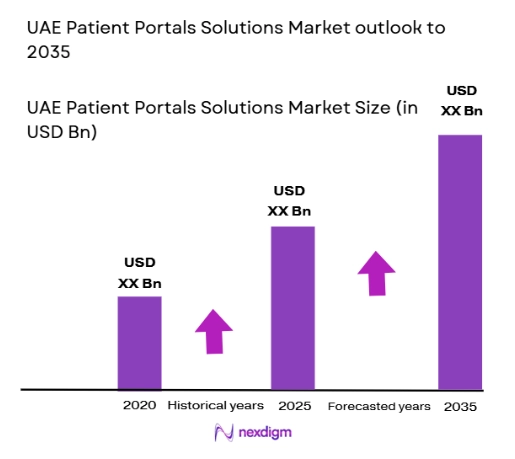
The UAE patient portals solutions market has witnessed significant growth, driven by an increasing demand for digital healthcare services. With the growing need for healthcare providers to enhance patient engagement, streamline operations, and improve healthcare outcomes, the market is expected to reach approximately USD ~ billion. This growth is propelled by the government’s initiatives toward smart healthcare solutions and the rising adoption of technology in healthcare systems. Healthcare providers and patients alike have become increasingly reliant on these solutions, with a significant shift toward cloud-based platforms and mobile applications enhancing accessibility and functionality.
The UAE market is dominated by cities like Dubai and Abu Dhabi, which are centers of innovation and healthcare development in the region. The UAE government’s strong push toward digital transformation in healthcare has further facilitated market growth, with strategic initiatives such as the National Health Information Center. Additionally, private healthcare providers in these cities are heavily investing in advanced technological infrastructure to meet the rising demands for patient engagement tools. These factors contribute to the dominant position of these cities in the regional market.
Market Segmentation
By Product Type:
UAE Patient Portals Solutions market is segmented by product type into cloud-based solutions, on-premise solutions, hybrid solutions, mobile-enabled portals, and web-based platforms. Recently, cloud-based solutions have dominated the market due to their scalability, cost-effectiveness, and ease of integration with other healthcare systems. The increasing reliance on cloud technology by healthcare providers to store patient data securely and ensure seamless communication between patients and providers has contributed significantly to the growth of this sub-segment. Moreover, cloud solutions facilitate the adoption of telemedicine and virtual healthcare services, further driving market expansion.

By Platform Type:
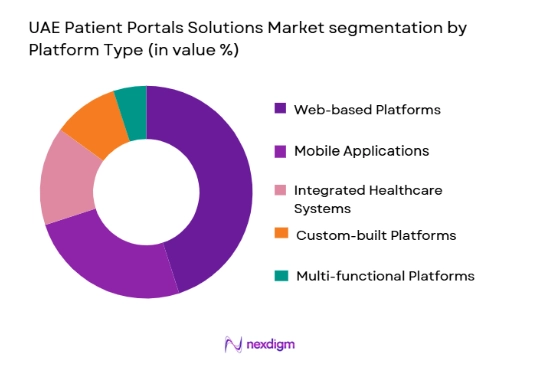
UAE Patient Portals Solutions market is segmented by platform type into web-based platforms, mobile applications, integrated healthcare systems, custom-built platforms, and multi-functional platforms. Web-based platforms have a dominant market share due to their user-friendly interface and broad accessibility. Patients and healthcare providers prefer web-based platforms as they are easily accessible on various devices, including desktops and laptops, without the need for specialized apps. The widespread internet connectivity in the UAE further boosts the adoption of web-based portals in healthcare facilities, making them the preferred choice for both patients and healthcare providers.
Competitive Landscape
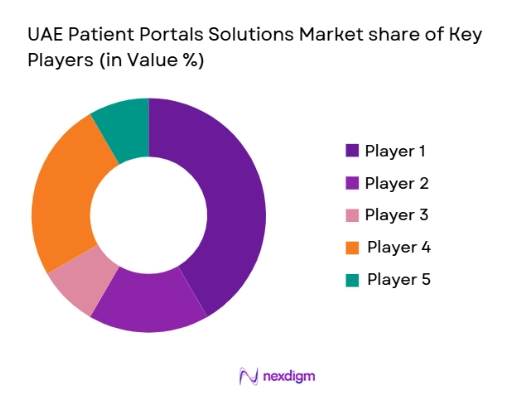
The UAE Patient Portals Solutions market is characterized by a highly competitive environment with significant consolidation and the presence of both local and international players. Leading players are focusing on expanding their technological offerings, collaborating with healthcare providers, and enhancing the usability of their solutions to maintain their position. As the demand for digital healthcare services increases, larger companies are acquiring smaller firms to diversify their portfolios and increase market penetration. Moreover, these companies are actively involved in improving their software’s integration capabilities with other healthcare systems to meet the region’s needs.
| Company Name | Establishment Year | Headquarters | Technology Focus | Market Reach | Key Products | Revenue |
| Cerner Corporation | 1979 | Kansas City, USA | ~ | ~ | ~ | ~ |
| Allscripts Healthcare | 1986 | Chicago, USA | ~ | ~ | ~ | ~ |
| Athenahealth | 1997 | Watertown, USA | ~ | ~ | ~ | ~ |
| Epic Systems Corporation | 1979 | Verona, USA | ~ | ~ | ~ | ~ |
| eClinicalWorks | 1999 | Westborough, USA | ~ | ~ | ~ | ~ |
UAE Patient Portals Solutions Market Analysis
Growth Drivers
Increasing government support for digital healthcare:
The UAE government’s push toward digital healthcare transformation has been a significant driver of market growth. With initiatives like the National Health Information Center and the Dubai Health Authority’s Smart Health Strategy, the government is encouraging healthcare providers to adopt digital tools, including patient portals. These portals are crucial for enhancing patient engagement, streamlining communication, and improving healthcare delivery. The UAE’s National Agenda for the next decade further emphasizes health innovation, which will likely lead to continued investment in healthcare IT infrastructure. Healthcare providers are therefore prioritizing the integration of patient portals into their existing systems, contributing to market expansion. The government’s regulatory frameworks, such as the Data Protection Law, also ensure patient confidentiality and data security, encouraging trust in digital platforms. As a result, the demand for patient portals is set to rise, offering long-term growth opportunities for market players. Furthermore, government-led initiatives are likely to incentivize healthcare providers to adopt these technologies, ensuring sustained demand for patient portal solutions.
Technological advancements and healthcare integration:
Another key growth driver in the UAE’s patient portal solutions market is the rapid advancement of healthcare technologies. These technologies include cloud-based systems, artificial intelligence, mobile integration, and data analytics, which enhance the functionality and scalability of patient portals. As healthcare providers integrate electronic health records (EHRs), telemedicine platforms, and other digital health services into their workflows, the demand for patient portals increases. The convenience of accessing medical records online, scheduling appointments, and communicating with healthcare professionals remotely is driving adoption among patients and providers. Additionally, the integration of wearables and health monitoring devices with patient portals provides real-time data exchange, improving patient care. The shift toward remote healthcare services, accelerated by the COVID-19 pandemic, has further driven the need for patient portals to ensure continuity of care. This growing technological adoption is expected to drive the demand for more advanced and feature-rich patient portal solutions in the region.
Market Challenges
Data privacy and cybersecurity concerns:
One of the main challenges facing the UAE Patient Portals Solutions market is the increasing concern over data privacy and cybersecurity. As healthcare systems transition to digital platforms, ensuring the confidentiality of sensitive patient data has become a critical issue. Data breaches, unauthorized access, and cyberattacks are significant risks that could undermine the trust patients have in digital health solutions. The UAE government has implemented stringent data protection regulations to address these concerns, but market players must continually invest in robust security measures, including encryption, multi-factor authentication, and advanced cybersecurity protocols. Ensuring compliance with international data security standards, such as the General Data Protection Regulation (GDPR), is also essential for companies seeking to operate in the global market. Healthcare providers are cautious about adopting patient portals due to these security concerns, which could hinder market growth if not addressed effectively. As the number of digital platforms increases, so does the potential for data breaches, making cybersecurity a top priority for stakeholders in the market.
Integration with existing healthcare systems:
The challenge of integrating patient portals with legacy healthcare systems is another significant barrier to the market’s growth. Many healthcare providers in the UAE still rely on outdated infrastructure and legacy software, making it difficult to adopt new digital solutions like patient portals. Integrating these new systems with existing electronic health records (EHR) or hospital management systems (HMS) can be complex, time-consuming, and costly. Additionally, the lack of interoperability between different healthcare systems can create data silos, preventing the seamless exchange of patient information across platforms. Healthcare providers often face challenges in ensuring that their patient portals can effectively communicate with other digital tools, creating inefficiencies and limiting the effectiveness of these platforms. These integration challenges require significant investments in IT infrastructure and skilled professionals, making it a substantial hurdle for smaller healthcare providers. Despite these challenges, the demand for integrated digital health systems is growing, and efforts to improve interoperability will likely drive the market in the coming years.
Opportunities
Expansion of telemedicine services:
The rapid growth of telemedicine services presents a significant opportunity for the UAE Patient Portals Solutions market. The ongoing adoption of remote healthcare has been accelerated by the COVID-19 pandemic, and this trend is expected to continue in the coming years. Telemedicine services, such as virtual consultations and remote monitoring, rely heavily on patient portals for seamless communication and data exchange between healthcare providers and patients. The demand for integrated patient portals that support telemedicine is expected to increase, creating opportunities for market players to develop advanced solutions tailored to the needs of telehealth services. These portals not only enable easy scheduling of virtual consultations but also facilitate real-time access to patient data, making remote healthcare more efficient and effective. As the UAE government continues to push for the expansion of telemedicine, the demand for patient portals that can support these services will likely grow, providing new revenue streams for companies in the market.
Rising demand for patient-centered healthcare solutions:
There is an increasing emphasis on patient-centered healthcare in the UAE, which presents a significant opportunity for the patient portal market. Patients are becoming more engaged in managing their health, seeking tools that enable them to access their medical records, book appointments, and communicate directly with healthcare providers. The demand for patient-centered solutions is expected to rise as healthcare providers aim to improve the quality of care and enhance patient satisfaction. Patient portals are a key component of this shift, as they offer patients greater control over their healthcare experience. With the UAE’s growing focus on improving healthcare quality, patient portals are seen as an essential tool to empower patients and improve outcomes. Market players that focus on creating user-friendly, intuitive portals that prioritize patient engagement and experience will be well-positioned to capitalize on this growing demand. As patient-centered care becomes more of a priority, the market for patient portals in the UAE is expected to expand significantly.
Future Outlook
The future of the UAE Patient Portals Solutions market looks promising, with significant growth expected over the next few years. Key drivers of this growth include advancements in technology, such as AI and cloud computing, as well as government support for digital health initiatives. The increasing adoption of telemedicine and patient-centered care models will continue to boost demand for patient portals. As healthcare systems become more integrated, patient portals will play a pivotal role in streamlining communication and improving patient outcomes. In addition, the UAE’s focus on regulatory frameworks to ensure data privacy and security will enhance trust in digital health solutions. Overall, the market is expected to witness a steady upward trajectory, with new technological innovations and expanding healthcare needs further driving growth.
Major Players
- Cerner Corporation
- Allscripts Healthcare Solutions
- Athenahealth
- Epic Systems Corporation
- eClinicalWorks
- McKesson Corporation
- GE Healthcare
- Medtronic
- NantHealth
- Greenway Health
- Kareo
- Optum
- iSALUS Healthcare
- CureMD
- NextGen Healthcare
Key Target Audience
- Investments and venture capitalist firms
- Government and regulatory bodies
- Healthcare providers and hospital networks
- Healthcare IT solution providers
- Insurance providers
- Pharmaceutical companies
- Telemedicine service providers
- Technology vendors in healthcare
Research Methodology
Step 1: Identification of Key Variables
We begin by identifying key market variables such as product types, platform types, regional growth drivers, and challenges impacting the UAE Patient Portals Solutions market.
Step 2: Market Analysis and Construction
We then conduct a thorough analysis of market trends, segmentation, and competitive dynamics, constructing a detailed market model that captures the current landscape and future outlook.
Step 3: Hypothesis Validation and Expert Consultation
We validate our hypotheses and models through consultations with industry experts, market leaders, and technology developers in the healthcare IT sector to refine our insights.
Step 4: Research Synthesis and Final Output
Finally, we synthesize the collected data, validate the findings through rigorous analysis, and present the final report with actionable insights and forecasts for the UAE Patient Portals Solutions market.

- Executive Summary
- Research Methodology (Definitions, Scope, Industry Assumptions, Market Sizing Approach, Primary & Secondary Research Framework, Data Collection & Verification Protocol, Analytic Models & Forecast Methodology, Limitations & Research Validity Checks)

- Market Definition and Scope
- Value Chain & Stakeholder Ecosystem
- Regulatory / Certification Landscape
- Sector Dynamics Affecting Demand
- Strategic Initiatives & Infrastructure Growth

- Growth Drivers
Increasing healthcare digitization
Rising demand for patient engagement
Government initiatives for healthcare reforms
Advancements in cloud computing technology
Increasing smartphone penetration - Market Challenges
Data privacy and security concerns
Integration challenges with legacy systems
High implementation costs
Lack of user awareness
Regulatory hurdles - Market Opportunities
Growth in telemedicine and remote healthcare
Emerging demand for patient-centric solutions
Government support for healthcare digital transformation - Trends
Growing use of artificial intelligence in healthcare portals
Integration of wearable devices for real-time health tracking
Shift towards mobile-first healthcare solutions
Focus on user-friendly interfaces for patients
Increasing adoption of blockchain for healthcare data security - Government Regulations & Defense Policy
Data protection regulations for healthcare information
Telemedicine policies and guidelines
Government initiatives for digital health transformation - SWOT Analysis
- Stakeholder and Ecosystem Analysis
- Porter’s Five Forces Analysis
- Competition Intensity and Ecosystem Mapping

- By Market Value, 2020-2025
- By Installed Units, 2020-2025
- By Average System Price, 2020-2025
- By System Complexity Tier, 2020-2025

- By System Type (In Value%)
Cloud-based Solutions
On-premise Solutions
Hybrid Solutions
Mobile-enabled Portals
Web-based Platforms - By Platform Type (In Value%)
Web-based Platforms
Mobile Applications
Integrated Healthcare Systems
Custom-built Platforms
Multi-functional Platforms - By Fitment Type (In Value%)
Hospital-based Systems
Clinic-based Systems
Standalone Platforms
Integrated Electronic Health Record Systems
Multi-use Platforms - By EndUser Segment (In Value%)
Healthcare Providers
Patients
Insurance Providers
Healthcare IT Solution Providers
Regulatory Bodies - By Procurement Channel (In Value%)
Direct Procurement from Manufacturers
Online Procurement Platforms
Third-party Distributors
Public Sector Procurement
Private Sector Procurement - By Material / Technology (in Value%)
Cloud Computing Technology
Data Security Technologies
Mobile Technology
Artificial Intelligence Solutions
Big Data Analytics

- Market structure and competitive positioning
- Market share snapshot of major players
- CrossComparison Parameters (Market Share, Technology Adoption, Pricing Strategies, Regulatory Compliance, Customer Satisfaction, Product Innovation, Geographic Reach, Distribution Channels, Market Growth, Competitive Intelligence)
- SWOT Analysis of Key Players
- Pricing & Procurement Analysis
- Key Players
Cerner Corporation
Allscripts Healthcare Solutions
Athenahealth
eClinicalWorks
Epic Systems Corporation
NextGen Healthcare
McKesson Corporation
GE Healthcare
Medtronic
NantHealth
Greenway Health
Kareo
Optum
iSALUS Healthcare
CureMD

- Patients seeking better engagement and self-management
- Healthcare providers prioritizing operational efficiency
- Insurance companies using portals for claims and information
- Regulatory bodies aiming to streamline patient data management

- Forecast Market Value, 2026-2035
- Forecast Installed Units, 2026-2035
- Price Forecast by System Tier, 2026-2035
- Future Demand by Platform, 2026-2035


 Request a Sample
 Ask for Customization
 Get a Quote
 Enquire Now