
 Download PDF
Market Overview
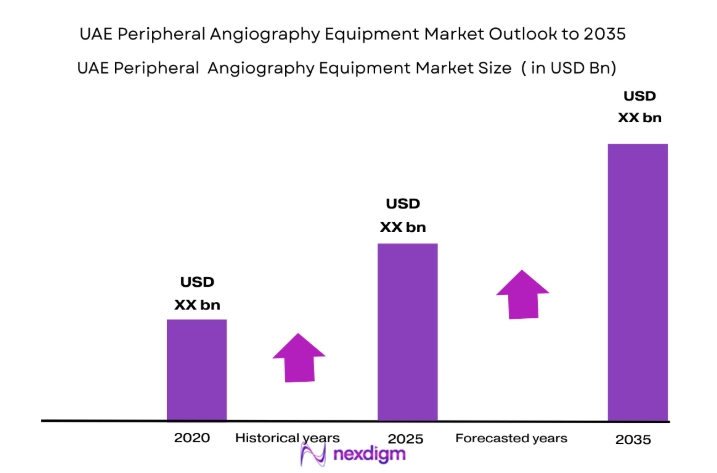
The UAE peripheral angiography equipment market is experiencing steady growth, driven by an increasing prevalence of cardiovascular diseases, advancements in imaging technology, and the expansion of healthcare infrastructure. Based on a recent historical assessment, the market is valued at approximately USD ~ million, with key players investing in innovative solutions to improve diagnostic accuracy and patient outcomes. The rising demand for minimally invasive procedures and the integration of AI in medical imaging are major factors fueling this market growth.
Dubai, Abu Dhabi, and Sharjah are the leading cities in the UAE driving the demand for peripheral angiography equipment. These cities benefit from high-income populations, advanced healthcare systems, and significant investments in healthcare infrastructure. Dubai, in particular, has established itself as a hub for healthcare innovation, attracting medical tourists and offering state-of-the-art medical facilities. The UAE government’s support for healthcare initiatives and the increasing number of hospitals and diagnostic centers further contribute to the dominance of these cities in the market.
Market Segmentation
By Product Type:
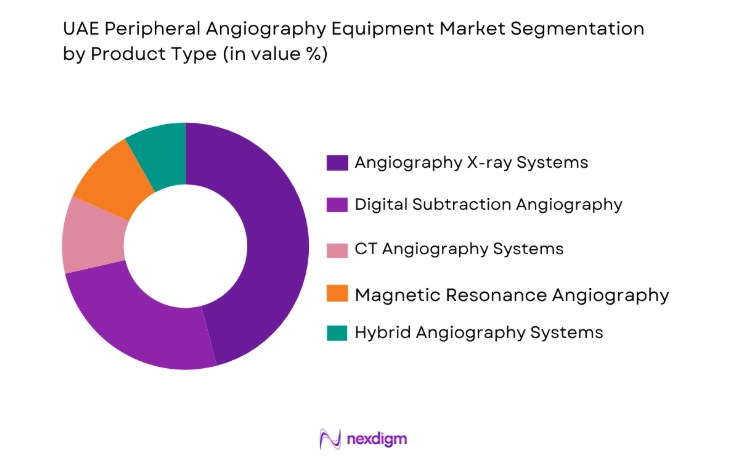
The UAE peripheral angiography equipment market is segmented by product type into angiography X-ray systems, digital subtraction angiography (DSA) systems, CT angiography systems, magnetic resonance angiography (MRA) systems, and hybrid angiography systems. Among these, angiography X-ray systems dominate the market share due to their widespread use, reliability, and cost-effectiveness. The increasing demand for accurate and detailed imaging for the diagnosis of peripheral artery diseases drives the adoption of these systems. Hospitals and diagnostic centers in urban regions favor angiography X-ray systems for their proven capabilities in delivering high-resolution images, which are crucial for making precise medical decisions.
By End-User Segment:
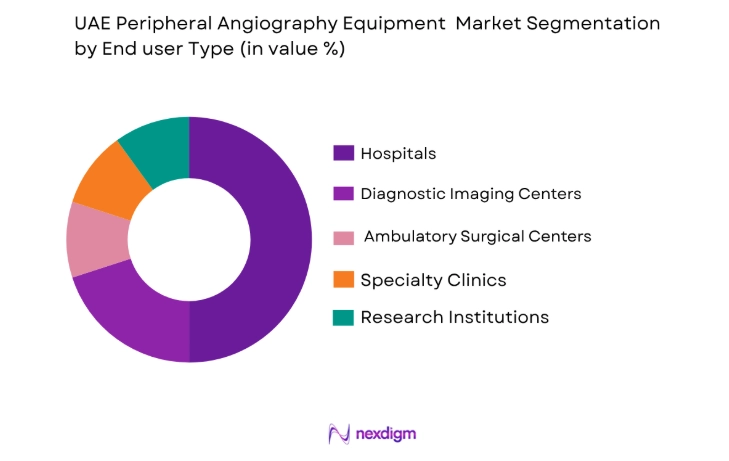
The market is segmented by end-user segment into hospitals, diagnostic imaging centers, ambulatory surgical centers (ASCs), research institutions, and specialty clinics. Hospitals are the dominant sub-segment, accounting for the largest market share. This is mainly due to the high volume of procedures performed in these institutions and their ability to invest in advanced diagnostic technologies. Hospitals in the UAE offer comprehensive cardiovascular care and are adopting peripheral angiography equipment to enhance their diagnostic capabilities, thereby increasing their market presence and dominating the end-user segment.
Competitive Landscape
The UAE peripheral angiography equipment market is highly competitive, with both global and regional players vying for market share. The competitive landscape is marked by significant consolidation, where larger companies dominate the high-end product segments, while smaller players focus on cost-effective solutions. Key players continuously innovate to introduce advanced imaging technologies, catering to the growing demand for accurate, non-invasive procedures. The market sees high collaboration between healthcare institutions and equipment manufacturers to develop specialized solutions for the growing cardiovascular disease burden.
| Company Name | Establishment Year | Headquarters | Technology Focus | Market Reach | Key Products | Revenue | Additional Parameter |
| Siemens Healthineers | 1847 | Germany | ~ | ~ | ~ | ~ | ~ |
| GE Healthcare | 1892 | USA | ~ | ~ | ~ | ~ | ~ |
| Philips Healthcare | 1891 | Netherlands | ~ | ~ | ~ | ~ | ~ |
| Canon Medical Systems | 1933 | Japan | ~ | ~ | ~ | ~ | ~ |
| Medtronic | 1949 | Ireland | ~ | ~ | ~ | ~ | ~ |
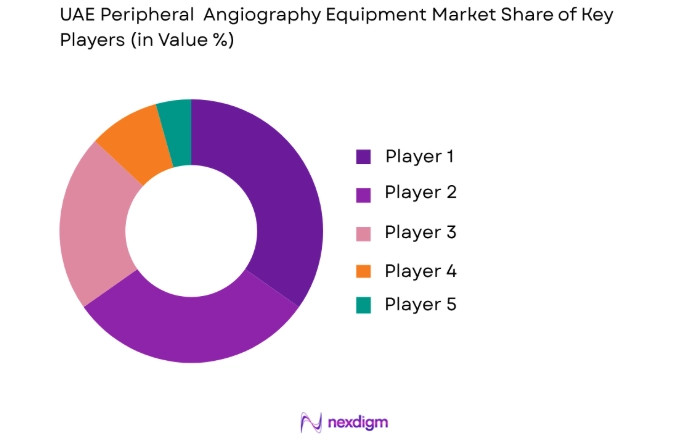
UAE Peripheral Angiography Equipment Market Analysis
Growth Drivers
Increasing Prevalence of Cardiovascular Diseases:
The growing incidence of cardiovascular diseases (CVDs) in the UAE is a primary growth driver for the peripheral angiography equipment market. With lifestyle changes, an aging population, and high levels of obesity, CVDs have become a significant health concern in the region. According to the World Health Organization, heart disease remains one of the leading causes of mortality in the UAE, prompting healthcare providers to invest in advanced diagnostic technologies. Peripheral angiography equipment plays a crucial role in diagnosing vascular diseases by offering non-invasive and highly detailed imaging. The increasing need for early diagnosis and intervention has led to a surge in demand for peripheral angiography systems, particularly in hospitals and diagnostic centers. Furthermore, advancements in imaging technologies such as digital subtraction angiography and hybrid systems are enhancing the capabilities of healthcare providers to offer precise diagnostics and improve patient outcomes. This trend is expected to continue as the healthcare system expands and adapts to the growing needs of cardiovascular care.
Government Support for Healthcare Development:
The UAE government has been actively supporting the expansion of the healthcare sector, which in turn boosts the demand for advanced medical equipment, including peripheral angiography devices. Government initiatives such as Vision 2021 and the National Health Strategy focus on improving healthcare infrastructure, enhancing the quality of medical services, and encouraging the adoption of innovative technologies. The government has also launched various healthcare development projects, including the establishment of new hospitals and diagnostic centers. This has created a significant opportunity for medical device manufacturers to cater to the growing demand for peripheral angiography equipment. In addition, regulatory bodies in the UAE are providing clear guidelines and certifications for medical devices, ensuring a high level of safety and quality in the market. These efforts have bolstered the demand for advanced angiography systems and will continue to drive market growth.
Market Challenges
High Costs of Advanced Imaging Equipment:
One of the major challenges faced by the UAE peripheral angiography equipment market is the high cost associated with advanced imaging technologies. The initial investment required for installing high-end systems such as digital subtraction angiography (DSA) and hybrid angiography systems can be prohibitively expensive for smaller healthcare facilities. Although hospitals and large diagnostic centers are more likely to invest in such technologies, smaller clinics and ambulatory surgical centers (ASCs) may face budget constraints that limit their ability to upgrade to the latest equipment. This cost barrier limits the overall adoption rate of these advanced systems across the healthcare sector. Additionally, the maintenance and operational costs of such systems, including service contracts and parts replacement, can further strain the financial resources of healthcare providers. Overcoming this challenge requires more affordable solutions, flexible financing options, and government incentives to support the adoption of peripheral angiography equipment across the region.
Regulatory and Certification Complexities:
Another significant challenge in the UAE peripheral angiography equipment market is the complex regulatory landscape surrounding medical device approvals and certifications. Medical device manufacturers must comply with stringent guidelines set by regulatory bodies such as the Emirates Authority for Standardization and Metrology (ESMA) and the Ministry of Health and Prevention (MOHAP). The process of obtaining regulatory approval can be time-consuming, requiring extensive documentation, clinical trials, and certification processes. This can delay the time-to-market for new devices and technologies, hindering the ability of manufacturers to quickly respond to market demands. Furthermore, the need for compliance with both local and international standards adds complexity to the regulatory process. Manufacturers must navigate these regulatory hurdles to ensure the safe and timely introduction of their products to the UAE market.
Opportunities
Rising Medical Tourism in the UAE:
The UAE has established itself as a global hub for medical tourism, attracting patients from across the Middle East, Asia, and beyond. The country’s world-class healthcare infrastructure, combined with high-quality medical care and advanced technologies, makes it a preferred destination for patients seeking treatment for cardiovascular diseases. Peripheral angiography equipment plays a crucial role in the diagnosis and treatment of vascular diseases, making it an essential component of the UAE’s medical tourism industry. With the growing influx of international patients, healthcare providers in the UAE are investing in state-of-the-art medical imaging equipment to cater to the needs of medical tourists. The government’s efforts to promote medical tourism through visa incentives and partnerships with international healthcare providers have created significant opportunities for the peripheral angiography equipment market. This trend is expected to continue, driving the demand for high-end diagnostic equipment across the country.
Technological Advancements in Imaging Systems:
Technological advancements in imaging systems present a significant opportunity for growth in the UAE peripheral angiography equipment market. The development of hybrid imaging systems that combine angiography with other diagnostic modalities, such as CT and MRI, is enhancing the accuracy and efficiency of cardiovascular diagnostics. These systems allow healthcare providers to obtain detailed images from multiple angles, improving the ability to detect and treat vascular diseases. Furthermore, the integration of artificial intelligence (AI) and machine learning algorithms into angiography systems is enhancing image interpretation, enabling faster and more accurate diagnosis. AI-driven software can analyze complex images and assist healthcare professionals in making better clinical decisions, ultimately improving patient outcomes. As these technologies become more advanced and affordable, they are expected to drive further demand for peripheral angiography equipment in the UAE.
Future Outlook
The future outlook for the UAE peripheral angiography equipment market is promising, with sustained growth driven by technological advancements, government initiatives, and increasing healthcare needs. Over the next five years, the market is expected to expand due to the rising prevalence of cardiovascular diseases, the growing adoption of minimally invasive procedures, and the continued development of advanced imaging technologies such as AI integration and hybrid systems. Regulatory support and infrastructure development will also play a crucial role in shaping the future trajectory of the market, fostering greater accessibility to cutting-edge diagnostic tools. The demand for peripheral angiography equipment is anticipated to remain strong, fueled by the continuous improvement in diagnostic accuracy and the UAE’s position as a global healthcare hub.
Major Players
- Siemens Healthineers
- GE Healthcare
- Philips Healthcare
- Canon Medical Systems
- Medtronic
- Toshiba Medical Systems
- Hitachi Medical Systems
- Carestream Health
- Fujifilm Holdings Corporation
- Samsung Medison
- Shimadzu Corporation
- Hologic
- Boston Scientific
- Johnson & Johnson
- Becton Dickinson
Key Target Audience
- Investments and venture capitalist firms
- Government and regulatory bodies
- Hospitals and healthcare providers
- Diagnostic imaging centers
- Medical device distributors
- Health insurance companies
- Medical equipment manufacturers
- Medical professionals and practitioners
Research Methodology
Step 1: Identification of Key Variables
The first step involves identifying the critical variables impacting the market, such as technological advancements, regulatory factors, and demand trends.
Step 2: Market Analysis and Construction
The second step entails conducting an in-depth analysis of market trends, growth drivers, challenges, and segmentation factors to build a robust market model.
Step 3: Hypothesis Validation and Expert Consultation
In this step, hypotheses are tested and validated through expert consultations with industry professionals, key opinion leaders, and market stakeholders.
Step 4: Research Synthesis and Final Output
The final step synthesizes all collected data and insights to produce a comprehensive and actionable market report that offers valuable recommendations.

- Executive Summary
- Research Methodology (Definitions, Scope, Industry Assumptions, Market Sizing Approach, Primary & Secondary Research Framework, Data Collection & Verification Protocol, Analytic Models & Forecast Methodology, Limitations & Research Validity Checks)

- Market Definition and Scope
- Value Chain & Stakeholder Ecosystem
- Regulatory / Certification Landscape
- Sector Dynamics Affecting Demand

- Growth Drivers
Increase in Chronic Diseases
Technological Advancements in Imaging
Government Support for Healthcare Infrastructure - Market Challenges
High Initial Investment Cost
Regulatory Compliance Issues
Limited Skilled Workforce - Market Opportunities
Emerging Market Growth
Telemedicine Integration
Advancements in Imaging Techniques - Trends
Shift to Hybrid and Portable Systems
Integration of AI in Imaging
Growing Preference for Non-invasive Procedure - Government Regulations
- SWOT Analysis of Key Competitors

- By Market Value, 2020-2025
- By Installed Units, 2020-2025
- By Average System Price, 2020-2025
- By System Complexity Tier, 2020-2025

- By System Type (In Value%)
Angiography X-ray Systems
Digital Subtraction Angiography (DSA) Systems
CT Angiography Systems
Magnetic Resonance Angiography (MRA) Systems
Hybrid Angiography Systems - By Platform Type (In Value%)
Fixed Platform Systems
Mobile/Portable Platform Systems
Hybrid Platform Systems
Standalone Systems
Modular Systems - By Fitment Type (In Value%)
Fixed Systems
Portable Systems
Hybrid Systems
Modular Systems
Custom Systems - By EndUser Segment (In Value%)
Hospitals
Diagnostic Imaging Centers
Ambulatory Surgical Centers (ASCs)
Research Institutions
Specialty Clinics

- Market Share Analysis
- CrossComparison Parameters (System Type, Platform Type, Fitment Type, EndUser Segment, Procurement Channel)
- SWOT Analysis of Key Competitors
- Pricing & Procurement Analysis
- Porter’s Five Forces
- Key Players
Siemens Healthineers
GE Healthcare
Philips Healthcare
Canon Medical Systems
Hitachi Medical Systems
Carestream Health
Medtronic
Fujifilm Holdings Corporation
Samsung Medison
Toshiba Medical Systems
Shimadzu Corporation
Hologic
Boston Scientific
Johnson & Johnson
Becton Dickinson

- Hospitals as Primary Users
- Increasing Adoption in Diagnostic Imaging Centers
- Growth in Ambulatory Surgical Centers
- Research Institutions Integrating Advanced Imaging

- Forecast Market Value, 2026-2035
- Forecast Installed Units, 2026-2035
- Price Forecast by System Tier, 2026-2035
- Future Demand by Platform, 2026-2035


 Request a Sample
 Ask for Customization
 Get a Quote
 Enquire Now