
 Download PDF
Market Overview
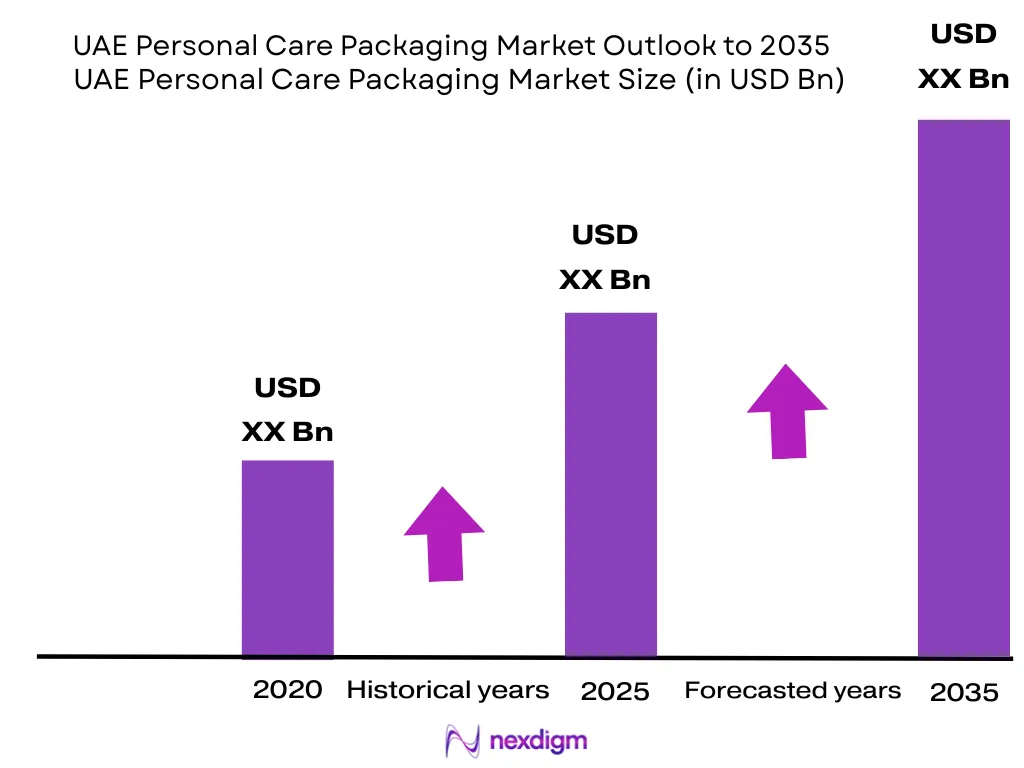
The UAE Personal Care Packaging Market is valued at approximately USD ~ billion, compared with USD ~ billion in the preceding annual period. These remain placeholders because no UAE government dataset isolates personal-care-packaging revenue. Demand is supported by national GDP rising from approximately USD 514 billion to USD 552.32 billion, alongside GDP per capita reaching USD 50,273.5. Premium skin care, fragrance, grooming, tourism, hospitality and e-commerce sustain demand for bottles, jars, tubes, pumps and decorated cartons. Dubai, Sharjah, Ajman, Abu Dhabi and Ras Al Khaimah dominate the UAE Personal Care Packaging Market. Dubai leads through luxury-beauty retail, duty-free operations, brand headquarters, Jebel Ali logistics and consumer-product registration infrastructure. Sharjah and Ajman provide plastics conversion, printing, contract filling and warehousing. Abu Dhabi supports premium retail, hotels and institutional procurement, while Ras Al Khaimah offers industrial land and manufacturing connectivity. Hotel guests increased from approximately 28.1 million to 30.8 million, strengthening amenity and travel-size packaging demand.
Market Segmentation
By Product Format
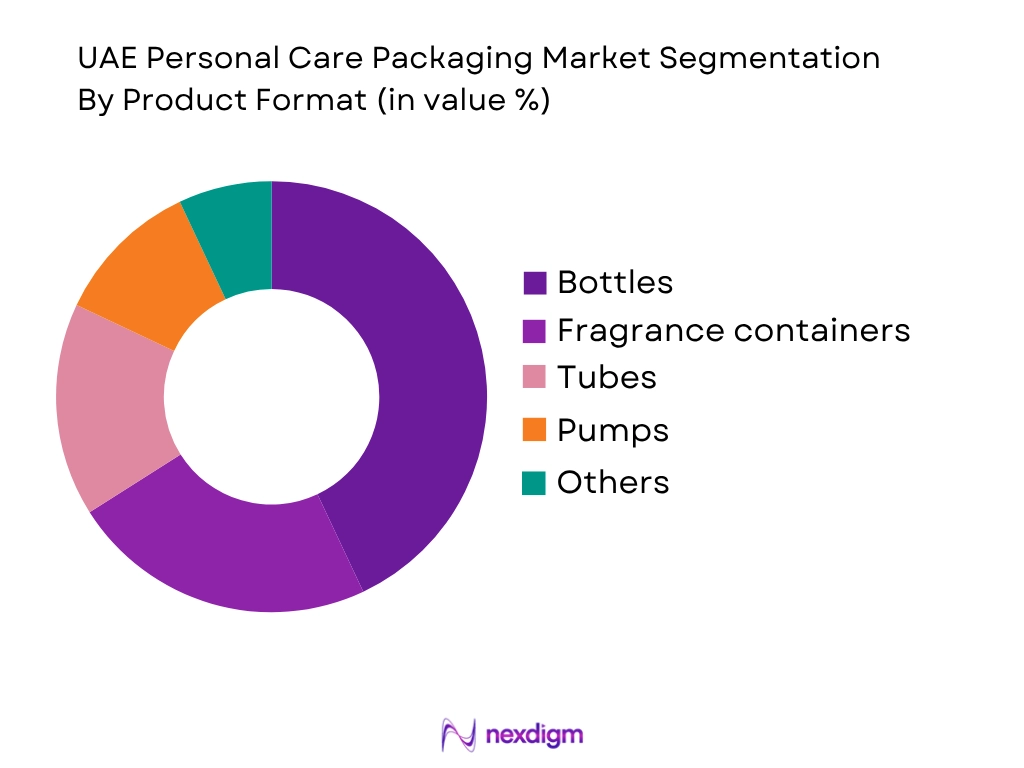
The UAE Personal Care Packaging Market is segmented into bottles, jars, tubes, pumps and airless packs, fragrance containers, aerosol and roll-on packs, refill pouches, and secondary cartons. Bottles hold the dominant share because shampoos, conditioners, body washes, lotions, liquid soaps, hair oils and hotel amenities generate high-volume demand for PET, HDPE and polypropylene containers. Bottles can be paired with flip-top closures, treatment pumps, foaming pumps or fine-mist sprayers and adapted for mass, premium and hospitality portfolios. Fragrance bottles contribute higher packaging value through decorated glass, crimp pumps, collars and custom caps, but their unit volumes remain lower. Airless systems are increasingly important in serums, sun care and active skin care, while tubes remain common for facial cleansers, sunscreens, toothpaste and men’s grooming. Refill pouches are gaining relevance as hotels, retailers and personal-care brands reduce single-use rigid packaging.
By Packaging Material
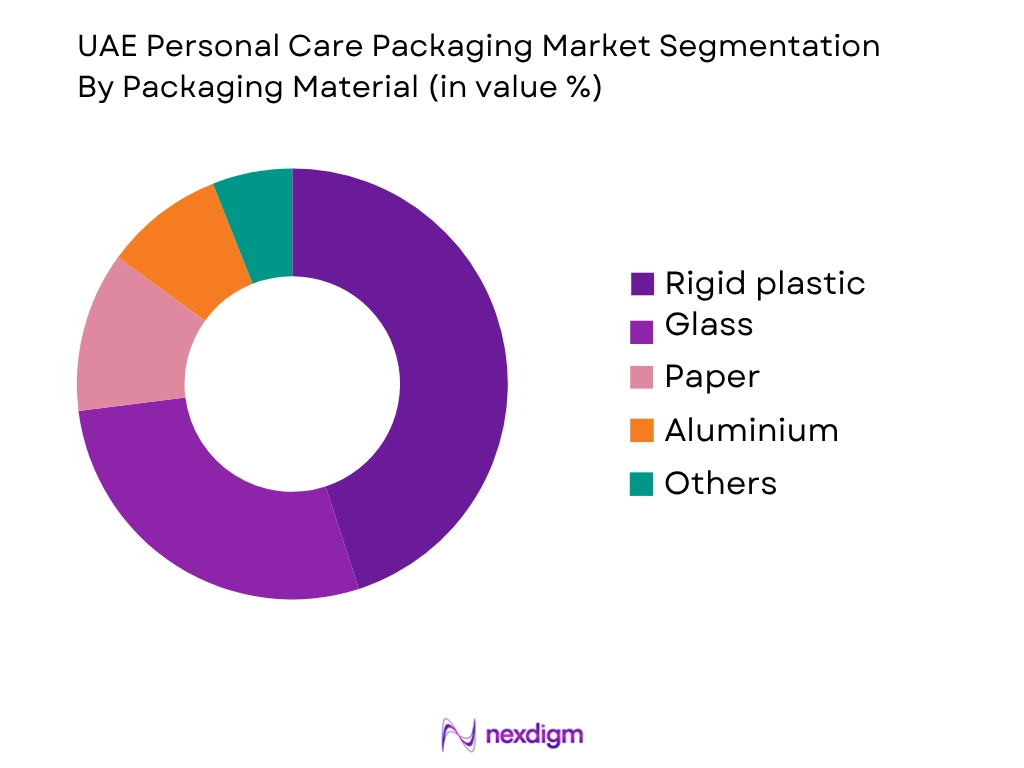
The UAE Personal Care Packaging Market is segmented into rigid plastic, glass, paper and paperboard, flexible laminates, aluminium and steel, and alternative materials. Rigid plastic holds the dominant share because PET, HDPE and polypropylene provide low weight, impact resistance, moulding flexibility and compatibility with mass-market personal-care formulations. Plastic bottles and jars also reduce transport breakage in e-commerce and hospitality supply chains. Glass has an unusually important position because the UAE is a major market and re-export hub for perfume, oud, attar, facial oils and prestige skin care. Paperboard is used extensively for fragrance cartons, cosmetic gift sets, travel-retail packs and premium secondary packaging. Aluminium supports aerosol cans, decorative collars and selected tubes, while flexible films serve refill pouches, samples and hotel-use formats. Future material selection will increasingly consider recycled content, detachable pumps, package weight and compatibility with the UAE’s circular-economy direction.
Competitive Landscape
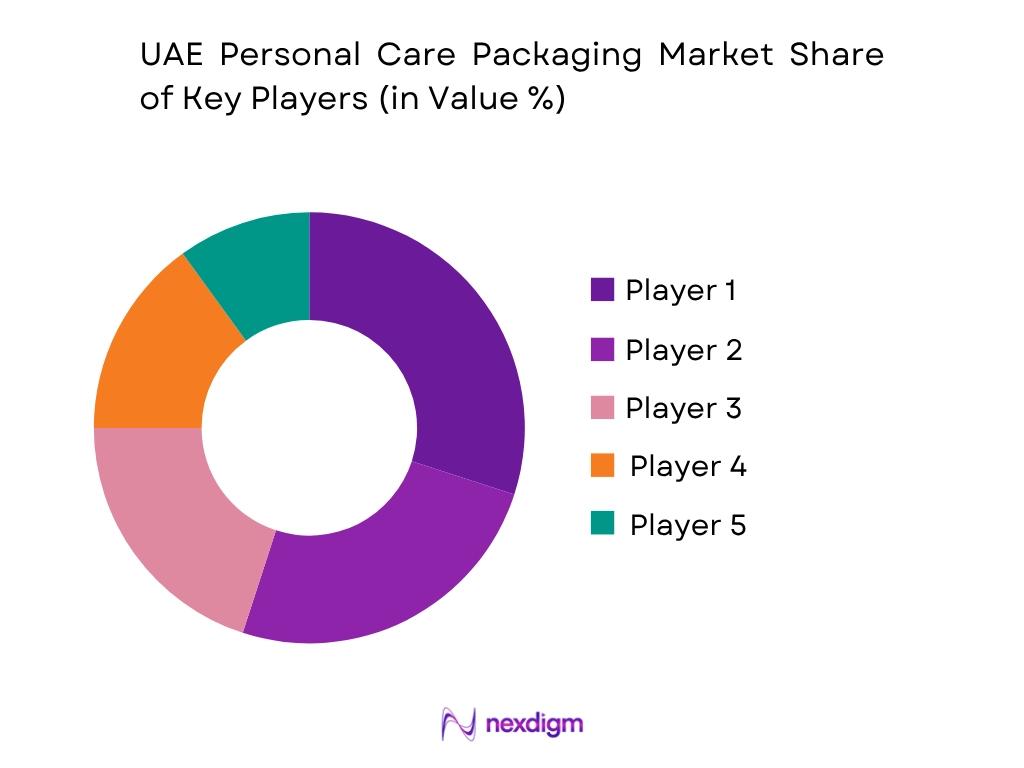
The UAE Personal Care Packaging Market combines domestic converters, regional packaging groups and international specialists. Local companies compete through rapid delivery, stock packaging, printing, warehousing and access to GCC customers. International suppliers differentiate through airless dispensing, fine-mist sprays, fragrance pumps, recycled-material technologies and global brand qualification. The competitive structure is fragmented across rigid plastics, glass, tubes, cartons, flexible packaging and dispensing components rather than being controlled by one integrated supplier. Montaji registration and Dubai Municipality’s product-safety framework also increase demand for accurate artwork, barcodes, traceability and compliant labels.
| Company | Established | Headquarters | Core personal-care packaging portfolio | Dispensing capability | Material capability | Decoration capability | Sustainability capability | UAE/GCC relevance |
| Integrated Plastics Packaging | 1994 | Dubai, UAE | ~ | ~ | ~ | ~ | ~ | ~ |
| Hotpack Global | 1995 | Dubai, UAE | ~ | ~ | ~ | ~ | ~ | ~ |
| AptarGroup | 1992 | Crystal Lake, United States | ~ | ~ | ~ | ~ | ~ | ~ |
| ALPLA | 1955 | Hard, Austria | ~ | ~ | ~ | ~ | ~ | ~ |
| Albéa Group | 2004 | Gennevilliers, France | ~ | ~ | ~ | ~ | ~ | ~ |
UAE Personal Care Packaging Market Analysis
Growth Drivers
Premium Consumer Spending and Tourism-Led Packaging Demand
The UAE’s high-income consumer base and tourism economy generate sustained demand for premium bottles, decorated glass, airless dispensers, tubes, gift boxes, hotel amenities and travel-size personal-care packs. The World Bank recorded national GDP of USD 552.32 billion, GDP per capita of USD 50,273.5, a population of approximately 10.99 million people and economic growth of 4.0 units for every 100 units in 2024. These indicators support spending on fragrance, skin care, sun care, grooming and salon products, where packaging contributes materially to perceived product quality. Tourism adds another demand layer: UAE hotels welcomed approximately 30.8 million guests and generated nearly AED 45 billion in revenue during 2024. Hotels, resorts, spas, airlines and duty-free retailers require amenity dispensers, miniatures, discovery sets and presentation packaging designed for multilingual and international consumers. The UAE’s large expatriate population also broadens demand across European, South Asian, Arab and East Asian beauty preferences. Packaging suppliers therefore serve both high-volume toiletries and lower-volume premium products requiring heavy glass, fine-mist pumps, metallic closures, Arabic decoration and rigid cartons. Suppliers with local warehousing can respond faster to seasonal tourism peaks and promotional campaigns than businesses dependent entirely on long imported-component lead times.
Industrial Diversification and Regional Packaging Production
Industrial diversification is strengthening the UAE’s ability to manufacture, fill, decorate and distribute personal-care packaging locally. The industrial sector contributed more than AED 210 billion to national GDP in 2024, while industrial exports reached AED 197 billion and domestic industrial procurement exceeded AED 110 billion. Dubai’s manufacturing sector generated AED 28.338 billion during the first nine months of 2024, compared with AED 27.699 billion in the corresponding 2023 period. These figures indicate expanding infrastructure for plastic moulding, flexible packaging, printing, cartons, warehousing and contract filling. Personal-care companies benefit from proximity to Jebel Ali, Dubai Industrial City, Sharjah industrial areas and Ajman manufacturing clusters, which reduce transportation time between component suppliers, fillers and regional distribution centres. Free zones also permit up to 100 units of foreign ownership for every 100 units of equity, supporting international packaging companies and component distributors establishing regional operations. The Jebel Ali Free Zone has attracted more than AED 110 billion in cumulative investment, reinforcing the UAE’s position as a gateway for packaging materials, pumps, glass bottles and finished cosmetics moving across the GCC, Africa and South Asia. This industrial and logistics base encourages brands to undertake regional final assembly, decoration and private-label production within the UAE.
Market Challenges
Imported Specialist Components and Climate-Performance Requirements
The UAE produces plastic containers, cartons and flexible formats domestically, but many prestige fragrance pumps, airless mechanisms, metallised collars, specialist elastomers and decorated glass components remain dependent on imported supply chains. This creates inventory and qualification risks for fragrance, dermocosmetic and luxury skin-care brands. The operating environment compounds the technical challenge: packages may remain in warehouses, delivery vehicles or outdoor loading areas under intense heat, increasing the risk of panel deformation, seal relaxation, label lifting, fragrance evaporation and formula discoloration. Each imported component therefore requires compatibility testing covering pump priming, spray pattern, crimp integrity, closure torque, leakage, UV exposure and temperature cycling. The scale of the national economy magnifies the commercial consequences of failure. The UAE recorded GDP of USD 552.32 billion and a population of nearly 10.99 million people in 2024, while hotels served 30.8 million guests, creating large volumes of retail and hospitality packaging movements. A failed pump or leaking cap can affect retail inventory, hotel procurement contracts and e-commerce customer satisfaction simultaneously. Smaller personal-care brands face additional pressure because custom moulds, decorated caps and imported pumps require minimum production commitments. Local suppliers that maintain substitute components, climate-tested stock and formal change-control procedures are better positioned to reduce these operational risks.
Registration, Labelling and Multimarket Compliance Complexity
Personal-care packaging sold through Dubai must align with the municipality’s technical requirements for cosmetics, fragrances, storage, import and re-export. The Montaji platform supports consumer-product assessment, registration and safety verification, and Dubai Municipality reported more than 400,000 registered products on the system. Packaging artwork must therefore remain consistent with product identity, ingredients, country of origin, responsible company details, batch information, nominal content, warnings and Arabic-language requirements. The challenge becomes greater for brands distributing the same product across several GCC markets, hotels, airports and online platforms, because each destination may require different labels, barcodes or responsible-party information. Packaging changes cannot be treated as purely aesthetic alterations; a revised bottle size, claim, fragrance or product name may require coordinated updates across regulatory files, labels, cartons, inventory and e-commerce listings. Dubai’s economy attracted 971 greenfield foreign-investment projects with capital inflows of AED 18.86 billion in 2024, indicating continued entry of international businesses and new consumer brands. This increases the volume of product variants moving through registration and distribution systems. Packaging suppliers must consequently provide artwork version control, batch-code space, bilingual layouts and traceability rather than only container conversion. Errors can delay launches, create relabelling work or prevent products from entering formal retail and re-export channels.
Market Opportunities
Refillable Hospitality and Circular Personal Care Packaging
Hotels, resorts, spas and personal-care brands represent a significant future opportunity for refillable packaging, bulk dispensers and reduced-material formats. UAE hotels received approximately 30.8 million guests and earned nearly AED 45 billion in 2024, creating substantial recurring demand for shampoo, conditioner, shower gel, lotion and hand-wash packaging. Replacing individual miniature bottles with tamper-controlled wall dispensers and larger back-of-house refill packs can reduce the number of rigid containers handled by housekeeping teams while maintaining branded guest experiences. Consumer brands can extend the same architecture to at-home refill pouches, reusable pump bottles and replaceable cartridges. The UAE’s circular-economy and waste-management direction supports packaging designed around material reduction, recyclability and reuse. Commercial success will require more than a sustainability claim: hotel dispensers must withstand repeated cleaning, resist unauthorised opening and deliver consistent doses, while refill pouches must tolerate transport heat and repeated handling. Packaging suppliers can add value through lifecycle material calculations, detachable-pump designs, PCR resin qualification and refill-system testing. The opportunity is particularly relevant to large hotel groups, airport hospitality providers and premium residential developments that procure personal-care products at scale. Suppliers able to combine durable primary containers with efficient bulk refills can establish long-term contracts and reduce dependence on one-off promotional packaging orders.
Local Production, Digital Decoration and GCC Re-Export Packaging
The UAE’s industrial and trade infrastructure creates an opportunity to localise short-run personal-care packaging, digital decoration and final product assembly for GCC distribution. In 2024, the industrial sector contributed more than AED 210 billion to GDP, industrial exports reached AED 197 billion, and domestic industrial procurement exceeded AED 110 billion. Non-oil trade between the UAE and ASEAN economies reached approximately USD 18 billion during the first half of 2024, providing established routes for importing pumps, films, resins and decoration equipment from Asian manufacturing centres. Packaging companies can use these connections to stock standard bottles and components in the UAE, then apply Arabic–English labels, digital printing, foiling, batch coding and market-specific cartons locally. This model reduces launch times for perfume houses, digital-first skin-care brands, private labels and hospitality products that cannot justify large custom production runs. Digital printing also allows fragrance variants, seasonal gift packs, influencer collaborations and destination-specific duty-free editions without separate printing cylinders for each design. Free-zone structures support regional inventory and re-export, while Jebel Ali’s integrated logistics ecosystem provides access to Saudi Arabia, Oman, Kuwait, Bahrain, Qatar, Africa and South Asia. Suppliers combining stock packaging, contract filling, regulatory artwork control and cross-border fulfilment can move beyond commodity conversion and become regional commercialization partners for emerging and multinational personal-care brands.
Future Outlook
The UAE Personal Care Packaging Market is forecast to expand at approximately ~% CAGR during the 2026–2035 period. This rate is a placeholder because official UAE sources do not publish a standalone packaging forecast. Growth will be led by premium beauty, fragrance exports, tourism, hotel amenities, online retail, private-label manufacturing and circular packaging redesign. Dubai will remain the principal commercial centre because of its concentration of international beauty companies, airport retail, luxury malls, distributors, e-commerce fulfilment and Jebel Ali logistics. Sharjah and Ajman are expected to remain important for moulding, printing, filling and lower-volume custom production. Fragrance packaging will be one of the highest-value opportunities. UAE perfume houses require decorated glass, precision crimp pumps, metal collars, weighted caps, rigid boxes and tamper-evident components. Suppliers that combine European-quality decoration with shorter regional lead times will be well positioned. Airless packaging will gain relevance in premium moisturisers, sunscreens, serums and dermocosmetics. These systems protect sensitive formulations, support controlled dosing and reduce product residue. Local stocking and assembly can address long imported-component lead times. Hospitality packaging will shift from single-use miniature bottles toward tamper-controlled bulk dispensers, refillable wall-mounted bottles and larger back-of-house refill packs. Suppliers must balance material reduction with hygiene, housekeeping efficiency and hotel-brand presentation. Travel retail will continue supporting miniatures, discovery sets and gift packs. These products require compact dimensions, strong secondary cartons and multilingual labels that function across several destination markets. E-commerce will increase demand for lockable pumps, induction seals, cap-retention testing and parcel-ready secondary packaging. Personal-care products may face heat exposure during delivery, making resin stability, label adhesion and fragrance retention commercially important. Luxury packaging will become more sustainable rather than disappearing. Brands will evaluate lighter glass, removable decorative collars, refill cartridges, certified paperboard and simplified inserts while preserving premium appearance.
Major Players
- Integrated Plastics Packaging
- Corys Packaging
- Hotpack Global
- ENPI Group
- Falcon Pack
- Al Bayader International
- AptarGroup
- ALPLA
- Berry Global
- Amcor
- Huhtamaki
- Albéa Group
- Silgan Dispensing Systems
- Quadpack
- HCP Packaging
Key Target Audience
- Personal care and cosmetics manufacturers
- Perfume, oud and fragrance houses
- Personal care packaging manufacturers and converters
- Contract manufacturing and private-label companies
- Hotels, resorts, airlines and travel-retail operators
- E-commerce, pharmacy and specialty-beauty retailers
- Investments and venture capitalist firms
- Government and regulatory bodies (Dubai Municipality, Ministry of Industry and Advanced Technology, Ministry of Climate Change and Environment, Emirates Authority for Standardization and Metrology functions within MoIAT, and local economic departments)
Research Methodology
Step 1: Identification of Key Variables
The first phase constructs an ecosystem map covering personal-care brands, fragrance houses, packaging converters, dispensing suppliers, contract fillers, retailers, hotels, importers, free-zone distributors and regulators. Critical variables include packaging units per product, material mix, imported-component dependence, dispensing-system usage, tourism exposure, re-export activity and premium decoration intensity.
Step 2: Market Analysis and Construction
Historical demand is analysed through finished-product consumption, hotel amenities, fragrance activity, packaging imports, domestic conversion and company revenues. The top-down model converts personal-care and hospitality consumption into packaging units. The bottom-up model aggregates bottles, tubes, pumps, glass packs, refill formats, cartons and decoration revenue before reconciling results through material weights and production capacity.
Step 3: Hypothesis Validation and Expert Consultation
Market hypotheses are validated through computer-assisted telephone interviews with packaging manufacturers, personal-care brands, perfume companies, contract fillers, hotel procurement teams and distributors. Interviews assess pack-format penetration, imported-component lead times, custom tooling, climate-performance requirements, Montaji compliance, e-commerce leakage and sustainability priorities.
Step 4: Research Synthesis and Final Output
The final phase integrates government economic indicators, Dubai Municipality guidelines, tourism statistics, primary interviews and company disclosures. Market size is triangulated across revenue, packaging units, material consumption and dispensing-component shipments. Forecast assumptions include tourism, premiumisation, refill adoption, e-commerce, regional re-exports and local manufacturing investment.

- Executive Summary
- Research Methodology (Market Definitions and Assumptions, Personal Care Packaging Taxonomy, Abbreviations, Market Sizing Approach, Top-Down Personal Care Consumption Analysis, Bottom-Up Packaging Supplier Aggregation, Packaging Units per Finished Product, Demand-Side Assessment, Supply-Side Capacity Mapping, Import–Re-Export Reconciliation, Primary Industry Interviews, Data Triangulation, Forecasting Framework, Scenario Analysis, Limitations and Future Conclusions)

- Definition and Scope
- Market Evolution and Industry Genesis
- Timeline of Major Industry Developments
- Personal Care Packaging Business Cycle
- Personal Care and Cosmetics Manufacturing Ecosystem
- Domestic Packaging Conversion and Imported Component Ecosystem

- Growth Drivers (High-Income Consumer Base, Premium Beauty Consumption, Tourism and Hospitality Demand, Travel-Retail Expansion, E-Commerce Growth, Regional Headquarters Presence, Free-Zone Manufacturing, Fragrance Culture and GCC Re-Export Activity)
- Market Challenges (Imported Premium Component Dependence, High Custom Tooling Costs, Small Domestic Manufacturing Base, Heat and UV Exposure, Short Product-Launch Cycles, Multicomponent Recycling Constraints, Formula Compatibility Risks and Regulatory Registration Complexity)
- Market Opportunities (Luxury Fragrance Packaging, Refillable Skin-Care Systems, Hotel Bulk Dispensers, Airless Packaging, PCR Resin, Smart Authentication, Arabic-Language Digital Packaging, Travel-Size Formats, Contract Manufacturing and GCC Re-Export Packaging)
- Market Trends (Prestige Glass Packaging, Minimalist Clinical Design, Oud-Inspired Decoration, Refill Pouches, Airless Pumps, Metallised Closures, Digital Printing, QR-Enabled Authentication, Sustainable Hotel Amenities and Omnichannel Packaging)
- SWOT Analysis
- Porter’s Five Forces Analysis
- PESTLE Analysis

- By Market Value (2020-2025)
- By Packaging Units (2020-2025)
- By Packaging Material Consumption (2020-2025)

- By Product Format (In Value %)
Bottles
Jars
Plastic Tubes
Laminated Tubes
Aluminium Tubes
Sachets
Pouches
Stand-Up Refill Pouches - By Packaging Material (In Value %)
Polyethylene Terephthalate
Recycled Polyethylene Terephthalate
High-Density Polyethylene
Low-Density Polyethylene
Polypropylene
Post-Consumer Recycled Polyolefins - By Sales and Distribution Channel (In Value %)
Supermarkets and Hypermarkets
Pharmacies and Drugstores
Health and Beauty Retailers
Department Stores
Specialty Beauty Retailers
Perfume and Oud Retailers
Professional Salons and Spas - By Geographic Market (In Value %)
Dubai
Abu Dhabi
Sharjah
Ajman
Ras Al Khaimah
Fujairah
Umm Al Quwain

- Market Share of Major Players
- Cross Comparison Parameters (Personal Care Packaging Portfolio Breadth, Luxury Fragrance and Dispensing Capability, UAE Manufacturing and Warehousing Footprint, Sustainable Material and PCR Capability, Custom Moulding and Decoration Capability, Refill and Hospitality Packaging Capability, GCC Distribution and Re-Export Reach, UAE Personal Care Brand Customer Coverage)
- SWOT Analysis of Major Players
- Detailed Profiles of Major Companies
Integrated Plastics Packaging
Corys Packaging
Hotpack Global
Arabian Packaging
Falcon Pack
ENPI Group
Al Bayader International
AptarGroup
ALPLA
Berry Global
Amcor
Huhtamaki
Albéa Group
Silgan Dispensing Systems
Quadpack

- Packaging Attribute Preference Assessment
- Premium versus Functional Packaging Preference
- Luxury Unboxing Preference
- Refillable Packaging Acceptance
- Recycled-Content Packaging Perception
- Glass versus Plastic Preference

- By Market Value (2026-2035)
- By Packaging Units (2026-2035)
- By Packaging Material Consumption (2026-2035)


 Request a Sample
 Ask for Customization
 Get a Quote
 Enquire Now