
 Download PDF
Market Overview
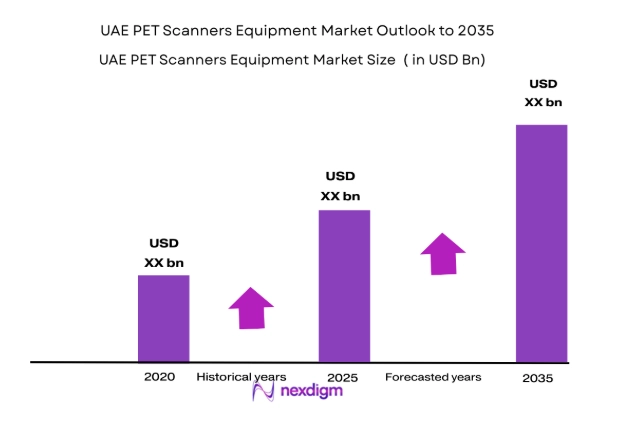
The UAE PET Scanners Equipment market is expected to experience significant growth, driven by increasing healthcare infrastructure investment and technological advancements. The market is valued at approximately USD ~ million, with growth fueled by rising healthcare demands, especially in oncology and cardiology sectors. The introduction of more sophisticated and affordable PET systems, along with improvements in diagnostic precision, has contributed to the surge in adoption. With advancements in digital and hybrid systems, market dynamics are witnessing a transformative shift. Furthermore, healthcare policies supporting the development of healthcare facilities have provided a conducive environment for the market’s expansion.
Dominant players in the UAE include cities such as Dubai and Abu Dhabi, where healthcare investments are concentrated. These cities lead in healthcare adoption due to government-driven initiatives and their status as major healthcare hubs. Dubai, in particular, stands out due to its advanced medical infrastructure and commitment to becoming a regional healthcare leader. These factors, along with the high concentration of medical research and healthcare facilities, have made these areas the key growth drivers in the UAE PET Scanners Equipment market.
Market Segmentation
By Product Type:
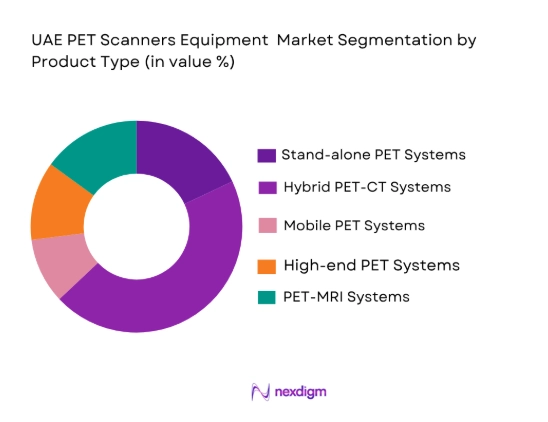
The UAE PET Scanners Equipment market is segmented by product type into stand-alone PET systems, hybrid PET-CT systems, mobile PET systems, high-end PET systems, and PET-MRI systems. Among these, hybrid PET-CT systems have a dominant market share due to their superior imaging capabilities and their ability to provide detailed functional and anatomical data, which is crucial in oncology diagnostics. The preference for hybrid systems has grown as healthcare providers seek to improve diagnostic accuracy and reduce patient scanning time, making these systems a valuable tool for both diagnosis and treatment planning in cancer care. Their versatility and precision have made them the preferred choice in hospitals and diagnostic centers.
By Platform Type:
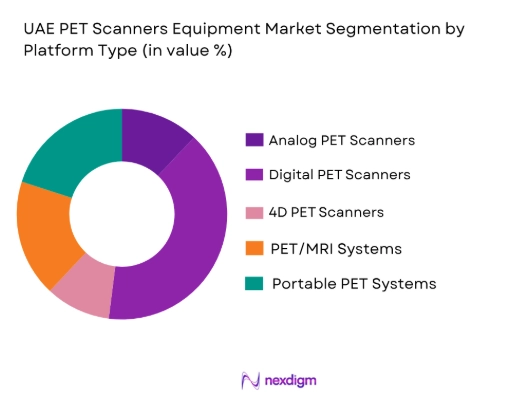
The market is segmented by platform type into analog PET scanners, digital PET scanners, 4D PET scanners, PET/MRI systems, and portable PET systems. Digital PET scanners dominate the market share due to their higher resolution, faster scanning times, and improved sensitivity, which enable better detection of diseases, including cancer, at earlier stages. The shift from analog to digital systems has been largely driven by the technological advancements in digital detectors and computer processing power. These systems provide enhanced image quality, enabling healthcare providers to make more accurate diagnoses, particularly in oncology and neurology.
Competitive Landscape
The competitive landscape of the UAE PET Scanners Equipment market is characterized by a mix of global and regional players. The industry is undergoing a phase of consolidation with major multinational companies acquiring smaller regional players to expand their product offerings and strengthen their market positions. Major players in the market leverage technological advancements, customer service, and strong distribution networks to remain competitive. Companies are also focusing on introducing advanced, cost-effective, and compact PET scanner models to cater to growing healthcare demands. Additionally, strategic partnerships with healthcare providers and government initiatives play a significant role in driving market growth.
| Company Name | Establishment Year | Headquarters | Technology Focus | Market Reach | Key Products | Revenue (USD) |
| Philips Healthcare | 1891 | Netherlands | ~ | ~ | ~ | ~ |
| Siemens Healthineers | 1847 | Germany | ~ | ~ | ~ | ~ |
| GE Healthcare | 1892 | USA | ~ | ~ | ~ | ~ |
| Canon Medical Systems | 1933 | Japan | ~ | ~ | ~ | ~ |
| Mindray Medical | 1991 | China | ~ | ~ | ~ | ~ |
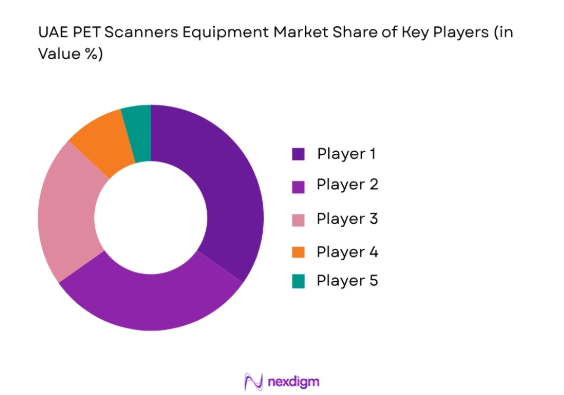
UAE PET Scanners Equipment Market Analysis
Growth Drivers
Technological Advancements in Imaging Systems:
Technological advancements in imaging systems have been one of the most significant growth drivers in the UAE PET Scanners Equipment market. The shift from analog to digital and hybrid PET-CT systems has revolutionized the healthcare landscape. These advancements have resulted in increased image resolution, reduced scanning times, and improved accuracy, making PET systems more efficient for diagnostic and treatment planning purposes. The demand for high-resolution images and quicker scan results is particularly crucial in oncology, where early detection of cancer can significantly improve treatment outcomes. These systems also enable better monitoring of treatment responses in patients with chronic conditions. The introduction of compact and portable PET systems is another advancement that allows for easier integration into smaller healthcare facilities and clinics, making advanced imaging accessible to a broader range of patients. As healthcare facilities in the UAE continue to adopt the latest technologies, the market is poised for significant growth driven by technological innovation.
Government Healthcare Initiatives:
Government-driven healthcare initiatives are another key growth driver for the PET scanners market. In the UAE, government healthcare investments have significantly increased, especially in the development of healthcare infrastructure and the modernization of existing medical facilities. The UAE government’s Vision 2021 and subsequent policies have prioritized advancements in medical technology and the provision of world-class healthcare services. These initiatives have paved the way for enhanced healthcare facilities, contributing to a greater demand for advanced diagnostic tools like PET scanners. The government’s emphasis on healthcare modernization, coupled with favorable regulations for the medical equipment sector, has fostered a supportive environment for the growth of PET scanners. Additionally, the government is encouraging the use of medical technologies that improve diagnostic accuracy, which has further fueled the adoption of PET scanning systems. As healthcare spending continues to rise, particularly in cities like Dubai and Abu Dhabi, the market is expected to expand rapidly.
Market Challenges
High Initial Investment Costs:
A significant challenge for the UAE PET Scanners Equipment market is the high initial investment costs associated with the purchase of PET scanning systems. The cost of advanced PET scanners, particularly hybrid PET-CT and PET-MRI systems, can be prohibitive for smaller healthcare facilities and diagnostic centers. This high upfront cost often limits the widespread adoption of these systems, particularly in smaller hospitals or clinics that may not have the necessary capital to make such investments. Additionally, maintenance costs, which include servicing and upgrading the equipment, add to the financial burden. For many healthcare providers, balancing the benefits of acquiring high-end diagnostic equipment with the cost implications can present a difficult decision. Despite the growing demand for advanced imaging technologies, the financial constraints faced by healthcare institutions remain a major hurdle. As a result, there is a delay in the deployment of PET scanners in certain regions, slowing down market growth.
Lack of Skilled Workforce:
Another challenge impacting the UAE PET Scanners Equipment market is the shortage of trained professionals who are capable of operating and maintaining these advanced imaging systems. The complexity of PET scanning technology requires highly specialized personnel to ensure accurate diagnostics and proper functioning of the equipment. The demand for skilled technicians and radiologists is high, but there is often a gap between the available talent and the growing number of healthcare facilities adopting advanced imaging technology. This skills gap can lead to inefficiencies, longer turnaround times for diagnostics, and potentially lower quality of service. The recruitment and training of skilled personnel are crucial to maintaining high standards in patient care and ensuring that PET scanners are used to their full potential. Until this challenge is addressed, it may continue to hinder market expansion.
Opportunities
Expanding Healthcare Infrastructure:
One of the most significant opportunities for the UAE PET Scanners Equipment market is the rapid expansion of healthcare infrastructure across the region. The UAE government has consistently prioritized healthcare as a key component of its national development strategy. Initiatives to enhance healthcare facilities, particularly in underserved areas, have created a favorable environment for the adoption of advanced medical technologies like PET scanners. As new hospitals and diagnostic centers are being built, they are increasingly equipped with the latest medical imaging systems, including PET scanners. This expansion is not only limited to major cities but is also reaching rural areas, where healthcare access has traditionally been limited. The demand for advanced imaging systems is expected to grow as more facilities are established, creating new opportunities for PET scanner manufacturers and suppliers. Furthermore, the ongoing efforts to enhance the country’s healthcare offerings will likely continue to drive investment in high-end medical technologies, providing a sustained growth opportunity for the PET scanners market.
Rising Demand for Early Diagnosis and Preventive Healthcare:
The growing awareness about the importance of early diagnosis and preventive healthcare is another opportunity for the UAE PET Scanners Equipment market. There is a strong shift towards preventive care in the UAE, as both the government and healthcare providers are focusing on reducing the burden of diseases through early detection. PET scanners, with their ability to detect diseases such as cancer and neurological disorders at an early stage, are becoming essential tools in modern diagnostic practices. With the rising prevalence of chronic diseases, including cancer and cardiovascular diseases, there is an increasing need for reliable and non-invasive diagnostic technologies. The adoption of PET scanning systems is expected to rise as healthcare providers aim to meet the demand for early and accurate diagnoses. This trend towards preventive healthcare and early diagnosis presents a significant growth opportunity for the market.
Future Outlook
The future outlook for the UAE PET Scanners Equipment market over the next five years remains highly positive. Technological advancements, particularly the development of more compact, efficient, and cost-effective PET systems, are expected to drive significant growth. Additionally, the increasing demand for early diagnosis and preventive healthcare, supported by government initiatives, will further fuel market expansion. With the ongoing development of healthcare infrastructure in both urban and rural areas, the market will likely experience wider adoption of PET scanners across various healthcare segments. Regulatory support for medical equipment, coupled with the continuous push for innovation, will play a key role in shaping the market’s trajectory, ensuring that it remains a key component of the UAE’s medical landscape.
Major Players
- Philips Healthcare
- Siemens Healthineers
- GE Healthcare
- Canon Medical Systems
- Mindray Medical
- Hitachi Medical Systems
- Fujifilm Healthcare
- Varian Medical Systems
- Medtronic
- Hologic
- NeusoftMedical Systems
- United Imaging Healthcare
- Carestream Health
- Esaote
- Toshiba Medical Systems
Key Target Audience
- Investments and venture capitalist firms
- Government and regulatory bodies
- Hospital chains
- Diagnostic imagingcenters
- Oncology clinics
- Cardiology clinics
- Research institutions
- Healthcare equipment distributors
Research Methodology
Step 1: Identification of Key Variables
Identifying key market variables such as technology trends, consumer behavior, and government policies is essential to provide a clear framework for analysis.
Step 2: Market Analysis and Construction
Comprehensive analysis of market dynamics, consumer preferences, and competitive forces is conducted to construct a market model that reflects current trends.
Step 3: Hypothesis Validation and Expert Consultation
Expert consultations and hypothesis testing are used to validate findings and ensure the accuracy of the market outlook and trends.
Step 4: Research Synthesis and Final Output
All collected data and insights are synthesized into a cohesive report, ensuring it provides actionable intelligence and a clear view of the market.

- Executive Summary
- Research Methodology (Definitions, Scope, Industry Assumptions, Market Sizing Approach, Primary & Secondary Research Framework, Data Collection & Verification Protocol, Analytic Models & Forecast Methodology, Limitations & Research Validity Checks)

- Market Definition and Scope
- Value Chain & Stakeholder Ecosystem
- Regulatory / Certification Landscape
- Sector Dynamics Affecting Demand
- Strategic Initiatives & Infrastructure Growth

- Growth Drivers
Increasing Prevalence of Cancer
Government Initiatives for Healthcare Infrastructure
Technological Advancements in PET Scanners - Market Challenges
High Initial Capital Investment
Regulatory Compliance Challenges
Lack of Skilled Technicians - Market Opportunities
Expanding Healthcare Infrastructure
Rising Adoption of Hybrid Imaging Systems
Growing Demand for Early Detection of Diseases - Trends
Integration of AI with PET Scanners
Miniaturization of PET Scanners
Increase in Demand for PET/MRI Systems
Government Regulations
SWOT Analysis of Key Competitors
Porter’s Five Forces nt - UAE PET Scanners Equipment Market EndUser Analysis
Hospitals and Healthcare Providers
Diagnostic Imaging Centers
Research & Educational Institutions
Oncology and Cardiology Specialty Clinics

- By Market Value, 2020-2025
- By Installed Units, 2020-2025
- By Average System Price, 2020-2025
- By System Complexity Tier, 2020-2025

- By System Type (In Value%)
Positron Emission Tomography (PET)
Hybrid PET-CT Systems
Stand-alone PET Systems
Mobile PET Systems
High-end PET Systems - By Platform Type (In Value%)
Analog PET Scanners
Digital PET Scanners
4D PET Scanners
PET/MRI Systems
Portable PET Systems - By Fitment Type (In Value%)
Fixed Fitment
Mobile Fitment
Modular Fitment
Portable Fitment
High-efficiency Fitment - By EndUser Segment (In Value%)
Hospitals
Diagnostic Imaging Centers
Research Institutes
Oncology Centers
Cardiology Clinics - By Procurement Channel (In Value%)
Direct Sales
Distributors & Resellers
Online Sales
Government Contracts
Private Health Sector

- Market Share Analysis
- CrossComparison Parameters (System Type, Platform Type, End-User, Procurement Channel, Price Sensitivity)
- SWOT Analysis of Key Competitors
- Pricing & Procurement Analysis
- Porter’s Five Forces
Key Players
Philips Healthcare
Siemens Healthineers
GE Healthcare
Canon Medical Systems
Hitachi Medical Systems
Medtronic
Hologic
Toshiba Medical Systems
Varian Medical Systems
Neusoft Medical Systems
Mindray Medical
United Imaging Healthcare
Fujifilm Healthcare
Esaote
Carestream Health

- Hospitals and Healthcare Providers
- Diagnostic Imaging Centers
- Research & Educational Institutions
- Oncology and Cardiology Specialty Clinics

- Forecast Market Value, 2026-2035
- Forecast Installed Units, 2026-2035
- Price Forecast by System Tier, 2026-2035
- Future Demand by Platform, 2026-2035


 Request a Sample
 Ask for Customization
 Get a Quote
 Enquire Now