
 Download PDF
Market Overview
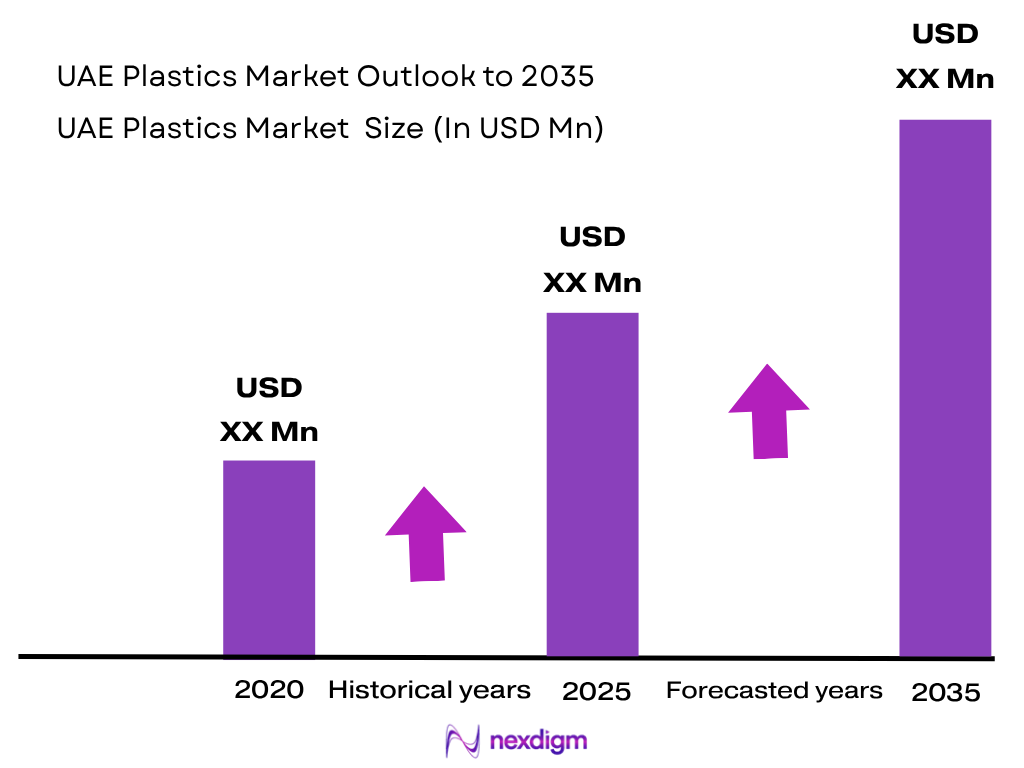
The UAE Plastics Market is valued at approximately USD ~ billion, compared with approximately USD ~21.9 billion in the preceding period, based on the historical series underlying Grand View Research’s UAE plastics databook. Demand is supported by packaging, construction, infrastructure, consumer goods and industrial applications. The published series subsequently reaches USD 23.8 billion, while polyethylene remains the largest resin category, reflecting the country’s strong polyolefin production base and downstream conversion ecosystem.
Abu Dhabi, Dubai and Sharjah form the principal demand and manufacturing centers of the UAE Plastics Market. Abu Dhabi benefits from the Al Ruwais petrochemical complex, where Borouge operates 5.0 million tonnes of annual polyolefin capacity. Dubai benefits from Jebel Ali’s conversion, logistics and re-export infrastructure, while Sharjah has an established plastics manufacturing base. The market is additionally supported by packaging conversion facilities in Ras Al Khaimah and other northern emirates serving domestic and export customers.
Market Segmentation
By Polymer Type
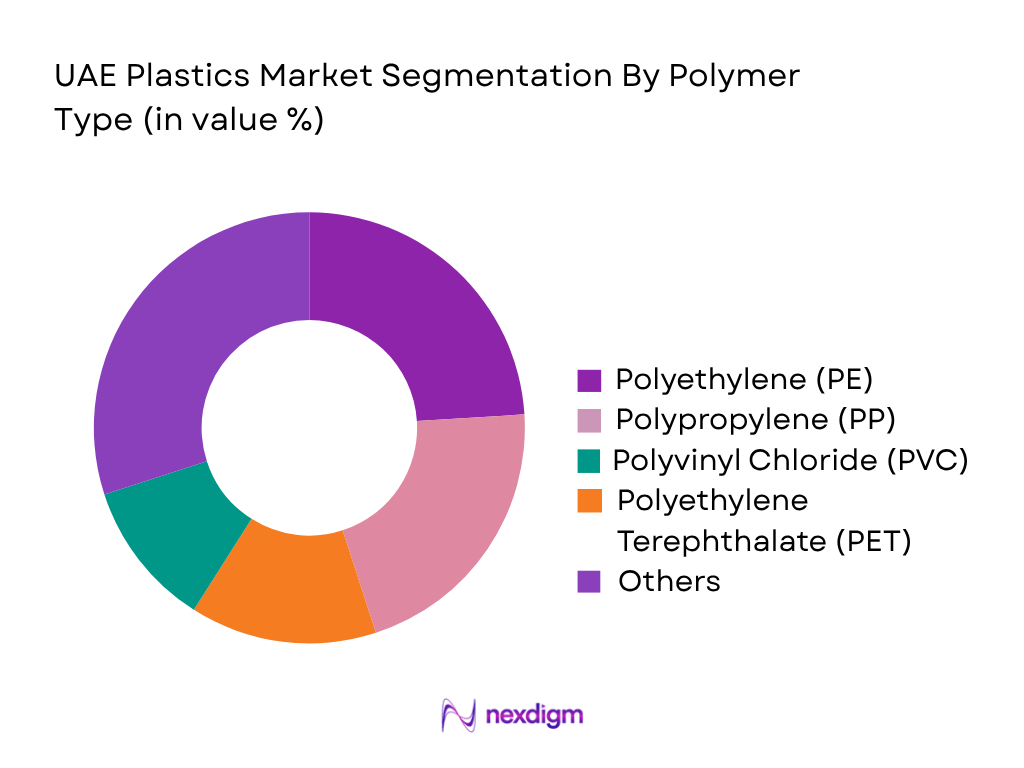
The UAE Plastics Market is segmented by polymer type into polyethylene, polypropylene, polyvinyl chloride, polyethylene terephthalate, polystyrene, polyurethane, engineering plastics and other specialty polymers. Polyethylene holds the dominant market share due to extensive applications across films, packaging, pipes, geomembranes, containers and infrastructure products. The UAE also possesses a significant domestic polyethylene production advantage through Borouge’s integrated Al Ruwais complex. Grand View Research identifies polyethylene as the UAE plastics market’s largest revenue-generating polymer category, while its dedicated polyethylene study identifies HDPE as the largest polyethylene sub-segment. Demand is further reinforced by water infrastructure, flexible packaging and industrial applications. Borouge’s differentiated PE grades and large-scale production provide domestic converters with access to a broad feedstock base, strengthening polyethylene’s structural position within the country’s plastics value chain.
By End-Use Industry
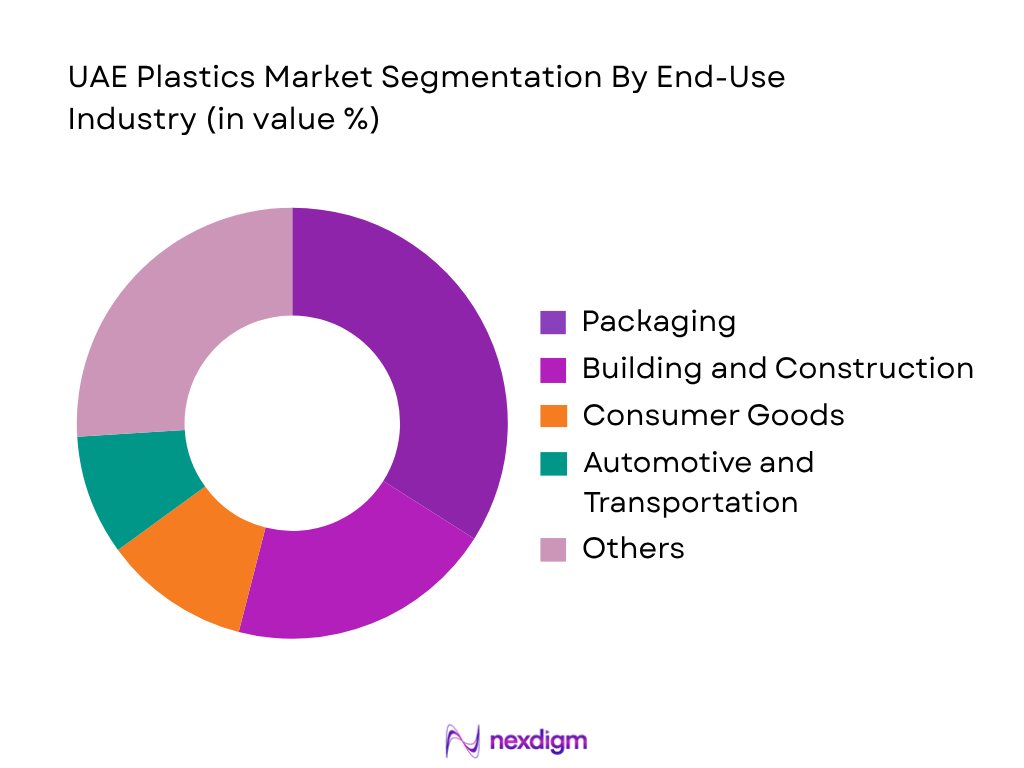
The UAE Plastics Market is segmented by end-use industry into packaging, construction, electrical and electronics, automotive and transportation, healthcare, agriculture, consumer goods, utilities and other industrial applications. Packaging represents the dominant end-use segment, supported by substantial demand for flexible films, rigid containers, bottles, caps, closures, food packaging and industrial packaging. The UAE’s food and beverage processing base, tourism activity, modern retail network, e-commerce ecosystem and high consumption of packaged beverages sustain resin demand. Packaging also provides a broad application base for PE, PP and PET. In the wider UAE packaging industry, plastics account for a substantial portion of material demand, while flexible plastics are an important product category. Regulatory pressure is simultaneously shifting converters toward recyclable mono-material structures, lighter formats and recycled-content packaging rather than eliminating polymer demand altogether.
Competitive Landscape
The UAE Plastics Market combines a highly concentrated upstream polyolefin manufacturing structure with a more fragmented downstream conversion industry. Borouge is the most significant domestic resin producer, while companies including Taghleef Industries, Cosmoplast, Hotpack Packaging Industries, Huhtamaki Flexibles UAE and Integrated Plastics Packaging participate across films, flexible packaging, pipes, containers and other converted-plastic categories. Competition increasingly centers on processing scale, product specialization, resin access, export reach, recyclable designs and technical capability. Borouge alone operates a 5 million-tonne annual polyolefin production platform, demonstrating the scale of the UAE’s upstream industry.
| Major Player | Establishment | Headquarters / UAE Base | Core Plastic Segment | Major Polymer/Product Exposure | Processing Capability | Key End-Use Industries | UAE Manufacturing Presence | Sustainability/Circularity Focus |
| Borouge Plc | 1998 | Abu Dhabi, UAE | ~ | ~ | ~ | ~ | ~ | ~ |
| Taghleef Industries | 2006 | Dubai, UAE | ~ | ~ | ~ | ~ | ~ | ~ |
| Cosmoplast Industrial Company | 1970 | Sharjah, UAE | ~ | ~ | ~ | ~ | ~ | ~ |
| Hotpack Packaging Industries | 1995 | Dubai, UAE | ~ | ~ | ~ | ~ | ~ | ~ |
| Huhtamaki Flexibles UAE | 1992* | Dubai / Ras Al Khaimah, UAE | ~ | ~ | ~ | ~ |
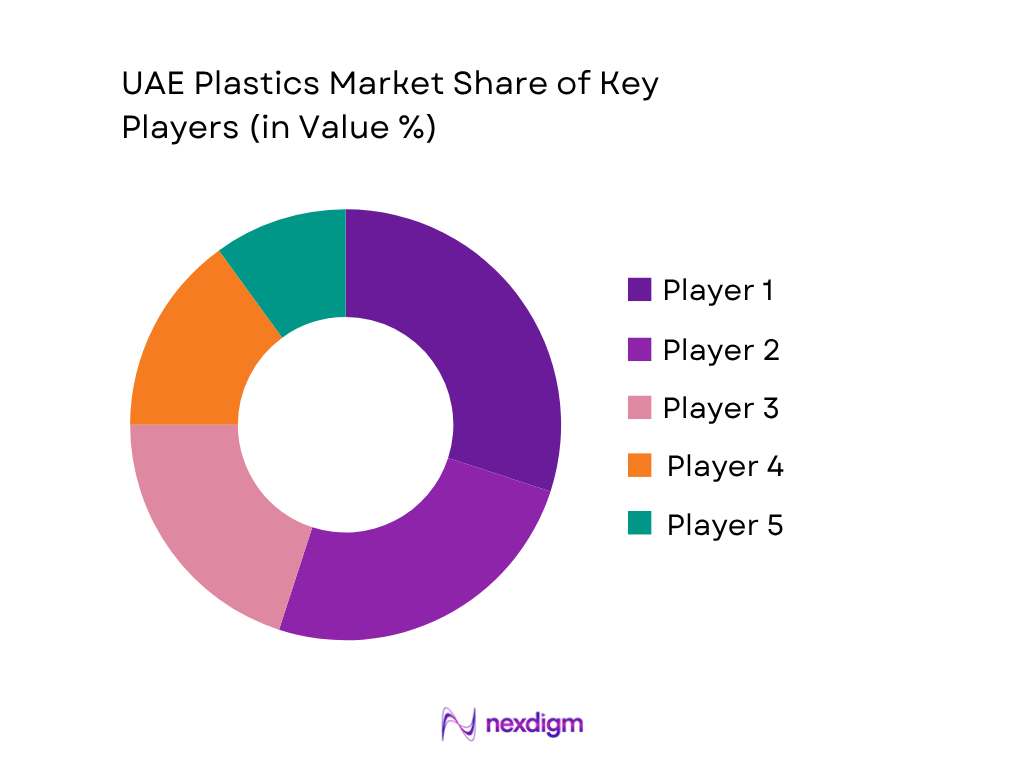
UAE Plastics Market Analysis
Growth Drivers
Expansion of Domestic Manufacturing and Polymer-Consuming Industries
The UAE’s expanding industrial base is directly strengthening demand for plastic resins, films, pipes, components, containers, masterbatches and engineering polymers. The UAE Ministry of Industry and Advanced Technology reported that the industrial sector generated AED 210 billion in national economic output during 2024, while industrial exports reached AED 197 billion and expenditure directed toward locally produced goods and services exceeded AED 110 billion. This manufacturing scale creates sustained resin requirements across packaging, construction materials, electrical products, consumer goods and industrial components. Abu Dhabi alone recorded AED 111.6 billion of manufacturing value added during 2024, according to Statistics Centre – Abu Dhabi, while Dubai’s official statistics recorded manufacturing output of AED 42.741 billion. The macroeconomic environment provides additional support: World Bank data place UAE GDP at USD 552.32 billion and GDP per capita at USD 50,273.5 during 2024. These indicators support continued downstream processing investment, larger converter production runs and broader domestic consumption of polyethylene, polypropylene, PVC, PET and specialty polymers.
Construction, Infrastructure and Logistics Activity Supporting High-Volume Plastic Applications
Infrastructure development is a major demand engine for UAE plastic pipes, fittings, insulation materials, membranes, cable compounds, geomembranes and construction-grade polymer products. Statistics Centre – Abu Dhabi recorded AED 107.4 billion of construction-sector value added during 2024, while Dubai’s official statistical system reported AED 26.792 billion of construction output. The physical project pipeline is equally significant: approximately USD 112 billion of UAE construction projects were identified during 2024, creating a substantial application base for HDPE, PVC, PPR and engineering-plastic products used in water, drainage, utilities and building systems. Logistics infrastructure strengthens the supply side. Jebel Ali Port handled 15.5 million TEUs and 5.4 million metric tonnes of breakbulk cargo during 2024, giving resin importers, converters and exporters access to large-scale trade infrastructure. World Bank data show UAE GDP of USD 552.32 billion during the same period, illustrating the economic base supporting capital-intensive infrastructure deployment and downstream plastics consumption.
Market Challenges
Tightening Restrictions on Single-Use Plastic Applications
The UAE plastics industry faces a structural adjustment as federal regulation progressively removes selected disposable-plastic applications from the domestic market. The Ministry of Climate Change and Environment implemented the first phase of Ministerial Decision No. 380 from 1 January 2024, prohibiting the import, production and trading of single-use plastic shopping bags, including biodegradable variants. A broader second phase became applicable from 1 January 2026, covering beverage cups and lids, forks, spoons, knives, chopsticks, plates, straws, stirrers and expanded-polystyrene food containers. The regulation also captures single-use bags made from different materials when thickness is below 50 microns. This directly affects converters concentrated in commodity disposable packaging and requires production lines to shift toward reusable, recyclable or exempt product categories. The scale of adaptation is important because the national industrial sector generated AED 210 billion of output during 2024, according to the UAE Cabinet and Ministry of Industry and Advanced Technology, meaning regulatory changes are occurring within an already substantial manufacturing ecosystem where plastics processors must preserve utilization while changing product specifications.
Exposure to International Supply Chains for Specialty Inputs and Conversion Equipment
UAE plastic converters benefit from strong domestic polyethylene and polypropylene availability but remain exposed to global supply chains for specialty engineering resins, additives, pigments, processing machinery and selected packaging inputs. This exposure is material because Jebel Ali Port processed 15.5 million TEUs during 2024, alongside 5.4 million metric tonnes of breakbulk cargo, while its installed container-handling capacity stands at 19.4 million TEUs, supported by more than 100 berths and approximately 25 kilometres of quay infrastructure. These figures demonstrate how strongly UAE manufacturing is integrated with international maritime flows. International Monetary Fund data also show that UAE merchandise imports run into hundreds of billions of US dollars, highlighting the wider economy’s integration with cross-border supply networks. For plastics processors, disruptions affecting shipping routes, semiconductor-controlled processing machinery, specialty additives or non-domestically produced resin grades can therefore interrupt production schedules even when commodity polyolefins are locally available. The challenge is particularly important for automotive, electronics, healthcare and high-barrier packaging converters requiring tightly specified imported materials.
Market Opportunities
Expansion of Recyclable and Circular Plastic Product Manufacturing
Regulatory change is creating a commercially relevant opportunity for UAE converters able to redesign products around recycled resin, reusable formats and circular material systems. The Ministry of Climate Change and Environment confirmed during 2025 that products manufactured from recycled materials inside the UAE are exempt from specified restrictions under the second phase of the single-use products framework, while export-oriented production is also permitted under defined conditions. The regulatory transition therefore provides a direct incentive for investment in recycled polyethylene, recycled polypropylene, recycled PET, washing, sorting, compounding and design-for-recycling capabilities. The opportunity is supported by the size of the domestic industrial ecosystem: UAE industrial output reached AED 210 billion, industrial exports reached AED 197 billion, and national industrial procurement exceeded AED 110 billion during 2024, according to the UAE Cabinet and Ministry of Industry and Advanced Technology. Abu Dhabi manufacturing generated another AED 111.6 billion in value added during 2024. These current indicators provide a substantial manufacturing and procurement base from which recycled-content packaging, pipes, industrial products and polymer compounds can scale without relying only on household consumer applications.
Higher-Value Polyethylene and Downstream Conversion Capacity
The UAE has a clear opportunity to deepen its position beyond commodity resin exports into higher-value pipes, advanced packaging, energy applications, healthcare products, mobility components and specialty polyethylene compounds. ADNOC reports that Borouge’s Ruwais complex currently provides 5 million tonnes of annual polyolefin capacity. During 2026, the Borouge 4 development adds a 1.5 million-tonne ethane cracker and 1.4 million tonnes of polyethylene capacity, materially expanding the domestic feedstock platform available to the wider downstream ecosystem. This manufacturing opportunity is reinforced by the UAE’s existing industrial base: national industrial exports reached AED 197 billion during 2024, while Jebel Ali handled 15.5 million TEUs, providing an established logistics channel for both resin and converted-plastic exports. World Bank data place UAE GDP at USD 552.32 billion and GDP per capita at USD 50,273.5 during 2024, supporting sophisticated domestic end markets alongside export demand. These conditions favor investment in differentiated polymer grades, high-pressure pipes, recyclable films, cable compounds, medical polymers and other technically demanding applications rather than additional dependence on low-value disposable products.
Future Outlook
The UAE Plastics Market is forecast to expand at approximately ~4.3% CAGR during 2026–2035, supported by downstream manufacturing, advanced packaging, construction and infrastructure requirements, specialized polymer applications and increasing circular-polymer adoption. The transition will increasingly favor recyclable structures, recycled feedstocks, high-performance resins and technically differentiated polymer grades. Grand View Research’s currently published UAE plastics forecast indicates a 4.3% CAGR for 2026–2033, with revenue projected to reach USD 33.59 billion by the end of that published forecast horizon.
Growth will increasingly come from value-added applications rather than undifferentiated commodity plastics alone. High-performance polymers are gaining relevance in automotive, electronics, industrial and energy applications; Grand View Research separately projects UAE high-performance plastics to expand at a 7.3% CAGR in its published forecast period. Meanwhile, mechanical plastics recycling has a substantially faster growth profile, reflecting investments in circularity, post-consumer material recovery and recycled polymer supply.
Major Players
- Borouge Plc
- Taghleef Industries LLC
- Cosmoplast Industrial Company LLC
- Hotpack Packaging Industries LLC
- Falcon Pack Industry LLC
- Integrated Plastics Packaging LLC
- Huhtamaki Flexibles UAE
- National Plastic & Building Material Industries LLC
- Hepworth PME LLC
- Polyfab Plastic Industry LLC
- Union Pipes Industry LLC
- Future Pipe Industries LLC
- Polycon Gulf Ltd.
- EnerPlastics LLC
- Polytec Masterbatch LLC
Key Target Audience
- Polymer Resin Producers and Petrochemical Manufacturers
- Plastic Converters and Packaging Manufacturers
- Plastic Pipe, Fittings and Infrastructure Product Manufacturers
- FMCG, Food & Beverage and Consumer Product Brand Owners
- Construction, Water Infrastructure and Industrial End Users
- Polymer Distributors, Compounders, Masterbatch Suppliers and Resin Traders
- Investments and Venture Capitalist Firms
- Government and Regulatory Bodies (Ministry of Industry and Advanced Technology, Ministry of Climate Change and Environment, Abu Dhabi Department of Economic Development, Dubai Department of Economy and Tourism, Environment Agency – Abu Dhabi and Dubai Municipality)
Research Methodology
Step 1: Identification of Key Variables
The initial phase involves constructing a detailed ecosystem map covering polymer producers, resin distributors, compounders, masterbatch suppliers, plastic converters, packaging manufacturers, pipe manufacturers, recyclers and major end users. Secondary research is used to identify variables including polymer demand, production capacity, imports, exports, resin pricing, processing technologies, end-use consumption and recycling penetration that influence the UAE Plastics Market.
Step 2: Market Analysis and Construction
Historical market data is compiled across polyethylene, polypropylene, PVC, PET, polyurethane, polystyrene and engineering plastics. A top-down assessment of UAE polymer and plastics demand is reconciled with bottom-up analysis of producer capacity, converter consumption, trade flows and end-use requirements. Revenue is constructed using polymer/product volumes and appropriate price benchmarks, while avoiding double counting across resin and converted-product value chains.
Step 3: Hypothesis Validation and Expert Consultation
Market hypotheses are validated through computer-assisted telephone interviews (CATIs) and structured discussions with polymer producers, plastic converters, resin distributors, packaging manufacturers, pipe producers, recyclers and industry procurement executives. These interviews test assumptions relating to capacity utilization, product mix, pricing, customer demand, imported versus locally produced resin consumption, recycled-content adoption and changing procurement requirements.
Step 4: Research Synthesis and Final Output
The final phase triangulates secondary evidence, company disclosures, trade indicators and primary industry inputs. Bottom-up estimates derived from polymer consumption and converter activity are compared against top-down industry and end-use indicators. Discrepancies are investigated at polymer, application and end-user levels before finalizing market size, segmentation, competitive positioning and long-term forecasts for the UAE Plastics Market.

- Executive Summary
- Research Methodology (Market Definition and Scope, UAE Plastics Classification, Polymer and Resin Demand Assessment, Plastic Conversion Industry Mapping, Petrochemical Feedstock Integration Assessment, Domestic Production Capacity Analysis, Import-Export and Re-Export Assessment, Plastic Processing Technology Mapping, End-Use Industry Demand Assessment, Virgin and Recycled Polymer Classification, Plastic Waste and Recycling Ecosystem Analysis)

- Definition and Scope
- UAE Plastics Industry Evolution and Development of Petrochemical and Plastic Conversion Ecosystem
- Polymer Manufacturing, Plastic Processing and Conversion Industry Structure
- UAE Plastics Value Chain Analysis
- UAE Plastics Supply Chain Analysis
- Petrochemical Feedstock, Polymer Resin, Compounder, Masterbatch, Converter, Distributor, End-User and Recycler Ecosystem Analysis
- Plastic Manufacturing and Conversion Integration Assessment Across Packaging, Construction, Automotive, Consumer Goods and Industrial Applications

- Growth Drivers (Competitive Domestic Polyolefin Feedstock Availability, Expansion of Packaging Demand, Infrastructure and Construction Development, Growth of Food and Beverage Manufacturing, Water Pipeline and Irrigation Investments, Export-Oriented Plastic Conversion, Manufacturing Localization, E-Commerce Packaging Expansion)
- Market Challenges (Single-Use Plastic Restrictions, Virgin Polymer Price Volatility, Dependence on Imported Specialty Polymers, Plastic Waste Collection Constraints, Recycled Feedstock Quality Variability, Converter Margin Pressure, Alternative Packaging Material Substitution, Recycling Economics Challenges)
- Market Opportunities (Recyclable Mono-Material Packaging, Food-Grade Recycled PET, Recycled PE and PP Compounds, Advanced Plastic Recycling, Specialty Polymer Compounding, Infrastructure-Grade Plastic Pipes, Automotive Engineering Plastics, Medical-Grade Plastics, Circular Polymer Solutions)
- Market Trends (Recycled Content Integration, Lightweight Plastic Packaging, Mono-Material Packaging Development, Plastic Down-Gauging, High-Barrier Flexible Films, Localized Polymer Compounding, Closed-Loop Recycling Partnerships, Design-for-Recycling Adoption)
- Regulatory and Standards Landscape (UAE Single-Use Products Regulation, Emirate-Level Single-Use Plastic Restrictions, Circular Economy Policy Framework, Plastic Product Conformity Requirements, Food-Contact Packaging Requirements, Plastic Waste Management Regulations, Recycling and Recycled Content Requirements)
- SWOT Analysis
- Porter’s Five Forces Analysis
- PESTLE Analysis
- Stakeholder Ecosystem
- Competition Ecosystem

- By Market Value (2020-2025)
- By Plastic Consumption Volume (2020-2025)
- By Domestic Plastic Production Volume (2020-2025)
- By Virgin Polymer Consumption Volume (2020-2025)
- By Recycled Plastic Consumption Volume (2020-2025)
- By Plastic Import Volume (2020-2025)
- By Plastic Export and Re-Export Volume (2020-2025)

- By Polymer Type (In Value %)
Polyethylene (PE)
High-Density Polyethylene (HDPE)
Low-Density Polyethylene (LDPE)
Linear Low-Density Polyethylene (LLDPE)
Polypropylene (PP)
Polyvinyl Chloride (PVC)
Polyethylene Terephthalate (PET)
Polystyrene and Expanded Polystyrene (PS and EPS)
Engineering Plastics
Bioplastics and Recycled Polymers - By Product Type (In Value %)
Plastic Films and Sheets
Rigid Plastic Packaging
Plastic Bottles, Preforms, Caps and Closures
Plastic Pipes and Fittings
Plastic Profiles and Construction Products
Injection-Molded Plastic Products
Blow-Molded Plastic Products
Thermoformed Plastic Products
Plastic Foams and Insulation Products - By Application Type (In Value %)
Flexible Packaging
Rigid Packaging
Pipes and Water Infrastructure
Building and Construction Components
Automotive Components
Electrical and Electronic Components
Consumer and Household Products
Industrial Plastic Components
Agricultural and Irrigation Products - By Processing Technology (In Value %)
Extrusion Processing
Injection Molding
Blow Molding
Thermoforming
Rotational Molding
Compression Molding
Foam Processing
Polymer Compounding
Masterbatch Processing - By End-Use Industry (In Value %)
Packaging
Food and Beverage
Building and Construction
Automotive and Transportation
Electrical and Electronics
Consumer Goods and Household Products
Healthcare and Medical
Agriculture and Irrigation
Oil and Gas and Industrial Applications
Water and Wastewater Infrastructure - By Emirate (In Value %)
Abu Dhabi
Dubai
Sharjah
Ras Al Khaimah
Ajman
Umm Al Quwain
Fujairah

- Market Share of Major Players (By Revenue, Plastic Production Volume, Polymer and Product Portfolio, End-Use Industry, Processing Technology, Manufacturing Capacity, Export Presence, Customer Segment Distribution)
- Cross Comparison Parameters (UAE Plastics Revenue, Installed Polymer and Plastic Processing Capacity, Polymer and Product Portfolio Breadth, Annual Resin and Converted Plastic Volume, End-Use Industry Coverage, UAE Manufacturing Footprint, Export and Re-Export Market Reach, Recycled and Circular Polymer Capability)
- SWOT Analysis of Major Players
- Competitive Positioning Matrix
- Product and Polymer Portfolio Benchmarking
- Pricing and Resin Category Benchmarking
- Manufacturing and Processing Technology Assessment
- End-User Partnership and Distribution Network Assessment
- Detailed Profiles of Major Companies
Borouge Plc
Taghleef Industries LLC
Cosmoplast Industrial Company LLC
Hotpack Packaging Industries LLC
Falcon Pack Industry LLC
Integrated Plastics Packaging LLC
Huhtamaki Flexibles UAE
National Plastic & Building Material Industries LLC
Hepworth PME LLC
Polyfab Plastic Industry LLC
Union Pipes Industry LLC
Future Pipe Industries LLC
Polycon Gulf Ltd.
EnerPlastics LLC
Polytec Masterbatch LLC

- Packaging Manufacturer Polymer Procurement Assessment
- Food and Beverage Manufacturer Plastic Packaging Demand Analysis
- Construction and Infrastructure Plastic Product Demand Assessment
- Plastic Pipe Manufacturer Resin Requirement Analysis
- Automotive Component Manufacturer Engineering Plastic Assessment
- Consumer Goods Manufacturer Plastic Procurement Analysis
- Healthcare and Medical Plastic Requirement Assessment
- Industrial End-User Polymer Application Assessment
- Brand Owner Recycled Content and Sustainable Packaging Adoption Analysis

- By Market Value (2026-2035)
- By Plastic Consumption Volume (2026-2035)
- By Domestic Plastic Production Volume (2026-2035)
- By Virgin Polymer Consumption Volume (2026-2035)
- By Recycled Plastic Consumption Volume (2026-2035)
- By Plastic Import Volume (2026-2035)
- By Plastic Export and Re-Export Volume (2026-2035)
- By Circular and Recycled Plastic Market Volume (2026-2035)


 Request a Sample
 Ask for Customization
 Get a Quote
 Enquire Now