
 Download PDF
Market Overview
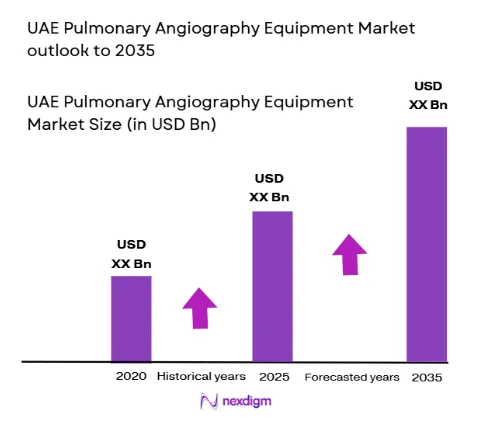
The UAE Pulmonary Angiography Equipment Market is valued at approximately USD ~ billion based on a recent historical assessment. This market is primarily driven by technological advancements in imaging equipment, the increasing prevalence of pulmonary diseases, and the rapid development of healthcare infrastructure across the UAE. Demand for precise diagnostic tools, including angiography equipment, is on the rise, largely due to the growing awareness and improved medical care within the region. Moreover, increasing investments in the healthcare sector further contribute to the growth and expansion of this market.
The UAE remains the dominant hub for pulmonary angiography equipment due to its well-established healthcare infrastructure, particularly in cities like Dubai and Abu Dhabi. These cities are home to cutting-edge medical facilities and a growing population of healthcare professionals who demand advanced medical technologies. Moreover, regulatory support, favorable government policies, and a strong focus on health innovations have helped cement the UAE’s position as a leader in medical technology adoption in the region. The ongoing healthcare modernization projects are also fueling demand for more sophisticated diagnostic equipment.
Market Segmentation
By Product Type:
The UAE Pulmonary Angiography Equipment market is segmented by product type into angiography catheters, angiography imaging systems, contrast injectors, radiology workstations, and imaging detectors. Recently, angiography imaging systems have seen the most significant market growth, driven by their increasing adoption across both hospitals and diagnostic imaging centers. Their ability to provide accurate, high-resolution images for a variety of conditions has made them a preferred choice. Additionally, the constant advancements in imaging technology and the increasing demand for non-invasive diagnostic procedures contribute to their dominance. As medical professionals seek more efficient, reliable, and cost-effective diagnostic tools, angiography imaging systems are expected to remain a key segment in the market.

By Platform Type:
The market is segmented into cardiovascular imaging platforms, multi-modality imaging platforms, standalone imaging systems, portable imaging systems, and fixed imaging systems. The cardiovascular imaging platforms hold the largest market share, driven by the high demand for specialized diagnostic systems that focus on heart and pulmonary diseases. These platforms are preferred for their accuracy, flexibility, and ability to provide detailed insights into the vascular system, making them the most reliable choice for pulmonary angiography. Cardiovascular platforms are especially sought after in large medical centers and hospitals due to their capacity to handle complex diagnostic procedures, along with the integration of advanced software to support precise imaging.

Competitive Landscape
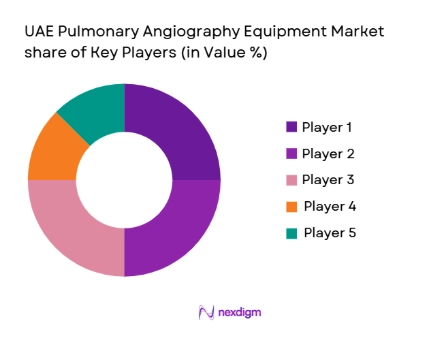
The UAE Pulmonary Angiography Equipment market is highly competitive, with major players like Siemens Healthineers, Philips Healthcare, and GE Healthcare leading the way. These companies are continuously innovating and expanding their market presence through acquisitions, collaborations, and technology advancements. The market is also experiencing consolidation as players integrate more advanced features into their offerings to maintain competitive advantage. With a focus on enhancing diagnostic accuracy and ease of use, major players are well-positioned to influence the growth trajectory of this market. Strategic partnerships and strong distribution networks play a significant role in establishing leadership in this space.
| Company Name | Establishment Year | Headquarters | Technology Focus | Market Reach | Key Products | Revenue | Additional Parameter |
| Siemens Healthineers | 1847 | Erlangen, Germany | ~ | ~ | ~ | ~ | ~ |
| Philips Healthcare | 1891 | Amsterdam, Netherlands | ~ | ~ | ~ | ~ | ~ |
| GE Healthcare | 1892 | Chicago, USA | ~ | ~ | ~ | ~ | ~ |
| Canon Medical Systems | 1933 | Tokyo, Japan | ~ | ~ | ~ | ~ | ~ |
| Fujifilm Holdings | 1934 | Tokyo, Japan | ~ | ~ | ~ | ~ | ~ |
UAE Pulmonary Angiography Equipment Market Analysis
Growth Drivers
Technological Advancements in Imaging Systems:
Technological advancements in imaging systems are a key driver for the growth of the UAE Pulmonary Angiography Equipment market. As the demand for more accurate and efficient diagnostic tools increases, manufacturers are focusing on the development of high-resolution, advanced imaging systems that provide clear and detailed images of pulmonary conditions. The introduction of real-time imaging, integrated software, and AI-powered solutions enables healthcare providers to make faster, more accurate diagnoses. This rapid advancement in technology enhances the overall healthcare experience, making angiography equipment an essential tool in diagnosing pulmonary diseases. With the growing need for minimally invasive procedures, the demand for such high-tech equipment continues to rise. The UAE, being a hub for healthcare innovation, sees strong growth prospects as the healthcare sector adopts these technologies. Furthermore, the integration of these innovations into portable and hybrid imaging systems is expected to fuel market demand. As a result, the technological progress in the sector is expected to contribute significantly to market growth.
Increase in Pulmonary Disease Prevalence:
The increase in pulmonary disease prevalence is a critical factor driving market growth. Chronic pulmonary diseases, including pulmonary embolism, are on the rise due to various risk factors such as smoking, obesity, and an aging population. As these diseases continue to affect a larger portion of the population, the demand for reliable diagnostic tools, including angiography equipment, has grown substantially. Pulmonary angiography equipment plays a crucial role in diagnosing conditions like pulmonary embolism and arterial blockages, which are prevalent in the UAE. The increase in the number of healthcare facilities, including diagnostic imaging centers and hospitals, provides a larger base of consumers for angiography equipment. With greater awareness and an expanding healthcare system, there is a growing need for high-tech solutions that ensure accurate and timely diagnosis, particularly in a region where healthcare standards are constantly improving. This heightened demand is expected to drive growth within the market as healthcare providers seek the best equipment for diagnosing and treating pulmonary conditions.
Market Challenges
High Cost of Equipment:
The high cost of pulmonary angiography equipment is one of the significant challenges in the UAE market. Advanced imaging systems, including angiography units, often require large capital investments, making it difficult for smaller healthcare centers and clinics to afford them. The high upfront cost of acquiring such equipment, along with maintenance and training expenses, limits the widespread adoption of these systems, especially in smaller facilities. Additionally, the rapid pace of technological advancements leads to frequent upgrades and replacements, further increasing costs. While large hospitals and diagnostic centers can typically absorb these costs, smaller institutions may face budgetary constraints that affect their ability to adopt cutting-edge technologies. Furthermore, healthcare providers may need to prioritize investment in other areas of healthcare infrastructure, such as medical personnel or basic medical equipment, which could push angiography equipment further down the list of priorities. Thus, the high cost of acquiring and maintaining angiography equipment remains a critical challenge for broader market penetration.
Regulatory and Certification Barriers:
Regulatory hurdles and certification processes are another challenge faced by manufacturers and healthcare providers in the UAE Pulmonary Angiography Equipment market. The equipment must comply with strict local regulations, including safety standards and certifications, before it can be marketed and used in healthcare facilities. These regulatory frameworks can be complex, and the certification process can be lengthy and costly, leading to delays in product launches and adoption. For manufacturers, navigating the regulations specific to the UAE, including compliance with both local and international standards, adds layers of complexity to their business operations. Additionally, healthcare providers must invest time and resources into understanding the certifications required for equipment use, which can impact their purchasing decisions. The high cost of meeting regulatory requirements can also deter smaller players from entering the market, further consolidating the sector around larger, established companies.
Opportunities
Technological Integration for Improved Diagnostics:
The integration of cutting-edge technologies such as artificial intelligence (AI) and machine learning (ML) into pulmonary angiography equipment presents a significant opportunity for market growth. AI-powered systems have the ability to analyze images faster and more accurately than traditional methods, providing healthcare professionals with advanced diagnostic tools. These technologies can enhance image clarity, detect subtle abnormalities, and reduce diagnostic errors, which is critical for complex pulmonary conditions. As healthcare systems increasingly prioritize accuracy and speed, the demand for AI-integrated angiography systems is expected to surge. Furthermore, the development of AI-enhanced systems could make these devices more affordable and accessible, particularly in regions with limited healthcare resources. With continued advancements in AI, the potential for improved diagnostic procedures creates a lucrative opportunity for manufacturers to innovate and lead in the growing market for pulmonary angiography equipment.
Expansion of Healthcare Infrastructure:
The expansion of healthcare infrastructure in the UAE presents a substantial opportunity for the pulmonary angiography equipment market. With continued investments in both public and private healthcare sectors, there is a growing demand for advanced diagnostic equipment, including pulmonary angiography systems. The UAE government has committed to enhancing healthcare services and facilities through various initiatives, such as the expansion of medical centers and hospitals, which will require state-of-the-art diagnostic tools. Furthermore, the growing prevalence of respiratory diseases in the region has prompted the need for specialized diagnostic equipment to handle increased patient volumes. As the healthcare infrastructure continues to evolve, the adoption of pulmonary angiography equipment will increase. The expansion of specialized healthcare facilities, coupled with increasing awareness of diagnostic technologies, will support the long-term growth of this market. Therefore, manufacturers can capitalize on the rising healthcare investments by offering advanced and cost-effective solutions to meet the needs of a growing healthcare sector.
Future Outlook
The future of the UAE Pulmonary Angiography Equipment Market looks promising, with strong growth expected over the next five years. Technological advancements, including AI integration and innovations in imaging systems, are anticipated to improve the accuracy and efficiency of diagnostics, driving further market expansion. Regulatory support and the continuous development of healthcare infrastructure will foster greater demand for these advanced systems, particularly in urban centers like Dubai and Abu Dhabi. Additionally, the growing awareness of pulmonary diseases will contribute to a higher adoption rate of diagnostic equipment, providing a solid foundation for the market’s growth trajectory.
Major Players
- Siemens Healthineers
- Philips Healthcare
- GE Healthcare
- Canon Medical Systems
- Fujifilm Holdings
- Medtronic
- Hitachi Healthcare
- Carestream Health
- Shimadzu Corporation
- Hologic Inc.
- Varian Medical Systems
- Esaote S.p.A.
- Neusoft Medical Systems
- Samsung Medison
- Toshiba Medical Systems
Key Target Audience
- Investments and venture capitalist firms
- Government and regulatory bodies
- Healthcare providers (hospitals, diagnostic centers, and clinics)
- Medical equipment distributors
- Diagnostic imaging centers
- Public health organizations
- Healthcare technology innovators
- Pulmonary disease treatment centers
Research Methodology
Step 1: Identification of Key Variables
The research begins by identifying the key market variables, including market size, growth drivers, challenges, and competitive landscape, that influence the UAE Pulmonary Angiography Equipment Market.
Step 2: Market Analysis and Construction
In this phase, a comprehensive market analysis is conducted by reviewing secondary and primary data sources, leading to the construction of accurate market models.
Step 3: Hypothesis Validation and Expert Consultation
The hypotheses derived from preliminary data are validated through consultations with industry experts and stakeholders to refine the market outlook.
Step 4: Research Synthesis and Final Output
The final step synthesizes the research findings into a coherent market report, highlighting trends, challenges, opportunities, and competitive analysis.

- Executive Summary
- Research Methodology (Definitions, Scope, Industry Assumptions, Market Sizing Approach, Primary & Secondary Research Framework, Data Collection & Verification Protocol, Analytic Models & Forecast Methodology, Limitations & Research Validity Checks)

- Market Definition and Scope
- Value Chain & Stakeholder Ecosystem
- Regulatory / Certification Landscape
- Sector Dynamics Affecting Demand
- Strategic Initiatives & Infrastructure Growth

- Growth Drivers
Increasing prevalence of pulmonary diseases
Technological advancements in imaging systems
Rising adoption of minimally invasive surgeries
Growth in the number of diagnostic imaging centers
Government initiatives for healthcare infrastructure - Market Challenges
High costs of advanced angiography equipment
Regulatory and certification barriers
Limited access to high-end equipment in remote areas
Shortage of skilled professionals
Intense competition among players - Market Opportunities
Expanding healthcare infrastructure in the UAE
Technological innovations in portable angiography systems
Rising awareness and demand for early disease diagnosis - Trends
Integration of AI in imaging systems
Growth in the use of hybrid imaging platforms
Miniaturization of imaging systems
Increased demand for personalized medicine
Expansion of outpatient diagnostic facilities - Government Regulations & Defense Policy
Compliance with international standards for medical devices
Increased regulation of contrast agents used in imaging
Supportive government policies to enhance healthcare sector - SWOT Analysis
- Stakeholder and Ecosystem Analysis
- Porter’s Five Forces Analysis
- Competition Intensity and Ecosystem Mapping

- By Market Value, 2020-2025
- By Installed Units, 2020-2025
- By Average System Price, 2020-2025
- By System Complexity Tier, 2020-2025

- By System Type (In Value%)
Angiography Catheters
Angiography Imaging Systems
Contrast Injectors
Radiology Workstations
Imaging Detectors - By Platform Type (In Value%)
Cardiovascular Imaging Platforms
Multi-modality Imaging Platforms
Standalone Imaging Systems
Portable Imaging Systems
Fixed Imaging Systems - By Fitment Type (In Value%)
In-lab Systems
Integrated Systems
Stand-alone Systems
Mobile Systems
Hybrid Systems - By EndUser Segment (In Value%)
Hospitals
Diagnostic Imaging Centers
Cardiology Clinics
Research Laboratories
Specialty Pulmonary Clinics - By Procurement Channel (In Value%)
Direct Procurement from Manufacturers
Third-Party Distributors
Online Retailers
Procurement through Healthcare Networks
Public Procurement - By Material / Technology (In Value%)
High-resolution Imaging Technology
X-ray Technology
Contrast Agents
CT and MRI-based Angiography Technology
Electromagnetic Imaging Technology

- Market structure and competitive positioning
- Market share snapshot of major players
- CrossComparison Parameters (Market Share, Product Innovation, Distribution Network, Pricing Strategies, Geographic Presence, Customer Satisfaction, Regulatory Compliance, Technological Advancements, Brand Recognition, Financial Strength)
- SWOT Analysis of Key Players
- Pricing & Procurement Analysis
- Key Players
Siemens Healthineers
Philips Healthcare
GE Healthcare
Canon Medical Systems
Medtronic
Hitachi Healthcare
Carestream Health
Shimadzu Corporation
Fujifilm Holdings Corporation
Hologic Inc.
Varian Medical Systems
Esaote S.p.A.
Neusoft Medical Systems
Samsung Medison
Toshiba Medical Systems

- Increasing demand for advanced pulmonary imaging systems in hospitals
- High adoption of hybrid systems in diagnostic imaging centers
- Specialized usage in research laboratories for pulmonary studies
- Growth in the number of private and specialty clinics

- Forecast Market Value, 2026-2035
- Forecast Installed Units, 2026-2035
- Price Forecast by System Tier, 2026-2035
- Future Demand by Platform, 2026-2035


 Request a Sample
 Ask for Customization
 Get a Quote
 Enquire Now