
 Download PDF
Market Overview
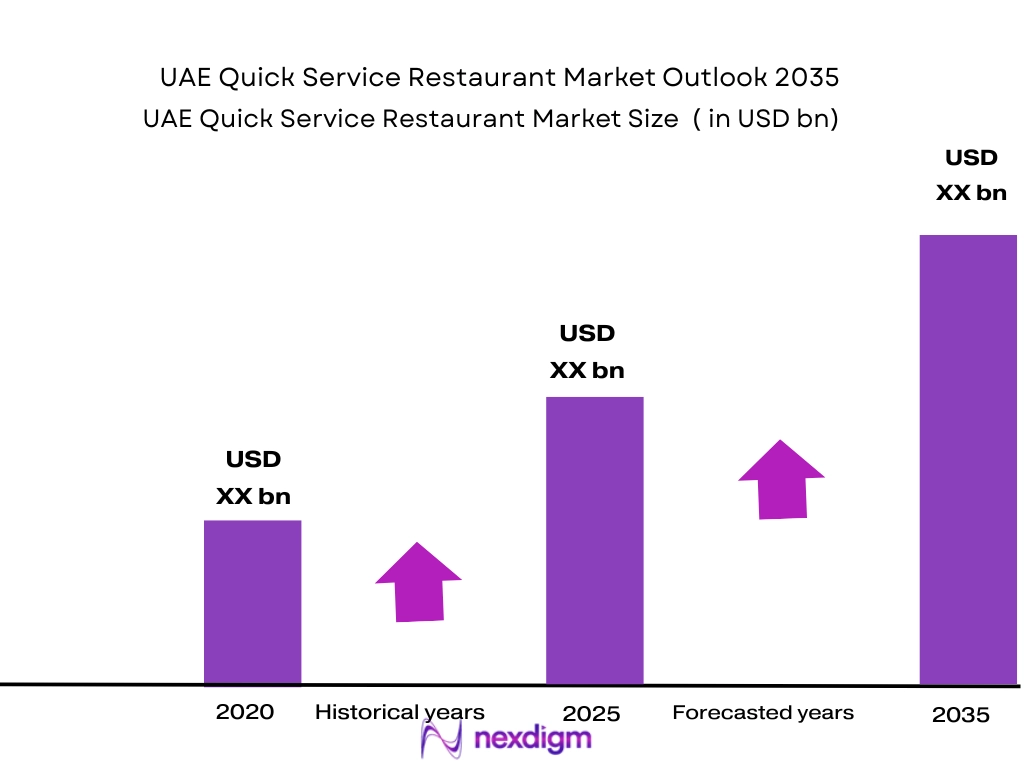
The UAE Quick Service Restaurant market is valued at USD ~ billion in 2024, with a forecasted CAGR of around 19.2% during 2024–2030. Growth is driven by urbanisation, high disposable income, strong tourism inflow, digital food ordering, international franchise expansion, and a multicultural consumer base with demand for burgers, chicken, pizza, shawarma, coffee, and Asian fast food. The broader UAE foodservice market reached USD 15.90 billion in 2024, reflecting strong food-away-from-home consumption.
Dubai, Abu Dhabi, Sharjah, Ajman, and Ras Al Khaimah dominate QSR demand due to dense residential clusters, tourism, malls, airport traffic, business districts, and high delivery-platform penetration. Dubai had 3,943,683 residents, Abu Dhabi had 3,789,860, Sharjah had 1,808,000, and Ajman had 504,846, supporting strong QSR outlet concentration. Dubai and Abu Dhabi also dominate because they attract international workers, tourists, retail investors, and global franchise brands.
Market Segmentation
By Product Type
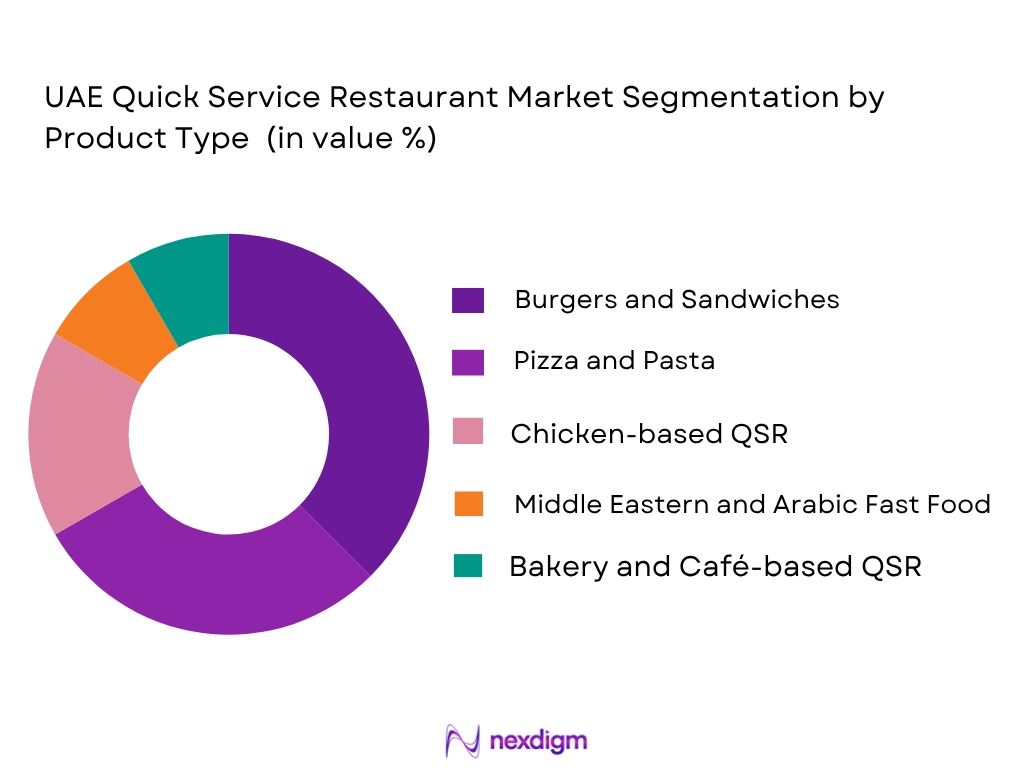
The UAE Quick Service Restaurant market is segmented by product type into burgers and sandwiches, chicken-based QSR, pizza and pasta, shawarma, Arabic fast food and grills, coffee, bakery and beverages, Asian and global street food, and others. Burgers and sandwiches hold the dominant market share under product type because of the strong presence of global chains such as McDonald’s, Burger King, Five Guys, Subway, Hardee’s, and Wendy’s, along with premium local burger concepts. The segment benefits from strong mall visibility, drive-thru suitability, delivery compatibility, and wide pricing coverage across value meals and premium burgers. Burgers and sandwiches are also popular among tourists, expatriates, office workers, students, and families because they are familiar, portable, and quick to consume. Operators frequently use limited-time products, spicy regional flavours, halal-certified menus, combo meals, and app-based offers to improve repeat consumption and average order value.
By Service Type
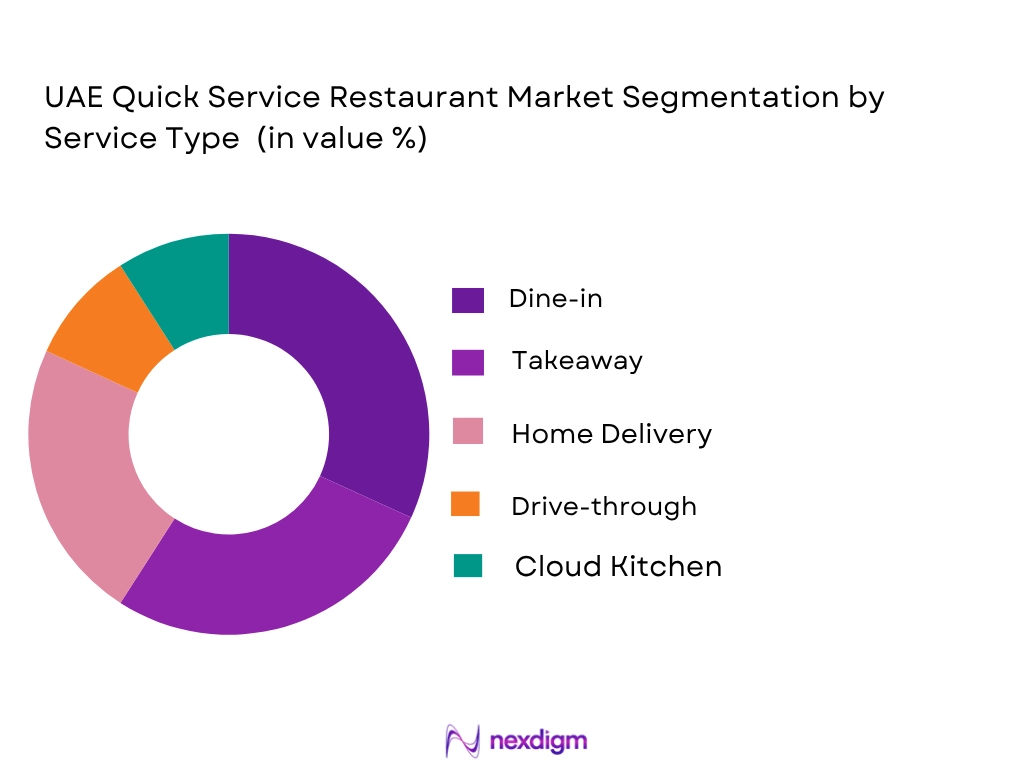
The UAE Quick Service Restaurant market is segmented by service type into delivery, dine-in, takeaway, drive-thru, and app-based pickup or click-and-collect. Delivery dominates the service type segment because the UAE has a highly developed digital ordering ecosystem, dense urban residential clusters, high smartphone penetration, and strong consumer willingness to use food aggregator platforms. Delivery is especially strong in Dubai, Abu Dhabi, and Sharjah, where office workers, expatriate households, tourists, and young consumers regularly order meals through apps. The segment is supported by platforms such as Talabat, Deliveroo, Careem Food, Noon Food, and brand-owned apps. Delivery also allows QSR chains to serve consumers beyond physical outlet catchments and improve order frequency during lunch, dinner, and late-night periods. Although dine-in remains important in malls and tourist zones, delivery has become central to UAE QSR growth.
Competitive Landscape
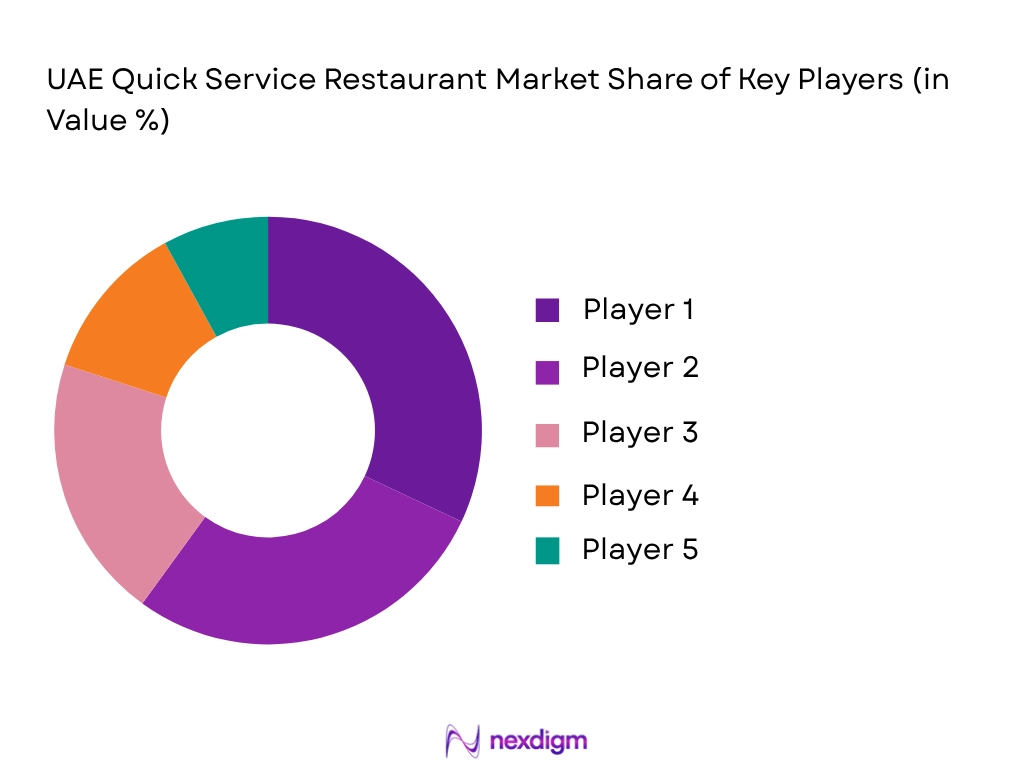
The UAE Quick Service Restaurant market is highly competitive and led by international fast-food chains, regional franchise operators, domestic foodservice groups, and delivery-first brands. McDonald’s, KFC, Burger King, Pizza Hut, Subway, Domino’s, Hardee’s, Popeyes, Jollibee, and Tim Hortons compete with regional and local brands such as Operation: Falafel, Al Farooj Fresh, Man’oushe Street, Just Falafel, and Salt. Competition is shaped by mall presence, franchise scale, delivery speed, menu localisation, halal compliance, pricing, tourist demand, loyalty programmes, and digital ordering capability.
| Company | Establishment Year | Headquarters | Core Cuisine | Business Model | Digital Ordering Strength | Delivery Presence | Loyalty Program | Key Competitive Advantage |
| McDonald’s UAE | 1940 | Chicago, United States | ~ | ~ | ~ | ~ | ~ | ~ |
| KFC UAE | 1952 | Louisville, United States | ~ | ~ | ~ | ~ | ~ | ~ |
| Burger King UAE | 1954 | Miami, United States | ~ | ~ | ~ | ~ | ~ | ~ |
| Pizza Hut UAE | 1958 | Plano, United States | ~ | ~ | ~ | ~ | ~ | ~ |
| Subway UAE | 1965 | Connecticut, United States | ~ | ~ | ~ | ~ | ~ | ~ |
UAE Quick Service Restaurant Market Analysis
Growth Drivers
Growth of Mall Culture and Tourism-driven Dining
The UAE quick service restaurant market benefits strongly from mall culture and tourism-driven dining. Shopping malls in Dubai, Abu Dhabi, Sharjah, and other emirates serve as major leisure, retail, and foodservice destinations. Consumers often visit malls not only for shopping but also for entertainment, socializing, and casual dining, creating steady footfall for QSR brands. Tourism further supports demand, as international visitors prefer familiar, convenient, and quick meal options during shopping, sightseeing, airport transit, and hotel stays. QSR outlets located in malls, tourist zones, theme parks, and transport hubs gain access to both residents and visitors. This combination of high retail traffic and tourism activity helps brands increase sales, improve visibility, and expand across premium commercial locations.
Rising Young Expatriate Population
The UAE’s young expatriate population is a major growth driver for the quick service restaurant market. A large share of the country’s workforce consists of expatriates from South Asia, Southeast Asia, Europe, the Middle East, and Africa, creating demand for diverse, affordable, and convenient food options. Young professionals and students often prefer QSR formats because they offer quick service, predictable pricing, delivery access, and international menu variety. This demographic is also highly exposed to digital ordering, food delivery apps, loyalty programs, and promotional offers. Their busy schedules and frequent dining-out habits support regular QSR consumption across business districts, residential communities, malls, and transport hubs. Brands that offer multicultural menus and value-focused meals can attract repeat customers.
Market Challenges
Rising Food Ingredient and Import Costs
Rising food ingredient and import costs are a significant challenge for the UAE quick service restaurant market. The country depends heavily on imported food products, including meat, dairy, grains, sauces, beverages, packaging materials, and specialty ingredients. Global price volatility, freight costs, currency movements, and supply chain disruptions can increase procurement expenses for QSR operators. Since many brands compete through value meals and affordable menu pricing, higher input costs can quickly affect margins. Passing cost increases to consumers may reduce demand, especially among price-sensitive residents and workers. To manage this pressure, operators need strong supplier relationships, local sourcing where possible, efficient inventory planning, and menu engineering. Maintaining consistent quality while controlling costs remains a key operational priority.
Intense Competition among Global and Local QSR Brands
The UAE QSR market is highly competitive due to the presence of global chains, regional brands, local restaurants, cafés, and delivery-only operators. International brands benefit from strong recognition and standardized operations, while local and regional players compete through Arabic flavors, halal positioning, pricing, and cultural relevance. Consumers have wide choices across burgers, fried chicken, pizza, shawarma, sandwiches, Asian food, coffee, and desserts. This makes customer retention difficult and increases pressure on promotions, discounts, menu innovation, service speed, and delivery performance. High competition can also raise marketing expenses and reduce pricing power. To succeed, QSR brands must differentiate through taste, convenience, digital engagement, location strategy, and consistent service quality across dine-in, takeaway, and delivery channels.
Opportunities
Adoption of Digital Ordering and Loyalty Programs
Digital ordering and loyalty programs offer strong opportunities for QSR brands in the UAE. Consumers are highly comfortable with smartphones, mobile payments, delivery apps, and online promotions, making digital engagement an important growth channel. QSR operators can use mobile apps, QR menus, self-ordering systems, and website ordering to reduce waiting times and improve convenience. Loyalty programs help brands encourage repeat purchases through points, personalized discounts, birthday offers, and app-exclusive deals. Digital platforms also provide valuable customer data, allowing restaurants to understand ordering patterns, preferred products, peak demand periods, and location-based behavior. This supports targeted marketing and better menu planning. Brands that combine convenience, personalization, and rewards can strengthen customer loyalty in a competitive foodservice market.
Expansion in Residential Communities and Travel Hubs
Expansion in residential communities and travel hubs presents a strong opportunity for QSR brands in the UAE. As urban development spreads across master-planned communities, suburbs, business parks, airports, metro stations, and highway service areas, demand for convenient food options is increasing beyond traditional mall locations. Residential areas offer regular demand from families, working professionals, and delivery customers, while travel hubs provide high-volume traffic from commuters, tourists, and business travelers. Smaller outlet formats, kiosks, drive-throughs, and delivery-focused stores can help brands serve these locations efficiently. This strategy reduces reliance on expensive prime retail sites and supports wider market coverage. QSR operators that align store formats with local traffic patterns can improve accessibility and capture frequent consumption occasions.
Future Outlook
The UAE Quick Service Restaurant market is expected to record strong growth over the next five years, supported by tourism, urban population growth, delivery penetration, digital ordering, and franchise-led expansion. Operators are expected to invest in compact store formats, cloud kitchens, delivery-ready outlets, app-based loyalty, AI-enabled demand forecasting, and faster kitchen workflows. Dubai and Abu Dhabi will remain the core growth centres, while Sharjah, Ajman, Ras Al Khaimah, and emerging residential communities will offer additional expansion opportunities.
Major Players
- McDonald’s UAE
- KFC UAE
- Burger King UAE
- Pizza Hut UAE
- Subway UAE
- Domino’s Pizza UAE
- Popeyes UAE
- Hardee’s UAE
- Jollibee UAE
- Tim Hortons UAE
- Five Guys UAE
- Wendy’s UAE
- Operation: Falafel
- Al Farooj Fresh
- Man’oushe Street
Key Target Audience
- Quick Service Restaurant Chains
- Fast Casual Restaurant Operators
- Franchise Owners and Multi-unit Operators
- Food Delivery and Aggregator Platforms
- Commercial Real Estate Developers
- Food and Beverage Manufacturers
- Investments and Venture Capitalist Firms
- Government and Regulatory Bodies
Research Methodology
Step 1: Identification of Key Variables
The initial phase involves constructing an ecosystem map covering major stakeholders in the UAE Quick Service Restaurant market. This includes QSR chains, franchise operators, delivery platforms, mall developers, food suppliers, packaging providers, payment companies, tourism-linked foodservice operators, and regulators. The objective is to identify variables that influence market size, pricing, outlet expansion, consumer demand, service model mix, and product category performance.
Step 2: Market Analysis and Construction
In this phase, historical market data is compiled and analysed across product type, service type, ownership model, emirate, outlet format, and consumer behaviour. Revenue generation is assessed through outlet density, order frequency, average transaction value, delivery contribution, dine-in demand, and app-based ordering penetration. The analysis also evaluates broader foodservice spending, tourism-linked consumption, franchise growth, and urban demand concentration.
Step 3: Hypothesis Validation and Expert Consultation
Market hypotheses are validated through structured interviews with restaurant operators, franchise managers, foodservice suppliers, delivery partners, technology vendors, and commercial real estate stakeholders. These discussions help verify assumptions related to pricing, menu performance, consumer preferences, delivery economics, labour pressure, supply chain costs, and outlet-level margins. Expert inputs are used to refine segmentation, competitive analysis, and growth expectations.
Step 4: Research Synthesis and Final Output
The final phase involves synthesising desk research, company-level information, public foodservice data, and expert insights into a structured market report. The output includes market size, segmentation, competitive landscape, future outlook, major players, key target audience, methodology, and FAQs. This step ensures consistency between top-down foodservice indicators and bottom-up company and channel-level findings.

- Executive Summary
- Research Methodology (Market Definitions and Assumptions, Abbreviations, Market Sizing Approach, Consolidated Research Approach, Understanding Market Potential Through In-Depth Industry Interviews, Primary Research Approach, Limitations and Future Conclusions)

- Definition and Scope
- Market Dynamics Overview
- Market Genesis
- Major Players and Market Timeline
- Business Cycle and Trends
- Supply Chain and Value Chain Analysis

- Growth Drivers
Rising Demand for Convenient and Affordable Meals
Expansion of Food Delivery Platforms
High Urbanization and Busy Consumer Lifestyles
Growth of Mall Culture and Tourism-driven Dining
Rising Young Expatriate Population
Expansion of International and Regional QSR Chains - Market Challenges
High Rental Costs in Prime Locations
Rising Food Ingredient and Import Costs
Intense Competition among Global and Local QSR Brands
Labour Cost and Staffing Challenges
Food Safety and Hygiene Compliance Requirements
Pressure on Profit Margins - Opportunities
Expansion of Cloud Kitchens and Delivery-only Models
Growth of Health-focused and Halal-certified Menu Options
Adoption of Digital Ordering and Loyalty Programs
Expansion in Residential Communities and Travel Hubs
Partnerships with Food Delivery Aggregators
Sustainable Packaging and Waste Reduction Initiatives - Key Trends
Growing Preference for Localized and Halal Menu Offerings
Rising Popularity of App-based Food Ordering
Expansion of Drive-through and Contactless Services
Increasing Demand for Value Meals and Combo Offers
Growth of Health-conscious and Plant-based Menu Options
Use of Technology for Ordering, Payments, and Customer Engagement - Government Regulations
- SWOT Analysis
- Porter’s Five Forces

- By Value, 2020–2025
- By Number of Outlets, 2020–2025
- By Average Order Value, 2020–2025

- By Product Type (In Value %)
Burgers and Sandwiches
Pizza and Pasta
Chicken-based QSR
Middle Eastern and Arabic Fast Food
Bakery and Café-based QSR
Others - By Service Model (In Value %)
Dine-in
Takeaway
Home Delivery
Drive-through
Cloud Kitchen - By Outlet Type (In Value %)
Standalone Outlets
Mall and High Street Outlets
Food Court Outlets
Travel Hub Outlets
Kiosks and Cloud Kitchens - By Ownership Model (In Value %)
Company-owned Outlets
Franchise Outlets - By Ordering Channel (In Value %)
In-store Ordering
Mobile Applications
Online Websites
Third-party Food Delivery Platforms
Self-service Kiosks - By End-User (In Value %)
Students and Young Adults
Working Professionals
Families
Tourists and Travellers
Others - By Emirate (In Value %)
Dubai
Abu Dhabi
Sharjah
Ajman
Ras Al Khaimah
Fujairah
Umm Al Quwain

- Market Share of Major Players by Value/Outlet Count
- Market Share of Major Players by Cuisine Type
- Market Share of Major Players by Service Model
- Cross Comparison Parameters (Company Overview, Business Strategies, Recent Developments, Strengths, Weaknesses, Organizational Structure, Revenues, Revenues by Cuisine Type, Number of Outlets, Franchise Network, Distribution and Delivery Channels, Average Order Value, Margins, Unique Value Offering, and Others)
- SWOT Analysis of Major Players
- Pricing Analysis Based on Menu Categories for Major Players
- Detailed Profiles of Major Companies
McDonald’s UAE
KFC UAE
Burger King UAE
Pizza Hut UAE
Domino’s Pizza UAE
Subway UAE
Hardee’s UAE
Popeyes UAE
Jollibee UAE
Texas Chicken UAE
Taco Bell UAE
Starbucks UAE
Tim Hortons UAE
Costa Coffee UAE
Operation: Falafel
Zaatar w Zeit
Al Farooj Fresh
Manoushe Street

- Consumer Demand and Dining Preferences
- Spending Power and Frequency of Visits
- Cuisine Preferences and Dietary Requirements
- Needs, Desires, and Pain Point Analysis
- Decision-Making Process

- By Value, 2026–2035
- By Number of Outlets, 2026–2035
- By Average Order Value, 2026–2035


 Request a Sample
 Ask for Customization
 Get a Quote
 Enquire Now