

 Download PDF
Market Overview
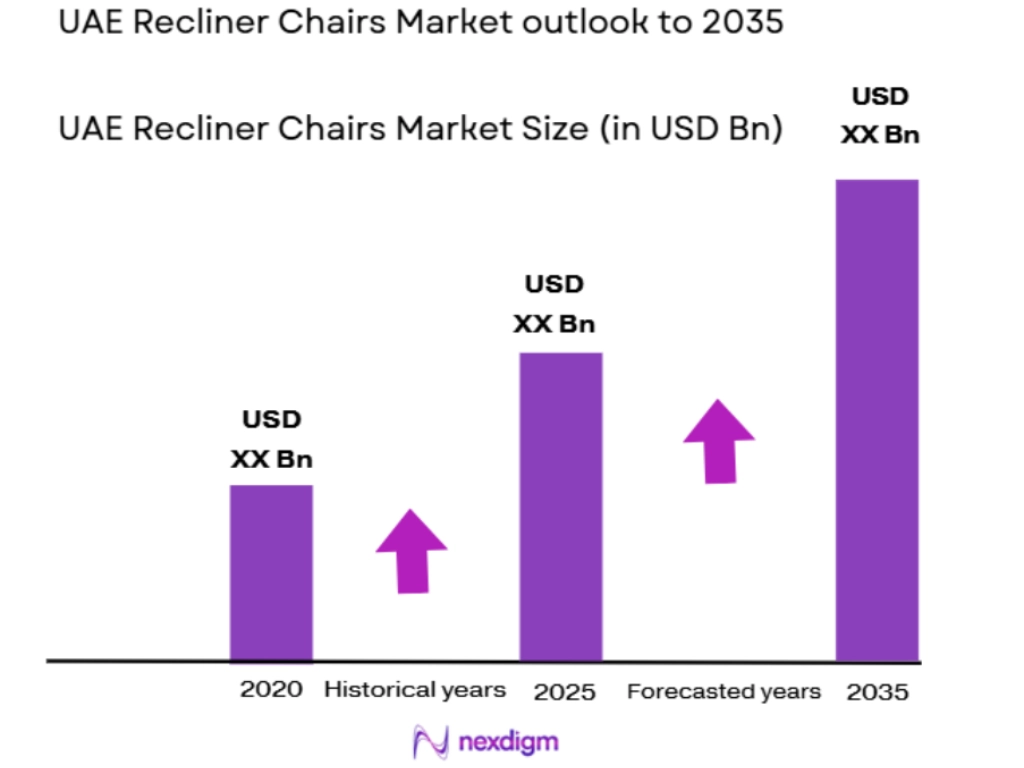
The UAE recliner chairs market was valued at USD ~ billion based on a recent historical assessment, supported by rising consumer spending on premium home furniture and comfort seating products. Growth has been driven by expansion in residential real estate, demand for ergonomic furniture, and increasing adoption of luxury home décor. Growth in hospitality infrastructure and home entertainment trends has also strengthened demand, while increased availability through organized retail and e-commerce platforms continues to support steady revenue generation.
Dubai and Abu Dhabi dominate the UAE recliner chairs market due to strong residential development pipelines, luxury housing demand, and a high concentration of expatriate populations with strong purchasing power. Dubai benefits from interior design investments linked to premium apartments and villas, while Abu Dhabi demand is supported by government housing initiatives and commercial development. Sharjah is emerging due to affordable housing expansion, while strong logistics infrastructure enables furniture imports and distribution across major urban centers.
Market Segmentation
By System Type
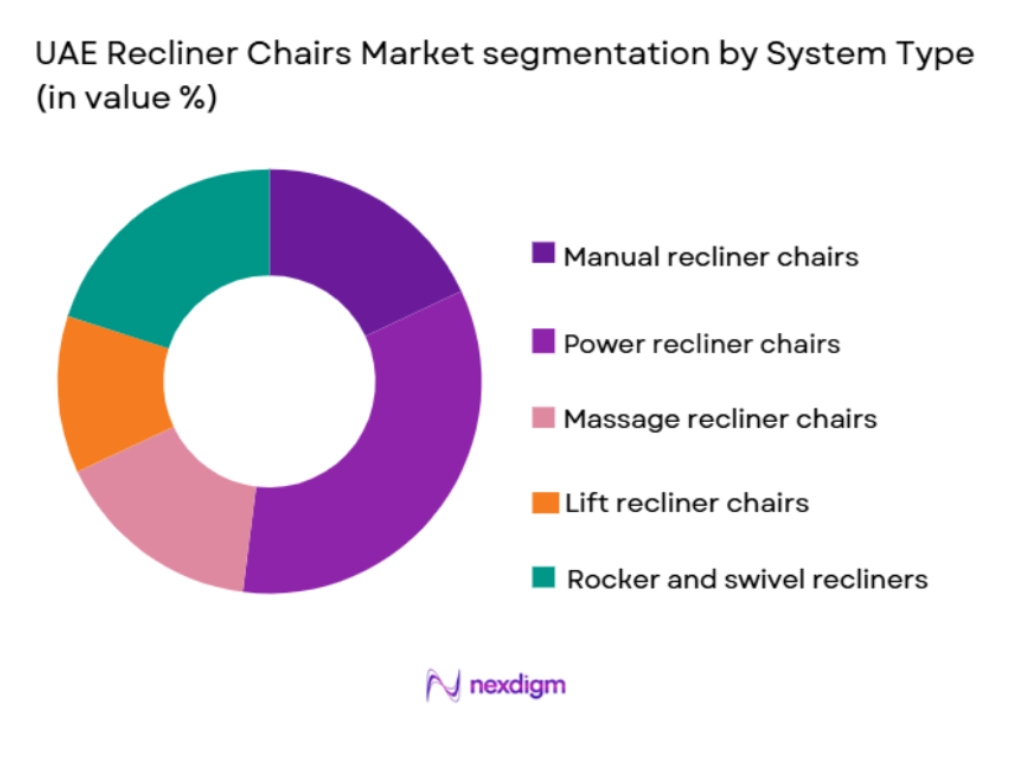
UAE Recliner Chairs market is segmented by system type into manual recliner chairs, power recliner chairs, massage recliner chairs, lift recliner chairs, and rocker and swivel recliners. Recently, power recliner chairs have a dominant market share due to increasing consumer demand for convenience, integrated technology, and enhanced comfort features. The growth of smart home adoption and rising preference for motorized furniture among high-income households has also strengthened this segment. Hospitality operators increasingly prefer power recliners for premium suites due to their durability and premium positioning. Additionally, the availability of multiple price tiers from international and regional brands has improved accessibility. Increasing availability through ecommerce platforms and showroom demonstrations has further supported their strong market position compared to traditional manual recliners which are gradually losing traction in premium segments.
By Platform Type
UAE Recliner Chairs market is segmented by platfrom type into single seater recliners, recliner sofas, home theater recliner systems, office recliner chairs, and luxury designer recliners. Recently, recliner sofas have a dominant market share due to their suitability for family living spaces and their ability to combine functionality with aesthetic value. The expansion of apartment living and family oriented housing has increased demand for multi seating recliner configurations. Furniture retailers also promote recliner sofas as bundled living room solutions which encourages higher purchase value. Interior designers frequently recommend recliner sofas for modern living room layouts which has reinforced their adoption. Their availability in leather and fabric variants at different price levels further strengthens their appeal compared to niche platforms such as office recliners or specialized home theater seating. 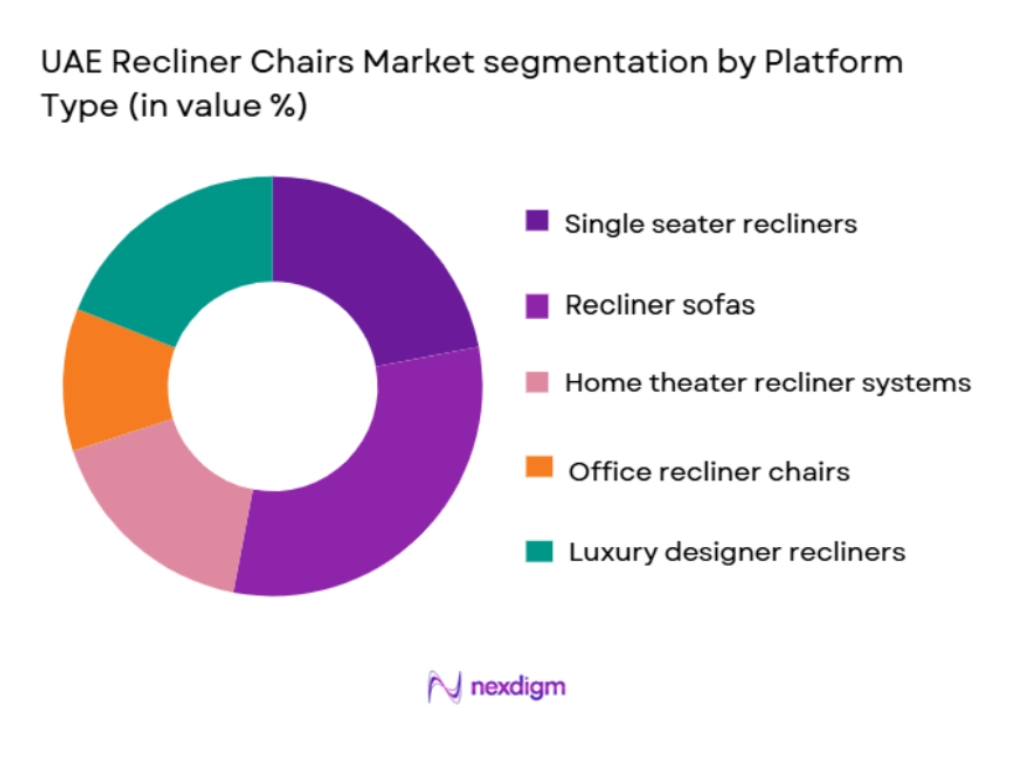
Competitive Landscape
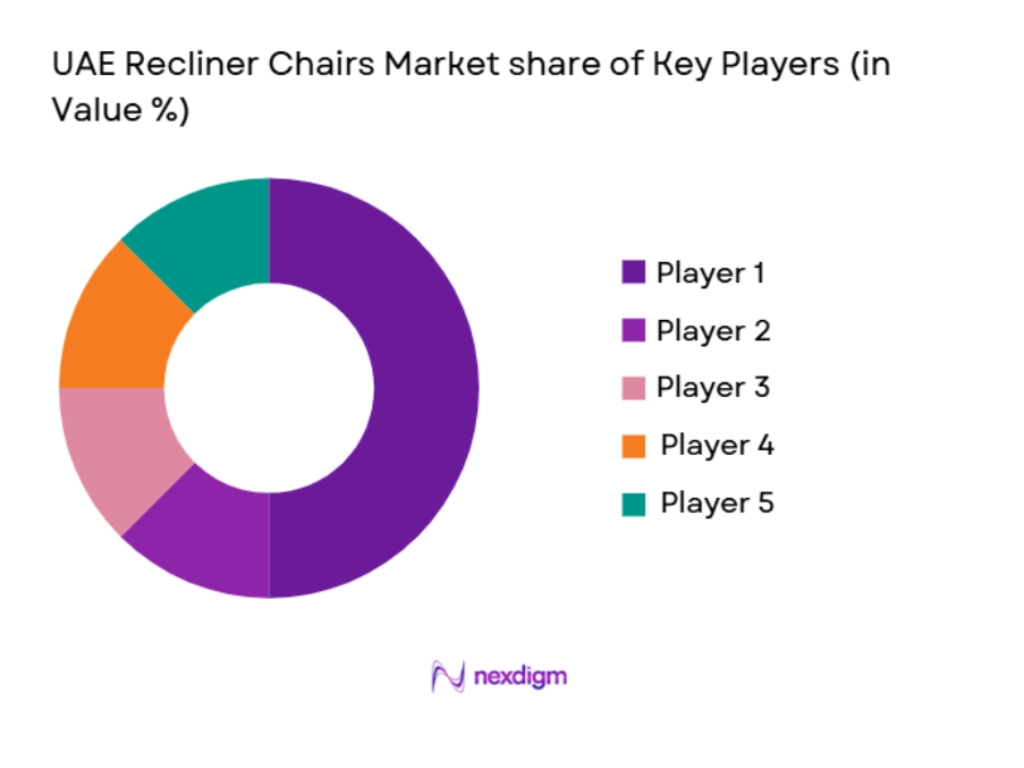
The UAE recliner chairs market shows moderate consolidation with a mix of international furniture brands and strong regional distributors competing through product quality, showroom presence, and pricing strategies. Major players benefit from established retail networks, strong sourcing capabilities, and partnerships with real estate developers and hospitality groups. Competition is increasingly shaped by customization capabilities, smart recliner innovations, and after-sales service strength, while private labels and imported products are intensifying price competition.
| Company Name | Establishment Year | Headquarters | Technology Focus | Market Reach | Key Products | Revenue | Distribution Strength |
| IKEA | 1943 | Netherlands | ~ | ~ | ~ | ~ | ~ |
| Ashley Furniture | 1945 | USA | ~ | ~ | ~ | ~ | ~ |
| La-Z-Boy | 1927 | USA | ~ | ~ | ~ | ~ | ~ |
| Natuzzi | 1959 | Italy | ~ | ~ | ~ | ~ | ~ |
| PAN Emirates | 1992 | UAE | ~ | ~ | ~ | ~ | ~ |
UAE Recliner Chairs Market Analysis
Growth Drivers
Rising Disposable Income and Luxury Furniture Demand in UAE Households
The UAE’s strong macroeconomic fundamentals are directly supporting demand for premium and luxury furniture, including recliners. According to the World Bank, UAE GDP (current US$) reached USD 514.13 billion in 2023, reflecting sustained economic expansion and high household purchasing power. Meanwhile, the International Monetary Fund reported GDP per capita at USD 49,451 in 2024, placing UAE among the highest globally. Household final consumption expenditure exceeded USD 180 billion in 2023 (World Bank), indicating strong consumer spending capacity. Additionally, UAE’s population surpassed 9.7 million in 2024 (Federal Competitiveness and Statistics Centre), with a large expatriate base earning high disposable incomes. This rising affluence drives demand for premium home furnishings, especially comfort-oriented luxury recliners, as consumers increasingly prioritize lifestyle upgrades, ergonomic furniture, and aesthetically appealing interiors aligned with global living standards.
Expansion of Premium Residential Real Estate Projects
The rapid expansion of high-end residential developments in the UAE is a major driver for recliner demand. According to Dubai Land Department, Dubai recorded over 133,000 real estate transactions in 2023, with total transaction values exceeding AED 411 billion, indicating strong housing demand. Additionally, the UAE’s gross fixed capital formation reached USD 132 billion in 2023 (World Bank), reflecting heavy investment in infrastructure and real estate. Abu Dhabi and Dubai continue to lead luxury housing supply, supported by population growth of over 0.1 million annually (World Bank estimates 2022–2024). High-income expatriates and investors purchasing premium apartments and villas drive demand for upscale interior products, including recliners. As newly developed homes emphasize modern interiors and comfort-driven living spaces, recliners are increasingly positioned as essential lifestyle furniture rather than optional luxury items.
Market Challenges
High Product Costs Compared to Conventional Furniture
Recliners remain significantly more expensive than conventional seating due to materials, mechanisms, and import dependency, which limits mass adoption. The UAE’s inflation dynamics further affect affordability. According to International Monetary Fund, UAE consumer price index levels increased steadily between 2022 and 2024, with inflation averaging above 3 index point annual movement, impacting discretionary purchases. Additionally, household consumption remains concentrated, with top income segments contributing a major share of spending (World Bank consumption data exceeding USD 180 billion in 2023). Lower- and middle-income households, including a large expatriate workforce, face budget constraints due to high living costs such as rent and utilities. This creates a pricing gap where recliners compete against significantly cheaper traditional sofas and chairs, slowing penetration into broader consumer segments despite growing awareness and demand for comfort furniture.
Import Dependency Leading to Supply Chain Cost Fluctuations
The UAE furniture market is highly dependent on imports, exposing recliner supply chains to global cost volatility. According to UN Comtrade, UAE imports of furniture and related products exceeded USD 5.5 billion in 2023, highlighting reliance on external manufacturing hubs such as China and Europe. Additionally, global logistics pressures impacted import costs, with container freight indices fluctuating sharply between 2022 and 2024 (World Bank global trade indicators). The UAE’s trade openness, with total trade exceeding USD 1.3 trillion in 2023 (World Bank), amplifies exposure to international supply disruptions. Currency fluctuations against major supplier nations and rising fuel costs further increase landed costs for recliners. This dependence limits price stability and reduces margin flexibility for retailers, making the recliner segment more sensitive to global economic shocks compared to locally produced conventional furniture alternatives.
Market Opportunities
Growth of Smart Furniture Integrated with Home Automation Systems
The UAE’s rapid digital transformation creates strong opportunities for smart recliners integrated with home automation. According to World Bank, UAE internet penetration exceeds 99 users per 100 people in 2023, making it one of the most digitally connected markets globally. Additionally, the International Telecommunication Union reports high smart device adoption, supported by per capita income exceeding USD 49,000 (IMF 2024). Government initiatives such as Smart Dubai and UAE Digital Government Strategy have driven widespread adoption of IoT-enabled homes. Household final consumption exceeding USD 180 billion (World Bank 2023) further supports spending on technology-enhanced lifestyle products. This environment creates strong demand for recliners with features like motorized adjustments, app control, and health monitoring integration, positioning smart furniture as a natural extension of the UAE’s highly digitized residential ecosystem.
Expansion into Mid-Range Affordable Recliner Categories
A significant opportunity exists in targeting mid-income consumers with affordable recliner options. The UAE labor market includes a large expatriate population, with total population exceeding 9.7 million in 2024 (Federal Competitiveness and Statistics Centre), many of whom fall into mid-income brackets. According to World Bank, UAE employment levels remained stable with labor force participation exceeding 80% among working-age population (2022–2024 estimates), ensuring steady income flows. Household consumption exceeding USD 180 billion (2023) indicates broad spending capacity beyond luxury segments. However, high living costs restrict premium purchases, creating demand for value-based alternatives. By introducing cost-efficient recliners with essential features, manufacturers can tap into this underserved segment, significantly expanding market reach while aligning with the UAE’s diverse income distribution and consumption patterns.
Future Outlook
The UAE recliner chairs market is expected to experience stable growth driven by residential expansion and increasing consumer interest in comfort focused furniture. Product innovation involving smart features and ergonomic engineering will shape future demand patterns. Government support for housing development and tourism infrastructure will indirectly support furniture demand. Rising e-commerce penetration is also expected to improve accessibility. Demand from hospitality and healthcare sectors is likely to further strengthen long term market expansion.
Major Players
- IKEA
- Ashley Furniture
- La-Z-Boy
- Natuzzi
- PAN Emirates
- Home Centre
- Danube Home
- Royal Furniture
- FSM Furniture
- Marina Home Interiors
- Western Furniture
- The One
- United Furniture
- Ekornes Stressless
- Himolla
Key Target Audience
- Furniture manufacturers
- Furniture retailers and distributors
- Real estate developers
- Interior design companies
- Hospitality groups
- Healthcare infrastructure operators
- Investments and venture capitalist firms
- Government and regulatory bodies
Research Methodology
Step 1: Identification of Key Variables
Key variables including product categories, pricing structures, distribution channels, and demand sectors were identified. Secondary industry databases and trade publications were evaluated to define scope. Market boundaries were determined based on product definitions.
Step 2: Market Analysis and Construction
Market modeling was performed using industry reports, company disclosures, and furniture sector statistics. Revenue benchmarks and consumption trends were mapped. Segment level demand patterns were analyzed to construct the market framework.
Step 3: Hypothesis Validation and Expert Consultation
Industry assumptions were validated through expert opinions from furniture distributors and procurement specialists. Supply chain participants were considered for cross validation. Conflicting data points were normalized through comparative assessment.
Step 4: Research Synthesis and Final Output
All validated data was consolidated into a structured framework. Quantitative estimates were aligned with industry benchmarks. Final insights were prepared through integrated analysis of demand drivers and competitive developments.

- Executive Summary
- Research Methodology (Definitions, Scope, Industry Assumptions, Market Sizing Approach, Primary & Secondary Research Framework, Data Collection & Verification Protocol, Analytic Models & Forecast Methodology, Limitations & Research Validity Checks)

- Market Definition and Scope
- Value Chain & Stakeholder Ecosystem
- Regulatory / Certification Landscape
- Sector Dynamics Affecting Demand
- Strategic Initiatives & Infrastructure Growth

- Growth Drivers
Rising disposable income and luxury furniture demand in UAE households
Expansion of premium residential real estate projects
Growing hospitality sector investments including hotels and serviced apartments
Increasing demand for home entertainment and home theater seating
Growing awareness of ergonomic furniture for health and comfort - Market Challenges
High product costs compared to conventional furniture
Import dependency leading to supply chain cost fluctuations
Limited consumer awareness in mid income segments
Space constraints in apartments affecting adoption
Maintenance concerns related to leather and motorized recliners - Market Opportunities
Growth of smart furniture integrated with home automation systems
Expansion into mid range affordable recliner categories
Customization demand from luxury interior design projects - Trends
Growing popularity of motorized recliners with USB charging and smart controls
Demand for minimalist and space saving recliner designs
Sustainability focus with eco friendly upholstery materials
Rising online furniture purchases through digital marketplaces
Growth of multifunctional recliners with massage and heating features - Government Regulations & Defense Policy
UAE product safety and consumer protection compliance requirements
Import duties and certification standards for furniture products
Fire safety and material compliance standards for commercial furniture - SWOT Analysis
- Stakeholder and Ecosystem Analysis
- Porter’s Five Forces Analysis
- Competition Intensity and Ecosystem Mapping

- By Market Value, 2020-2025
- By Installed Units, 2020-2025
- By Average System Price, 2020-2025
- By System Complexity Tier, 2020-2025

- By System Type (In Value%)
Manual recliner chairs
Power recliner chairs
Massage recliner chairs
Lift recliner chairs
Rocker and swivel recliners - By Platform Type (In Value%)
Single seater recliners
Recliner sofas
Home theater recliner systems
Office recliner chairs
Luxury designer recliners - By Fitment Type (In Value%)
Standalone recliners
Wall hugger recliners
Modular recliner systems
Built in recliner seating
Custom interior fitted recliners - By EndUser Segment (In Value%)
Residential households
Corporate offices
Hospitality sector
Healthcare facilities
Entertainment venues - By Procurement Channel (In Value%)
Furniture retail showrooms
E commerce platforms
Interior design firms
Direct brand outlets
Wholesale distributors - By Material / Technology (in Value %)
Genuine leather recliners
Faux leather recliners
Fabric upholstered recliners
Smart IoT enabled recliners
Ergonomic orthopedic recliners

- Market structure and competitive positioning
- Market share snapshot of major players
- Cross Comparison Parameters (Product Portfolio Diversity, Price Positioning, Distribution Network Strength, UAE Retail Presence, Customization Capability, Material Quality Standards, Smart Feature Integration, After Sales Service Strength, Brand Recognition, Hospitality Project Experience)
- SWOT Analysis of Key Players
- Pricing & Procurement Analysis
- Key Players
IKEA UAE
PAN Emirates Home Furnishings
Home Centre UAE
Danube Home
Royal Furniture UAE
FSM Furniture
Western Furniture LLC
The One UAE
Marina Home Interiors
United Furniture UAE
Ashley Furniture UAE
La Z Boy Incorporated
Natuzzi Group
Ekornes Stressless
Himolla Furniture

- Residential buyers prioritize comfort aesthetics and smart features
- Hotels demand durable premium recliners aligned with luxury standards
- Corporate offices increasingly adopt ergonomic recliner seating for executives
- Healthcare facilities adopt recliners for patient comfort and recovery use

- By Market Value, 2020-2025
- By Installed Units, 2020-2025
- By Average System Price, 2020-2025
- By System Complexity Tier, 2020-2025


 Request a Sample
 Ask for Customization
 Get a Quote
 Enquire Now