
 Download PDF
Market Overview
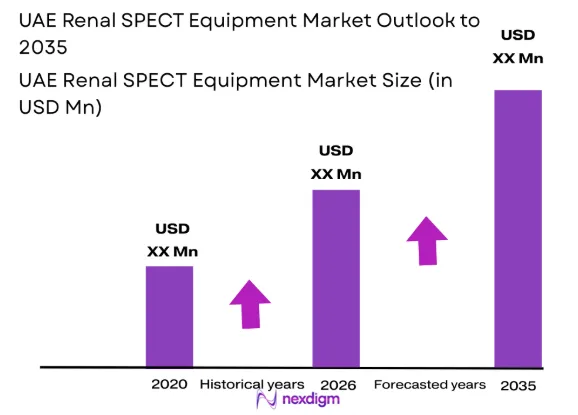
The UAE Renal SPECT Equipment market has witnessed significant growth, driven by increasing demand for advanced diagnostic tools in the healthcare sector. The market size is valued at USD ~ million, based on a recent historical assessment, with growth attributed to a rising number of renal disease cases and the adoption of innovative medical technologies. Factors such as governmental healthcare investments, improved healthcare infrastructure, and advancements in imaging technologies are key drivers in expanding this market.
The UAE’s dominance in the market can be attributed to its robust healthcare system, advanced medical infrastructure, and strategic government support for healthcare innovation. Cities like Dubai and Abu Dhabi lead the market due to their highly developed medical centers and increasing healthcare investments. These cities also serve as hubs for medical tourism in the region, boosting the demand for high-tech medical equipment, including renal imaging systems, which continues to support their dominance in the market.
Market Segmentation
By System Type
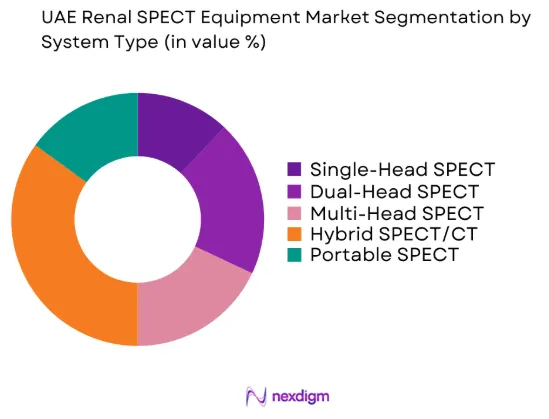
The UAE Renal SPECT Equipment market is segmented by system type into single-head SPECT systems, dual-head SPECT systems, multi-head SPECT systems, hybrid SPECT/CT systems, and portable SPECT systems. Recently, hybrid SPECT/CT systems have seen dominant market share due to their ability to combine the benefits of both SPECT and CT imaging, offering more detailed and accurate results for renal diagnostics. As these systems provide higher resolution and are increasingly preferred for their diagnostic capabilities, their adoption continues to rise across hospitals and diagnostic centers in the UAE.
By Platform Type
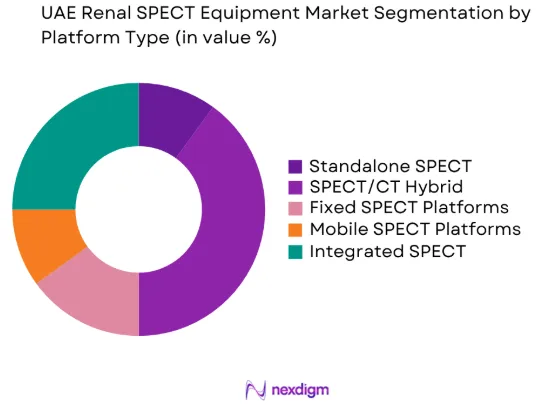
The UAE Renal SPECT Equipment market is also segmented by platform type into standalone SPECT systems, SPECT/CT hybrid systems, fixed SPECT platforms, mobile SPECT platforms, and integrated SPECT systems. SPECT/CT hybrid systems dominate the market as they offer enhanced diagnostic accuracy and are increasingly in demand in both urban and rural healthcare facilities. These platforms combine SPECT imaging with CT scans, providing comprehensive imaging solutions that make them highly sought after for renal disease diagnosis and treatment planning.
Competitive Landscape
The competitive landscape of the UAE Renal SPECT Equipment market is marked by the presence of major players that are continuously innovating and consolidating their positions. These companies compete on the basis of technology, product offerings, and pricing strategies. Leading companies focus on expanding their product portfolios to include hybrid systems and portable devices, which are gaining popularity in the region. The ongoing partnerships between healthcare facilities and equipment providers are further shaping the competitive environment.
| Company Name | Establishment Year | Headquarters | Technology Focus | Market Reach | Key Products | Revenue | Additional Parameter |
| GE Healthcare | 1892 | Chicago, USA | ~ | ~ | ~ | ~ | ~ |
| Siemens Healthineers | 1847 | Erlangen, Germany | ~ | ~ | ~ | ~ | ~ |
| Philips Healthcare | 1891 | Amsterdam, Netherlands | ~ | ~ | ~ | ~ | ~ |
| Toshiba Medical Systems | 1930 | Tokyo, Japan | ~ | ~ | ~ | ~ | ~ |
| Medtronic | 1949 | Dublin, Ireland | ~ | ~ | ~ | ~ | ~ |
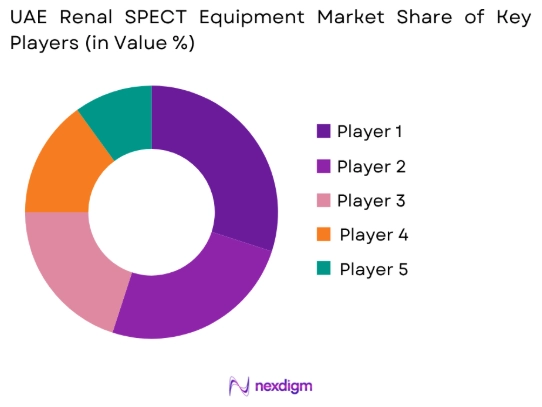
UAE Renal SPECT Equipment Market Analysis
Growth Drivers
Increase in Kidney Disease Incidence
The increasing prevalence of kidney diseases, including chronic kidney disease (CKD) and renal failure, is a significant growth driver for the UAE Renal SPECT Equipment market. With lifestyle changes, such as unhealthy diets and sedentary habits, the incidence of kidney disorders has risen significantly in the region. As a result, there is a growing demand for early diagnostic technologies, such as SPECT imaging, to detect renal abnormalities. The adoption of these advanced imaging systems by hospitals and diagnostic centers is accelerating as they provide non-invasive and accurate diagnostic capabilities, aiding in better disease management and patient outcomes. The rise in public awareness and healthcare expenditure has further facilitated the expansion of diagnostic services and the incorporation of state-of-the-art medical technologies.
Technological Advancements in Imaging Systems
Technological advancements, particularly the development of hybrid imaging systems such as SPECT/CT, have been instrumental in driving market growth. These systems combine the diagnostic capabilities of SPECT with high-resolution CT scans, providing clearer and more accurate images for renal diagnostics. This integration of technologies not only enhances the diagnostic process but also shortens the time required for diagnosis, improving the workflow in healthcare settings. With the ongoing advancements in software and AI integration, imaging systems are becoming more efficient and patient-friendly. As the demand for high-quality imaging systems rises in response to the growing prevalence of renal disorders, this technological shift continues to be a key driver in the market’s expansion.
Market Challenges
High Cost of Equipment
One of the major challenges facing the UAE Renal SPECT Equipment market is the high initial cost associated with these advanced imaging systems. The purchase and installation of SPECT and hybrid SPECT/CT systems require significant capital investment, which can be prohibitive for smaller diagnostic centers and hospitals. Additionally, the ongoing maintenance, calibration, and servicing of these systems further add to the operational costs. While these systems provide superior diagnostic capabilities, the high upfront cost makes it difficult for some healthcare providers to adopt these technologies. This challenge is further compounded by the competitive nature of the market, which increases the pressure to offer cost-effective solutions without compromising on quality.
Lack of Trained Personnel
Another significant challenge in the UAE Renal SPECT Equipment market is the shortage of skilled professionals trained in the operation and maintenance of advanced imaging systems. While these systems offer cutting-edge imaging capabilities, they require specialized knowledge to operate effectively. The lack of skilled personnel capable of handling and interpreting data from these systems can limit their adoption and usage. Additionally, the need for continuous training and certification to stay up-to-date with technological advancements further exacerbates this issue. The shortage of qualified personnel in the medical imaging sector represents a considerable challenge for healthcare providers looking to integrate advanced systems into their operations.
Opportunities
Government Healthcare Investments
The UAE government’s significant investments in healthcare infrastructure present a major opportunity for the Renal SPECT Equipment market. As part of its strategy to position the UAE as a leader in healthcare innovation, the government is focusing on enhancing medical technologies and equipment. This initiative aims to improve healthcare quality, expand service access, and attract international patients for medical tourism. By prioritizing advanced diagnostic capabilities and fostering healthcare innovation, the UAE government is creating a favorable environment for market players. This growing support opens avenues for companies to expand their presence, innovate, and contribute to the ongoing development of the country’s healthcare sector.
Expansion in Rural Healthcare
As the demand for advanced medical equipment grows, there is also an opportunity to expand the use of Renal SPECT Equipment into rural and underserved regions. Many rural areas in the UAE lack access to advanced diagnostic technologies, creating an unmet need for mobile or portable Renal SPECT systems. The growing emphasis on expanding healthcare access in these areas presents a unique opportunity for companies to cater to the demands of these regions by offering cost-effective and mobile solutions. By targeting rural healthcare providers, market players can contribute to improving the quality of renal care in underserved communities while driving market growth.
Future Outlook
The future outlook for the UAE Renal SPECT Equipment market remains positive, driven by the increasing demand for early renal disease detection, advancements in imaging technology, and government initiatives supporting healthcare infrastructure development. Over the next five years, the market is expected to see significant growth, with a continued shift towards hybrid imaging systems and mobile solutions. Technological advancements, particularly in AI and machine learning integration, will further enhance diagnostic capabilities. Additionally, the expansion of healthcare facilities in rural areas and greater government investment in the healthcare sector will drive demand for Renal SPECT Equipment in the region.
Major Players
- GE Healthcare
- Siemens Healthineers
- Philips Healthcare
- Toshiba Medical Systems
- Medtronic
- Shimadzu Corporation
- Hitachi Medical Corporation
- Spectrum Dynamics
- Neusoft Medical Systems
- Polymedic
- Shenzhen Mindray Bio-Medical Electronics
- United Imaging Healthcare
- Elbit Systems
- Agfa-Gevaert Group
- Canon Medical Systems
Key Target Audience
- Investments and venture capitalist firms
- Government and regulatory bodies
- Hospitals and diagnostic imaging centers
- Medical device distributors
- Healthcare providers and clinicians
- Private healthcare groups
- Medical equipment procurement managers
- Healthcare consultants
Research Methodology
Step 1: Identification of Key Variables
We begin by identifying key variables and parameters that impact the market, including trends, growth drivers, challenges, and opportunities, based on industry data and expert consultations.
Step 2: Market Analysis and Construction
Market analysis is performed by analyzing historical data, current market trends, and future projections, while segmenting the market by product types, applications, and end-users.
Step 3: Hypothesis Validation and Expert Consultation
We validate hypotheses with inputs from subject matter experts, medical professionals, and industry leaders to ensure accuracy and relevance.
Step 4: Research Synthesis and Final Output
The research findings are synthesized into a comprehensive report, incorporating market insights, forecasts, and actionable recommendations for stakeholders.

- Executive Summary
- Research Methodology (Definitions, Scope, Industry Assumptions, Market Sizing Approach, Primary & Secondary Research Framework, Data Collection & Verification Protocol, Analytic Models & Forecast Methodology, Limitations & Research Validity Checks)

- Market Definition and Scope
- Value Chain & Stakeholder Ecosystem
- Regulatory / Certification Landscape
- Sector Dynamics Affecting Demand
- Strategic Initiatives & Infrastructure Growth

- Growth Drivers
Increasing Prevalence of Kidney Diseases
Advancements in Medical Imaging Technologies
Growing Healthcare Infrastructure Investments - Market Challenges
High Initial Equipment Cost
Limited Awareness in Emerging Markets
Technological Complexity and Training Needs - Market Opportunities
Growing Demand for Non-Invasive Diagnostic Techniques
Expansion of Healthcare Facilities in Rural Areas
Increasing Adoption of Hybrid Imaging Systems - Trends
Rise in Point-of-Care Imaging
Integration of Artificial Intelligence in Imaging Systems
Shift Towards Personalized Medicine - Government Regulations
- SWOT Analysis of Key Competitors
- Porter’s Five Forces

- By Market Value, 2020-2025
- By Installed Units, 2020-2025
- By Average System Price, 2020-2025
- By System Complexity Tier, 2020-2025

- By System Type (In Value%)
Single-Head SPECT Systems
Dual-Head SPECT Systems
Multi-Head SPECT Systems
Hybrid SPECT/CT Systems
Portable SPECT Systems - By Platform Type (In Value%)
Standalone SPECT Systems
SPECT/CT Hybrid Systems
Fixed SPECT Platforms
Mobile SPECT Platforms
Integrated SPECT Systems - By Fitment Type (In Value%)
Fixed Fitment Systems
Mobile Fitment Systems
Ceiling-Mounted Systems
Floor-Mounted Systems
Table-Top Systems - By End User Segment (In Value%)
Hospitals
Diagnostic Imaging Centers
Research Laboratories
Ambulatory Surgical Centers
Specialized Renal Clinics - By Procurement Channel (In Value%)
Direct Sales
Distributor Network
Online Sales Channels
Government and Public Sector Tenders
Leasing and Financing Options

- Market Share Analysis
- Cross Comparison Parameters (Product Type, System Complexity, Installed Base, Technological Innovations, Procurement Models)
- SWOT Analysis of Key Competitors
- Pricing & Procurement Analysis
- Key Players
GE Healthcare
Siemens Healthineers
Philips Healthcare
Toshiba Medical Systems
Canon Medical Systems
Medtronic
Shimadzu Corporation
Hitachi Medical Corporation
Spectrum Dynamics
Neusoft Medical Systems
Polymedic
Shenzhen Mindray Bio-Medical Electronics
United Imaging Healthcare
Elbit Systems
Agfa-Gevaert Group

- Hospitals with Renal Departments
- Diagnostic Imaging Providers Specializing in Renal Imaging
- Private Renal Care Centers
- Research Institutions Focused on Renal Disease

- Forecast Market Value, 2026-2035
- Forecast Installed Units, 2026-2035
- Price Forecast by System Tier, 2026-2035
- Future Demand by Platform, 2026-2035


 Request a Sample
 Ask for Customization
 Get a Quote
 Enquire Now