
 Download PDF
 Download PDF
Market Overview
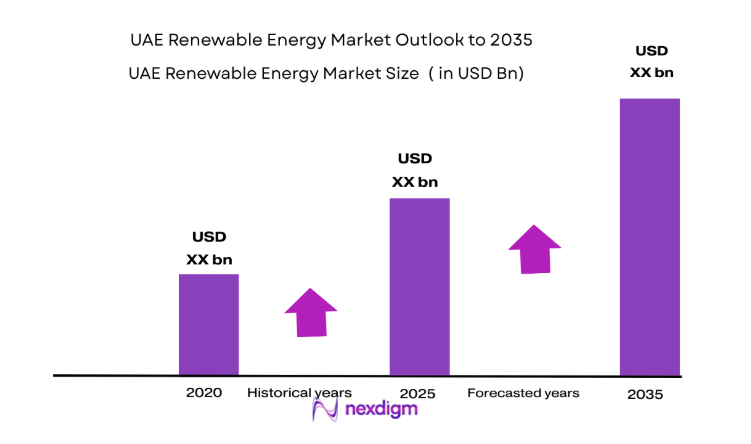
The UAE renewable energy market is projected to grow substantially, driven by significant investments in solar and wind energy projects. In recent assessments, the market size is estimated at USD ~ billion, with continued government support for renewable energy initiatives contributing to this growth. Strong policy frameworks and funding mechanisms have bolstered the development of clean energy infrastructure, resulting in more efficient production and distribution systems. Technological advancements and cost reductions in solar panel and wind turbine technologies have been key drivers of this growth, alongside the increasing demand for sustainable energy sources.
The UAE’s dominance in the renewable energy market is supported by its strategic location, favorable investment climate, and substantial energy resources. The country is focused on diversifying its energy mix, with major projects located in Dubai and Abu Dhabi driving growth. The government’s commitment to sustainable development, demonstrated by the launch of initiatives like the UAE Energy Strategy 2050, has solidified its position as a leader in the renewable energy sector. Dubai, with its vast solar energy projects, and Abu Dhabi, home to leading wind energy projects, are at the forefront of the market’s expansion.
Market Segmentation
By System Type:
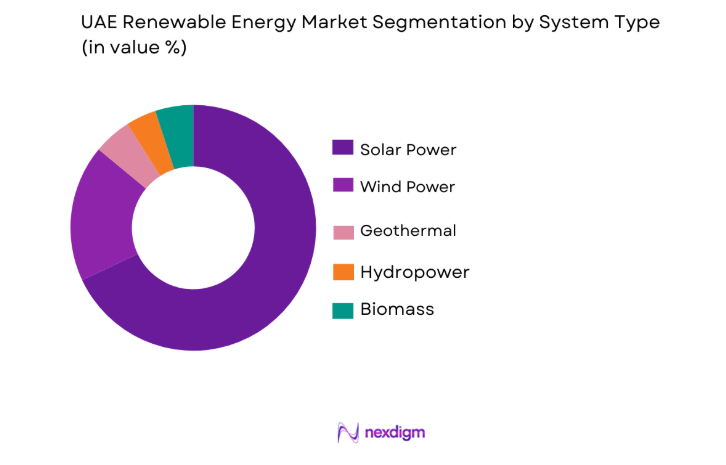
The UAE renewable energy market is segmented by system type into solar, wind, geothermal, hydropower, and biomass. The solar power segment currently dominates the market share due to the country’s abundant sunlight, which provides ideal conditions for solar energy production. As one of the world’s leaders in solar energy capacity, the UAE’s investment in solar technology has increased significantly, driving the dominance of solar systems. Additionally, with the UAE government’s plans to increase renewable energy capacity to 50% by 2050, the solar sub-segment is expected to continue to capture the largest share. The expansion of large-scale solar projects, such as the Mohammed bin Rashid Al Maktoum Solar Park, reinforces solar energy’s lead position in the UAE’s renewable energy landscape.
By Platform Type:
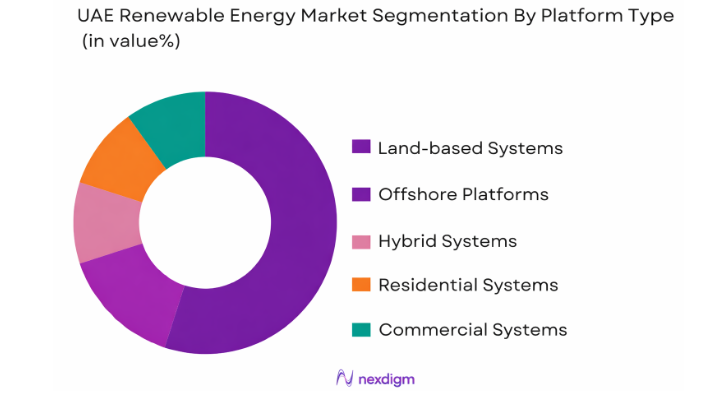
The UAE renewable energy market is segmented by platform type into land-based systems, offshore platforms, hybrid systems, residential systems, and commercial systems. Land-based solar systems currently hold the largest market share in the UAE. This dominance is attributed to the region’s vast desert landscape, which is ideal for large-scale solar installations. Additionally, land-based solar systems benefit from relatively lower installation costs and greater energy efficiency compared to other platform types. The UAE government has heavily invested in expanding land-based solar infrastructure, which is expected to continue to dominate the market. The hybrid systems sub-segment is also gaining traction due to the growing demand for integrated energy solutions that combine multiple sources of renewable energy, including solar and wind.
Competitive Landscape
The UAE renewable energy market is competitive, with a mix of established global players and local firms contributing to the market’s growth. The consolidation of market leaders, backed by government-backed renewable energy projects, has resulted in a robust competitive environment. Major players in solar and wind energy have been instrumental in shaping the country’s renewable energy landscape. The influence of these players, combined with favorable regulations, is expected to drive continued growth and innovation. As competition intensifies, companies are focusing on technological innovation, strategic partnerships, and sustainability to maintain their competitive edge.
| Company Name | Establishment Year | Headquarters | Technology Focus | Market Reach | Key Products | Revenue (USD) | Key Technology Focus |
| First Solar | 1999 | United States | ~ | ~ | ~ | ~ | ~ |
| Siemens Gamesa | 1976 | Spain | ~ | ~ | ~ | ~ | ~ |
| Masdar | 2006 | UAE | ~ | ~ | ~ | ~ | ~ |
| JinkoSolar | 2006 | China | ~ | ~ | ~ | ~ | ~ |
| Enel Green Power | 2008 | Italy | ~ | ~ | ~ | ~ | ~ |
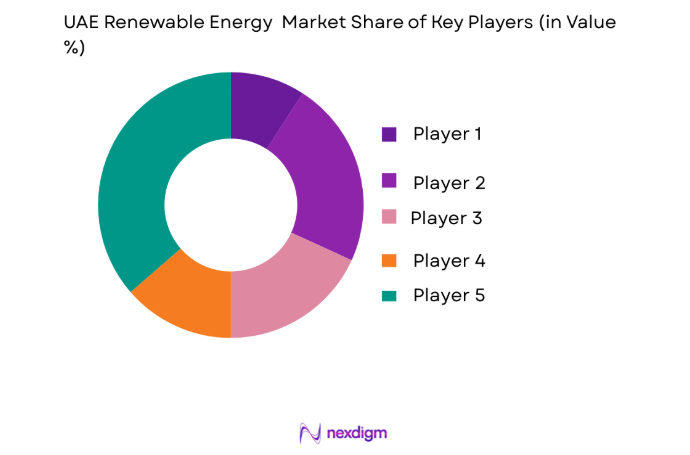
UAE Renewable Energy Market Analysis
Growth Drivers
Government Investment in Renewable Energy Initiatives:
The UAE government’s investment in renewable energy has been a significant driver of market growth. With a commitment to increasing the share of renewables in the national energy mix to 50% by 2050, the government has launched numerous initiatives to encourage private sector participation. These include the development of large-scale solar projects like the Mohammed bin Rashid Al Maktoum Solar Park, which is expected to generate up to 5,000 MW of energy by 2030. Furthermore, the UAE’s focus on reducing dependence on fossil fuels and promoting sustainable energy has led to favorable regulations and incentives, attracting both domestic and international investors. These government-led efforts have paved the way for technological innovation, cost reductions, and greater public awareness of renewable energy, further boosting the market’s growth.
Technological Advancements in Solar Power and Storage:
Technological advancements in solar power systems and energy storage solutions have significantly contributed to the growth of the UAE renewable energy market. With improvements in solar panel efficiency, cost reductions, and the integration of energy storage technologies, solar energy has become more viable for large-scale projects and residential applications. The UAE’s strategic investments in solar research and development have helped accelerate these innovations, positioning the country as a leader in solar energy technology. Additionally, advancements in energy storage technologies have addressed the intermittency issues associated with renewable energy, making solar power more reliable and efficient. These technological improvements have lowered the cost of solar energy generation and are expected to drive further growth in the market.
Market Challenges
High Initial Capital Costs for Renewable Energy Projects:
A significant challenge facing the UAE renewable energy market is the high initial capital costs associated with renewable energy projects. Although solar and wind energy technologies have seen cost reductions in recent years, the upfront investment required for large-scale installations remains a barrier to entry for some developers. This challenge is particularly evident in off-grid and residential solar solutions, where the cost of system components and installation can be prohibitive. The high capital costs are compounded by the need for specialized infrastructure and skilled labor, making it difficult for smaller players to compete. Despite these challenges, government incentives and the increasing affordability of renewable technologies are helping to mitigate the impact of high initial costs.
Energy Storage and Grid Integration Challenges:
As the UAE continues to expand its renewable energy capacity, grid integration and energy storage remain significant challenges. The intermittent nature of renewable energy sources like solar and wind means that energy production does not always align with demand, making grid integration complex. The UAE’s electricity grid needs to be upgraded to accommodate these fluctuations, requiring substantial investments in infrastructure and technology. Moreover, energy storage solutions, which are essential for ensuring a steady power supply, are still developing. While advancements in battery storage technologies are ongoing, the lack of widespread adoption and the high cost of storage systems remain key hurdles for the industry. These challenges must be addressed to ensure the long-term viability of renewable energy in the UAE.
Opportunities
Expansion of Solar and Wind Power Projects:
One of the most significant opportunities for the UAE renewable energy market is the continued expansion of solar and wind power projects. With the country’s abundant sunshine and favorable wind conditions, the potential for large-scale solar and wind farms is vast. The UAE’s commitment to diversifying its energy sources and reducing carbon emissions has led to the launch of several high-profile renewable energy projects. These include the Mohammed bin Rashid Al Maktoum Solar Park and the Barakah Nuclear Energy Plant, which are expected to provide substantial renewable energy capacity. The government’s focus on sustainability and its willingness to support private sector participation presents significant opportunities for developers, investors, and technology providers in the renewable energy sector.
Energy Storage Solutions for Grid Stability:
The growing need for energy storage solutions presents a major opportunity for the UAE renewable energy market. As the country increases its reliance on intermittent renewable energy sources, energy storage technologies will be essential for ensuring a stable and reliable power supply. Battery storage systems, pumped hydro storage, and other innovative solutions can help balance supply and demand by storing excess energy during periods of high generation and releasing it when demand peaks. The UAE’s strong focus on innovation and technology development positions it as a potential hub for energy storage solutions in the Middle East. This opportunity is expected to drive growth in both the renewable energy and energy storage sectors.
Future Outlook
The UAE renewable energy market is expected to continue its growth trajectory over the next five years, with increased investments in solar and wind energy projects. Technological advancements in energy storage and grid integration, coupled with supportive government policies, will drive further market development. As the country moves closer to its target of 50% renewable energy by 2050, demand for clean energy will continue to rise, providing ample opportunities for both local and international players to expand their presence in the market.
Major Players
- First Solar
- Siemens Gamesa
- Masdar
- JinkoSolar
- Enel Green Power
- SunPower
- Vestas
- Schneider Electric
- GE Renewable Energy
- Trina Solar
- Canadian Solar
- Lightsource BP
- First Solar
- Hanergy
- Yingli Solar
Key Target Audience
- Investments and venture capitalist firms
- Government and regulatory bodies
- Solar and wind power developers
- Energy storage solution providers
- Renewable energy technology manufacturers
- Utilities and energy providers
- Project developers
- Environmental consulting firms
Research Methodology
Step 1: Identification of Key Variables
This step involves identifying the key drivers and variables that affect the renewable energy market, including technological, economic, and policy factors.
Step 2: Market Analysis and Construction
We analyze historical market data, trends, and current developments to build a comprehensive market model.
Step 3: Hypothesis Validation and Expert Consultation
Experts in renewable energy technologies and market trends are consulted to validate our hypotheses and improve the accuracy of our analysis.
Step 4: Research Synthesis and Final Output
We synthesize all the data and insights into a final report, highlighting key findings and providing actionable recommendations.

- Executive Summary
- Research Methodology (Definitions, Scope, Industry Assumptions, Market Sizing Approach, Primary & Secondary Research Framework, Data Collection & Verification Protocol, Analytic Models & Forecast Methodology, Limitations & Research Validity Checks)

- Market Definition and Scope
- Value Chain & Stakeholder Ecosystem
- Regulatory / Certification Landscape
- Sector Dynamics Affecting Demand

- Growth Drivers
Government Investment in Renewable Energy Projects
Technological Advancements in Renewable Technologies
Strong Environmental Policies and Regulations - Market Challenges
High Initial Investment Costs
Intermittency of Renewable Energy Sources
Grid Integration and Infrastructure Development - Market Opportunities
Expansion of Solar and Wind Power Capacities
Energy Storage Solutions for Grid Stability
Public-Private Partnerships for Renewable Projects - Trends
Increased Integration of AI and IoT in Renewable Energy Systems
Adoption of Energy Storage Solutions
Expansion of Solar and Wind Farms - Government Regulations
- SWOT Analysis of Key Competitors

- By Market Value, 2020-2025
- By Installed Units, 2020-2025
- By Average System Price, 2020-2025
- By System Complexity Tier, 2020-2025

- By System Type (In Value%)
Solar Power
Wind Power
Hydropower
Geothermal
Biomass - By Platform Type (In Value%)
Land-based Systems
Offshore Platforms
Hybrid Systems
Residential Systems
Commercial Systems - By Fitment Type (In Value%)
On-premise Solutions
Cloud-based Solutions
Hybrid Solutions
Modular Solutions
Integrated Solutions - By EndUser Segment (In Value%)
Government Entities
Private Sector
Utilities
Industrial
Residential

- Market Share Analysis
- CrossComparison Parameters (System Type, Platform Type, Procurement Channel, EndUser Segment, Fitment Type)
- SWOT Analysis of Key Competitors
- Pricing & Procurement Analysis
- Porter’s Five Forces
- Key Players
First Solar
Siemens Gamesa
Masdar
Abu Dhabi National Energy Company (TAQA)
Enel Green Power
JinkoSolar
Sungevity
GE Renewable Energy
Vestas
Brookfield Renewable Partners
Trina Solar
TotalEnergies
DNV GL
Acciona
Schneider Electric

- Government Adoption of Renewable Solutions
- Industrial Adoption of Green Energy
- Private Sector Investments in Solar and Wind Projects
- Increased Residential Interest in Clean Energy Solutions

- Forecast Market Value, 2026-2035
- Forecast Installed Units, 2026-2035
- Price Forecast by System Tier, 2026-2035
- Future Demand by Platform, 2026-2035


 Request a Sample
 Ask for Customization
 Get a Quote
 Enquire Now