
 Download PDF
Market Overview
The UAE Rolling Stock Market covers the procurement, deployment, modernization, and maintenance of railway vehicles including passenger trains, freight wagons, metro vehicles, locomotives, and advanced electric rolling stock systems. The market is being shaped by the UAE Railway Programme, Etihad Rail freight operations, metro expansion projects, and upcoming passenger rail services. The national railway network extends approximately 900 km and connects industrial zones, ports, and major cities across the Emirates.
The UAE has emerged as a regional railway hub due to investments in integrated transport infrastructure, logistics connectivity, and sustainable mobility. Etihad Rail’s freight operations connect key industrial and logistics locations, while passenger rail development is expected to link 11 cities across the country. Dubai and Abu Dhabi remain dominant railway development centers due to population concentration, tourism activity, industrial demand, and extensive public transport investments.
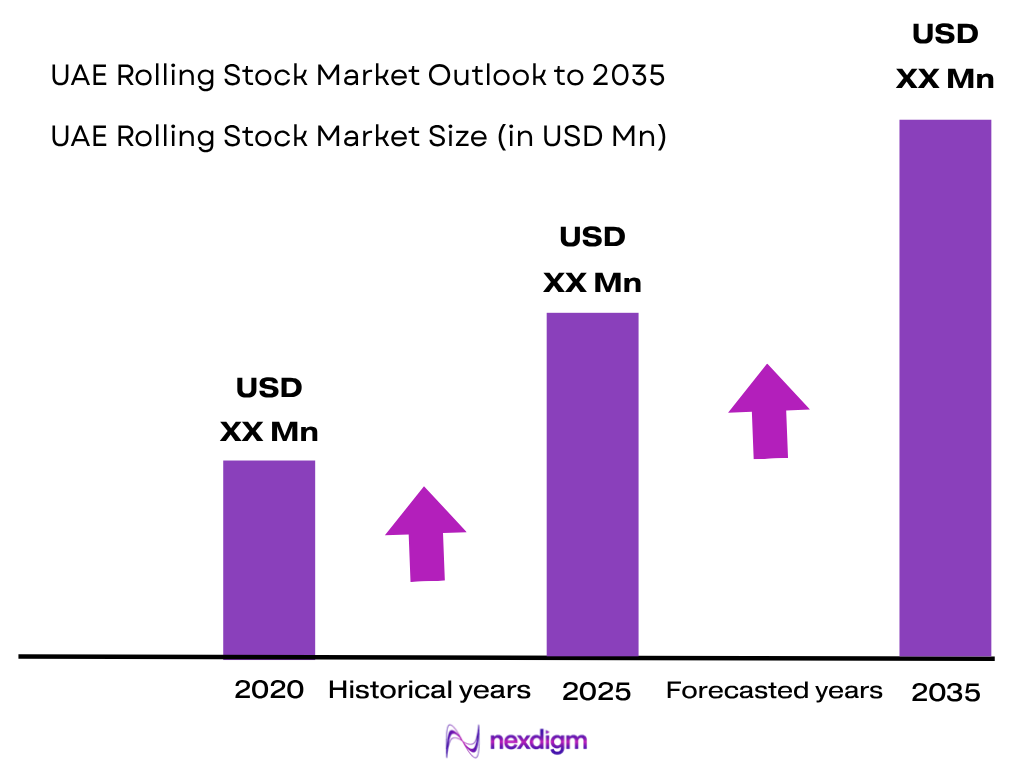
Market Segmentation
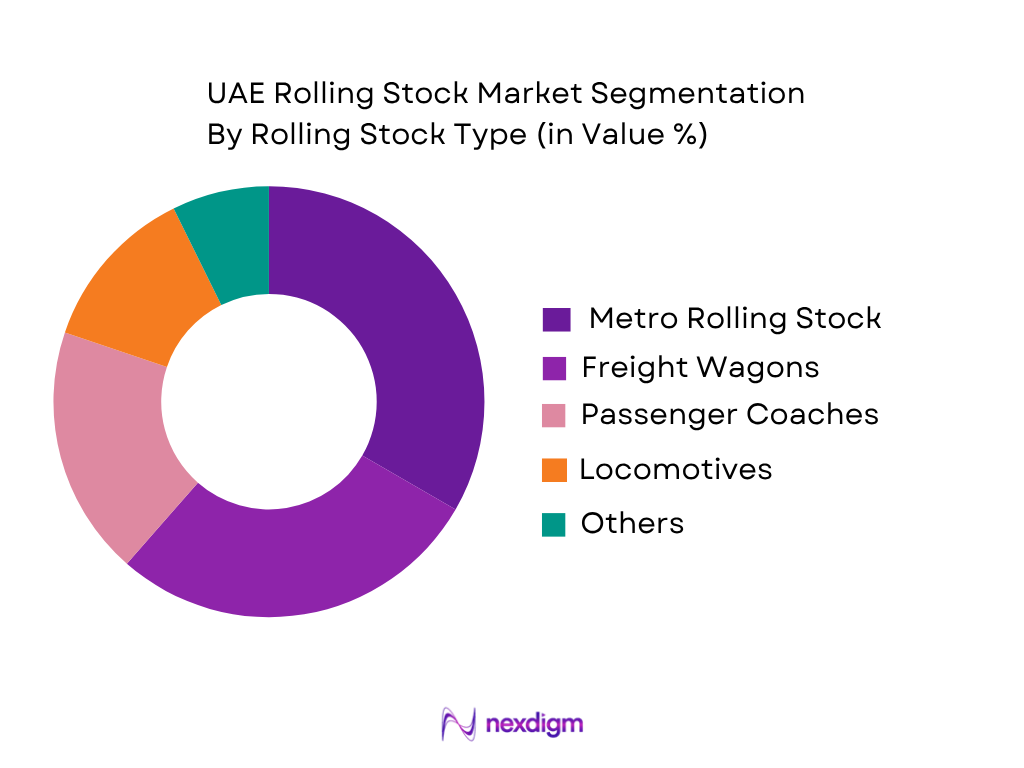
By Rolling Stock Type
Metro rolling stock dominates due to established urban transportation networks in Dubai and continued investment in urban mobility systems. Dubai Metro represents one of the most advanced automated metro systems globally, creating sustained demand for metro vehicles, spare parts, and maintenance services. Future integration between urban rail systems and national railway infrastructure is expected to increase demand for connected metro and light rail solutions. Dubai’s planned metro expansion projects, including additional lines and extensions, are expected to support future rolling stock procurement.
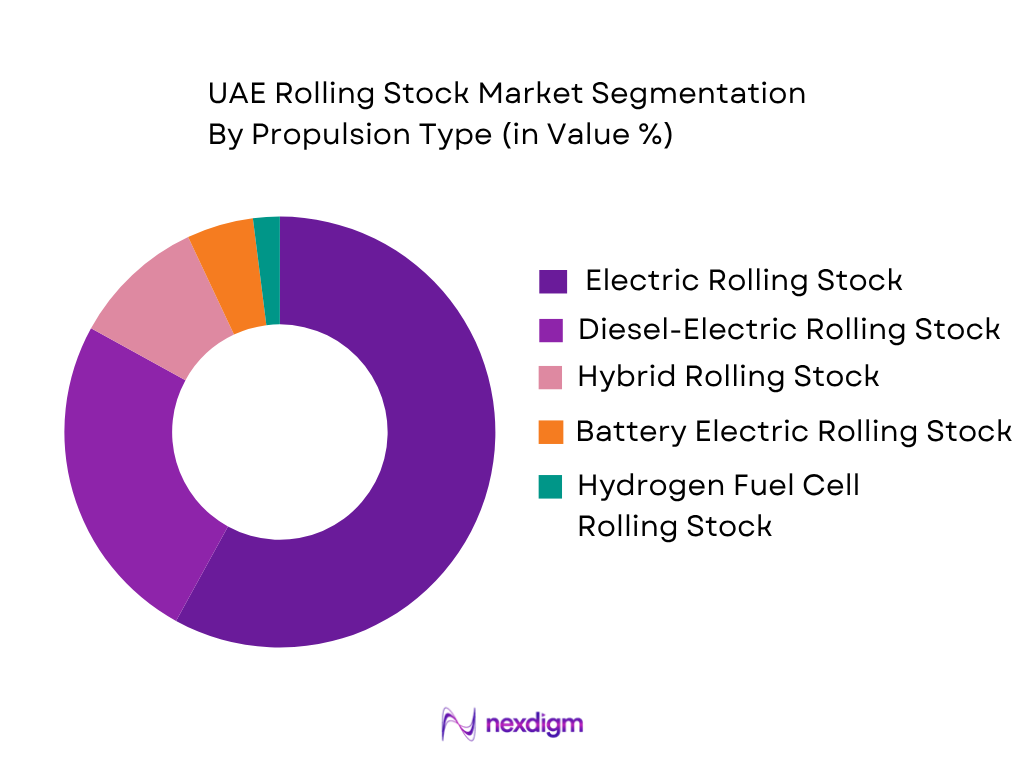
By Propulsion Type
Electric rolling stock leads due to UAE sustainability objectives, railway electrification initiatives, and demand for low-emission transportation. National railway projects emphasize efficient and sustainable mobility solutions, with future passenger and high-speed rail systems designed around electrified infrastructure. Etihad Rail’s planned high-speed passenger rail network is expected to operate on a fully electrified dedicated network, supporting adoption of advanced electric train technologies.
Competitive Landscape
The UAE Rolling Stock Market is characterized by strong participation from international railway manufacturers due to limited domestic rolling stock manufacturing capabilities. Companies compete based on rolling stock technology, railway automation expertise, maintenance capabilities, energy efficiency, and experience in large-scale railway projects. Etihad Rail, Dubai Metro, and other transport authorities collaborate with global technology providers for railway development.
| Company | Headquarters | Establishment Year | Core Rolling Stock Capability | UAE Market Focus | Technology Expertise | Maintenance Capability | Major Applications |
| Alstom | France | 1928 | ~ | ~ | ~ | ~ | ~ |
| Siemens Mobility | Germany | 1847 | ~ | ~ | ~ | ~ | ~ |
| CRRC Corporation | China | 2007 | ~ | ~ | ~ | ~ | ~ |
| Hyundai Rotem | South Korea | 1999 | ~ | ~ | ~ | ~ | ~ |
| Stadler Rail | Switzerland | 1942 | ~ | ~ | ~ | ~ | ~ |
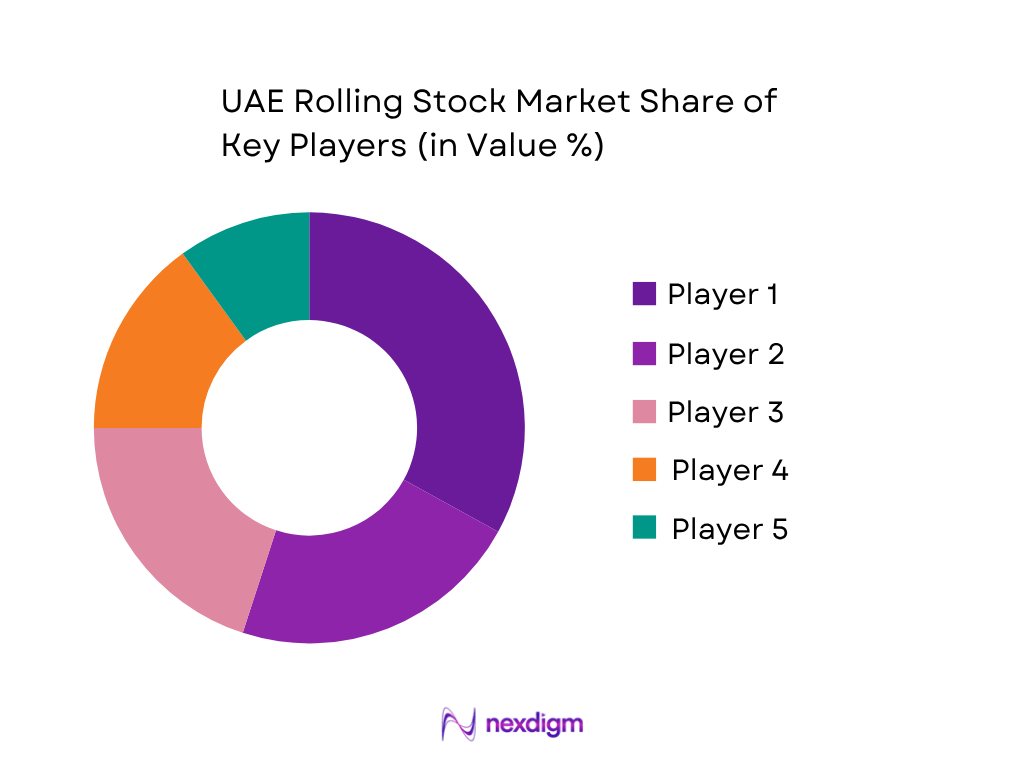
UAE Rolling Stock Market Analysis
Growth Drivers
Freight Railway Network Expansion
Freight railway network expansion is a major growth driver for the UAE Rolling Stock Market due to the country’s focus on developing rail-based logistics infrastructure to reduce dependence on road freight and strengthen industrial connectivity. Etihad Rail has developed a national railway network extending approximately 900 km, connecting industrial areas, ports, quarries, and logistics hubs across the Emirates. The freight network supports transportation of bulk commodities, containers, and industrial materials, increasing demand for freight wagons, locomotives, and specialized rolling stock. The UAE’s non-oil economy contributed AED 1.24 trillion to GDP in 2023, highlighting increasing industrial and logistics activity requiring efficient transportation infrastructure. Expansion of rail freight capacity supports connectivity between Khalifa Port, Jebel Ali Port, and industrial zones such as Ruwais and Ghuwaifat. The UAE handled more than 19 million TEUs of container traffic through major ports in 2023, creating demand for integrated rail freight solutions. The shift toward sustainable logistics is also supported by national emission reduction objectives, encouraging replacement of road-based cargo movement with rail transportation. As freight volumes increase, rolling stock requirements will expand across locomotives, wagons, maintenance equipment, and digital fleet management systems.
Etihad Rail Development
Etihad Rail development represents a central growth factor for the UAE Rolling Stock Market as the national railway programme creates long-term demand for passenger trains, freight locomotives, and advanced railway systems. The UAE Railway Programme is designed to establish an integrated railway network connecting all seven emirates with approximately 900 km of railway infrastructure. Etihad Rail’s freight operations have already commenced, connecting major industrial and logistics locations, while passenger rail services are planned to connect 11 cities and regions across the country. The UAE transportation sector continues to receive government support, with infrastructure investment remaining a strategic priority under national development plans. The country’s population exceeded 10 million people, creating increasing demand for efficient intercity mobility solutions. Passenger railway development between Abu Dhabi and Dubai is expected to reduce travel times significantly and create demand for modern electric multiple units and high-performance passenger coaches. The project also supports adoption of advanced signaling, digital train control systems, and maintenance technologies. Continued expansion of Etihad Rail will therefore create opportunities for international rolling stock manufacturers, component suppliers, and railway service providers.
Market Challenges
High Import Dependency
High import dependency remains a significant challenge for the UAE Rolling Stock Market due to limited domestic manufacturing capability for advanced railway vehicles, propulsion systems, and specialized components. The UAE relies heavily on international suppliers for metro trains, locomotives, signaling equipment, and railway technology solutions. Major rolling stock manufacturers from Europe, China, Japan, and South Korea participate in UAE railway projects because of their established manufacturing expertise and technology capabilities. The country’s manufacturing sector contributed approximately AED 180 billion to GDP in 2023, but advanced rail vehicle production remains a specialized segment requiring extensive engineering capabilities and supply chains. Dependence on imported rolling stock increases exposure to international supply chain disruptions, foreign exchange fluctuations, and extended delivery timelines. Railway projects require integration of imported components including traction systems, braking equipment, control systems, and specialized materials. The limited availability of local suppliers for these components creates challenges in maintaining cost efficiency and operational flexibility. Developing localized railway manufacturing capabilities and increasing technology partnerships will be essential to reduce dependency and improve long-term rolling stock sustainability.
Extreme Climate Adaptation Requirements
Extreme climate conditions create technical challenges for the UAE Rolling Stock Market as railway systems must operate reliably under high temperatures, desert environments, and sand exposure. Summer temperatures in the UAE frequently exceed 45°C, requiring rolling stock manufacturers to develop specialized cooling systems, dust protection mechanisms, and climate-resistant components. Railway vehicles operating in desert environments require enhanced filtration systems, reinforced electrical equipment, and advanced maintenance procedures to prevent performance degradation. The UAE has experienced rapid infrastructure development across urban and industrial areas, increasing the need for reliable transportation systems capable of operating throughout the year. Rolling stock deployed in the country must meet strict reliability standards for passenger comfort, equipment durability, and operational safety. Extreme environmental conditions increase maintenance requirements for traction systems, air-conditioning units, braking components, and electronic systems. These requirements can extend testing periods and increase engineering complexity for international suppliers entering the UAE market. Manufacturers with proven experience in desert railway operations and harsh climate adaptation technologies are better positioned to participate in future railway projects.
Market Opportunities
High-Speed Rail Development
High-speed rail development presents a significant opportunity for the UAE Rolling Stock Market as the country advances plans for faster intercity connectivity between major economic centers. The UAE’s planned high-speed passenger rail network is designed to connect Abu Dhabi and Dubai through dedicated railway infrastructure, supporting faster movement of passengers between key cities. The UAE recorded more than 28 million international visitors in 2023, increasing demand for efficient transportation networks connecting airports, business districts, and tourism destinations. High-speed rail development creates opportunities for advanced passenger trainsets, electric propulsion systems, signaling technologies, and specialized maintenance solutions. The project aligns with national objectives to enhance sustainable mobility and reduce dependence on private vehicles for long-distance travel. High-speed trains require advanced rolling stock technologies including lightweight materials, aerodynamic designs, energy-efficient propulsion, and digital monitoring systems. International manufacturers with expertise in high-speed railway technology are expected to participate through partnerships, technology supply agreements, and project collaborations. Expansion of high-speed rail infrastructure will strengthen demand for next-generation rolling stock and associated railway services.
Smart Railway Maintenance and Digitalization
Smart railway maintenance and digitalization provide major opportunities for the UAE Rolling Stock Market through adoption of predictive maintenance systems, artificial intelligence-based monitoring, and connected railway technologies. Modern railway operators are increasingly implementing digital solutions to improve fleet availability, reduce downtime, and optimize maintenance activities. The UAE has positioned itself as a regional technology hub, with digital transformation initiatives supporting infrastructure modernization across transportation sectors. Smart maintenance technologies enable real-time monitoring of rolling stock components including engines, braking systems, wheels, and electrical systems. The UAE’s logistics sector continues to expand, with Dubai handling more than 14 million passengers through Dubai International Airport in the first quarter of 2024 alone, demonstrating strong mobility demand requiring reliable transportation systems. Digital railway solutions can improve operational efficiency across passenger and freight networks by using sensor-based diagnostics, automated inspection systems, and data analytics platforms. Future rolling stock procurement is expected to increasingly prioritize connected train systems, cybersecurity solutions, and integrated fleet management platforms. These developments create opportunities for technology providers, railway software companies, and maintenance service specialists.
Future Outlook
The UAE Rolling Stock Market is expected to experience significant transformation driven by national railway expansion, urban mobility investments, and sustainable transportation initiatives. Future demand will be supported by passenger rail deployment, high-speed rail development, freight network expansion, and adoption of digitally connected railway systems.
The UAE’s high-speed rail initiative is planned to connect Abu Dhabi and Dubai through a dedicated electrified network, targeting travel times of approximately 30 minutes between the two economic centers.
Major Players
- Alstom
- Siemens Mobility
- CRRC Corporation Limited
- Hyundai Rotem
- Stadler Rail
- Hitachi Rail
- Wabtec Corporation
- CAF
- Talgo
- Knorr-Bremse
- Mitsubishi Heavy Industries
- Toshiba Infrastructure Systems
- Keolis
- Etihad Rail
- Thales Transportation Systems
Key Target Audience
- Railway Operators (Etihad Rail, Dubai Metro, Dubai Tram)
- Government and Regulatory Bodies (UAE Ministry of Energy and Infrastructure, Roads and Transport Authority Dubai, Department of Municipalities and Transport Abu Dhabi)
- Rolling Stock Manufacturers
- Railway Component Suppliers
- Infrastructure Development Companies
- Railway Maintenance and Service Providers
- Investments and Venture Capitalist Firms
- Logistics and Freight Transportation Companies
Research Methodology
Step 1: Identification of Key Variables
The research begins with the identification of major market variables across the UAE rolling stock ecosystem. This includes assessment of railway infrastructure development, rolling stock procurement trends, operator requirements, government transportation programs, and technology adoption patterns.
Step 2: Market Analysis and Construction
Historical and current market information is analyzed through evaluation of rolling stock deployment, railway projects, fleet composition, procurement activities, and maintenance requirements. Supply-side and demand-side factors are integrated to develop a structured market assessment.
Step 3: Hypothesis Validation and Expert Consultation
Market assumptions are validated through discussions with railway industry participants, technology providers, operators, and infrastructure stakeholders. Expert inputs help evaluate procurement cycles, technology preferences, and future investment priorities.
Step 4: Research Synthesis and Final Output
The final research framework combines primary insights with secondary industry analysis. Data is reviewed through triangulation methods to ensure accurate evaluation of market dynamics, competitive positioning, segmentation, and future opportunities.

- Executive Summary
- Research Methodology (Market Definitions and Scope, Rolling Stock Classification Framework, Market Sizing Approach, Top-Down Analysis, Bottom-Up Analysis, Demand-Side Assessment, Supply-Side Assessment, Railway Operator Interviews, Infrastructure Project Mapping, Data Triangulation, Forecasting Framework, Research Limitations and Future Conclusions)

- Definition and Scope
- Evolution of UAE Railway Transportation Ecosystem
- Historical Development of Railway Infrastructure
- Major Railway Milestones and Industry Transformation
- UAE Railway Value Chain Analysis
- UAE Rolling Stock Supply Chain Analysis
- Key Stakeholder Ecosystem

- Growth Drivers (Freight Railway Network Expansion, Etihad Rail Development, Urban Metro Expansion, Passenger Mobility Demand, Railway Decarbonization Initiatives, Logistics Sector Growth)
- Market Challenges (High Import Dependency, Extreme Climate Adaptation Requirements, Infrastructure Compatibility Constraints, High Maintenance Requirements, Long Procurement Cycles, Skilled Railway Workforce Availability)
- Market Opportunities (High-Speed Rail Development, Hydrogen Train Adoption, Battery Electric Rolling Stock, Smart Railway Maintenance, Freight Automation, Railway Digitalization)
- Market Trends (Driverless Metro Expansion, Predictive Maintenance Adoption, Energy Efficient Train Technologies, Digital Railway Management Systems, Sustainable Transportation Development)
- Government Regulations and Industry Standards (UAE Railway Law, Federal Railway Safety Standards, Rail Infrastructure Regulations, Environmental Compliance Requirements, Procurement Guidelines)
- SWOT Analysis
- Porter’s Five Forces Analysis
- PESTLE Analysis

- By Market Value (2020-2025)
- By Rolling Stock Fleet Volume (2020-2025)
- By Rolling Stock Procurement Value (2020-2025)
- By New Train Deliveries (2020-2025)
- By Fleet Modernization Expenditure (2020-2025)

- By Rolling Stock Type (In Value %)
Freight Wagons
Passenger Coaches
Locomotives
Metro Rolling Stock
Light Rail Vehicles
High-Speed Rail Vehicles
Electric Multiple Units (EMUs)
Diesel Multiple Units (DMUs) - By Propulsion Type (In Value %)
Electric Rolling Stock
Diesel-Electric Rolling Stock
Hybrid Rolling Stock
Battery Electric Rolling Stock
Hydrogen Fuel Cell Rolling Stock - By Application Type (In Value %)
Passenger Transportation
Freight Transportation
Urban Metro Transit
Airport Connectivity
Intercity Railway Transportation - By End User (In Value %)
Etihad Rail
Dubai Metro
Dubai Tram
Abu Dhabi Public Transport Authorities
Industrial Freight Operators - By Region (In Value %)
Dubai
Abu Dhabi
Sharjah
Northern Emirates
Industrial and Logistics Zones - By Technology Type (In Value %)
Conventional Rolling Stock
Connected Rolling Stock
Automated Train Systems
Energy Efficient Rolling Stock
Digital Maintenance Enabled Rolling Stock

- Market Share of Major Players (By Rolling Stock Type, Technology Type, Application, Railway Project Participation)
- Cross Comparison Parameters (Rolling Stock Portfolio Breadth, Metro Train Manufacturing Capability, Freight Wagon Capability, Electric Propulsion Expertise, Railway Digitalization Capability, Maintenance and MRO Network, UAE Regional Presence, Large Railway Project Experience)
- SWOT Analysis of Major Players
- Detailed Profiles of Major Companies
Alstom
Siemens Mobility
CRRC Corporation
Hyundai Rotem
Stadler Rail
Hitachi Rail
CAF
Talgo
Wabtec Corporation
Knorr-Bremse
Mitsubishi Heavy IndustriesToshiba Infrastructure Systems
Construcciones y Auxiliar de Ferrocarriles (CAF)
Deutsche Bahn Engineering and Consulting
Etihad Rail

- Railway Passenger Demand Assessment
- Freight Operator Analysis
- Public Transport Usage Behaviour
- Passenger Preference Analysis
- Freight Customer Requirement Analysis
- Railway Service Quality Assessment

- By Market Value (2026-2035)
- By Rolling Stock Fleet Volume (2026-2035)
- By Rolling Stock Procurement Value (2026-2035)
- By New Train Deliveries (2026-2035)
- By Fleet Modernization Expenditure (2026-2035)


 Request a Sample
 Ask for Customization
 Get a Quote
 Enquire Now