
 Download PDF
 Download PDF
Market Overview
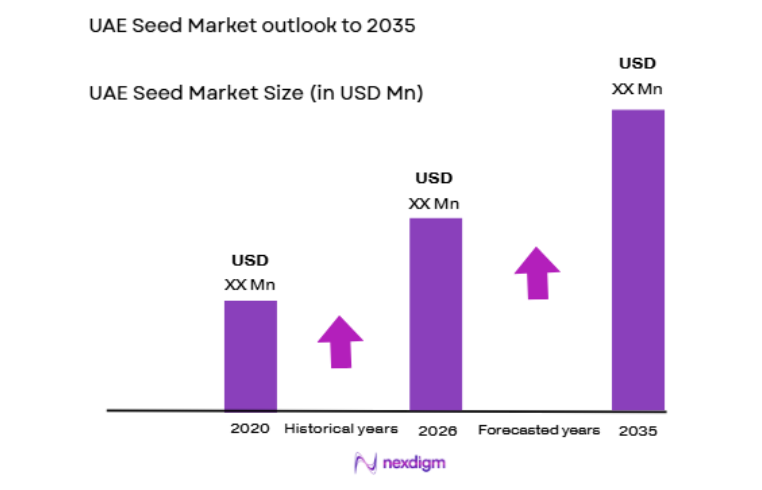
The UAE seed market is valued at USD ~ million, based on a recent historical assessment. This growth is primarily driven by the demand for high-quality seeds that can withstand the region’s arid climate. Technological advancements in hybrid and genetically modified seeds are enhancing crop yields and enabling farmers to optimize land use efficiently. Additionally, government initiatives aimed at enhancing food security and boosting agricultural productivity are further accelerating market growth.
The UAE’s seed market is dominated by cities like Dubai and Abu Dhabi, which have the necessary infrastructure, investment, and advanced farming technologies. These cities benefit from government-backed initiatives such as the UAE Food Security Strategy, which supports innovation in agriculture. Furthermore, these areas have easy access to international markets, making them vital hubs for seed distribution within the Middle East and North Africa (MENA) region.
Market Segmentation
By Product Type
The UAE seed market is segmented by product type into hybrid seeds, genetically modified (GM) seeds, and traditional seeds. Hybrid seeds currently dominate the market due to their superior yield potential, adaptability to diverse climates, and resistance to diseases, which is crucial in the harsh desert environment of the UAE. These seeds are highly favored by farmers looking for efficient crop production and are extensively used in both commercial and government-supported agricultural projects. Their ability to deliver high productivity despite challenging environmental conditions ensures their strong market position.

By Seed Category
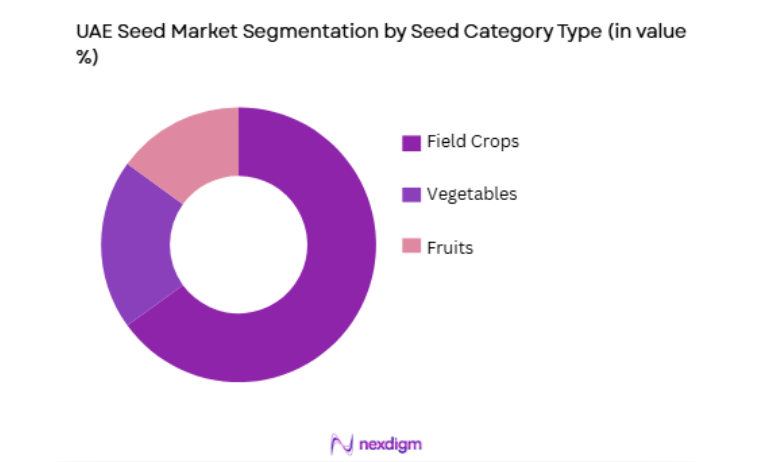
The market is also segmented by seed category into field crops, vegetables, and fruits. Field crops hold a significant market share, as they include staple crops such as wheat, barley, and maize, which are critical to maintaining the country’s food security. Due to the UAE’s focus on increasing domestic food production and reducing dependency on imports, field crop seeds have become the preferred choice, particularly for large-scale commercial farms that are crucial to the UAE’s agricultural sector. These seeds are produced in controlled environments, making them suitable for cultivation in the country’s harsh climate.
Competitive Landscape
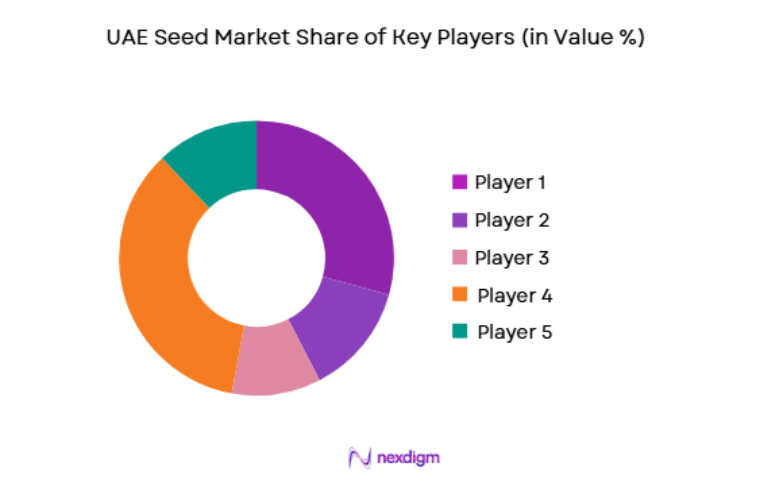
The UAE seed market is characterized by a mix of international and local players, with major multinational companies alongside prominent regional firms. These companies are expanding their portfolios by focusing on advanced seed technologies such as hybrid and genetically modified seeds, which offer better yields and resilience. The competitive landscape also sees consolidation, with larger firms acquiring smaller ones to broaden their market presence and product offerings. The market’s growth is influenced by both global seed technology trends and local agricultural policies.
| Company Name | Establishment Year | Headquarters | Technology Focus | Market Reach | Key Products | Revenue (USD) | R&D Investment (%) |
| Bayer CropScience | 2002 | Germany | ~ | ~ | ~ | ~ | ~ |
| Syngenta | 2000 | Switzerland | ~ | ~ | ~ | ~ | ~ |
| Arysta Lifescience | 2007 | Japan | ~ | ~ | ~ | ~ | ~ |
| Al Dahra | 1992 | UAE | ~ | ~ | ~ | ~ | ~ |
| Emirates Seed Corporation | 2005 | UAE | ~ | ~ | ~ | ~ | ~ |
UAE Seed Market Analysis
Growth Drivers
Technological Advancements in Seed Technology
The UAE seed market is experiencing significant growth due to technological advancements in seed development, including the introduction of genetically modified (GM) seeds and hybrid varieties. These innovations allow for improved yield, resistance to pests and diseases, and better adaptability to extreme environmental conditions. The hybrid seeds, in particular, offer higher productivity, which is crucial for maximizing the limited agricultural land available in the UAE. As the UAE’s agricultural sector focuses on increasing self-sufficiency, the demand for these advanced seed varieties is expected to rise. The government’s push for food security, coupled with advancements in seed technologies, has created a favorable environment for market expansion. These innovations have allowed UAE farmers to cultivate more efficient crops with lower water consumption, addressing the country’s water scarcity issues and boosting agricultural output.
Government Support for Food Security and Agriculture
The UAE government has implemented several policies to boost agricultural production, and these initiatives have become a significant growth driver for the seed market. The government’s commitment to food security has led to increased investments in agricultural technology and innovation, particularly in seed development. Through strategies like the UAE Food Security Strategy, the government has been encouraging the adoption of high-quality seeds to improve crop yields. Additionally, subsidies and incentives for farmers purchasing advanced seed varieties have helped reduce the cost barriers associated with high-yielding seeds. This support, along with the establishment of research and development (R&D) centers focused on agriculture, is driving the growth of the seed market by making high-quality seeds more accessible to farmers.
Market Challenges
Water Scarcity and Climate Conditions
The UAE’s water scarcity and harsh climate present significant challenges to the seed market. The country’s arid desert climate makes it difficult to grow crops without significant water input, and the unpredictability of weather patterns can further exacerbate these challenges. While hybrid and GM seeds are designed to be more resilient to environmental stress, they still require access to sufficient water for optimal growth. The increasing water scarcity in the region is pushing farmers to adopt more water-efficient farming techniques, but this remains a constant challenge. In the face of such limitations, the demand for seeds that can thrive under drought-like conditions is rising. However, even with advancements in seed technology, the market is constrained by the physical limitations of the country’s agricultural environment.
High Cost of Advanced Seed Varieties
The high cost of advanced seed varieties, such as genetically modified and hybrid seeds, presents a challenge to the growth of the UAE seed market. While these seeds offer superior yield potential and resistance to diseases, they come at a premium price, making them less affordable for small and medium-sized farmers. Despite government subsidies and initiatives, the cost of acquiring these seeds can be a barrier for many farmers, especially those in rural areas who rely on traditional farming methods. As a result, there is a demand for more cost-effective solutions that can help bridge the gap between the benefits of advanced seeds and their affordability. This challenge requires the market to address pricing models and explore options for reducing the cost of high-quality seeds.
Opportunities
Increasing Demand for Sustainable Agricultural Practices
There is a growing demand for sustainable agricultural practices in the UAE, and this trend is creating an opportunity for the seed market. Consumers are increasingly looking for food products that are grown using environmentally friendly methods, and this shift in consumer preferences is encouraging farmers to adopt sustainable farming practices. The UAE government has been promoting organic farming and sustainable agriculture through various initiatives and incentives. This shift has created a demand for seeds that are compatible with organic farming practices, such as non-GMO seeds. As farmers adopt sustainable agricultural practices to meet consumer demands, the market for organic and eco-friendly seeds is expected to expand. This presents a unique opportunity for seed companies to cater to a new segment of the market that is focused on sustainability.
Expansion of Agricultural Technology in the UAE
The integration of advanced agricultural technologies presents a significant opportunity for the UAE seed market. Technologies such as precision farming, smart irrigation systems, and automated planting methods are gaining traction in the region. These innovations are designed to optimize resource use, increase crop yields, and reduce costs. Seed companies that align their offerings with these technological advancements can tap into the growing demand for high-tech farming solutions. As more farmers and agricultural companies adopt these technologies, the demand for seeds that work seamlessly with these systems will increase. This presents a unique opportunity for seed companies to enhance their product offerings and capture a larger share of the market.
Future Outlook
The UAE seed market is poised for continued growth over the next five years. Key drivers such as technological advancements in seed development, government-backed initiatives for food security, and the rising demand for sustainable agricultural practices will fuel the market expansion. The growing adoption of agricultural technologies will further drive the demand for advanced seed varieties, particularly hybrid and genetically modified seeds. Additionally, the push for organic and eco-friendly farming practices will create new opportunities in the market. These trends, combined with government incentives and investments in the agricultural sector, will ensure a positive outlook for the UAE seed market.
Major Players
- Bayer CropScience
- Syngenta
- Arysta Lifescience
- Al Dahra
- Emirates Seed Corporation
- Dow AgroSciences
- Rasi Seeds
- Monsanto
- Novozymes
- Kaveri Seed
- SeedWorks International
- AgriGold Seeds
- Krishi Rasayan Exports
- Reliance Industries
- DuPont Pioneer
Key Target Audience
- Investments and venture capitalist firms
- Government and regulatory bodies
- Large-scale farmers and agricultural enterprises
- Seed distributors and retailers
- Agri-tech companies
- Agricultural cooperatives
- Food processing companies
- Research and development organizations
Research Methodology
Step 1: Identification of Key Variables
Identifying key variables such as product types, technological advancements, and market demand patterns that influence the seed market.
Step 2: Market Analysis and Construction
Analyzing historical market data, current growth trends, and future projections to construct an accurate market model.
Step 3: Hypothesis Validation and Expert Consultation
Validating hypotheses by consulting industry experts, government bodies, and leading agricultural firms to gain insights into market dynamics.
Step 4: Research Synthesis and Final Output
Synthetizing findings from various research methods and expert consultations into a final report that provides actionable insights for stakeholders.

- Executive Summary
- Research Methodology (Definitions, Scope, Industry Assumptions, Market Sizing Approach, Primary & Secondary Research Framework, Data Collection & Verification Protocol, Analytic Models & Forecast Methodology, Limitations & Research Validity Checks)

- Market Definition and Scope
- Value Chain & Stakeholder Ecosystem
- Regulatory / Certification Landscape
- Sector Dynamics Affecting Demand

- Growth Drivers
Government Support for Agricultural Development
Technological Advancements in Seed Production
Increasing Demand for High-Yield Varieties - Market Challenges
Climate Change and Weather Variability
Supply Chain and Distribution Issues
Regulatory and Certification Barriers - Market Opportunities
Expanding Organic Farming Trends
Rising Investment in Agricultural Research
Growing Demand for Bio-based Seeds - Trends
Adoption of Precision Farming Technologies
Shift Toward Sustainable Agricultural Practices
Integration of Digital Platforms for Seed Distribution - Government regulations
- SWOT analysis
- Porters 5 forces

- By Market Value, 2020-2025
- By Installed Units, 2020-2025
- By Average System Price, 2020-2025
- By System Complexity Tier, 2020-2025

- By System Type (In Value%)
Hybrid Seeds
Open Pollinated Seeds
Genetically Modified Seeds
Certified Seeds
Vegetable Seeds - By Platform Type (In Value%)
Agricultural Land Platforms
Greenhouse Platforms
Hydroponic Platforms
Vertical Farming Platforms
Aquaponic Platforms - By Fitment Type (In Value%)
Field Application
Greenhouse Application
Hydroponic Application
Urban Farming Application
Commercial Application - By End User Segment (In Value%)
Farmers
Agricultural Cooperatives
Government Organizations
Private Sector Companies

- Market Share Analysis
- Cross Comparison Parameters (System Type, Platform Type, Procurement Channel, EndUser Segment, Fitment Type, Seed Variety, Technology Adoption, Regional Market Dynamics, Distribution Network, Government Policies)
- SWOT Analysis of Key Competitors
- Pricing & Procurement Analysis
- Key Players
Al Dahra Agriculture
Barilla Group
Emirates Seeds
Abu Dhabi Food Control Authority
Al Ain Farms
Al-Balqa for Seeds
National Seed Company
Raya Seeds
Qatar National Food Security Program
Bayer CropScience
Syngenta UAE
Monsanto
Takii Seed
Enza Zaden
Oasis Farms

- Increasing Demand from Small-scale Farmers
- Large Corporations Investing in Seed Production
- Government Initiatives to Support Agricultural Growth
- Focus on Sustainable and Organic Farming Practices

- Forecast Market Value, 2026-2035
- Forecast Installed Units, 2026-2035
- Price Forecast by System Tier, 2026-2035
- Future Demand by Platform, 2026-2035


 Request a Sample
 Ask for Customization
 Get a Quote
 Enquire Now