

 Download PDF
Market Overview
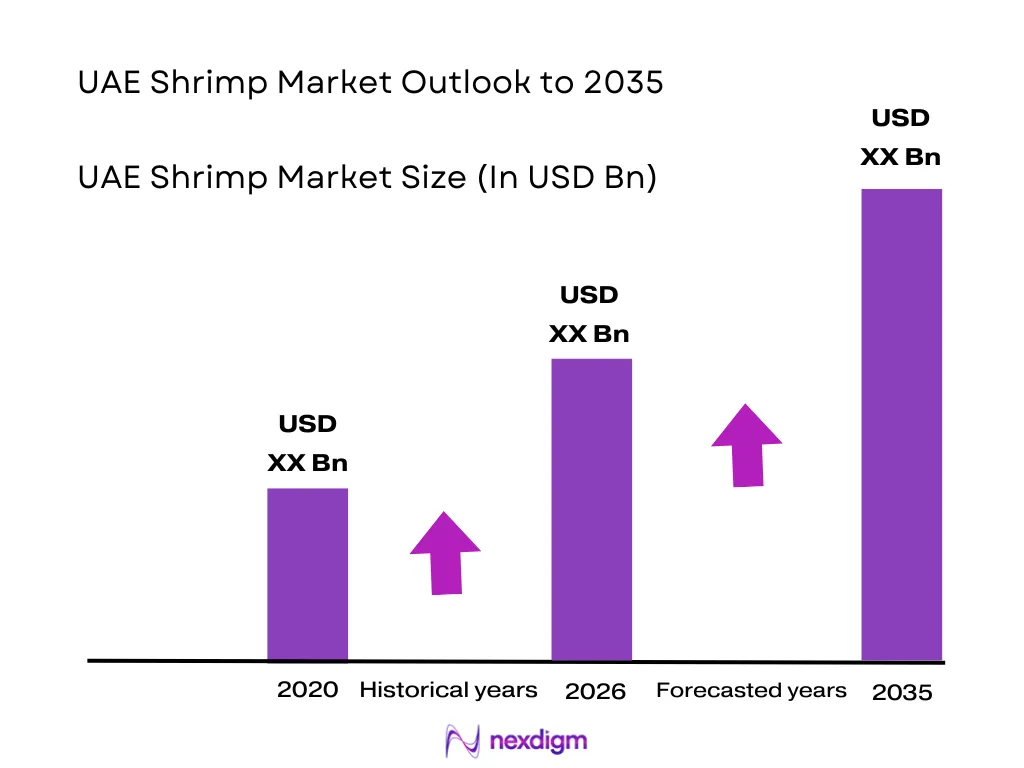
The UAE shrimp market is valued at approximately USD ~ million, based on a historical industry assessment. The market is supported by increasing seafood consumption, expansion of premium dining formats, and strong demand from hotels, restaurants, and catering channels. The UAE recorded more than 30 million hotel guests, strengthening seafood procurement across hospitality businesses. Rising urban consumption, food security initiatives, and investments in aquaculture infrastructure continue to support shrimp availability through domestic production and import networks.
Dubai and Abu Dhabi dominate the UAE shrimp market due to advanced cold-chain networks, seafood distribution hubs, luxury hospitality infrastructure, and high consumer spending capacity. Dubai benefits from its position as a regional seafood trading and re-export center, while Abu Dhabi is supported by aquaculture and food security initiatives. Major shrimp exporting countries maintain strong positions due to large aquaculture production capacity, established seafood processing systems, and consistent supply of frozen and value-added shrimp products.
Market Segmentation
By Species Type
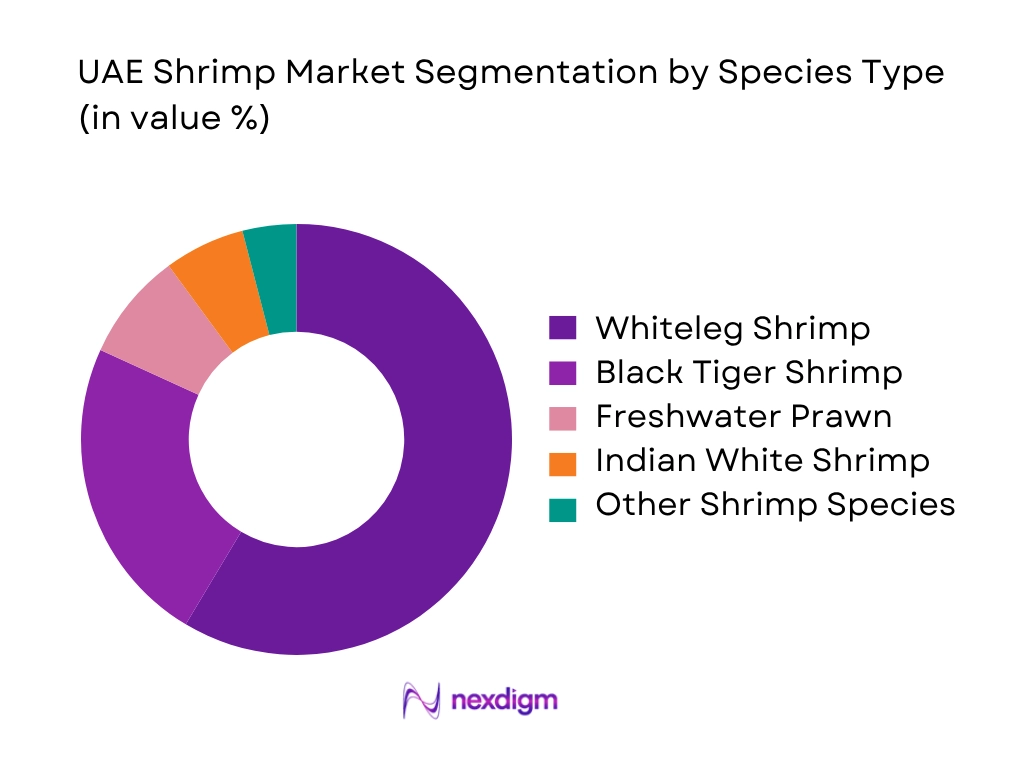
The UAE shrimp market is segmented by species type into Whiteleg Shrimp, Black Tiger Shrimp, Freshwater Prawn, Indian White Shrimp, and Other Shrimp Species. Recently, Whiteleg Shrimp has held the dominant market share under species segmentation due to its wide commercial availability, consistent supply chain, and suitability across retail and foodservice applications. The species is preferred by seafood distributors and hospitality operators because of its uniform size grading, high processing adaptability, and availability in multiple formats including frozen, peeled, and value-added shrimp products.
By Product Form
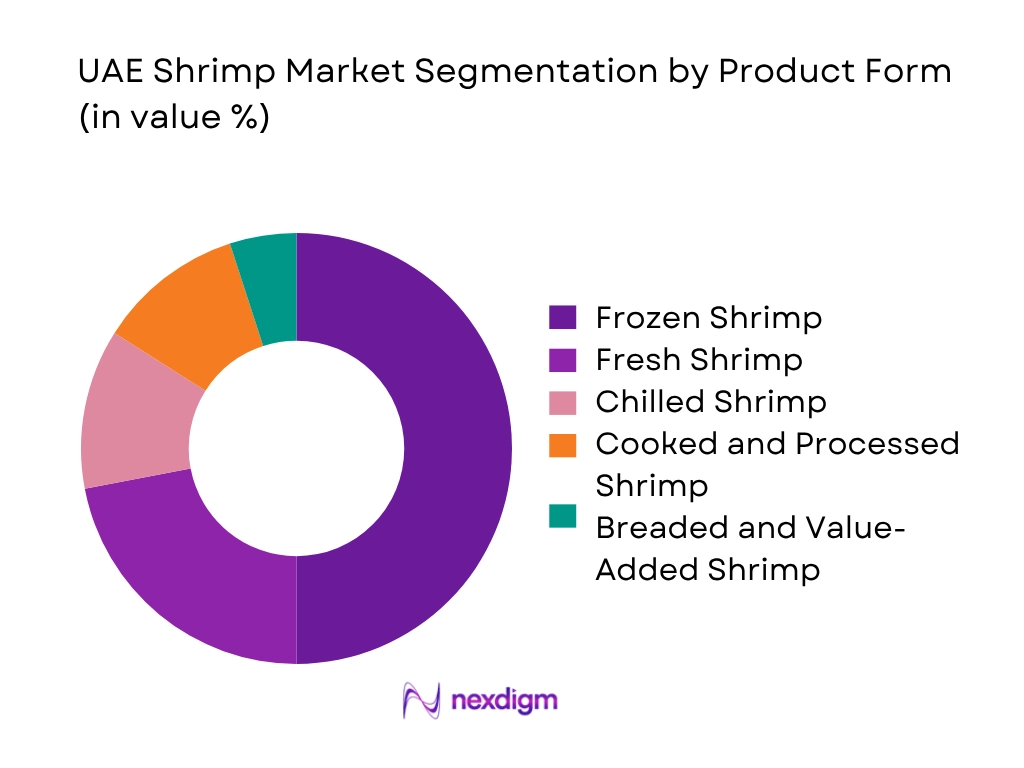
The UAE shrimp market is segmented by product form into Frozen Shrimp, Fresh Shrimp, Chilled Shrimp, Cooked and Processed Shrimp, and Breaded and Value-Added Shrimp. Recently, Frozen Shrimp has captured the dominant market share under product form segmentation due to the UAE’s dependency on imported seafood products and strong cold-chain infrastructure. Frozen shrimp offers longer shelf life, easier transportation, and consistent availability for restaurants, retailers, and catering companies. Growing consumer demand for convenient seafood products further strengthens frozen shrimp adoption across distribution channels.
Competitive Landscape
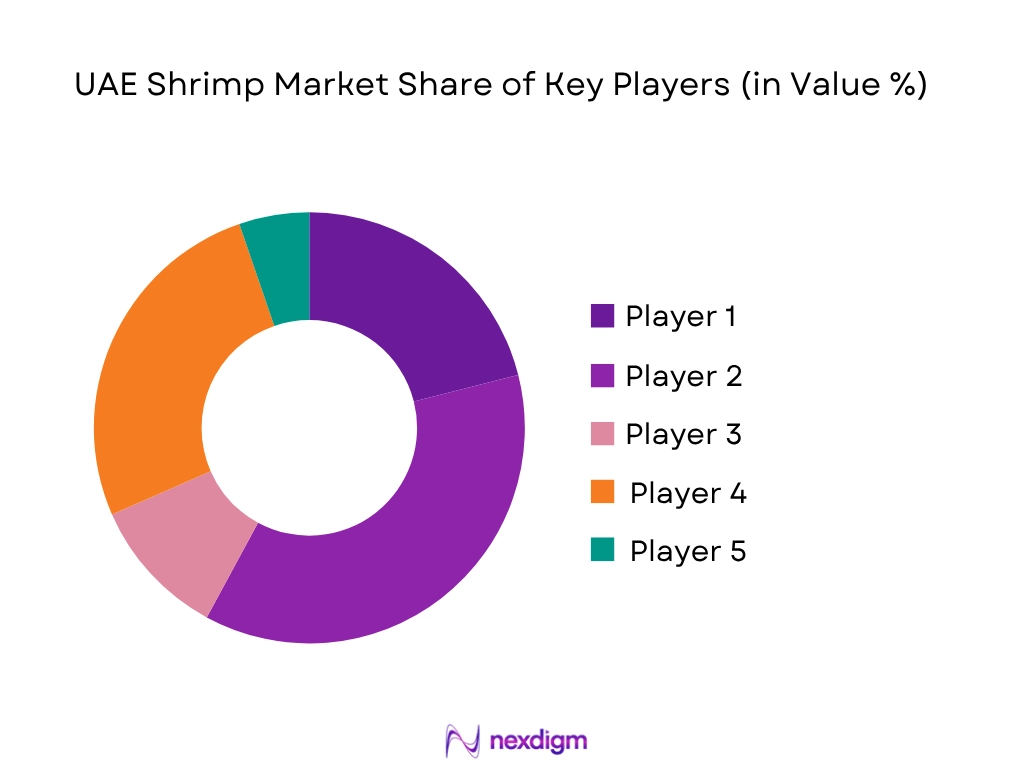
The UAE shrimp market consists of domestic seafood processors, aquaculture operators, importers, and regional seafood suppliers. Companies compete through extensive cold-chain capabilities, seafood sourcing networks, processing capacity, product diversification, and partnerships with foodservice operators. The competitive environment is increasingly focused on sustainable aquaculture, traceability systems, premium shrimp products, and value-added seafood solutions to serve evolving retail and hospitality requirements.
| Company | Establishment Year | Headquarters | Business Type | Shrimp Portfolio | Processing Capability | Cold Chain Network | Distribution Presence | Aquaculture Operations |
| Asmak | 1999 | UAE | ~ | ~ | ~ | ~ | ~ | ~ |
| Fish Farm LLC | 2013 | UAE | ~ | ~ | ~ | ~ | ~ | ~ |
| Al Islami Foods | 1981 | UAE | ~ | ~ | ~ | ~ | ~ | ~ |
| The Deep Seafood Company | 1986 | UAE | ~ | ~ | ~ | ~ | ~ | ~ |
| National Aquaculture Group | 2007 | Saudi Arabia | ~ | ~ | ~ | ~ | ~ | ~ |
UAE Shrimp Market Analysis
Growth Drivers
Rising Tourism and Hospitality Sector Driving Shrimp Consumption
The UAE shrimp market is significantly supported by the expansion of tourism, hotels, restaurants, and catering services. The country recorded more than 30 million hotel guests, creating strong seafood requirements across premium dining establishments. Dubai welcomed over 18 million international visitors, strengthening demand from restaurants and luxury hospitality operators. The UAE also operates over 1,200 hotel establishments, increasing seafood procurement requirements. Growing international tourism, diverse cuisines, and premium food experiences continue supporting demand for shrimp products across foodservice channels.
Population Growth and Expanding Seafood Consumer Base
Increasing population and urban development are supporting higher seafood consumption across the UAE shrimp market. The country’s population reached nearly 11 million people, creating a larger consumer base for protein-rich food categories. High urban concentration in Dubai, Abu Dhabi, and Sharjah supports organized seafood retail, restaurants, and online seafood platforms. A diverse expatriate population from seafood-consuming regions further strengthens shrimp demand. Growing household consumption and changing dietary preferences continue increasing demand for frozen, fresh, and processed shrimp products.
Market Challenges
High Dependence on Imported Shrimp Supply
The UAE shrimp market faces challenges due to significant reliance on international seafood supply chains. Domestic shrimp production remains limited compared to consumption requirements generated by nearly 11 million residents and millions of annual tourists. Import dependency exposes seafood distributors and retailers to shipping disruptions, supply chain delays, and availability fluctuations. Maintaining consistent shrimp supply requires strong international sourcing relationships and efficient logistics infrastructure. This creates operational challenges for businesses managing inventory, procurement, and distribution networks.
Aquaculture Production Constraints and Environmental Challenges
Shrimp farming expansion in the UAE faces challenges due to environmental conditions, water management requirements, and technical complexity. The country’s arid climate requires advanced farming technologies such as controlled aquaculture systems to maintain production efficiency. Rising seafood demand from residents and hospitality channels increases pressure on domestic production capabilities. Maintaining water quality, disease prevention, and sustainable farming practices requires continuous investment. These factors make large-scale shrimp aquaculture development more challenging compared with traditional shrimp-producing regions.
Opportunities
Expansion of Sustainable Aquaculture Development
The UAE shrimp market presents opportunities through investments in aquaculture technologies and food security initiatives. Growing focus on domestic food production is encouraging adoption of advanced farming systems, controlled environments, and resource-efficient seafood production methods. The country’s population base of nearly 11 million residents provides a stable demand foundation for locally produced shrimp. Increasing emphasis on reducing import dependency creates opportunities for aquaculture operators, technology providers, and seafood producers.
Growing Premium Seafood Demand Through Hospitality Expansion
The expansion of luxury tourism and premium dining creates strong opportunities for high-quality shrimp products in the UAE. The hospitality sector serves millions of domestic and international consumers annually, creating consistent demand for premium seafood. More than 200,000 hotel rooms across the country support large-scale foodservice requirements. Demand for sustainable shrimp, larger shrimp sizes, and value-added products is increasing as hotels and restaurants enhance seafood offerings for international customers.
Future Outlook
The UAE shrimp market is expected to witness consistent growth supported by rising seafood consumption, expansion of premium hospitality services, and increasing investments in sustainable aquaculture. Growing demand for convenient frozen seafood products, improvements in cold-chain infrastructure, and government focus on food security are expected to strengthen industry development. Companies are likely to focus on value-added shrimp products, traceability, and sustainable sourcing practices to capture future opportunities.
Major Players
- Asmak
- Al Jaraf Fisheries
- The Deep Seafood Company
- Al Islami Foods
- Fish Farm LLC
- Emirates AquaTech
- National Aquaculture Group (NAQUA)
- Saudi Fisheries Company
- Al Kabeer Group
- Golden Dunes General Trading
- Tabuk Fisheries
- Seaworld Group
- Ocean Wave Fisheries
- Aqua Bridge Group
- Unima
Key Target Audience
- Shrimp Producers and Aquaculture Operators
- Seafood Importers and Exporters
- Seafood Processing Companies
- Hotels, Restaurants and Catering Operators
- Hypermarket and Supermarket Chains
- Investments and Venture Capitalist Firms
- Government and Regulatory Bodies
- Cold Chain Logistics and Seafood Distribution Companies
Research Methodology
Step 1: Identification of Key Variables
The initial phase includes mapping the UAE shrimp ecosystem covering producers, importers, distributors, processors, retailers, and foodservice operators. Extensive secondary research is conducted to identify industry variables influencing supply, demand, production, and consumption trends.
Step 2: Market Analysis and Construction
Historical shrimp industry data is analyzed through production trends, import activities, distribution networks, and consumption patterns. Market construction is performed by assessing supply chain participants and validating revenue contribution across major industry segments.
Step 3: Hypothesis Validation and Expert Consultation
Market assumptions are validated through interviews with shrimp producers, seafood distributors, importers, and industry stakeholders. These discussions provide insights into operational trends, demand patterns, and competitive developments.
Step 4: Research Synthesis and Final Output
Final analysis is prepared by combining primary and secondary findings. Data points are validated through multiple industry sources to develop an accurate assessment of the UAE shrimp market ecosystem.

- Executive Summary
- Research Methodology (Market Definitions and Assumptions, Abbreviations, Market Sizing Approach, Demand Side Assessment, Supply Side Assessment, Primary Interviews with Shrimp Producers, Importers, Distributors and Foodservice Operators, Market Validation Approach, Data Triangulation, Limitations and Future Conclusions)

- Definition and Scope
- Market Evolution and Industry Genesis
- UAE Shrimp Industry Ecosystem
- Shrimp Trade Flow Analysis
- Shrimp Supply Chain and Value Chain Analysis
- Stakeholder Ecosystem
- Shrimp Consumption Landscape

- Growth Drivers
Rising Seafood Consumption
Growth in Tourism and Hospitality Sector
Expansion of Premium Dining and Asian Cuisine
Government Focus on Food Security
Investments in Aquaculture Technologies - Market Challenges
Dependence on Imported Shrimp
Feed Cost Volatility
Disease Outbreak Risks in Aquaculture
Cold Chain Management Challenges
Price Competition from Imported Suppliers - Market Opportunities
Expansion of Recirculating Aquaculture Systems (RAS)
Premium Organic and Antibiotic-Free Shrimp
Sustainable and Certified Shrimp Production
Export and Re-Export Hub Opportunities
Value-Added Shrimp Processing - Market Trends
Increasing Preference for Frozen Shrimp
Traceability and Digital Supply Chain Adoption
Growth of Online Seafood Retail
Sustainable Aquaculture Practices
Premiumization of Seafood Products - Government Regulations and Compliance
Food Safety Regulations
Aquaculture Licensing Framework
Import Inspection Requirements
Sustainability and Environmental Regulations
Halal and Product Labeling Standards - PESTLE Analysis
- SWOT Analysis
- Porter’s Five Forces Analysis
- Industry Risk Assessment
- Competition Ecosystem

- By Value, 2020-2025
- By Volume, 2020-2025
- By Average Import Price, 2020-2025

- By Species Type (in Value %)
Whiteleg Shrimp (Penaeus Vannamei)
Black Tiger Shrimp (Penaeus Monodon)
Giant Freshwater Prawn
Indian White Shrimp
Other Shrimp Species - By Product Form (in Value %)
Fresh Shrimp
Frozen Shrimp
Chilled Shrimp
Cooked and Processed Shrimp
Breaded and Value-Added Shrimp - By Source (in Value %)
Farmed Shrimp
Wild-Caught Shrimp - By Shrimp Size Category (in Value %)
Small Size Shrimp
Medium Size Shrimp
Large Size Shrimp
Extra Large Shrimp - By End User (in Value %)
Households
Hotels
Restaurants
Catering Services
Food Processing Companies - By Distribution Channel (in Value %)
Hypermarkets and Supermarkets
Traditional Seafood Markets
HoReCa Distributors
Online Seafood Platforms
Specialty Seafood Retailers - By Emirate (in Value %)
Dubai
Abu Dhabi
Sharjah
Ajman
Ras Al Khaimah
Fujairah
Umm Al Quwain

- Market Share Analysis of Major Players
- Cross Comparison Parameters (Shrimp Production Capacity, Aquaculture Farm Area, Annual Processing Capacity, Import and Re-Export Volume, Cold Storage Capacity, Shrimp Species Portfolio, HoReCa Penetration, Sustainability and Certification Coverage)
- Competitive Benchmarking Matrix
- Pricing Analysis by Species, Size Count and Product Form
- Detailed Profiles of Major Companies
Asmak
Al Jaraf Fisheries
The Deep Seafood Company
Al Islami Foods
Fish Farm LLC
Emirates AquaTech
National Aquaculture Group (NAQUA)
Saudi Fisheries Company
Al Kabeer Group
Golden Dunes General Trading
Tabuk Fisheries
Seaworld Group
Ocean Wave Fisheries
Aqua Bridge Group
Unima

- Shrimp Consumption Patterns
- Foodservice Demand Assessment
- Retail Purchase Behaviour
- Consumer Pain Point Analysis
- Buying Decision Framework

- By Value, 2026-2035
- By Volume, 2026-2035
- By Average Import Price, 2026-2035


 Request a Sample
 Ask for Customization
 Get a Quote
 Enquire Now