
 Download PDF
 Download PDF
Market Overview
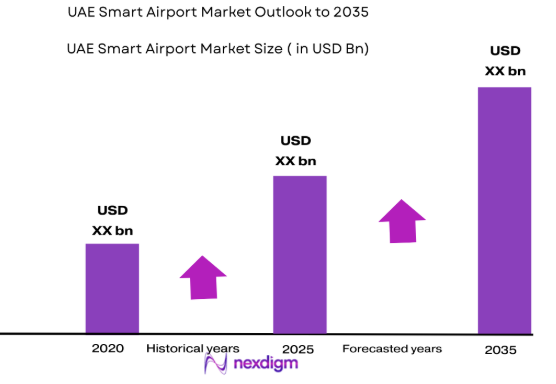
The UAE smart airport market is driven by significant investments in infrastructure, technology advancements, and government initiatives aimed at enhancing airport efficiency and passenger experience. The growing demand for seamless and automated operations, fueled by the rise in air travel and smart technologies, has led to a market size of USD ~ billion based on a recent historical assessment. The market is supported by the increasing adoption of AI, IoT, and big data technologies across airports, providing a new competitive edge to the sector.
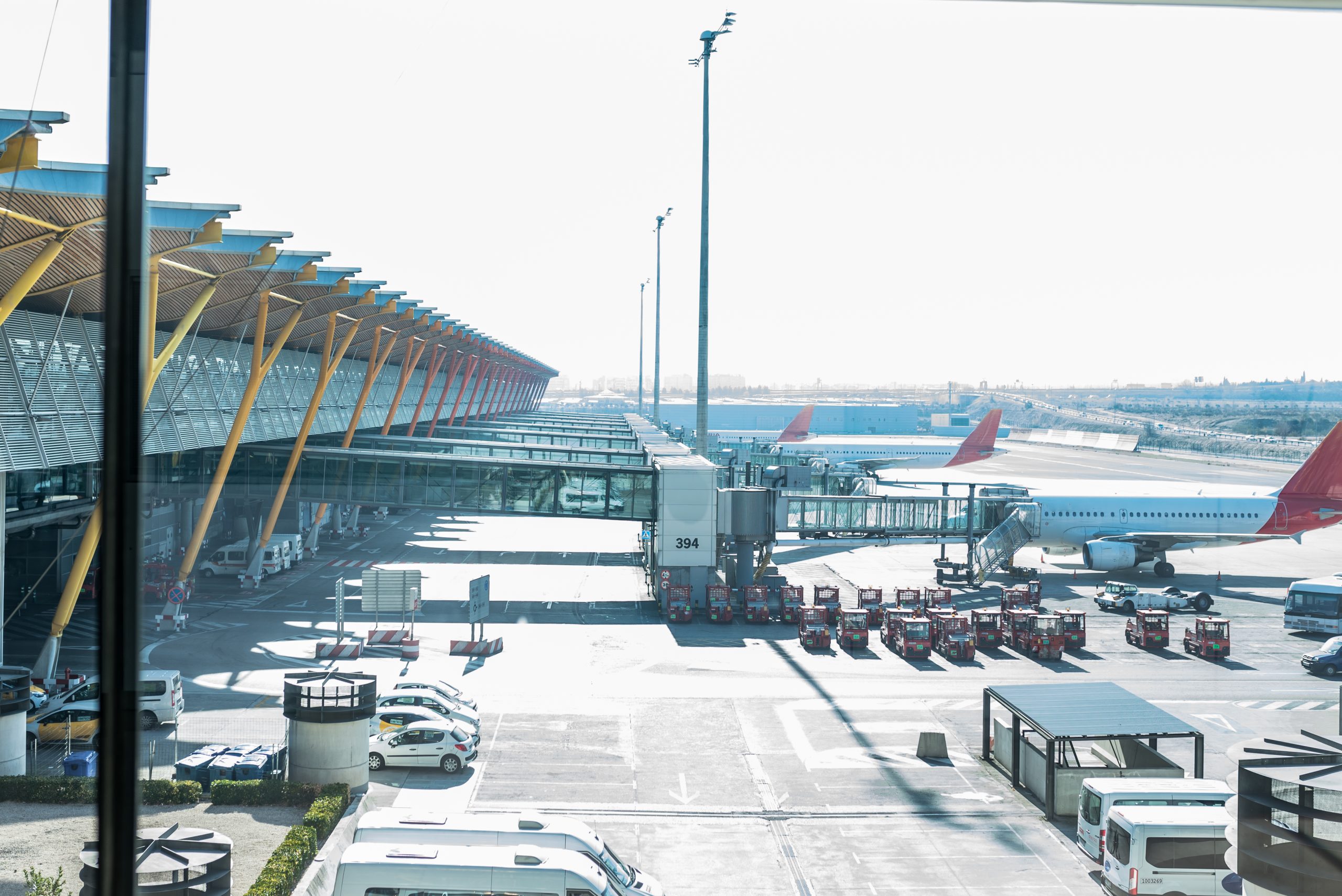
Dubai and Abu Dhabi are the dominant cities driving the smart airport market in the UAE, with advanced airports such as Dubai International and Abu Dhabi International leading the way. Their dominance can be attributed to their strategic location as international aviation hubs, heavy investments in smart technology, and the UAE’s ongoing vision to enhance digital infrastructure. The growing emphasis on automation, passenger convenience, and operational efficiency in these cities makes them key players in the region’s smart airport landscape.
Market Segmentation
By Product Type
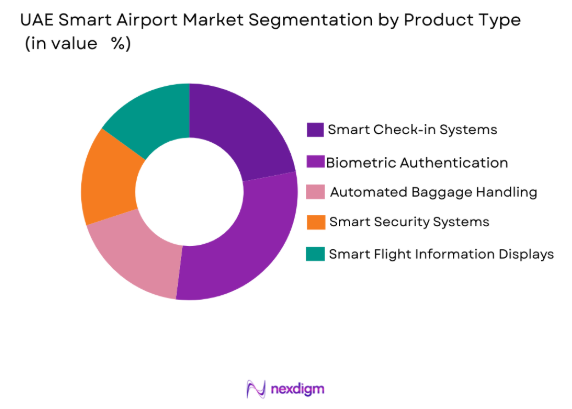
The UAE smart airport market is segmented by product type into smart check-in systems, biometric authentication, automated baggage handling, smart security systems, and intelligent flight information display systems. The biometric authentication sub-segment has a dominant market share due to the increasing demand for enhanced security measures and seamless passenger processing. Innovations such as facial recognition and fingerprint scanning provide a faster and more secure process, gaining widespread adoption across UAE airports. This product type offers substantial convenience and security, crucial for the modernization of airport operations.
By Platform Type
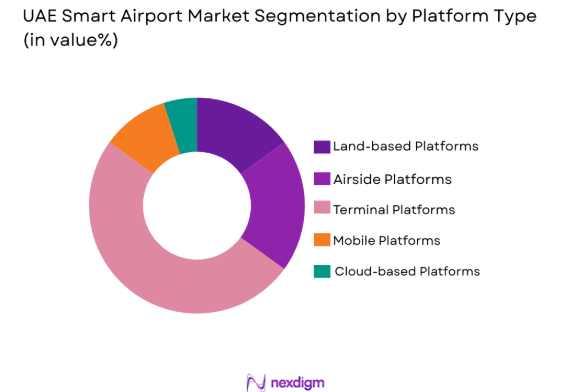
The UAE smart airport market is segmented by platform type into land-based platforms, airside platforms, and terminal platforms. The terminal platform sub-segment leads in market share due to its pivotal role in passenger experience and operational efficiency. Terminal platforms, integrating automated check-ins, baggage handling systems, and digital displays, play a significant role in streamlining airport processes. The continuous development and innovation in terminal infrastructure contribute to the high demand for these solutions, further supporting the growth of the sub-segment.
Competitive Landscape
The UAE smart airport market is highly competitive, with numerous global players vying for market share. Consolidation in the market is driven by large-scale contracts awarded by airports and government entities to technology providers. Leading companies are focusing on innovative smart solutions, partnerships with airport authorities, and continuous product upgrades to strengthen their market position. Collaboration with regulatory bodies and airport operators also plays a crucial role in the competitive dynamics.
|
Company Name |
Establishment Year | Headquarters | Technology Focus | Market Reach | Key Products | Revenue (USD Million) | Smart Airport Solutions Focus |
| Siemens AG | 1847 | Munich, Germany | ~ | ~ | ~ | ~ | ~ |
| Honeywell International | 1906 | Morris Plains, USA | ~ | ~ | ~ | ~ | ~ |
| IBM Corporation | 1911 | Armonk, USA | ~ | ~ | ~ | ~ | ~ |
| Thales Group | 2000 | Paris, France | ~ | ~ | ~ | ~ | ~ |
| SITA | 1949 | Geneva, Switzerland | ~ | ~ | ~ | ~ | ~ |
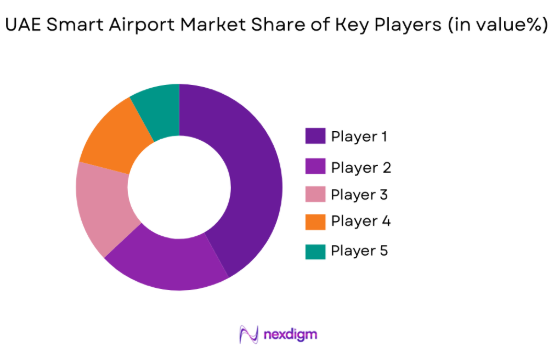
UAE Smart Airport Market Analysis
Growth Drivers
Government Investments in Airport Infrastructure
Government initiatives aimed at enhancing airport infrastructure are one of the key growth drivers in the UAE smart airport market. The UAE government has heavily invested in expanding and modernizing airport facilities, supporting the growth of smart technologies within the sector. These initiatives include the development of AI-powered solutions, biometric systems, and enhanced security measures, which streamline operations and improve the passenger experience. The country’s Vision 2021 and UAE National Innovation Strategy play significant roles in driving these advancements. As the demand for air travel increases, airports must adopt these innovations to maintain efficiency and competitiveness. Additionally, the influx of tourism and business travel, especially with Dubai hosting global events such as Expo 2020, fuels the need for more intelligent and automated airport systems. These government-backed initiatives create a favorable environment for smart airport solutions to thrive, pushing the market toward greater technological adoption.
Technological Advancements in Automation and AI
The rapid evolution of automation and AI technologies is another critical growth driver for the UAE smart airport market. Automation in airports increases operational efficiency, reduces human error, and accelerates passenger processing, making it highly attractive to operators seeking to optimize their services. The introduction of AI technologies such as facial recognition for security checks, self-service kiosks, and predictive analytics for baggage handling helps streamline operations. These advancements not only enhance security but also provide a seamless travel experience for passengers. AI-driven systems can predict flight delays, optimize baggage handling, and offer real-time updates, improving both operational and customer satisfaction. The ongoing development of these technologies and their integration into airport systems across the UAE enhances the value proposition of smart airports, further boosting the demand for automated solutions in the market.
Market Challenges
High Implementation Costs
The implementation of smart airport systems is a costly endeavor, presenting a significant challenge for airport operators in the UAE. Advanced technologies such as biometric authentication, AI-powered baggage handling, and automated check-in kiosks require substantial upfront investments. For smaller airports or those undergoing modernization, allocating funds for these high-tech solutions can be difficult, even with government incentives. Additionally, maintaining these systems over time adds to the operational costs, making it challenging for airports to balance cost efficiency and technological advancement. Despite the long-term benefits, the high initial costs can slow down the adoption rate of these solutions, particularly in smaller or regional airports that may struggle with budget constraints. Overcoming these financial barriers is crucial for the widespread adoption of smart technologies across the UAE airport network.
Integration and Interoperability Issues
Another challenge that smart airport systems face in the UAE is the issue of system integration and interoperability. Airports typically operate a range of different technologies from various vendors, making it difficult to create a seamless system. The integration of new smart solutions with existing infrastructure, such as legacy baggage handling systems, security systems, and passenger management software, can be complex and time-consuming. Compatibility issues can delay the deployment of new technologies and lead to operational inefficiencies. Moreover, as airports adopt solutions from multiple providers, ensuring that all systems communicate effectively with one another is critical for achieving the full potential of smart airports. Addressing these integration challenges requires coordinated efforts from both airport operators and technology providers to standardize systems and create more interoperable solutions.
Opportunities
Expansion of Autonomous Systems in Airport Operations
The development and deployment of autonomous systems present significant opportunities for the UAE smart airport market. Automated vehicles for luggage transport, self-driving shuttle buses for passengers, and robotic security patrols are gaining momentum as part of the broader trend toward automation in airport operations. These systems help reduce operational costs, increase efficiency, and improve passenger experience by reducing wait times. As the technology continues to evolve, it presents a unique opportunity for airports in the UAE to integrate fully autonomous systems into their operations, enhancing operational capabilities. Furthermore, autonomous technologies align with sustainability goals, reducing the environmental footprint by optimizing energy use and reducing carbon emissions in airport operations.
Expansion of Digital Passenger Services
Digital passenger services represent another major opportunity for growth in the UAE smart airport market. With increasing demand for contactless travel experiences, airports are looking to implement digital services that can improve the convenience and efficiency of passenger journeys. From mobile check-ins and digital baggage tracking to real-time flight information updates, digital services enhance the passenger experience by providing more personalized, seamless journeys. Furthermore, the COVID-19 pandemic has accelerated the need for contactless travel options, presenting a clear opportunity for airports to expand digital offerings. With the continued evolution of mobile and cloud-based technologies, airports have the chance to lead the way in providing these next-generation services, driving greater efficiency, and ensuring that passengers can travel with peace of mind.
Future Outlook
The future outlook for the UAE smart airport market is positive, with expected growth in the adoption of AI, IoT, and automation technologies. The UAE government’s support for infrastructure development and technological innovation will continue to drive the expansion of smart airports. Technological advancements in AI, biometrics, and cloud-based solutions will shape the future, providing more efficient, secure, and personalized services for passengers. The market is also expected to benefit from continued investments in autonomous systems and digital services, paving the way for more sustainable and seamless airport operations in the coming years.
Major Players
- Siemens AG
- Honeywell International
- IBM Corporation
- Thales Group
- SITA
- Amadeus IT Group
- Cisco Systems
- NEC Corporation
- Indra Sistemas
- Atos SE
- Panasonic Corporation
- Huawei Technologies
- Rockwell Collins
- United Technologies Corporation
- ABB Ltd
Key Target Audience
- Investments and venture capitalist firms
- Government and regulatory bodies
- Airport operators and management companies
- Airlines and air service providers
- Airport security service providers
- Technology solution providers for airports
- Consulting and infrastructure development firms
- IT and communications companies
Research Methodology
Step 1: Identification of Key Variables
The key variables influencing the smart airport market are identified based on primary and secondary research, focusing on technological trends, market dynamics, and stakeholder interviews.
Step 2: Market Analysis and Construction
Data is collected from industry reports, government publications, and expert consultations, followed by analysis to build a comprehensive market model.
Step 3: Hypothesis Validation and Expert Consultation
The developed market model is validated with inputs from key industry experts, ensuring the assumptions are aligned with the latest market developments.
Step 4: Research Synthesis and Final Output
The final report is synthesized, integrating insights from the collected data and expert feedback, offering a clear, actionable market outlook.

- Executive Summary
- Research Methodology (Definitions, Scope, Industry Assumptions, Market Sizing Approach, Primary & Secondary Research Framework, Data Collection & Verification Protocol, Analytic Models & Forecast Methodology, Limitations & Research Validity Checks)

- Market Definition and Scope
- Value Chain & Stakeholder Ecosystem
- Regulatory / Certification Landscape
- Sector Dynamics Affecting Demand
- Strategic Initiatives & Infrastructure Growth

- Growth Drivers
Government Investments in Smart Infrastructure
Technological Advancements in Automation and IoT
Increasing Demand for Seamless Passenger Experience
Rising Focus on Airport Security and Safety
Growing Adoption of Cloud Solutions in Airport Operations - Market Challenges
High Implementation and Maintenance Costs
Integration and Interoperability Challenges
Regulatory and Certification Barriers
Data Security and Privacy Concerns
Technological Skills Gap in the Workforce - Market Opportunities
Expansion of Autonomous Systems in Airports
Increased Use of AI for Predictive Maintenance
Growth of Digital Passenger Services and Automation - Trends
Rise of Contactless and Touchless Technologies
Increased Investment in Smart Security Systems
Growth of Cloud-based Airport Management Systems
Advancement in Biometric Authentication Systems
Increasing Focus on Sustainability and Energy Efficiency - Government Regulations & Defense Policy
Adoption of Smart Airport Regulatory Standards
Data Protection and Privacy Regulations for Passengers
Government Funding for Smart Airport Technologies

- By Market Value, 2020-2025
- By Installed Units, 2020-2025
- By Average System Price, 2020-2025
- By System Complexity Tier, 2020-2025

- By System Type (In Value%)
Smart Check-in Systems
Automated Baggage Handling
Biometric Authentication
Intelligent Security Systems
Passenger Information Systems - By Platform Type (In Value%)
Terminal Platforms
Airside Platforms
Land-side Platforms
Mobile Platforms
Cloud-based Platforms - By Fitment Type (In Value%)
On-premise Solutions
Cloud-based Solutions
Modular Solutions
Hybrid Solutions
Integrated Solutions - By End User Segment (In Value%)
Airports & Airport Operators
Airlines
Government and Regulatory Bodies
Security Agencies
Technology Providers - By Procurement Channel (In Value%)
Direct Procurement
Government Tenders
Private Sector Procurement
Online Bidding Platforms
Third-party Distributors - By Material / Technology (in Value%)
AI and Machine Learning
Biometric Technologies
Automation Systems
Internet of Things (IoT)
Cloud Computing Solutions

- Market structure and competitive positioning
- Market share snapshot of major players
- Cross Comparison Parameters (System Type, Platform Type, EndUser Segment, Procurement Channel, Fitment Type)
- SWOT Analysis of Key Competitors
- Pricing & Procurement Analysis
- Porter’s Five Forces Analysis
- Key Players
Siemens AG
Honeywell International
SITA
Thales Group
Amadeus IT Group
IBM Corporation
Cisco Systems
NEC Corporation
Indra Sistemas
Atos SE
Panasonic Corporation
Huawei Technologies
Rockwell Collins
United Technologies Corporation
ABB Ltd

- Airports’ Demand for Advanced Smart Solutions
- Airlines’ Adoption of Seamless Passenger Processes
- Government Agencies Driving Regulatory Compliance
- Technology Providers Supporting Airport Modernization

- Forecast Market Value, 2026-2035
- Forecast Installed Units, 2026-2035
- Price Forecast by System Tier, 2026-2035
- Future Demand by Platform, 2026-2035


 Request a Sample
 Ask for Customization
 Get a Quote
 Enquire Now