

 Download PDF
Market Overview
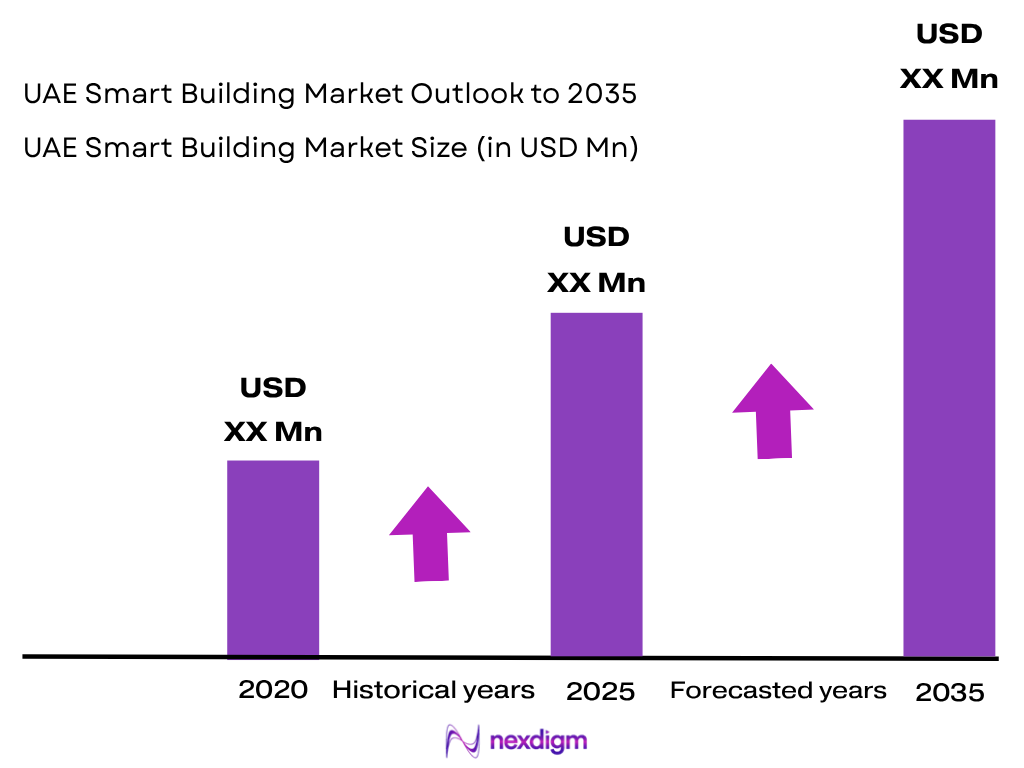
The UAE Smart Building Market is supported by strong construction, real-estate and digital-transformation activity. The UAE economy recorded 4.0% real GDP growth in 2024, according to the World Bank, while the UAE Ministry of Economy reported 8.4% growth in building and construction activity during the same period. The Ministry also recorded 4.8% growth in real estate activities, creating a broad installed base for building automation, energy management, HVAC controls, intelligent lighting and connected security systems.
Dubai and Abu Dhabi constitute the principal demand centers for UAE Smart Building technologies because they combine large commercial-property inventories, major hospitality developments, government-led digital initiatives, infrastructure investment and sophisticated facility-management ecosystems. Abu Dhabi recorded 783,970 real-estate units and 299,360 buildings in 2024, compared with 754,555 units and 281,780 buildings in 2023, according to the Statistics Centre – Abu Dhabi. The emirate’s building stock therefore provides a substantial installed base for smart-building retrofits and new connected-building deployments.
Market Segmentation
By Component
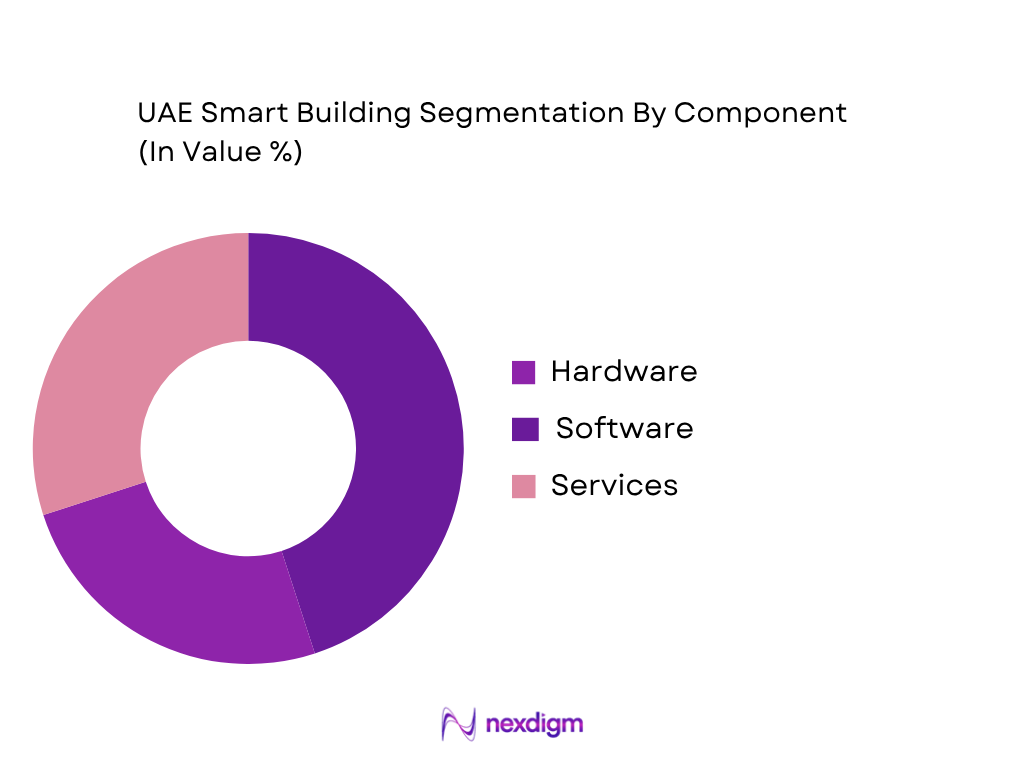
The UAE Smart Building Market is segmented by component into hardware, software and services, with hardware further encompassing sensors, controllers, gateways, meters, actuators and building automation equipment. Software includes building management platforms, energy-management software, analytics, digital-twin platforms and cloud-based building-control applications, while services cover system integration, installation, commissioning, maintenance and managed services. Hardware is expected to represent the dominant component, with a 2024 market share of ~XX%, reflecting the equipment-intensive nature of smart-building deployment. Sensors, HVAC controllers, lighting controls, access-control equipment and communication gateways must be physically installed before software and analytics platforms can generate building-level operational data. The large existing construction and real-estate base also creates recurring demand for equipment replacement and retrofit installations. The UAE’s construction and real-estate activities remain significant contributors to the non-oil economy, with real estate and construction accounting for 19.5% of real non-oil GDP in 2024, according to the IMF. This supports continuing demand for physical building automation infrastructure alongside software and services.
By Application
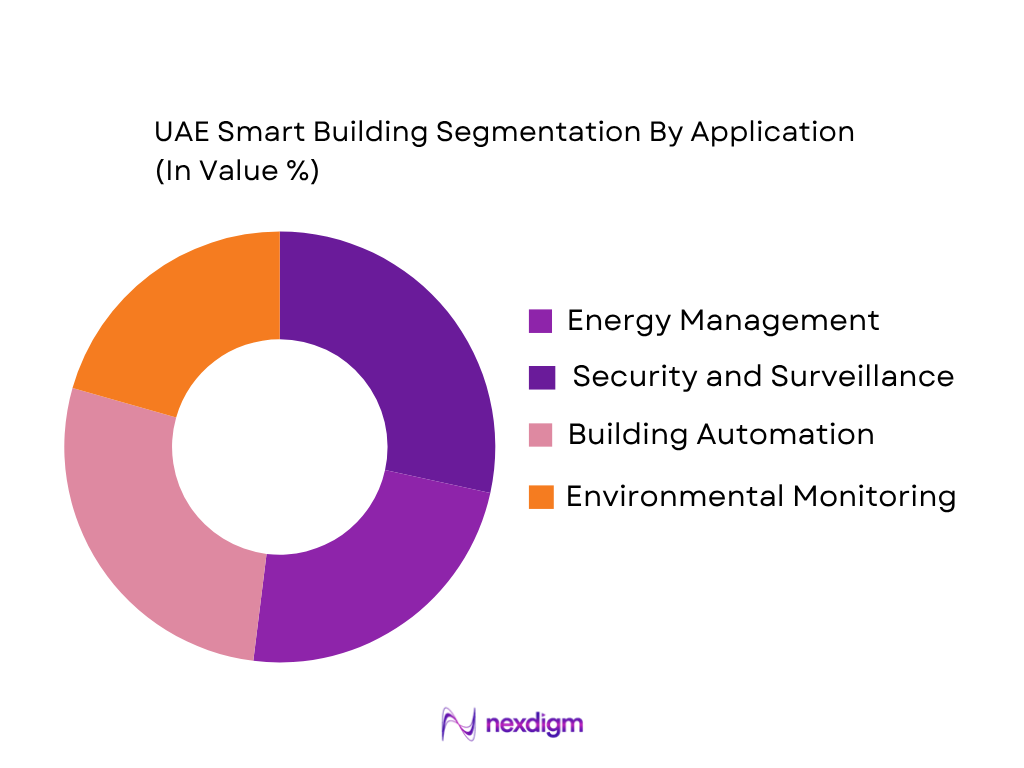
The UAE Smart Building Market is segmented by application into energy management, HVAC optimization, intelligent lighting, building automation, security and surveillance, access control, fire and life safety, indoor air-quality monitoring, occupancy and space management, and water management. Energy management is expected to hold the largest application share, at ~XX% in 2024, because energy-intensive building operations provide a direct application for automation, monitoring and optimization technologies. HVAC control is particularly relevant because cooling systems represent a major operational requirement in the UAE’s climate, while connected meters and sensors allow building operators to monitor consumption and equipment performance. The opportunity is reinforced by the country’s large real-estate and construction ecosystem. IMF analysis states that real-estate and construction activities represented 19.5% of real non-oil GDP in 2024, while the UAE Ministry of Economy reported 8.4% growth in building and construction activity. These conditions support deployment across newly constructed buildings as well as existing commercial properties undergoing modernization.
Competitive Landscape
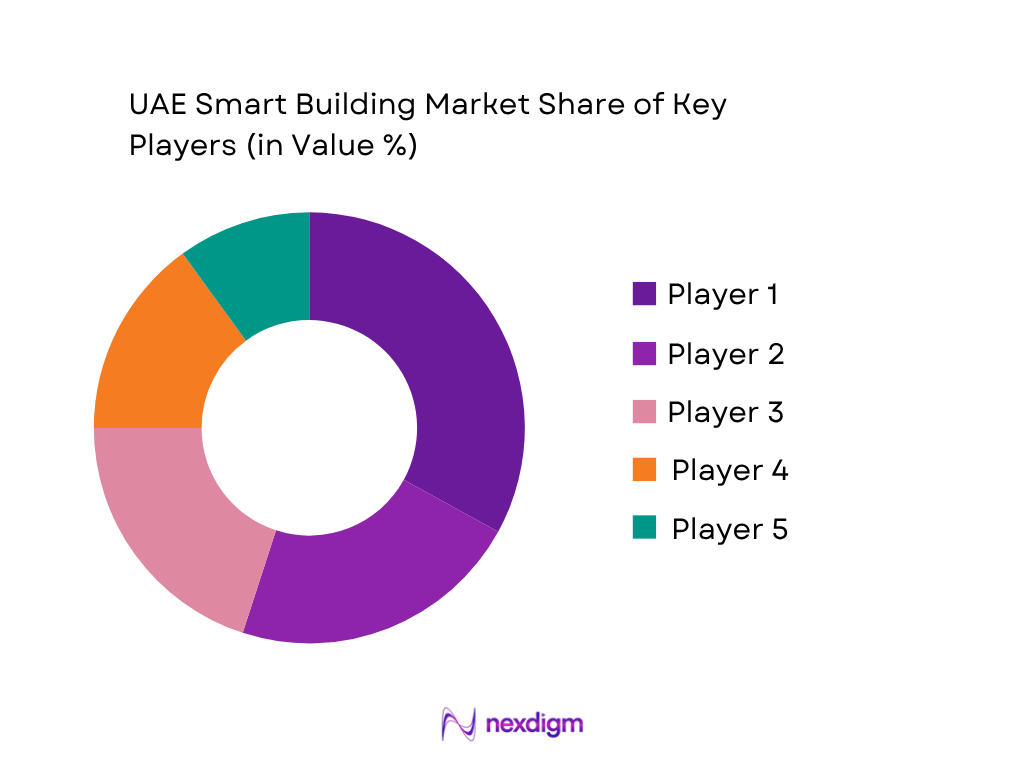
The UAE Smart Building Market includes multinational building-technology companies, automation specialists, security technology providers, systems integrators and locally established technology companies. Competition is structured around building management systems, HVAC automation, energy management, intelligent lighting, IoT connectivity, security, cloud platforms, analytics and integration capabilities. The market’s competitive environment is also influenced by the ability to integrate multiple building systems rather than supplying isolated technologies. Strong construction and real-estate activity provides opportunities for both new-build deployments and modernization of existing properties. The UAE Ministry of Economy reported 8.4% growth in building and construction activity in 2024, while real estate activities grew 4.8%, supporting continued demand for building technology solutions.
| Company | Establishment Year | Headquarters | BMS Capability | HVAC Automation | Energy Management | IoT Integration | Smart Security | UAE Systems Integration |
| Siemens AG | 1847 | Munich, Germany | ||||||
| Honeywell International Inc. | 1906 | Charlotte, USA | ||||||
| Schneider Electric SE | 1836 | Rueil-Malmaison, France | ||||||
| Johnson Controls International plc | 1885 | Cork, Ireland | ||||||
| ABB Ltd. | 1988 | Zurich, Switzerland |
UAE Smart Building Market Analysis
Growth Drivers
Smart City Development Programs
The UAE Smart Building Market is supported by the country’s continued development of digitally connected urban infrastructure and government-led smart-city programs. The UAE recorded real GDP of AED 1,776 billion in 2024, compared with AED 1,709 billion in 2023, while non-oil GDP reached AED 1,342 billion, demonstrating the scale of economic activity available for technology-intensive infrastructure deployment. Information and communication activity also expanded by 5.5%, creating a supportive environment for IoT connectivity, cloud platforms, automation and data-driven building management. Dubai’s IoT strategy specifically integrates data sources through Dubai Pulse and covers governance, deployment, optimization and security, directly supporting connected infrastructure across public and private assets. The UAE’s Fourth Industrial Revolution strategy additionally emphasizes intelligent connectivity and cyber-secured data environments. These initiatives create demand for interconnected HVAC, lighting, energy, occupancy, access-control and facility-management systems rather than isolated building equipment. The country’s building and construction activity expanded by 8.4%, while transportation and storage increased by 9.6%, indicating continued infrastructure development requiring digitally enabled facilities. This combination of economic diversification, construction activity, digital infrastructure and government smart-city programs provides a strong structural foundation for adoption of integrated smart-building technologies
High Commercial Building Concentration and Energy Efficiency Requirements
High commercial-building activity and increasing electricity demand create a direct operational requirement for smart HVAC, lighting, metering and energy-management technologies in the UAE Smart Building Market. Dubai recorded total electricity demand of 59,594 GWh in 2024, compared with 56,516 GWh in 2023, while commercial users consumed 28,849 GWh, making commercial buildings the largest individual consumption category in DEWA’s published statistics. Residential consumption reached 17,912 GWh, while industrial consumption stood at 2,603 GWh, illustrating the particularly large energy-management opportunity within commercial properties. Dubai’s peak electricity demand reached 10.76 GW, compared with 10.41 GW in 2023, increasing the importance of automated load management, HVAC optimization and real-time monitoring. At the national level, construction activity increased by 8.4% and real-estate activities increased by 4.8%, expanding the number of properties requiring building-management infrastructure. The UAE’s economic output also reached AED 1,776 billion, providing a substantial commercial and institutional base for technology investment. Smart-building platforms can connect meters, sensors, HVAC equipment and lighting controls to identify operational inefficiencies and coordinate equipment automatically. Consequently, rising electricity requirements combined with continued commercial development create a measurable operating environment for intelligent building controls.
Market Challenges
High Initial System Integration Complexity and Interoperability Across Legacy Building Systems
Integration complexity remains a significant challenge for the UAE Smart Building Market because smart-building projects frequently require multiple building systems to communicate through a common operational environment. HVAC controls, lighting systems, access control, surveillance, fire systems, elevators, meters and facility-management platforms can use different hardware architectures and communication protocols, increasing engineering and commissioning requirements. The scale of the UAE’s existing commercial-property ecosystem makes retrofit compatibility particularly relevant. Real estate and construction activities represented 19.5% of real non-oil GDP in 2024, demonstrating the economic importance of the built environment and the breadth of infrastructure that may require modernization. Commercial real-estate lending alone reached 13.6% of total gross loans in 2024, according to IMF analysis, indicating substantial financial exposure to commercial properties. Building operators therefore need integration solutions that can connect new IoT devices with installed equipment without disrupting ongoing operations. Dubai’s electricity system also supplied 59,594 GWh in 2024, including 28,849 GWh to commercial users, showing the scale of infrastructure where coordinated energy-management systems can be relevant. The challenge is consequently not simply installing connected devices; it involves protocol compatibility, cybersecurity, data architecture, commissioning, maintenance and long-term interoperability across diverse equipment generations.
Cybersecurity Requirements and Dependence on Specialized Technical Skills
Cybersecurity and specialist technical capability represent important constraints for the UAE Smart Building Market as more physical building infrastructure becomes connected to networks, cloud platforms and IoT ecosystems. The UAE’s National Cybersecurity Strategy is structured around 5 pillars and 60 initiatives, while the government identifies energy, ICT, government, electricity and water, finance, emergency services, health, transportation, and food and agriculture among critical sectors requiring protection. The UAE achieved 100 points across the 5 pillars of the International Telecommunication Union’s Global Cybersecurity Index 2024, demonstrating the extensive national cybersecurity framework within which connected-building systems operate. Dubai’s updated Cyber Security Strategy incorporates four pillars covering cyber-secure society, innovation, resilience and collaboration. Smart-building operators therefore need cybersecurity controls alongside conventional facility-management capabilities. The UAE’s National IoT Security Policy emphasizes security and privacy by design, certified devices, skilled resources, multilayered defense and incident response. These requirements increase the technical complexity of deploying connected HVAC controllers, sensors, access systems, cameras and cloud platforms. Building owners must also maintain cybersecurity throughout the asset lifecycle rather than only during installation. Consequently, demand for specialized integration, network-security, device-management and operational-technology expertise can increase project complexity and create additional requirements for qualified technical personnel.
Market Opportunities
Smart Building Retrofit Programs and AI-Based Energy Optimization
Retrofit programs provide an important opportunity for the UAE Smart Building Market because the country’s substantial installed building base can support technology upgrades without requiring complete redevelopment. The UAE’s construction and real-estate ecosystem accounted for 19.5% of real non-oil GDP in 2024, while building and construction activity increased by 8.4% and real-estate activities increased by 4.8%. Dubai’s electricity demand reached 59,594 GWh, including 28,849 GWh from commercial users, creating a substantial operational environment for energy-management technologies. AI-enabled platforms can use data from smart meters, HVAC equipment, occupancy sensors and environmental sensors to identify abnormal consumption, optimize equipment schedules and coordinate building loads. Dubai’s electricity peak reached 10.76 GW, highlighting the relevance of demand-side optimization and automated controls. The opportunity extends beyond conventional BMS upgrades into predictive analytics, digital twins and cloud-based facility-management platforms. Existing buildings can progressively introduce sensors, connected controllers and analytics while retaining parts of their installed infrastructure. Dubai’s IoT strategy also establishes an institutional framework for integrating data sources and improving efficiency across sectors. These conditions create opportunities for vendors offering retrofit-ready hardware, interoperable gateways, AI analytics, energy dashboards, predictive maintenance and integrated facility-management platforms targeted at commercial, hospitality, government and mixed-use properties.
Digital Twin Deployment, Predictive Maintenance and Connected Hospitality Infrastructure
Digital twins, predictive maintenance and connected hospitality infrastructure represent emerging opportunities because the UAE combines substantial real-estate activity with extensive tourism and transportation infrastructure. UAE airports handled 147.8 million passengers in 2024, while the accommodation and food-services sector recorded 5.7% growth and transportation and storage activity expanded by 9.6%. These conditions support continued operation and development of hotels, airports, retail destinations and mixed-use facilities where real-time building intelligence can improve asset coordination. Digital twins can combine information from HVAC equipment, elevators, lighting, access control, occupancy sensors and energy meters into a single operational representation of a property. Predictive-maintenance systems can subsequently analyze equipment performance and identify potential faults before they affect building operations. The UAE economy generated AED 1,776 billion in real GDP in 2024, while information and communication activity increased by 5.5%, supporting the technological infrastructure required for cloud-connected building applications. Dubai’s data and IoT strategies also emphasize data integration, secure exchange and digital transformation. These conditions create opportunities for smart-building-as-a-service models, connected hotel rooms, centralized facility-management platforms, AI-based fault detection, occupancy analytics and digital-twin solutions that integrate building operations with hospitality and property-management systems.
Future Outlook
The UAE Smart Building Market is positioned for continued development as building owners, developers and facility operators increasingly integrate automation, connectivity and analytics into building infrastructure. The country’s economic expansion, real-estate activity and smart-city initiatives provide a supporting environment for connected-building deployment. IMF analysis identifies construction, real estate, tourism, manufacturing and financial services as important contributors to domestic non-hydrocarbon activity. The UAE Ministry of Economy also reported 147.8 million airport passengers handled during 2024, alongside 8.4% growth in building and construction activity, reinforcing the scale of infrastructure and property activity relevant to smart-building technologies.
Major Players
- Siemens AG
- Honeywell International Inc.
- Schneider Electric SE
- Johnson Controls International plc
- ABB Ltd.
- Trane Technologies plc
- Legrand S.A.
- Signify N.V.
- Cisco Systems, Inc.
- Delta Electronics, Inc.
- Lutron Electronics Co., Inc.
- Crestron Electronics, Inc.
- Distech Controls
- e&
- Pacific Controls Systems LLC
Key Target Audience
- Real Estate Developers and Property Development Companies
- Commercial Building Owners and Facility Management Companies
- Smart Building Technology Manufacturers and Systems Integrators
- HVAC, MEP and Building Automation Solution Providers
- Hospitality Groups and Hotel Property Operators
- Investments and Venture Capitalist Firms
- Government and Regulatory Bodies (UAE Ministry of Energy and Infrastructure, Dubai Municipality, Abu Dhabi Department of Municipalities and Transport, Dubai Electricity and Water Authority)
- Data Center, Healthcare and Critical-Infrastructure Operators
Research Methodology
Step 1: Identification of Key Variables
The initial phase involves constructing a UAE Smart Building Market ecosystem covering building owners, developers, technology vendors, systems integrators, MEP contractors, facility-management companies and government stakeholders. The study identifies variables across BMS, HVAC automation, intelligent lighting, energy management, IoT sensors, security, access control, cloud platforms and analytics.
Step 2: Market Analysis and Construction
Historical market information is compiled using supply-side and demand-side assessment of smart-building technology deployment. The analysis evaluates technology adoption across commercial buildings, hospitality properties, residential developments, healthcare facilities, government buildings, data centers and other relevant building categories, with separate consideration of new-build and retrofit activity.
Step 3: Hypothesis Validation and Expert Consultation
Market hypotheses are validated through structured discussions with building-technology manufacturers, systems integrators, facility-management companies, MEP contractors, property developers and building operators. Expert inputs are used to validate application segmentation, technology adoption, deployment models, competitive positioning and the operational requirements of UAE smart-building projects.
Step 4: Research Synthesis and Final Output
The final stage triangulates secondary information, company disclosures, project-level information and industry interviews to construct the UAE Smart Building Market assessment. Findings are organized by component, technology, application, building type, deployment model, end-user and geography to produce an integrated view of market structure and future development.

- Executive Summary
- Research Methodology (Market Definitions and Assumptions, UAE Smart Building Market Classification, Smart Building Technology Mapping, Building Management System Assessment, Building Automation System Evaluation, IoT Sensor and Connectivity Assessment, Smart HVAC Control Analysis, Intelligent Lighting System Evaluation, Energy Management System Assessment, Smart Security and Surveillance Analysis, Access Control Technology Assessment, Fire and Life Safety System Evaluation, Indoor Air Quality Monitoring Assessment, Occupancy and Space Utilization Analytics, Digital Twin Technology Assessment, AI-Based Building Optimization Analysis, Cloud-Based Building Management Assessment, Edge Computing Infrastructure Evaluation, Cybersecurity Assessment, Smart Metering Analysis, Building Retrofit Demand Assessment, New Smart Building Development Assessment, Commercial Building Technology Adoption, Residential Smart Building Assessment, Hospitality Smart Building Evaluation, Healthcare Facility Assessment, Government Building Digitization Assessment, Smart City Integration Analysis, Demand-Side Assessment, Supply-Side Assessment)

- Definition and Scope
- UAE Smart Building Industry Evolution and Development of Building Management Systems, Building Automation Platforms, IoT-Enabled Building Infrastructure, Smart HVAC Controls, Intelligent Lighting Systems, Energy Management Platforms, Smart Security Solutions, Connected Access Control, Indoor Air Quality Monitoring, Occupancy Analytics, Digital Twin Platforms, AI-Based Building Optimization, Cloud-Based Building Management, Edge Computing, Smart Metering, Integrated Command Centers, Net-Zero Building Technologies, Sustainable Building Automation, Smart Building Retrofit Solutions
- Smart Building Value Chain Analysis
- Smart Building Supply Chain Analysis

- Growth Drivers (Smart City Development Programs, High Commercial Building Concentration, Energy Efficiency Requirements, Rapid IoT Adoption, Digital Transformation Initiatives, Premium Real Estate Development, Hospitality Infrastructure Expansion, Data Center Development, Government Building Digitization, Demand for Intelligent HVAC and Energy Management)
- Market Challenges (High Initial System Integration Complexity, Interoperability Across Legacy Building Systems, Cybersecurity Requirements, Dependence on Specialized Technical Skills, Fragmented Technology Ecosystems, Retrofit Constraints in Existing Buildings, Integration of Multiple Communication Protocols, Data Privacy Requirements, Long Technology Replacement Cycles, High Dependence on HVAC Optimization)
- Market Opportunities (Smart Building Retrofit Programs, AI-Based Energy Optimization, Digital Twin Deployment, Net-Zero Building Management, Smart HVAC Solutions, Integrated Energy and Facility Management Platforms, Predictive Maintenance, Smart Building Cybersecurity, IoT-Based Occupancy Analytics, Intelligent Water Management, Smart Building-as-a-Service Models, Connected Hospitality Infrastructure)
- Market Trends (AI-Enabled Building Automation, Cloud-Based BMS Platforms, Digital Twin Adoption, Predictive Building Maintenance, Integrated IoT Sensors, Smart HVAC Optimization, Occupancy-Based Energy Management, Intelligent Lighting Controls, Cybersecurity Integration, Edge-Based Building Analytics, Connected Facility Management, Net-Zero Building Technologies)
- Government Regulations and Standards (Dubai Building Code, UAE Fire and Life Safety Code, Abu Dhabi International Building Codes, Estidama Pearl Rating System, Dubai Green Building Regulations and Specifications, Smart Buildings Guidelines, Telecommunications Infrastructure Requirements, Building Energy Efficiency Requirements, Civil Defense Requirements, Cybersecurity and Data Protection Requirements)
- SWOT Analysis
- Porter’s Five Forces Analysis
- PESTLE Analysis
- Stakeholder Ecosystem
- Competition Ecosystem

- By Market Value (2020-2025)
- By Smart Building System Installation Volume (2020-2025)
- By Smart Building Project Count (2020-2025)
- By Connected Building Devices Installed (2020-2025)
- By Building Automation System Deployment Volume (2020-2025)
- By Building Management System Deployment Volume (2020-2025)

- By Component (In Value %)
Smart Building Hardware
Smart Building Software
Smart Building Services
Sensors and Controllers
Building Management Systems
Communication and Connectivity Infrastructure - By Technology (In Value %)
Internet of Things (IoT)
Artificial Intelligence and Machine Learning
Cloud Computing
Edge Computing
Digital Twin Technology
Building Information Modeling Integration
Wireless Building Automation - By Application (In Value %)
Energy Management
Building Automation
HVAC Optimization
Intelligent Lighting
Security and Surveillance
Access Control
Fire and Life Safety
Indoor Air Quality Monitoring
Occupancy and Space Management
Water Management - By Building Type (In Value %)
Commercial Offices
Retail and Shopping Centers
Hotels and Hospitality Buildings
Residential Buildings
Healthcare Facilities
Educational Buildings
Government Buildings
Industrial Facilities
Data Centers
Airports and Transportation Facilities - By Deployment Type (In Value %)
New Smart Building Deployment
Existing Building Retrofit
Building Automation Upgrade
Energy Management Retrofit
Security System Modernization
HVAC Modernization
Lighting System Modernization
Integrated Smart Building Transformation - By End-User (In Value %)
Commercial Real Estate
Residential Real Estate
Hospitality
Healthcare
Government and Public Infrastructure
Retail
Industrial and Manufacturing
Transportation
Data Centers - By Sales Channel (In Value %)
Direct Sales
Systems Integrators
Technology Distributors
Facility Management Providers
MEP Contractors

- Market Share of Major Players (By UAE Revenue, Smart Building Project Portfolio, Building Management System Capability, Building Automation Product Portfolio, IoT Integration Capability, Energy Management Solutions, Smart HVAC Capability, Intelligent Lighting Capability, Security and Access Control Portfolio, Digital Twin Capability, AI and Analytics Capability, Cloud Platform Integration, Systems Integration Capability, UAE Distribution Network, Technical Support Capability)
- Cross Comparison Parameters (Building Management System Integration Capability, IoT Device and Sensor Ecosystem, HVAC Optimization Capability, Energy Management and Analytics Capability, AI and Digital Twin Integration, Cybersecurity and Data Protection Capability, Smart Building Retrofit Expertise, UAE Project References and Technical Support Network)
- SWOT Analysis of Major Players
- Detailed Profiles of Major Companies
Siemens AG
Honeywell International Inc.
Schneider Electric SE
Johnson Controls International plc
ABB Ltd.
Trane Technologies plc
Legrand S.A.
Signify N.V.
Cisco Systems, Inc.
Delta Electronics, Inc.
Lutron Electronics Co., Inc.
Crestron Electronics, Inc.
Distech Controls
e&
Pacific Controls Systems LLC

- Commercial Building Owner Technology Assessment
- Real Estate Developer Smart Building Requirement Analysis
- Facility Management Technology Requirement Assessment
- Hospitality Building Automation Demand Analysis
- Healthcare Facility Smart Infrastructure Assessment
- Government Building Digitalization Assessment
- Data Center Smart Infrastructure Requirement Analysis

- By Market Value (2026-2035)
- By Smart Building System Installation Volume (2026-2035)
- By Smart Building Project Count (2026-2035)
- By Connected Building Devices Installed (2026-2035)
- By Building Management System Deployment Volume (2026-2035)
- By Building Automation System Deployment Volume (2026-2035)
- By Energy Management System Deployment Volume (2026-2035)


 Request a Sample
 Ask for Customization
 Get a Quote
 Enquire Now
