
 Download PDF
 Download PDF
Market Overview
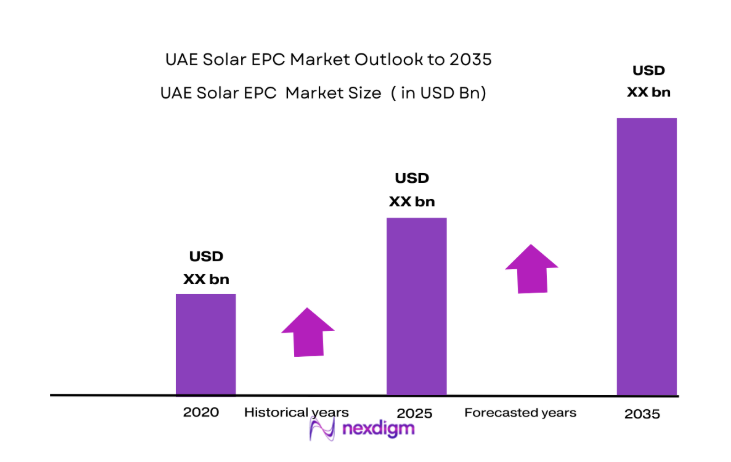
The UAE Solar EPC market is valued USD ~ billion, based on recent assessments of the country’s ongoing infrastructure developments and renewable energy investments. The market is primarily driven by the UAE government’s commitment to increasing renewable energy capacity, with a focus on solar energy. As part of Vision 2021 and its ambitious clean energy targets, the UAE has been investing heavily in solar power projects, positioning itself as a leader in renewable energy adoption in the region. This growth is also fueled by international investments and collaborations, making the UAE a key player in the Middle East’s transition to a low-carbon economy.
Dominant regions in the UAE Solar EPC market include major cities like Dubai and Abu Dhabi. These cities are characterized by their developed infrastructure, supportive regulatory environments, and proximity to large-scale solar projects. Dubai’s emphasis on energy diversification through initiatives like the Mohammed bin Rashid Al Maktoum Solar Park plays a critical role in its dominance. Abu Dhabi, with its investments in Masdar City and other renewable energy projects, contributes significantly to the country’s leadership in solar energy. These cities benefit from the government’s strong focus on achieving sustainability and renewable energy goals.
Market Segmentation
By Product Type:
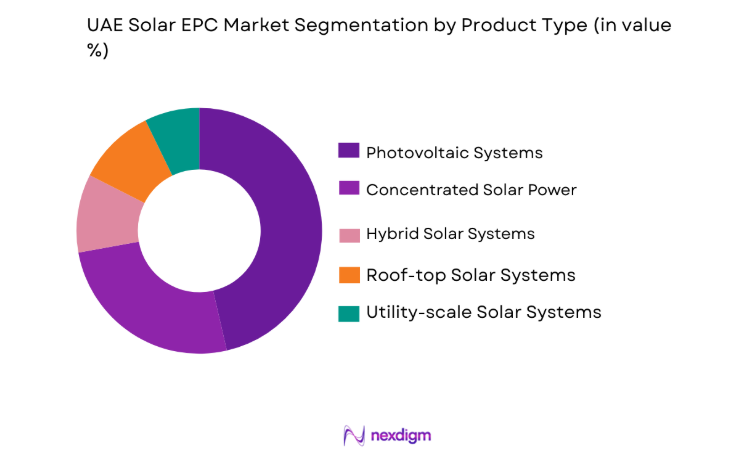
The UAE Solar EPC market is segmented by product type into photovoltaic (PV) systems, concentrated solar power (CSP) systems, hybrid solar systems, roof-top solar systems, and utility-scale solar systems. Among these, PV systems dominate the market share due to the rapidly increasing demand for residential and commercial solar installations. The ease of installation, lower costs, and efficiency improvements over the years have made PV systems the preferred choice for many consumers. Additionally, government incentives and regulatory support further boost the demand for PV systems, making them the primary contributor to the market’s growth.
By End-User Segment:
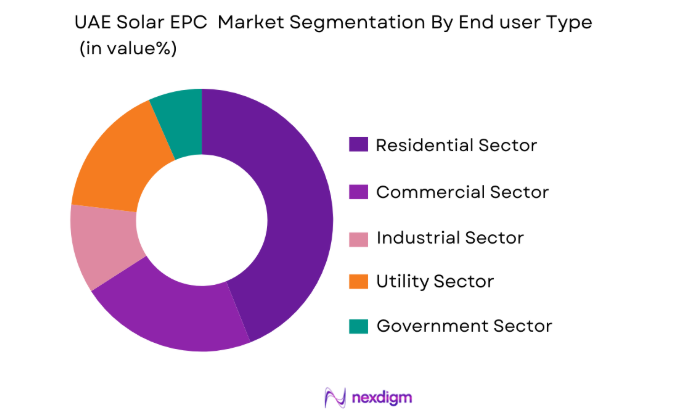
The UAE Solar EPC market is divided by end-user segment into residential, commercial, industrial, utility, and government sectors. The residential sector leads the market share due to the rapid adoption of solar energy in homes driven by increasing energy costs and a greater awareness of environmental impact. The government sector follows closely behind with large-scale projects that are aligned with national sustainability targets. Both sectors benefit from favorable regulatory incentives and growing energy self-sufficiency trends, contributing significantly to the expansion of solar energy in the UAE.
Competitive Landscape
The UAE Solar EPC market is highly competitive, with major players from both local and international markets vying for dominance. This is driven by the government’s push for renewable energy development, as well as the growing private sector demand for clean energy solutions. The market also sees increasing collaboration between government entities and international energy firms, leading to consolidation in the industry.
| Company Name | Establishment Year | Headquarters | Technology Focus | Market Reach | Key Products | Revenue | Project Involvement |
| First Solar | 1999 | USA | ~ | ~ | ~ | ~ | ~ |
| JinkoSolar | 2006 | China | ~ | ~ | ~ | ~ | ~ |
| Siemens Gamesa | 1976 | Spain | ~ | ~ | ~ | ~ | ~ |
| ACWA Power | 2002 | UAE | ~ | ~ | ~ | ~ | ~ |
| Trina Solar | 1997 | China | ~ | ~ | ~ | ~ | ~ |
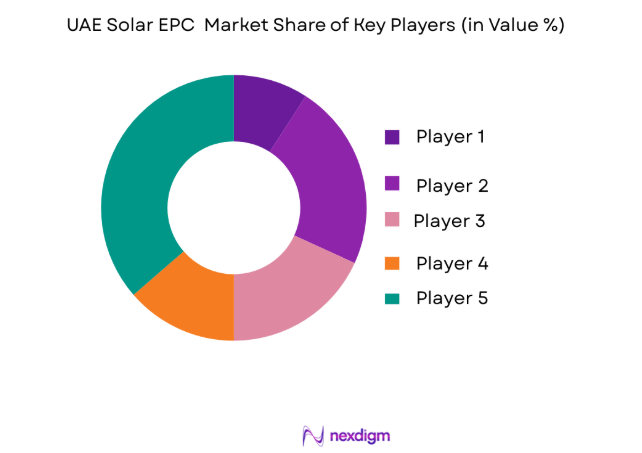
UAE Solar EPC Market Analysis
Growth Drivers
Government Incentives:
The UAE government has been offering substantial incentives to promote the use of renewable energy, especially solar power. These incentives include subsidies for solar installations, tax benefits, and grants for large-scale solar projects. The push for solar energy is part of the country’s broader goal to meet clean energy targets under its Vision 2021. These financial incentives are encouraging both residential and commercial sectors to adopt solar energy, thus driving the market’s expansion. The creation of solar parks, along with favorable policies, has made it easier for developers to invest in solar power, ensuring that the sector continues to thrive. Furthermore, the UAE’s commitment to renewable energy aligns with its broader environmental goals, further supporting the expansion of the solar EPC market.
Technological Advancements:
Continuous advancements in solar energy technology are helping to make solar power more accessible and efficient. Breakthroughs in photovoltaic panel efficiency and innovations in energy storage technologies have enabled the solar EPC market to expand rapidly. These innovations reduce the cost of solar power and increase its effectiveness, making it a more attractive investment for both residential and industrial consumers. The integration of smart grid technologies, coupled with improved battery storage systems, ensures that solar energy can be efficiently stored and distributed, making solar power a more reliable and cost-effective source of energy. As technology continues to improve, more sectors are adopting solar energy solutions, propelling the market forward.
Market Challenges
High Initial Capital Investment:
One of the primary barriers to solar energy adoption in the UAE is the high upfront capital required to install solar energy systems, especially for residential customers. Despite the long-term savings on energy bills, the initial installation cost can be prohibitive for many consumers. While financial incentives and subsidies are available, they may not fully offset the initial costs for all potential customers. Additionally, the infrastructure required for large-scale solar power projects can be expensive, limiting the ability of small developers and businesses to participate in the market. The high cost of energy storage systems, which are essential for solar energy reliability, further adds to the financial burden, limiting widespread adoption in certain sectors.
Regulatory Hurdles:
While the UAE government supports the expansion of solar energy, the regulatory framework surrounding solar projects can sometimes be complex and slow-moving. The approval process for large-scale solar projects can be lengthy, and developers may face challenges in obtaining the necessary permits and licenses. Additionally, there is a lack of clear regulations around energy storage and integration with the national grid, which can hinder the deployment of solar power systems. The need for updated and streamlined regulations is critical to support the market’s growth and ensure that solar projects can be implemented without unnecessary delays.
Opportunities
Integration with Smart Technologies:
The rise of smart home technologies and IoT devices presents a significant opportunity for the UAE solar EPC market. As more homeowners and businesses seek to integrate solar energy with smart technologies, there is a growing demand for solar systems that can be easily connected to smart grids and energy management platforms. This trend offers significant growth potential for solar EPC companies, as it aligns with the broader push for energy efficiency and sustainability. By incorporating IoT devices and smart energy solutions, solar power systems can become more efficient, providing users with better control over their energy usage and reducing their overall energy costs. The ability to offer integrated smart solar solutions is a key opportunity for companies looking to expand in this rapidly growing market.
Expansion in Off-Grid Solutions:
The UAE’s push for renewable energy provides opportunities for off-grid solar solutions, particularly in remote areas where the national grid does not reach. Off-grid solar power systems are becoming increasingly popular in rural and desert areas, where access to traditional power sources is limited. With the UAE’s large desert regions and remote locations, solar power is the most viable option for providing energy to these areas. Additionally, the rising cost of fossil fuels and the environmental impact of traditional power generation methods make solar a more sustainable and cost-effective alternative. The expansion of off-grid solar solutions presents a significant opportunity for growth in the UAE Solar EPC market, particularly in underserved regions.
Future Outlook
The future outlook for the UAE Solar EPC market remains positive, with continued government support, technological advancements, and an increasing shift towards sustainability. Over the next five years, solar energy adoption is expected to grow steadily as more residential and commercial sectors embrace solar solutions. Technological developments in solar panel efficiency and storage technologies will further drive market expansion. Regulatory initiatives focused on renewable energy integration and the promotion of green energy projects will continue to play a crucial role in shaping the market. Furthermore, demand for large-scale solar energy solutions will likely increase, especially with the expansion of solar parks and infrastructure projects aimed at meeting the UAE’s long-term energy goals.
Major Players
- First Solar
- JinkoSolar
- Siemens Gamesa
- ACWA Power
- Trina Solar
- SunPower Corporation
- First Solar
- LONGiSolar
- Canadian Solar
- Hanwha Q CELLS
- GE Renewable Energy
- ABB
- Sanyo Solar
- Suntech Power
- SoltecPower Holdings
Key Target Audience
- Investments and venture capitalist firms
- Government and regulatory bodies
- Solar EPC contractors
- Utility companies
- Commercial building owners
- Renewable energy developers
- Large-scale solar energy producers
- Real estate developers
Research Methodology
Step 1: Identification of Key Variables
The identification of key variables involves determining the critical drivers, challenges, and trends that influence the market’s dynamics.
Step 2: Market Analysis and Construction
The market analysis and construction focus on collecting data through primary and secondary research methods to accurately forecast market performance.
Step 3: Hypothesis Validation and Expert Consultation
Expert consultations are conducted to validate hypotheses and ensure that market assumptions align with current industry trends and future projections.
Step 4: Research Synthesis and Final Output
All data and insights are synthesized into a comprehensive report, which is then finalized after validation and peer review.

- Executive Summary
- Research Methodology (Definitions, Scope, Industry Assumptions, Market Sizing Approach, Primary & Secondary Research Framework, Data Collection & Verification Protocol, Analytic Models & Forecast Methodology, Limitations & Research Validity Checks)

- Market Definition and Scope
- Value Chain & Stakeholder Ecosystem
- Regulatory / Certification Landscape
- Sector Dynamics Affecting Demand

- Growth Drivers
Government Policies Supporting Renewable Energy
Declining Solar Equipment Prices
Increase in Corporate Sustainability Initiatives - Market Challenges
High Initial Investment Costs
Intermittency of Solar Power Generation
Limited Localized Manufacturing Capacity - Market Opportunities
Expansion in Solar Energy Storage Solutions
Integration with Smart Grid Technologies
Increased Foreign Investments in Solar Projects - Trends
Adoption of Solar + Storage Hybrid Solutions
Rise of Solar Community Projects
Development of Solar Microgrids - Government Regulations
- SWOT Analysis of Key Competitors

- By Market Value, 2020-2025
- By Installed Units, 2020-2025
- By Average System Price, 2020-2025
- By System Complexity Tier, 2020-2025

- By System Type (In Value%)
Photovoltaic Systems
Concentrated Solar Power Systems
Hybrid Solar Systems
Roof-top Solar Systems
Utility-Scale Solar Systems - By Platform Type (In Value%)
Ground-mounted Platforms
Roof-mounted Platforms
Floating Solar Platforms
Building Integrated Photovoltaics (BIPV)
Mobile Solar Platforms - By Fitment Type (In Value%)
Residential Fitment
Commercial Fitment
Industrial Fitment
Utility Fitment
Government Fitment - By EndUser Segment (In Value%)
Residential Sector
Commercial Sector
Industrial Sector
Utility Sector
Government Sector

- Market Share Analysis
- CrossComparison Parameters (System Type, Platform Type, Procurement Channel, EndUser Segment, Fitment Type)
- SWOT Analysis of Key Competitors
- Pricing & Procurement Analysis
- Porter’s Five Forces
- Key Players
First Solar
JinkoSolar
Siemens Gamesa
SunPower Corporation
Enel Green Power
Trina Solar
ACWA Power
Longi Solar
TotalEnergies
Solvay
Schneider Electric
Abengoa Solar
First Solar
PowerChina
TATA Power Solar

- Government Sector’s Role in Renewable Energy Projects
- Utility Sector’s Demand for Large-scale Solar Solutions
- Industrial Sector’s Shift Towards Self-Generation
- Residential Sector’s Growing Interest in Solar PV

- Forecast Market Value, 2026-2035
- Forecast Installed Units, 2026-2035
- Price Forecast by System Tier, 2026-2035
- Future Demand by Platform, 2026-2035


 Request a Sample
 Ask for Customization
 Get a Quote
 Enquire Now