
 Download PDF
Market Overview
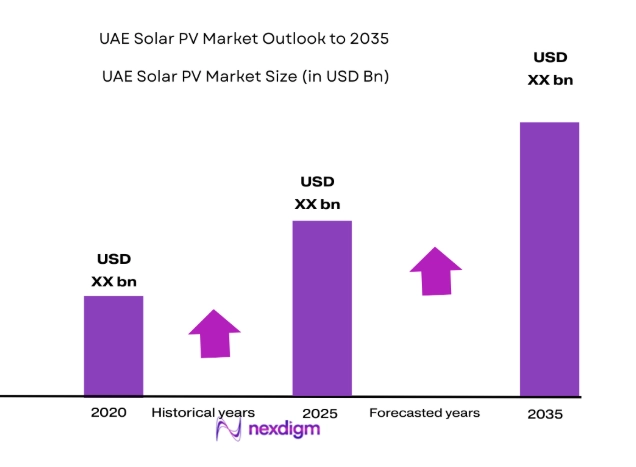
The UAE Solar PV market is projected to grow significantly, driven by the increasing demand for renewable energy sources and the government’s ambitious clean energy goals. The market size is expected to reach USD ~ billion by the end of the assessment period, with substantial investments in large-scale solar projects, both residential and commercial sectors. Key drivers include favorable government policies, declining costs of solar technology, and the nation’s push to diversify energy sources to reduce reliance on fossil fuels. This growth is supported by advancements in photovoltaic technology and energy storage solutions.
The UAE, particularly Dubai and Abu Dhabi, dominates the solar PV market due to its favorable climatic conditions, high solar irradiation, and government-led initiatives such as the Dubai Clean Energy Strategy. These cities are witnessing a rapid increase in solar energy adoption across various sectors, especially in commercial and utility-scale solar power plants. The combination of government incentives, a robust regulatory framework, and strategic investments in infrastructure has positioned the UAE as a leader in the Middle Eastern solar PV market.
Market Segmentation
By Product Type
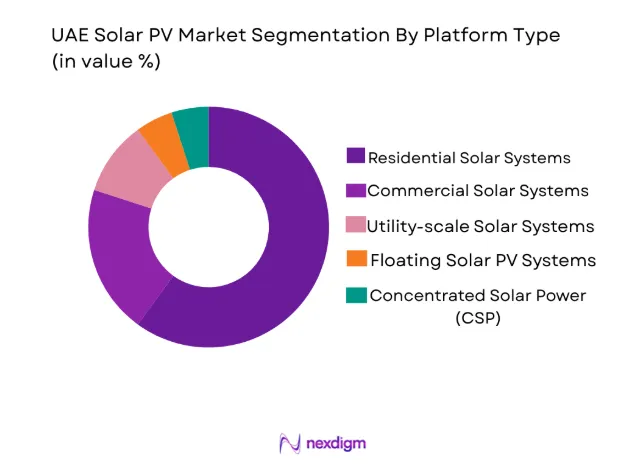
The UAE Solar PV market is segmented by product type into residential, commercial, and utility-scale systems. Recently, the utility-scale systems segment has dominated the market share due to large government-backed projects and the rising need for large renewable energy sources. Factors such as the government’s long-term plans to generate 50% of its energy from renewable sources and the favorable policies for large-scale projects have propelled the dominance of this sub-segment. The government’s investment in solar parks and other infrastructure also plays a pivotal role in expanding this segment’s market share.
By Platform Type
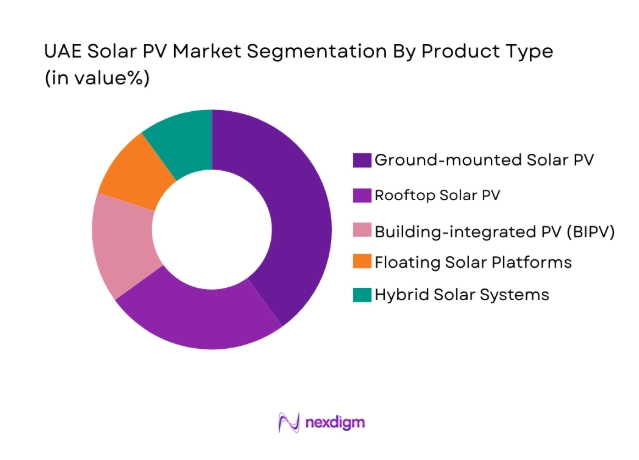
The UAE Solar PV market is segmented by platform type into ground-mounted solar PV, rooftop solar PV, building-integrated PV (BIPV), floating solar platforms, and hybrid solar systems. Recently, the ground-mounted solar PV systems sub-segment has dominated the market share due to the development of large-scale solar parks, which are a key component of the UAE’s renewable energy strategy. The vast land available for such installations, along with government investments in large-scale solar projects like Mohammed bin Rashid Al Maktoum Solar Park, has made ground-mounted solar PV the most preferred platform for utility-scale energy production.
Competitive Landscape
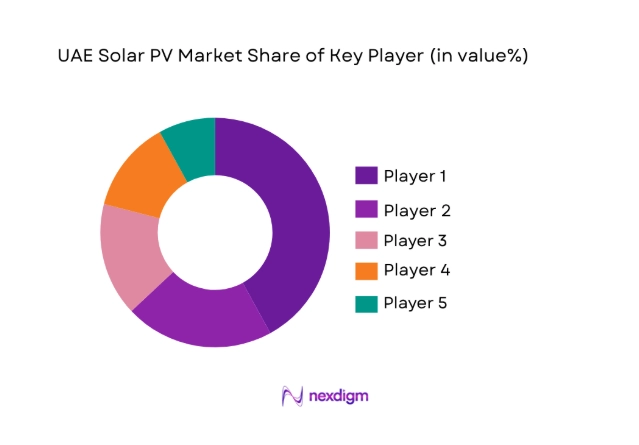
The competitive landscape of the UAE Solar PV market is driven by both local and international players investing heavily in solar energy infrastructure. Major players have consolidated their positions through strategic partnerships and large-scale projects, with the government’s regulatory support facilitating the growth. The rise in competitive solar energy pricing and technological advancements also plays a critical role in shaping the competitive dynamics.
| Company Name | Establishment Year | Headquarters | Technology Focus | Market Reach | Key Products | Revenue | Solar Project Capacity |
| First Solar | 1999 | United States | ~ | ~ | ~ | ~ | ~ |
| JinkoSolar | 2006 | China | ~ | ~ | ~ | ~ | ~ |
| Trina Solar | 1997 | China | ~ | ~ | ~ | ~ | ~ |
| Canadian Solar | 2001 | Canada | ~ | ~ | ~ | ~ | ~ |
| JA Solar | 2005 | China | ~ | ~ | ~ | ~ | ~ |
UAE Solar PV Market Analysis
Growth Drivers
Government Incentives and Subsidies:
The UAE government has implemented numerous incentives, such as tax exemptions and rebates, to encourage the adoption of renewable energy solutions, particularly solar. These incentives significantly reduce the initial cost of solar installations, making it easier for both residential and commercial sectors to adopt solar PV systems. Additionally, the government has established a favorable regulatory framework to promote clean energy, including policies for net metering and power purchase agreements, which further reduce the financial barriers for solar adoption. These initiatives have played a key role in driving the widespread use of solar PV across the UAE, especially in the context of increasing energy demand and the desire for energy diversification. This trend is expected to continue, as the UAE continues to push for its clean energy goals, driving further investments in solar technologies.
Technological Advancements in Solar Power
Another key growth driver in the UAE Solar PV market is the rapid advancement of solar technology, particularly in photovoltaic cell efficiency and energy storage systems. Innovations such as bifacial solar panels and PERC (Passivated Emitter and Rear Contact) technology are driving higher energy yields per square meter, making solar power a more attractive option. Energy storage systems, including batteries, are also evolving, providing a reliable solution to the intermittent nature of solar power and enabling the use of solar energy even during non-sunlight hours. These technological improvements are reducing the levelized cost of electricity (LCOE) for solar power, further enhancing its economic viability compared to traditional energy sources. As these technologies continue to improve, the solar PV market in the UAE is expected to grow rapidly, contributing to the country’s transition towards cleaner energy sources.
Market Challenges
High Initial Investment Costs:
One of the major challenges facing the UAE Solar PV market is the high initial capital required for large-scale solar power projects. Despite the falling costs of solar panels and related technologies, the installation of solar power plants, particularly utility-scale systems, remains capital-intensive. This high upfront cost is a significant barrier to entry for smaller companies and local investors who may lack access to sufficient funding. Furthermore, the costs associated with the installation of complementary infrastructure, such as energy storage and grid integration systems, contribute to the overall capital requirements. Although financing options are available, the high initial investment required for solar PV systems is still a significant challenge that must be addressed to increase adoption across all sectors.
Intermittency and Grid Integration Issues:
Another challenge for the UAE Solar PV market is the intermittent nature of solar energy generation. Solar power production is dependent on sunlight, which varies throughout the day and across seasons, leading to fluctuations in power supply. This intermittency poses challenges for grid integration and requires advanced energy storage systems to ensure a reliable power supply. Moreover, integrating solar power into the existing energy grid infrastructure can be complex and costly. The lack of sufficient energy storage solutions and smart grid technologies further exacerbates these challenges, as the current grid systems may not be equipped to handle the variable output from solar power plants. As a result, addressing these technical issues is crucial for the continued growth of the solar PV market in the UAE.
Opportunities
Expansion in Residential and Commercial Sectors:
The expansion of solar energy adoption in the residential and commercial sectors presents significant opportunities for the UAE Solar PV market. With increasing electricity demand, high energy costs, and a growing focus on sustainability, more homeowners and businesses are turning to solar PV systems to reduce their energy costs and carbon footprint. Government incentives and financing options, such as the UAE’s “Shams Dubai” initiative, encourage solar panel installations in these sectors. The growing interest in energy independence and sustainability, coupled with technological advancements that make solar systems more affordable and efficient, is driving this growth. As the demand for clean energy solutions continues to rise, the residential and commercial solar PV segments are expected to see rapid growth, offering lucrative opportunities for market players in terms of installations and service offerings.
Opportunities in Solar Energy Storage:
The rapid growth of solar PV systems in the UAE has created a significant opportunity for energy storage solutions, especially in the context of large-scale solar power plants and residential solar systems. Energy storage technologies, such as lithium-ion batteries, are essential for mitigating the intermittency of solar power by storing excess energy generated during peak sunlight hours for later use. The demand for energy storage is expected to rise significantly as the solar PV market expands, offering new growth prospects for companies in the storage sector. Additionally, the UAE government’s focus on enhancing grid stability and integrating renewable energy sources into the national grid creates a favorable environment for energy storage solutions. As these technologies continue to improve in terms of efficiency and cost-effectiveness, energy storage will play a critical role in supporting the growth of solar power in the UAE.
Future Outlook
The UAE Solar PV market is expected to continue its upward trajectory over the next five years, fueled by government support, technological advancements, and increasing energy demand. Technological innovations, particularly in solar power efficiency and energy storage, will drive cost reductions and improve the economic viability of solar energy solutions. Additionally, regulatory frameworks will continue to evolve, providing further incentives for both residential and commercial solar PV installations. With a growing focus on sustainability and energy independence, the UAE is likely to see a significant increase in solar energy adoption, contributing to its clean energy targets.
Major Players
- First Solar
- JinkoSolar
- Trina Solar
- Canadian Solar
- JA Solar
- SunPower
- LONGi Green Energy
- Yingli Green Energy
- REC Solar
- SolarEdge Technologies
- Hanwha Q Cells
- SMA Solar Technology
- Sungrow Power
- GT Solar
Key Target Audience
- Investments and venture capitalist firms
- Government and regulatory bodies
- Energy producers
- Solar power installation companies
- Energy consultants
- Infrastructure developers
- Real estate developers
Research Methodology
Step 1: Identification of Key Variables
The first step involves identifying key market variables, such as the size of the solar PV market, technology trends, and regulatory environment.
Step 2: Market Analysis and Construction
This step focuses on analyzing the market data, constructing models, and segmenting the market based on product types, platform types, and end-users.
Step 3: Hypothesis Validation and Expert Consultation
In this phase, hypotheses are validated by consulting with industry experts and collecting primary data from key market players.
Step 4: Research Synthesis and Final Output
The final output is synthesized from the collected data, with detailed analysis, forecasts, and recommendations.

- Executive Summary
- Research Methodology (Definitions, Scope, Industry Assumptions, Market Sizing Approach, Primary & Secondary Research Framework, Data Collection & Verification Protocol, Analytic Models & Forecast Methodology, Limitations & Research Validity Checks)

- Market Definition and Scope
- Value Chain & Stakeholder Ecosystem
- Regulatory / Certification Landscape
- Sector Dynamics Affecting Demand
- Strategic Initiatives & Infrastructure Growth

- Growth Drivers
Government Incentives and Subsidies
Falling Solar Panel Prices
Increasing Demand for Renewable Energy
Energy Security and Independence
Technological Advancements in Solar Power - Market Challenges
Intermittency and Grid Integration Issues
High Initial Investment Costs
Regulatory and Policy Barriers
Energy Storage and Backup Solutions
Land and Space Constraints - Market Opportunities
Government Investments in Clean Energy Projects
Rising Demand for Off-grid Solar Solutions
Growing Commercial Adoption of Solar PV - Trends
Growth in Large-Scale Solar Projects
Adoption of Energy Storage Solutions - Government Regulations
Renewable Energy Policies and Frameworks
Net Metering and Feed-in Tariffs
Solar Energy Deployment Incentives - SWOT Analysis
- Porter’s Five Forces

- By Market Value, 2020-2025
- By Installed Units, 2020-2025
- By Average System Price, 2020-2025
- By System Complexity Tier, 2020-2025

- By System Type (In Value%)
Residential Solar Systems
Commercial Solar Systems
Utility-scale Solar Systems
Floating Solar PV Systems
Concentrated Solar Power (CSP) Systems - By Platform Type (In Value%)
Ground-mounted Solar PV
Rooftop Solar PV
BIPV (Building Integrated PV) Systems
Floating Solar Platforms
Hybrid Solar Systems - By Fitment Type (In Value%)
On-grid Solar Systems
Off-grid Solar Systems
Hybrid Solar Systems
Community Solar Solutions - By End User Segment (In Value%)
Residential Sector
Commercial Sector
Industrial Sector

- Market Share Analysis
- Cross Comparison Parameters (System Type, Platform Type, End User Segment, Fitment Type, Technological Innovation, Price, Procurement Channel)
- SWOT Analysis of Key Competitors
- Pricing & Procurement Analysis
- Key Players
First Solar
JinkoSolar
Trina Solar
Canadian Solar
JA Solar
Sungrow Power
Hanwha Q Cells
LONGi Green Energy
Siemens Gamesa
Goldwind
ACCIONA
Enel Green Power
Dubai Electricity and Water Authority (DEWA)
Masdar
Tata Power Solar

- Residential Consumers Increasing Solar Adoption
- Corporate Entities Shifting Towards Sustainable Energy
- Government-driven Renewable Energy Initiatives
- Private Sector Investment in Solar PV

- Forecast Market Value, 2026-2035
- Forecast Installed Units, 2026-2035
- Price Forecast by System Tier, 2026-2035
- Future Demand by Platform, 2026-2035


 Request a Sample
 Ask for Customization
 Get a Quote
 Enquire Now