
 Download PDF
Market Overview
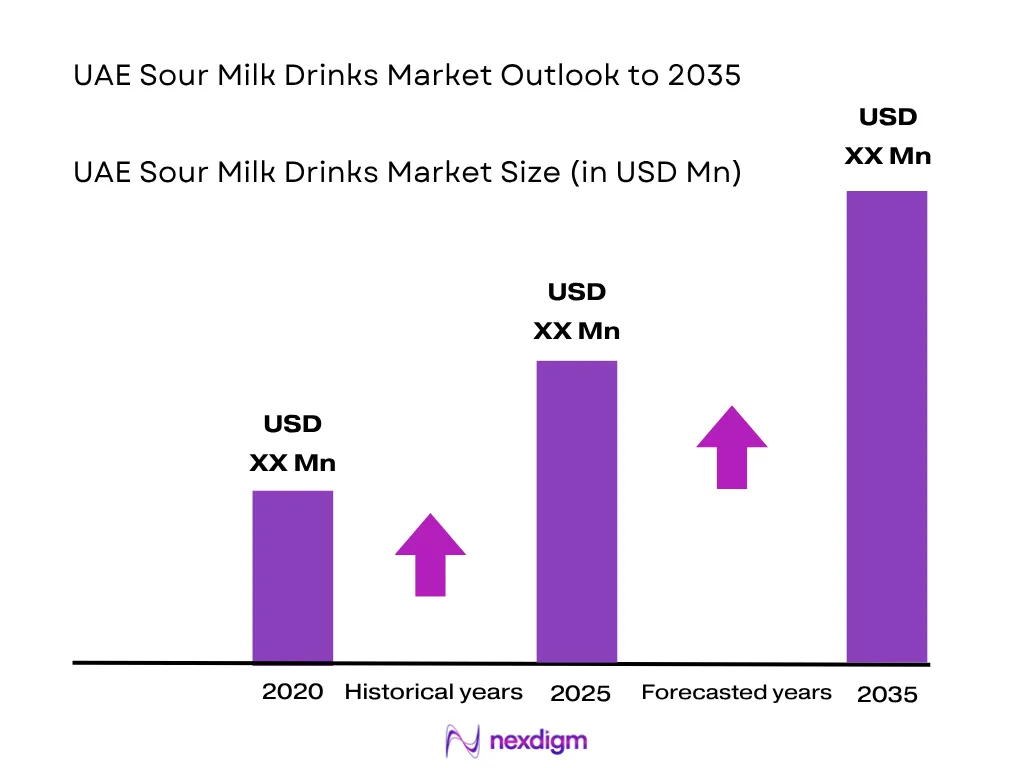
The UAE Sour Milk Drinks Market is assessed through the closest publicly reported category of yoghurt and sour milk products, with UAE yoghurt market value placed at USD ~ million, while the broader UAE dairy products market is valued at USD ~ billion. Demand is driven by chilled laban, ayran, kefir and drinking yoghurt consumption across households, HoReCa and grocery retail. The UAE Sour Milk Drinks Market is expected to grow at a forecast CAGR of around 4.6% during 2026-2035, benchmarked against UAE dairy foods growth projections. Growth is expected to be supported by health and wellness positioning, probiotic beverages, chilled grocery delivery, foodservice demand and the continued role of laban as a culturally embedded meal-accompaniment drink.
Dubai, Abu Dhabi and Sharjah dominate UAE sour milk drinks consumption because they concentrate population, modern grocery stores, hotels, restaurants, cafeterias and quick-commerce delivery. Dubai’s population is estimated at 4,248,200 people, and official food-sector references indicate the UAE has over 30,000 food outlets, with around 60% located in Dubai. Abu Dhabi benefits from institutional demand, while Sharjah supports value-oriented family consumption through supermarkets and baqalas.
Market Segmentation
By Product Type
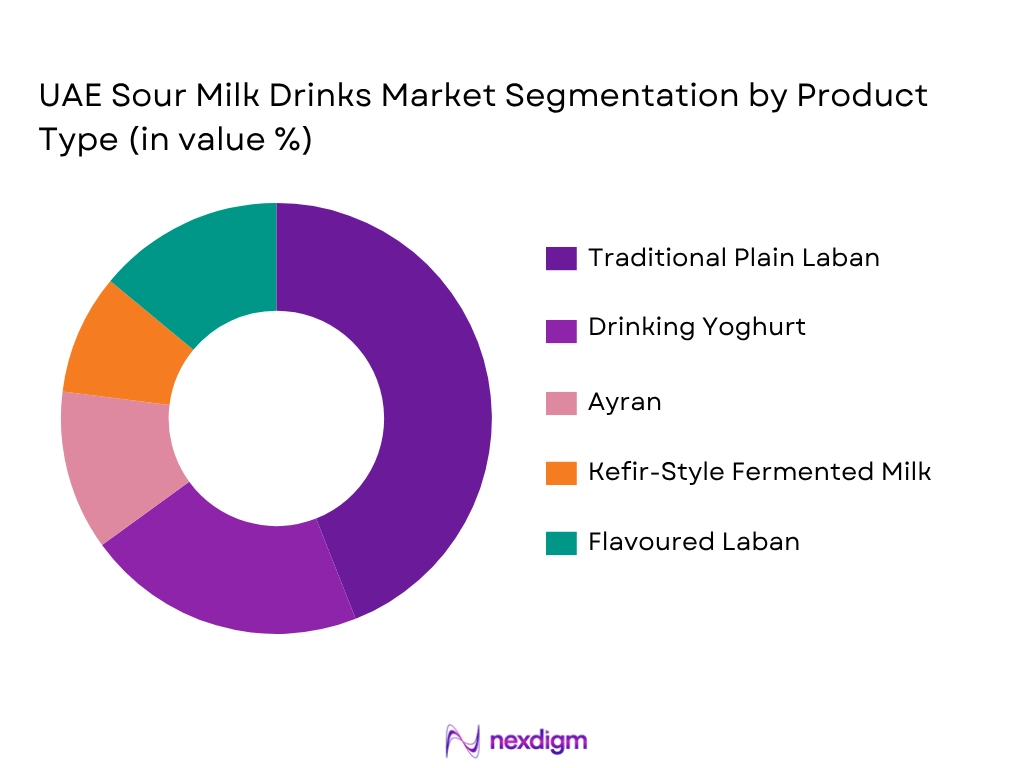
The UAE Sour Milk Drinks Market is segmented by product type into traditional plain laban, drinking yoghurt, ayran, kefir, flavoured laban and lassi/chaas-style drinks. Traditional plain laban holds the dominant position because it has the widest consumption base across Emirati households, GCC consumers, Arab expats and South Asian residents. It is purchased as a meal accompaniment, hydration drink and family refrigerator staple. Its dominance is reinforced by broad availability in 200 ml, 500 ml, 1 L and 2 L packs across hypermarkets, supermarkets, baqalas, cafeterias and institutional supply. Unlike kefir or drinking yoghurt, plain laban is not dependent only on health positioning; it is part of routine food consumption, especially with rice dishes, grills, cafeteria meals and Ramadan iftar/suhoor occasions.
By Distribution Channel
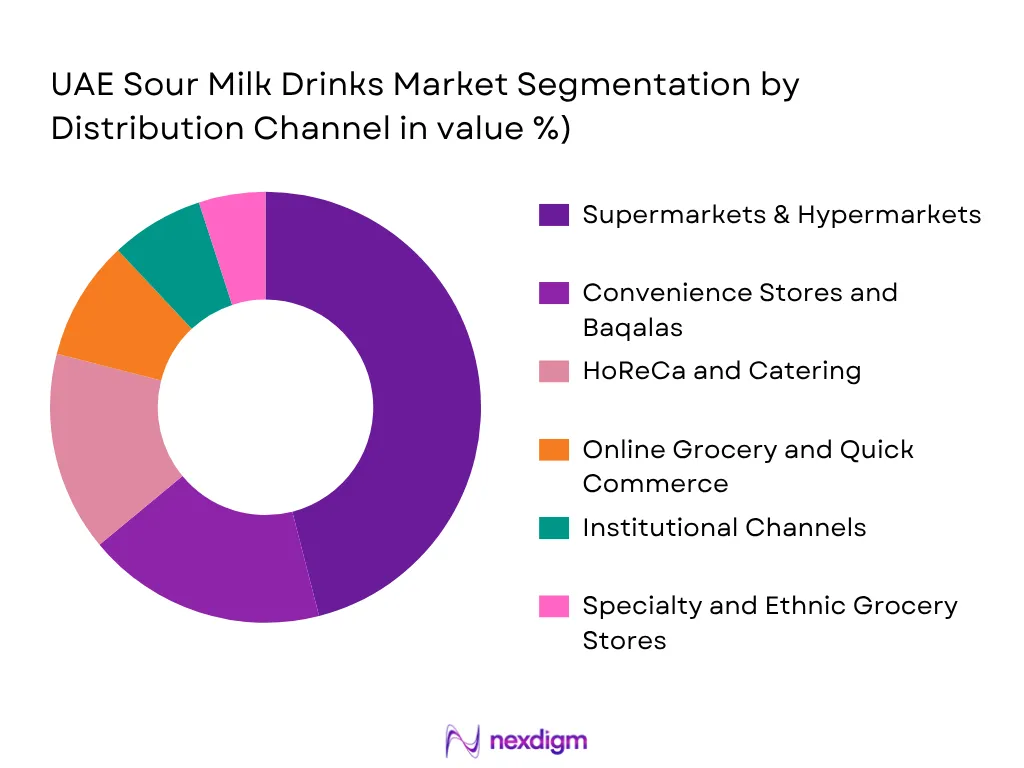
The UAE Sour Milk Drinks Market is segmented by distribution channel into hypermarkets and supermarkets, convenience stores and baqalas, HoReCa and catering, online grocery and quick commerce, institutional channels and specialty ethnic grocery outlets. Hypermarkets and supermarkets dominate because sour milk drinks require refrigerated shelf visibility, frequent replenishment and pack-size variety. Chains such as Lulu, Carrefour, Union Coop, Spinneys and Choithrams allow brands to display plain laban, flavoured laban, ayran, kefir and drinking yoghurt together in chilled dairy aisles, improving discovery and basket conversion. These stores also support promotional bundles, multipacks and family-size packs, which are important for laban. Convenience stores remain important for single-serve consumption, but they cannot match the SKU depth, chiller capacity and weekly grocery basket role of modern trade.
Competitive Landscape
The UAE Sour Milk Drinks Market is concentrated around local fresh dairy manufacturers, GCC dairy exporters and multinational yoghurt/probiotic players. Local companies such as Al Rawabi, Al Ain Farms and Marmum are advantaged by fresh milk sourcing, shorter replenishment cycles and UAE-made positioning. Regional players such as Almarai and Nadec compete through strong GCC supply chains, brand recall and scale. Multinationals such as Danone compete more selectively through probiotic and health-positioned drinking yoghurt formats. Al Rawabi’s official company profile states its journey began in 1989 in Dubai’s Al Khawaneej, while Al Ain Farms identifies itself as established in 1981 and as the first dairy company in the UAE. Marmum lists Dubai and Al Ain operations and identifies laban as part of its product range. Almarai states its journey began in 1977 and reports headquarters in Riyadh.
| Company | Establishment Year | Headquarters | Sour Milk Drinks Portfolio | UAE Route-to-Market | Cold-Chain Strength | Key Pack Formats | Functional/Health Positioning | Competitive Positioning |
| Al Rawabi Dairy | 1989 | Dubai, UAE | ~ | ~ | ~ | ~ | ~ | ~ |
| Al Ain Farms | 1981 | Al Ain, Abu Dhabi, UAE | ~ | ~ | ~ | ~ | ~ | ~ |
| Marmum Dairy Farm | 1984 | Dubai, UAE | ~ | ~ | ~ | ~ | ~ | ~ |
| NFPC / Lacnor / Laban Up | 1971 | Abu Dhabi, UAE | ~ | ~ | ~ | ~ | ~ | ~ |
| Almarai | 1977 | Riyadh, Saudi Arabia | ~ | ~ | ~ | ~ | ~ | ~ |
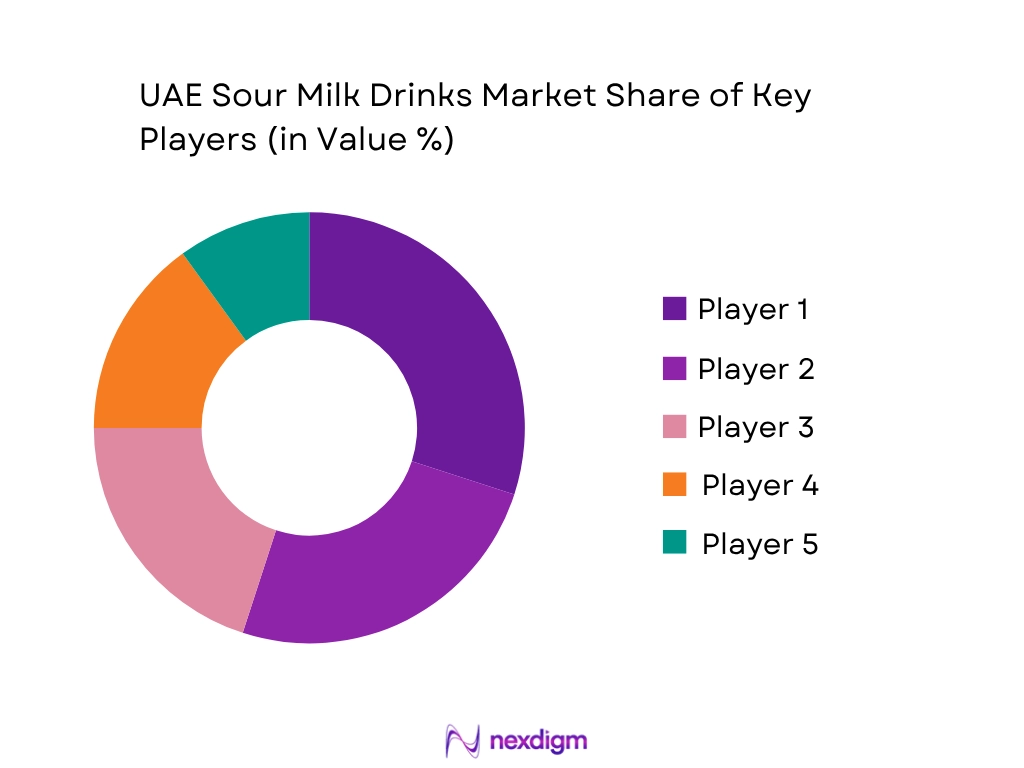
UAE Sour Milk Drinks Market Analysis
Growth Drivers
Health and Wellness
Health and wellness is a core growth driver for the UAE Sour Milk Drinks Market because laban, kefir, ayran and drinking yoghurt sit at the intersection of daily dairy consumption, hydration and better-for-you snacking. The UAE had 10,986,400 residents in 2024, giving chilled fermented dairy brands a large urban consumer base for everyday household and on-the-go consumption. The country’s GDP per capita stood at USD 50,273.5 in 2024, supporting consumer ability to purchase premium dairy formats such as probiotic laban, fortified drinking yoghurt and kefir. The World Bank also reports UAE life expectancy at 83 years in 2024, reinforcing the relevance of wellness-led food choices among consumers and policymakers. For sour milk drink brands, this supports portfolio movement beyond plain laban toward products positioned around protein, calcium, digestive comfort, reduced sugar and clean-label ingredients. High digital access also strengthens product discovery, as 100 people out of every 100 were internet users in the UAE in 2024, supporting online grocery, quick-commerce dairy replenishment and digital health communication around fermented dairy.
Digestive Health
Digestive health supports the UAE Sour Milk Drinks Market because fermented dairy drinks are naturally aligned with gut-friendly positioning, especially in kefir, probiotic drinking yoghurt and cultured laban. The UAE’s consumer base is large and highly urban, with 10,986,400 residents recorded in 2024 and an IMF population projection of 11.47 million people for 2026, creating a wider base for repeat-purchase dairy beverages. Urban lifestyles, eating out and convenience consumption increase the relevance of ready-to-drink fermented dairy products that can be consumed with meals or as a snack. Dubai and Abu Dhabi are particularly important because foodservice and grocery ecosystems are dense: UAE official statistics cited in a food-sector country profile indicate over 30,000 food outlets across the country, with Dubai accounting for around 18,000 outlets when the stated Dubai concentration is applied. This gives laban and ayran strong meal-pairing relevance in cafeterias, Arabic restaurants, Turkish food outlets, South Asian restaurants and catering kitchens. For manufacturers, digestive health messaging is commercially relevant because it differentiates kefir and probiotic drinking yoghurt from standard dairy drinks while retaining the cultural acceptance of laban.
Market Challenges
Cold-Chain Cost
Cold-chain cost is a structural challenge in the UAE Sour Milk Drinks Market because fresh laban, ayran, kefir and drinking yoghurt require refrigerated storage from factory dispatch to retail chillers, baqalas, quick-commerce dark stores and HoReCa kitchens. The UAE’s climate and energy intensity make chilled logistics operationally demanding: Federal Competitiveness and Statistics Centre data, sourced from the Ministry of Energy and Infrastructure, reports national electricity consumption of 155,279.2 GWh in 2024. This indicates the scale of national cooling and power dependence in which refrigerated dairy distribution operates. The challenge is sharper for sour milk drinks because these products compete on freshness and taste, requiring consistent temperature control across warehouses, vehicles and store-level chillers. Weather exposure increases handling risk during unloading, especially for small-format stores and high-frequency replenishment routes. Reported UAE summer conditions also reached 50.8°C in Abu Dhabi and Al Ain in 2024, based on National Centre of Meteorology reporting cited by regional media, making route discipline and insulated handling essential. For dairy companies, the issue is not only logistics efficiency but also product integrity, wastage prevention and the ability to serve fragmented convenience-store demand without compromising chilled quality.
Short Shelf Life
Short shelf life is a key challenge for the UAE Sour Milk Drinks Market because fresh laban and chilled fermented dairy beverages need rapid rotation, accurate demand forecasting and strict expiry management. The UAE has a sizeable and fast-moving consumer base of 10,986,400 residents in 2024, while Dubai alone recorded 4,248,200 individuals at the end of 2024, creating dense demand but also high replenishment pressure in modern retail, baqalas and foodservice outlets. The challenge is intensified by the UAE’s large foodservice footprint: official statistics cited in a food-sector profile indicate over 30,000 food outlets nationwide, including approximately 18,000 outlets in Dubai when the stated Dubai concentration is applied. These outlets create recurring demand for laban and ayran, but they also require distributors to manage smaller drops, variable daily consumption and strict chilled handling. For retailers, short shelf life affects chiller allocation, discounting near expiry and SKU rationalization between plain laban, flavoured laban, ayran, kefir and drinking yoghurt. For manufacturers, the challenge is balancing family-pack availability with single-serve freshness, especially during Ramadan, summer and tourism-driven foodservice peaks.
Opportunities
Reduced Sugar
Reduced sugar is a future-facing opportunity in the UAE Sour Milk Drinks Market because flavoured laban, drinking yoghurt and kids’ dairy drinks can be reformulated without losing the everyday role of fermented dairy. The UAE’s high-income consumer base supports premium healthier variants: World Bank data places GDP per capita at USD 50,273.5 in 2024, while total GDP reached USD 552.32 billion in 2024. These macroeconomic conditions allow brands to develop higher-value reduced-sugar SKUs targeted at families, office workers, gym users and parents buying lunchbox dairy drinks. The public-health policy environment also supports reformulation. The UAE Government’s National Nutrition Strategy page, updated in 2024, states that the strategy aims to create sustainable nutritional systems and safe supportive environments for nutrition across age groups. For sour milk drink brands, this creates room for reduced-sugar flavoured laban, fruit drinking yoghurt with cleaner labels and children-focused multipacks with improved nutritional positioning. The opportunity is especially relevant in Dubai and Abu Dhabi, where modern trade, online grocery and quick commerce can communicate product claims clearly through digital shelves and nutrition filters. Reduced sugar also helps brands defend against substitution by bottled water, juices and carbonated drinks while retaining the functional appeal of cultured dairy.
Lactose-Free
Lactose-free sour milk drinks represent a premium growth opportunity in the UAE because the market serves a diverse population with different digestive tolerances, food habits and dairy-consumption routines. The country’s resident base reached 10,986,400 people in 2024, and IMF projects 11.47 million people in 2026, giving manufacturers a growing base for specialized dairy formats. The UAE’s high urbanization and income profile supports products positioned around digestive comfort, especially lactose-free laban, lactose-free drinking yoghurt and kefir-style beverages. World Bank data shows GDP per capita at USD 50,273.5 in 2024, which supports the commercial viability of premium functional dairy SKUs. Lactose-free formats are particularly relevant in modern grocery and quick-commerce channels because consumers can actively search for dietary-need products online. The same year, the UAE recorded 100 internet users per 100 people, strengthening digital discovery and repeat purchase for niche health-led dairy products. For producers, lactose-free sour milk drinks offer a way to expand beyond basic plain laban and compete on tolerance, convenience and functional value. The opportunity also fits HoReCa needs where hotels, airlines and premium cafés increasingly require inclusive menu options for international consumers.
Future Outlook
The UAE Sour Milk Drinks Market is expected to expand steadily as laban, ayran, kefir and drinking yoghurt benefit from health-led dairy consumption and strong chilled retail penetration. Functional claims such as probiotics, digestive wellness, high protein, reduced sugar and lactose-free will shape premium product launches. Dubai and Abu Dhabi will remain core demand centers because of modern trade, HoReCa and quick commerce. Family-size laban and single-serve convenience packs will continue to grow together. The market’s future will be defined by three commercial shifts. First, plain laban will remain the volume anchor, but premium kefir and probiotic drinking yoghurt will raise value per liter. Second, quick-commerce platforms will increase chilled impulse replenishment, especially in dense urban districts. Third, HoReCa and catering buyers will remain important for bulk laban and ayran, particularly across cafeterias, hotels, Arabic restaurants, South Asian foodservice and institutional kitchens.
Major Players
- Al Rawabi Dairy
- Al Ain Farms
- Marmum Dairy Farm
- National Food Products Company
- Lacnor
- Laban Up
- Almarai
- Nadec
- Nada Dairy
- Baladna
- Hayatna / National Dairy
- Unikai Foods
- Danone
- Yoplait
- Balade Farms
Key Target Audience
- Dairy product manufacturers
- Fermented dairy and probiotic beverage brands
- Hypermarket and supermarket chains
- Online grocery and quick-commerce platforms
- HoReCa procurement teams
- Institutional foodservice buyers
- Investments and venture capitalist firms
- Government and regulatory bodies: Ministry of Climate Change and Environment, Emirates Authority for Standardization and Metrology, Abu Dhabi Agriculture and Food Safety Authority, Dubai Municipality Food Safety Department
Research Methodology
Step 1: Identification of Key Variables
The initial phase involves constructing an ecosystem map of the UAE Sour Milk Drinks Market, covering dairy farms, laban manufacturers, yoghurt drink producers, importers, distributors, grocery retailers, HoReCa buyers and regulators. The key variables include product type, pack size, chilled distribution, retail penetration, price per liter, consumption occasion and emirate-level demand concentration.
Step 2: Market Analysis and Construction
Historical market structure is assessed using dairy, yoghurt and yoghurt-and-sour-milk benchmarks, supported by retail shelf checks and product mapping. The analysis evaluates the contribution of plain laban, ayran, kefir, drinking yoghurt and flavoured fermented drinks. Bottom-up sizing is constructed through SKU-level pricing, estimated throughput by channel, pack-size movement and cold-chain coverage.
Step 3: Hypothesis Validation and Expert Consultation
Market hypotheses are validated through interviews with dairy manufacturers, chilled distributors, category managers, HoReCa procurement teams and foodservice suppliers. These consultations are used to verify demand intensity, channel profitability, promotional patterns, pack-size preferences and brand strength. Inputs are cross-checked against public dairy market sources and visible retail availability.
Step 4: Research Synthesis and Final Output
The final phase consolidates secondary research, primary insights and bottom-up market modelling into a validated market view. Segment shares, growth outlook and competitive positioning are synthesized through triangulation. The output provides a structured view of market size, product segmentation, channel dynamics, competitive landscape, future opportunities and buyer-specific recommendations.

- Executive Summary
- Research Methodology (Market Definition, Sour Milk Drink Inclusion Criteria, Laban/Ayran/Kefir Classification, Value and Volume Sizing, Retail Audit, HoReCa Demand Mapping, Import Tracking, Cold-Chain Validation, Primary Interviews, Limitations)

- Definition and Scope
- Market Genesis and Evolution
- UAE Fermented Dairy Consumption Landscape
- Role of Laban in Emirati, Arab, South Asian and Expat Dietary Patterns
- Business Cycle and Seasonality
- Value Chain and Supply Chain Analysis
- Cold-Chain Infrastructure and Chilled Route-to-Market
- Import Dependence vs Local Dairy Manufacturing
- Retail Shelf-Space and Chiller Allocation Dynamics
- UAE Regulatory and Halal Compliance Landscape

- Growth Drivers(Health and Wellness, Digestive Health, Expat Food Habits, Ramadan Consumption, Hot Climate, HoReCa Expansion)
- Market Challenges (Cold-Chain Cost, Short Shelf Life, Raw Milk Supply, Price Discounting, Import Competition, SKU Cannibalization)
- Opportunities (Reduced Sugar, Lactose-Free, High-Protein, Functional Probiotic, Premium Ayran, Ethnic Lassi, Sustainable Packaging)
- Trends (Probiotic Positioning, Clean Label, Local Sourcing, Fortification, Value Multipacks, Quick-Commerce Packs, Premium Imported Kefir)
- Government Regulation (UAE Food Safety Law, Halal Certification, Dairy Product Conformity, Labelling, Additives, Shelf-Life Declaration, Cold-Chain Compliance)
- SWOT Analysis (Local Dairy Strength, Functional Dairy Opportunity, Shelf-Life Weakness, Import Threat)
- Stakeholder Ecosystem (Dairy Farms, Milk Processors, Culture Suppliers, Packaging Vendors, Cold-Chain Logistics, Retailers, HoReCa Buyers, Regulators)
- Porter’s Five Forces (Supplier Power, Buyer Power, Competitive Rivalry, Substitute Threat, New Entrant Threat)
- Pricing and Promotion Analysis (AED per Liter, Pack-Size Ladder, Discount Frequency, Multipack Offers, Premium Kefir Pricing)
- Route-to-Market Analysis (Direct Store Delivery, Distributor-Led Supply, Chilled Warehousing, Last-Mile Grocery Delivery)
- Import-Export and Trade Flow Analysis (Saudi, Qatar, Turkey, Europe, Local Production, Re-Export Potential)

- By Value (2020-2025)
- By Volume (2020-2025)
- By Average Retail Price per Liter
- By Per Capita Consumption (2020-2025)
- By Off-Trade and On-Trade Sales Contribution (2020-2025)
- By Local Production and Import Contribution (2020-2025)

- By Product Type (In Value%)
Traditional Plain Laban
Ayran
Kefir
Drinking Yoghurt
Flavoured Laban
Lassi and Chaas-Style Fermented Dairy Drinks - By Fat Content (In Value%)
Full-Fat Sour Milk Drinks
Low-Fat Sour Milk Drinks
Skimmed/Fat-Free Sour Milk Drinks
Lactose-Free Sour Milk Drinks
Fortified Sour Milk Drinks - By Packaging Format (In Value%)
PET Bottles
HDPE Bottles
Tetra/UHT Packs
Multipacks
Portion Cups - By Pack Size (In Value%)
180 ml–250 ml
300 ml–500 ml
1 L
2 L and Above
Bulk Foodservice Packs - By Distribution Channel (In Value%)
Hypermarkets and Supermarkets
Convenience Stores and Baqalas
Online Grocery and Marketplace Platforms
Quick Commerce
HoReCa
Institutional Channels - By Consumer Group (In Value%)
Emirati and GCC Consumers
Arab Expat Consumers
South Asian Expat Consumers
Western Expat Consumers
Kids and Family Households - By Usage Occasion (In Value%)
Meal Accompaniment
Breakfast and Snacking
Hydration and Refreshment
Ramadan Iftar and Suhoor
Fitness and Digestive Wellness - By Emirate (In Value%)
Dubai
Abu Dhabi
Sharjah
Northern Emirates

- Market Share of Major Players (Value Share, Volume Share, Chilled Laban Share, Functional Kefir Share, Retail Channel Share, Product Cluster)
- Cross Comparison Parameters (Company Overview, Sour Milk Drink Portfolio Breadth, Laban/Ayran/Kefir SKU Count, Pack-Size Architecture, AED per Liter Price Ladder, Chilled Distribution Reach, Shelf-Life and Cold-Chain Capability, Retail Chiller Share, HoReCa Contract Penetration, Probiotic/Functional Claim Strength, Local Milk Sourcing, Halal/Food Safety Certification, Promotional Intensity, Export/Re-Export Presence, Recent Product Innovation)
- SWOT Analysis of Major Players (Brand Equity, Local Production, Import Dependence, Functional Dairy Capability)
- Pricing Analysis Basis SKUs for Major Players(180 ml, 200 ml, 330 ml, 500 ml, 1 L, 2 L, Multipack, Bulk Foodservice Packs)
- Distribution Benchmarking (Modern Trade, Traditional Trade, Baqalas, Online Grocery, Quick Commerce, HoReCa, Institutional Sales)
- Detailed Profiles of Major Companies
Al Rawabi Dairy Co. L.L.C.
Al Ain Farms Group
Marmum Dairy Farm L.L.C.
National Food Products Company
Almarai Company
National Agricultural Development Company
Nada Dairy
Baladna Food Industries
Hayatna / National Dairy L.L.C.
Unikai Foods PJSC
Danone
Nestlé
Yoplait
Lactel
Balade Farms Food Industries L.L.C.

- Demand and Utilization (Daily Household Consumption, Meal Pairing, Ramadan Demand, HoReCa Beverage Use)
- Purchasing Power and Basket Behaviour (Price per Liter, Family Pack Buying, Premium Functional SKUs, Promo Sensitivity)
- Needs, Desires and Pain Point Analysis (Freshness, Taste, Shelf Life, Gut Health, Sugar Level, Pack Convenience)
- Decision-Making Process (Brand Trust, Local Origin, Halal Assurance, Price, Availability, Health Claims)
- Buyer Persona Mapping (Family Shopper, Health Seeker, South Asian Expat, HoReCa Procurement Manager, Convenience Buyer)

- By Value (2026-2035)
- By Volume (2026-2035)
- By Average Retail Price per Liter (2026-2035)
- By Per Capita Consumption (2026-2035)
- By Chilled vs Ambient Sour Milk Drinks (2026-2035)
- By Local Production vs Import Contribution (2026-2035)


 Request a Sample
 Ask for Customization
 Get a Quote
 Enquire Now