
 Download PDF
 Download PDF
Market Overview
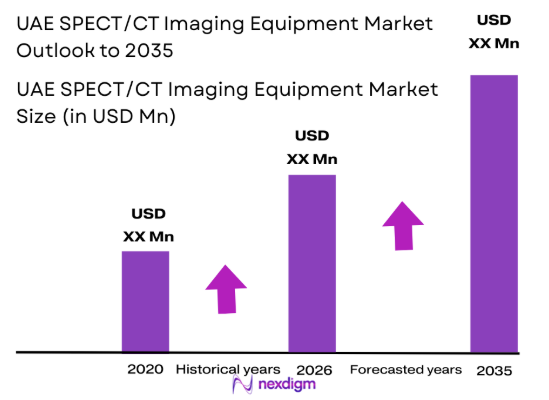
The UAE SPECT/CT Imaging Equipment market is projected to reach USD ~ million based on a recent historical assessment. The growth of the market is driven by the increasing demand for advanced diagnostic imaging systems, enhanced by the rising awareness of early disease detection and government investments in healthcare infrastructure. Technological advancements, including the integration of SPECT and CT technologies, further propel the market, offering improved diagnostic precision for various conditions, particularly in oncology and cardiology.
The dominant countries driving the UAE SPECT/CT Imaging Equipment market are the UAE and Saudi Arabia. The UAE leads the market due to its well-established healthcare sector, increasing medical tourism, and investments in modern healthcare facilities. Saudi Arabia follows closely due to its significant healthcare expansion projects and adoption of advanced imaging technologies. Both nations’ growing emphasis on improving healthcare services and diagnostic capabilities contributes to their market dominance.
Market Segmentation
By System Type
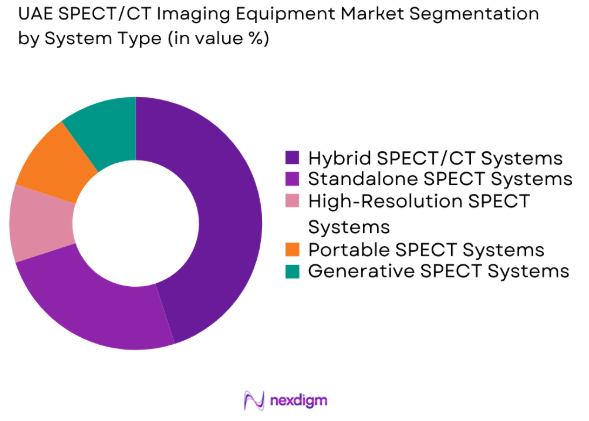
The UAE SPECT/CT Imaging Equipment market is segmented by system type into hybrid SPECT/CT systems, standalone SPECT systems, high-resolution SPECT systems, portable SPECT systems, and generative SPECT systems. Recently, hybrid SPECT/CT systems have a dominant market share due to their ability to combine the functional imaging of SPECT with the detailed anatomical images of CT. This combination enhances diagnostic accuracy, especially in oncology, cardiology, and neurology, making hybrid systems the preferred choice among healthcare providers and driving their widespread adoption.
By Platform Type
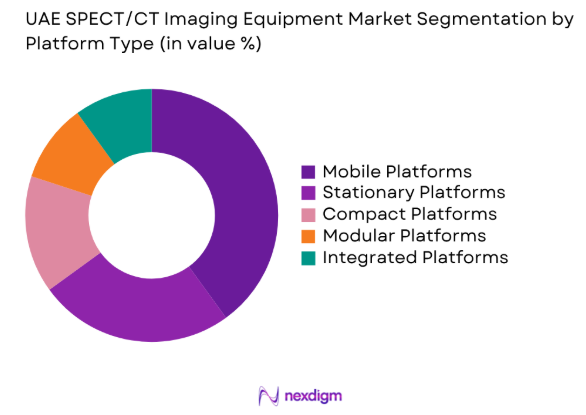
The UAE SPECT/CT Imaging Equipment market is segmented by platform type into mobile platforms, stationary platforms, compact platforms, modular platforms, and integrated platforms. Mobile platforms dominate the market due to their flexibility and ability to be used in multiple settings, including outpatient clinics, hospitals, and mobile diagnostic units. The growing demand for on-the-go diagnostic services, particularly in rural and underserved areas, further supports the dominance of mobile platforms in the region.
Competitive Landscape
The UAE SPECT/CT Imaging Equipment market is highly competitive, with several global players operating in the region. Key players are focusing on product innovations, strategic partnerships, and expanding their market presence to strengthen their competitive positions. The market is witnessing consolidation as companies collaborate with healthcare providers to offer customized imaging solutions, enhancing their market reach.
| Company Name | Establishment Year | Headquarters | Technology Focus | Market Reach | Key Products | Revenue | Additional Parameter |
| GE Healthcare | 1892 | USA | ~ | ~ | ~ | ~ | ~ |
| Siemens Healthineers | 1847 | Germany | ~ | ~ | ~ | ~ | ~ |
| Philips Healthcare | 1891 | Netherlands | ~ | ~ | ~ | ~ | ~ |
| Canon Medical Systems | 1933 | Japan | ~ | ~ | ~ | ~ | ~ |
| Hitachi Medical Systems | 1949 | Japan | ~ | ~ | ~ | ~ | ~ |
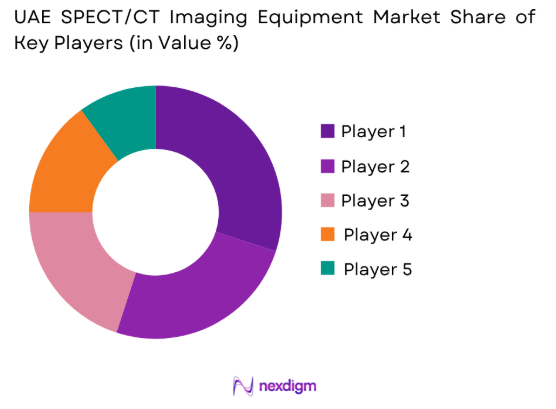
UAE SPECT/CT Imaging Equipment Market Analysis
Growth Drivers
Technological Advancements in Imaging Systems
Technological advancements in SPECT/CT imaging systems play a significant role in driving the growth of the UAE market. The integration of SPECT and CT technologies enhances diagnostic accuracy, particularly for diseases like cancer, cardiovascular conditions, and neurological disorders. Continuous improvements in high-resolution imaging and the incorporation of AI for data analysis further boost the demand for these systems. Additionally, the UAE’s growing healthcare investments provide strong support for adopting advanced technologies. Hospitals and diagnostic centers seek cutting-edge solutions to improve diagnostic capabilities, meet rising patient demand, and offer more precise and timely diagnoses. This trend accelerates the adoption of SPECT/CT systems, making them a preferred choice for healthcare providers in the region.
Government Healthcare Investments
The UAE government’s ongoing investment in healthcare infrastructure is crucial in driving the demand for SPECT/CT imaging equipment. Through initiatives like Vision 2021, which prioritizes healthcare development, there has been increased funding for both public and private healthcare sectors. This financial support enables the procurement of advanced diagnostic technologies, such as SPECT/CT systems, to improve disease detection and treatment planning. Furthermore, the government’s focus on expanding medical tourism enhances the demand for high-quality imaging systems, attracting international patients seeking world-class healthcare services. These efforts significantly contribute to the growth of the SPECT/CT imaging market in the UAE, positioning the country as a hub for advanced medical technologies.
Market Challenges
High Cost of SPECT/CT Systems
The high initial investment and operational costs of SPECT/CT systems pose significant challenges in the UAE market. These advanced systems require considerable financial resources for procurement, maintenance, installation, and training, making them inaccessible to smaller healthcare providers and facilities. The cost of servicing and upgrading equipment further increases the financial burden, especially for institutions in remote or underserved areas. While government healthcare initiatives support technology adoption, the overall high cost remains a barrier, limiting widespread market penetration. This challenge is particularly pronounced in public healthcare settings, where budget constraints and limited funding make it difficult to adopt such expensive diagnostic technologies.
Regulatory and Compliance Barriers
The UAE SPECT/CT imaging equipment market faces regulatory challenges that can delay the introduction of new technologies. The approval process for medical devices and diagnostic equipment requires thorough testing and certification, leading to extended lead times for market entry. Manufacturers must also comply with both international standards and local regulatory frameworks, adding complexity to the process. These regulatory barriers can hinder market growth, as healthcare providers and equipment manufacturers must navigate lengthy approval processes before new systems can be deployed. As a result, the introduction of advanced diagnostic technologies is slowed, impacting the pace at which healthcare providers can offer state-of-the-art imaging solutions.
Opportunitis
Expansion of Medical Tourism
The UAE’s growing reputation as a hub for medical tourism presents significant opportunities for the SPECT/CT imaging equipment market. The government’s strategic focus on expanding the healthcare sector, combined with world-class facilities and skilled professionals, has made the UAE a preferred destination for patients seeking advanced diagnostic and therapeutic services. As the demand for high-quality healthcare continues to rise, particularly for complex diagnostic procedures, the need for advanced imaging equipment, such as SPECT/CT systems, is expected to increase. This trend provides a significant opportunity for manufacturers to supply state-of-the-art diagnostic solutions to meet the needs of medical tourists and local patients alike.
Technological Integration and AI Adoption
The integration of artificial intelligence (AI) in SPECT/CT imaging systems presents a significant growth opportunity for the market. AI-driven solutions are increasingly being used to improve diagnostic accuracy and optimize workflow in imaging systems. These technologies assist healthcare professionals in detecting abnormalities, such as tumors or cardiovascular conditions, with greater precision and speed, leading to more accurate diagnoses. The growing interest in AI applications within the UAE healthcare sector creates a favorable environment for the adoption of AI-powered SPECT/CT systems. By incorporating AI, healthcare providers can enhance their diagnostic capabilities, reduce the time required for analysis, and offer more efficient and reliable services. This trend is expected to drive the demand for advanced imaging solutions across the region.
Future Outlook
The future outlook for the UAE SPECT/CT Imaging Equipment market is positive, with significant growth expected over the next five years. Technological advancements, particularly in the integration of AI and machine learning, will continue to enhance the diagnostic capabilities of SPECT/CT systems. Moreover, government investments in healthcare infrastructure and medical tourism will drive the demand for state-of-the-art diagnostic equipment. The market is expected to witness a steady increase in adoption as healthcare providers strive to offer advanced, accurate, and timely diagnostic solutions to meet the growing healthcare needs of the population.
Major Players
- GE Healthcare
- Siemens Healthineers
- Philips Healthcare
- Canon Medical Systems
- Hitachi Medical Systems
- Medtronic
- Carestream Health
- EsaoteS.p.A
- NeusoftMedical Systems
- United Imaging Healthcare
- Shimadzu Corporation
- NeuroLogicaCorporation
- Samsung Medison
- Mindray
- Hitachi High-Technologies
Key Target Audience
- Investments and venture capitalist firms
- Government and regulatory bodies
- Hospitals and diagnosticcenters
- Medical equipment distributors
- Healthcare providers
- Imaging service providers
- Private healthcare facilities
- Research institutions
Research Methodology
Step 1: Identification of Key Variables
The first step in our research methodology involves identifying the key market variables that influence the demand, supply, and growth of the UAE SPECT/CT Imaging Equipment market. These variables include technological advancements, regulatory frameworks, pricing models, and adoption rates across different segments.
Step 2: Market Analysis and Construction
Our market analysis involves evaluating historical data, current trends, and future projections to construct a comprehensive view of the market landscape. This includes market sizing, segmentation analysis, and demand forecasting based on a variety of factors such as healthcare infrastructure and technological adoption rates.
Step 3: Hypothesis Validation and Expert Consultation
We validate our hypotheses and findings through expert consultations with key stakeholders in the medical imaging sector, including manufacturers, healthcare providers, and industry regulators. These consultations provide additional insights into market dynamics and help refine our models.
Step 4: Research Synthesis and Final Output
The final step involves synthesizing all collected data, insights, and expert opinions into a cohesive report. This includes generating actionable insights for market participants and decision-makers, along with strategic recommendations to leverage growth opportunities and mitigate challenges.

- Executive Summary
- Research Methodology (Definitions, Scope, Industry Assumptions, Market Sizing Approach, Primary & Secondary Research Framework, Data Collection & Verification Protocol, Analytic Models & Forecast Methodology, Limitations & Research Validity Checks)

- Market Definition and Scope
- Value Chain & Stakeholder Ecosystem
- Regulatory / Certification Landscape
- Sector Dynamics Affecting Demand
- Strategic Initiatives & Infrastructure Growth

- Growth Drivers
Advancements in Imaging Technology
Rising Demand for Early Diagnosis
Government Healthcare Initiatives - Market Challenges
High Equipment Costs
Lack of Skilled Professionals
Regulatory Barriers - Market Opportunities
Increasing Demand for Non-invasive Procedures
Expansion of Healthcare Infrastructure
Integration of AI in Imaging Solutions - Trends
Adoption of AI and Machine Learning
Shift Towards Hybrid Imaging Systems
Growth of Telemedicine - Government Regulations
- SWOT Analysis of Key Competitors
- Porter’s Five Forces

- By Market Value, 2020-2025
- By Installed Units, 2020-2025
- By Average System Price, 2020-2025
- By System Complexity Tier, 2020-2025

- By System Type (In Value%)
Generative SPECT Systems
Hybrid SPECT/CT Systems
Standalone SPECT Systems
High-Resolution SPECT Systems
Portable SPECT Systems - By Platform Type (In Value%)
Mobile Platforms
Stationary Platforms
Compact Platforms
Modular Platforms
Integrated Platforms - By Fitment Type (In Value%)
Fixed Systems
Portable Systems
Modular Systems
Standalone Units
Integrated Systems - By End User Segment (In Value%)
Hospitals
Diagnostic Centers
Research Institutions
Healthcare Providers
Imaging Service Providers - By Procurement Channel (In Value%)
Direct Procurement
Government Procurement
Private Sector Procurement
Third-party Distributors
Online Procurement Platforms

- Market Share Analysis
- Cross Comparison Parameters (System Type, Platform Type, Procurement Channel, End User Segment, Fitment Type, Technology Integration, Market Reach, Pricing Model, Service Coverage, Product Innovation)
- SWOT Analysis of Key Competitors
- Pricing & Procurement Analysis
- Key Players
GE Healthcare
Siemens Healthineers
Philips Healthcare
Canon Medical Systems
Hitachi Medical Systems
Carestream Health
Medtronic
Guerbet Group
Esaote S.p.A
Neusoft Medical Systems
United Imaging Healthcare
Shimadzu Corporation
NeuroLogica Corporation
Samsung Medison
Mindray

- Increasing Demand from Hospitals
- Rising Adoption in Diagnostic Centers
- Research Institutions Seeking Advanced Imaging
- Expanding Market for Healthcare Providers

- Forecast Market Value, 2026-2035
- Forecast Installed Units, 2026-2035
- Price Forecast by System Tier, 2026-2035
- Future Demand by Platform, 2026-2035


 Request a Sample
 Ask for Customization
 Get a Quote
 Enquire Now