
 Download PDF
Market Overview
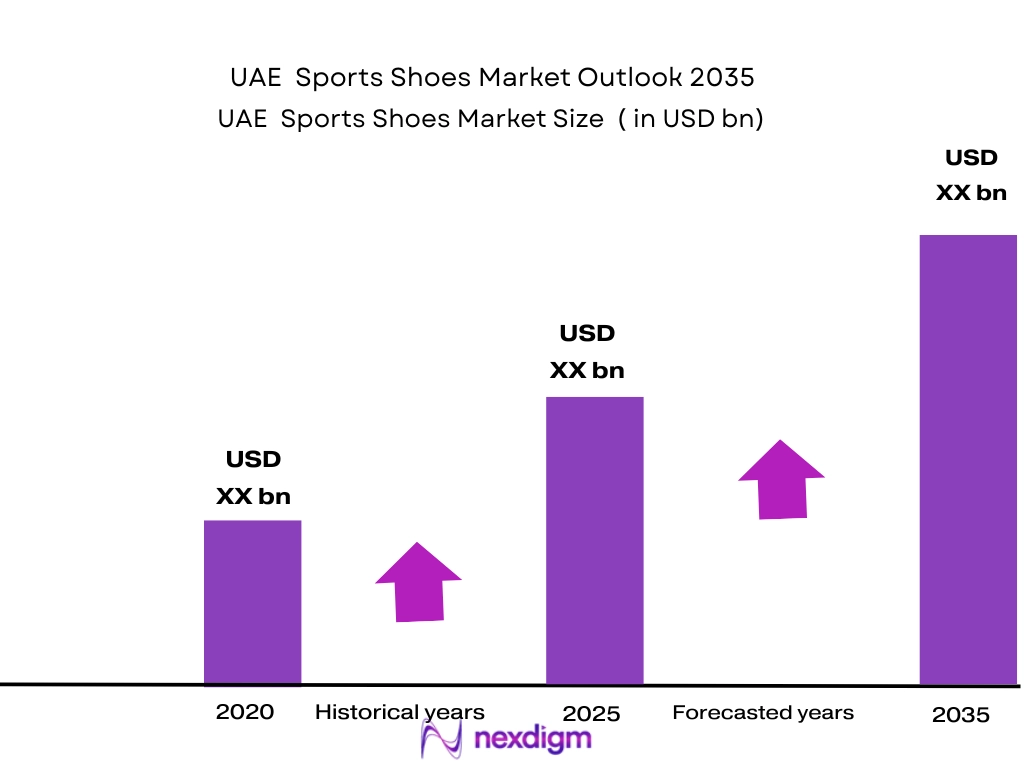
The UAE sports shoes market is valued at USD ~ billion, benchmarked against the country’s wider footwear market value of USD 1.26 billion and the athletic footwear category’s retail contribution within performance, training, sneaker, and athleisure footwear. The market is driven by higher gym penetration, premium sneaker demand, tourism-led retail spending, and organized fitness participation. The broader UAE footwear market is forecast to grow at 3.95% CAGR, while the Middle East and Africa athletic footwear market is expected to grow at 5.32% CAGR through the forecast window.
Dubai and Abu Dhabi dominate the UAE sports shoes market due to their concentration of malls, international sports retailers, tourist footfall, high-income residents, and organized fitness infrastructure. Dubai welcomed 17.15 million international overnight visitors before reaching 18.72 million in the next annual benchmark, strengthening sportswear sales through malls, airports, and brand flagships. The UAE economy also reached USD 552.32 billion in current GDP, supporting premium footwear consumption, while Dubai’s airport handled 86.9 million passengers in the prior benchmark and 44.9 million passengers in the first-half benchmark.
Market Segmentation
By Product Type
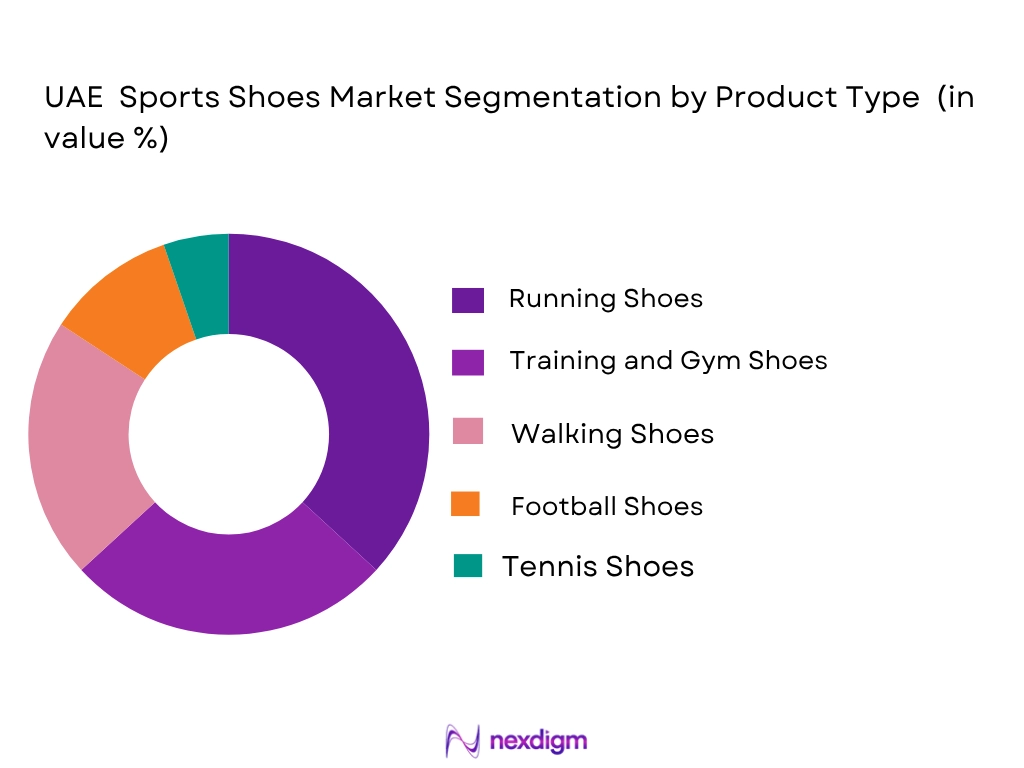
UAE Sports Shoes Market is segmented by product type into running shoes, training and gym shoes, lifestyle/athleisure sports shoes, football and court sports shoes, walking shoes, and others. Recently, running shoes have a dominant market share in the UAE under the product type segmentation, due to their broader use beyond professional running. Consumers use running shoes for gym workouts, casual office wear, airport travel, walking, and lifestyle dressing, making the category less dependent on seasonal sports participation. Major brands such as Nike, Adidas, ASICS, New Balance, and Hoka have expanded running-focused product lines with cushioning, lightweight uppers, and stability features. The dominance is also supported by Dubai’s fitness events, marathon culture, mall-based walking behavior during hot months, and strong premiumization in performance footwear. Running shoes are also easier to sell across gender and age groups compared with sport-specific footwear such as football boots or tennis shoes.
By Distribution Channel
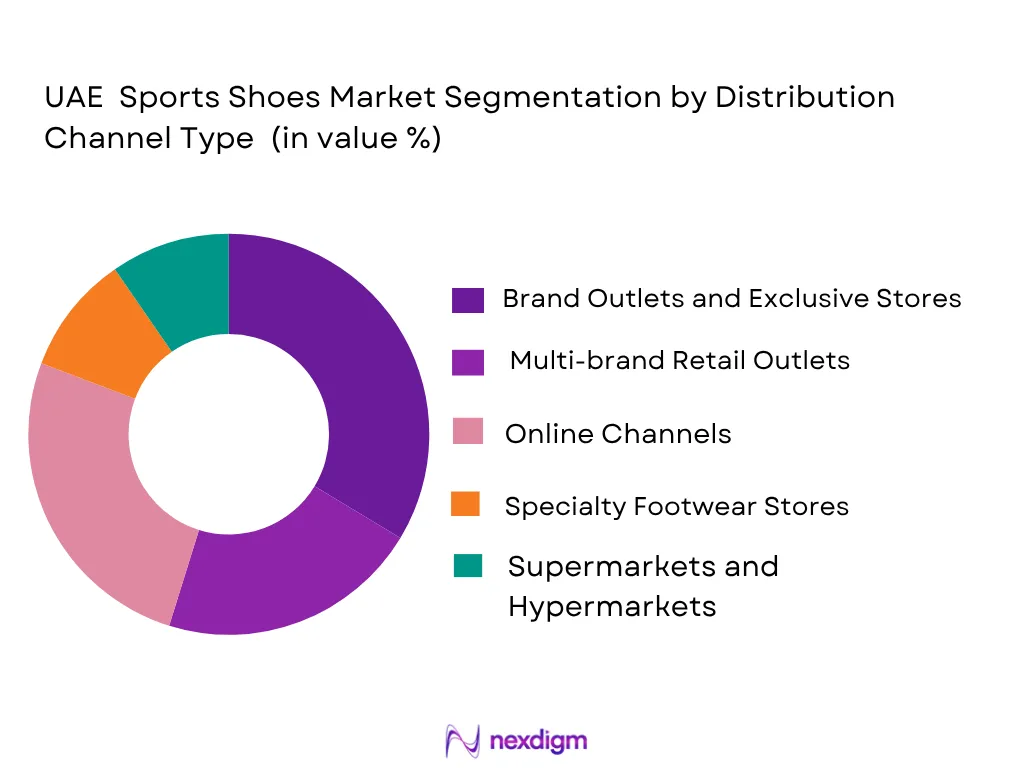
UAE Sports Shoes Market is segmented by distribution channel into multi-brand sports retail stores, brand outlets and exclusive stores, online channels, department stores and lifestyle retail, hypermarkets and supermarkets, and others. Recently, multi-brand sports retail stores have a dominant market share in the UAE under the distribution channel segmentation, primarily due to their ability to offer comparison-based purchasing across Nike, Adidas, Puma, Skechers, ASICS, New Balance, Under Armour, and other performance brands. Retail chains such as Sun & Sand Sports and Decathlon benefit from mall locations, wide price bands, in-store trials, product advisory, and access to both premium and mass consumers. UAE buyers often prefer trying footwear before purchase because comfort, fit, arch support, and size conversion differ across brands. Multi-brand retailers also benefit from tourists, family shoppers, promotional campaigns, and omnichannel fulfillment, which makes them more scalable than single-brand outlets.
Competitive Landscape
The UAE Sports Shoes Market is moderately consolidated, with global brands dominating premium and performance categories while regional retailers control consumer access through mall stores, franchise partnerships, and e-commerce platforms. Nike, Adidas, Puma, Skechers, and ASICS remain among the most visible brands across Dubai and Abu Dhabi, while Sun & Sand Sports, Decathlon, Namshi, Noon, and Amazon UAE influence distribution and discount-driven purchasing. Competitive advantage is shaped by brand equity, celebrity endorsements, comfort technology, inventory availability, retail footprint, and localized digital marketing
| Company | Establishment Year | Headquarters | Core Sports Shoe Focus | UAE Channel Strength | Price Positioning | Product Technology | Target Consumer Base | Competitive Advantage |
| Nike | 1964 | Beaverton, USA | ~ | ~ | ~ | ~ | ~ | ~ |
| Adidas | 1949 | Herzogenaurach, Germany | ~ | ~ | ~ | ~ | ~ | ~ |
| Puma | 1948 | Herzogenaurach, Germany | ~ | ~ | ~ | ~ | ~ | ~ |
| Skechers | 1992 | Manhattan Beach, USA | ~ | ~ | ~ | ~ | ~ | ~ |
| ASICS | 1949 | Kobe, Japan | ~ | ~ | ~ | ~ | ~ | ~ |
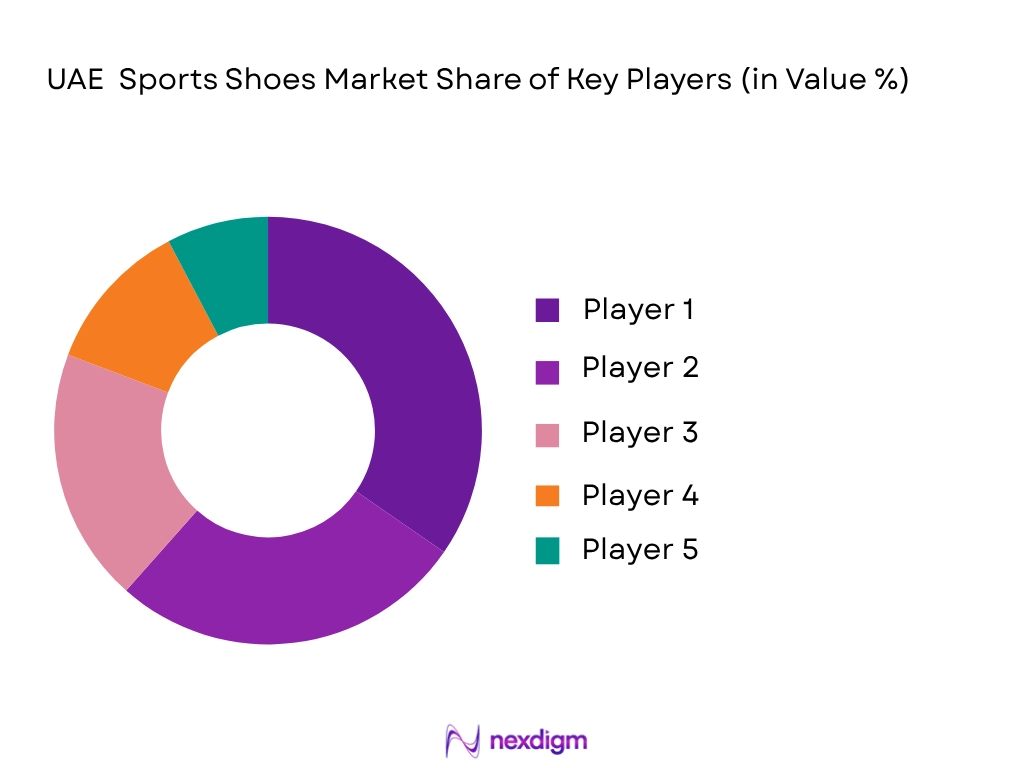
UAE Sports Shoes Market Analysis
Growth Drivers
Increasing Health and Fitness Awareness
Increasing health and fitness awareness is a major growth driver for the UAE sports shoes market. Consumers are becoming more focused on preventive healthcare, daily activity, weight management, and active lifestyles, which is raising demand for comfortable and performance-oriented footwear. Sports shoes are no longer limited to athletes; they are widely used for walking, gym workouts, running, cycling, outdoor training, and everyday mobility. Fitness challenges, wellness campaigns, social media influencers, and community sports events are encouraging people to invest in quality footwear. Dubai and Abu Dhabi, with their strong gym culture and active urban population, are key demand centers. This shift is supporting higher sales of running shoes, training shoes, walking shoes, and athleisure sports footwear.
Growth of E-commerce and Omnichannel Retail
Growth of e-commerce and omnichannel retail is significantly supporting the UAE sports shoes market. Consumers increasingly browse online platforms to compare brands, prices, sizes, reviews, discounts, and limited-edition sneaker launches before purchasing. Online channels provide access to wider product ranges across Nike, Adidas, Puma, Skechers, ASICS, New Balance, and other brands, especially for consumers outside major retail hubs. At the same time, physical stores remain important for fitting, comfort checks, and brand experience. Retailers are combining both channels through click-and-collect, easy returns, digital payments, mobile apps, and loyalty programs. This omnichannel model improves convenience, expands geographic reach, and helps brands target younger, digitally active consumers who prefer flexible shopping options.
Market Challenges
High Competition Among Global and Regional Brands
High competition among global and regional brands is a major challenge in the UAE sports shoes market. International players such as Nike, Adidas, Puma, Skechers, ASICS, New Balance, Under Armour, and Reebok compete across running, training, lifestyle, and sport-specific footwear categories. Regional retailers, online marketplaces, and private-label brands further intensify competition by offering frequent discounts and wide product availability. Consumers have multiple choices across premium, mid-range, and affordable price segments, which reduces brand loyalty and increases switching behavior. Companies must continuously invest in marketing, influencer collaborations, product innovation, retail experience, and promotional campaigns to remain visible. This competitive pressure can affect margins and make differentiation difficult for both established and emerging brands.
Counterfeit and Grey Market Products
Counterfeit and grey market products create a significant challenge for the UAE sports shoes market, especially in premium sneakers and branded athletic footwear. Strong demand for global sports brands encourages unauthorized sellers to offer imitation products or parallel imports at lower prices through informal retail channels and online platforms. These products can damage brand reputation, reduce consumer trust, and affect sales through authorized retailers. Consumers may also face issues related to poor durability, incorrect sizing, lack of warranty, and inferior performance materials. Grey market activity also creates pricing inconsistency between official stores, marketplaces, and independent sellers. To address this, brands need stronger authentication systems, authorized distribution networks, consumer awareness campaigns, and closer monitoring of online sales channels.
Opportunities
Rising Demand for Sustainable and Eco-friendly Sports Shoes
Rising demand for sustainable and eco-friendly sports shoes presents a strong opportunity in the UAE market. Consumers, especially younger and premium buyers, are becoming more conscious of environmental impact, responsible sourcing, recycled materials, and ethical production. Global sportswear brands are introducing footwear made with recycled polyester, bio-based materials, reduced-waste manufacturing, and recyclable packaging. This trend aligns with the UAE’s wider sustainability focus and supports demand for products that combine performance, comfort, design, and environmental responsibility. Retailers can use sustainable collections, recycling programs, and transparent product labelling to attract conscious consumers. As sustainability becomes more mainstream, eco-friendly sports shoes can shift from a niche category to a stronger growth segment across premium and lifestyle footwear.
Growth in Women’s Sports and Fitness Footwear
Growth in women’s sports and fitness footwear is an important opportunity for the UAE sports shoes market. Female participation in gyms, running clubs, yoga, pilates, tennis, padel, walking groups, and boutique fitness classes is increasing demand for women-specific sports shoes. Brands are expanding collections with lighter designs, improved cushioning, better arch support, flexible soles, breathable materials, and style-focused color options. Women also use sports shoes for athleisure, travel, shopping, and daily casual wear, increasing purchase frequency beyond workout use. Social media fitness communities and women-focused wellness campaigns are further supporting demand. Retailers can benefit by offering wider size ranges, targeted in-store displays, and marketing campaigns focused on comfort, performance, and active lifestyles.
Future Outlook
Over the next five to six years, the UAE Sports Shoes Market is expected to grow steadily, supported by premium sneaker adoption, sports participation, organized fitness campaigns, tourism-led retail spending, and e-commerce penetration. The market is forecast to register a 5.3% CAGR during 2024–2030, aligned with regional athletic footwear growth trends. Performance footwear will continue gaining traction as consumers shift from general-purpose shoes to activity-specific running, training, walking, and court-sport products.The future market will be shaped by four broad shifts. First, running and training shoes will remain core revenue generators as gyms, boutique fitness studios, marathon events, and community sports participation expand across Dubai and Abu Dhabi. Second, athleisure will strengthen as sports shoes continue to move into office-casual and travel wardrobes. Third, women’s sports footwear will grow as brands introduce more female-specific running, training, and lifestyle collections. Fourth, online channels will grow faster than traditional retail as UAE consumers increasingly compare prices, check limited-edition drops, and purchase through mobile-first platforms.
Major Players
- Nike
- Adidas
- Puma
- Skechers
- ASICS
- New Balance
- Under Armour
- Reebok
- Fila
- Converse
- Vans
- Decathlon
- Sun & Sand Sports
- JD Sports
- Foot Locker
Key Target Audience
- Sports footwear manufacturers
- Global sportswear brands
- Multi-brand sports retail chains
- E-commerce and marketplace operators
- Footwear importers and distributors
- Investments and venture capitalist firms
- Mall developers and retail real estate operators
- Government and regulatory bodies
Research Methodology
Step 1: Identification of Key Variables
The initial phase involves constructing an ecosystem map covering all major stakeholders within the UAE Sports Shoes Market. This includes global brands, local retailers, online platforms, importers, distributors, fitness centers, mall operators, and end consumers. The objective is to identify variables such as product type, price band, consumer profile, retail format, and import dependency.
Step 2: Market Analysis and Construction
In this phase, historical market data is compiled and analyzed for sports footwear sales, retail pricing, product mix, consumer demand, and channel-level movement. The analysis reviews revenue contribution from running shoes, training shoes, athleisure footwear, football shoes, and walking shoes. Retail density, tourism-led purchases, and online sales behavior are also assessed to construct the market model.
Step 3: Hypothesis Validation and Expert Consultation
Market hypotheses are developed and validated through computer-assisted telephone interviews with industry experts across sports retail, footwear distribution, e-commerce, and brand management. These consultations help verify product-level dominance, pricing trends, margin structures, and channel performance. The insights are used to refine the market segmentation and competitive benchmarking.
Step 4: Research Synthesis and Final Output
The final phase involves synthesizing desk research, retail observations, expert inputs, and bottom-up market construction. Inputs from brand portfolios, retailer assortments, distribution channels, and consumer purchasing behavior are consolidated. The final output presents market size, segmentation, competitive landscape, target audience, future outlook, and strategic implications for the UAE Sports Shoes Market.

- Executive Summary
- Research Methodology (Market Definitions and Assumptions Abbreviations, Market Sizing Approach, Consolidated Research Approach, Understanding Market Potential Through In-Depth Industry Interviews, Primary Research Approach, Limitations and Future Conclusions)

- Definition and Scope
- Market Dynamics Overview
- Market Genesis
- Major Players and Market Timeline
- Business Cycle and Trends
- Supply Chain and Value Chain Analysis

- Growth Drivers
Increasing Health and Fitness Awareness
Rising Participation in Sports and Fitness Activities
Growth of Athleisure and Lifestyle Footwear Trends
Expansion of Gyms, Fitness Centers, and Sports Clubs
Rising Disposable Income and Premium Brand Adoption
Growth of E-commerce and Omnichannel Retail
Increasing Youth and Expat Population - Market Challenges
High Competition Among Global and Regional Brands
Price Sensitivity Among Mass Consumers
Counterfeit and Grey Market Products
Seasonality and Changing Fashion Preferences
Dependence on Imports and Supply Chain Fluctuations
Brand Loyalty and Consumer Switching Behavior - Opportunities
Rising Demand for Sustainable and Eco-friendly Sports Shoes
Growth in Women’s Sports and Fitness Footwear
Expansion of Online Sports Retail Platforms
Demand for Smart and Performance-enhancing Footwear
Growth of Private Label and Affordable Sports Shoe Brands
Increasing Sponsorships, Sports Events, and Fitness Campaigns
Expansion into Tier-2 Emirates and Community Sports Segments - Key Trends
Shift Toward Athleisure and Everyday Sports Footwear
Rising Popularity of Lightweight and Breathable Materials
Growing Demand for Customized and Limited-edition Sneakers
Increasing Adoption of Sustainable Materials and Packaging
Rise of Influencer-led and Social Media-driven Purchases
Expansion of Premium and Luxury Sports Footwear Segments
Integration of Technology in Sports Shoes - Government Regulations
Import Regulations and Customs Duties
Product Labelling and Consumer Protection Standards
Retail and E-commerce Regulations
Sustainability and Packaging Compliance
ntellectual Property and Anti-counterfeit Regulations - SWOT Analysis
- Porter’s Five Forces Analysis

- By Value, 2020–2025
- By Volume, 2020–2025
- By Average Selling Price, 2020–2025

- By Product Type (In Value %)
Running Shoes
Training and Gym Shoes
Walking Shoes
Football Shoes
Tennis Shoes - By Gender (In Value %)
Men
Women
Kids - By Price Range (In Value %)
Mass/Economy
Mid-range
Premium
Luxury/Super Premium - By End User (In Value %)
Professional Athletes
Fitness and Gym Users
Sports Enthusiasts
Casual/Athleisure Consumers
School and College Students
Others - By Distribution Channel (In Value %)
Brand Outlets and Exclusive Stores
Multi-brand Sports Retail Stores
Online Channels
Supermarkets and Hypermarkets
Specialty Footwear Stores - By Region/Emirate (In Value %)
Dubai
Abu Dhabi
Sharjah
Ajman
Ras Al Khaimah
Fujairah
Umm Al Quwain

- Market Share of Major Players by Value/Volume
- Market Share of Major Players by Product Type
- Market Share of Major Players by Distribution Channel
- Cross Comparison Parameters(Company Overview, Business Strategies, Recent Developments, Strengths, Weaknesses, Organizational Structure, Revenues, Revenues by Product Type, Number of Touchpoints, Distribution Channels, Number of Dealers and Distributors, Margins, Manufacturing/Import Base, Product Portfolio, Unique Value Offering and Others)
- SWOT Analysis of Major Players
- Pricing Analysis Based on Product Categories for Major Players
- Detailed Profiles of Major Companies
Nike
Adidas
Puma
Skechers
New Balance
Under Armour
Asics
Reebok
Fila
Converse
Vans
Decathlon
Sun & Sand Sports
JD Sports
Foot Locker
Namshi
Noon
Amazon UAE

- Market Demand and Utilization
- Purchasing Power and Budget Allocations
- Brand Preferences and Buying Behavior
- Needs, Desires, and Pain Point Analysis
- Decision-making Process
- Frequency of Purchase and Replacement Cycle

- By Value, 2026–2035
- By Volume, 2026–2035
- By Average Selling Price, 2026–2035


 Request a Sample
 Ask for Customization
 Get a Quote
 Enquire Now