
 Download PDF
Market Overview
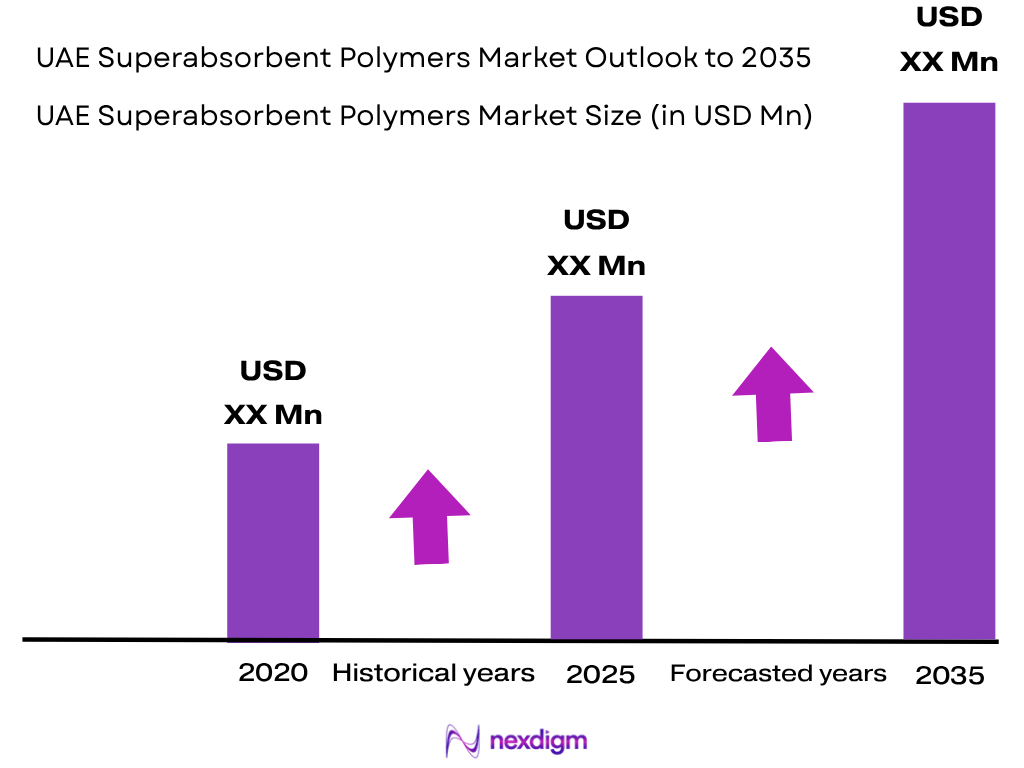
The UAE Superabsorbent Polymers Market is valued at ~USD XX million in 2024, compared with ~USD XX million in 2023, with demand concentrated in hygiene products and supported by the country’s expanding consumer base, healthcare infrastructure, and import-oriented chemical supply chain. The UAE recorded a population of 10,986,400 and GDP of USD 552.32 billion in 2024, while GDP growth reached 4.0, creating a supportive economic environment for consumer and industrial applications.
The UAE Superabsorbent Polymers Market is concentrated around Dubai and Abu Dhabi, where population concentration, healthcare infrastructure, consumer-goods distribution and industrial activity support demand for SAP-containing products. The UAE population reached 10,986,400, while internet usage reached 100 in 2024, supporting modern retail and digitally enabled procurement channels. Life expectancy reached 83 years, strengthening the structural relevance of healthcare and adult-care applications alongside established baby and feminine-hygiene consumption.
Market Segmentation
By Product Type
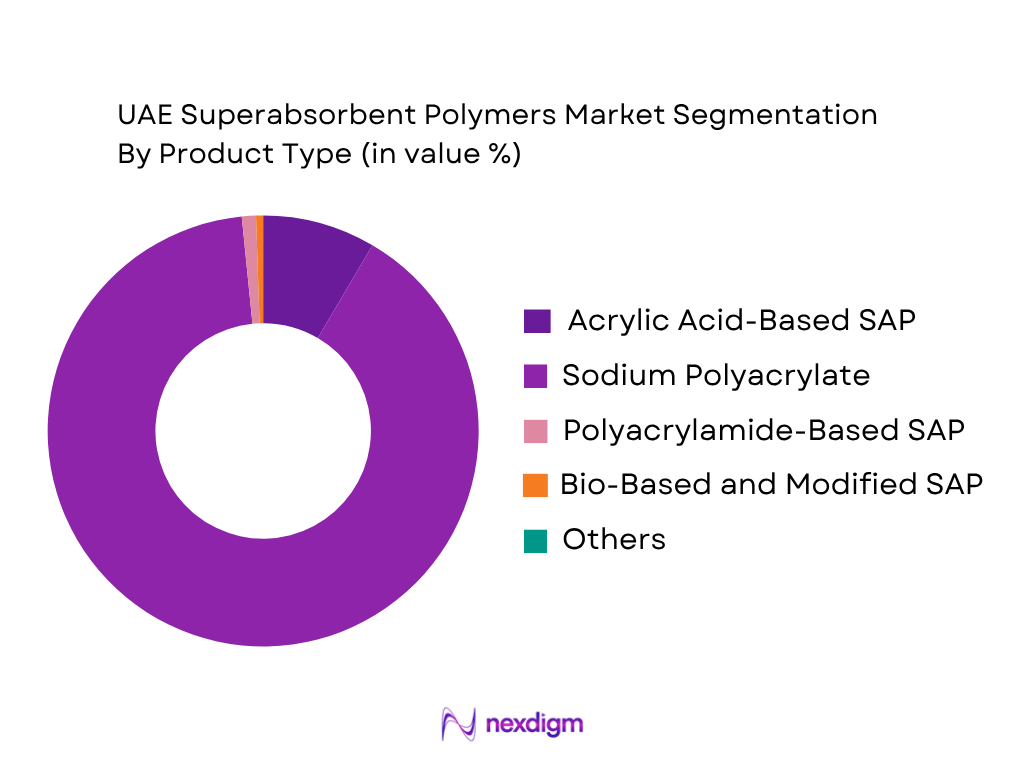
The UAE Superabsorbent Polymers Market is segmented by product type into sodium polyacrylate, polyacrylate/polyacrylamide copolymers, polyacrylamide-based SAP, acrylic acid-based SAP, bio-based and modified SAP, and other specialty SAP grades. Sodium polyacrylate is expected to represent the dominant sub-segment because of its established absorption and liquid-retention performance in disposable hygiene products. Its relevance is particularly strong in baby diapers, feminine hygiene products and adult incontinence products, where rapid liquid uptake, gel formation and retention are central product-performance requirements. The UAE’s large imported consumer-goods ecosystem also facilitates access to established SAP grades through international suppliers and chemical distributors. In addition, the country’s developed retail and healthcare infrastructure supports continued consumption of finished products incorporating SAP. Higher-performance grades are gaining relevance as manufacturers seek thinner absorbent cores and improved fluid distribution, but conventional sodium-polyacrylate formulations remain important because of established manufacturing specifications, compatibility with existing diaper-core designs and proven processing characteristics.
By Application
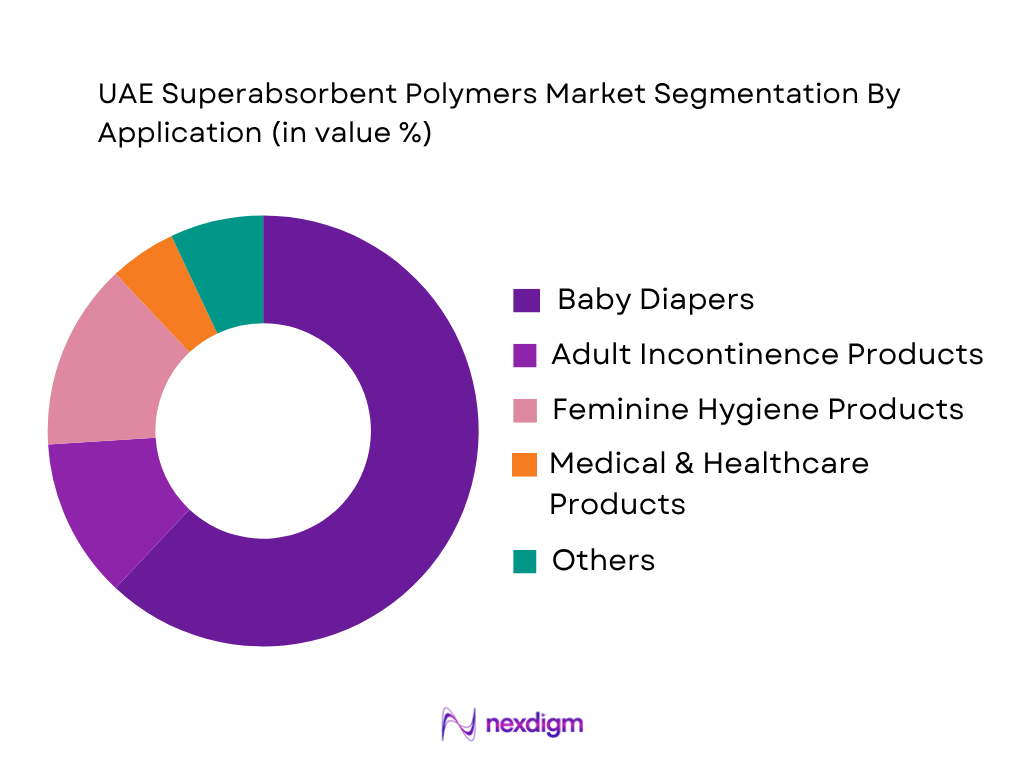
The UAE Superabsorbent Polymers Market is segmented by application into baby diapers, adult incontinence products, feminine hygiene products, medical absorbent products, agriculture and horticulture, industrial absorbent applications and other specialty applications. Baby diapers represent the dominant application because SAP is a core functional component in modern disposable diaper absorbent systems, providing rapid liquid uptake and retention while enabling thinner product construction. Demand is supported by the UAE’s sizable resident population and established modern retail ecosystem. Adult incontinence is also becoming structurally relevant because the UAE has developed healthcare infrastructure and an aging population segment, while medical applications benefit from hospitals and healthcare facilities requiring absorbent products. Agriculture represents a smaller but strategically relevant application because SAP can improve water retention in soil and growing media. Industrial applications include spill-control and moisture-management products, although these remain less established than hygiene uses.
Competitive Landscape
The UAE Superabsorbent Polymers Market includes global specialty-chemical manufacturers and polymer producers supplying SAP either directly or through regional distributors. Competition is shaped by product-performance specifications, hygiene-grade qualification, supply reliability, technical support, polymer absorption characteristics and access to regional distribution networks. Major international suppliers such as BASF, Evonik, Nippon Shokubai, Sumitomo Seika Chemicals and LG Chem participate in the broader SAP ecosystem, while UAE demand is largely connected to imported polymer grades and downstream hygiene-product manufacturing and distribution.
| Company | Establishment Year | Headquarters | SAP Product Portfolio | Hygiene Applications | Specialty Grade Capability | Global Manufacturing | UAE Supply Route |
| BASF SE | 1865 | Ludwigshafen, Germany | ~ | ~ | ~ | ~ | ~ |
| Evonik Industries AG | 2007 | Essen, Germany | ~ | ~ | ~ | ~ | ~ |
| Nippon Shokubai Co., Ltd. | 1941 | Osaka, Japan | ~ | ~ | ~ | ~ | ~ |
| Sumitomo Seika Chemicals Co., Ltd. | 1944 | Kakogawa, Japan | ~ | ~ | ~ | ~ | ~ |
| LG Chem Ltd. | 1947 | Seoul, South Korea | ~ | ~ | ~ | ~ | ~ |
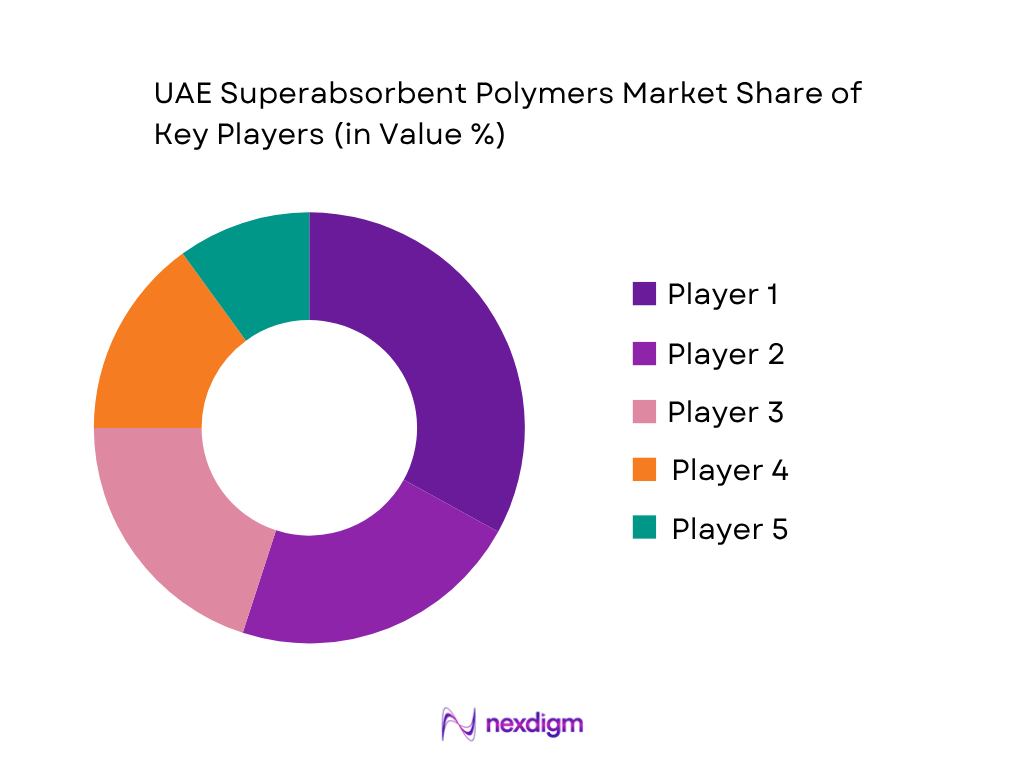
UAE Superabsorbent Polymers Market Analysis
Growth Drivers
Expansion of Disposable Diaper Consumption
The UAE’s expanding population base, high urban concentration, and established modern retail ecosystem support sustained demand for disposable hygiene products that use superabsorbent polymers (SAP) as a core absorbent component. Continued demand for infant-care products supports consumption of high-retention sodium polyacrylate grades, particularly in thinner diaper designs where manufacturers seek greater liquid retention with lower material usage. The UAE’s large expatriate population and developed healthcare and retail infrastructure further support availability and consumption of branded hygiene products. SAP demand is also linked to the country’s role as a regional distribution hub, where imported hygiene products and raw materials move through established logistics infrastructure. The combination of infant-care consumption, premium disposable products, and sophisticated retail channels creates a structurally supportive environment for hygiene-grade SAP. Demand is increasingly oriented toward polymers offering high absorbency under pressure, rapid liquid uptake, improved gel strength, and controlled swelling, making performance characteristics important for diaper manufacturers and converters serving the UAE market.
Rising Adult Incontinence Demand
Demographic development and expanding healthcare services are creating a broader application base for SAP beyond infant diapers. Adult incontinence products, including disposable briefs, protective underwear, underpads, and other absorbent medical-hygiene formats, require polymers capable of rapid absorption, liquid retention, and leakage control. The UAE’s healthcare infrastructure and growing availability of specialized healthcare services support demand for professionally managed continence-care products. SAP is particularly relevant because it enables manufacturers to increase absorbency while maintaining relatively compact product structures, supporting mobility and comfort requirements. Demand can also extend through hospitals, long-term care settings, home healthcare providers, pharmacies, and retail channels. Increasing awareness of continence management can encourage movement from basic absorbent materials toward engineered hygiene products using higher-performance SAP grades. This creates opportunities for suppliers offering consistent particle-size distribution, high centrifuge retention capacity, strong absorbency under load, and improved gel permeability. As healthcare-oriented consumption expands, adult incontinence represents an increasingly relevant demand channel for UAE SAP suppliers and hygiene-product manufacturers.
Market Challenges
Dependence on Imported SAP Grades
The UAE has limited upstream production of specialized superabsorbent polymers and consequently relies heavily on international supply chains for many SAP grades used by hygiene-product manufacturers and distributors. This creates exposure to overseas manufacturing availability, shipping schedules, regional logistics conditions, and supplier allocation decisions. Imported SAP may arrive through major commercial and logistics hubs, requiring manufacturers and distributors to manage inventory carefully because hygiene production depends on uninterrupted availability of absorbent materials. The challenge becomes more significant for specialized grades requiring particular absorbency, gel strength, particle-size distribution, or surface-crosslinking characteristics. Dependence on international suppliers can also lengthen qualification cycles when manufacturers need to replace an approved grade. UAE converters therefore need reliable technical documentation, consistent specifications, regulatory compliance, and stable supply arrangements. Import dependence also limits the ability of downstream users to respond immediately to unexpected disruptions. Establishing multiple qualified suppliers, maintaining appropriate inventories, and developing regional distribution relationships can reduce operational exposure, but qualification requirements can make rapid substitution difficult for established hygiene-product production lines.
Acrylic Acid Feedstock Exposure
Superabsorbent polymers are closely linked to acrylic-acid chemistry, making the SAP value chain exposed to developments affecting petrochemical feedstocks, monomer availability, and international chemical manufacturing. UAE manufacturers and distributors operating downstream in the SAP chain may therefore experience indirect effects from disruptions affecting acrylic-acid production, transportation, or international supply. Feedstock exposure is particularly relevant because hygiene-grade SAP requires controlled polymerization and consistent chemical characteristics to meet demanding absorbency specifications. Any disruption upstream can affect availability of suitable grades and complicate procurement planning. The challenge is amplified where local production of specialized SAP intermediates is limited and downstream companies depend on imported material. Suppliers also need to maintain technical consistency across batches because diaper, feminine-hygiene, and medical-product manufacturers typically qualify materials against defined performance specifications. Consequently, alternative sourcing cannot always be implemented immediately. UAE participants can reduce this exposure through supplier diversification, regional inventory planning, longer-term procurement arrangements, and closer integration with international chemical producers, but the underlying dependence on acrylic-acid-based chemistry remains an important structural consideration for the market.
Market Opportunities
High-Performance Hygiene-Grade SAP
The UAE provides opportunities for higher-performance SAP grades as hygiene-product manufacturers increasingly emphasize absorbency, leakage control, product thinness, and user comfort. Advanced hygiene products can benefit from surface-crosslinked SAP engineered for rapid liquid uptake, strong retention under pressure, and improved gel permeability. These characteristics are particularly relevant to premium diapers, adult incontinence products, feminine hygiene products, and medical absorbent formats. The opportunity extends beyond supplying conventional sodium polyacrylate because manufacturers can differentiate products through polymer performance and absorbent-core design. UAE distributors can also use the country’s established logistics infrastructure to supply specialized SAP grades to hygiene manufacturers and converters across the wider Middle East. Demand for premium hygiene products creates an addressable pathway for suppliers capable of providing technical support, application testing, consistent specifications, and customized absorbency profiles. Advanced SAP can therefore support thinner product architectures and improved liquid-management performance while allowing manufacturers to target higher-value hygiene applications. The opportunity is strongest where suppliers combine polymer technology with application engineering and reliable regional inventory.
Sustainable and Bio-Based SAP
Sustainability requirements create an emerging opportunity for alternative SAP technologies that reduce dependence on conventional petrochemical inputs or improve the environmental profile of absorbent products. UAE companies involved in hygiene manufacturing, distribution, and product development can explore bio-based feedstocks, modified absorbent polymers, improved material efficiency, and technologies designed to reduce the environmental burden associated with disposable hygiene products. The opportunity is relevant because conventional SAP is predominantly based on synthetic acrylic chemistry, while used diapers and other hygiene products present end-of-life management challenges. Product developers can therefore investigate SAP systems that maintain required absorption performance while incorporating renewable inputs or improving compatibility with emerging waste-management approaches. Sustainable SAP can also complement premium hygiene positioning, particularly where manufacturers seek to combine thinner designs, lower material intensity, and improved environmental attributes. Regional distribution capabilities provide an additional pathway because UAE-based companies can potentially introduce emerging SAP technologies to neighboring Middle Eastern and African hygiene markets. Commercial development will depend on maintaining performance, safety, manufacturing consistency, and compatibility with existing converting equipment while demonstrating credible environmental benefits.
Future Outlook
Over the coming decade, the UAE Superabsorbent Polymers Market is expected to remain closely linked to hygiene-product consumption, healthcare requirements and specialty absorbent applications. Demand will increasingly emphasize high-retention polymers, thinner absorbent cores and improved fluid-management performance. The development of adult-care products and medical absorbents can broaden the application base, while agricultural water-retention technologies provide an additional avenue for diversification. The UAE’s role as a regional trade and distribution center also creates opportunities for supplying SAP and SAP-containing products across neighboring Middle Eastern and African markets.
Major Players
- BASF SE
- Evonik Industries AG
- Nippon Shokubai Co., Ltd.
- Sumitomo Seika Chemicals Co., Ltd.
- LG Chem Ltd.
- Formosa Plastics Corporation
- Sanyo Chemical Industries, Ltd.
- SDP Global Co., Ltd.
- Kao Corporation
- Yixing Danson Technology
- Shandong Nuoer Bio-Tech Co., Ltd.
- Songwon Industrial Co., Ltd.
- Stockhausen GmbH
- Chase Corporation
- Gellner Industrial LLC
Key Target Audience
- Disposable Diaper and Baby Hygiene Product Manufacturers
- Adult Incontinence Product Manufacturers
- Feminine Hygiene Product Manufacturers
- Medical Absorbent Product Manufacturers
- Healthcare Product Distributors and Procurement Organizations
- Investments and Venture Capitalist Firms
- Government and Regulatory Bodies (Ministry of Industry and Advanced Technology, Ministry of Climate Change and Environment, Dubai Municipality)
- Agricultural Technology and Irrigation Solution Providers
Research Methodology
Step 1: Identification of Key Variables
The initial phase involves mapping the UAE Superabsorbent Polymers ecosystem across polymer suppliers, importers, distributors, hygiene manufacturers, healthcare users and specialty application providers. Key variables include SAP chemistry, absorption capacity, retention performance, application requirements, import dependency, downstream consumption and distribution structures.
Step 2: Market Analysis and Construction
Historical market information is compiled through supply-side and demand-side assessment, including SAP imports, downstream hygiene-product consumption, industrial applications and distributor activity. Product-level and application-level datasets are reconciled to construct the UAE market baseline and identify the principal sources of demand.
Step 3: Hypothesis Validation and Expert Consultation
Market hypotheses are validated through structured discussions with industry participants covering hygiene manufacturing, chemical distribution, healthcare procurement and agricultural applications. Expert inputs are used to test assumptions concerning product specifications, procurement practices, application suitability, competitive positioning and supply-chain dynamics.
Step 4: Research Synthesis and Final Output
The final stage integrates primary findings with secondary datasets and applies data triangulation to validate market estimates. Bottom-up calculations based on application demand are reconciled with top-down supply and trade assessments to develop the market outlook, segmentation framework and competitive assessment.

- Executive Summary
- Research Methodology (Market Definition and Scope, UAE Superabsorbent Polymers Market Classification, SAP Product Mapping, Polymer Chemistry Assessment, Absorption and Retention Performance Framework, Application-Level Demand Mapping, Hygiene Product Consumption Assessment, Domestic Manufacturing Assessment, Import Dependency Analysis, Supply Chain Mapping, Demand-Side Assessment, Supply-Side Assessment, Trade Flow Analysis, Top-Down Market Sizing, Bottom-Up Market Sizing, Primary Industry Interviews, Data Triangulation, Forecasting Framework, Market Share Validation, Limitations and Future Conclusions)

- Definition and Scope
- UAE Superabsorbent Polymers Industry Evolution
- Superabsorbent Polymers Value Chain Analysis
- Superabsorbent Polymers Supply Chain Analysis

- Growth Drivers (Expansion of Disposable Diaper Consumption, Rising Adult Incontinence Demand, Growth of Feminine Hygiene Products, Healthcare Product Manufacturing Expansion, Increasing Demand for High-Absorbency Hygiene Materials, Agricultural Water-Efficiency Requirements, Premium Hygiene Product Adoption, Growth of Medical Absorbent Applications)
- Market Challenges (Dependence on Imported SAP Grades, Acrylic Acid Feedstock Exposure, Petrochemical Raw Material Volatility, Limited Domestic SAP Manufacturing Infrastructure, Import Logistics Dependency, Environmental and End-of-Life Concerns, Recycling Limitations for Used Hygiene Products, Product Qualification Requirements, Competition from Alternative Absorbent Materials)
- Market Opportunities (High-Performance Hygiene-Grade SAP, Adult Incontinence Applications, Sustainable and Bio-Based SAP, Agricultural Water-Retention Applications, Medical Absorbent Materials, Surface-Crosslinked High-Retention SAP, Specialty Industrial Absorbents, Domestic SAP Manufacturing and Compounding, Regional SAP Distribution and Re-Export Opportunities, Advanced Hygiene Product Manufacturing)
- Market Trends (Premium Diaper Absorbency, Lightweight Absorbent Cores, High-Retention SAP Adoption, Fluff-Reduced Hygiene Products, Surface-Crosslinked Polymer Development, Sustainable SAP Formulations, Adult Incontinence Product Expansion, SAP Optimization in Feminine Hygiene, Agricultural Water-Retention Applications, High-Performance Medical Absorbents)
- Government Regulations and Standards (UAE Ministry of Industry and Advanced Technology Product Conformity Requirements, Emirates Conformity Assessment Scheme, UAE Standards for Personal Care Products, Dubai Municipality Consumer Product Requirements, Abu Dhabi Agriculture and Food Safety Authority Requirements, Ministry of Climate Change and Environment Environmental Requirements, Chemical Import and Handling Requirements, Product Safety and Labeling Standards, Waste Management and Environmental Compliance)
- SWOT Analysis
- Porter’s Five Forces Analysis
- PESTLE Analysis
- Stakeholder Ecosystem
- Competition Ecosystem

- By Market Value (2020-2025)
- By Market Volume (2020-2025)
- By SAP Consumption Volume (2020-2025)
- By Hygiene-Grade SAP Consumption Volume (2020-2025)
- By Non-Hygiene SAP Consumption Volume (2020-2025)

- By Product Type (In Value %)
Sodium Polyacrylate
Polyacrylate / Polyacrylamide Copolymers
Polyacrylamide-Based SAP
Acrylic Acid-Based SAP
Bio-Based and Modified SAP
Other Specialty SAP Grades - By Application (In Value %)
Baby Diapers
Adult Incontinence Products
Feminine Hygiene Products
Medical Absorbent Products
Agriculture and Horticulture
Industrial Absorbent Applications
Other Specialty Applications - By Absorption Capacity (In Value %)
Standard Absorption SAP
High-Absorption SAP
Super-Absorption SAP
High-Retention SAP
Surface-Crosslinked High-Performance SAP - By Product Form (In Value %)
Granular SAP
Powder SAP
Fine-Particle SAP
Modified SAP Formulations
Specialty Engineered SAP Grades - By End-Use Industry (In Value %)
Personal Hygiene
Healthcare and Medical
Agriculture and Horticulture
Landscaping and Turf Management
Industrial Manufacturing
Oil and Gas
Construction and Infrastructure
Other Industrial Applications - By Distribution Channel (In Value %)
Direct Industrial Sales
Authorized Chemical Distributors
Specialty Polymer Distributors
Hygiene Raw Material Suppliers
Agricultural Input Distributors
Industrial Chemical Trading Companies
E-Commerce and Online B2B Platforms

- Market Share of Major Players (By UAE Revenue, SAP Sales Volume, Hygiene-Grade SAP Volume, Product Category, Application Category, Absorption Performance, Distribution Coverage, Import Supply Coverage, End-Use Industry Exposure, Regional Presence, Customer Coverage)
- Cross Comparison Parameters (SAP Product Portfolio Breadth, SAP Production Capacity, Hygiene-Grade SAP Capability, Absorption Capacity Range, Surface-Crosslinking Technology, Application Portfolio Breadth, Regional Distribution Network Reach, Technical Support and Application-Laboratory Capability)
- SWOT Analysis of Major Players
- Detailed Profiles of Major Companies
BASF SE
Evonik Industries AG
Sumitomo Seika Chemicals Co., Ltd.
Nippon Shokubai Co., Ltd.
LG Chem Ltd.
Formosa Plastics Corporation
Yixing Danson Technology
Sanyo Chemical Industries, Ltd.
Kao Corporation
SDP Global Co., Ltd.
Chase Corporation
Stockhausen GmbH
Shandong Nuoer Bio-Tech Co., Ltd.
Songwon Industrial Co., Ltd.
Gellner Industrial LLC

- Baby Diaper Manufacturer SAP Procurement Assessment
- Adult Incontinence Product Manufacturer SAP Requirement Analysis
- Feminine Hygiene Manufacturer SAP Application Assessment
- Medical Absorbent Product Manufacturer Requirement Analysis
- Healthcare Distributor SAP Procurement Assessment
- Agricultural and Horticultural SAP Requirement Analysis

- By Market Value (2026-2035)
- By Market Volume (2026-2035)
- By SAP Consumption Volume (2026-2035)
- By Hygiene-Grade SAP Consumption Volume (2026-2035)
- By Non-Hygiene SAP Consumption Volume (2026-2035)


 Request a Sample
 Ask for Customization
 Get a Quote
 Enquire Now