
 Download PDF
Market Overview
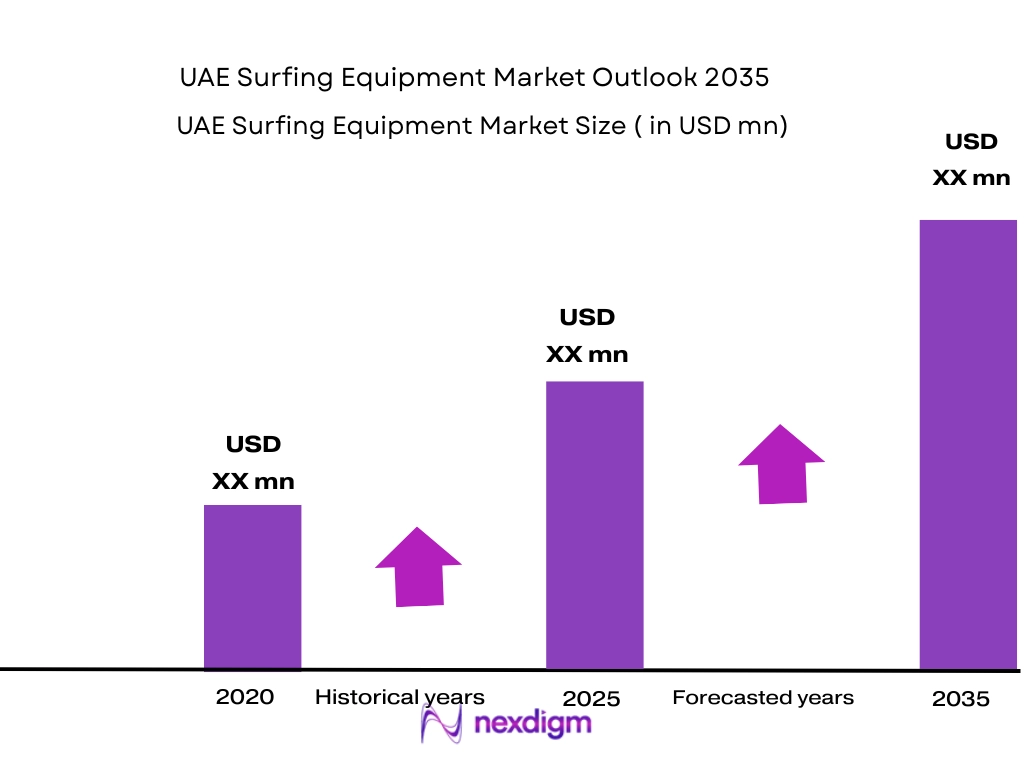
The UAE surfing equipment market is expected to grow significantly, driven by the increasing popularity of surfing as a recreational activity and the nation’s growing tourism sector. In 2025, the market was valued at approximately USD ~ million, with demand for surfing equipment like surfboards, wetsuits, and accessories seeing consistent growth. The market growth is attributed to the country’s unique geography, characterized by a long coastline, which offers ideal conditions for surfing. Additionally, the rise in disposable income, increasing youth participation in water sports, and the country’s focus on promoting a healthy lifestyle are crucial drivers behind this trend. The booming tourism sector, with visitors flocking to Dubai and other coastal regions, further supports the demand for surfing gear, including professional and recreational equipments
Dubai, Abu Dhabi, and Sharjah are the key cities driving the UAE surfing equipment market. Dubai, with its strong tourism sector, has become a global hotspot for water sports, including surfing, attracting both local enthusiasts and international tourists. The city’s luxurious resorts, beaches, and investment in world-class facilities have positioned it as a major player in the surfing industry. Abu Dhabi, being a major cultural and economic hub, also contributes significantly due to its proximity to some of the country’s best surfing spots. Sharjah, with its growing number of surfing schools and events, is gaining popularity in the local surfing scene. These cities dominate the market due to their established tourism infrastructure, favorable climate for surfing, and a growing base of surf enthusiasts.
Market Segmentation
By Product Type
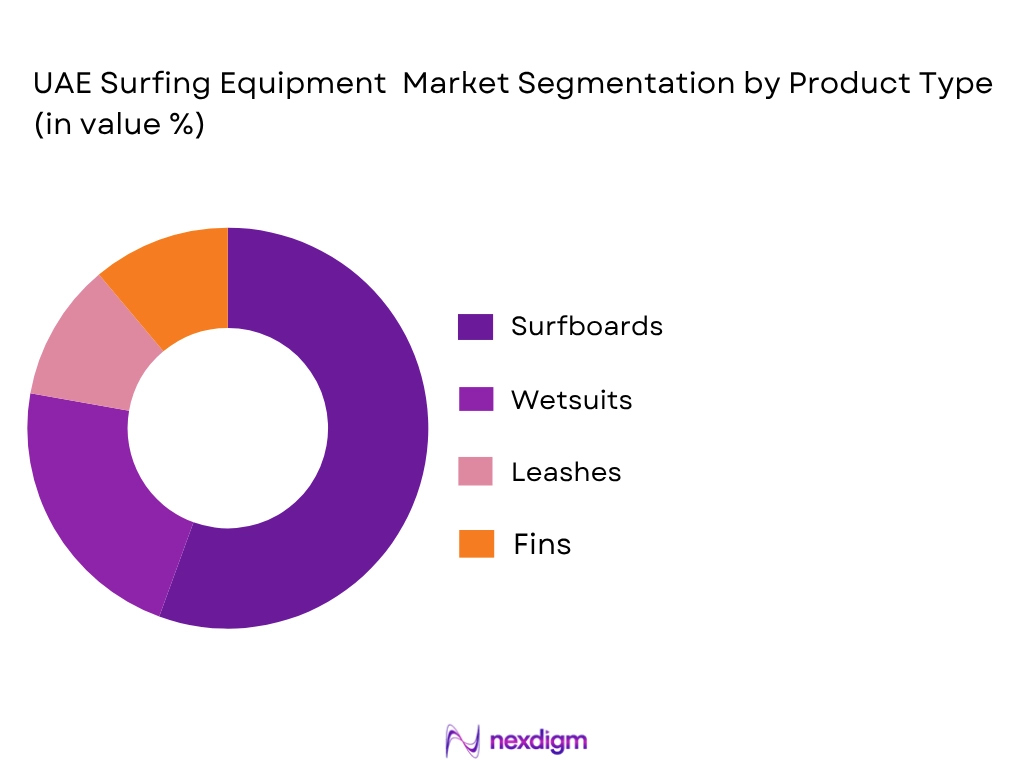
The UAE surfing equipment market is segmented by product type into surfboards, wetsuits, leashes, fins, and accessories. Among these, surfboards dominate the market share, primarily due to their essential role in the sport of surfing. Surfboards are the most critical equipment for any surfer, and their demand continues to rise as surfing gains more popularity, both as a recreational and professional sport. The demand for high-performance surfboards is growing, especially as more professional surfers and enthusiasts enter the sport. Surfboards made from advanced materials such as epoxy and carbon fiber are increasingly popular due to their lightweight, durability, and superior performance. Additionally, surfboard manufacturers are focusing on eco-friendly production methods, which aligns with the increasing demand for sustainable products in the market.
By Material Type
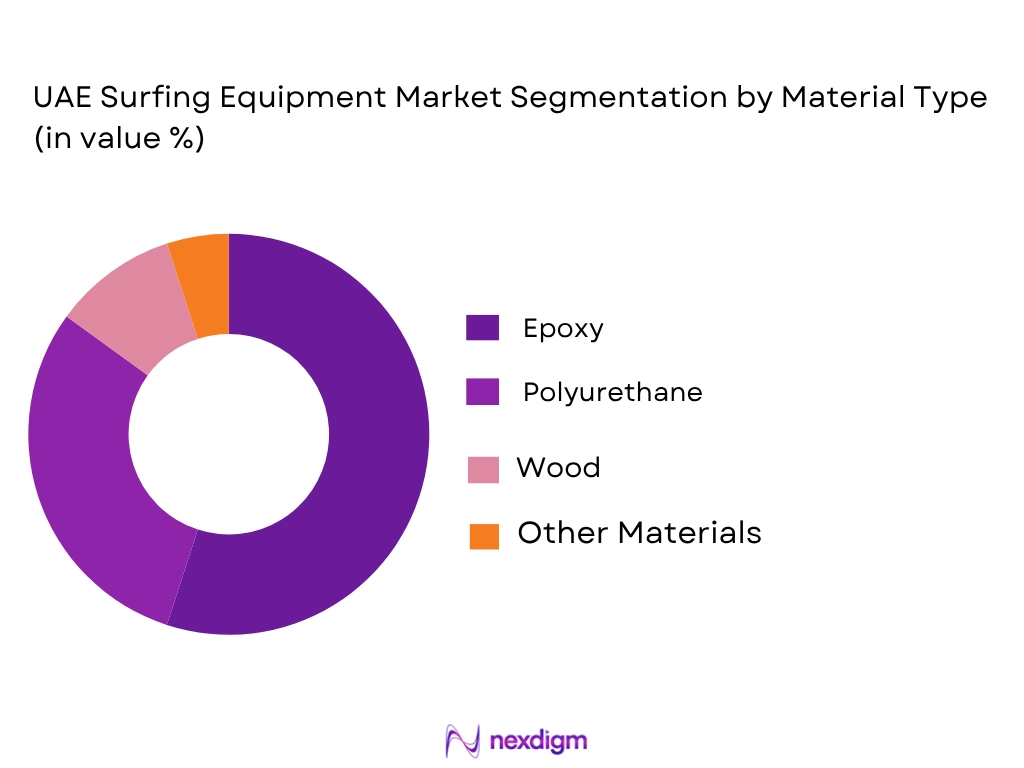
The market is also segmented by material type into epoxy, polyurethane, wood, and other materials. Among these, epoxy surfboards are leading the market share due to their superior performance and lightweight properties. Epoxy boards are made from a combination of epoxy resin and foam core, which makes them more durable, buoyant, and resistant to dings compared to traditional polyurethane boards. This makes epoxy boards highly favored among recreational and professional surfers alike. The material’s ability to retain strength and provide excellent floatation has made it the go-to material for the majority of surfboards in the market. Additionally, as sustainability becomes a more significant concern, epoxy surfboards are also seen as a more environmentally friendly option, contributing to their dominance in the market.
Competitive Landscape
The UAE surfing equipment market is highly competitive, with both local and international players vying for market share. Global brands like Quiksilver, Rip Curl, Billabong, and O’Neill dominate the market, due to their established brand recognition, extensive product ranges, and strong distribution networks. These brands are also benefiting from the growing trend of eco-conscious consumers, with many offering sustainable and environmentally friendly products. Local brands, such as Roxy UAE and Desert Surfboards, are also carving out a niche in the market by providing affordable and regionally tailored products. The market is further characterized by the presence of high-end luxury surf equipment brands catering to the growing number of affluent surfers in the UAE.
| Company Name | Establishment Year | Headquarters | Product Focus | Distribution Channels | Revenue | Market Share |
| Quiksilver | 1969 | USA | ~ | ~ | ~ | ~ |
| Rip Curl | 1969 | Australia | ~ | ~ | ~ | ~ |
| Billabong | 1973 | Australia | ~ | ~ | ~ | ~ |
| O’Neill | 1952 | USA | ~ | ~ | ~ | ~ |
| Desert Surfboards | 2005 | UAE | ~ | ~ | ~ | ~ |
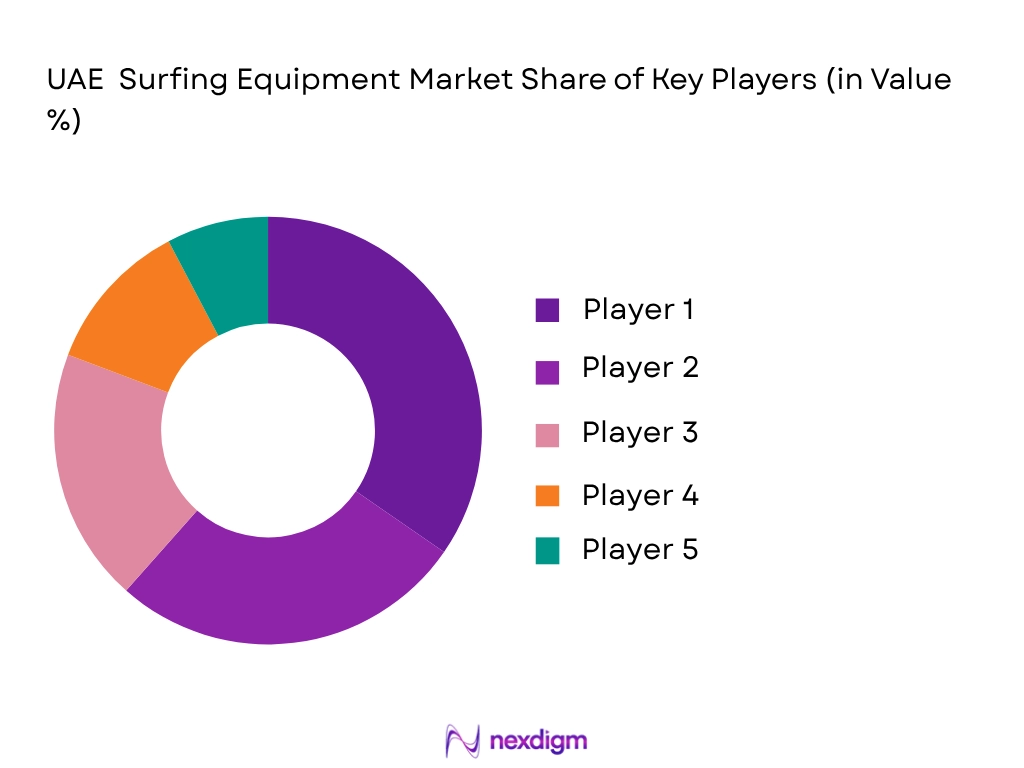
UAE Surfing Equipment Market Analysis
Growth Drivers
Increasing Interest in Water Sports
The growing popularity of water sports in the UAE is a significant driver for the surfing equipment market. With its extensive coastline, the UAE offers ideal conditions for surfing, attracting both locals and tourists. As surfing becomes more accessible and appealing, particularly to younger populations, more people are participating in the sport. Local surfing events and competitions are also contributing to the rise in interest. This surge in demand for surfing equipment is being fueled by the increasing awareness of the benefits of water sports for fitness and well-being, and the promotion of outdoor activities in the country.
Expanding Tourism Industry and Infrastructure
The UAE’s tourism sector is a major driver of growth for the surfing equipment market. With the government’s focus on diversifying the economy, the tourism industry has expanded significantly, especially in coastal cities like Dubai and Abu Dhabi. These cities have become popular destinations for international tourists, many of whom come for water sports, including surfing. This expansion of tourism infrastructure, including luxury resorts, surf schools, and beach events, has led to a higher demand for surfing gear. Additionally, tourism-focused surf events are contributing to the increasing visibility of surfing in the region.
Market Challenges
High Import Dependence for Surfing Equipment
The UAE’s reliance on imports for surfing equipment presents a challenge for the local market. While demand for high-quality surfboards, wetsuits, and accessories is growing, a significant portion of these products is imported from countries with established surf industries. This reliance on imported goods increases the cost of surfing equipment due to shipping, tariffs, and distribution expenses. Additionally, disruptions in global supply chains or fluctuations in import prices could impact the availability and affordability of surfing gear in the UAE, limiting market growth and making it difficult for local brands to compete on price.
Price Sensitivity Among Consumers
Price sensitivity remains a key challenge in the UAE surfing equipment market, particularly among younger consumers and those in emerging surfing communities. While surfing is becoming more popular, it is still viewed by some as a niche or luxury sport, with high-quality surfboards and wetsuits being expensive. Many local consumers are price-conscious, which can limit their willingness to purchase premium products. This price sensitivity drives demand for affordable alternatives, which can strain the profitability of high-end brands and manufacturers, forcing them to find ways to reduce costs while maintaining quality.
Opportunities
Rising Demand for Eco-Friendly and Sustainable Surf Equipment
There is a growing consumer interest in eco-friendly and sustainable surfing equipment, presenting a unique opportunity for brands in the UAE. With an increasing global focus on environmental consciousness, consumers are more inclined to choose products made from recyclable, biodegradable, and eco-friendly materials. Surfboard manufacturers in the UAE can capitalize on this trend by offering sustainable products that align with the growing demand for environmentally responsible goods. The shift toward sustainable surf equipment also ties into broader trends within the outdoor and adventure sports industry, further driving consumer interest in these products.
Expansion of Surf Tourism in Emerging Regions
The expansion of surf tourism in emerging regions of the UAE presents significant opportunities for the local surfing equipment market. While Dubai and Abu Dhabi remain the primary surf tourism destinations, regions like Ras Al Khaimah and Fujairah are gaining popularity for their surf-friendly beaches. As surf tourism grows in these emerging areas, the demand for surfing equipment will rise, creating new market opportunities for local retailers, surf schools, and manufacturers. This geographic diversification will help establish new retail outlets and distribution channels, benefiting both established international brands and new local surf brands.
Future Outlook
Over the next 5 years, the UAE surfing equipment market is expected to grow significantly, driven by the increasing interest in water sports, particularly surfing. The country’s thriving tourism sector, coupled with a growing youth population eager to participate in active lifestyle sports, will continue to boost demand for surfing equipment. Additionally, advancements in surfing technology, such as improved surfboard materials and eco-friendly products, will drive innovation in the market. The government’s focus on promoting sports and outdoor activities will also contribute to the expansion of the surfing community. As the market matures, the growth of local surf brands and the continued popularity of sustainable surfing gear will provide new opportunities for growth.
Major Players
- Quiksilver
- Rip Curl
- Billabong
- O’Neill
- Desert Surfboards
- Hurley
- Volcom
- Body Glove
- Lost Surfboards
- Channel Islands Surfboards
- FCS
- Firewire Surfboards
- JS Industries
- Torq Surfboards
- Takayama Surfboards
Key Target Audience
- Surfing Equipment Manufacturers
- Surfing Gear Distributors and Wholesalers
- Tourism and Hospitality Businesses
- Retail Chains and E-commerce Platforms
- Investments and Venture Capitalist Firms
- Government and Regulatory Bodies (UAE Ministry of Sports)
- Surfing Event Organizers
- Eco-Conscious Consumers
Research Methodology
Step 1: Identification of Key Variables
In this phase, we construct an ecosystem map of the UAE surfing equipment market, identifying the key stakeholders, including manufacturers, retailers, distributors, and consumers. We utilize secondary research to compile data from government reports, industry publications, and market research databases.
Step 2: Market Analysis and Construction
This phase involves collecting historical data, analyzing trends in market penetration, sales, and consumer preferences. By evaluating demand fluctuations, we aim to understand the market dynamics and predict future growth trends.
Step 3: Hypothesis Validation and Expert Consultation
We will validate market hypotheses through interviews with industry experts, including manufacturers, distributors, and retail chains. These consultations will help refine the market insights by providing real-time feedback on market challenges and opportunities.
Step 4: Research Synthesis and Final Output
The final phase involves synthesizing data from primary and secondary sources to generate a comprehensive analysis of the UAE surfing equipment market. This includes insights into market trends, competitive landscape, and the evolving demand for surfing products.

- Executive Summary
- Research Methodology(Market Definitions and Assumptions, Abbreviations, Market Sizing Approach, Consolidated Research Approach, Understanding Market Potential Through In-Depth Industry Interviews, Primary Research Approach,Limitations and Future Conclusions)

- Definition and Scope
- Market Dynamics Overview
- Market Genesis
- Major Players and Market Timeline
- Business Cycle and Trends
- Supply Chain and Value Chain Analysis

- Growth Drivers
Increasing Interest in Water Sports
Expanding Tourism Industry and Infrastructure
Growing Disposable Income
Youth Engagement in Active Lifestyles - Market Challenges
High Import Dependence for Surfing Equipment
Price Sensitivity Among Consumers
Limited Local Surf Equipment Manufacturing
Intense Competition from International Brands - Opportunities
Rising Demand for Eco-Friendly and Sustainable Surf Equipment
Expansion of Surf Tourism in Emerging Regions
Development of Local Surfing Brands
Advancements in Surfboard Technology and Materials - Key Trends
Popularity of Eco-Conscious Surfing Gear
Shift Toward Lightweight and Durable Surfboards
Growth in Women’s and Youth Surfing Equipment
Adoption of Technology-Enhanced Surf Gear - Government Regulations
- SWOT Analysis
- Porter’s Five Forces

- By Value, 2020–2025
- By Volume, 2020–2025
- By Average Price, 2020–2025

- By Product Type (In Value %)
Surfboards
Wetsuits
Leashes
Fins - By Material Type (In Value %)
Epoxy
Polyurethane
Wood
Other Materials - By Application (In Value %)
Professional Surfing
Recreational Surfing
Competitive Surfing - By Distribution Channel (In Value %)
Direct Sales
Distributors and Wholesalers
Retail Stores
Online Channels - By Region (In Value %)
Dubai
Abu Dhabi
Sharjah
Rest of UAE

- Market Share of Major Players by Value/Volume
- Market Share of Major Players by Product Type
- Cross Comparison Parameters (Company Overview, Business Strategies, Recent Developments, Strength, Weakness, Organizational Structure, Revenues, Revenues by Product Type, Number of Touchpoints, Distribution Channels, Number of Dealers and Distributors, Margins, Production Plant, Capacity, Unique Value Offering, and Others)
- SWOT Analysis of Major Players
- Pricing Analysis Based on Product Categories for Major Players
- Detailed Profiles of Major Companies
Quiksilver
Rip Curl
Billabong
O’Neill
Dakine
Hurley
Volcom
Body Glove
Lost Surfboards
Channel Islands Surfboards

- The high cost of premium surfboards limits entry-level consumer access.
- Inconsistent availability of top-tier surfboards in emerging markets.
- Limited after-sales support for repairs and maintenance in some regions.
- Difficulty in finding the right gear for specific body types or unique needs.
- Seasonal fluctuations in demand, making it challenging for suppliers to manage inventory.

- By Value, 2026–2035
- By Volume, 2026–2035
- By Average Price, 2026–2035


 Request a Sample
 Ask for Customization
 Get a Quote
 Enquire Now