

 Download PDF
 Download PDF
Market Overview
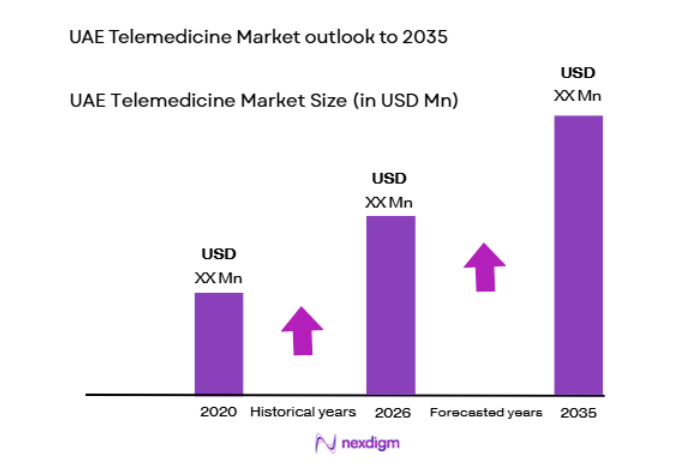
The UAE telemedicine market has expanded rapidly as healthcare systems increasingly integrate digital consultation platforms and remote patient monitoring services to improve healthcare accessibility. Based on a recent historical assessment, the UAE telemedicine market size is valued at approximately USD ~ million, supported by digital healthcare investments led by the Ministry of Health and Prevention, Dubai Health Authority, and Department of Health Abu Dhabi. Increasing smartphone penetration, advanced internet infrastructure, and healthcare digitalization programs are significantly accelerating telemedicine adoption across hospitals and private healthcare providers.
Dubai and Abu Dhabi dominate the UAE telemedicine ecosystem due to strong healthcare infrastructure, high technology adoption, and extensive government-led digital healthcare initiatives. Dubai’s smart healthcare transformation programs encourage hospitals to integrate teleconsultation services and digital health platforms across healthcare facilities. Abu Dhabi also plays a major role through large hospital networks and advanced digital healthcare programs supported by the Department of Health. The presence of international healthcare providers and health technology firms further strengthens telemedicine service expansion across the country.
Market Segmentation
By Service Type
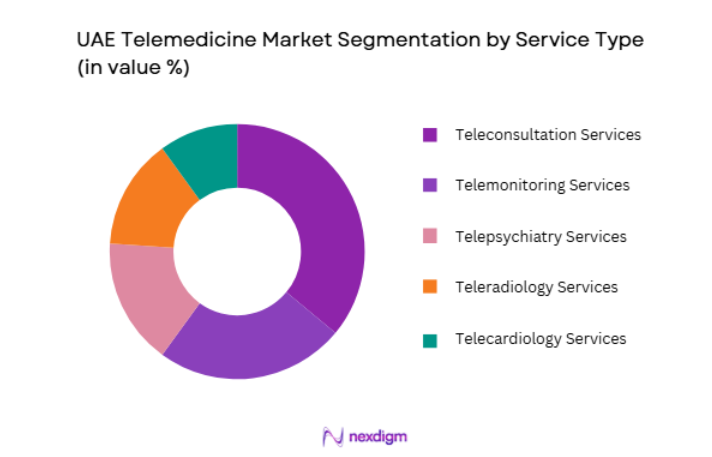
UAE Telemedicine market is segmented by service type into teleconsultation services, telemonitoring services, telepsychiatry services, teleradiology services, and telecardiology services. Recently, teleconsultation services has a dominant market share due to increasing patient demand for remote healthcare access, growing smartphone adoption, and government initiatives encouraging virtual healthcare services across hospitals and clinics. Teleconsultation platforms allow patients to connect with physicians through secure video consultations, enabling convenient medical advice without requiring hospital visits. Hospitals integrate teleconsultation tools with electronic health records and digital prescriptions to improve clinical workflow efficiency and patient engagement. Insurance companies also encourage teleconsultation services because remote healthcare reduces treatment costs and improves early diagnosis capabilities.
By Deployment Mode
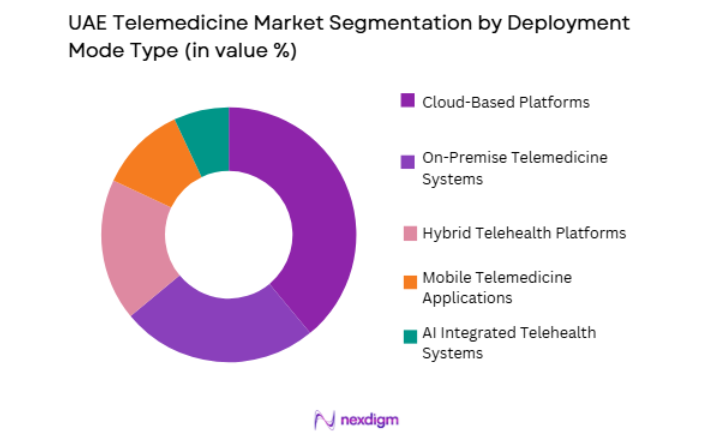
UAE Telemedicine market is segmented by deployment mode into cloud-based platforms, on-premise telemedicine systems, hybrid telehealth platforms, mobile telemedicine applications, and AI integrated telehealth systems. Recently, cloud-based platforms has a dominant market share due to healthcare providers increasingly adopting scalable digital infrastructure that supports virtual consultations, remote monitoring, and centralized patient data management. Cloud deployment enables hospitals and clinics to securely store large volumes of medical data while ensuring interoperability between different healthcare providers. Government initiatives supporting digital health data exchange also strengthen adoption of cloud-enabled telemedicine platforms. Healthcare institutions benefit from reduced IT infrastructure costs and improved system flexibility when deploying cloud-based telehealth platforms.
Competitive Landscape
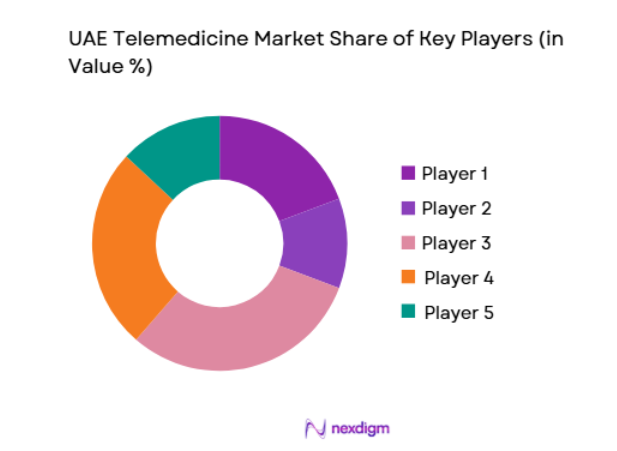
The UAE telemedicine market features a competitive environment where international telehealth providers, regional digital health startups, and hospital-owned telemedicine platforms compete to expand virtual healthcare services. Global healthcare technology companies collaborate with hospitals and government agencies to develop integrated telemedicine infrastructure. Market consolidation is gradually increasing as healthcare providers partner with digital health companies to strengthen teleconsultation platforms, remote monitoring technologies, and AI-assisted healthcare delivery systems.
| Company Name | Establishment Year | Headquarters | Technology Focus | Market Reach | Key Products | Revenue | Telehealth Platform Integration |
| Teladoc Health | 2002 | United States | ~ | ~ | ~ | ~ | ~ |
| Amwell | 2006 | United States | ~ | ~ | ~ | ~ | ~ |
| Philips Healthcare | 1891 | Netherlands | ~ | ~ | ~ | ~ | ~ |
| Oracle Health | 1977 | United States | ~ | ~ | ~ | ~ | ~ |
| GE HealthCare | 1994 | United States | ~ | ~ | ~ | ~ | ~ |
UAE Telemedicine Market Analysis
Growth Drivers
Government Supported Digital Healthcare Transformation Initiatives
Governments across the UAE strongly promote digital healthcare adoption through national strategies that prioritize technology integration within healthcare systems, which significantly accelerates telemedicine market expansion across hospitals and clinics. Federal health authorities and emirate-level regulators actively support telehealth infrastructure development through policies encouraging virtual healthcare consultations, digital prescription services, and remote patient monitoring platforms that improve healthcare accessibility. The Dubai Health Authority and Department of Health Abu Dhabi invest heavily in smart hospital programs and digital patient engagement platforms that integrate telemedicine services into healthcare delivery models. These initiatives encourage hospitals to adopt secure teleconsultation platforms that enable physicians to remotely diagnose and treat patients while maintaining efficient healthcare service delivery across urban and remote regions. National healthcare digitalization strategies also promote integration of telemedicine platforms with electronic health record systems that allow physicians to access patient medical histories during remote consultations. Government policies supporting artificial intelligence integration in healthcare further expand opportunities for telemedicine technology providers offering advanced diagnostic support tools within telehealth platforms. Healthcare institutions increasingly deploy remote monitoring technologies and wearable health devices that transmit patient health data directly to physicians, which enhances chronic disease management through telemedicine platforms. Regulatory frameworks supporting digital healthcare services also encourage private healthcare providers and international telemedicine companies to expand operations across the UAE healthcare sector.
Rapid Growth of Smartphone Based Healthcare Access and Remote Patient Monitoring
The widespread availability of smartphones and high-speed internet infrastructure across the UAE significantly accelerates telemedicine adoption because patients can easily access healthcare services through mobile telehealth platforms. Telemedicine applications allow patients to schedule consultations, communicate with healthcare professionals, and receive digital prescriptions through mobile devices without requiring physical hospital visits. Healthcare providers deploy mobile telehealth applications that integrate wearable health monitoring devices capable of tracking patient vitals such as heart rate, blood pressure, and glucose levels, which provide physicians with real-time health data for clinical decision-making. Remote monitoring technologies also enable healthcare providers to track chronic disease patients continuously, improving early detection of health complications and reducing hospital admissions. Insurance companies increasingly support remote healthcare monitoring services because telemedicine reduces healthcare costs by enabling early diagnosis and proactive disease management. Hospitals integrate telemedicine platforms with electronic health record systems and digital health analytics platforms to provide comprehensive patient management services across digital healthcare ecosystems. Patients benefit from improved convenience and accessibility when accessing telehealth platforms because mobile applications allow them to connect with physicians regardless of geographical location. Healthcare providers also utilize telemedicine technologies to extend specialist consultations to rural communities where healthcare facilities may be limited.
Market Challenges
Data Security Risks and Patient Privacy Concerns in Virtual Healthcare Platforms
Telemedicine platforms rely heavily on digital infrastructure that stores and transmits sensitive patient health information across networks, which introduces significant cybersecurity and data privacy challenges for healthcare providers operating in the UAE telemedicine market. Healthcare organizations must ensure that telehealth platforms comply with national healthcare data protection regulations while maintaining secure communication channels for virtual consultations between patients and medical professionals. Digital healthcare systems often store electronic medical records, diagnostic reports, and prescription data that require strong encryption and cybersecurity protection to prevent unauthorized access or data breaches. Cybersecurity threats targeting healthcare networks can disrupt telemedicine services and compromise confidential patient information, which can negatively impact patient trust in digital healthcare platforms. Healthcare providers therefore invest heavily in cybersecurity infrastructure including advanced encryption systems, network monitoring technologies, and secure data storage platforms that protect telemedicine communications and medical records. Smaller healthcare providers and independent clinics may face financial and technical challenges when implementing comprehensive cybersecurity frameworks required for telemedicine platform deployment. In addition, telemedicine services often integrate wearable health devices and mobile health applications that increase the number of connected endpoints within healthcare networks, expanding potential cybersecurity vulnerabilities. Regulatory authorities across the UAE continuously update healthcare data governance policies to ensure telemedicine platforms meet strict privacy protection standards.
Integration Limitations Between Telemedicine Platforms and Hospital Information Systems
Healthcare providers frequently encounter technical difficulties when integrating telemedicine platforms with existing hospital information systems because many healthcare institutions operate legacy IT infrastructure that lacks compatibility with modern digital healthcare technologies. Effective telemedicine deployment requires seamless integration between teleconsultation platforms, electronic health record systems, laboratory information systems, and diagnostic imaging databases that support clinical decision-making during remote consultations. Hospitals must often upgrade their IT infrastructure and healthcare information systems before implementing telemedicine technologies capable of supporting large volumes of digital healthcare data and real-time video consultations. Interoperability challenges between different healthcare software platforms can slow telemedicine adoption because patient data must be accurately transferred between systems without compromising clinical accuracy or regulatory compliance. Healthcare providers also require specialized IT expertise to manage integration processes and ensure telemedicine platforms function efficiently within hospital networks. Training medical staff to effectively utilize telehealth technologies and integrated healthcare platforms also increases operational complexity during telemedicine implementation. Healthcare regulators encourage the development of national health information exchange systems that improve interoperability across healthcare providers and facilitate efficient patient data sharing between hospitals, clinics, and laboratories.
Opportunities
Expansion of Artificial Intelligence Enabled Telehealth Diagnostic Systems
Artificial intelligence technologies create strong opportunities within the UAE telemedicine market because healthcare providers increasingly adopt AI-powered diagnostic tools that enhance remote healthcare consultations and improve clinical decision-making accuracy. AI algorithms analyze patient symptoms, medical imaging results, and health monitoring data to assist physicians in identifying diseases earlier and recommending appropriate treatment options during virtual consultations. Telemedicine platforms integrate machine learning models capable of detecting patterns within large healthcare datasets that help physicians diagnose complex medical conditions more efficiently. Healthcare institutions implement AI-driven clinical decision support systems that provide real-time diagnostic recommendations during teleconsultation sessions, improving healthcare quality and reducing diagnostic errors. Government initiatives promoting artificial intelligence adoption within healthcare systems further strengthen opportunities for telemedicine technology providers developing AI-powered healthcare platforms. Hospitals and digital health companies collaborate to develop telemedicine platforms capable of integrating predictive analytics that identify high-risk patients requiring early medical intervention. AI-based healthcare analytics also help healthcare providers monitor population health trends and optimize clinical resource allocation across hospitals and healthcare networks. Venture capital investment in healthcare technology startups focusing on artificial intelligence diagnostics further supports innovation within telemedicine platforms.
Development of Telemedicine Services for Chronic Disease Management Programs
Chronic disease management programs present significant growth opportunities for the UAE telemedicine market because remote healthcare monitoring technologies enable physicians to continuously track patients suffering from long-term medical conditions. Telemedicine platforms allow healthcare providers to monitor vital signs such as blood pressure, glucose levels, and heart activity using wearable health devices that transmit real-time health data directly to medical professionals. Remote patient monitoring technologies enable physicians to detect early signs of disease complications and adjust treatment plans before serious health conditions develop. Healthcare providers increasingly adopt telemedicine solutions for managing chronic diseases such as diabetes, cardiovascular disorders, and respiratory illnesses that require continuous medical supervision. Insurance companies also support telemedicine-based chronic disease management programs because early detection and remote monitoring reduce hospital admissions and long-term treatment costs. Telehealth platforms integrate patient engagement tools that remind patients to follow medication schedules and maintain healthy lifestyle practices that improve treatment outcomes. Healthcare providers benefit from improved patient adherence to treatment plans when telemedicine technologies enable continuous communication between patients and physicians. Government healthcare authorities also encourage remote disease management initiatives that reduce healthcare system burden by preventing avoidable hospital visits.
Future Outlook
The UAE telemedicine market is expected to witness strong growth as healthcare providers continue expanding digital healthcare infrastructure and telehealth services across hospitals and clinics. Artificial intelligence integration, wearable health monitoring technologies, and cloud-based healthcare platforms will significantly enhance remote healthcare delivery capabilities. Government initiatives promoting digital healthcare transformation will continue supporting telemedicine adoption across healthcare systems.
Major Players
- Teladoc Health
- Amwell
- Philips Healthcare
- Oracle Health
- GE HealthCare
- Siemens Healthineers
- MDLIVE
- Doctor On Demand
- Babylon Health
- Doctolib
- Vezeeta
- Athenahealth
- Epic Systems
- Allscripts Healthcare Solutions
- Cisco Healthcare Solutions
Key Target Audience
- Hospital networks and healthcare providers
- Digital healthcare platform developers
- Health insurance providers
- Pharmaceutical and biotechnology companies
- Investments and venture capitalist firms
- Government and regulatory bodies
- Medical device manufacturers
- Healthcare IT infrastructure providers
Research Methodology
Step 1: Identification of Key Variables
Key variables affecting the UAE telemedicine market were identified through analysis of healthcare digitalization policies, telehealth adoption trends, healthcare infrastructure development, and investments in digital health technologies across the country.
Step 2: Market Analysis and Construction
Market size estimation and segmentation were developed using healthcare expenditure statistics, telemedicine service adoption levels, digital healthcare infrastructure expansion data, and evaluation of telehealth platform deployment across hospitals and clinics.
Step 3: Hypothesis Validation and Expert Consultation
Industry experts including healthcare technology specialists, telehealth service providers, and hospital administrators were consulted to validate telemedicine adoption patterns and technological developments influencing market growth.
Step 4: Research Synthesis and Final Output
Collected data was synthesized using structured analytical frameworks to generate validated insights regarding market segmentation, competitive dynamics, regulatory developments, and future growth opportunities within the UAE telemedicine market.

- Executive Summary
- Research Methodology (Definitions, Scope, Industry Assumptions, Market Sizing Approach, Primary & Secondary Research Framework, Data Collection & Verification Protocol, Analytic Models & Forecast Methodology, Limitations & Research Validity Checks)

- Market Definition and Scope
- Value Chain & Stakeholder Ecosystem
- Regulatory / Certification Landscape
- Sector Dynamics Affecting Demand

- Growth Drivers
Government initiatives promoting telehealth adoption across the UAE
Increasing demand for remote healthcare access and virtual consultations
Rising digital literacy and smartphone penetration enabling telemedicine growth - Market Challenges
Data privacy and cybersecurity concerns in telemedicine services
Integration challenges with existing hospital information systems
Limited awareness and trust among certain patient segments - Market Opportunities
Expansion of AI enabled teleconsultation and diagnostic platforms
Partnerships between hospitals and telemedicine service providers
Growth of telemedicine solutions for international and remote patients - Trends
Rapid adoption of mobile and wearable enabled teleconsultation
Integration of AI and machine learning for clinical decision support - Government Regulations
Telemedicine practice guidelines issued by the Ministry of Health and Prevention
Data protection frameworks regulating patient health information
Licensing and accreditation standards for telehealth providers - SWOT Analysis
- Porter’s Five Forces

- By Market Value, 2020-2025
- By Installed Units, 2020-2025
- By Average System Price, 2020-2025
- By System Complexity Tier, 2020-2025

- By System Type (In Value%)
Real Time Video Consultation Platforms
Store and Forward Telemedicine Systems
Remote Patient Monitoring Solutions
Mobile Health Teleconsultation Applications
AI Assisted Telemedicine Platforms - By Platform Type (In Value%)
Hospital Integrated Telemedicine Systems
Cloud Based Telemedicine Platforms
Government Sponsored Telehealth Programs
Mobile Teleconsultation Platforms
Wearable Device Integrated Telemedicine Platforms - By Fitment Type (In Value%)
Standalone Telemedicine Applications
Integrated Hospital Telemedicine Systems
Cloud Hosted Telemedicine Infrastructure
AI Enabled Clinical Teleconsultation Systems - By End User Segment (In Value%)
Hospitals and Multi Specialty Clinics
Diagnostic Centers and Laboratories
Individual Patients and Remote Healthcare Users

- Market Share Analysis
- Cross Comparison Parameters (Consultation Platform Capability, Data Security Compliance, Integration with Hospital Systems, AI Assisted Diagnostic Support, Teleconsultation Quality)
- SWOT Analysis of Key Competitors
- Pricing & Procurement Analysis
- Key Players
Cerner Corporation
Epic Systems
Philips Healthcare
Siemens Healthineers
Teladoc Health
IBM Watson Health
GE HealthCare
Medtronic Digital Health
Doctify
Okadoc
Altibbi
Vezeeta
Healthigo
Seha Virtual Hospital
Nextcare Telemedicine Solutions

- Hospitals deploying telemedicine for patient outreach and operational efficiency
- Diagnostic centers integrating remote consultation for faster results
- Patients adopting teleconsultation services for convenience and accessibility
- Insurance providers using telemedicine for preventive healthcare and claims management

- Forecast Market Value, 2026-2035
- Forecast Installed Units, 2026-2035
- Price Forecast by System Tier, 2026-2035
- Future Demand by Platform, 2026-2035


 Request a Sample
 Ask for Customization
 Get a Quote
 Enquire Now