
 Download PDF
Market Overview
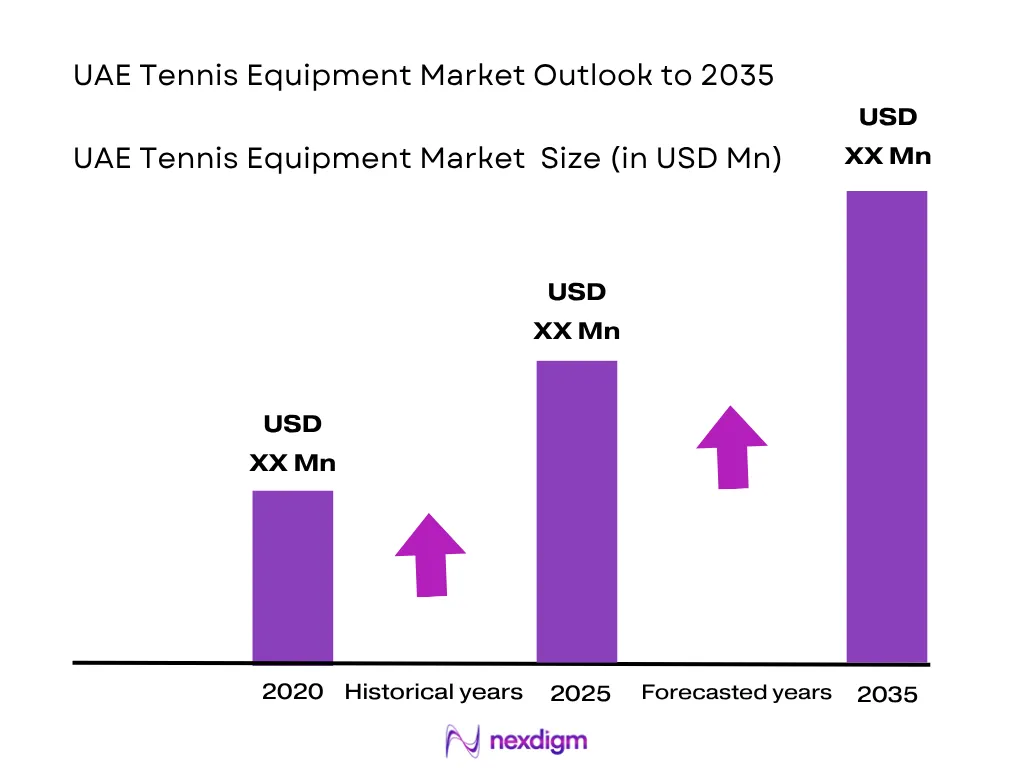
The UAE Tennis Equipment market is valued at approximately USD ~ million, driven by a combination of increasing sports participation, especially among youth and affluent consumers, and the growing popularity of tennis as a professional sport. The market’s expansion is further supported by investments in tennis infrastructure, such as the construction of state-of-the-art tennis courts and academies, particularly in cities like Dubai and Abu Dhabi. Consumer demand for premium and innovative tennis products, such as advanced racquets, shoes, and accessories, is another factor fueling market growth.
Dubai and Abu Dhabi dominate the UAE Tennis Equipment market due to their status as economic hubs with a strong sports culture. Dubai, in particular, is home to several prestigious tennis tournaments, such as the Dubai Tennis Championships, which boosts the visibility of the sport. The strong expatriate population, particularly from tennis-playing nations like the UK, France, and Australia, further increases demand for tennis equipment. Abu Dhabi benefits from being a growing center for sports events, attracting international players and consumers alike.
Market Segmentation
By Equipment Type
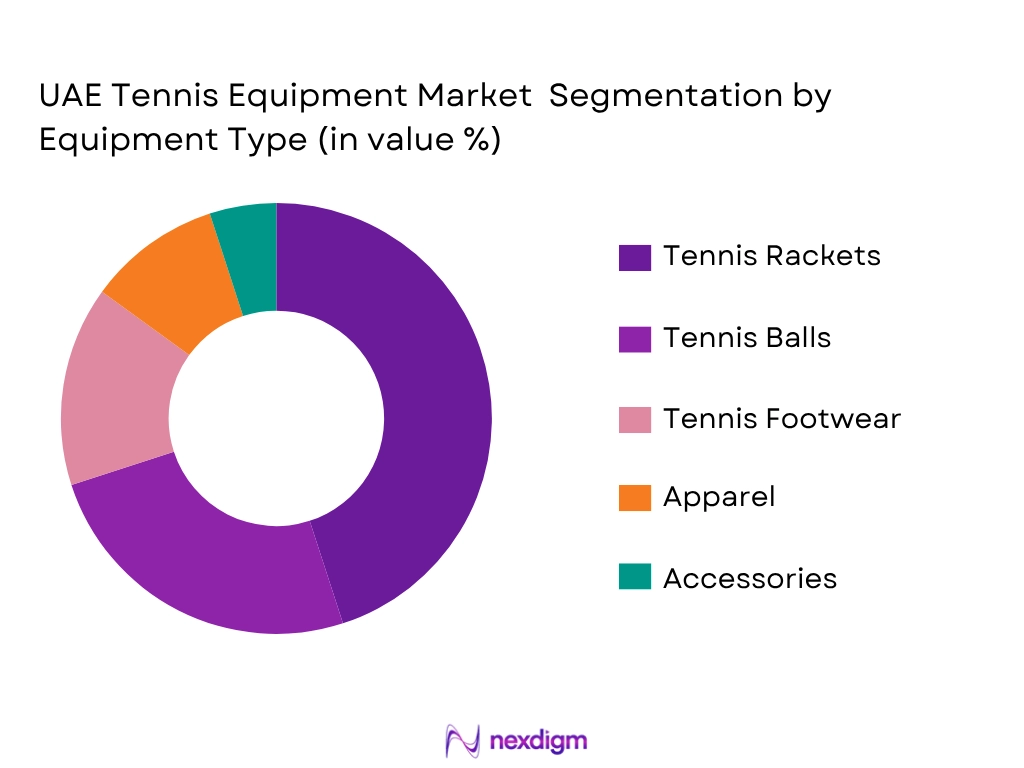
The UAE Tennis Equipment market is segmented by product type, including racquets, balls, footwear, apparel, and accessories. Racquets hold the dominant share within this segmentation, as they are crucial to players’ performance and often purchased at regular intervals due to wear and tear. Leading brands like Wilson and Babolat have captured significant market share due to their focus on performance-enhancing technology, such as lighter materials and aerodynamic designs. Furthermore, the increasing demand for premium racquets among both recreational and professional players has fueled growth in this segment.
By Distribution Channel
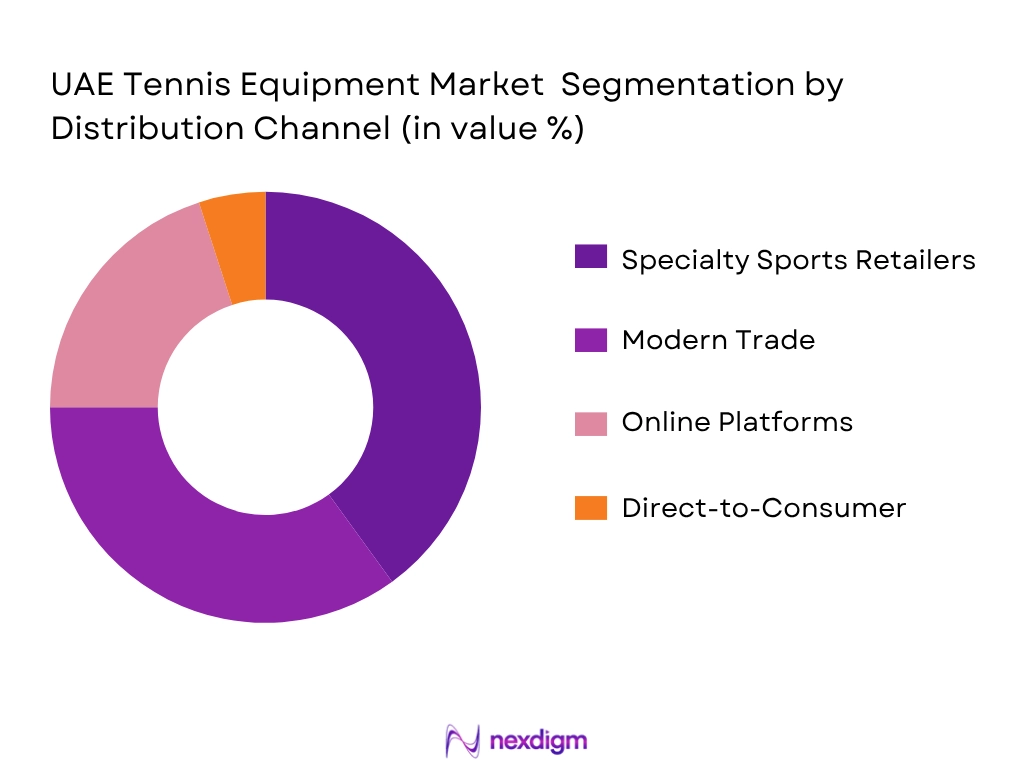
The market is also segmented by distribution channel into specialty sports retailers, modern trade (hypermarkets and sports megastores), online platforms, and direct-to-consumer channels. Online platforms have been growing rapidly, particularly due to the convenience offered to consumers and the rise in e-commerce penetration. The shift toward online shopping is driven by younger, tech-savvy consumers who prefer to shop from the comfort of their homes. Additionally, the growing influence of social media platforms and influencer marketing has driven awareness and sales through online channels.
Competitive Landscape
The UAE Tennis Equipment market is dominated by a few major international players, including Wilson Sporting Goods, Head NV, Babolat, Yonex, and Prince. These companies have a strong presence in the UAE due to their advanced product offerings and well-established retail networks. Local retailers and distributors also play a crucial role in providing access to global brands through strategic partnerships and localized services. The competitive environment is characterized by a high level of brand loyalty, innovation in product features, and a focus on high-end product offerings for premium consumers.
| Company Name | Establishment Year | Headquarters | Product Focus | Distribution Network | R&D Investment | Market Share in UAE |
| Wilson Sporting Goods | 1914 | USA | ~ | ~ | ~ | ~ |
| Head NV | 1950 | Austria | ~ | ~ | ~ | ~ |
| Babolat | 1875 | France | ~ | ~ | ~ | ~ |
| Yonex | 1946 | Japan | ~ | ~ | ~ | ~ |
| Prince Sports | 1970 | USA | ~ | ~ | ~ | ~ |
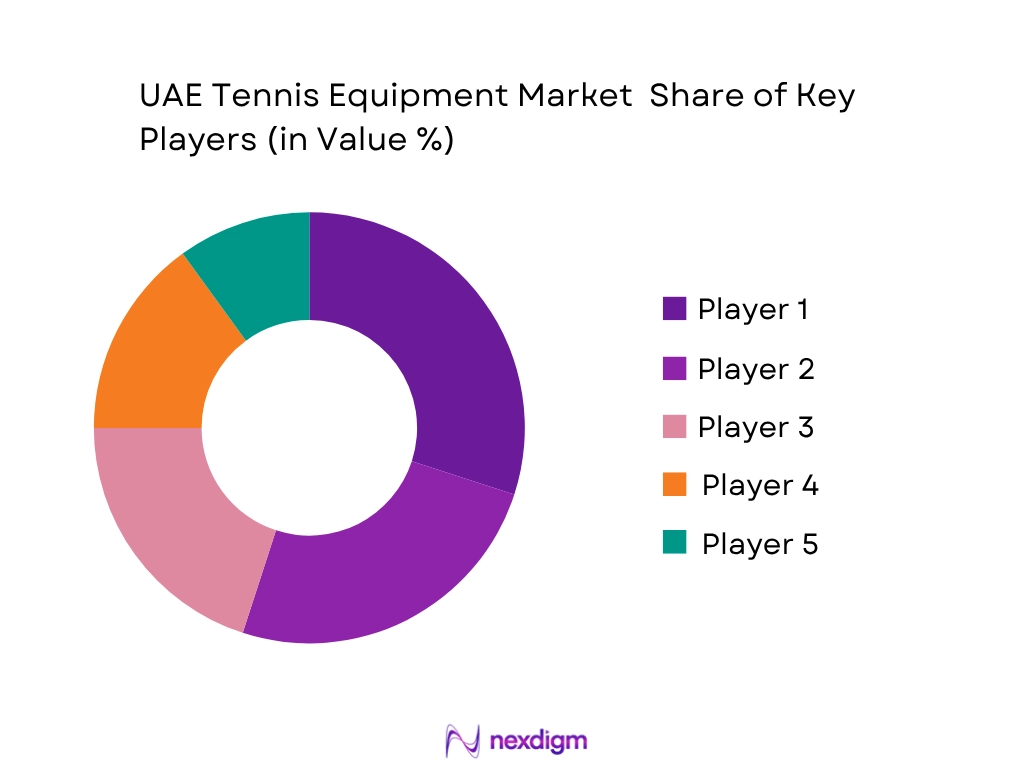
UAE Tennis Equipment Market Analysis
Market Drivers
Growth in Sports Participation Rate in Tennis
Global participation in tennis and physical activity has shown measurable expansion in recent years, directly influencing demand for sports products, training, and facilities. According to the ITF Global Tennis Report, the total number of tennis players across 199 countries reached approximately 106 million individuals in 2024, up from 84.4 million in 2019, indicating a significant increase in active engagement across ages and regions. This dataset also reveals that Asia accounted for 35.3 million tennis players, making it the largest continent in absolute terms, which highlights growth potential in emerging markets where middle‑class incomes and leisure spending have been rising. Such participation metrics are consistent with broader physical activity engagement captured by the Global Wellness Institute, which reported that consumer spending on sports and active recreation reached USD 281.2 billion in 2023, reflecting sustained involvement in recreational sports and signalling higher grassroots engagement in physical activity beyond competitive play. Increased participation rates correlate with government health priorities such as those outlined by WHO, which has emphasised physical activity as a key public health objective, and stimulate demand across related market segments including coaching, sporting infrastructure, and equipment supply. These broader participation trends underpin the structural growth in demand for tennis and sports‑specific services worldwide, aligning with macroeconomic data on consumer engagement in recreational activity in 2024.
Expansion of Tennis Academies and Coaching Infrastructure
The proliferation of structured tennis coaching and academy infrastructure supports sustained development of player skills, elevates user engagement, and enhances market demand for related goods and services. Data from current industry analyses report that the global tennis academy market reached an approximate valuation of USD 8.4 billion in 2024, reflecting widespread establishment and utilisation of academy facilities by beginners, intermediate learners, and advanced players alike. This quantification translates directly into increased enrolment, demand for professional coaching staff, and expanded facility operations. Multiple international academies, such as the Mouratoglou Tennis Academy, which has expanded with multiple centres across Europe and Asia, and other established entities like the Rafa Nadal Academy, demonstrate the institutionalisation of tennis training globally. Moreover, in urban hubs such as Delhi and Gurgaon alone, directory listings identify 20+ distinct tennis academies and training facilities, indicating dense coaching infrastructure within key metropolitan areas and a wide base of participant access points. Expansion of academies supports increased demand for ancillary services, from sports apparel and equipment to competitive event organisation, and reflects macro trends in organised sports participation where structured training infrastructure fuels broader market engagement.
Market Challenges
Supply Chain Disruptions & Import Dependency in Sporting Goods
The sporting goods industry continues to face logistical complexity and import dependency issues that constrain timely supply distribution and elevate operational risks. Analysis of current global trade data indicates that sporting goods, including tennis equipment and athletic wear rely heavily on cross‑border manufacturing hubs, particularly in Asia‑Pacific regions, creating structural exposure to geopolitical shifts, tariff fluctuations, and freight cost volatility. Historical and recent trade datasets show that although global import–export volumes for sporting goods have generally increased with rising consumer demand, North America and Europe remain net import dependent, which subjects retail and distribution networks to external supply chain shocks such as port congestion, tariff changes, and raw material price inflation. Firms in these regions frequently grapple with regional disparities in supplier concentration, as cost‑advantaged manufacturing in emerging markets drives export flows while limiting domestic production capacity.These supply chain inefficiencies directly affect availability of key products, including tennis rackets, balls, footwear, and protective gear, with lead time variability and logistics costs impacting both pricing strategies and retailer margins. In 2025, companies expanded peak inventory levels to mitigate delayed deliveries, further evidencing reactive supply strategies in the face of systemic disruptions. Collectively, this landscape constrains the market’s ability to respond to real‑time consumer demand and sustains import reliance as a structural challenge for sporting goods segments.
Seasonal Demand Fluctuations in Sports Consumption and Retail
Demand dynamics in sports goods and apparel exhibit pronounced seasonality, which presents operational and revenue planning challenges for manufacturers, retailers, and service providers. Analysis of industry behaviour indicates that consumer spending and participation levels vary significantly throughout the year, driven by climatic conditions, school calendars, competition schedules, and regional holiday cycles that influence the purchase and utilisation patterns of sports products. This cyclicality complicates inventory planning, distribution scheduling, and retail forecasting. Sporting goods brands regularly report that peaks in demand often correlate with end‑of‑year school terms, summer sports leagues, and holiday buying seasons requiring substantial pre‑positioning of inventory, which raises holding costs and necessitates precise logistical coordination. Conversely, slower periods can lead to excess stock and pricing pressure, impacting profitability. The technical literature on demand forecasting emphasises that inadequate anticipation of seasonal swings contributes to delivery delays, empty shelves during high‑demand periods, or overstocks during troughs. For tennis‑specific categories such as racquets, shoes, and protective gear, these seasonal fluctuations are especially evident around school and collegiate competitive seasons, annual sporting calendars, and community programme cycles, reinforcing the need for advanced demand planning to align supply with intermittent consumption patterns.
Market Opportunities
Growth in Digital Retail & Omni‑Channel Experiences in Sports
The transition toward omnichannel retail models and digital engagement platforms is reshaping consumer access to sports equipment and experiences. While macro consumer spending data on e‑commerce shows persistent growth in digital retail channels across multiple segments in 2024, sports and recreation products benefit from this structural shift as purchasers increasingly combine online browsing with in‑store fulfilment or experiential services. In the broader sporting goods context, approximately 70% of industry stakeholders report integration of omnichannel strategies that include an ecosystem of coordinated online platforms, physical retail outlets, and direct‑to‑consumer engagement tools, demonstrating widespread adoption of digital retail frameworks to capture fragmented demand. E‑commerce demand patterns, supported by robust digital infrastructure and smartphone penetration, allow niche products such as performance‑oriented tennis apparel or racquets suited for different play styles to reach geographically dispersed buyers without reliance on proximity to physical stores. Retailers and brand owners leveraging analytics from online interactions can tailor promotions, optimise stock levels across channels, and drive deeper consumer loyalty through seamless experiences, thereby unlocking revenue opportunities that align with consumer expectations for convenience, selection, and integrated service delivery.
Performance‑Oriented Products and Consumer Demand for Sports‑Specific Gear
Consumer demand for performance‑oriented sports products has risen alongside increasing engagement in organised physical activity and athletic training. Macroeconomic indicators highlight that consumer spending on sports and active recreation reached USD 281.2 billion in 2023, indicating a substantial allocation of household expenditure toward quality gear, facility access, and specialised sports services. The tennis segment exemplifies this trend, as players across proficiency levels show preference for racquets, footwear, apparel, and training aids designed to support specific biomechanical demands of the sport. Data from global physical activity spending further indicate that subsets such as sports and active recreation contribute more than USD 281 billion annually to overall physical activity markets, signalling broad consumer willingness to invest in better‑performing products rather than basic alternatives. This demand is underpinned by demographic groups, including youth players engaged in tournaments and adult coaches prioritising skill development, who prioritise performance enhancements for comfort, durability, and competitive benefit. The shift toward consumer preference for advanced sports gear creates a market opportunity for specialised producers and retailers to differentiate through innovation, technology integration (such as wearable performance trackers), and tailored product offerings matched to distinct play categories. Strong consumer spending and heightened engagement in disciplined sport forms substantiate this opportunity, as players increasingly value gear that enhances performance outcomes and user experience.
Future Outlook
Over the next decade, the UAE Tennis Equipment market is expected to show significant growth, driven by a combination of factors, including increased participation in tennis, the rising popularity of sports among the youth, and the continued development of the country’s sports infrastructure. In particular, government initiatives to promote sports at a grassroots level and the country’s positioning as a global sports hub will continue to spur demand for tennis-related products. With technological advancements in equipment and the growing trend of personalizing sports gear, the market for high-performance tennis equipment is likely to expand at a strong pace.
Major Players
- Wilson Sporting Goods
- Head NV
- Babolat
- Yonex
- Prince Sports
- Tecnifibre
- Slazenger
- Dunlop
- Nike
- Adidas
- Asics
- Lotto Sport
- Puma
- Under Armour
- New Balance
Key Target Audience
- Investments and venture capitalist firms
- Government and regulatory bodies (UAE Ministry of Sports, Dubai Sports Council)
- Sports retailers and distributors
- Tennis academies and professional coaches
- Sporting goods manufacturers
- Importers of international brands
- Sports event organizers
- Fitness clubs and recreational centers
Research Methodology
Step 1: Identification of Key Variables
The initial phase involves constructing an ecosystem map of all major stakeholders in the UAE Tennis Equipment market, gathering data from industry reports, retail statistics, and consumer surveys to identify key trends, challenges, and growth drivers.
Step 2: Market Analysis and Construction
Historical data will be compiled, focusing on the tennis equipment market’s performance in various regions of the UAE. Sales data from major retailers, product category performance, and consumer behavior will be analyzed to ensure accuracy.
Step 3: Hypothesis Validation and Expert Consultation
Market hypotheses will be validated through expert interviews with retailers, distributors, and manufacturers. These consultations provide insights into market trends, operational challenges, and consumer preferences, helping to refine and confirm findings.
Step 4: Research Synthesis and Final Output
The final phase involves compiling the data gathered through primary and secondary research to create a comprehensive market report. This will include verified projections, market trends, and an outlook on the key segments driving growth.

- Executive Summary
- Research Methodology (Market Definitions and Assumptions, Abbreviations, Market Sizing Approach [Units, Market Value, Price Index], Data Collection Framework, Primary and Secondary Research Spine, Sampling & Interview Protocol, Limitations & Adjustments)

- Definition and Scope
- Genesis and Market Evolution
- Competitive Terrain and Modernization Cycle
- Value Chain & Supply Chain Mapping
- Distribution Ecosystem
- Channel Feedback Loop and Wholesale Dynamics

- Growth Drivers (Growth in Sports Participation Rate, Expansion of Tennis Academies & Coaching Infrastructure, Rising Disposable Income, Premium Sports Consumption Trends, Government Initiatives and Sports Tourism Promotion)
- Market Challenges (Supply Chain Disruptions & Import Dependency, Seasonal Demand Fluctuations, High Cost of Premium Equipment vs Price Sensitivity, Competitive Pricing Pressure from E‑commerce)
- Market Opportunities (Growth in Digital Retail & Omni‑channel Experiences, Emergence of Custom/Performance‑oriented Products, Institutional Procurement (Schools, Sports Leagues, Federations), Partnerships Between Brands and Local Clubs)
- Market Trends (Smart Equipment & Sensor Integration, Sustainability in Materials & Packaging, Athlete‑centric Product Differentiators, Localised Product Mix Adaptation)
- Regulatory and Trade Environment (Import Tariffs & Free Trade Agreements, Compliance Standards, Sports Federation Policy Impact, Intellectual Property and Branding Enforcement)
- SWOT Analysis (Strengths, Weaknesses, Opportunities, Threats of the UAE tennis equipment market)
- Stakeholder Ecosystem (Relationships among manufacturers, distributors, retail chains, sports federations, tennis clubs and coaches)
- Porter’s Five Forces (Competitive rivalry, supplier power (e.g. material suppliers), buyer power, threat of new entrants (niche sports tech startups), threat of substitutes)

- By Value (2020-2025)
- By Volume (2020-2025)
- By Average Selling Price (2020-2025)

- By Product Category (In Value %)
Racquets
Balls
Footwear
Apparel
Accessories - By Usage Application (In Value %)
Recreational/Leisure
Professional/Competitive
Academies & Coaching Facilities
Institutional (Schools/Colleges) - By Distribution Channel (In Value %)
Specialty Sports Retailers
Modern Trade
Online Platforms
Direct to Consumer - By End‑User Age Segment (In Value %)
Juniors (Under 14)
Youth (14–24)
Adult Amateur (25–44)
Competitive Adults (25–44)
Seniors (45+) - By Price Tier (In Value %)
Economy
Mid‑Tier
Premium/Elite - By Region (Value %)
Dubai
Abu Dhabi
Sharjah
Northern Emirates
Southern Emirates

- Market Share Analysis (Value, Volume, Channel Breakdown)
- Cross‑Comparison Parameters (Brand Positioning, SKU Portfolio Breadth, Channel Reach, SKU Price Range, Regional Stock Keeping Units, End‑User Penetration, Warranty & After‑Sales Support, Digital Engagement Metrics)
- Pricing Analysis (Average selling prices and SKU-level pricing for major brands, premium vs standard product lines)
- SWOT of Major Players (Strengths, Weaknesses, Opportunities, Threats for key companies)
- Competitive Intelligence & Benchmarking (Pricing & Promotional Index, Product Launches & Innovation Pipeline, Retailer & Consumer Sentiment Analysis, Omni‑channel Performance Scorecards)
- Detailed Profiles of Major Companies
Wilson Sporting Goods
Head NV
Babolat
Yonex
Prince Sports
Tecnifibre
Slazenger
Dunlop
Nike
Adidas
Asics
Lotto Sport
Puma
Under Armour

- Demand and Utilization (Sales breakdown by end-user type: recreational players vs professional athletes, club/academy purchases)
- Consumer Demographics and Purchasing Behavior (Age, income, gender distribution, purchasing frequency, channel preferences)
- Budget and Price Sensitivity (Pricing tiers: premium vs mid-range vs value segment, consumer spending patterns on equipment and apparel)
- Needs, Desires and Pain Points (Comfort, performance, and durability requirements, desire for brand/image, issues like gear availability or fitting)
- Decision-Making Process (Influencers in purchase decisions: coaches’ recommendations, peer reviews, online research, role of professional endorsements and demo clinics)

- By Value (2026-2035)
- By Volume (2026-2035)
- By Average Price (2026-2035)


 Request a Sample
 Ask for Customization
 Get a Quote
 Enquire Now