

 Download PDF
Market Overview
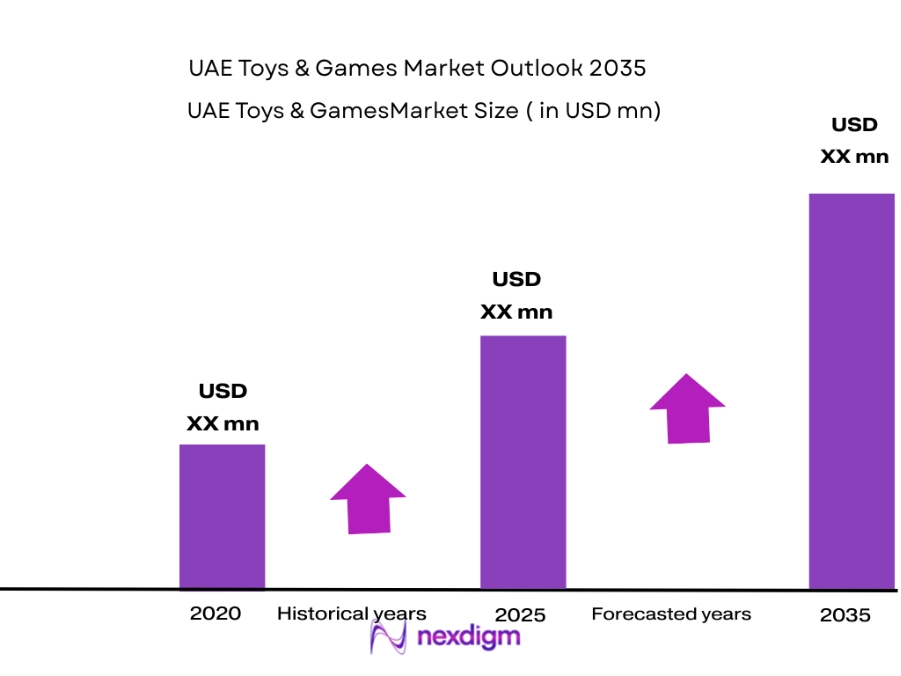
The UAE toys & games market is valued at approximately USD ~ million based on current revenue analysis, driven by high per capita income, strong consumer spending on leisure products, and a culturally diverse population with significant spending on children’s recreational goods. Heavy retail engagement during festive seasons and a rise in e‑commerce sales have further supported revenue growth in 2023 and 2024, reflecting robust demand across traditional and modern toy categories.
The market’s activity centers around Dubai and Abu Dhabi, which dominate demand due to higher disposable incomes, dense retail infrastructure, and a concentration of expatriate families with a strong preference for branded and licensed toys. Both cities host the majority of organized retail outlets, flagship stores, and family‑oriented shopping experiences, which underpin consumer engagement and purchasing patterns in the UAE toys sector.
Market Segmentation
By Product Type
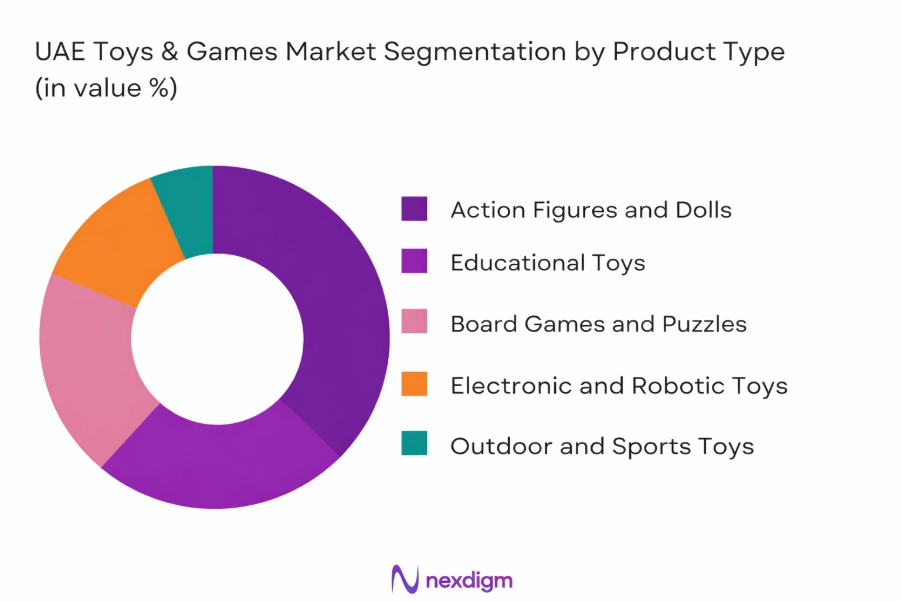
By product type, educational toys lead market share, reflecting a strong parental preference for products that support cognitive skill development and early‑learning outcomes. This trend is supported by increasing awareness of STEM‑oriented play, which encourages parents to invest in toys that combine learning with play. Educational toys often feature technology integration, problem‑solving elements, and long‑term educational value, which together elevate consumer demand. Electronic toys hold the second largest portion, driven by tech‑savvy consumer preferences and demand for interactive products that incorporate connectivity and smart features. Licensed dolls and action figures maintain relevance, particularly tied to global media franchises, while puzzles and board games continue to appeal due to family‑oriented play and social interaction.
By Distribution Channel
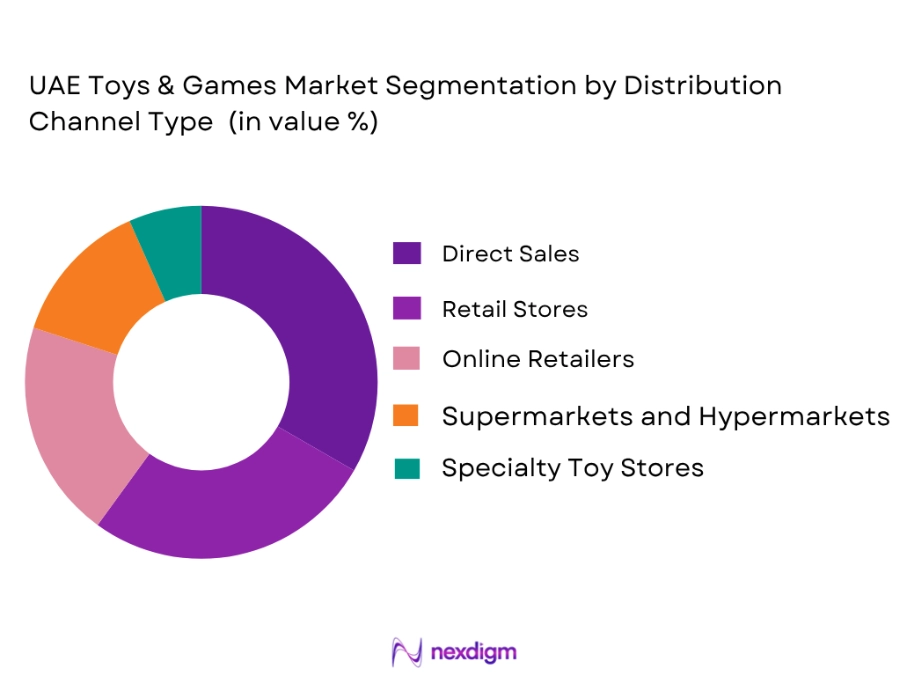
The toy market is divided into several distribution channels, each contributing differently in value terms. Direct sales allow manufacturers to engage with consumers directly, offering exclusive products and personalized services. Retail stores provide a traditional shopping experience with tangible product interaction, while specialty toy stores focus on niche or premium products, catering to dedicated audiences. Online channels have grown rapidly, driven by convenience, wider selection, and competitive pricing, enabling consumers to shop from home. Supermarkets and hypermarkets leverage high foot traffic and one-stop shopping, combining toys with everyday purchases. Each channel plays a distinct role in overall market value distribution.
Competitive Landscape
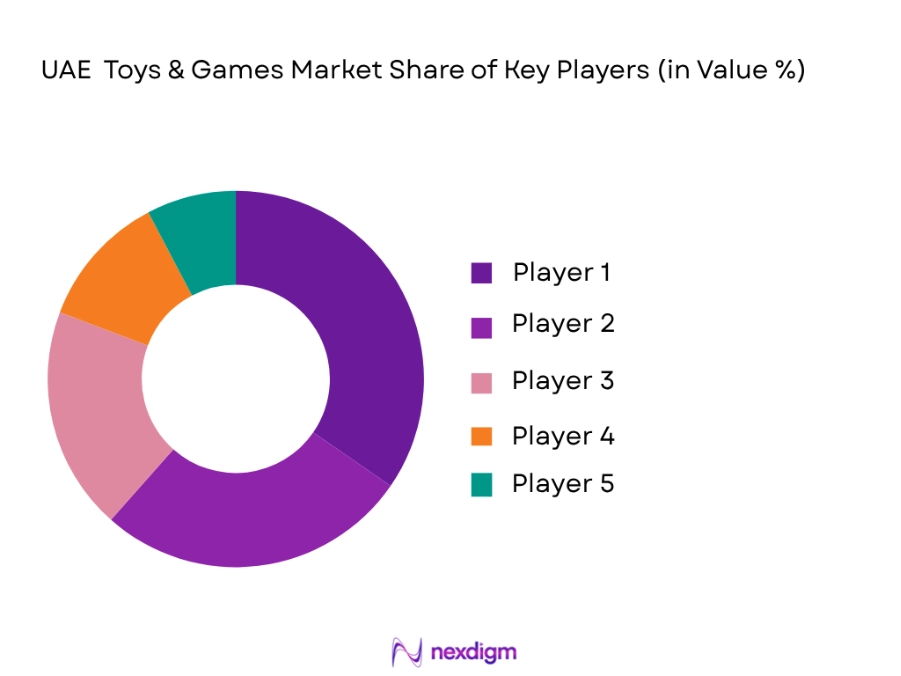
The UAE toys & games market remains moderately diversified but anchored by key global and regional players that shape consumer access and supply dynamics. International brands and retail chains leverage strong distribution networks, extensive product portfolios, and strategic retail locations to sustain market prominence. Emerging e‑commerce platforms and specialty local retailers complement the landscape by providing alternative channels and niche offerings.
| Company | Est. Year | Headquarters | Global Presence | Product Breadth | Retail Footprint | Online Reach | Innovation Focus | Brand Recognition |
| Mattel Inc. | 1945 | El Segundo, California, USA | ~ | ~ | ~ | ~ | ~ | ~ |
| LEGO Group | 1932 | Billund, Denmark | ~ | ~ | ~ | ~ | ~ | ~ |
| Hasbro Inc. | 1923 | Pawtucket, Rhode Island, USA | ~ | ~ | ~ | ~ | ~ | ~ |
| Bandai Namco | 1950 | Tokyo, Japan | ~ | ~ | ~ | ~ | ~ | ~ |
| Simba Dickie Group | 1982 | Fürth, Germany | ~ | ~ | ~ | ~ | ~ | ~ |
UAE Toys & Games Market Analysis
Growth Drivers
Rising Disposable Income and Middle-Class Expansion
The UAE toys & games market is significantly propelled by rising disposable income and the expansion of the middle-class population. Families increasingly prioritize spending on children’s recreational and educational products, reflecting the growing emphasis on quality and branded toys. High-income expatriate communities in urban centers like Dubai and Abu Dhabi contribute to strong demand for premium and licensed toys. Additionally, seasonal spending during holidays and cultural events further elevates market consumption. Retailers capitalize on this economic advantage by offering a wide range of toys across various price points, ensuring accessibility while maintaining brand appeal. The combination of economic prosperity and consumer willingness to invest in child development underpins sustained market growth.
Technological Advancements and Smart Toys
Technological innovation is a key growth driver, with smart toys, interactive games, and app-connected products gaining popularity. Parents increasingly seek toys that combine entertainment with learning, such as programmable robots, STEM kits, and AI-enabled educational devices. Advancements in technology enable manufacturers to design toys with enhanced interactivity, gamification features, and personalized experiences, aligning with modern parenting trends focused on skill development. These innovations also attract tech-savvy children who are early adopters of interactive play. Retailers and e-commerce platforms actively promote these technologically advanced products, leveraging digital marketing to highlight their benefits, which helps expand market penetration. The convergence of play and technology is redefining consumer expectations in the UAE toy industry.
Market Challenges
High Competition and Market Saturation
The UAE toys & games market faces high competition due to the presence of numerous international and regional players, leading to saturation in certain segments. Global brands like LEGO, Hasbro, and Mattel compete alongside local retailers, increasing pressure on pricing and promotional strategies. This competitive intensity challenges new entrants and smaller players to differentiate their products effectively. Market saturation is particularly pronounced in urban retail hubs where multiple stores offer similar product lines, making consumer loyalty harder to sustain. Brands must continuously innovate in design, licensing, and customer experience to maintain market share. Failure to adapt to these dynamics may result in revenue erosion despite growing overall demand.
Safety and Regulatory Compliance Requirements
Compliance with strict safety regulations and import standards is a significant challenge for the UAE toys & games market. Products must adhere to guidelines set by the Emirates Authority for Standardization and Metrology, ensuring materials, chemical content, and mechanical safety meet international norms. Non-compliance risks legal penalties, product recalls, and reputational damage. The regulatory burden can increase production and operational costs, especially for small or new market entrants. Additionally, ensuring consistent quality across imported toys from multiple global sources requires rigorous monitoring and testing, which adds logistical complexity. While compliance safeguards consumers, it also acts as a barrier that requires strategic planning and operational investment by market participants.
Opportunities
Growing Demand for Educational and STEM-Based Toys
The UAE market shows strong potential for educational and STEM-based toys that foster cognitive development and early learning skills. Parents and educators increasingly prioritize products that integrate learning into play, reflecting global trends toward skill-focused childhood development. STEM kits, robotics, puzzle games, and coding-based toys are gaining traction across both urban and expatriate communities. Schools and enrichment programs often partner with toy brands for curriculum support, creating additional sales channels. This segment benefits from growing awareness of long-term educational benefits, leading to higher willingness to invest in premium products. The educational segment’s growth potential is amplified by digital marketing campaigns and e-commerce distribution, providing convenient access to consumers.
Expansion of Online Retail and Subscription Models
The rapid adoption of e-commerce and subscription-based toy services presents a major growth opportunity. Digital platforms allow consumers to conveniently purchase a wide variety of products with delivery to home, which is especially attractive for busy families. Subscription models that deliver curated toy boxes on a monthly basis provide continuous engagement and predictable revenue streams for businesses. These models also support personalized recommendations, enhancing consumer experience. With increasing internet penetration and mobile app adoption, online sales channels are expected to continue growing at a faster pace than traditional retail. Market players can leverage this trend to expand their reach beyond urban centers, tap into smaller cities, and offer specialized or premium toy collections efficiently.
Future Outlook
The UAE toys & games market is projected to sustain steady growth through 2030, supported by the continued expansion of organized retail channels, omnichannel consumer engagement, and rising demand for educational and interactive toys. Urban family demographics and rising per‑capita spending on premium products will further support market growth. E‑commerce platforms are expected to increase their share as consumer behavior shifts toward digital shopping. Additionally, innovation in toy categories, particularly technology‑enabled play experiences and licensed franchise products, will remain key performance drivers in the competitive environment.
Major Players
- Mattel Inc.
- LEGO Group
- Hasbro Inc.
- Bandai Namco
- Simba Dickie Group
- Hamleys UAE
- Toys “R” Us UAE
- Early Learning Centre UAE
- Virgin Megastore UAE
- The Toy Store UAE
- Babyshop
- Al‑Futtaim Toys
- Centrepoint UAE
- LEGO UAE Retail
- Mumzworld (E‑Commerce)
Key Target Audience
- Toy Manufacturers
- Retail Chains and Specialty Toy Outlets
- Online Retail Platforms & Marketplaces
- Children’s Product Importers & Distributors
- Consumer Goods Investment & Venture Capitalist Firms
- Government and Regulatory Bodies
- Family Entertainment and Theme Park Operators
- Children’s Retail Event Organizers
Research Methodology
Step 1: Identification of Key Variables
The initial phase maps all major stakeholders in the UAE toys & games market using desk research, industry databases, and published secondary sources. The objective is to define variables such as product categories, distribution channels, market revenues, and consumer behavior.
Step 2: Market Analysis and Construction
Historical data and verified market size metrics are compiled and analyzed to establish trends. This includes segmenting by product, retail channel, and demographic usage patterns, validating revenue streams and growth drivers against external industry benchmarks.
Step 3: Hypothesis Validation and Expert Consultation
Key market assumptions are validated through interviews with industry experts, retail executives, and category managers. These engagements provide insights into operational realities, sales performance, and emerging trends that supplement secondary data.
Step 4: Research Synthesis and Final Output
Data from both bottom‑up market construction and expert inputs are synthesized to produce comprehensive forecasts and segmentation analyses. This ensures alignment between quantitative revenue figures and qualitative market insights for an accurate and balanced market outlook.

- Executive Summary
- Research Methodology (Market Definitions and Assumptions, Abbreviations, Market Sizing Approach, Consolidated Research Approach, Understanding Market Potential Through In-Depth Industry Interviews, Primary Research Approach, Limitations and Future Conclusions)

- Definition and Scope
- Market Dynamics Overview
- Market Genesis
- Major Players and Market Timeline
- Business Cycle and Trends
- Supply Chain and Value Chain Analysis

- Growth Drivers
Rising Disposable Income and Middle-Class Expansion
Increasing Focus on Child Development and Education
Technological Advancements and Smart Toys
Influence of Global Toy Trends and Pop Culture
Growth of E-commerce and Digital Marketing - Market Challenges
High Competition and Market Saturation
Import Dependence and Fluctuating Currency Rates
Safety and Regulatory Compliance Requirements
Counterfeit and Low-Cost Products
Changing Consumer Preferences - Opportunities
Expansion of Online Retail and Subscription Models
Growing Demand for Educational and STEM-Based Toys
Emergence of Eco-friendly and Sustainable Toys
Opportunities in Premium and Licensed Merchandise
Untapped Potential in Smaller Cities and Expat Communities - Key Trends
Integration of Technology and Interactive Features
Personalized and Customizable Toy Offerings
Rise in Licensing of Popular Media Franchises
Growth in Collectibles and Hobby-Based Toys
Focus on Innovative Packaging and User Experience - Government Regulations
- SWOT Analysis
- Porter’s Five Forces

- By Value, 2020–2025
- By Volume, 2020–2025
- By Average Price, 2020–2025

- By Product Type (In Value %)
Action Figures and Dolls
Educational Toys
Board Games and Puzzles
Electronic and Robotic Toys
Outdoor and Sports Toys - By Age Group (In Value %)
0–3 Years
4–7 Years
8–12 Years
13+ Years - By Distribution Channel (In Value %)
Direct Sales
Retail Stores
Online Channels
Supermarkets and Hypermarkets
Specialty Toy Stores - By Region (In Value %)
Abu Dhabi
Dubai
Sharjah
Northern Emirates
Rest of UAE

- Market Share of Major Players by Value/Volume
- Market Share of Major Players by Product Type
- Cross Comparison Parameters (Company Overview, Business Strategies, Recent Developments, Strength, Weakness, Organizational Structure, Revenues, Revenues by Product Type, Number of Touchpoints, Distribution Channels, Number of Dealers and Distributors, Margins, Production Plant, Capacity, Unique Value Offering and Others)
- SWOT Analysis of Major Players
- Pricing Analysis Based on Product Categories for Major Players
- Detailed Profiles of Major Companies
Hasbro Inc.
Mattel Inc.
LEGO Group
Bandai Namco Holdings
Spin Master Corp.
Ravensburger AG
Smoby Toys
Funskool India Ltd.
Toy Kingdom UAE
Early Learning Centre UAE
Fisher-Price (Mattel)
Funskool Vietnam
Bkids Vietnam
Boon & Baby Innovations

- Market Demand and Utilization
- Purchasing Power and Budget Allocations
- Regulatory and Compliance Requirements
- Needs, Desires, and Pain Point Analysis
- Decision-Making Process

- By Value, 2026–2035
- By Volume, 2026–2035
- By Average Price, 2026–2035


 Request a Sample
 Ask for Customization
 Get a Quote
 Enquire Now