
 Download PDF
Market Overview
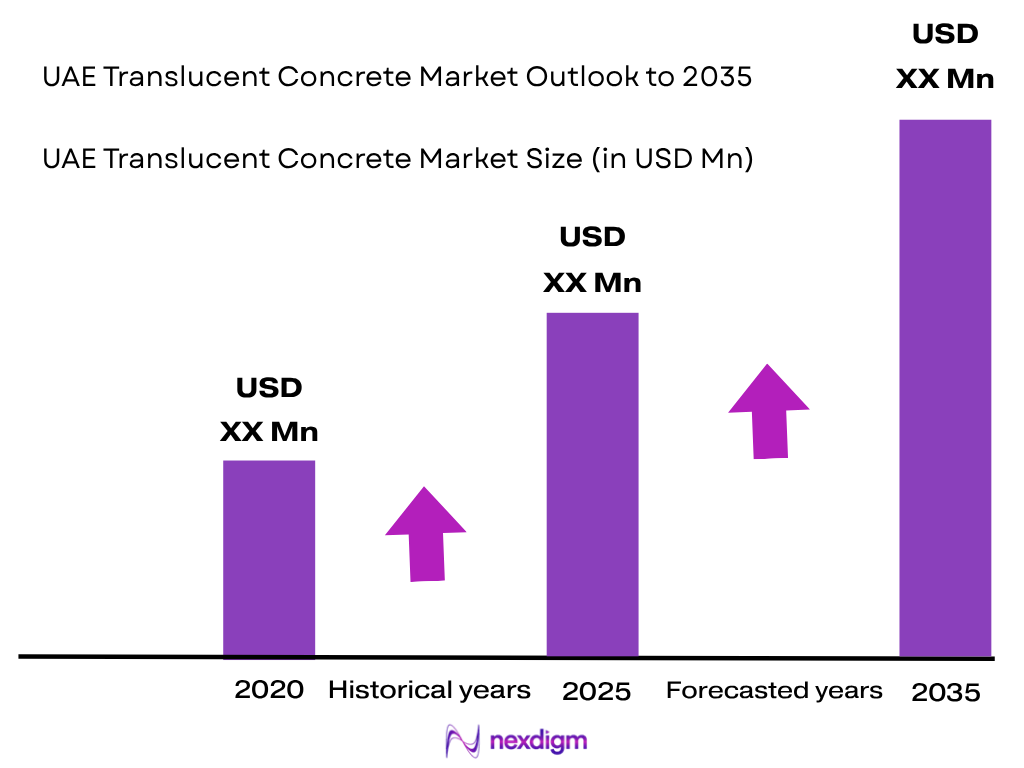
The UAE Translucent Concrete Market is valued at approximately USD ~ million, compared with USD ~ million in the preceding period, based on the historical market assessment. Demand is supported by premium construction, façade innovation, hospitality developments and sustainable building design. The wider economic environment is substantial, with UAE GDP reaching USD 552.32 billion, while Dubai’s hotel inventory expanded from 150,291 rooms across 821 establishments to 154,016 rooms across 832 establishments, strengthening the addressable architectural-project base.
Dubai and Abu Dhabi dominate the UAE Translucent Concrete Market because they concentrate premium real estate, luxury hospitality, landmark architecture and sophisticated façade projects. Dubai accommodated 17.15 million international overnight visitors before reaching 18.72 million, alongside expansion of its hotel inventory. Abu Dhabi recorded 28,249 real-estate transactions compared with a real-estate transaction value of AED 87.1 billion in the preceding period and launched 38 new off-plan projects, reinforcing demand for differentiated architectural materials.
Market Segmentation
By Light-Transmitting Technology
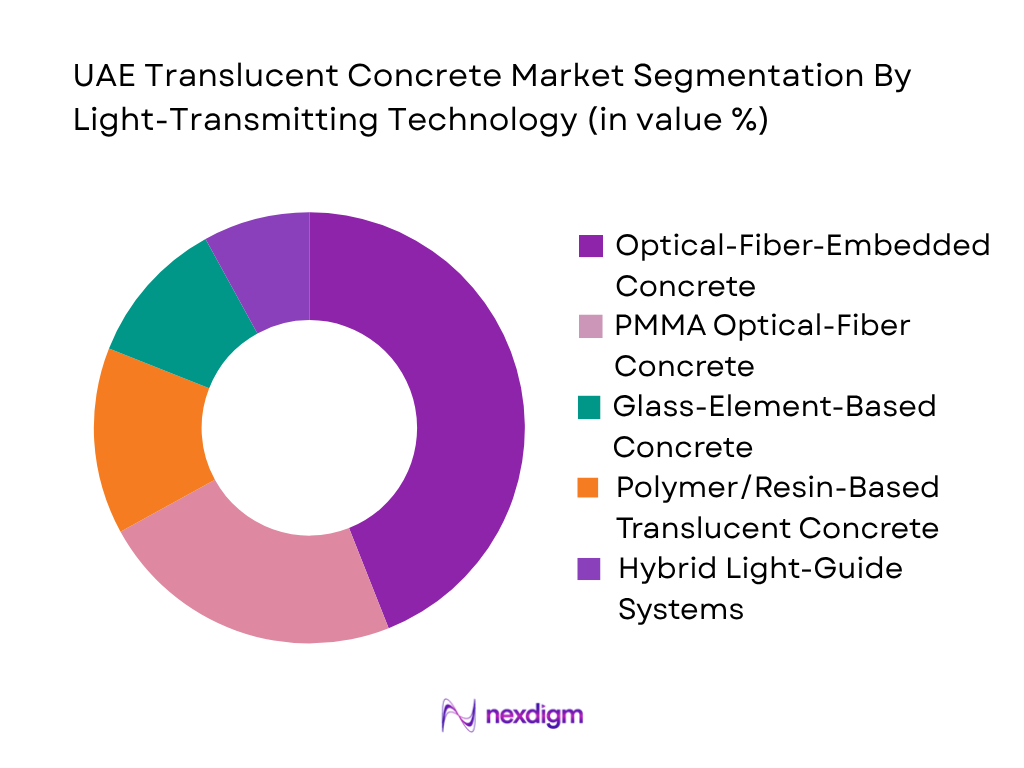
The UAE Translucent Concrete Market is segmented by light-transmitting technology into optical-fiber-embedded concrete, PMMA optical-fiber concrete, glass-element-based concrete, polymer/resin-based translucent concrete and hybrid light-guide systems. Optical-fiber-embedded concrete holds the dominant market share because the technology can transmit natural or artificial light through an otherwise opaque cementitious matrix while retaining the visual character of architectural concrete. This functionality is particularly relevant to UAE luxury hotels, flagship retail spaces, corporate buildings, museums and signature façades where material differentiation is a major design objective. Optical-fiber systems can be incorporated into precast panels, blocks, feature walls and illuminated architectural surfaces, providing flexibility for both exterior and interior applications. Dubai’s premium construction environment strengthens the addressable application base, with the emirate operating 832 hotel establishments containing 154,016 rooms. UAE green-building regulations also encourage integration between sustainable technologies and building design, reinforcing the potential relevance of daylight-transmitting architectural materials.
By Application
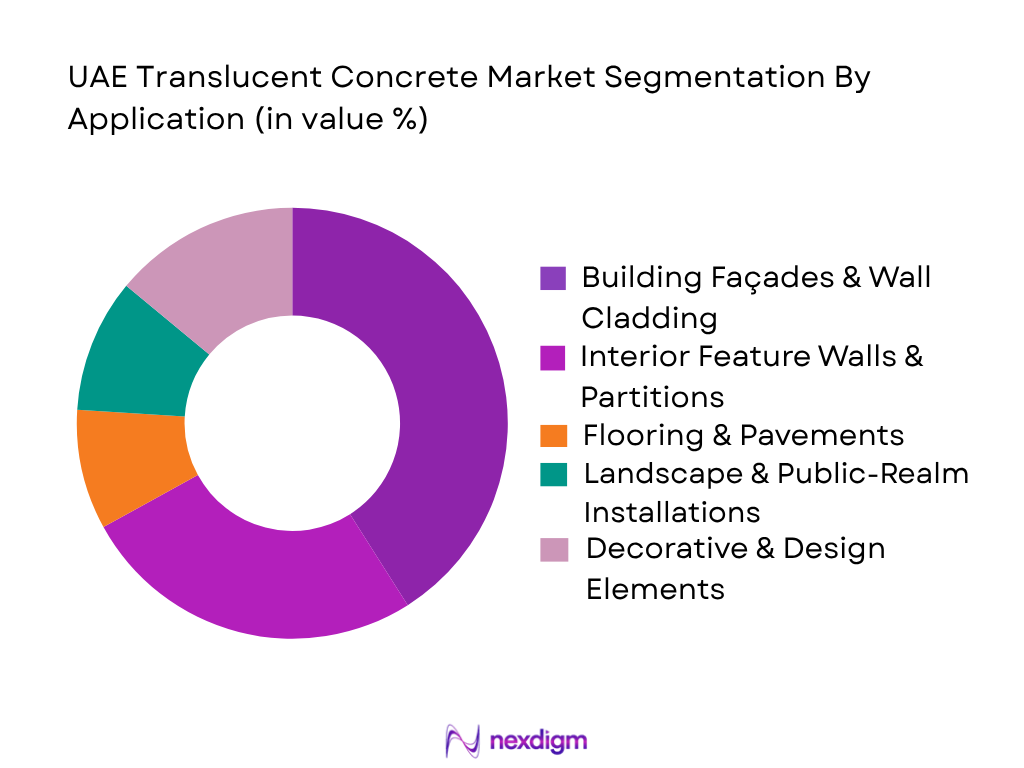
The UAE Translucent Concrete Market is segmented by application into building façades and wall cladding, interior feature walls and partitions, flooring and pavements, landscape/public-realm installations, and decorative architectural elements. Building façades and wall cladding represent the dominant application because UAE developers frequently use distinctive building envelopes to differentiate hospitality, commercial and mixed-use developments. Translucent concrete offers an unusual combination of concrete aesthetics, privacy, daylight transmission and artificial backlighting, making it particularly suitable for entrance areas, signature façades and high-visibility architectural elevations. Abu Dhabi’s construction sector reached AED 107.4 billion in value added, while the emirate added 29,415 new commercial or residential units, bringing the total stock to 783,970 units. The total number of buildings reached 299,360, illustrating the depth of the built-environment ecosystem available to specialist façade and architectural-material suppliers. Dubai’s mandatory Al Sa’fat framework further emphasizes sustainable building performance and innovation.
Competitive Landscape
The UAE Translucent Concrete Market has a specialized competitive structure involving international light-transmitting concrete technology companies, architectural concrete specialists and UAE-based building-material distributors. Competitive differentiation depends on optical-fiber technology, light-transmission capability, panel engineering, customization, climate suitability, façade integration and access to architects and developers. The market also requires strong technical support because translucent panels must integrate with anchoring, lighting and building-envelope systems under demanding UAE environmental conditions.
| Major Player | Establishment Year | Headquarters | Core Technology | Primary Product Form | Façade Capability | Interior Application Capability | Customization Capability | Middle East/UAE Relevance |
| Fapinex LLC | 2006 | UAE | ~ | ~ | ~ | ~ | ~ | ~ |
| LUCEM GmbH | 2007 | Germany | ~ | ~ | ~ | ~ | ~ | ~ |
| LiTraCon / Litracon | 2004 | Hungary | ~ | ~ | ~ | ~ | ~ | ~ |
| Heidelberg Materials / Italcementi | 1873 | Germany | ~ | ~ | ~ | ~ | ~ | ~ |
| Pan-United Corporation Ltd. | 1999 | Singapore | ~ | ~ | ~ | ~ | ~ | ~ |
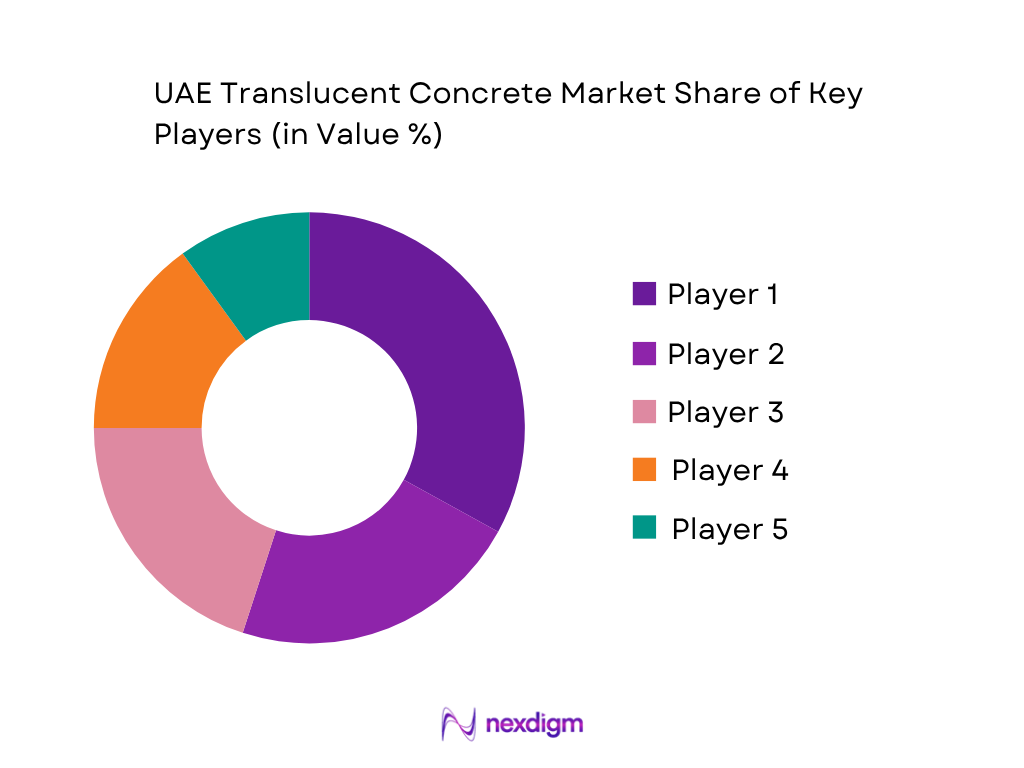
UAE Translucent Concrete Market Analysis
Growth Drivers
Expansion of Premium Hospitality and Architecturally Differentiated Developments
The expansion of UAE premium hospitality and destination infrastructure is strengthening the specification environment for translucent concrete across illuminated façades, entrance features, interior partitions, reception walls and bespoke architectural elements. Dubai welcomed 18.72 million international overnight visitors in 2024, compared with 17.15 million in 2023, while hotel capacity reached 154,016 rooms across 832 establishments, compared with 150,291 rooms across 821 establishments previously. Occupied room nights reached 43.03 million, compared with 41.70 million, demonstrating the physical utilization of the hospitality asset base. This is directly relevant to translucent concrete because luxury hotels and resorts represent suitable environments for optical-fiber-embedded panels, backlit concrete walls and customized light-transmitting surfaces that provide visual differentiation without replacing the concrete aesthetic. Dubai International Airport also handled 92.3 million passengers in 2024, demonstrating the scale of visitor-facing infrastructure supporting hospitality and destination development. Abu Dhabi Airports handled 29.4 million passengers across its five airports and recorded 249,747 aircraft movements, further widening the UAE infrastructure ecosystem in which premium architectural materials can be specified. Zayed International Airport connected Abu Dhabi with more than 125 destinations and added 29 routes, creating another substantial high-specification built environment. The broader macroeconomic foundation supports such premium development: World Bank data record UAE GDP at USD 552.32 billion in 2024 and GDP per capita at USD 50,273.5. The combination of more than 154,000 Dubai hotel rooms, nearly 19 million international overnight visitors, 92.3 million Dubai airport passengers and a high-income economy creates an established project ecosystem in which architects can specify translucent concrete for high-visibility hospitality, aviation and mixed-use developments.
Expansion of Construction and High-Specification Built Infrastructure
The expansion of the UAE built environment provides a direct demand foundation for translucent concrete because the material is principally used in architectural panels, wall systems, façades, partitions and customized precast elements rather than conventional mass concrete applications. Abu Dhabi recorded 29,415 new commercial and residential units in 2024, taking its total stock to 783,970 units, while the emirate’s building inventory reached 299,360 buildings. Construction activity generated AED 107.4 billion of value, illustrating the physical scale of the construction ecosystem available to specialist material suppliers. These numbers are relevant for translucent concrete because a growing building stock expands opportunities for signature façades, corporate entrances, hospitality interiors, illuminated walls and high-end public spaces where optical-fiber concrete can deliver differentiated visual performance. Abu Dhabi also recorded 28,249 real-estate transactions, including 16,735 sales transactions and 11,514 mortgage transactions, demonstrating substantial underlying property activity. During the same period, 38 new off-plan projects were launched and 12 major developments were completed, creating additional channels through which architects and developers can consider advanced architectural materials. The UAE’s macroeconomic fundamentals further support this construction environment. World Bank data record USD 552.32 billion in national GDP and USD 50,273.5 in GDP per capita during 2024. The combination of nearly 784,000 units in Abu Dhabi, almost 300,000 buildings, tens of thousands of property transactions and a high-income national economy provides a substantial specification base for suppliers capable of integrating translucent panels with UAE façade, precast and interior construction systems.
Market Challenges
Specialized Integration with UAE Façade and Building Systems
Translucent concrete faces a technical commercialization challenge in the UAE because optical-fiber panels must integrate with façade anchoring, structural connections, waterproofing, electrical infrastructure, backlighting and building-envelope systems rather than functioning as standalone decorative materials. The scale of the built environment magnifies the need for standardized engineering: Abu Dhabi contained 299,360 buildings in 2024 and 783,970 commercial and residential units, after 29,415 additional units entered the stock. The emirate’s construction activity reached AED 107.4 billion, demonstrating the size of the established construction ecosystem in which translucent concrete must compete for architectural specifications. Dubai’s hospitality environment adds another technically demanding application base, comprising 832 hotel establishments and 154,016 rooms, where specialized materials must satisfy operational, aesthetic and maintenance requirements. Dubai International Airport handled 92.3 million passengers, while Abu Dhabi Airports handled 29.4 million passengers, illustrating the operational intensity associated with another potential translucent-concrete end-use category. Fiber orientation, panel thickness, joint detailing, fixing arrangements, moisture protection and lighting access must remain consistent across custom installations, creating additional coordination requirements for manufacturers, precast fabricators and façade contractors. The national macroeconomic context also indicates a sophisticated high-income project environment. World Bank data record UAE GDP at USD 552.32 billion in 2024 and GDP per capita at USD 50,273.5. Consequently, commercial adoption depends on reliable technical documentation, repeatable fabrication, architectural mock-ups, structural integration, climate-compatible components and specialist installation expertise suitable for large UAE projects rather than merely demonstrating light-transmission functionality.
Limited Standardization Against Established Architectural Material Systems
Limited standardization represents a major challenge for UAE translucent concrete because the technology requires controlled placement of optical fibers or light-guiding elements within the cementitious matrix, followed by specialized casting, cutting, polishing and installation. This contrasts with mature façade supply chains for architectural glass, GRC/GFRC and conventional precast concrete that already serve a substantial UAE building base. Abu Dhabi alone recorded 299,360 buildings and 783,970 commercial and residential units in 2024, with 29,415 new units added during the period. Dubai simultaneously operated 832 hotel establishments containing 154,016 rooms, compared with 821 establishments and 150,291 rooms previously. These numbers illustrate the scale at which architects, developers and contractors require predictable material specifications and repeatable delivery. The UAE aviation ecosystem imposes similar expectations: Dubai International processed 92.3 million passengers, while Abu Dhabi Airports recorded 29.4 million passengers and 249,747 aircraft movements. Materials specified for these high-traffic facilities must support dependable manufacturing, installation and maintenance performance. Translucent-concrete suppliers therefore need consistent optical-fiber alignment, panel dimensions, light transmission, surface finishing and anchorage systems before they can participate beyond bespoke installations. The broader economy reinforces the requirement for professionalized production: World Bank data record UAE GDP at USD 552.32 billion in 2024 and GDP per capita at USD 50,273.5. Scaling within this construction environment requires standardized production processes, qualified installation partners, technical submittals, mock-up capabilities and dependable local technical support rather than project-by-project experimental fabrication.
Market Opportunities
Localization of Translucent Concrete for Premium Hospitality Applications
The UAE’s established hospitality infrastructure creates an opportunity for future localization of translucent concrete panels, blocks and bespoke architectural elements, allowing suppliers to serve projects requiring customized dimensions, finishes and integrated lighting. Dubai’s hotel inventory reached 154,016 rooms across 832 establishments in 2024, compared with 150,291 rooms across 821 establishments previously. International overnight visitors reached 18.72 million, compared with 17.15 million, while occupied hotel room nights reached 43.03 million, compared with 41.70 million. These current indicators demonstrate an extensive hospitality asset base capable of generating future renovation, refurbishment and new-build specifications without relying on forward projections. Dubai International Airport’s 92.3 million passengers reinforce the scale of tourism infrastructure feeding this hospitality ecosystem. Abu Dhabi Airports additionally handled 29.4 million passengers, recorded 249,747 aircraft movements and connected passengers through a network that included more than 125 destinations from Zayed International Airport. Local translucent-concrete fabrication could address feature walls, entrance installations, reception areas, partitions, illuminated façades and branded architectural surfaces while improving responsiveness for customized components. The macroeconomic environment provides an additional foundation for localization: World Bank data record UAE GDP of USD 552.32 billion in 2024 and GDP per capita of USD 50,273.5. Suppliers combining imported optical-fiber technologies with UAE-based casting, cutting, polishing, panel engineering, backlighting integration and installation can therefore target a substantial existing hospitality and destination infrastructure ecosystem while establishing domestic technical capabilities for future architectural projects.
Expansion into Smart Façades and High-End Urban Architecture
The UAE’s expanding high-specification built environment creates an opportunity for translucent concrete to develop beyond isolated decorative installations into smart façades, illuminated public spaces, commercial entrances, interactive walls and integrated architectural surfaces. Abu Dhabi added 29,415 commercial and residential units in 2024, increasing the total stock to 783,970 units, while the number of buildings reached 299,360. Construction activity generated AED 107.4 billion, providing a substantial current physical base for future material specification. The emirate also recorded 28,249 real-estate transactions, including 16,735 sales transactions and 11,514 mortgage transactions, while 38 off-plan projects were launched and 12 major developments reached completion. Dubai’s hospitality ecosystem adds another relevant application pool, with 154,016 rooms across 832 hotel establishments, while 18.72 million international overnight visitors demonstrate intensive utilization of destination infrastructure. Translucent concrete can capitalize on this environment through optical-fiber panels that transmit daylight, LED-integrated cementitious elements, backlit partitions, branded surfaces and customized precast systems designed for premium buildings. Dubai International’s 92.3 million passengers and Abu Dhabi Airports’ 29.4 million passengers additionally demonstrate the scale of high-traffic public infrastructure suitable for distinctive architectural treatments. World Bank data record national GDP at USD 552.32 billion in 2024 and GDP per capita at USD 50,273.5. These current economic, construction, hospitality and infrastructure indicators establish a credible foundation for future adoption across landmark, commercial, hospitality, aviation and public-realm architecture.
Future Outlook
The UAE Translucent Concrete Market is expected to expand at approximately ~% CAGR during 2026-2035, supported by continuing premium construction, hospitality development, architectural innovation, green-building requirements and demand for differentiated building materials. Dubai and Abu Dhabi are expected to remain the principal specification centres, while emerging hospitality and luxury real-estate activity in other emirates can broaden the application landscape.
Localization represents an important development pathway. The current market structure creates opportunities for international technology providers to collaborate with UAE precast manufacturers, façade contractors and architectural-material distributors. Local casting, cutting, finishing and panel customization could improve project responsiveness while imported optical fibers and proprietary light-guide technologies continue to provide the core optical functionality.
Major Players
- Fapinex LLC
- LUCEM GmbH
- LiTraCon / Litracon
- Heidelberg Materials / Italcementi
- Pan-United Corporation Ltd.
- Dupont Lightstone
- CRE Panel GmbH
- LCT GesmbH
- Glass Block Technology Ltd.
- Beton Brož
- Florack Bauunternehmung GmbH
- Concrete LCDA
- Gravelli / LiCrete
- GBA Architectural Products
- Translucent Crete LLC
Key Target Audience
- Translucent Concrete Manufacturers and Technology Developers
- Precast Concrete and Architectural Panel Manufacturers
- Optical Fiber, PMMA Fiber and Light-Guide Component Suppliers
- Real Estate Developers, Main Contractors and Façade Contractors
- Luxury Hospitality, Commercial Property and Infrastructure Developers
- Investments and Venture Capitalist Firms
- Government and Regulatory Bodies (Dubai Municipality, Abu Dhabi Department of Municipalities and Transport, Dubai Central Laboratory, Ministry of Energy and Infrastructure)
- Architectural Building Material Importers and Distributors
Research Methodology
Step 1: Identification of Key Variables
The initial phase involves constructing a detailed ecosystem map of the UAE Translucent Concrete Market, covering optical-fiber suppliers, concrete producers, technology developers, precast fabricators, distributors, façade contractors, architects and property developers. Secondary research identifies critical variables including installed area, product form, light-transmission technology, application mix, import dependency, manufacturing capability and emirate-level demand concentration.
Step 2: Market Analysis and Construction
Historical market information is compiled through top-down and bottom-up approaches. The top-down analysis evaluates UAE construction activity, premium real estate, hospitality development, façade demand and addressable architectural applications. The bottom-up model assesses supplier activity, translucent-concrete installations, panel consumption, installed surface area, product realization, imports and project references to establish the underlying market structure.
Step 3: Hypothesis Validation and Expert Consultation
Initial market hypotheses are validated through computer-assisted telephone interviews with technology suppliers, precast manufacturers, façade contractors, architectural-material distributors, architects, developers and other market participants. These consultations verify technology adoption, product specifications, procurement routes, project lead times, application preferences, localization potential and competitive positioning while identifying practical barriers to translucent-concrete adoption in UAE construction projects.
Step 4: Research Synthesis and Final Output
The final stage triangulates primary findings with construction statistics, real-estate development indicators, hospitality activity, company information and regulatory documentation. Supplier-level and project-level findings are reconciled with the top-down addressable-market framework. The resulting analysis provides a validated assessment of UAE translucent concrete demand by technology, application, end-use sector, emirate and competitive positioning.

- Executive Summary
- Research Methodology (Market Definition and Scope, UAE Translucent Concrete Market Classification, Light-Transmitting Concrete Technology Mapping, Optical-Fiber-Embedded Concrete Assessment, PMMA Optical Fiber Concrete Evaluation, Glass-Fiber Light-Transmitting Concrete Analysis, Resin and Polymer-Based Translucent Concrete Assessment, Precast Translucent Concrete Panel Evaluation, Translucent Concrete Block Assessment, Architectural Panel Performance Mapping, Light Transmission Efficiency Analysis, Compressive Strength Assessment, Flexural Strength Evaluation, Optical Fiber Density Analysis, Panel Thickness and Dimension Assessment, Surface Finish Evaluation, Façade Application Mapping, Interior Application Assessment, Building Type Demand Mapping, Precast Manufacturing Assessment, Architectural Specification Analysis, Import Dependency Assessment, Domestic Manufacturing Capability Assessment, Supply-Side Assessment, Demand-Side Assessment, Top-Down Market Sizing, Bottom-Up Market Sizing, Primary Industry Interviews, Data Triangulation, Forecasting Framework)

- Definition and Scope
- UAE Translucent Concrete Industry Evolution and Development of Optical-Fiber-Embedded Concrete, Light-Transmitting Cementitious Materials, Precast Translucent Concrete Panels, Architectural Façade Systems, Interior Feature-Wall Applications, Daylighting Solutions, High-Performance Concrete Matrices, PMMA Optical Fiber Integration, Glass Light-Guide Technologies, Custom Architectural Elements, Smart Concrete Surfaces, LED-Integrated Concrete, Low-Carbon Concrete Matrices, Automated Fiber Placement, Digital Fabrication and Advanced Precast Manufacturing
- Translucent Concrete Value Chain Analysis
- Translucent Concrete Supply Chain Analysis
- Cement and Binder Suppliers, Fine Aggregate Suppliers, Optical Fiber Manufacturers, PMMA Fiber Suppliers, Glass Light-Guide Suppliers, Admixture Manufacturers, Translucent Concrete Technology Developers, Precast Concrete Manufacturers, Architectural Panel Fabricators, Façade System Suppliers, Specialty Building Material Importers, Construction Material Distributors, Architects, Façade Consultants, Lighting Designers, General Contractors, Specialty Installers, Property Developers and Building Owners

- Growth Drivers (Expansion of Luxury Hospitality Construction, Development of Landmark Architecture, Growth of Grade-A Commercial Buildings, Increasing Demand for Daylighting Solutions, Adoption of Signature Building Façades, Expansion of High-End Interior Fit-Out Projects, Increasing Precast Construction Adoption, Green Building Development)
- Market Challenges (High Translucent Concrete Production Cost, High Optical Fiber Cost, Dependence on Imported Optical Fibers and Specialized Components, Limited Domestic Commercial-Scale Manufacturing, Labor-Intensive Fiber Placement, Complex Precast Manufacturing Requirements, Harsh Climate Exposure, Structural and Façade Integration Challenges, Long Project-Specific Lead Times)
- Market Opportunities (Domestic Translucent Concrete Manufacturing, Localization of Precast Panel Production, Technology Licensing and Joint Ventures, Automated Optical Fiber Placement, Lightweight Translucent Concrete Panels, Low-Carbon Cementitious Matrices, Integrated LED Concrete Systems, Smart and Interactive Façades, Modular Translucent Concrete Systems)
- Market Trends (Increasing Adoption of Optical-Fiber-Embedded Concrete, Growth of Custom Precast Panels, Integration of LED Backlighting, Development of Lightweight Panels, Increasing Use in Feature Walls and Signature Façades)
- Government Regulations and Standards (UAE Fire and Life Safety Code Requirements, Dubai Building Code Requirements, Al Sa’fat Green Building System, Estidama Pearl Building Rating System, Structural Concrete Requirements, Precast Concrete Requirements, Structural Anchorage Requirements, Façade Wind-Load Requirements, Fire Performance Requirements)
- SWOT Analysis
- Porter’s Five Forces Analysis
- PESTLE Analysis
- Stakeholder Ecosystem
- Competition Ecosystem

- By Market Value (2020-2025)
- By Installed Volume (2020-2025)
- By Installed Surface Area (2020-2025)
- By Average Selling Price per Square Meter (2020-2025)
- By Precast Translucent Concrete Panel Consumption Volume (2020-2025)
- By Optical-Fiber-Embedded Concrete Consumption Volume (2020-2025)
- By Translucent Concrete Block and Tile Consumption Volume (2020-2025)
- By Exterior Façade Application Volume (2020-2025)
- By Interior Architectural Application Volume (2020-2025)

- By Light-Transmitting Technology (In Value %)
Optical-Fiber-Embedded Cementitious Concrete
PMMA Optical-Fiber Concrete
Glass-Fiber and Glass-Element-Based Concrete
Polymer and Resin-Based Translucent Concrete
Hybrid Light-Guide Concrete Systems
Integrated LED Translucent Concrete
Alternative Light-Transmitting Cementitious Systems - By Product Form (In Value %)
Precast Translucent Concrete Panels
Translucent Concrete Slabs
Translucent Concrete Blocks and Bricks
Translucent Concrete Tiles
Custom Architectural Elements
Decorative Concrete Components
Furniture and Interior Elements
Bespoke Formed and 3D Elements - By Application (In Value %)
Building Façades
Exterior Wall Cladding
Interior Feature Walls
Partitions and Space Dividers
Flooring and Pavements
Staircases and Vertical Circulation Elements
Reception Desks and Countertops
Signage and Branded Architectural Surfaces
Landscape and Public-Realm Installations
Furniture and Decorative Applications - By End-Use Building Type (In Value %)
Luxury Hotels and Resorts
Grade-A Offices and Corporate Buildings
Retail Malls and Luxury Stores
Airports and Transportation Facilities
Museums, Galleries and Cultural Buildings
Educational and Institutional Buildings
Healthcare Facilities
Government and Civic Buildings
High-End Residential Buildings
Mixed-Use Developments - By Project Type (In Value %)
New Construction
Major Renovation
Façade Retrofit
Interior Fit-Out
Public-Realm Redevelopment
Landmark and Signature Architecture
Luxury Hospitality Development - By Emirate (In Value %)
Dubai
Abu Dhabi
Sharjah
Ras Al Khaimah
Ajman
Fujairah
Umm Al Quwain

- Market Share of Major Players (By UAE Revenue, Translucent Concrete Product Portfolio, Optical-Fiber Technology Capability, Precast Panel Portfolio, Light Transmission Performance, Panel Size and Thickness Range, Exterior Façade Capability, Interior Application Coverage, Customization Capability, Integrated Lighting Capability, Manufacturing Capacity, UAE and GCC Distribution Network, Architectural Specification Reach, Project Portfolio, Technical Support Capability)
- Cross Comparison Parameters (Light Transmission Efficiency, Compressive Strength Performance, Panel Size and Thickness Range, Optical Fiber and Light-Guide Technology Capability, UAE and GCC Project and Distribution Presence, Exterior Façade and Harsh-Climate Application Capability, Customization and Integrated Lighting Capability, Manufacturing Scalability and Lead-Time Capability)
- SWOT Analysis of Major Players
- Competitive Positioning Matrix
- Translucent Concrete Technology and Architectural Application Benchmarking
- Panel Performance, Anchorage and Building System Integration Assessment
- UAE Distribution, Architectural Specification and Technical Support Assessment
- Major Companies
Fapinex LLC
LUCEM GmbH
LiTraCon / Litracon
Heidelberg Materials / Italcementi
Pan-United Corporation Ltd.
Dupont Lightstone
CRE Panel GmbH
LCT GesmbH
Glass Block Technology Ltd.
Beton Brož
Florack Bauunternehmung GmbH
Concrete LCDA
Gravelli / LiCrete
GBA Architectural Products
Translucent Crete LLC

- Architectural Façade Requirement Assessment
- Exterior Wall Cladding Demand Analysis
- Interior Feature-Wall Requirement Assessment
- Grade-A Office and Corporate Building Demand Analysis
- Luxury Hotel and Resort Application Assessment
- Luxury Retail Application Requirement Analysis
- Airport and Transportation Facility Demand Assessment
- Museum and Cultural Building Application Analysis
- Government and Civic Building Requirement Assessment
- High-End Residential Application Analysis
- Daylighting Performance Requirement Assessment
- Light Transmission Efficiency Requirement Analysis
- Panel Thickness and Dimension Requirement Assessment

- By Market Value (2026-2035)
- By Installed Volume (2026-2035)
- By Installed Surface Area (2026-2035)
- By Average Selling Price per Square Meter (2026-2035)
- By Precast Translucent Concrete Panel Consumption Volume (2026-2035)
- By Optical-Fiber-Embedded Concrete Consumption Volume (2026-2035)
- By Translucent Concrete Block and Tile Consumption Volume (2026-2035)
- By Exterior Façade Application Volume (2026-2035)
- By Interior Architectural Application Volume (2026-2035)


 Request a Sample
 Ask for Customization
 Get a Quote
 Enquire Now