
 Download PDF
Market Overview
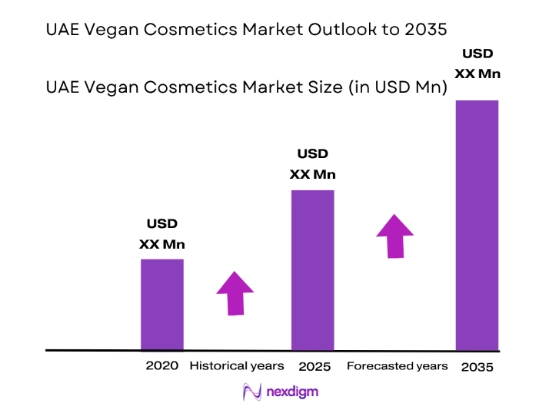
The UAE vegan cosmetics market is valued at approximately USD ~ million, based on aggregated industry datasets from leading beauty and personal care intelligence platforms. The market demonstrates steady expansion from a prior benchmark of nearly USD ~ million, driven by increasing consumer preference for cruelty-free formulations, clean-label ingredients, and plant-based skincare innovations. Growth is reinforced by rising disposable income, premium beauty penetration, and strong retail expansion across both offline specialty stores and digital-first beauty platforms in the UAE.
Dubai and Abu Dhabi remain central consumption hubs, supported by high expatriate density, luxury retail infrastructure, and tourism-driven beauty consumption. Dubai leads demand due to its concentration of flagship beauty retailers, international brand launches, and strong influencer-led digital commerce ecosystem. Abu Dhabi follows with strong institutional retail penetration and premium skincare adoption. The broader GCC-linked trade environment and re-export positioning further strengthen UAE’s dominance as a regional hub for vegan and clean beauty distribution.
Market Segmentation
By Product Category
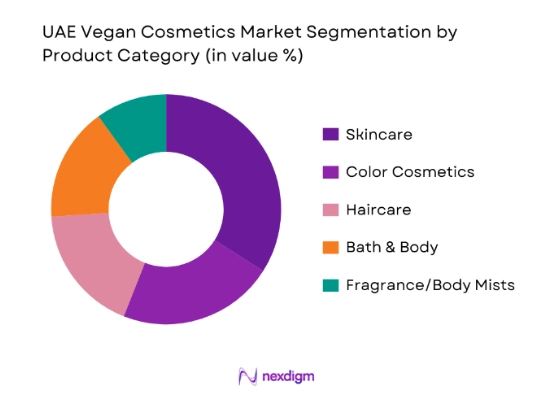
The UAE vegan cosmetics market is segmented into skincare, color cosmetics, haircare, bath & body, and fragrance/body mists. Among these, skincare holds the dominant share due to strong consumer focus on skin health, anti-aging solutions, and hydration products suited for the region’s hot and arid climate. Vegan skincare brands emphasizing botanical actives, dermatologically tested formulations, and clean-label transparency are highly preferred. Additionally, skincare benefits from frequent repurchase cycles and higher trust in ingredient-led marketing. The expansion of premium skincare counters in Sephora and specialty beauty retailers has further strengthened its dominance in the UAE vegan cosmetics ecosystem.
By Distribution Channel
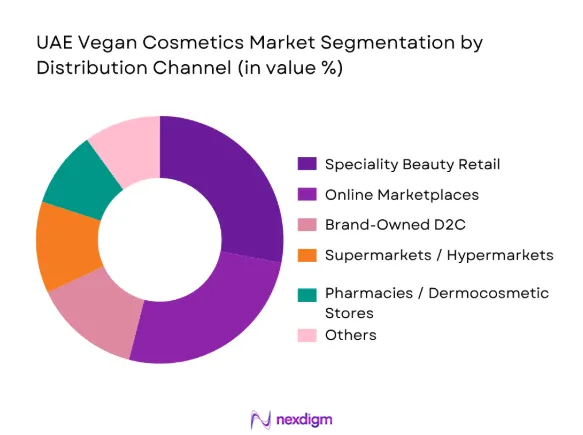
The UAE vegan cosmetics market is segmented into specialty beauty retail, online marketplaces, D2C platforms, supermarkets, pharmacies, department stores, and salons/spas. Specialty beauty retail dominates due to strong brand curation, experiential shopping, and early access to international vegan launches. Retailers such as Sephora and boutique clean beauty stores significantly influence purchase decisions through in-store consultation and product sampling. However, online marketplaces are rapidly expanding due to convenience, promotional pricing, and influencer-driven discovery. The UAE’s high digital penetration and strong logistics infrastructure also support hybrid omnichannel growth, reinforcing both offline and online dominance.
Competitive Landscape
The UAE vegan cosmetics market is moderately consolidated, with global clean beauty leaders and digitally native brands competing alongside premium celebrity-driven labels. Market dynamics are shaped by brand storytelling, ingredient transparency, cruelty-free certifications, and strong social media influence. International brands dominate shelf visibility, while niche vegan-first brands are gaining traction through D2C ecosystems and influencer marketing strategies.
| Company | Establishment Year | Headquarters | Vegan Positioning | UAE Presence | Channel Strength | Innovation Focus | Price Tier |
| Huda Beauty | 2013 | UAE | ~ | ~ | ~ | ~ | ~ |
| The Body Shop | 1976 | UK | ~ | ~ | ~ | ~ | ~ |
| e.l.f. Cosmetics | 2004 | USA | ~ | ~ | ~ | ~ | ~ |
| Rare Beauty | 2020 | USA | ~ | ~ | ~ | ~ | ~ |
| Fenty Beauty | 2017 | USA | ~ | ~ | ~ | ~ | ~ |
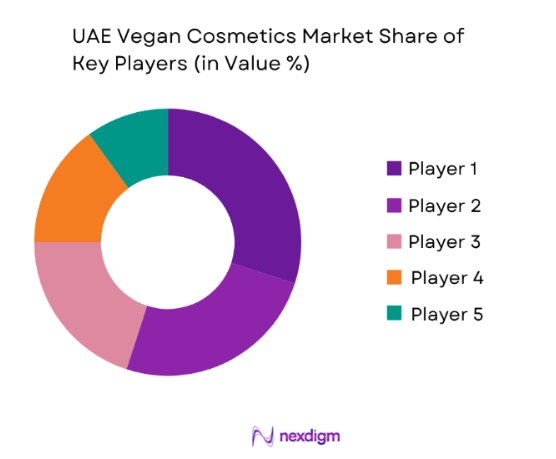
UAE Vegan Cosmetics Market Analysis
Growth Drivers
Ethical Consumption
Ethical consumption in the UAE is strongly supported by high-income urban demographics and macroeconomic stability. The UAE’s nominal GDP is approximately USD 514 billion, as reported by the IMF World Economic Outlook database, reflecting strong purchasing power capacity for premium and ethically positioned goods. The population exceeds 10.2 million, with more than 88% urban residency (World Bank), enabling concentrated exposure to sustainability-led retail ecosystems. Internet penetration is near universal at 99%+, supporting awareness-driven consumption behavior. The country also records high per capita income levels exceeding USD 49,000, reinforcing preference for premium, ethically aligned beauty products.
Clean Beauty Adoption
Clean beauty adoption is reinforced by strong regulatory modernization and environmental policy alignment in the UAE. The country has committed to Net Zero 2050, driving compliance pressure across consumer goods sectors, including cosmetics. The UAE imports over 90% of its consumer goods, including personal care products, according to World Bank trade structure indicators, increasing exposure to global clean-label standards. Additionally, the services sector contributes over 50% of GDP, reflecting strong retail and tourism-driven consumption ecosystems where premium skincare and cosmetics dominate. High urban digital penetration at 99% internet usage enables rapid diffusion of ingredient transparency awareness.
Market Challenges
Greenwashing Risk
Greenwashing risk in the UAE cosmetics ecosystem is amplified by high import dependency and limited domestic manufacturing validation structures. With over 90% of cosmetics products imported, according to World Bank trade dependency indicators, product authenticity verification becomes more complex across multi-origin supply chains. The UAE also processes over 21 million annual tourists, increasing exposure to fragmented retail channels where certification inconsistencies may arise. Inflation remains moderate at around 3.1%, as per IMF estimates, which sustains demand for premium products but also increases competitive branding pressures that can encourage misleading sustainability claims. Regulatory enforcement is strengthening under UAE sustainability frameworks, yet fragmented labeling standards across import sources remain a structural risk.
Registration Lead Time
Registration lead time challenges are linked to the UAE’s import-heavy cosmetics structure and compliance-driven regulatory framework. The UAE handles trade volumes exceeding USD 600 billion in total merchandise trade, as per World Bank trade statistics, creating high customs throughput across consumer product categories. Cosmetics fall under regulated consumer goods requiring conformity approvals, labeling verification, and halal-aligned compliance checks in certain product lines. With 99% internet penetration and advanced digital governance systems, procedural efficiency is improving; however, multi-agency coordination across municipalities and federal bodies still creates delays. The UAE’s role as a re-export hub further increases documentation complexity for cross-border cosmetic shipments entering GCC markets.
Market Opportunities
Halal-Vegan Convergence
Halal-vegan convergence is a structural opportunity supported by the UAE’s demographic and trade positioning. The UAE population includes a significant Muslim majority, aligned with halal compliance frameworks integrated into consumer goods regulation. The broader halal economy in the GCC exceeds USD 2 trillion globally, with the UAE acting as a key re-export and certification hub (Islamic economy indicators referenced through government-aligned frameworks). The country’s trade openness, with exports and imports exceeding USD 600 billion annually, supports rapid cross-category product diffusion. Additionally, urbanization at 88%+ enables concentrated retail ecosystems where halal-certified vegan cosmetics can gain dual trust positioning among both ethical and religious compliance-driven consumers.
Men’s Grooming
Men’s grooming presents a strong expansion avenue supported by UAE demographic structure and income distribution. The UAE population is composed of a significantly higher male share, estimated above 60%, driven by expatriate workforce composition (World Bank demographic structure indicators). This creates a large base for grooming and personal care consumption among working-age male consumers. GDP per capita exceeding USD 49,000 supports premium grooming adoption, while employment in services and construction sectors drives demand for practical skincare and grooming solutions. Additionally, urbanization above 88% and near-universal digital access at 99% internet penetration accelerates awareness of vegan grooming products, particularly among younger expatriate professionals.
Future Outlook
The UAE vegan cosmetics market is expected to witness strong expansion driven by sustained demand for clean beauty, increasing regulatory emphasis on ingredient transparency, and accelerated digital commerce adoption. Rising consumer awareness around sustainability and cruelty-free certification will continue to reshape product development strategies. Brands are expected to invest heavily in refillable packaging, climate-adaptive formulations, and dermatologically tested vegan products tailored for Middle Eastern skin conditions.
Over the forecast horizon, category convergence between skincare, makeup, and wellness will further accelerate market expansion. Premiumization, influencer-led discovery, and tourism-driven beauty spending will remain structural growth pillars supporting long-term category maturity.
Major Players in the Market
- Huda Beauty
- The Body Shop
- e.l.f. Cosmetics
- Rare Beauty
- Fenty Beauty
- tarte cosmetics
- KVD Beauty
- Urban Decay
- Too Faced
- Milk Makeup
- Kosas
- Kylie Cosmetics
- Essence
- Pacifica Beauty
- Wet n Wild
Key Target Audience
- High-income urban female consumers seeking clean beauty alternatives
- Gen Z consumers influenced by social media-driven beauty trends
- Millennials prioritizing skincare-driven makeup and ingredient transparency
- Male grooming segment adopting vegan skincare and fragrance products
- Expatriate professional population with premium global brand exposure
- Tourism and travel retail consumers in Dubai and Abu Dhabi
- Investments and venture capitalist firms (Sequoia Capital, Middle East Venture Partners)
- Government and regulatory bodies (UAE Ministry of Industry and Advanced Technology – MoIAT, Dubai Municipality, Department of Economy and Tourism Dubai)
Research Methodology
Step 1: Identification of Key Variables
The initial phase involves mapping the vegan cosmetics ecosystem within the UAE, covering brands, distributors, retailers, and regulatory authorities. Secondary research is conducted using industry databases, retail audits, and import-export records to identify key market variables. Core parameters such as product segmentation, pricing tiers, and consumer demand drivers are established to define the analytical structure.
Step 2: Market Analysis and Construction
This phase involves consolidating historical data across beauty retail channels, including offline specialty stores and e-commerce platforms. Revenue contributions, SKU penetration, and channel distribution ratios are analyzed. Consumer behavior trends are also assessed to understand purchasing frequency, basket size, and brand loyalty across vegan cosmetic categories.
Step 3: Hypothesis Validation and Expert Consultation
Primary validation is conducted through structured interviews with importers, distributors, and retail executives operating in the UAE beauty sector. These consultations provide insights into pricing strategies, supply chain efficiency, and product demand cycles. The findings are used to validate assumptions and refine market structure estimations.
Step 4: Research Synthesis and Final Output
The final phase integrates primary and secondary research findings into a unified market model. Brand-level performance, category growth rates, and channel contributions are synthesized to generate a validated analytical output. This ensures consistency across data sources and strengthens reliability of the final market assessment.

- Executive Summary
- Research Methodology (Market Definitions and Vegan Qualification Criteria, Abbreviations, UAE Demand-Side Assessment, Top-to-Bottom Market Estimation, Bottom-to-Top Brand/SKU Mapping, Primary Interviews with Importers/Distributors/Retailers/Online Sellers, Pricing and Promotion Audit, Brand Share Modeling, Channel Validation Framework, Assumptions and Limitations)

- Definition and Scope
- Product Universe and Inclusion/Exclusion Criteria
- Market Genesis and Evolution of Vegan Beauty in UAE
- Parent Market Linkages: Beauty & Personal Care, Clean Beauty, Cruelty-Free Beauty, Halal Beauty
- UAE Consumer Purchase Journey
- Value Chain Analysis
- Supply Chain Analysis
- Trade Flow and Import Dependency Structure
- Regulatory and Compliance Framework
- Pricing Architecture and Premiumization Landscape
- Innovation and New Product Development Landscape
- Timeline of Key Brand Entries, Retail Expansion, and Category Inflection Points

- Growth Drivers (Ethical Consumption, Clean Beauty Adoption, Premiumization, Digital Influence, Tourism-Led Beauty Spend, Ingredient Transparency)
- Market Challenges (Greenwashing Risk, Registration Lead Time, Price Premium, Counterfeit/Unauthorized Sellers, Limited Local Manufacturing Base)
- Market Opportunities (Halal-Vegan Convergence, Men’s Grooming, Refill Systems, Sensitive Skin Solutions, Climate-Specific Formulations, Travel Retail Packs)
- Market Trends (Skinimalism, Hybrid Makeup-Skincare, Barrier Repair, SPF-Infused Cosmetics, Shade Inclusivity, Refillables, Vegan Fragrance Layering)
- Regulatory Landscape (MoIAT Conformity, GSO Packaging and Labelling, Dubai Municipality Registration, Halal National Mark Relevance, Label Transparency)
- PESTLE Analysis (Policy, Purchasing Power, Demographics, Social Media Influence, Sustainability Expectations, Labelling Compliance)
- SWOT Analysis (Category Strength, Import Reliance, Brand Innovation, White-Space Potential, Price Pressure, Channel Fragmentation)
- Porter’s Five Forces Analysis (Supplier Power, Distributor Bargaining, New Entrant Risk, Substitution Risk, Rivalry Intensity)
- Stakeholder Ecosystem (Brand Owners, Contract Manufacturers, Importers, Distributors, Retailers, Marketplaces, Regulators, Certification Bodies, Influencers)

- By Value (2020-2025)
- By Volume (2020-2025)
- By Average Selling Price (2020-20265
- By Organized vs Unorganized Sales (2020-2025)
- By Offline vs Online Sales (2020-2025)

- By Product Category (In Value%)
Skincare
Color Cosmetics
Haircare
Bath & Body
Fragrance/Body Mists - By Product Formulation Positioning (In Value%)
100% Vegan
Vegan + Cruelty-Free
Vegan + Clean Beauty
Vegan + Halal-Aligned
Vegan + Organic/Botanical
Vegan + Sensitive Skin / Dermatologically Tested
Vegan + Refillable / Sustainable Packaging - By Price Tier (In Value%)
Mass
Masstige
Premium
Luxury - By Distribution Channel (In Value%)
Specialty Beauty Retail
Brand-Owned E-Commerce / D2C
Online Marketplaces
Supermarkets / Hypermarkets
Pharmacies / Dermocosmetic Stores
Department Stores
Salons, Spas, and Professional Beauty Stores
Concept Stores / Clean Beauty Boutiques - By Consumer Group (In Value%)
Gen Z
Millennials
Gen X and Mature Consumers
Women
Men
Gender-Neutral / Inclusive Beauty Buyers
Affluent UAE Nationals
Expat Professionals
Tourist and Travel Retail Buyers - By Emirate (In Value%)
Dubai
Abu Dhabi
Sharjah
Northern Emirates - By Packaging Format (In Value%)
Bottles
Tubes
Sticks
Pumps / Droppers
Refill Packs
Travel Minis / Gift Sets - By Country/Region of Origin (In Value%)
UAE / GCC
Europe
North America
South Korea / Japan
Other Asia-Pacific

- Market Share of Major Players by Value, By Volume, By Product Category, By Distribution Channel)
- Brand Architecture: Pure-Play Vegan vs Multi-Portfolio Beauty Brands
- Competitive Positioning Map
- Cross Comparison Parameters
- WOT Analysis of Major Players
- Pricing Analysis Based on Leading SKUs in UAE Vegan Cosmetics Market
- Digital Shelf and Marketplace Visibility Analysis
- Detailed Profiles of Major Companies
Huda Beauty
The Body Shop
e.l.f. Cosmetics
Rare Beauty
Fenty Beauty / Fenty Skin
tarte cosmetics
KVD Beauty
Urban Decay
Too Faced
Milk Makeup
Kosas
Kylie Cosmetics
Essence
Pacifica Beauty
Wet n Wild

- Demand and Consumption Analysis
- Brand Awareness and Consideration Funnel
- Purchase Decision Drivers
- Unmet Needs and Pain Point Analysis
- Certification and Trust Marker Sensitivity
- Price Elasticity and Promotion Responsiveness
- Basket Composition by Consumer Cohort
- Seasonality Analysis (Festive Gifting, Summer Skincare, Travel Purchases, Promotional Peaks)

- By Value (2026-2035)
- By Volume (2026-2035)
- By Average Selling Price (2026-2035)
- By Offline vs Online Sales (2026-2035)
- By Organized vs Unorganized Sales (2026-2035)


 Request a Sample
 Ask for Customization
 Get a Quote
 Enquire Now