
 Download PDF
 Download PDF
Market Overview
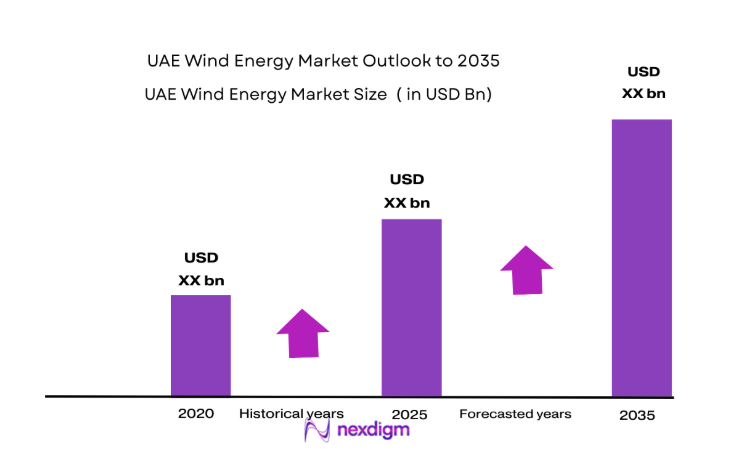
The UAE wind energy market size reaching approximately USD ~ billion has witnessed substantial growth due to increasing investments in renewable energy and a government-driven push for sustainability. Market size, based on a recent historical assessment, is driven by the increasing adoption of wind energy projects, particularly offshore wind farms, which contribute significantly to power generation. The market’s growth is fueled by technological advancements, government initiatives, and the rising demand for clean energy sources to meet the country’s renewable energy targets.
Dominant regions such as Dubai and Abu Dhabi have established themselves as key players in the wind energy market, primarily due to their substantial investments in infrastructure and renewable energy initiatives. These cities benefit from the strategic geographical positioning of offshore wind farms, favorable climate conditions, and government-led programs supporting green energy adoption. Additionally, private sector involvement and partnerships with international wind energy companies contribute to the dominance of these regions.
Market Segmentation
By Product Type:
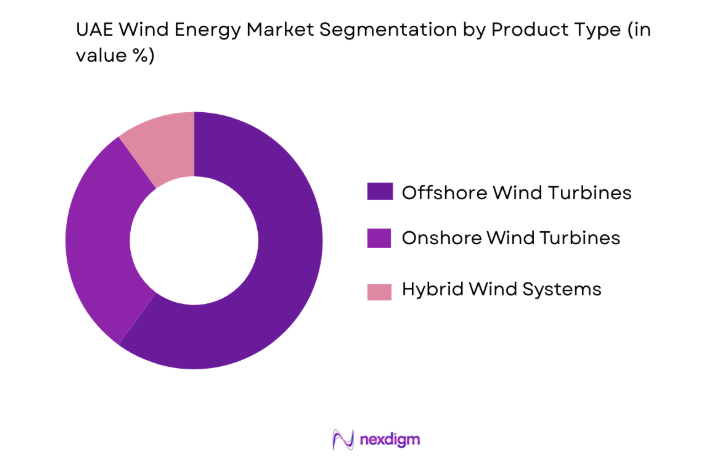
UAE wind energy market is segmented by product type into offshore wind turbines, onshore wind turbines, and hybrid wind systems. Recently, offshore wind turbines have a dominant market share due to their ability to generate larger amounts of energy with less space, aligning well with the UAE’s strategy of utilizing its coastal geography. These turbines benefit from the relatively stronger and more consistent winds at sea, thus providing higher energy efficiency and capacity compared to onshore alternatives. The government’s emphasis on sustainable energy infrastructure has led to increased investments in offshore wind projects, bolstering this sub-segment’s dominance.
By Platform Type:
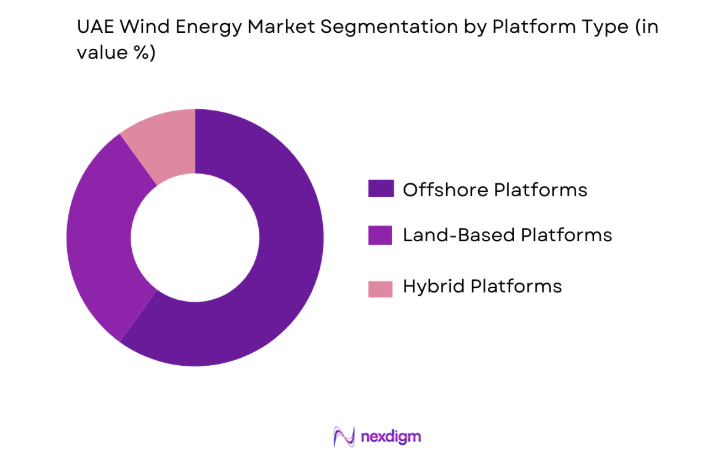
UAE wind energy market is segmented by platform type into land-based platforms, offshore platforms, and hybrid platforms. Offshore platforms dominate due to their increased potential for high-capacity generation and the UAE’s geographical advantage of coastal access. These platforms are especially beneficial for large-scale wind farms, where the energy generation potential is maximized by exploiting the strong, consistent winds offshore. The government’s focus on offshore energy projects, coupled with international partnerships, has spurred significant growth in this sub-segment.
Competitive Landscape
The UAE wind energy market is highly competitive, with several major international and regional players dominating the landscape. These companies are actively involved in both onshore and offshore wind farm projects, offering advanced turbine technology and energy solutions. With growing investment in sustainable energy projects and government support, these players contribute to market consolidation, with a few key players holding a significant share of the market.
| Company Name | Establishment Year | Headquarters | Technology Focus | Market Reach | Key Products | Revenue | Additional Parameter |
| Siemens Gamesa | 1976 | Spain | ~ | ~ | ~ | ~ | ~ |
| GE Renewable Energy | 1892 | USA | ~ | ~ | ~ | ~ | ~ |
| Vestas Wind Systems | 1945 | Denmark | ~ | ~ | ~ | ~ | ~ |
| Nordex | 1985 | Germany | ~ | ~ | ~ | ~ | ~ |
| MHI Vestas Offshore Wind | 2014 | Denmark | ~ | ~ | ~ | ~ | ~ |
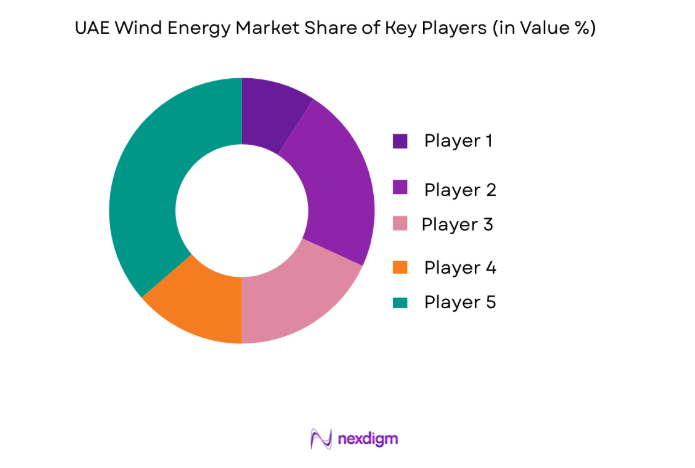
UAE Wind Energy Market Analysis
Growth Drivers
Government Support for Renewable Energy Projects:
One of the key growth drivers in the UAE wind energy market is the significant government support for renewable energy projects. The UAE has set ambitious targets to diversify its energy mix, with a strong focus on renewable sources such as wind and solar. The government’s long-term vision, particularly under initiatives like the UAE Vision 2021 and the Energy Strategy 2050, emphasizes the transition to clean energy. Additionally, financial incentives, tax relief, and public-private partnerships have made it more feasible for both local and international players to invest in wind energy projects. The UAE has positioned itself as a regional leader in the development of renewable energy infrastructure, which has attracted foreign investment and boosted wind energy adoption.
Technological Advancements in Wind Energy:
Technological advancements in wind turbine design and energy storage have played a critical role in driving market growth. The development of larger and more efficient turbines, along with improvements in offshore turbine technology, has made wind energy more cost-effective and competitive compared to other renewable sources. Additionally, the integration of digital technologies, such as artificial intelligence (AI) and predictive maintenance, has enhanced operational efficiencies. These advancements have allowed the UAE to harness more consistent and higher energy outputs from its wind resources, further supporting the market’s growth. Furthermore, technological innovations have lowered the cost of wind energy generation, making it an increasingly attractive option for power generation in the region.
Market Challenges
High Initial Capital Investment:
One of the primary challenges for the UAE wind energy market is the high initial capital investment required for setting up wind energy projects. Offshore wind farms, in particular, demand significant upfront costs related to infrastructure, technology, and maintenance. While the UAE government provides support, the cost of building wind farms—especially offshore projects—can be prohibitive for smaller developers. This challenge is further compounded by long-term payback periods, which can deter private sector investment. Despite falling technology costs, the financial barriers remain a significant challenge to the rapid expansion of wind energy capacity, particularly in offshore sectors.
Regulatory and Environmental Challenges:
Another key challenge for the UAE wind energy market is navigating complex regulatory and environmental requirements. Securing permits for both onshore and offshore wind projects can be a lengthy process, as it involves detailed environmental impact assessments and coordination with various government agencies. Additionally, there are concerns over the impact of wind farms on marine life, particularly in offshore projects. While the government is supportive of renewable energy development, the regulatory environment can sometimes create delays or uncertainties for developers. Ensuring that wind energy projects meet environmental and regulatory standards while remaining economically viable is a delicate balancing act.
Opportunities
Expansion of Offshore Wind Farms:
One of the major opportunities in the UAE wind energy market lies in the expansion of offshore wind farms. The UAE’s extensive coastline and favorable wind conditions present a significant opportunity for large-scale offshore wind projects. Offshore wind farms have the potential to generate large amounts of energy with minimal land use, making them an ideal solution for the UAE’s energy needs. With the government’s push for clean energy and a greater focus on sustainable energy sources, offshore wind farms are expected to play a key role in achieving the country’s renewable energy targets. The development of floating wind turbines and advancements in offshore technologies further enhance the potential of this sub-segment.
Integration with Other Renewable Sources:
Another opportunity in the UAE wind energy market is the integration of wind energy with other renewable sources, such as solar power. The UAE has an abundance of sunlight, which complements wind energy production. By combining wind and solar power generation, the country can create a more reliable and resilient energy grid. The government has already initiated projects that integrate wind and solar technologies, such as hybrid energy plants, and further expansion of this concept could lead to improved energy security and efficiency. The ability to integrate these renewable sources will help the UAE transition to a low-carbon economy while meeting its energy needs.
Future Outlook
The future outlook for the UAE wind energy market is highly promising, driven by government initiatives, technological advancements, and increasing investment in sustainable energy. The expansion of offshore wind farms, along with the integration of wind and solar power, is expected to play a major role in meeting the country’s renewable energy targets. Technological innovations, such as floating turbines and AI-driven systems, will further enhance the efficiency of wind energy generation. Regulatory support and public-private partnerships will continue to drive growth, making wind energy a key component of the UAE’s energy landscape over the next several years.
Major Players
- Siemens Gamesa
- GE Renewable Energy
- Vestas Wind Systems
- Nordex
- MHI Vestas Offshore Wind
- Suzlon Energy
- Acciona
- Iberdrola
- Ørsted
- Siemens AG
- First Solar
- EDF Renewables
- Brookfield Renewable Partners
- Enel Green Power
- Hexcel Corporation
Key Target Audience
- Investments and venture capitalist firms
- Government and regulatory bodies
- Energy producers
- Private sector developers
- Utility providers
- International renewable energy agencies
- Environmental organizations
- Technology developers
Research Methodology
Step 1: Identification of Key Variables
The key variables influencing the market, such as technological advancements, government policies, and demand patterns, are identified.
Step 2: Market Analysis and Construction
The market is analyzed based on product types, platform types, and demand trends, and a comprehensive market model is constructed.
Step 3: Hypothesis Validation and Expert Consultation
Experts are consulted to validate market assumptions and refine the hypothesis with real-world insights.
Step 4: Research Synthesis and Final Output
The collected data is synthesized into a final comprehensive report, incorporating insights, trends, and market projections.

- Executive Summary
- Research Methodology (Definitions, Scope, Industry Assumptions, Market Sizing Approach, Primary & Secondary Research Framework, Data Collection & Verification Protocol, Analytic Models & Forecast Methodology, Limitations & Research Validity Checks)

- Market Definition and Scope
- Value Chain & Stakeholder Ecosystem
- Regulatory / Certification Landscape
- Sector Dynamics Affecting Demand

- Growth Drivers
Government’s Renewable Energy Targets
Increasing Investments in Sustainable Energy
Technological Advancements in Wind Energy - Market Challenges
High Initial Capital Expenditure
Regulatory and Compliance Barriers
Land Acquisition and Space Constraints - Market Opportunities
Expansion of Offshore Wind Energy Projects
Integration of Wind Energy with Other Renewable Sources
Technological Advancements in Wind Turbine Efficiency - Trends
Adoption of Smart Grid Technologies
Rise in Offshore Wind Farms
Increased Integration of AI in Wind Energy Operations - Government Regulations
- SWOT Analysis of Key Competitors

- By Market Value, 2020-2025
- By Installed Units, 2020-2025
- By Average System Price, 2020-2025
- By System Complexity Tier, 2020-2025

- By System Type (In Value%)
Onshore Wind Turbines
Offshore Wind Turbines
Hybrid Wind Systems
Small-Scale Wind Systems
Wind Farm Projects - By Platform Type (In Value%)
Land-Based Platforms
Offshore Platforms
Floating Platforms
Hybrid Platforms
Distributed Platforms - By Fitment Type (In Value%)
Onshore Installations
Offshore Installations
Mobile Installations
Modular Installations
Customized Solutions - By EndUser Segment (In Value%)
Government and Public Sector
Private Energy Companies
Utility Providers
Industrial Manufacturers

- Market Share Analysis
- CrossComparison Parameters (System Type, Platform Type, Procurement Channel, EndUser Segment, Fitment Type)
- SWOT Analysis of Key Competitors
- Pricing & Procurement Analysis
- Porter’s Five Forces
- Key Players
Siemens Gamesa Renewable Energy
GE Renewable Energy
Nordex
Suzlon Energy
Vestas Wind Systems
Siemens AG
MHI Vestas Offshore Wind
Suzlon Energy
Acciona
Ørsted
First Solar
Enel Green Power
Iberdrola
EDF Renewables
Brookfield Renewable Partners

- Government’s Role in Energy Procurement
- Private Sector Adoption of Green Energy
- Growth of Renewable Energy Providers
- Increased Consumer Demand for Clean Energy

- Forecast Market Value, 2026-2035
- Forecast Installed Units, 2026-2035
- Price Forecast by System Tier, 2026-2035
- Future Demand by Platform, 2026-2035


 Request a Sample
 Ask for Customization
 Get a Quote
 Enquire Now