

 Download PDF
Market Overview
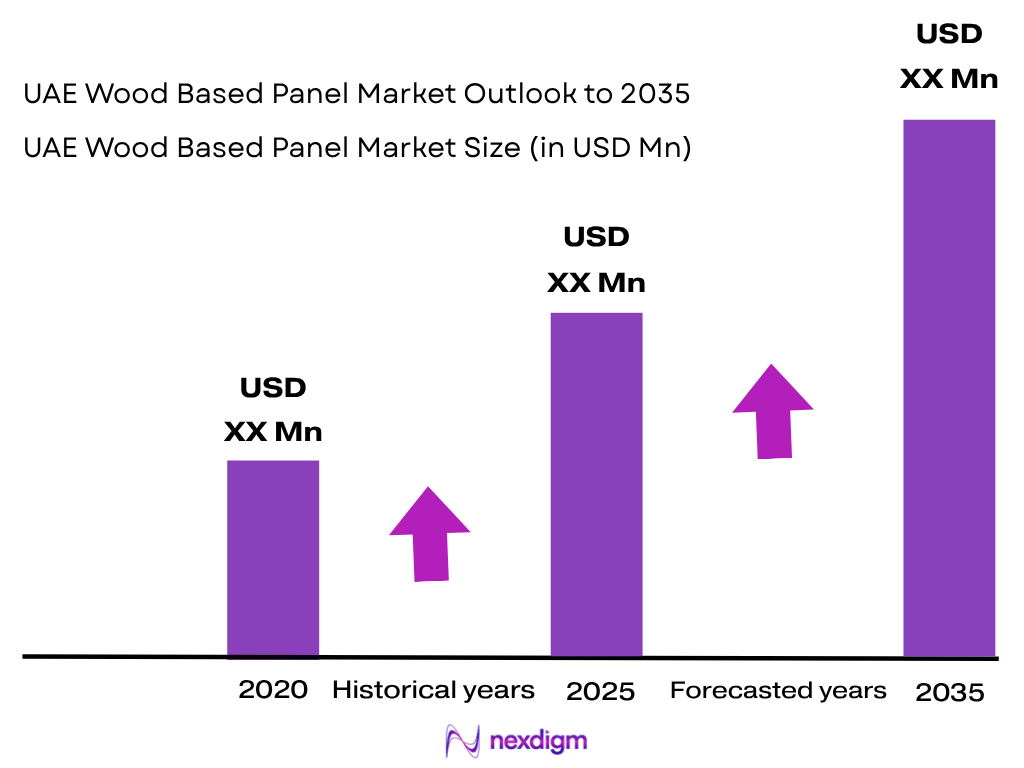
The UAE Wood Based Panel Market is valued at approximately ~USD XX million, supported by construction, furniture manufacturing, joinery, hospitality development and interior fit-out activity. The country’s real GDP increased from approximately AED 1,707 billion to AED 1,776 billion, while non-oil GDP reached AED 1,342 billion. Strong non-oil economic activity supports demand for MDF, plywood, particleboard, HDF and decorative panels used across residential and commercial interiors, furniture, cabinetry and construction applications.
Dubai, Abu Dhabi and Sharjah dominate UAE wood-based panel consumption because of their concentration of construction projects, furniture distributors, joinery workshops, interior contractors and warehousing infrastructure. Dubai recorded 226,000 real-estate transactions valued at AED 761 billion, compared with approximately 166,000 transactions valued at AED 634 billion in the preceding period. Sharjah complements this demand through its extensive industrial and wood-trading ecosystem, while Abu Dhabi generates panel requirements from residential, hospitality, institutional and commercial developments.
Market Segmentation
By Product Type
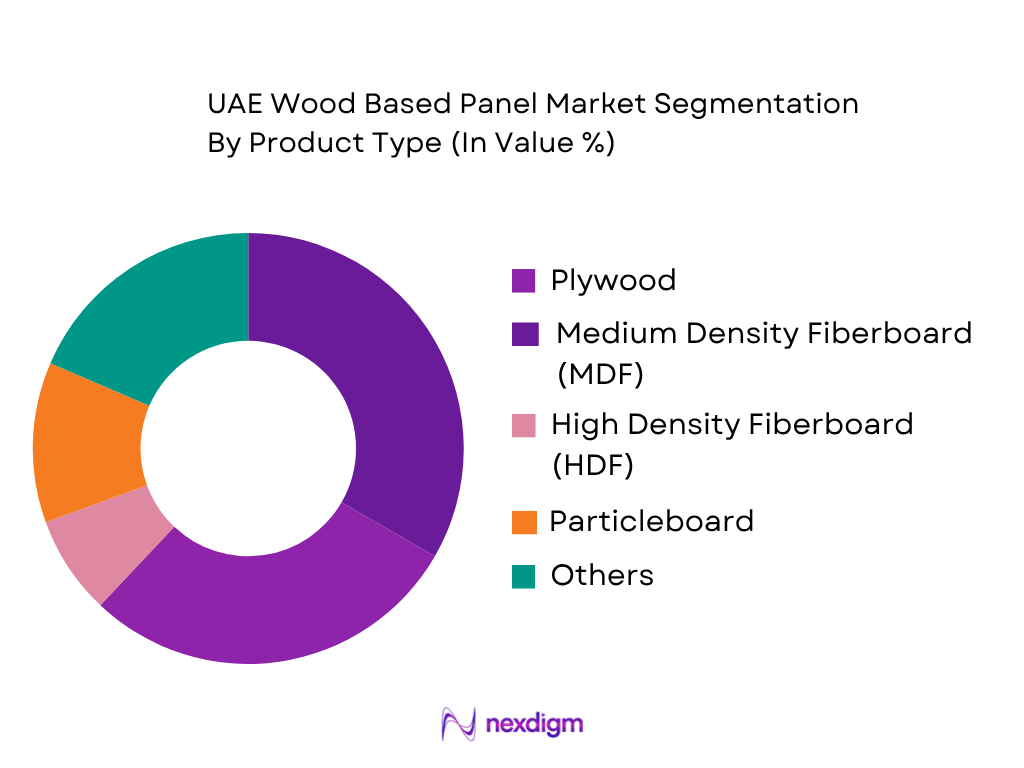
The UAE Wood Based Panel Market is segmented by product type into plywood, MDF, particleboard, HDF, OSB and other engineered panels. Plywood holds the dominant position in the report model because of its extensive application across construction formwork, joinery, furniture, cabinetry, packaging and temporary project structures. UAE construction contractors require commercial, marine and film-faced plywood, while furniture and interior contractors use decorative and hardwood plywood for premium applications. MDF represents another major segment because it offers consistent surfaces for laminates, veneers, paints and decorative coatings used in wardrobes, kitchens and retail interiors. The UAE’s limited domestic forestry resources make the industry structurally import dependent. International trade data illustrate this dependency: China alone supplied approximately USD 198.37 million of plywood, veneered panels and similar laminated wood to the UAE during 2024. India supplied another USD 10.5 million of products within the broader plywood and laminated-wood category. The breadth of applications therefore maintains plywood’s leading position while MDF increasingly benefits from furniture and interior fit-out demand.
By Application
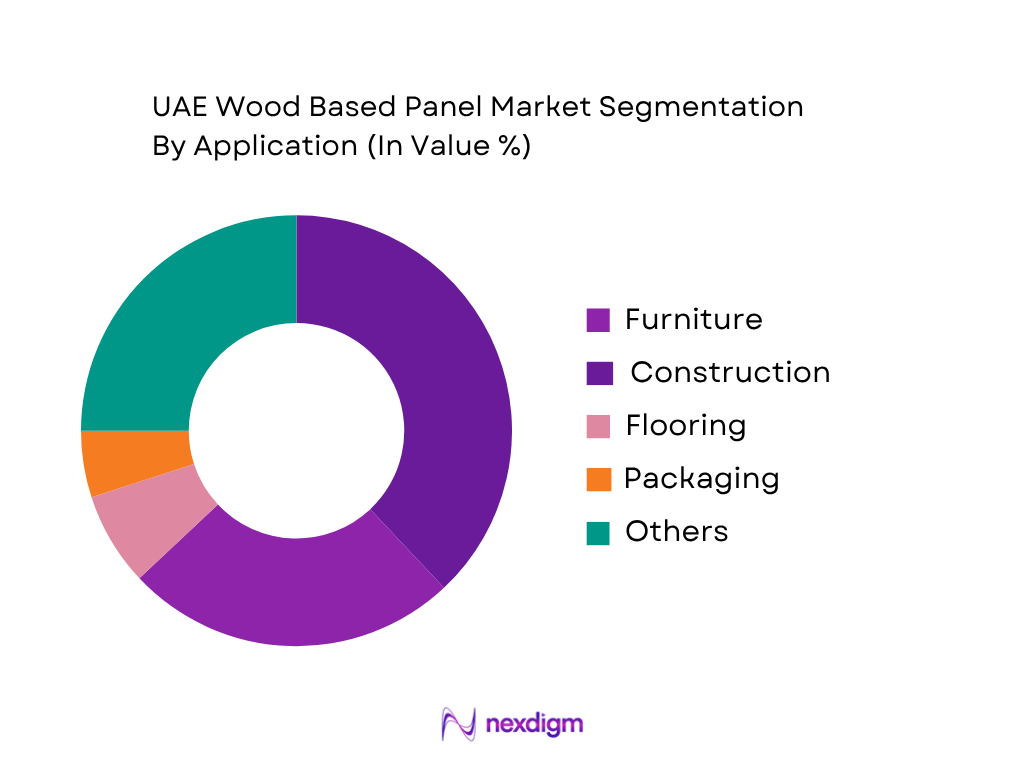
The UAE Wood Based Panel Market is segmented by application into furniture and cabinetry, construction and formwork, interior fit-out and joinery, flooring, packaging and other industrial applications. Furniture and cabinetry hold the dominant position in the report model, reflecting substantial requirements for MDF, MFC, plywood, HDF and decorative boards in kitchens, wardrobes, office furniture, hotel rooms and residential interiors. Dubai’s expanding property base creates a particularly important downstream ecosystem because every completed apartment, villa, hotel, office or retail development generates potential requirements for doors, cabinets, wardrobes, counters, partitions and decorative surfaces. Dubai recorded 2.78 million real-estate procedures, including transactions and rental agreements, demonstrating the scale of the built-property ecosystem supporting renovation and fit-out activity. Interior contractors increasingly prefer pre-laminated MDF, moisture-resistant boards and decorative panels because they reduce secondary finishing requirements and enable consistent large-scale installations. Construction remains another significant application through film-faced plywood and structural panels, particularly for concrete formwork, temporary structures and project-site requirements.
Competitive Landscape
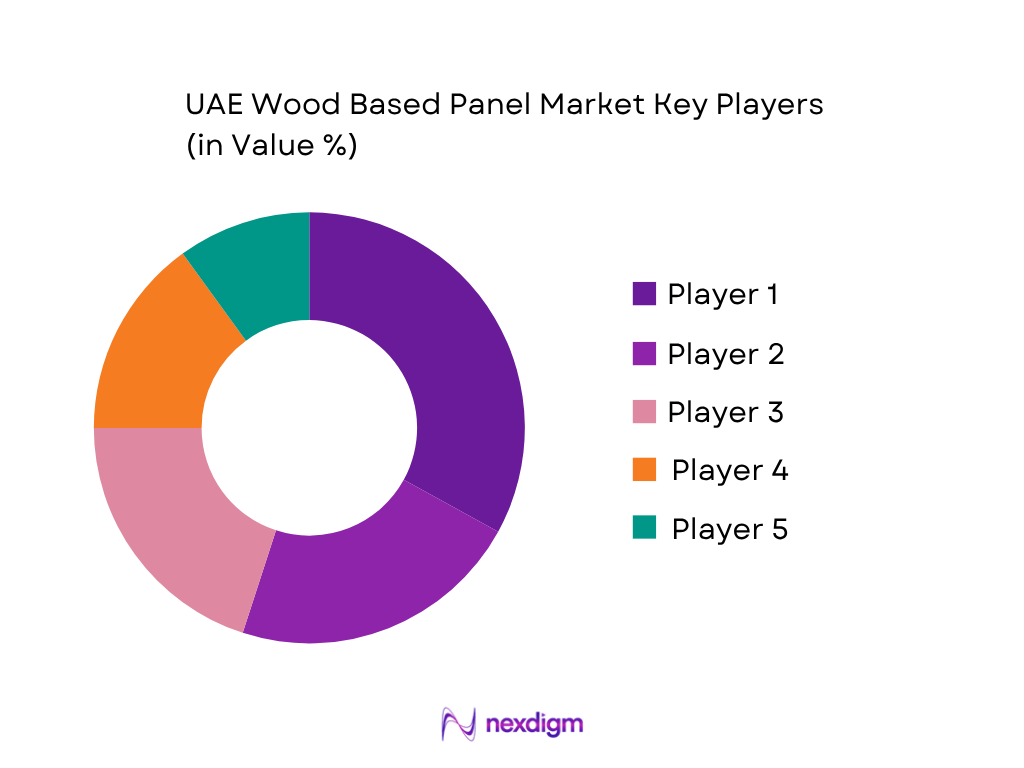
The UAE Wood Based Panel Market is characterized by international panel manufacturers, specialized importers, timber merchants, building-material distributors and local value-added processors. Competition is influenced by product origin, MDF and plywood grade availability, decorative surface range, warehouse inventory, fire-retardant and moisture-resistant offerings, delivery capabilities and relationships with joinery and fit-out contractors. International manufacturers compete alongside UAE distributors that maintain extensive inventories and provide cutting, edging, lamination and project-supply services.
| Company | Established | Headquarters | Key Panel Portfolio | Decorative Capability | Specialty Grades | UAE Distribution Model | Certification Focus | Major Applications |
| Kronospan | 1897 | Salzburg, Austria | ||||||
| EGGER | 1961 | St. Johann in Tirol, Austria | ||||||
| FINSA | 1931 | Santiago de Compostela, Spain | ||||||
| Swiss Krono | 1966 | Lucerne, Switzerland | ||||||
| Pfleiderer | 1894 | Neumarkt, Germany |
UAE Wood Based Panel Market Analysis
Growth Drivers
Large Residential Construction Pipeline and Interior Fit-Out Demand
The UAE’s expanding residential and commercial property base is creating sustained downstream demand for plywood, MDF, particleboard, decorative boards and furniture-grade engineered panels. In 2024, the UAE recorded real GDP of AED 1,776 billion, including AED 1,342 billion generated by non-oil activities, providing a broad economic base for construction, real estate, hospitality and interior contracting. Dubai alone registered 226,000 real-estate transactions and 2.78 million real-estate procedures, illustrating the scale of properties moving through development, ownership and leasing channels. This activity directly supports panel consumption because apartments, villas and mixed-use buildings require wardrobes, modular kitchens, doors, partitions, cabinetry, wall features and fixed furniture. Dubai also recorded 217,000 real-estate investments, reinforcing the depth of property-related capital deployment. Wood-based panel distributors consequently benefit from demand across new-build installation as well as refurbishment and tenant fit-outs. MDF and pre-laminated boards are particularly relevant because standardized dimensions, machinability and compatibility with decorative surfaces make them suitable for high-volume joinery. The scale of non-oil economic activity and property transactions therefore provides a measurable demand foundation for UAE panel suppliers.
Expansion of Furniture, Joinery and Decorative Engineered Panel Consumption
The UAE’s furniture and joinery ecosystem is increasingly supported by substantial physical flows of engineered wood panels. World Bank WITS trade records show that Thailand shipped 130,676,000 kg of fibreboard in the 0.5–0.8 g/cm³ density category to the UAE in 2024, while Malaysia supplied another 24,073,400 kg and European Union suppliers delivered 2,794,480 kg. These volumes demonstrate a large material base available to furniture factories, joinery workshops, modular-kitchen fabricators and interior contractors. Particleboard trade is similarly substantial: European Union exporters supplied 38,052,400 kg of unworked particleboard to the UAE, while China supplied 26,239,800 kg, Romania 11,270,100 kg and Spain 12,413,300 kg. These physical volumes support increasing use of MDF, fibreboard and particleboard in wardrobes, kitchen carcasses, retail fixtures, office furniture and decorative interior systems. The UAE’s AED 1,342 billion non-oil economy further supports downstream commercial activity. Together, high panel inflows and a large non-oil economic base strengthen availability for manufacturers seeking standardized substrates suitable for laminating, CNC machining, edge-banding and production of furniture-ready components.
Market Challenges
High Dependence on Imported Panels and International Supply Chains
The UAE Wood Based Panel Market remains structurally exposed to overseas manufacturing and international logistics because large quantities of fibreboard and particleboard originate outside the country. In 2024, Thailand supplied 130,676,000 kg of medium-density-range fibreboard to the UAE and Malaysia supplied 24,073,400 kg. For unworked particleboard, European Union exporters delivered 38,052,400 kg, China supplied 26,239,800 kg, Spain contributed 12,413,300 kg, Romania 11,270,100 kg and Turkey 10,337,800 kg. These quantities illustrate how distributors and furniture manufacturers depend on geographically dispersed sourcing bases for core raw materials. Consequently, shipment scheduling, port handling, inventory availability and replenishment cycles become operationally important for suppliers serving time-sensitive construction and interior projects. Importers must simultaneously maintain different thicknesses, densities, surface finishes and technical grades, increasing warehouse complexity. This exposure is particularly significant because the UAE economy generated AED 1,342 billion from non-oil sectors in 2024, supporting substantial construction, property and commercial activity that requires dependable material availability. Any disruption affecting major Asian or European sourcing corridors can therefore transmit directly into stock availability for joineries, furniture manufacturers and interior contractors.
Technical Compliance, Product Performance and Inventory Complexity
UAE panel suppliers must balance large physical inventories with increasingly specialized requirements for moisture resistance, fire performance, emissions, surface finish and application-specific board characteristics. The scale of imported material makes this challenge commercially significant. Thailand alone supplied 130,676,000 kg of fibreboard in one density category to the UAE during 2024, compared with 24,073,400 kg from Malaysia and 2,794,480 kg from European Union suppliers. Particleboard sourcing is similarly diversified, including 38,052,400 kg from the European Union and 26,239,800 kg from China. Such sourcing diversity means distributors may handle boards produced to different specifications, densities and intended applications while maintaining consistent performance for furniture factories and project contractors. UAE conditions also place particular emphasis on moisture-resistant products for kitchens, bathrooms and humid environments, while hotels, offices and commercial interiors can require fire-performance documentation and controlled-emission products. Inventory planning becomes more demanding when distributors must stock conventional MDF alongside moisture-resistant, fire-retardant, decorative, laminated and furniture-ready variants. With Dubai recording 2.78 million real-estate procedures in 2024, suppliers face a sizeable project ecosystem in which product availability, documentation and consistent specifications can directly affect procurement decisions and installation schedules.
Market Opportunities
Moisture-Resistant, Fire-Retardant and Premium Decorative Panels
The existing scale of UAE fibreboard consumption provides a substantial platform for suppliers to shift customers toward higher-performance engineered panels. In 2024, Thailand delivered 130,676,000 kg of fibreboard within the 0.5–0.8 g/cm³ density category to the UAE, while Malaysia delivered 24,073,400 kg. These volumes indicate an established downstream processing ecosystem into which moisture-resistant MDF, low-emission boards, fire-retardant MDF, acrylic-faced panels and premium decorative surfaces can be introduced. Demand conditions are supported by Dubai’s active property ecosystem, where 226,000 real-estate transactions and 217,000 real-estate investments were recorded during the same period. Each new or refurbished residential, hospitality, retail and office property creates potential requirements for wardrobes, kitchens, reception counters, wall panels, doors and fixed furniture. Higher-performance boards can address applications where conventional MDF faces limitations, particularly kitchens, wash areas, hospitality spaces and regulated commercial interiors. The UAE’s non-oil GDP of AED 1,342 billion also provides a broad economic foundation for construction and interior activity. Suppliers that combine technical-grade boards with decorative surfaces, cutting, CNC processing and edge-banding can therefore target more value-added portions of the existing panel-processing ecosystem.
Furniture-Ready Components and GCC/Africa Re-Export Expansion
The UAE’s established wood-product trading network creates an opportunity for distributors to evolve from simple panel importers into regional processors and re-export hubs. World Bank WITS records show that Oman imported 34,891,600 kg of high-density fibreboard from the UAE in 2024, while Israel received 4,792,280 kg, Saudi Arabia 1,003,250 kg and Qatar 511,835 kg. UAE-origin trade flows also included plywood: Oman received 8,390 m³ in one plywood category and another 5,109 m³ of tropical-faced plywood. These flows demonstrate existing distribution routes that can support future expansion of MDF, HDF, plywood, decorative boards and processed furniture components across neighboring markets. The opportunity extends beyond raw boards to cut-to-size panels, CNC-routed components, edge-banded furniture parts, pre-laminated MDF and project-specific joinery inputs. Processing panels before re-export can position UAE suppliers deeper in the furniture and interior supply chain while leveraging established warehousing and logistics capabilities. Domestic demand provides an additional operating base, with Dubai recording 2.78 million real-estate procedures in 2024. Suppliers can therefore combine UAE project demand with regional distribution, particularly toward Oman, Saudi Arabia, Qatar and selected African destinations.
Future Outlook
The UAE Wood Based Panel Market is expected to expand through 2035, supported by residential construction, hospitality development, premium interior fit-outs and increasing demand for modular furniture. The report assumes a ~XX% CAGR during 2026–2035. Product demand is expected to increasingly shift toward moisture-resistant MDF, fire-retardant boards, low-emission panels, decorative surfaces and pre-finished furniture boards. Dubai and Abu Dhabi are expected to remain critical demand centers as developers continue delivering residential, hospitality, office and mixed-use projects. These developments create downstream requirements for kitchens, wardrobes, doors, wall cladding, hotel furniture and retail fixtures.
Major Players
- Kronospan
- EGGER
- FINSA
- Pfleiderer
- Swiss Krono
- Unilam Wood Industries
- Madar Emirates for Building Materials
- MIH Group
- Suma Building Materials Stores
- Model Wood
- Salvocorp
- Mac Timber Trading
- WoodWorth Industrial Supply
- JDR Building Materials Trading
- FK Nobel Co.
Key Target Audience
- Wood Based Panel Manufacturers
- Plywood, MDF, HDF and Particleboard Importers
- Furniture and Modular Furniture Manufacturers
- Joinery and Interior Fit-Out Contractors
- Real Estate Developers and Construction Contractors
- Building Material Distributors and Timber Traders
- Investments and Venture Capitalist Firms
- Government and Regulatory Bodies (Ministry of Economy and Tourism, Ministry of Industry and Advanced Technology, Federal Authority for Identity, Citizenship, Customs and Port Security, Dubai Municipality, Abu Dhabi Department of Municipalities and Transport)
Research Methodology
Step 1: Identification of Key Variables
The initial phase involves constructing an ecosystem map covering international panel manufacturers, UAE importers, timber merchants, distributors, furniture manufacturers, joinery companies, interior contractors and construction companies. Critical variables include imports, consumption, panel type, thickness, grade, application, distribution channel, warehouse availability and end-user demand.
Step 2: Market Analysis and Construction
Historical market information is assessed through import flows, domestic consumption, re-exports, distributor activity and downstream construction and furniture demand. A top-down framework evaluates trade and construction indicators, while the bottom-up framework aggregates importer volumes, distributor sales, panel categories and consumption across furniture, construction and interior applications.
Step 3: Hypothesis Validation and Expert Consultation
Market hypotheses are validated through CATIs and structured discussions with panel importers, distributors, joinery manufacturers, furniture producers and interior contractors. Consultations evaluate product preference, supplier selection, panel origin, stock availability, specialty-board adoption, project requirements and demand for decorative, moisture-resistant and fire-retardant products.
Step 4: Research Synthesis and Final Output
The final stage triangulates trade information, distributor inputs, construction indicators and downstream application demand. Supply-side availability is reconciled with furniture, joinery, construction and fit-out consumption to validate the market structure. Forecast assumptions incorporate construction pipelines, import dynamics, product substitution, specialty-panel adoption and value-added processing.

- Executive Summary
- Research Methodology (Market Definitions and Assumptions, Product Classification, HS Code Mapping, Market Sizing Approach, Top-Down Analysis, Bottom-Up Analysis, Import-Based Supply Assessment, Distributor and Stockist Mapping, Joinery Demand Assessment, Construction and Fit-Out Demand Assessment, Primary Industry Interviews, Data Triangulation, Forecasting Framework, Limitations and Future Conclusions)

- Definition and Scope
- Market Evolution and Industry Genesis
- Timeline of Major Industry Developments
- Wood Based Panel Industry Value Chain Analysis
- Supply Chain Analysis
- Import and Re-Export Ecosystem
- Domestic Processing and Value-Addition Ecosystem
- Dubai–Sharjah–Ajman Wood Trading and Distribution Cluster

- Growth Drivers (Large Residential Construction Pipeline, Expansion of Luxury Interior Fit-Out Activity, Hospitality Development, Growth of Modular Kitchens and Wardrobes, Commercial Office Fit-Out Demand, Expansion of Furniture and Joinery Workshops, Strong Dubai Re-Export Infrastructure, Increasing Demand for Decorative MDF and Engineered Panels)
- Market Challenges (High Dependence on Imported Panels, International Freight Exposure, Imported Timber and Fibre Price Volatility, Fire-Safety Compliance Requirements, Formaldehyde Emission Requirements, Humidity-Related Panel Performance, Competition Among International Panel Origins, Distributor Inventory Management, Project Payment Cycles)
- Market Opportunities (Moisture-Resistant MDF, Fire-Retardant MDF, Low-Emission Panels, Premium Decorative Boards, Pre-Laminated MDF, Acrylic-Faced Boards, Furniture-Ready Components, Hotel and Luxury Interior Panels, Sustainable Certified Panels, OSB and Structural Panels, Re-Export Opportunities Across GCC and Africa)
- Market Trends (Premium Decorative Surfaces, Super-Matte Panels, Woodgrain Textures, High-Gloss Acrylic Panels, Moisture-Resistant Boards, Fire-Rated Panel Adoption, Ready-to-Process Panels, Sustainable Wood Certification, Digital Décor Matching, Increasing Use of Pre-Finished Panels)
- Government Regulations and Standards (UAE Fire and Life Safety Code Requirements, Emirates Building Code Requirements, Dubai Municipality Building Requirements, Abu Dhabi Building Regulations, Product Conformity Requirements, Fire-Rated Interior Material Compliance, Timber Import Documentation, Customs Classification and Origin Documentation)
- SWOT Analysis
- Porter’s Five Forces Analysis
- PESTLE Analysis
- Stakeholder Ecosystem
- Competition Ecosystem

- By Market Value (2020-2025)
- By Panel Consumption Volume (2020-2025)
- By Import Volume (2020-2025)
- By Import Value (2020-2025)
- By Domestic Consumption versus Re-Export (2020-2025)
- By Average Selling Price (2020-2025)

- By Product Type (In Value %)
Plywood
Medium Density Fibreboard (MDF)
High Density Fibreboard (HDF)
Particleboard/Chipboard
Oriented Strand Board (OSB)
Blockboard
Hardboard
Other Engineered Wood Panels - By Panel Grade (In Value %)
Standard/Commercial Grade Panels
Moisture-Resistant Panels
Fire-Retardant Panels
Marine-Grade Plywood
Structural Panels
Low-Emission Panels
Exterior-Grade Panels - By Surface and Finish Type (In Value %)
Raw/Plain Panels
Melamine-Faced Panels
Veneered Panels
High-Pressure Laminate Faced Panels
Acrylic-Faced Panels
Pre-Laminated Panels
Film-Faced Panels
Decorative Textured Panels
High-Gloss and Super-Matte Panels - By Application (In Value %)
Residential Furniture
Office and Commercial Furniture
Kitchen Cabinets and Wardrobes
Interior Fit-Out and Joinery
Doors and Door Components
Construction and Formwork
Retail and Hospitality Interiors
Flooring Substrates
Exhibition and Event Structures
Packaging and Industrial Applications - By End-User Industry (In Value %)
Furniture Manufacturers
Joinery and Carpentry Workshops
Interior Fit-Out Contractors
Construction Contractors
Real Estate Developers
Hospitality and Hotel Projects
Retail and Commercial Projects
Kitchen and Wardrobe Manufacturers
Building Material Traders
Packaging and Industrial Users - By Distribution Channel (In Value %)
Wood and Building Material Distributors
Specialist Panel Importers
Authorized Brand Distributors
Wholesale Timber Markets
Direct-to-Joinery Sales
Direct Project Supply
Hardware and Building Material Retailers
Online B2B Distribution - By Emirate (In Value %)
Dubai
Abu Dhabi
Sharjah
Ajman
Ras Al Khaimah
Umm Al Quwain
Fujairah

- Market Share of Major Players (By Value, Panel Type, Distribution Reach, End-User Coverage)
- Cross Comparison Parameters (Product Portfolio Breadth, MDF and Plywood Grade Coverage, Decorative Surface Portfolio, UAE Warehouse and Stock Availability, Moisture-Resistant and Fire-Retardant Panel Range, Distribution and Project Supply Reach, Cut-to-Size and Value-Addition Capability, Sustainability and Product Certification Coverage)
- SWOT Analysis of Major Players
- Pricing Analysis by Panel Type, Thickness and Grade
- Detailed Profiles of Major Companies
Kronospan
EGGER
FINSA
Pfleiderer
Swiss Krono
Unilam Wood Industries
Madar Emirates for Building Materials
MIH Group
Suma Building Materials Stores
Model Wood
Salvocorp
Mac Timber Trading
WoodWorth Industrial Supply
JDR Building Materials Trading
FK Nobel Co.

- Customer Pain Point Analysis
- Imported versus Locally Value-Added Panel Preference Analysis
- Project-Based versus Stock-Based Purchasing Behavior
- UAE Wood Based Panel Supply Chain Analysis
- International Panel Manufacturers
- UAE Importers

- By Market Value (2026-2035)
- By Panel Consumption Volume (2026-2035)
- By Import Volume (2026-2035)
- By Product Type (2026-2035)
- By Application (2026-2035)
- By Emirate (2026-2035)


 Request a Sample
 Ask for Customization
 Get a Quote
 Enquire Now