
 Download PDF
Market Overview
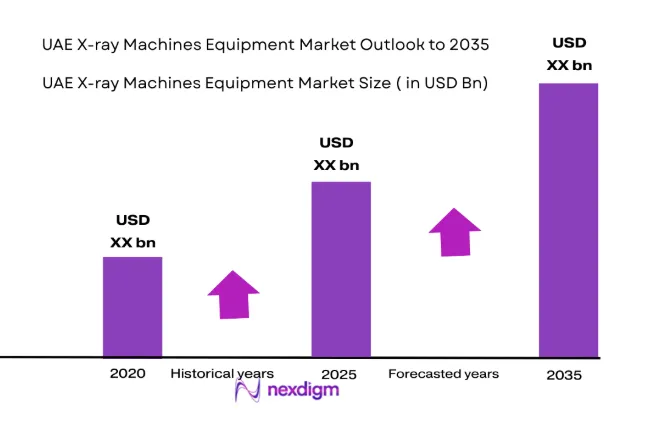
The UAE X-ray machines equipment market is expected to reach USD ~ billion by the end of the year, driven by technological advancements, rising healthcare investments, and increased adoption of diagnostic imaging tools. This market is largely influenced by the country’s growing demand for advanced medical devices, particularly in the healthcare sector, as the government emphasizes providing world-class medical facilities and expanding infrastructure. Key drivers of this market include the government’s healthcare policies, technological innovations in imaging systems, and increased patient awareness regarding the benefits of diagnostic imaging for early disease detection.
The UAE’s dominance in the X-ray machine market is primarily attributed to its position as a healthcare hub in the Middle East. Cities such as Dubai and Abu Dhabi serve as the epicenters for medical technology innovation, with numerous state-of-the-art healthcare facilities offering advanced diagnostic equipment. The country’s strategic location, economic strength, and heavy investments in healthcare infrastructure have attracted global medical device manufacturers. This results in a higher demand for advanced imaging systems, positioning the UAE as a leading market player in the region.
Market Segmentation
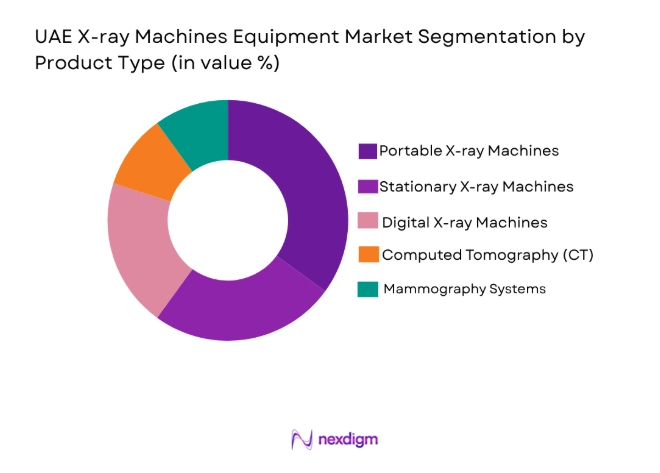
By Product Type
The UAE X-ray machines equipment market is segmented by product type into portable X-ray machines, stationary X-ray machines, digital X-ray machines, computed tomography (CT) scanners, and mammography systems. The portable X-ray machines sub-segment dominates the market due to their versatility, ease of use in various medical settings, and the growing demand for mobile healthcare solutions. These machines are especially in high demand in emergency and remote healthcare settings, where mobility is crucial for patient care. The preference for portable machines is driven by their compact size, cost-effectiveness, and the increasing trend of mobile health services across the UAE.
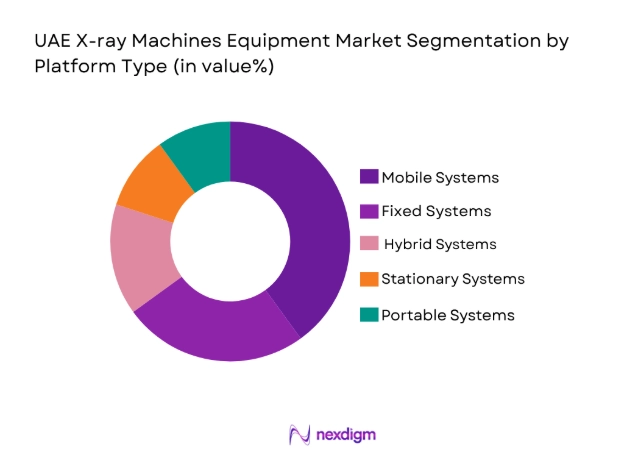
By Platform Type
The UAE X-ray machines equipment market is also segmented by platform type, including fixed systems, mobile systems, hybrid systems, stationary systems, and portable systems. Mobile systems are the leading sub-segment in this market, driven by the increasing need for healthcare accessibility in remote and underserved areas. The demand for mobile systems is boosted by their ability to provide high-quality imaging services in non-hospital settings such as outpatient clinics, urgent care centers, and even in the field, where hospital-based diagnostic tools may not be available. The flexibility, cost-effectiveness, and convenience of mobile systems make them a popular choice in the UAE market.
Competitive Landscape
The competitive landscape of the UAE X-ray machines equipment market is characterized by the presence of both global and regional players, contributing to a highly fragmented market. Major players leverage advanced technologies, strategic partnerships, and extensive distribution networks to maintain their market presence. The market is also witnessing consolidation, with larger companies acquiring smaller, innovative firms to enhance their product portfolios and regional reach. This competitive environment encourages continuous innovation, providing better access to high-quality diagnostic tools across the UAE.
| Company Name | Establishment Year | Headquarters | Technology Focus | Market Reach | Key Products | Revenue (USD) |
| GE Healthcare | 1892 | Chicago, USA | ~ | ~ | ~ | ~ |
| Philips Healthcare | 1891 | Amsterdam, Netherlands | ~ | ~ | ~ | ~ |
| Siemens Healthineers | 1847 | Erlangen, Germany | ~ | ~ | ~ | ~ |
| Carestream Health | 2007 | Rochester, USA | ~ | ~ | ~ | ~ |
| Fujifilm Holdings | 1934 | Tokyo, Japan | ~ | ~ | ~ | ~ |
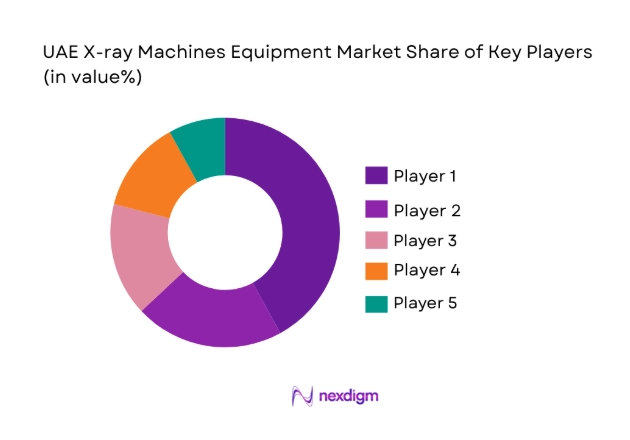
UAE X-ray Machines Equipment Market Analysis
Growth Drivers
Technological Advancements in Imaging Systems
Technological innovations in X-ray machines, including the development of digital radiography, computed tomography (CT), and artificial intelligence (AI)-enhanced imaging systems, are playing a crucial role in driving the growth of the market. The evolution of digital radiography has revolutionized the way medical images are captured and processed, significantly improving image quality, enhancing the speed of diagnosis, and reducing the radiation exposure to patients. Moreover, the advent of AI has transformed the imaging landscape by allowing for more precise and quicker diagnostics. AI-powered systems help radiologists interpret X-ray images more efficiently by automating image analysis, detecting abnormalities such as fractures, tumors, and other medical conditions at an early stage. These technological advancements allow healthcare facilities to provide superior patient care and increase operational efficiency. The UAE healthcare system, which is continually adopting cutting-edge diagnostic tools, benefits from these innovations as they contribute to better health outcomes and faster diagnostic workflows. This continuous embrace of new technology is expected to significantly expand the UAE X-ray machines market as medical professionals demand higher-quality equipment that can support complex diagnostics.
Government Initiatives for Healthcare Infrastructure Development
The UAE government’s strategic investments in healthcare infrastructure are essential growth drivers for the X-ray machines equipment market. The government has continuously focused on improving the quality and accessibility of healthcare services, especially through its landmark initiatives such as the UAE Vision 2021 and the broader National Health Agenda. These initiatives aim to enhance the overall healthcare system by fostering the adoption of advanced medical technologies, improving healthcare services, and increasing the country’s appeal as a medical tourism hub. A key component of these investments is the upgrade and expansion of hospitals and healthcare facilities across the country. This includes the introduction of state-of-the-art diagnostic tools like X-ray machines, which are in high demand for providing comprehensive imaging services. Furthermore, these initiatives aim to support both public and private healthcare sectors by increasing their capacity to offer advanced diagnostic solutions. As a result, the demand for X-ray machines is expected to rise significantly, especially in cities like Dubai and Abu Dhabi, where the concentration of healthcare infrastructure is the highest. With continuous government support, the healthcare sector in the UAE is well-positioned to expand, boosting the demand for advanced diagnostic equipment.
Market Challenges
High Initial Investment Costs
One of the most significant challenges facing the UAE X-ray machines market is the high initial investment required for acquiring advanced diagnostic equipment. The costs associated with high-quality X-ray machines, including digital radiography and CT systems, are often prohibitively high for many healthcare providers. This is especially true for smaller clinics, private practices, and healthcare providers in more remote areas who may find it difficult to justify such large upfront expenditures. In addition to the initial cost of purchasing the machines, ongoing maintenance, servicing, and the need for specialized technical support further add to the financial burden. Although these advanced machines offer superior imaging capabilities, faster results, and improved diagnostic accuracy, the hefty investment may deter many healthcare providers from upgrading or adopting newer technologies. Instead, some hospitals and clinics might continue using older and less efficient equipment, limiting the overall market growth. As the demand for high-quality imaging solutions continues to rise, addressing the financial challenge of purchasing cutting-edge equipment will be critical for encouraging wider adoption of these technologies across the UAE.
Regulatory and Compliance Issues
Navigating the complex regulatory landscape is another significant challenge for the UAE X-ray machines market. The healthcare sector in the UAE is governed by stringent regulations that ensure the safety, quality, and effectiveness of medical devices. While these regulations are critical for protecting patients and healthcare professionals, they also create barriers for new technology adoption and market entry. The process of obtaining regulatory approvals for X-ray equipment can be time-consuming and expensive, particularly for international manufacturers wishing to enter the UAE market. Additionally, the UAE’s evolving medical device regulatory framework often introduces new compliance requirements, which can add further complexity. Regulatory delays and the need to meet these evolving standards can significantly slow down the introduction of innovative X-ray machines to the market. Manufacturers must also ensure that their equipment adheres to both local and international standards, which may vary, leading to additional challenges for compliance. Despite these challenges, ongoing efforts to streamline regulations and improve the approval process may help mitigate some of these issues, facilitating smoother market entry for advanced diagnostic technologies in the future.
Opportunities
Expansion of Medical Tourism
The UAE’s growing position as a leading destination for medical tourism presents a significant opportunity for the X-ray machines equipment market. The country has invested heavily in its healthcare sector, and this investment has contributed to its reputation as a hub for medical tourism in the Middle East. The government has introduced policies aimed at attracting international patients, with facilities offering high-quality healthcare services and advanced medical technologies, including diagnostic imaging tools like X-ray machines. With more patients traveling to the UAE for specialized treatments and surgeries, there is a growing demand for the latest diagnostic equipment to support fast and accurate diagnoses. The demand for state-of-the-art diagnostic tools, including X-ray systems, is increasing as medical tourists seek advanced healthcare solutions. As medical tourism continues to expand, the UAE X-ray machines market will benefit from the increasing need for cutting-edge imaging systems in hospitals, clinics, and other medical centers. This growth in medical tourism is expected to provide manufacturers with new opportunities to supply X-ray machines and other diagnostic equipment to healthcare facilities catering to both local and international patients.
Integration of AI in Diagnostic Imaging
The integration of artificial intelligence (AI) into diagnostic imaging represents a substantial opportunity for the UAE X-ray machines equipment market. The UAE healthcare sector’s push towards digital transformation has created an environment ripe for the adoption of AI-driven technologies. AI has the potential to revolutionize the way X-ray images are analyzed, with machine learning algorithms enhancing the accuracy and speed of diagnoses. AI-enabled X-ray machines can automatically detect and diagnose medical conditions such as fractures, tumors, and infections, reducing the workload of radiologists and improving diagnostic efficiency. Furthermore, AI can enhance the quality of images, even in challenging conditions, leading to more accurate and reliable results. The growing demand for AI-integrated X-ray systems is driving the market as healthcare facilities in the UAE look to leverage technology to improve patient care and operational efficiency. With the increasing adoption of AI-powered diagnostic tools, the UAE X-ray machines market is expected to experience significant growth, making AI integration a key opportunity for both manufacturers and healthcare providers in the region.
Future Outlook
The future of the UAE X-ray machines equipment market is promising, with strong growth expected due to several key factors. These include the rise in healthcare investments, the integration of AI in medical imaging, and regulatory support aimed at improving diagnostic capabilities. Technological innovations such as 3D imaging and AI-based diagnostic tools will play a significant role in driving market expansion, offering faster and more accurate results. With the continued development of healthcare infrastructure and the rising demand for medical tourism, the market is expected to experience steady growth over the next five years.
Major Players
- GE Healthcare
- Philips Healthcare
- Siemens Healthineers
- Carestream Health
- Fujifilm Holdings
- Canon Medical Systems
- Agfa-Gevaert Group
- Hitachi Medical Systems
- Hologic
- Mindray Medical International
- Samsung Medison
- Varian Medical Systems
- Toshiba Medical Systems
- Analogic Corporation
- Neusoft Medical Systems
Key Target Audience
- Investments and venture capitalist firms
- Government and regulatory bodies
- Medical device distributors
- Healthcare facility managers
- Diagnostic imaging professionals
- Hospitals and clinics
- Medical technology companies
Research Methodology
Step 1: Identification of Key Variables
Key market variables such as technology trends, product demand, and regulatory factors are identified through comprehensive market research.
Step 2: Market Analysis and Construction
Data is gathered from reliable sources, and a structured analysis of the market is built to understand its key drivers and challenges.
Step 3: Hypothesis Validation and Expert Consultation
Validated hypotheses are tested through expert consultations with industry leaders and market participants.
Step 4: Research Synthesis and Final Output
Final market insights are synthesized, ensuring a comprehensive and accurate report is produced.

- Executive Summary
- Research Methodology (Definitions, Scope, Industry Assumptions, Market Sizing Approach, Primary & Secondary Research Framework, Data Collection & Verification Protocol, Analytic Models & Forecast Methodology, Limitations & Research Validity Checks)

- Market Definition and Scope
- Value Chain & Stakeholder Ecosystem
- Regulatory / Certification Landscape
- Sector Dynamics Affecting Demand
- Strategic Initiatives & Infrastructure Growth

- Growth Drivers
Increasing Healthcare Investments
Technological Advancements in X-ray Equipment
Government Healthcare Initiatives and Infrastructure Expansion - Market Challenges
High Initial Cost of Equipment
Limited Skilled Workforce
Regulatory and Compliance Constraints - Market Opportunities
Growing Demand in Emerging Markets
Increasing Aging Population
Integration with AI and Machine Learning for Improved Diagnosis - Trends
Adoption of Digital Radiography
Rising Preference for Mobile and Portable Systems - Government Regulations
- SWOT Analysis
- Porter’s Five Forces

- By Market Value, 2020-2025
- By Installed Units, 2020-2025
- By Average System Price, 2020-2025
- By System Complexity Tier, 2020-2025

- By System Type (In Value%)
Portable X-ray Machines
Stationary X-ray Machines
Digital X-ray Machines
Computed Tomography (CT) Scanners
Mammography Systems - By Platform Type (In Value%)
Fixed Systems
Mobile Systems
Hybrid Systems
Stationary Systems
Portable Systems - By Fitment Type (In Value%)
Standalone Systems
Integrated Systems
Mobile Fitments
Hybrid Fitments - By End User Segment (In Value%)
Hospitals
Diagnostic Centers
Research & Academic Institutions

- Market Share Analysis
- Cross Comparison Parameters (Market Share, Pricing Trends, Technological Advancements, Regulatory Compliance, System Complexity, End User Preferences, Market Growth Rate)
- SWOT Analysis of Key Competitors
- Pricing & Procurement Analysis
- Key Players
GE Healthcare
Philips Healthcare
Siemens Healthineers
Carestream Health
Fujifilm Holdings
Canon Medical Systems
Agfa-Gevaert Group
Hitachi Medical Systems
Hologic
Mindray Medical International
Samsung Medison
Varian Medical Systems
Toshiba Medical Systems
Analogic Corporation
Neusoft Medical Systems

- Hospitals
- Diagnostic Centers
- Research & Academic Institutions
- Public Health Organizations

- Forecast Market Value, 2026-2035
- Forecast Installed Units, 2026-2035
- Price Forecast by System Tier, 2026-2035
- Future Demand by Platform, 2026-2035


 Request a Sample
 Ask for Customization
 Get a Quote
 Enquire Now