
 Download PDF
Market Overview
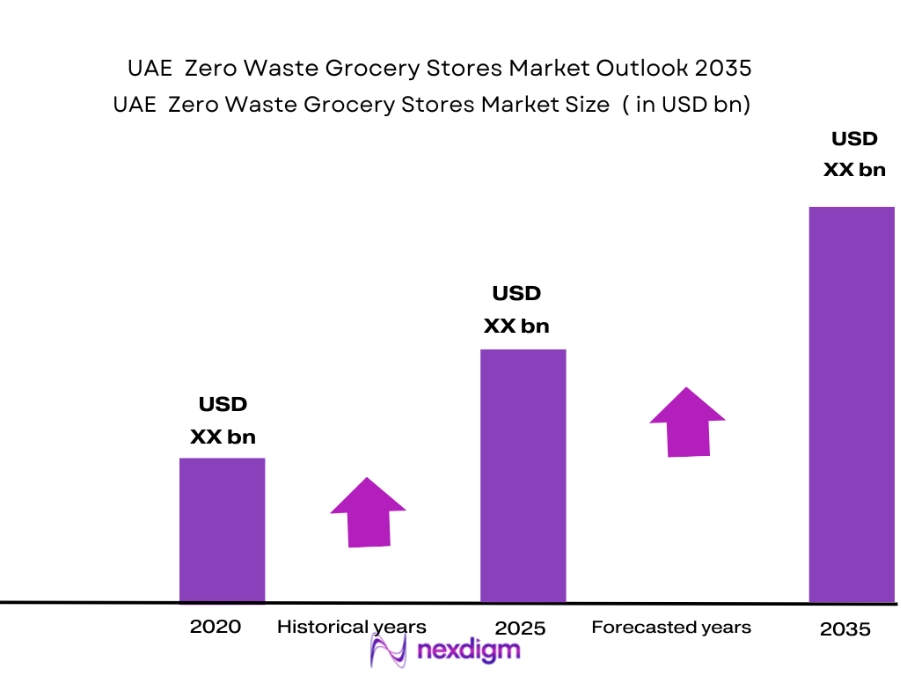
The UAE Zero Waste Grocery Stores Market is valued at USD ~ billion in 2025, with the forecasted CAGR for the 2025–2035 period assessed at 8.9%, supported by the wider global zero waste grocery store market benchmark of USD 264.11 billion in 2025 and its projected growth toward 2035. The market is driven by refill grocery formats, reusable-container shopping, sustainable packaging, premium organic retailing, and retailer-led food-waste reduction initiatives. The UAE food and grocery retail market recorded revenues of USD 42 billion, creating a strong base for low-waste grocery adoption.
Dubai, Abu Dhabi, Sharjah, Ajman, Ras Al Khaimah, Al Ain, Fujairah, and Umm Al Quwain are the dominant city markets for UAE Zero Waste Grocery Stores Market. Their dominance is linked to higher disposable income, premium supermarket concentration, expatriate-driven sustainable consumption, tourism-led retail innovation, and stronger plastic-reduction regulation. The UAE wastes around 3.27 million tonnes of food annually, while the national ban on single-use plastic bags and wider restrictions on disposable plastic products are encouraging retailers to adopt refillable, reusable, and package-light grocery formats.
Market Segmentation
By Product Type
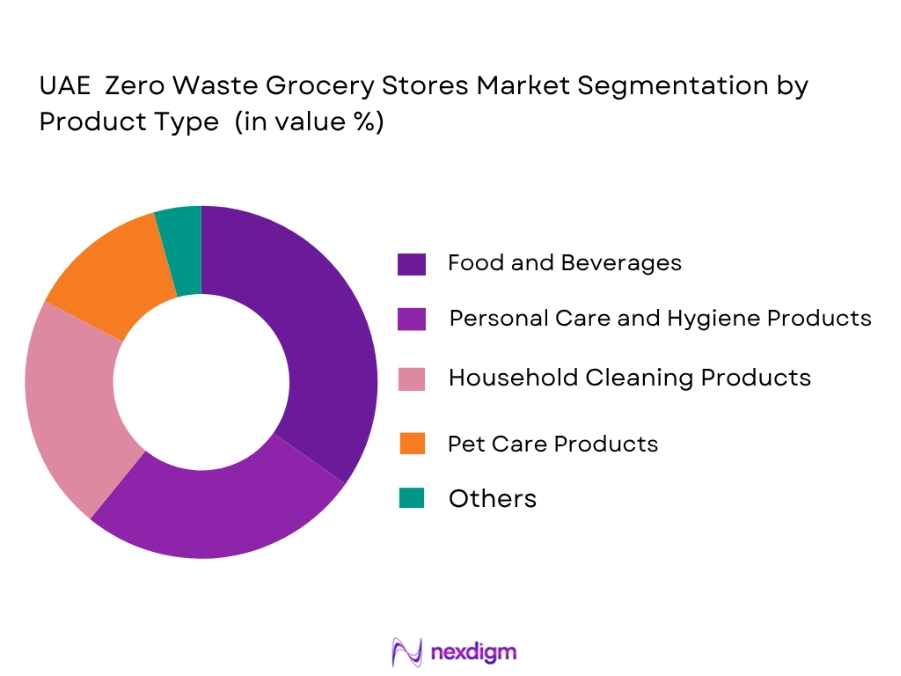
The UAE Zero Waste Grocery Stores Market is segmented by product type into pantry supplies and dry goods, fresh produce, personal care and hygiene products, cleaning supplies, and others. Recently, pantry supplies and dry goods have held the dominant market share under product type segmentation because they are highly compatible with refill bins, scoop dispensers, reusable jars, weighing systems, and bring-your-own-container grocery shopping. Products such as rice, lentils, grains, pasta, nuts, seeds, cereals, spices, coffee, tea, dried fruits, flour, and baking ingredients are frequently purchased across UAE households and are suitable for low-waste retail formats. This segment also benefits from the UAE’s strong supermarket culture, premium grocery consumption, and expatriate demand for international pantry products. Retailers prefer pantry supplies and dry goods because they offer longer shelf life, easier storage, and lower cold-chain complexity compared with fresh or chilled categories.
By Distribution Channel
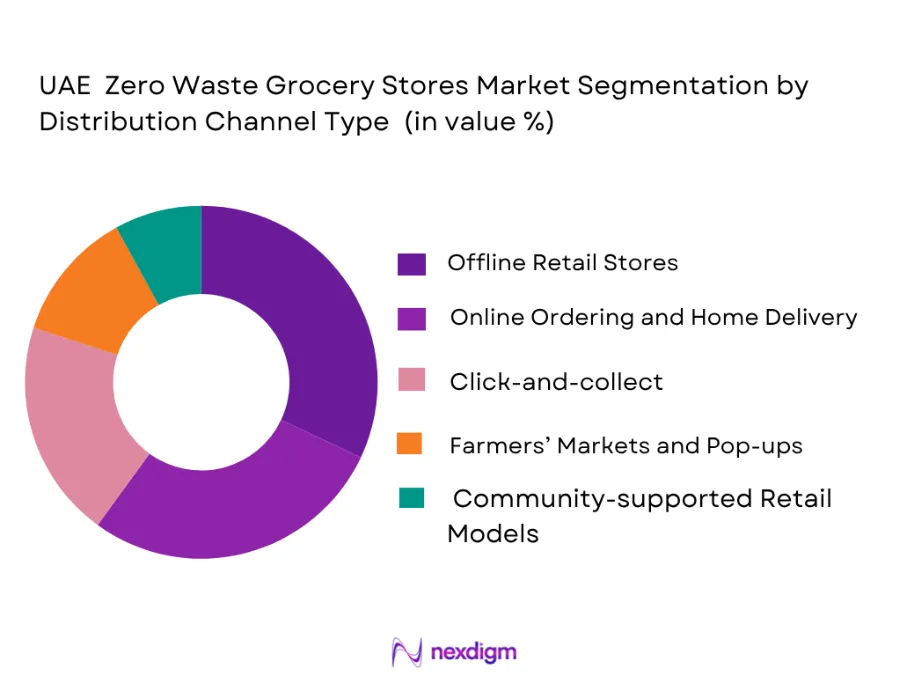
The UAE Zero Waste Grocery Stores Market is segmented by distribution channel into offline stores and online platforms. Recently, offline stores have had the dominant market share under distribution channel segmentation because zero-waste grocery shopping depends on physical refill participation, container weighing, product inspection, and in-store consumer education. Premium supermarkets, organic grocery outlets, refill shops, farmers’ markets, community stores, and specialty sustainable retailers form the core offline ecosystem. Consumers prefer offline stores for staples, fresh produce, cleaning refills, and personal-care products because they can assess quality, control purchase quantity, and avoid unnecessary delivery packaging. Online platforms are growing through sustainable grocery delivery, refill subscriptions, and eco-product marketplaces, but offline channels continue to dominate because the UAE’s zero-waste grocery model is still closely tied to premium in-store retail experiences.
Competitive Landscape
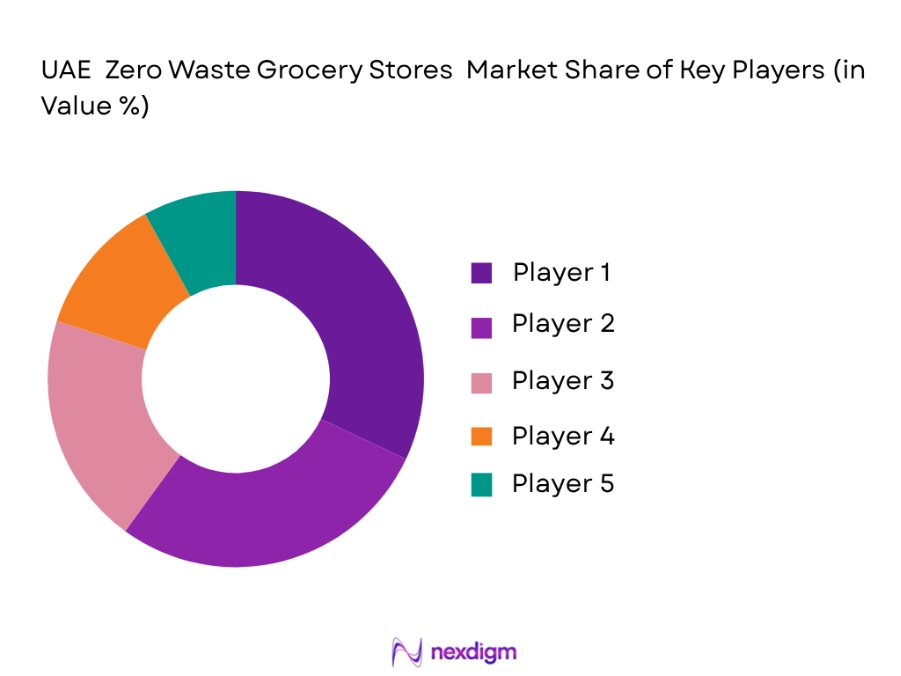
The UAE Zero Waste Grocery Stores Market is fragmented, with a mix of premium supermarket chains, organic grocery retailers, refill-focused stores, sustainable lifestyle platforms, and hypermarkets introducing lower-packaging practices. Competition is shaped by refill infrastructure, imported organic assortments, private-label sustainable products, reusable packaging, premium store locations, and consumer education. Carrefour UAE, Spinneys, Waitrose UAE, Organic Foods and Café, and Kibsons are influential players, while specialist zero-waste and sustainable product platforms support adoption in Dubai, Abu Dhabi, Sharjah, and other urban markets.
| Company | Establishment Year | Headquarters | Business Model | Core Product Focus | Store / Channel Presence | Sustainability Positioning | Packaging Model | Market Role |
| Carrefour UAE | 1995 | Dubai, UAE | ~ | ~ | ~ | ~ | ~ | ~ |
| Spinneys UAE | 1961 | Dubai, UAE | ~ | ~ | ~ | ~ | ~ | ~ |
| Waitrose UAE | 2008 | Dubai, UAE | ~ | ~ | ~ | ~ | ~ | ` |
| Organic Foods and Café | 2004 | Dubai, UAE | ~ | ~ | ~ | ~ | ~ | ~ |
| Kibsons | 1980 | Dubai, UAE | ~ | ~ | ~ | ~ | ~ | ~ |
UAE Zero Waste Grocery Stores Market Analysis
Growth Drivers
Support from UAE sustainability and circular economy initiatives
The UAE zero waste grocery stores market is supported by national and emirate-level sustainability initiatives focused on reducing waste, improving resource efficiency, and encouraging circular economy practices. Government attention on plastic reduction, responsible consumption, recycling, and sustainable retail creates a favorable environment for low-waste grocery formats. Consumers in Dubai, Abu Dhabi, and Sharjah are increasingly exposed to sustainability campaigns through schools, communities, workplaces, and retail programs. This helps normalize reusable bags, refill systems, and reduced-packaging products. Zero waste grocery stores can align with these initiatives by offering refill stations, reusable packaging, and responsible sourcing. As sustainability becomes more embedded in urban planning and consumer behavior, demand for practical waste-reduction retail formats is likely to increase.
Growth in organic, natural, and sustainable food consumption
Demand for organic, natural, and sustainable food products is growing in the UAE, especially among health-conscious residents, expatriate communities, and higher-income urban consumers. Shoppers are increasingly interested in clean-label groceries, natural household products, ethically sourced items, and products with lower environmental impact. Zero waste grocery stores can benefit from this trend by offering unpackaged grains, nuts, spices, oils, teas, snacks, personal care products, and cleaning essentials in refillable or reusable formats. The UAE’s premium grocery segment already supports demand for differentiated and health-oriented products, making zero waste concepts more acceptable to targeted consumers. By combining sustainability with wellness, quality, and convenience, these stores can position themselves as modern alternatives to conventional packaged retail.
Market Challenges
High operating costs and limited scalability
High operating costs are a major challenge for zero waste grocery stores in the UAE. Retail rents, labor costs, imported product sourcing, storage requirements, and compliance expenses can make the model expensive to operate. Many zero waste products require specialized bulk handling, refill infrastructure, reusable packaging systems, and strict hygiene controls, which add further cost. Since the market is still niche, stores may lack the sales volume needed to achieve strong economies of scale. This can result in higher prices and restrict adoption to premium consumer segments. Scaling across multiple emirates is also difficult because each location requires reliable suppliers, strong logistics, customer education, and enough demand to justify operating expenses.
Consumer convenience barriers compared with conventional grocery retail
Convenience is a significant barrier for zero waste grocery stores in the UAE, where consumers are accustomed to large supermarkets, hypermarkets, quick-commerce platforms, and home delivery services. Conventional grocery retailers offer broad product ranges, fast checkout, loyalty programs, competitive promotions, and strong digital ordering infrastructure. In comparison, zero waste shopping may require customers to bring containers, visit specialist stores, and spend more time selecting refill products. This can reduce repeat usage among busy households, even when sustainability awareness is present. Store accessibility is also important because car-based shopping patterns and mall-centric retail habits influence consumer choices. Zero waste retailers need simplified refill systems, delivery options, and partnerships with mainstream retail to reduce friction.
Opportunities
Partnerships with local farms, urban farms, and sustainable brands
Partnerships with local farms, urban farms, and sustainable brands create strong opportunities for UAE zero waste grocery stores. The UAE is investing in controlled-environment agriculture, hydroponics, vertical farming, and local food production to improve food security and reduce import dependence. Zero waste stores can collaborate with these producers to offer fresh, traceable, and locally grown products with reduced packaging. Partnerships with sustainable home care, personal care, and pantry brands can also expand refillable product categories. Local sourcing can strengthen consumer trust while supporting national sustainability goals. These collaborations allow zero waste retailers to differentiate themselves through freshness, transparency, and responsible sourcing rather than competing only on price with conventional supermarkets.
Growth of online zero waste grocery platforms
Online zero waste grocery platforms offer meaningful growth potential in the UAE because consumers are highly accustomed to digital shopping and home delivery. E-commerce models can make refillable and low-waste products accessible beyond specialist physical stores, especially in Dubai, Abu Dhabi, Sharjah, and new residential communities. Platforms can offer pantry staples, cleaning liquids, toiletries, and sustainable household products using reusable containers, returnable packaging, or plastic-free delivery systems. Subscription models for frequently used items can improve repeat purchases and reduce customer effort. Technology can also support container tracking, route optimization, inventory planning, and customer education. By combining sustainability with the UAE’s strong digital retail culture, online zero waste platforms can broaden market reach.
Future Outlook
Over the next decade, the UAE Zero Waste Grocery Stores Market is expected to expand steadily as consumers, retailers, and regulators respond to plastic waste, food waste, and demand for sustainable premium grocery formats. Growth will be concentrated in Dubai and Abu Dhabi before spreading through Sharjah, Ajman, Ras Al Khaimah, and other urban centers. The market outlook to 2035 will be shaped by refill systems, reusable packaging, sustainable import practices, food-waste reduction platforms, and partnerships between retailers, hospitality operators, and packaging providers.
By 2035, zero-waste grocery formats in the UAE are expected to become more visible as premium supermarkets, organic stores, and specialty retailers introduce refill sections, loose dry goods, plastic-free personal care, and cleaning-product refill points. Pantry staples, fresh produce, household refills, and personal-care products will remain the core growth categories. The market will also benefit from plastic bans, ESG commitments among retailers, food security strategies, and rising demand from expatriate households familiar with sustainable shopping formats. By 2035, the UAE Zero Waste Grocery Stores Market is expected to evolve from a niche sustainability-led retail format into a broader hybrid model combining premium offline grocery stores, online sustainable grocery delivery, circular packaging, and refill infrastructure. Specialist zero-waste stores will continue to influence consumer education, while large supermarket chains may selectively integrate package-free aisles and reusable-container systems. Stronger regulation, food-waste reduction campaigns, and corporate sustainability commitments will remain important enablers of long-term market growth.
Major Players
- Carrefour UAE
- Spinneys UAE
- Waitrose UAE
- Organic Foods and Café
- Kibsons
- Lulu Hypermarket
- Choithrams
- Union Coop
- Grandiose Supermarket
- FreshToHome UAE
- BulkWhiz
- The Green Ecostore
- Go Organic
- Ripe Organic
- Lets Organic
Key Target Audience
- Zero waste grocery store operators
- Organic and premium grocery retailers
- Supermarket chains and hypermarket operators
- Sustainable packaging manufacturers
- Refill station and bulk dispensing equipment providers
- Investments and venture capitalist firms
- Government and regulatory bodies
- Food co-operatives and regional grocery associations
Research Methodology
Step 1: Identification of Key Variables
The initial phase involves constructing an ecosystem map covering zero-waste grocery stores, premium supermarkets, organic grocery retailers, online grocery platforms, refill-system providers, packaging manufacturers, food-waste reduction initiatives, and regulatory stakeholders. This step is underpinned by desk research and secondary databases to identify the key variables influencing the UAE Zero Waste Grocery Stores Market, such as plastic bans, refill adoption, premium grocery demand, urban retail density, and consumer sustainability behaviour.
Step 2: Market Analysis and Construction
In this phase, historical data related to the UAE grocery retail sector, organic food sales, zero-waste stores, refill models, sustainable packaging, and food-waste reduction activity is compiled and assessed. The analysis reviews market penetration, channel performance, product-category relevance, and revenue generation across offline and online formats. The objective is to construct a market view that reflects both specialist zero-waste stores and mainstream grocery retailers adopting low-waste practices.
Step 3: Hypothesis Validation and Expert Consultation
Market hypotheses are developed around product dominance, city-level adoption, distribution-channel strength, price sensitivity, and consumer purchasing behaviour. These hypotheses are validated through interviews with zero-waste store operators, premium grocery retailers, packaging specialists, refill-system providers, and sustainable food stakeholders. The consultation process helps test assumptions related to affordability, refill logistics, food safety, consumer education, and competitive differentiation.
Step 4: Research Synthesis and Final Output
The final phase integrates secondary findings, market modelling, stakeholder inputs, and competitive benchmarking into a structured analysis of the UAE Zero Waste Grocery Stores Market. Insights from grocery retailers, sustainable packaging providers, organic food companies, and refill-store operators are used to verify segmentation, sales-channel dynamics, future outlook, and major-player positioning. This step ensures that the final output reflects practical market conditions, growth opportunities, and investment relevance.

- Executive Summary
- Research Methodology (Market Definitions and Assumptions, Abbreviations, Market Sizing Approach, Consolidated Research Approach, Understanding Market Potential Through In-Depth Industry Interviews, Primary Research Approach, Limitations and Future Conclusions)

- Definition and Scope
- Market Dynamics Overview
- Market Genesis
- Major Players and Market Timeline
- Business Cycle and Trends
- Supply Chain and Value Chain Analysis
- Role of Bulk, Refill, Reuse, and Package-free Retail Models

- Growth Drivers
Increasing Consumer Awareness About Plastic Waste and Sustainability
Rising Demand for Package-free and Low-waste Shopping Options
Growth in Organic, Natural, and Sustainable Food Consumption
Expansion of Urban Eco-conscious Consumer Groups
Increasing Adoption of Reusable and Refillable Packaging
Support from UAE Sustainability and Circular Economy Initiatives
Growing Preference for Ethical and Locally Sourced Products - Market Challenges
High Operating Costs and Limited Scalability
Consumer Convenience Barriers Compared with Conventional Grocery Retail
Limited Supplier Ecosystem for Package-free Products
Food Safety, Hygiene, and Compliance Requirements
Price Sensitivity Among Consumers
Difficulty in Maintaining Product Freshness and Inventory Turnover
Competition from Mainstream Supermarkets Offering Sustainable Alternatives - Opportunities
Expansion of Refill Stations in Mainstream Retail
Growth of Online Zero Waste Grocery Platforms
Partnerships with Local Farms, Urban Farms, and Sustainable Brands
Adoption of Deposit-return and Circular Packaging Models
Rising Demand for Private-label Sustainable Products
Expansion into Dubai, Abu Dhabi, Sharjah, and Emerging Urban Communities
Use of Technology for Inventory, Traceability, and Waste Reduction - Key Trends
Shift Toward Bulk Food and Refill Shopping
Increasing Use of Reusable Containers and Deposit-based Packaging
Integration of Zero Waste Sections in Conventional Grocery Stores
Growth of Community-owned and Specialty Sustainable Retail Models
Rising Demand for Local, Organic, and Ethically Sourced Products
Expansion of Plastic-free Personal Care and Cleaning Products
Increasing Focus on Carbon Footprint Reduction and Circular Economy Practices - Government Regulations and Policy Landscape
UAE Food Safety and Retail Hygiene Regulations
Municipality Guidelines for Food Handling and Retail Compliance
UAE Circular Economy Policy and Waste Diversion Initiatives
Single-use Plastic Ban and Plastic Bag Reduction Policies
Extended Producer Responsibility and Packaging Waste Regulations
Packaging, Labeling, and Consumer Protection Regulations
Recycling, Composting, and Sustainability Policies - SWOT Analysis
- Porter’s Five Forces Analysis

- By Value, 2020–2025
- By Store Count, 2020–2025
- By Transaction Volume, 2020–2025
- By Average Basket Size, 2020–2025
- By Average Revenue per Store, 2020–2025

- By Store Format (In Value %)
Standalone Zero Waste Grocery Stores
Bulk and Refill Stores
Organic and Sustainable Grocery Stores with Zero Waste Sections
Cooperative and Community-based Stores
Mobile and Pop-up Zero Waste Stores
Others - By Product Category (In Value %)
Food and Beverages
Personal Care and Hygiene Products
Household Cleaning Products
Pet Care Products
Reusable Packaging and Storage Products
Others - By Food Product Type (In Value %)
Grains, Pulses, and Cereals
Nuts, Seeds, and Dried Fruits
Spices, Herbs, and Condiments
Fresh Produce
Dairy and Plant-based Alternatives
Snacks and Package-free Foods
Beverages
Others - By Non-food Product Type (In Value %)
Shampoo, Soaps, and Personal Care Refills
Laundry and Cleaning Refills
Reusable Bags, Containers, and Jars
Compostable and Eco-friendly Household Products
Others - By Business Model (In Value %)
Bring-your-own-container Model
Deposit-return Packaging Model
Subscription and Refill Delivery Model
In-store Bulk Dispensing Model
Hybrid Sustainable Grocery Model - By Consumer Type (In Value %)
Environmentally Conscious Consumers
Urban Millennials and Gen Z Consumers
Health-conscious Consumers
Families and Households
Small Businesses and Cafés
Others - By Distribution Channel (In Value %)
Offline Retail Stores
Online Ordering and Home Delivery
Click-and-collect
Farmers’ Markets and Pop-ups
Community-supported Retail Models - By Region (In Value %)
Dubai
Abu Dhabi
Sharjah
Ajman
Ras Al Khaimah
Fujairah
Umm Al Quwain

- Market Share of Major Players by Value
- Market Share of Major Players by Store Count
- Market Share by Product Category
- Market Share by Region
- Competitive Positioning of Zero Waste Grocery Stores and Sustainable Retailers
- Cross Comparison Parameters (Company Overview, Business Model, Product Categories, Store Presence, Online Presence, Geographic Reach, Sourcing Strategy, Sustainability Practices, Packaging and Refill Model, Pricing Strategy, Customer Base, Revenue Streams, Recent Developments, Strengths and Weaknesses, Partnerships and Supplier Network, Unique Value Offering)
- SWOT Analysis of Major Players
- Pricing Analysis
Pricing Analysis by Product Category
Pricing Comparison with Conventional Grocery Stores
Pricing Analysis of Bulk and Refill Products
Average Basket Size by Store Format
Margin Analysis by Product Category - Detailed Profiles of Major Companies
The Waste Lab
Azraq
My Green Chapter
The Giving Movement
Organic Foods & Café
Ripe Organic
Spinneys
Waitrose UAE
Carrefour UAE
Lulu Hypermarket
Union Coop
Choithrams
Kibsons
Barakat Fresh
FreshToHome UAE
NRTC Fresh
BAYARA
BulkWhiz
Local and Regional Zero Waste Grocery Stores

- Market Demand and Utilization
- Purchasing Power and Budget Allocations
- Consumer Preferences and Buying Behavior
- Awareness of Sustainability and Waste Reduction
- Needs, Desires, and Pain Point Analysis
- Decision-making Process
- Frequency of Purchase and Basket Size Analysis

- By Value, 2026–2035
- By Store Count, 2026–2035
- By Transaction Volume, 2026–2035
- By Average Basket Size, 2026–2035
- By Average Revenue per Store, 2026–2035


 Request a Sample
 Ask for Customization
 Get a Quote
 Enquire Now