

 Download PDF
Market Overview
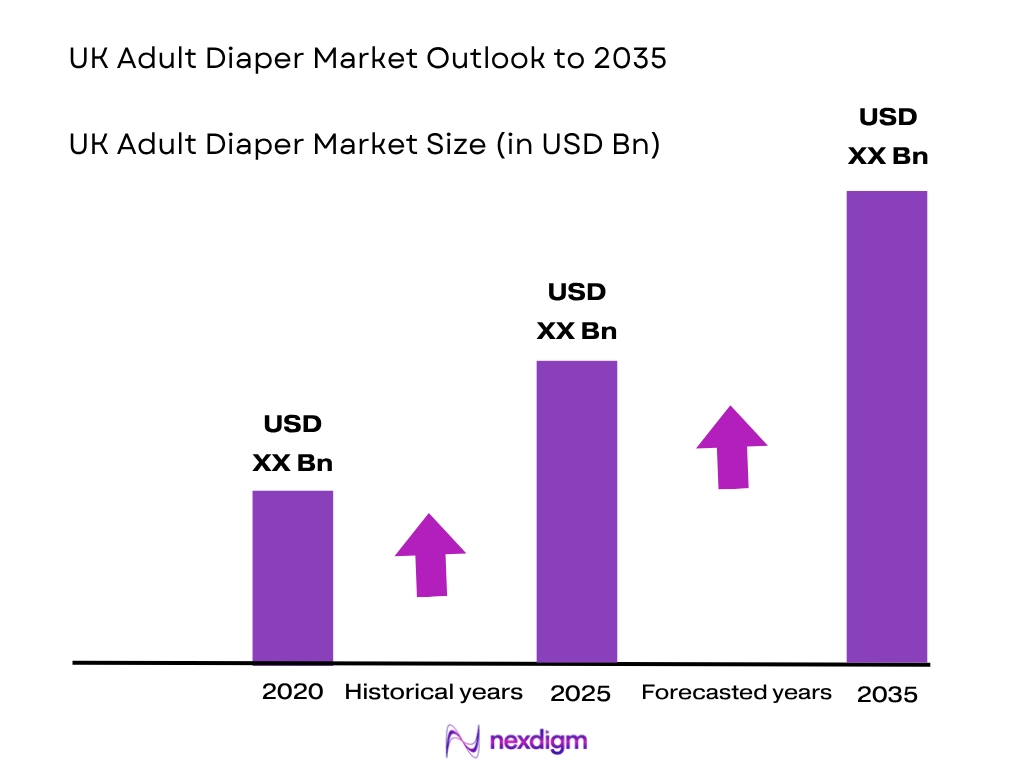
The UK adult diaper market is valued at approximately USD ~ billion, driven primarily by an aging population, with the number of individuals aged 65 and above steadily increasing. This demographic shift leads to a higher prevalence of incontinence, consequently boosting the demand for adult diapers. Additionally, heightened awareness around incontinence management, supported by healthcare campaigns from organizations like the NHS, has further driven market growth. The UK healthcare system’s increased focus on elderly care, coupled with growing healthcare expenditure, also strengthens market prospects. Moreover, innovations in product design and material, such as thinner and more absorbent options, have contributed to the growth of the market, as they improve user comfort and accessibility.
The UK market is dominated by England, where the largest consumer base resides, particularly in cities such as London, Manchester, and Birmingham. These urban areas benefit from higher population densities, as well as better access to healthcare infrastructure and retail channels for adult diapers. The demand for adult diapers is notably high in nursing homes, care facilities, and hospitals, which are predominantly located in these areas. Furthermore, England’s aging population and concentrated healthcare services make it a focal point of the market, driving product demand. Scotland, Wales, and Northern Ireland also contribute to the market but to a lesser extent due to comparatively smaller populations.
Market Segmentation
By Product Type
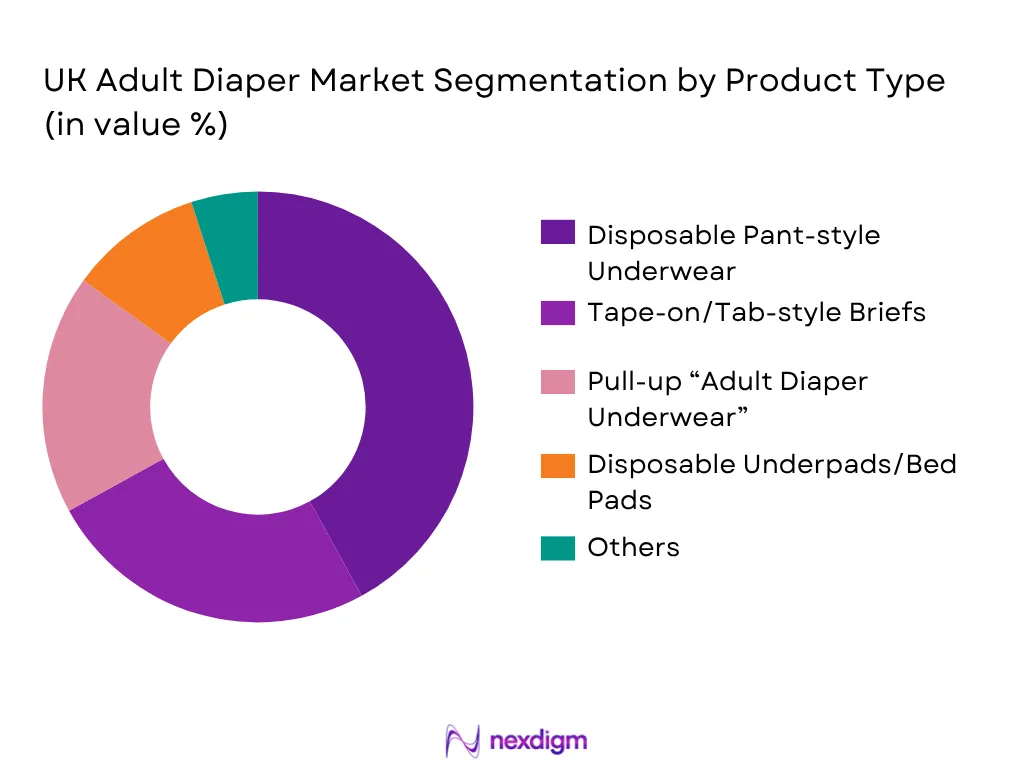
The UK adult diaper market is segmented into several product types, including disposable pant-style underwear, tape-on/tab-style briefs, pull-up “adult diaper underwear,” and disposable underpads/bed pads. Among these, the disposable pant-style underwear segment holds the dominant market share. This is because of its increasing adoption due to its user-friendly design, providing enhanced comfort and ease of use, particularly among elderly consumers and caregivers. The convenience and discreetness offered by pant-style underwear make it highly popular, especially in both home and institutional care settings. The appeal of this segment is further driven by innovations in materials that provide better absorption and odor control.
By Distribution Channel
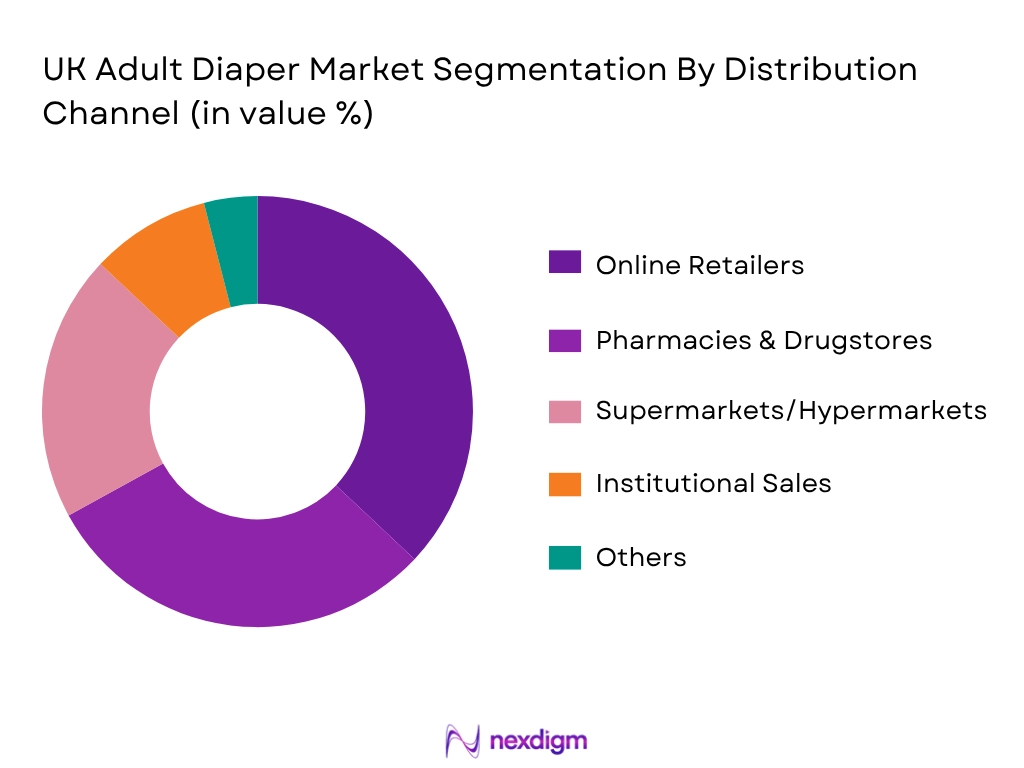
The UK adult diaper market is segmented by distribution channel into pharmacies & drugstores, supermarkets/hypermarkets & convenience stores, online retailers, institutional sales, and others. Online retail channels are projected to hold the largest market share in 2024. This is due to the growing preference for e-commerce platforms, especially among younger caregivers and family members, who seek the convenience of doorstep delivery. Moreover, subscription-based models, allowing customers to receive regular supplies, are contributing to the increasing popularity of online sales. Online retailers provide a broad range of adult diaper products, offering consumers various choices in terms of price and product features.
Competitive Landscape
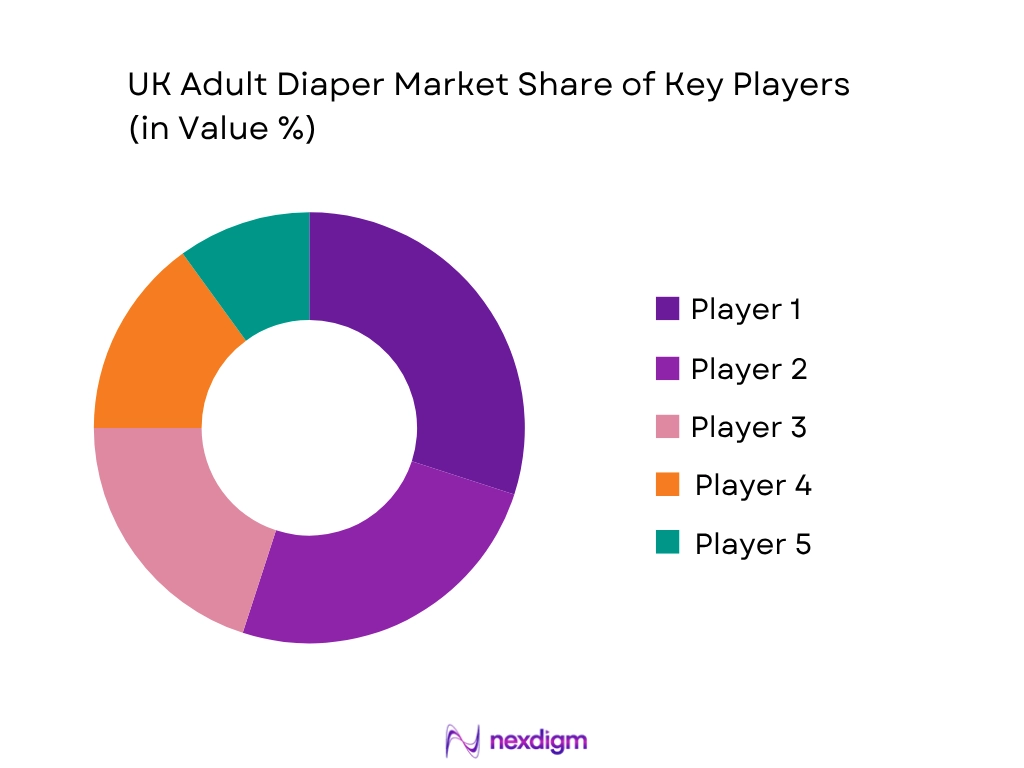
The UK adult diaper market is dominated by a few major players that have strong brand recognition and widespread distribution networks. These players include global companies such as Kimberly-Clark, Essity (TENA), and Procter & Gamble, which have established a solid presence in both the retail and institutional sectors. The consolidation of key players in the market reflects the significance of established brands in capturing consumer loyalty and trust.
| Company Name | Establishment Year | Headquarters | Product Portfolio | Market Reach | Distribution Network | Financial Performance |
| Kimberly-Clark Corporation | 1872 | USA | ~ | ~ | ~ | ~ |
| Essity AB (TENA) | 1929 | Sweden | ~ | ~ | ~ | ~ |
| Procter & Gamble | 1837 | USA | ~ | ~ | ~ | ~ |
| Ontex Group NV | 1979 | Belgium | ~ | ~ | ~ | ~ |
| Paul Hartmann AG | 1904 | Germany | ~ | ~ | ~ | ~ |
UK Adult Diaper Market Analysis
Growth Drivers
Aging Population and Longevity
The aging population in the UK is a major driver of the adult diaper market. According to the Office for National Statistics (ONS), the proportion of people aged 65 and over in the UK has steadily increased, reaching approximately 19% of the total population in 2024. This demographic shift is contributing to higher incidences of incontinence, driving demand for adult diapers. In 2024, there are 12.3 million individuals aged 65 and over in the UK, and this number is expected to grow as life expectancy continues to rise. In addition, the UK’s life expectancy for men and women is projected to be 79.3 and 82.9 years, respectively, by 2024 (ONS). This longer life expectancy results in an increased prevalence of age-related health conditions, including incontinence, which directly impacts the demand for adult diapers. Additionally, many elderly people prefer to live at home or in care facilities, which increases the need for continence care products, further supporting the growth of this market.
Chronic Conditions Prevalence
Chronic conditions, such as diabetes, neurological disorders, and mobility impairments, are becoming more prevalent in the UK, further driving the demand for adult diapers. According to the NHS Digital, as of 2024, approximately 4.9 million people in the UK are living with diabetes, with an expected rise of over 5 million by 2026. Many individuals with chronic conditions like diabetes, Parkinson’s disease, or multiple sclerosis often experience incontinence, leading to a consistent need for adult diapers. Moreover, the NHS reports that the prevalence of neurological conditions in the UK, such as dementia, is on the rise, with an estimated 850,000 people living with dementia in 2024, and this number is expected to increase to over 1 million by 2030. These conditions result in a greater incidence of incontinence among adults, thereby driving the demand for adult diapers in both home care and institutional settings, including hospitals and nursing homes.
Market Challenges
Social Taboo and Underreporting
One of the key challenges in the UK adult diaper market is the social stigma surrounding incontinence. Many individuals, particularly in older age groups, still feel embarrassed to discuss or seek help for incontinence. According to a report from the National Institute for Health and Care Excellence (NICE), only a small percentage of those affected by incontinence actively seek help or discuss it with healthcare professionals. This underreporting is a major barrier to market growth, as many potential users remain undiagnosed or do not purchase the products necessary for managing incontinence. In 2024, approximately 2.5 million people in the UK suffer from urinary incontinence, but many of them do not use adult diapers due to embarrassment or social discomfort. This significant portion of the population represents untapped market potential for adult diaper manufacturers. Addressing the stigma and encouraging open discussions around incontinence care would help mitigate this challenge and expand the market.
Affordability & Reimbursement
Affordability and reimbursement are significant challenges that affect the UK adult diaper market. Although adult diapers are an essential part of incontinence care, the cost of high-quality products can be a barrier for many consumers, especially those in lower-income households or on fixed budgets. The UK government’s National Health Service (NHS) provides some reimbursement for adult diapers, but only under certain conditions and with budget limitations. In 2024, NHS funding for continence products remains capped, and only patients who meet specific eligibility criteria are eligible for free or subsidized products. This results in a gap where many people with incontinence need to self-fund their products, limiting access for some and creating an affordability challenge. Additionally, as the price of raw materials such as superabsorbent polymers fluctuates, manufacturers face pressure to maintain affordability while ensuring product quality. This financial barrier can discourage some individuals from purchasing adult diapers, limiting overall market penetration.
Market Opportunities
Eco-friendly and Biodegradable Products
The growing trend toward sustainability and eco-consciousness presents a significant opportunity for the UK adult diaper market. As consumer awareness about environmental impact increases, the demand for eco-friendly and biodegradable products is on the rise. The UK government has introduced several initiatives to reduce plastic waste, and this trend is affecting product preferences in various industries, including personal care. In 2024, the UK’s commitment to reducing plastic waste, as outlined in the UK Plastics Pact, is encouraging adult diaper manufacturers to explore alternative materials that are biodegradable or made from renewable resources. Consumers, particularly those with a focus on sustainability, are becoming increasingly interested in products that minimize environmental impact. This shift is expected to open up new opportunities for manufacturers to cater to eco-conscious consumers, who are more willing to pay a premium for sustainable options. In addition, some manufacturers are experimenting with reusable cloth diapers, further contributing to the growth of this market segment.
Gender-Specific Products
Gender-specific adult diapers are gaining traction in the UK market due to the increasing demand for more comfortable and tailored solutions. Incontinence products designed specifically for men and women, such as anatomically shaped diapers and diapers with varying absorbency levels, offer improved comfort and performance. In 2024, the growing recognition of the differences in incontinence between genders is driving innovation in product design. Women, for instance, often experience incontinence due to pregnancy, childbirth, or menopause, while men may experience it due to prostate issues or neurological disorders. These gender-specific products, which cater to the unique needs of each group, are becoming more popular, particularly among older adults seeking comfort and discretion. Manufacturers are increasingly focusing on these segments, providing more specialized solutions that meet the needs of both male and female consumers. This trend is expected to continue, as demand for personalized care grows.
Future Outlook
Over the next five years, the UK adult diaper market is expected to witness significant growth, driven by an aging population, increasing awareness of incontinence care, and product innovation. The market is poised for further expansion as healthcare facilities and home care providers seek improved incontinence management solutions. The growth of e-commerce platforms and subscription services will also continue to boost the demand for adult diapers. Innovations in sustainability, such as eco-friendly and biodegradable adult diapers, are likely to gain traction, offering new opportunities for market players.
Major Players
- Kimberly-Clark Corporation
- Essity AB (TENA)
- Procter & Gamble
- Ontex Group NV
- Paul Hartmann AG
- Medline Industries, Inc.
- Domtar Personal Care
- Lindell AB (iD® brand)
- Cardinal Health, Inc.
- Attends Healthcare (Ontex)
- Drylock Technologies NV
- Abena Group
- Unicharm Corporation
- JSNODA
- Novamed (UK)
Key Target Audience
- Investments and Venture Capitalist Firms
- Government and Regulatory Bodies (e.g., National Health Service – NHS, Public Health England)
- Healthcare Providers (Hospitals, Nursing Homes, Homecare Agencies)
- Caregiver Organizations
- Private Labels and Retailers
- Institutional Buyers (Care Homes, Rehabilitation Centers)
- Manufacturers of Incontinence Products
- E-commerce Platforms and Subscription Services
Research Methodology
Step 1: Identification of Key Variables
This step involves constructing an ecosystem map for the UK adult diaper market, encompassing key stakeholders such as manufacturers, distributors, healthcare providers, and retailers. The objective is to identify all critical variables affecting market dynamics through secondary research using databases and industry reports.
Step 2: Market Analysis and Construction
Historical data analysis will be performed to assess the penetration rates of different product types and distribution channels within the UK market. Service quality and revenue generation metrics will be evaluated to derive accurate insights into the market structure.
Step 3: Hypothesis Validation and Expert Consultation
Hypotheses regarding market dynamics will be validated through computer-assisted telephone interviews (CATIs) with industry experts. These consultations will provide direct insights into the operational and financial aspects of the market, ensuring the accuracy of the analysis.
Step 4: Research Synthesis and Final Output
The final phase will involve engaging directly with key manufacturers to acquire insights into product segments, sales performance, consumer preferences, and new innovations in the adult diaper market. These insights will supplement the data gathered during the previous phases and lead to a comprehensive and validated market report.

- Executive Summary
- Research Methodology (Market Definitions & Scope (Adult diapers and related products), Assumptions and Data Sources (ONS, NHS, Industry), Abbreviations (SAP, ICB, etc.), Market Sizing Approach;Top-down and bottom-up, Consolidated Secondary Research & Data Validation, Primary Research (Industry interviews: healthcare providers, manufacturers), Limitations and Future Assumptions)

- Definition and Scope
- Market Genesis and Evolution of adult incontinence care in UK
- Timeline of Major Milestones and Product Innovations
- Industry Life Cycle and Growth Stage
- Supply Chain and Value-Chain Analysis
- Stakeholder Ecosystem

- Growth Drivers (Aging Population and Longevity, Chronic Conditions Prevalence, Awareness & Reduced Stigma, Growth in Care Facilities and Homecare, Product Innovation)
- Market Challenges (Social Taboo and Underreporting, Affordability & Reimbursement, Raw Material Cost Volatilit, Supply Chain Disruptions)
- Opportunities (Eco-friendly and Biodegradable Products, Gender-Specific Products, Smart Diapers and Digital Healt, E-commerce & Subscription Models)
- Industry Trends (Rise of Private Labels, Smart Marketing & Brandin, Integration)
- Regulatory & Reimbursement Landscape – Governmental and standards environment:NHS Procurement and Reimbursemen, Quality Standard, Upcoming Regulations).
- SWOT Analysis (Summary of Strengths, Weaknesses, Opportunities, Threats for the UK market)
- Stakeholder Ecosystem (Roles of Manufacturers, Distributors, Healthcare Systems, Caregivers, Patients)
- Porter’s Five Forces Analysis (Competitive rivalry, buyer/supplier power, substitutes, entry barriers in the adult diaper industry)
- Competition Ecosystem (Summary of the competitive landscape (major global/local players, market concentration)

- By Value (2020-2025)
- By Volume (2020-2025)
- By Average Selling Price (2020-2025)

- By Product Type (In Value %)
Disposable Pant-style Underwear
Tape-on/Tab-style Briefs
Pull-up “Adult Diaper Underwear”
Disposable Underpads/Bed Pads (Incontinence Bed Mats)
Reusable Cloth Diapers - By Product Category (In Value %)
Male-Specific Products
Female-Specific Products
Unisex Products - By End-User (In Value %)
Residential/Home Care (Adults at home)
Nursing Homes and Long-Term Care Facilities
Hospitals and Clinics (Inpatient wards)
Rehabilitation Centers
Hospices
- By Distribution Channel (In Value %)
Pharmacies & Drugstores
Supermarkets/Hypermarkets & Convenience Stores
Online Retailers (Direct-to-Consumer e‑commerce)
Institutional Sales (Hospital/Care-home procurement)
Wholesale
Subscription Services - By Region (In Value %)
England
Scotland
Wales
Northern Ireland - By Price Tier (In Value %)
Premium Segment (High-end brands)
Mid-Range Segment
Economy/Value Segment (Private-label)

- Market Share of Major Players (by value/volume, brand presence, by product type)
- Cross-Comparison Parameters (Company Overview, Product Portfolio, Manufacturing Capacity & Technology, Distribution Network, Financials & Market Share, R&D and Innovation Focus, Marketing and Partnerships, Competitive Strengths/Weaknesses)
- SWOT Analysis of Major Players (collective summary of top companies)
- Pricing and SKU Analysis (Comparison of pricing tiers, pack sizes and ASPs for leading brands)
- Recent Strategic Developments (Product Launches, Packaging Redesigns, DTC Expansion, Retail Partnerships, Institutional Contracts, Sustainability Initiatives)
- Detailed Profiles of Major Companies
Kimberly-Clark Corporation
Essity (TENA)
Ontex Group NV
Paul Hartmann AG
Medline Industries, Inc.
Domtar Personal Care
Lindell AB
Cardinal Health
Attends Healthcare
Drylock Technologies NV
Abena Group
Unicharm Corporation
JSNODA
Novamed
Procter & Gamble Co.

- Market Demand and Utilization (penetration rates among elderly and patients, usage frequency)
- Purchasing Behavior and Budget Allocation (public vs private spending, shopping channels)
- Regulatory Requirements (eligibility for free NHS supply, prescription process)
- Consumer Needs, Preferences and Pain Points (comfort, discretion, skin health, odor control)
- Decision-Making Process (role of caregivers, clinicians, procurement departments in product choice)
- Customer Cohort Analysis (Active Seniors, High-Dependency Elderly, Women with Bladder Leakage, Men with Leakage, Institutional Residents, Post-Acute Patients)

- By Value (2026-2035)
- By Volume (2026-2035)
- By ASP (2026-2035)


 Request a Sample
 Ask for Customization
 Get a Quote
 Enquire Now