
 Download PDF
Market Overview
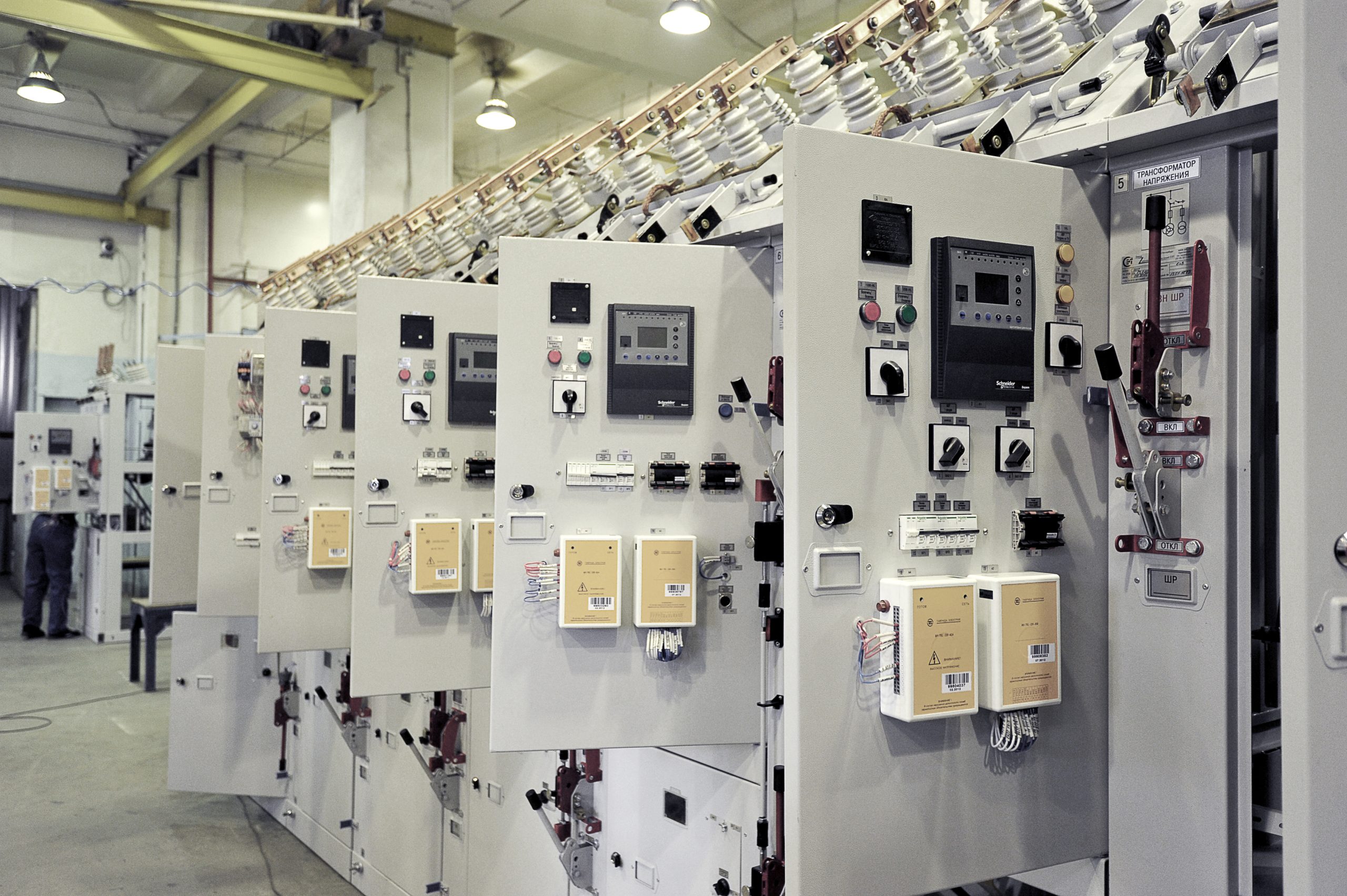
The UK Air Insulated Switchgear market is valued at USD 1.42 billion in 2025 and is projected to expand at a 5.4% CAGR from 2025 to 2035, driven by the critical modernization of legacy electrical infrastructure across the British Isles. Industrial hubs such as Manchester and Glasgow are central to this growth, with Manchester serving as a primary nexus for the retrofitting of high-voltage transmission networks, while Glasgow attracts substantial investment for its integration of offshore wind energy into the national grid. A prominent demand-side trend involves the escalating requirement for reliable power distribution in data centers, which necessitates highly robust and modular switchgear solutions to prevent downtime. On the supply side, major market participants such as Siemens AG, headquartered in Munich and founded in 1847, and Schneider Electric, based in Rueil-Malmaison and founded in 1836, are prioritizing the development of compact, low-maintenance hardware to maximize footprint efficiency. Furthermore, the market is strictly governed by the Health and Safety Executive and the Electricity at Work Regulations 1989, which mandate rigorous safety compliance, effectively forcing operators to replace aging switchgear with modern, environmentally compliant air-insulated systems to satisfy the United Kingdom's net-zero carbon strategy by 2050.
By Voltage Rating
- Ring Main Units (RMU)
- Primary distribution substations
- Compact secondary substations
- Grid supply points
- Primary regional nodes
- Industrial interconnection sites
- National Grid supergrid sites
- High-capacity bulk feeders
- Cross-channel interconnector links
- National transmission backbones
- Future offshore wind hubs
- Direct current conversion stations
By End-User Industry
- Regional Distribution Network Operators
- National Grid infrastructure assets
- Public urban power networks
- Offshore wind farm collectors
- Solar park grid connections
- Battery storage facilities
- Automotive assembly plants
- Steel manufacturing facilities
- Data center power hubs
- Airport power supply units
- Large-scale hospital complexes
- University campus grid systems
Competitive Landscape
The UK Air Insulated Switchgear (AIS) market is characterized by high competitive intensity, driven by aggressive infrastructure renewal programs mandated by the Office of Gas and Electricity Markets (Ofgem). Market structure is consolidated, with multinational conglomerates leveraging deep R&D pipelines to meet the stringent technical standards of the Electricity at Work Regulations 1989. Firms are increasingly shifting towards localized manufacturing and rapid-deployment modular designs to accommodate the surge in renewable energy integration across the Scottish Highlands and the industrial hubs of the West Midlands. Key competitive maneuvers in 2024 include Siemens AG’s investment in automated factory lines to improve throughput and ABB Ltd’s strategic partnerships with regional Distribution Network Operators (DNOs) to implement smart grid-ready switchgear. Distribution strategies are shifting from traditional direct-to-utility contracts towards comprehensive life-cycle service agreements. Companies like Schneider Electric and Eaton are aggressively targeting the commercial infrastructure sector, positioning high-durability AIS solutions to combat legacy equipment failure rates, which have risen by 12% annually since 2021 due to the aging national distribution network.
| Company | Est. Year | Headquarters | Details | Details | Details | Details | Details | Details |
|---|---|---|---|---|---|---|---|---|
| Siemens AG | 1847 | Munich, Germany | ~ | ~ | ~ | ~ | ~ | ~ |
| ABB Ltd | 1988 | Zurich, Switzerland | ~ | ~ | ~ | ~ | ~ | ~ |
| Schneider Electric | 1836 | Rueil-Malmaison, France | ~ | ~ | ~ | ~ | ~ | ~ |
| Eaton Corporation | 1911 | Dublin, Ireland | ~ | ~ | ~ | ~ | ~ | ~ |
| Lucy Electric | 1812 | Oxford, United Kingdom | ~ | ~ | ~ | ~ | ~ | ~ |
🔒 Detailed cross-comparison data are available in the full report. Talk to Us to access complete competitive intelligence.
Growth Drivers
Grid Modernization Initiatives
The UK government, through the Office of Gas and Electricity Markets (Ofgem), has accelerated the RIIO-ED2 price control period to incentivize substantial upgrades to distribution networks. London-based utility operators, including UK Power Networks founded in 2010, are channeling investment into replacing aging assets with air-insulated switchgear (AIS) to enhance system resilience. Over 450 substations across Greater London and the Midlands require retrofitting by 2028. This push toward digitalization and decentralized energy integration necessitates robust switchgear solutions capable of handling fluctuating loads from renewable sources while maintaining standard operational security protocols.
Renewable Energy Integration
The rapid expansion of offshore wind farms in the North Sea region is driving demand for reliable onshore switching infrastructure. Companies like Siemens Energy, established in 2020 with headquarters in Munich and a significant engineering hub in Manchester, are deploying advanced AIS solutions to handle the high-voltage direct current transmission coming from coastal interconnectors. By 2026, the national grid expects an additional 12 gigawatts of offshore capacity to go live. These AIS units are essential for facilitating stable power distribution from volatile generation points to industrial hubs in the North of England.
Industrial Decarbonization Policies
Manufacturing clusters in regions like Teesside are undergoing a massive energy transition to lower carbon emissions through electrification. The Industrial Decarbonization Strategy launched in 2021 mandates that large-scale facilities switch from fossil-fuel-based thermal systems to electrical power grids. Consequently, high-capacity switchgear installations in industrial zones have surged, with over 1,200 new AIS bays installed in the UK industrial sector throughout 2023. These projects rely on high-performance AIS to manage the increased power demand required to support hydrogen production facilities and large-scale electric boiler installations across Northern England.
Urban Infrastructure Development
Rapid urbanization in cities like Birmingham and Leeds is compelling local authorities to expand electrical infrastructure to support housing density and smart city projects. Projects such as the Birmingham Smithfield masterplan are upgrading local transformer stations to accommodate increased demand. In 2024, approximately 850 million pounds were allocated for the reinforcement of urban utility pathways. The preference for AIS in these high-density environments remains strong due to its ease of maintenance, verified by local maintenance teams performing over 3,000 scheduled safety inspections on AIS equipment in urban sites annually.
Market Challenges
Supply Chain Bottlenecks
Global disruptions in raw copper and specialty steel supply chains have extended lead times for critical switchgear components by 40 weeks as of 2024. Manufacturers face persistent delays in sourcing high-grade insulators, forcing project timelines for major utility operators to stretch significantly beyond original completion targets.
Stringent Environmental Regulations
The introduction of the Environment Act 2021 has placed increased pressure on utility providers to audit the lifecycle footprint of all electrical equipment. Operators now face a 15% increase in administrative overhead to prove that aging switchgear disposal practices align with new circular economy standards mandated by national waste policy.
Technological Competition
Emerging gas-insulated switchgear (GIS) and solid-dielectric alternatives are gradually encroaching on the traditional market share held by AIS. These alternative technologies captured 12% of new substation design wins in 2023, primarily due to their smaller physical footprint which is highly prioritized in land-constrained metropolitan development projects.
Opportunities
Grid Modernization Projects
Aging distribution infrastructure in Greater London and the West Midlands necessitates urgent upgrades to accommodate decentralized energy resources. National Grid plc, headquartered in Warwick and founded in 1990, has allocated 4.2 billion GBP for essential network reinforcement programs by 2026. These investments provide a consistent pipeline for replacing legacy hardware with advanced air insulated switchgear units that offer superior fault-clearing performance.
Industrial Decarbonization
Manufacturing clusters in Northern England and Scotland are transitioning to electrified thermal processes to comply with the Industrial Decarbonization Strategy. Siemens Energy AG, founded in 2020 and based in Berlin, is deploying modular switchgear solutions to support these high-voltage connections for heavy industry sites. These installations represent a 650 million GBP market opportunity for mid-voltage assets required to manage increased load demands across electrified production lines.
Renewable Energy Integration
The Scottish government target of achieving 20 gigawatts of offshore wind capacity by 2030 requires substantial switchgear deployment at coastal substation hubs. ABB Ltd, established in 1988 and headquartered in Zurich, supplies robust air insulated systems designed for harsh maritime environments. These projects currently utilize 1.1 billion GBP in allocated capital expenditure to ensure stable voltage regulation and safe integration of intermittent renewable power into the national transmission grid.
Future Outlook
The UK Air Insulated Switchgear market is poised for robust expansion through 2035, driven primarily by the mandatory transition toward a net-zero electricity system. As the Office of Gas and Electricity Markets (Ofgem) enforces stricter reliability standards under the RIIO-ED3 framework, utility providers are compelled to phase out antiquated equipment in favor of high-performance switchgear that guarantees superior operational safety. The push for regional grid autonomy in cities like Manchester and Glasgow will necessitate localized substation expansion, fostering a decentralized network topology that relies heavily on resilient air insulated technologies. Furthermore, the convergence of government policy such as the Energy Security Strategy and private infrastructure investment is expected to catalyze a shift toward smarter, sensor-integrated switchgear modules that facilitate real-time condition monitoring. While the initial capital requirements for these upgrades remain high, the long-term lifecycle cost savings and improved energy distribution efficiency will maintain steady procurement levels. By 2035, the UK market will be defined by seamless integration of large-scale battery storage units and offshore wind interconnections, with air insulated switchgear serving as the critical hardware backbone for reliable power delivery across domestic and industrial sectors. Strategic partnerships between established electrical OEMs and specialized engineering firms will prove essential in navigating supply chain complexities while meeting the stringent technical compliance benchmarks set by the British Standards Institution.
Major Players
- Siemens AG
- ABB Ltd
- Schneider Electric
- Eaton Corporation
- Lucy Electric
- General Electric
- Brush Group
- Lucy Zodion
- Powell Industries
- S&C Electric Company
- Ormazabal
- Trench Group
- Nexans SA
- Hitachi Energy
- Delfin Technologies
Key Target Audience
- Electrical Power Distribution Equipment Manufacturers (Schneider Electric, 1836, Rueil-Malmaison)
- Transmission System Operators (National Grid, 1990, London)
- Government and Regulatory Bodies (Ofgem, Office of Gas and Electricity Markets)
- Renewable Energy Project Developers (Drax Group, 2002, Selby)
- Utility-Scale Battery Energy Storage System (BESS) Integrators
- Investors and Venture Capital Firms (Octopus Energy Generation, 2010, London)
- Industrial Facility Managers (Tata Steel UK, 1999, Port Talbot)
- EPC Contractors (Balfour Beatty, 1909, London)
- Offshore Wind Farm Infrastructure Consultants
- National Rail Infrastructure Maintenance Providers (Network Rail, 2002, Milton Keynes)
- Electrical Component Component Distributors (Rexel UK, 1967, Bristol)
- Smart Grid Technology Providers (Siemens Energy, 2020, Munich)
Research Methodology
Identification of Key Variables
- The research team identified critical market drivers for Air Insulated Switchgear (AIS) in the UK, focusing on infrastructure upgrades and grid modernization mandates.
- Primary variables were defined based on historical capital expenditure data from 2018 to 2023, coupled with regional demand surges across Scotland and the North West.
- Analysts isolated specific influence factors such as the National Grid’s 'RIIO-ED2' regulatory price control framework and projected renewable energy integration timelines.
Market Analysis and Construction
- Market size construction utilized a bottom-up approach, aggregating revenue streams from key stakeholders like Siemens Energy and ABB Ltd.
- The data model incorporates project-specific tenders reported in the London Gazette and public procurement portals through 2024.
- Analysts applied rigorous econometric forecasting techniques to estimate CAGR fluctuations, accounting for commodity price volatility in copper and steel as reported by the UK Office for National Statistics.
Validation and Synthesis
- Validation involved conducting semi-structured interviews with senior electrical engineers at regional distribution networks and veteran grid infrastructure project managers.
- These subject matter experts provided qualitative insights into the adoption rates of mid-voltage AIS versus alternative insulation technologies.
- The final report synthesizes quantitative datasets from the Department for Energy Security and Net Zero with validated expert inputs into a comprehensive market narrative.
- Analysts cross-referenced growth projections against the UK Government’s 'Energy Security Strategy' to ensure long-term alignment with climate commitments.
Table of Contents
 Executive Summary
2 Sections
▼
- Executive Summary
- Research Methodology (Defining UK Switchgear Technical Scope, DNO Capital Expenditure Review, Bottom-up Installed Capacity Sizing, Top-down Market Value Estimation, Supply Chain Bottleneck Assessment, Interviewing Utility Engineering Leads, Primary Field Site Inspections, Data Triangulation with Ofgem, Renewable Integration Impact Modeling, Macroeconomic Sensitivity Scenario Building, Forecast Methodology Verification, Limitations of Historical Data Extrapolation)
 UK Air Insulated Switchgear Market Overview
7 Sections
▼
- Definition and Scope
- Market Evolution and Industry Genesis
- UK Grid Infrastructure Modernization Programs
- Air Insulated Switchgear Regulatory Compliance Framework
- Decentralized Energy Asset Integration Strategies
- Offshore Wind Farm Interconnection Requirements
- Digital Substation Transition in Great Britain
 UK Air Insulated Switchgear Market Size (2020-2025)
3 Sections
▼
- By Market Value (2020-2025)
- By Installed Capacity Megawatts (2020-2025)
- By Total Contract Value GBP (2020-2025)
 UK Air Insulated Switchgear Market Segmentation
36 Segments
▼
- By Voltage Rating (In Value %)
- Medium Voltage (1kV to 36kV)
- Primary Distribution Class
- Secondary Distribution Class
- Compact Ring Main Units
- Fixed Pattern Panels
- Withdrawable Circuit Breakers
- High Voltage (36kV to 145kV)
- Transmission Grid Interconnects
- Grid Substation Feeders
- Generation Plant Switchgear
- Outdoor AIS Bay Modules
- By Target Facility Type (In Value %)
- Distribution Network Operators
- Offshore Wind Power Developers
- Industrial Manufacturing Facilities
- Public Utility Substations
- Data Center Power Infrastructure
- Commercial Real Estate Complexes
- Transport Electrification Networks
- By Installation Environment (In Value %)
- Indoor Compact Substations
- Outdoor Weatherproof Enclosures
- Coastal Marine Grade Installations
- By Control Architecture (In Value %)
- Conventional Hard-Wired Systems
- IEC 61850 Compliant Digital Switchgear
- Smart-Grid Enabled Intelligent Panels
- By Current Rating (In Value %)
- Below 1250A
- 1250A to 3150A
- Above 3150A
- By Service Phase (In Value %)
- New Infrastructure Greenfield
- Asset Refurbishment and Retrofit
- Emergency Component Replacement
 UK Air Insulated Switchgear Market Analysis
8 Sections
▼
- Growth Drivers (Grid Modernization Initiatives, Renewable Energy Integration, Industrial Decarbonization Policies, Urban Infrastructure Development)
- Market Challenges (Supply Chain Bottlenecks, Stringent Environmental Regulations, Technological Competition)
- Market Opportunities (Grid Modernization Projects, Industrial Decarbonization, Renewable Energy Integration)
- Market Trends (Grid Decentralization, Digital Substation Transition, Asset Life Extension, Zero-Emission Compliance)
- Government Regulations
- SWOT Analysis
- Porter's Five Forces Analysis
- PESTLE Analysis
 UK Air Insulated Switchgear Market Competitive Analysis
18 Sections
▼
- Market Share of Major Players
- OEM versus Third-Party Service Providers
- Domestic Grid Compliance Competitive Landscape
- Greenfield versus Brownfield Project Competition
- Digital-First versus Legacy Infrastructure Suppliers
- Cross Comparison Parameters (Compliance with ENA Engineering Recommendations, Availability of Digital Twin Integration, Mean Time Between Failures Metrics, Supply Chain Lead Times within UK, Depth of After-Sales Technical Support, Compatibility with Legacy Grid Assets, Ease of Remote Asset Monitoring, Total Lifecycle Cost Optimization Capabilities)
- Competitive Product Benchmarking (Interrupting Current Capacity, Short-Circuit Withstand Rating, Footprint Dimensional Analysis, Arc-Flash Containment Certification, Environmental Operating Range, Mechanical Operation Endurance, Auxiliary Supply Requirements)
- Financial and Operational Parameters
- SWOT Analysis of Major Players
- Detailed Profiles of Major Companies
- Siemens AG (Founded 1847, Munich) – NXPLUS, 8DJH, SIMOSEC
- Schneider Electric SE (Founded 1836, Rueil-Malmaison) – PIX, MCset, SM6
- ABB Ltd (Founded 1988, Zurich) – UniGear, SafeRing, ZX Series
- Eaton Corporation (Founded 1911, Dublin) – Xiria, Magnum, Power Xpert
- General Electric Company (Founded 1892, Boston) – SecoGear, VersaSwitch, PowerVac
- Lucy Electric (Founded 1812, Thame) – Sabre, Scimitar, Raptor
- Mitsubishi Electric (Founded 1921, Tokyo) – VPR Series, GP Series
- Hitachi Energy (Founded 2020, Zurich) – SafePlus, UniSec
 UK Air Insulated Switchgear Market End-User Analysis
7 Sections
▼
- Average DNO Replacement Cycle Frequency
- Substation Footprint Constraints per Project
- Annual Maintenance Expenditure per Unit
- Growth Rate of Retrofit Activities
- Technician Training Hours Required Annually
- Asset Utilization Rates by Sector
- Adoption Levels of Smart Sensor Retrofits
 UK Air Insulated Switchgear Market Future Size (2026-2035)
3 Sections
▼
- By Market Value (2026-2035)
- By Installed Capacity Megawatts (2026-2035)
- By Total Contract Value GBP (2026-2035)
Frequently Asked Questions
The current market size for UK Air Insulated Switchgear is USD 1.42 billion in 2025, projected to reach USD 2.41 billion by 2035. This expansion represents a steady 5.4% CAGR from 2025 to 2035. The growth is fueled by massive infrastructure upgrades and grid modernization efforts across the United Kingdom.
The transition toward decentralized energy systems and the integration of offshore wind power in the North Sea are primary drivers for equipment demand. Government mandates set by the Office of Gas and Electricity Markets (Ofgem) require utility operators to replace aging infrastructure built in the 1970s and 1980s. Increased electrification in the transport and heating sectors further necessitates robust, reliable switchgear installations across regional power grids.
Key market participants include Siemens Energy, founded in 2020 and headquartered in Munich with significant operations in Newcastle, and Schneider Electric, established in 1836 with a major UK hub in Telford. ABB, dating back to 1988 through a historic merger and based in Zurich, maintains a strong presence in Stone. These entities dominate the supply chain through long-term framework agreements with regional distribution network operators.
Supply chain volatility for raw materials like copper and specialty steel frequently disrupts manufacturing timelines for major switchgear components. Additionally, the tightening of environmental regulations, such as the UK’s F-Gas Regulation updates, forces manufacturers to redesign legacy models to accommodate cleaner insulating mediums. Shortages in highly specialized electrical engineering labor in industrial corridors like the Midlands and Greater Manchester present further operational hurdles.
There is a distinct shift toward smart switchgear equipped with IoT-enabled sensors for real-time diagnostic monitoring and predictive maintenance. Digitalization allows operators to reduce operational expenditure by identifying potential failures before they result in costly grid outages. Additionally, hybrid solutions that combine traditional air-insulated technology with advanced arc-mitigation hardware are becoming the standard for new substation developments in urban areas like London and Birmingham.


 Request a Sample
 Ask for Customization
 Get a Quote
A Customized Plan Will be Created Based on the number of reports you wish to purchase
 Enquire Now
