
 Download PDF
Market Overview
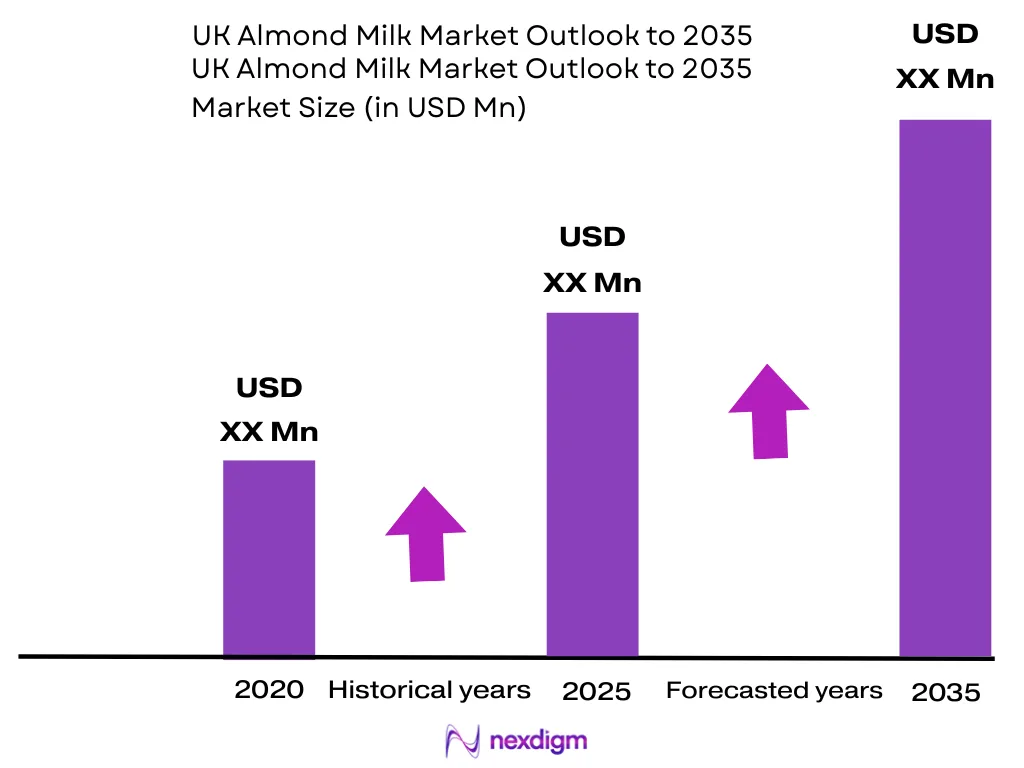
The UK Almond Milk Market is valued at approximately USD ~ Million based on historical consumption trends within the broader plant-based beverage industry. Growth is supported by increasing consumer preference for dairy alternatives, rising vegan and flexitarian populations, and greater awareness regarding lactose intolerance. The UK food and beverage sector exceeds GBP ~ Billion, while retail sales of plant-based products continue to expand through supermarkets, convenience stores, and e-commerce channels. Product innovation, fortified formulations, and expanding café adoption further contribute to almond milk consumption across the country.
Market Segmentation
By Product Type
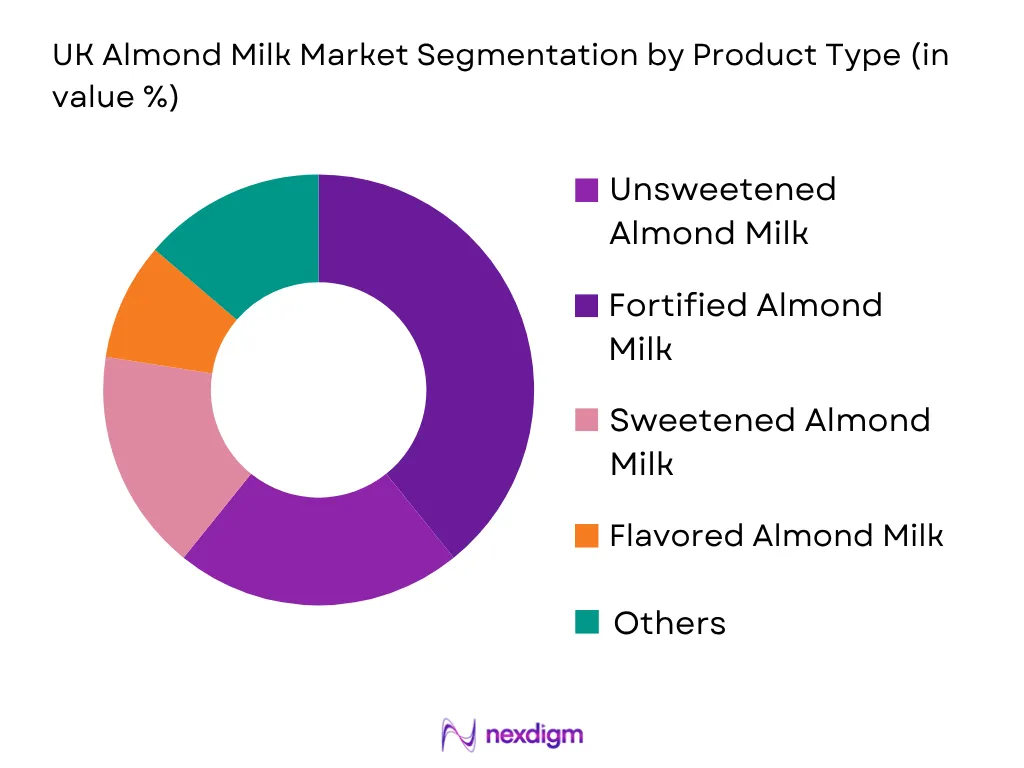
The UK Almond Milk Market is segmented into unsweetened almond milk, fortified almond milk, sweetened almond milk, flavored almond milk, and organic almond milk. Recently, unsweetened almond milk has held the dominant market share within the product type segment. This dominance is primarily attributed to increasing health consciousness among UK consumers seeking low-calorie and sugar-free beverage alternatives. Consumers increasingly prefer products that align with weight management goals and healthy lifestyles. Major retailers and manufacturers have expanded unsweetened product offerings, making them widely available across supermarkets, convenience stores, and online channels. The rise in fitness-oriented consumers and growing awareness regarding sugar consumption have further strengthened demand. Additionally, unsweetened almond milk is commonly used in coffee, smoothies, cereals, and cooking applications, enhancing its versatility and broad consumer appeal. Strong brand support and continuous product innovation continue to reinforce the leading position of this segment within the UK almond milk industry.
By Distribution Channel
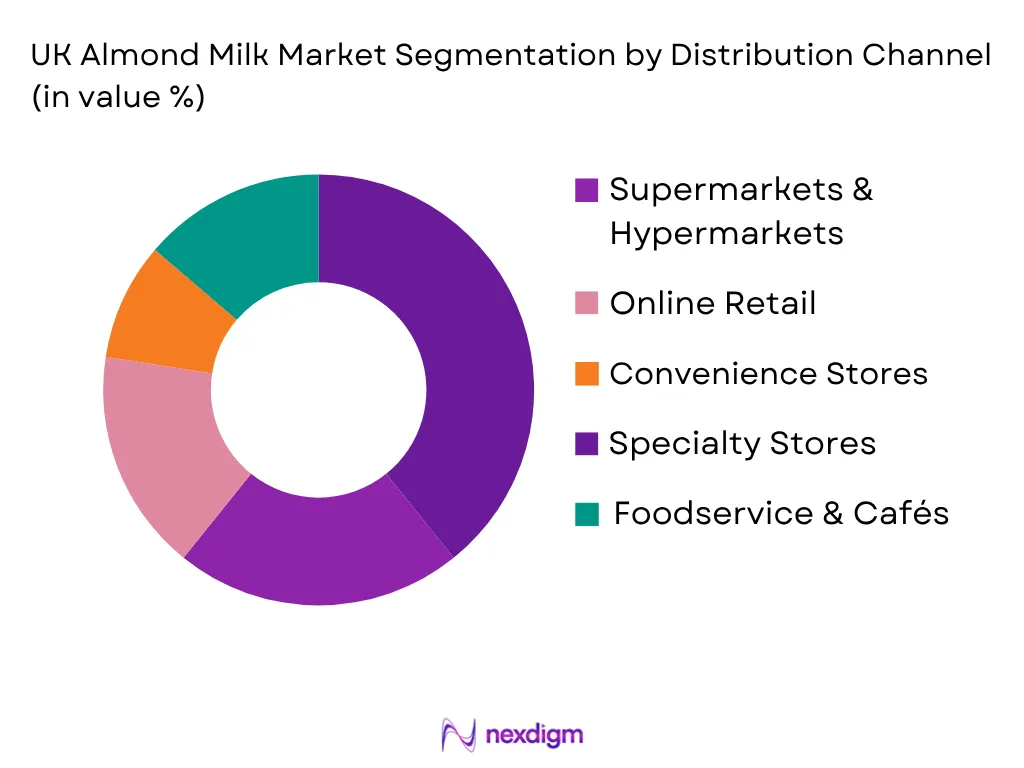
The UK Almond Milk Market is segmented into supermarkets & hypermarkets, online retail, convenience stores, specialty stores, and foodservice & cafés. Supermarkets and hypermarkets currently dominate the distribution landscape due to their extensive geographic reach, large product assortment, and competitive pricing strategies. Leading retail chains such as Tesco, Sainsbury’s, Asda, Morrisons, Aldi, and Lidl have significantly expanded their plant-based beverage portfolios. Consumers prefer these stores because they provide easy access to multiple brands and private-label alternatives in a single location. Promotional activities, loyalty programs, and growing shelf space dedicated to dairy alternatives further strengthen sales through this channel. Additionally, supermarkets continue to introduce premium, organic, and fortified almond milk products, catering to diverse consumer preferences. The convenience of one-stop shopping and strong nationwide presence make supermarkets and hypermarkets the preferred purchasing destination for almond milk consumers across the United Kingdom.
Competitive Landscape
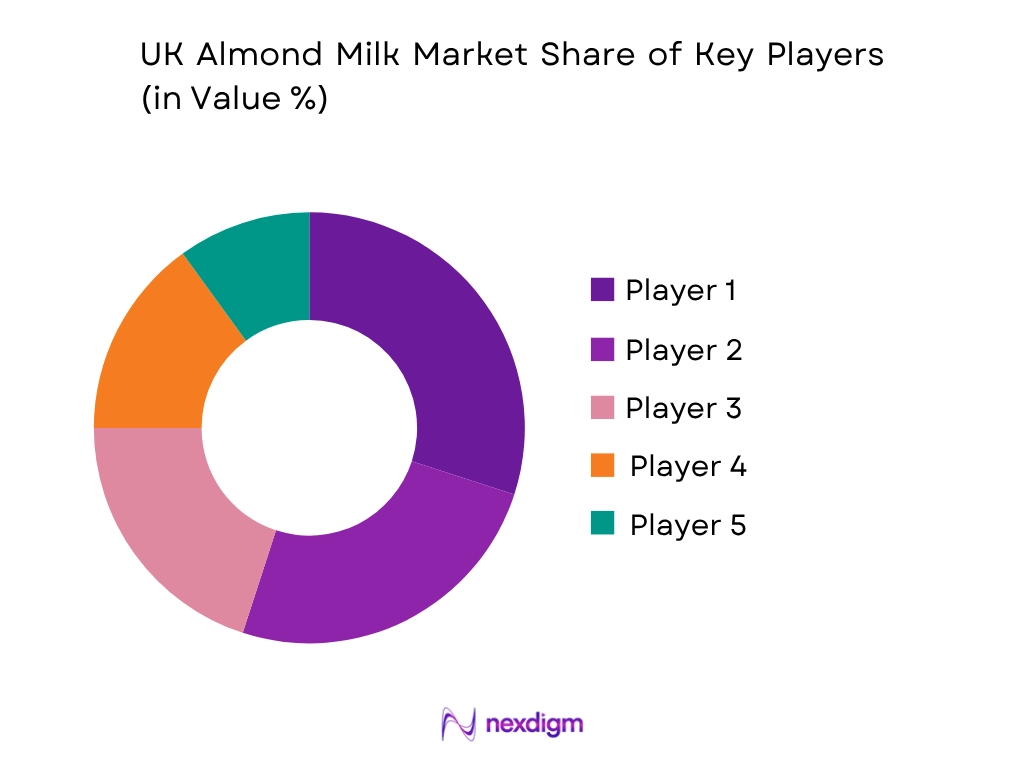
The UK Almond Milk Market is moderately consolidated, with both international and domestic brands competing across retail and foodservice channels. Global plant-based beverage manufacturers maintain strong visibility through extensive distribution networks, while private-label brands from leading retailers have intensified competition. Product innovation, sustainability initiatives, nutritional fortification, and premium positioning remain key competitive strategies. Companies continue investing in new flavors, barista variants, and environmentally friendly packaging to differentiate themselves in the expanding plant-based beverage sector.
| Company | Establishment Year | Headquarters | Product Portfolio | UK Retail Presence | Fortified Variants | Organic Range | Barista Products | Sustainability Focus |
| Alpro | 1980 | ~ | ~ | ~ | ~ | ~ | ~ | ~ |
| Almond Breeze | 1998 | ~ | ~ | ~ | ~ | ~ | ~ | ~ |
| Califia Farms | 2010 | ~ | ~ | ~ | ~ | ~ | ~ | ~ |
| Plenish | 2012 | ~ | ~ | ~ | ~ | ~ | ~ | ~ |
| Rude Health | 2005 | ~ | ~ | ~ | ~ | ~ | ~ | ~ |
UK Almond Milk Market Analysis
Growth Drivers
Rising Health and Wellness Consumption
The increasing focus on health and wellness across the United Kingdom continues to support demand for almond milk products. The UK population exceeds 68 million people, while GDP remains above USD 3.3 trillion, reflecting strong consumer spending capacity on premium food and beverage products. Health-conscious consumers are increasingly reducing consumption of traditional dairy products and seeking low-calorie, lactose-free, and plant-based alternatives. The UK food and drink sector contributes more than GBP 146 billion to the national economy and remains one of the country’s largest manufacturing sectors. Household expenditure on food and non-alcoholic beverages exceeds GBP 150 billion annually, demonstrating substantial purchasing activity within the consumer food segment. Almond milk benefits from rising interest in vegan, vegetarian, and flexitarian lifestyles, particularly among urban populations in London, Manchester, Birmingham, and Bristol. The UK’s urban population exceeds 57 million people, creating a large consumer base with access to modern retail infrastructure. Growing participation in fitness, wellness, and preventive healthcare activities further supports demand for functional beverages. Product innovations involving fortified almond milk with calcium, vitamin D, and vitamin B12 have enhanced consumer appeal, helping almond milk become a mainstream dairy alternative across supermarkets, convenience stores, cafés, and online grocery platforms throughout the UK.
Expansion of Plant-Based Food Ecosystem
The development of a mature plant-based food ecosystem is a major driver for the UK Almond Milk Market. The United Kingdom has become one of Europe’s leading markets for plant-based food and beverage products, supported by strong retail penetration and increasing consumer acceptance. Total retail sales in the UK exceed GBP 500 billion annually, creating significant shelf space opportunities for dairy alternatives. More than 90,000 food and beverage manufacturing businesses operate across the country, strengthening product availability and innovation. Major retail chains including Tesco, Sainsbury’s, Asda, Morrisons, Aldi, and Lidl continue to expand plant-based product portfolios. The UK e-commerce sector exceeds GBP 120 billion in annual consumer spending, improving accessibility to almond milk products beyond traditional retail outlets. Foodservice establishments, coffee chains, and quick-service restaurants increasingly offer plant-based beverage options, supporting broader market exposure. Consumer preference for environmentally conscious consumption patterns has also strengthened demand for dairy alternatives. London alone hosts more than 20,000 foodservice establishments, providing substantial opportunities for almond milk adoption. The continued expansion of plant-based product launches, coupled with strong retail and foodservice infrastructure, creates a favorable environment for sustained almond milk consumption growth throughout the United Kingdom.
Market Challenges
Dependence on Imported Almond Supply
A major challenge facing the UK Almond Milk Market is its dependence on imported almonds and almond-derived ingredients. The United Kingdom has limited domestic almond cultivation due to climatic conditions, requiring manufacturers to rely heavily on imports from major almond-producing regions. Total UK goods imports exceed GBP 800 billion annually, illustrating the country’s reliance on international supply chains. Global disruptions in logistics, shipping, weather conditions, and agricultural production can affect almond availability and supply stability. Exchange rate volatility between the British Pound and international trading currencies further impacts procurement expenses and supply planning. The UK’s food manufacturing sector depends significantly on imported agricultural inputs, making supply chain resilience increasingly important. Transportation distances between almond-producing countries and the UK add logistical complexity and inventory management challenges. Port congestion, freight capacity constraints, and geopolitical uncertainties may also influence supply continuity. Since almond milk manufacturers rely on consistent raw material quality and availability, any disruption within the global almond supply chain can affect production planning and product availability. These factors create operational challenges for producers seeking to maintain stable supply and competitive positioning within the growing dairy alternatives sector.
Intense Competition from Alternative Plant-Based Beverages
The UK Almond Milk Market faces strong competition from other plant-based beverage categories, including oat milk, soy milk, coconut milk, rice milk, and pea-based drinks. The United Kingdom has emerged as a highly competitive plant-based food market, attracting both domestic and international manufacturers. Retailers allocate significant shelf space to multiple dairy alternative categories, increasing competition for consumer attention. Oat milk has gained considerable popularity due to local sourcing advantages and sustainability positioning, while soy-based products maintain strong consumer familiarity. The UK grocery market exceeds GBP 220 billion annually, making competition among beverage categories particularly intense. Leading retailers increasingly introduce private-label plant-based beverages, further expanding product choices. Foodservice operators and coffee chains frequently offer multiple dairy alternative options, reducing product exclusivity for almond milk. Consumer experimentation with emerging plant-based beverages also influences category dynamics. Manufacturers must invest continuously in branding, product innovation, nutritional fortification, and sustainability initiatives to maintain market relevance. As more companies enter the plant-based beverage space, differentiation becomes increasingly important. This competitive environment requires almond milk producers to develop clear value propositions that emphasize taste, functionality, nutrition, and premium product positioning.
Market Opportunities
Growth of Functional and Fortified Beverages
The increasing demand for functional nutrition presents a substantial opportunity for the UK Almond Milk Market. Consumers are becoming more focused on products that deliver additional health benefits beyond basic nutrition. The UK’s healthcare expenditure exceeds GBP 280 billion annually, reflecting strong societal emphasis on health and wellness. Demand for products containing added vitamins, minerals, protein, probiotics, and immunity-supporting ingredients continues to increase across food and beverage categories. Almond milk is well-positioned within this trend due to its compatibility with fortification strategies. Manufacturers can introduce premium formulations containing calcium, vitamin D, vitamin B12, protein blends, and digestive health ingredients. The UK’s aging population, combined with growing interest in active lifestyles, creates opportunities for targeted nutrition products. Supermarkets and specialty retailers increasingly allocate shelf space to functional beverages, improving product visibility. The expansion of health-focused consumer segments supports demand for value-added almond milk offerings designed for fitness, wellness, and preventive nutrition. These developments create favorable conditions for manufacturers seeking to expand premium product portfolios and strengthen brand differentiation within the UK’s evolving plant-based beverage landscape.
Expansion Through E-Commerce and Foodservice Channels
The continued expansion of e-commerce and foodservice channels creates significant opportunities for the UK Almond Milk Market. The United Kingdom is one of Europe’s largest e-commerce markets, with online retail sales exceeding GBP 120 billion annually. Digital grocery platforms have become increasingly important for health-conscious consumers seeking specialty and premium food products. Online channels allow almond milk brands to reach consumers beyond traditional supermarket networks while supporting subscription purchasing models and direct-to-consumer strategies. Simultaneously, the UK foodservice sector generates more than GBP 100 billion in annual turnover, creating substantial opportunities for almond milk integration. Coffee shops, cafés, restaurants, hotels, and quick-service operators continue expanding plant-based menu offerings. London, Manchester, Birmingham, Glasgow, and Edinburgh remain major foodservice hubs where consumer demand for dairy alternatives is particularly strong. Barista-specific almond milk products have gained popularity among coffee chains seeking premium plant-based options. As digital commerce and foodservice channels continue evolving, almond milk manufacturers can strengthen market penetration, improve consumer accessibility, and expand brand visibility across multiple purchasing environments. This dual-channel growth provides a strong foundation for long-term market development in the United Kingdom.
Future Outlook
The UK Almond Milk Market is expected to witness sustained growth throughout the forecast period, supported by increasing adoption of plant-based diets, rising lactose intolerance awareness, and strong demand for healthier beverage alternatives. Continuous product innovation, including fortified and protein-enriched formulations, is expected to attract a broader consumer base. Growth in online grocery retailing and foodservice adoption will further strengthen market expansion. Sustainability concerns and clean-label preferences are likely to encourage manufacturers to introduce environmentally responsible packaging and transparent ingredient sourcing practices.
Major Players
- Alpro
- Almond Breeze
- Califia Farms
- Plenish
- Rude Health
- Oatly
- Minor Figures
- Mighty Drinks
- Innocent Drinks
- Tesco Plant Chef
- Sainsbury’s Plant Pioneers
- Aldi Everyday Plant Based
- Lidl Vemondo
- Marks & Spencer Plant Kitchen
- Whole Earth Foods
Key Target Audience
- Almond Milk Manufacturers
- Plant-Based Beverage Producers
- Dairy Alternative Brands
- Foodservice Operators and Café Chains
- Supermarkets and Retail Chains
- E-Commerce Grocery Platforms
- Investment and Venture Capitalist Firms
- Government and Regulatory Bodies
Research Methodology
Step 1: Identification of Key Variables
The initial phase involves mapping all stakeholders across the UK Almond Milk Market ecosystem, including manufacturers, distributors, retailers, foodservice operators, and consumers. Extensive secondary research is conducted to identify key market drivers, trends, and demand indicators. The objective is to determine the variables influencing market performance and consumer purchasing behavior.
Step 2: Market Analysis and Construction
Historical market information is compiled and analyzed to evaluate consumption patterns, distribution dynamics, product penetration, and revenue generation. Market segmentation is constructed based on product type, distribution channel, and consumer preferences. Data triangulation techniques are applied to improve accuracy and consistency.
Step 3: Hypothesis Validation and Expert Consultation
Market assumptions are validated through interviews with manufacturers, distributors, retail executives, and industry participants. These consultations provide insights into operational performance, competitive positioning, and future demand trends. Feedback from stakeholders is incorporated to refine market estimates and analysis.
Step 4: Research Synthesis and Final Output
The final stage integrates findings from primary and secondary research into a comprehensive market assessment. Data is reviewed through both top-down and bottom-up methodologies to ensure consistency. The resulting report delivers a detailed evaluation of market dynamics, competition, opportunities, and future growth prospects.

- Executive Summary
- Research Methodology (Market Definitions and Assumptions, Abbreviations, Market Sizing Approach, Bottom-Up and Top-Down Analysis, Primary Research Interviews, Demand-Side Assessment, Supply-Side Assessment, Data Triangulation, Limitations and Future Outlook)

- Definition and Scope
- Market Evolution and Industry Genesis
- Timeline of Key Market Developments
- Almond Milk Industry Lifecycle Analysis
- Value Chain Analysis

- Growth Drivers (Plant-Based Diet Adoption, Lactose Intolerance Awareness, Vegan Population Expansion, Health & Wellness Trends, Café Culture Growth)
- Market Challenges (Almond Import Dependence, Price Premium, Competition from Oat Milk, Sustainability Concerns, Retail Competition)
- Market Opportunities (Functional Nutrition, Premiumization, E-Commerce Expansion, Clean Label Demand, Foodservice Penetration)
- Market Trends (Barista Variants, Protein-Enriched Products, Sustainable Packaging, Sugar-Free Products, Private Label Expansion)
- Government Regulations (Food Standards Compliance, Product Labelling, Import Regulations, Sustainability Requirements, Nutritional Claims)
- SWOT Analysis
- Stakeholder Ecosystem
- PESTLE Analysis
- Porter’s Five Forces Analysis
- Competition Ecosystem

- By Revenue (2020-2025)
- By Volume Consumption (2020-2025)
- By Average Retail Selling Price (2020-2025)

- By Product Type (In Value %)
Unsweetened Almond Milk
Sweetened Almond Milk
Flavored Almond Milk
Organic Almond Milk
Fortified Almond Milk - By Distribution Channel (In Value %)
Supermarkets & Hypermarkets
Convenience Stores
Online Retail
Specialty Health Stores
Foodservice & Cafes - By End User (In Value %)
Residential Consumers
Cafés & Coffee Chains
Restaurants & Foodservice
Corporate & Institutional Buyers
Health & Fitness Consumers - By Region (In Value %)England
Scotland
Wales
Northern Ireland - By Packaging Type (In Value %)
Cartons
Bottles
Multipack Formats
Single-Serve Packs
Bulk Foodservice Packs

- Market Share of Major Players (Revenue, Volume, By Product Category)
- Cross Comparison Parameters (Brand Portfolio Strength, Almond Milk SKU Count, Product Fortification Portfolio, Distribution Reach, Retail Shelf Presence, Private Label Partnerships, Sustainability Initiatives, Manufacturing & Supply Network)
- SWOT Analysis of Major Players
- Pricing Analysis by SKU and Pack Size
- Detailed Profiles of Major Companies
Alpro
Danone UK
Califia Farms
Blue Diamond Almond Breeze
Minor Figures
Plenish
Mighty Drinks
Rude Health
Innocent Drinks
Oatly Group
Lidl Private Label
Aldi Private Label
Tesco Plant Chef
Sainsbury’s Plant Pioneers

- Consumption Behaviour Analysis
- Brand Preference Analysis
- Purchase Decision Factors
- Price Sensitivity Assessment
- Consumer Pain Points
- Product Attribute Preferences
- Retail Channel Preference Analysis
- Repeat Purchase Behaviour

- By Revenue (2026-2035)
- By Volume Consumption (2026-2035)
- By Average Retail Selling Price (2026-2035)


 Request a Sample
 Ask for Customization
 Get a Quote
 Enquire Now