

 Download PDF
Market Overview
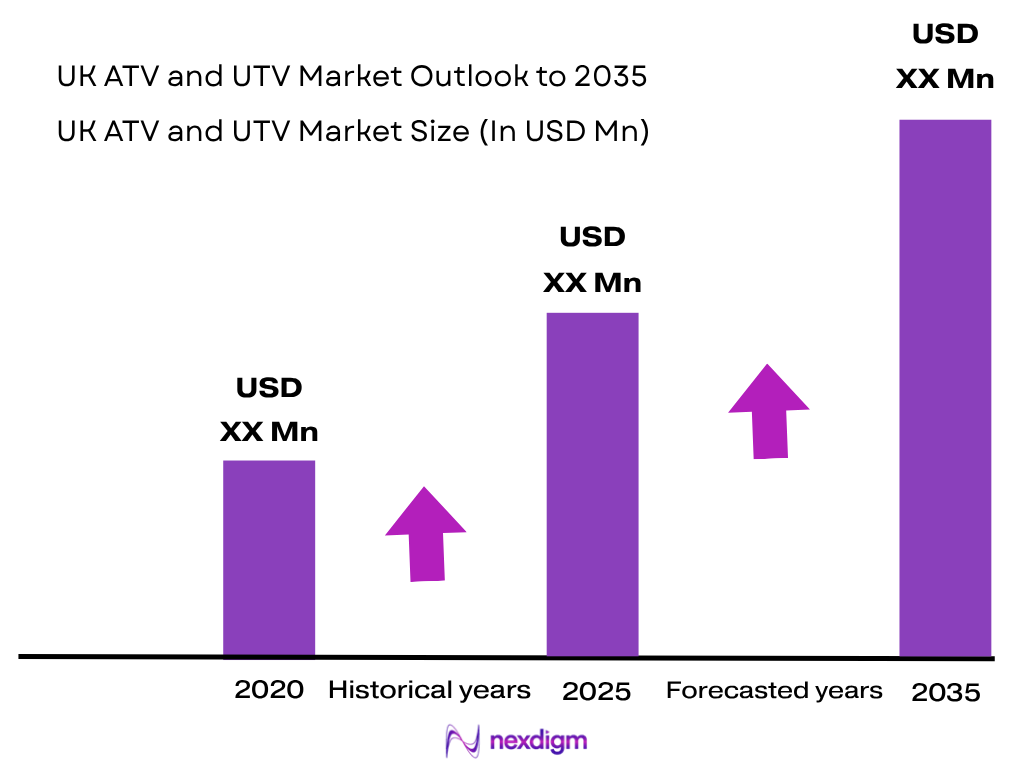
The UK ATV and UTV market is valued at USD ~ billion in 2024, based on industry assessments covering utility ATVs, quad bikes, side-by-side vehicles, and recreational off-road vehicles. The market has expanded from USD ~0.74 billion in 2023, supported by demand from agriculture, forestry, estate management, and commercial utility applications. The growth is driven by increasing adoption of compact off-road mobility solutions, replacement of ageing farm equipment, and rising preference for side-by-side utility vehicles for higher payload and operational flexibility. Global market studies also identify strong expansion in ATV and UTV demand due to agricultural and recreational applications.
The UK ATV and UTV market is concentrated around rural regions and agricultural hubs where land-intensive activities require specialized mobility solutions. England dominates demand due to its large agricultural base, extensive livestock farming, estate ownership, and higher concentration of commercial operators. Scotland represents another significant market due to forestry operations, Highland estates, gamekeeping activities, and challenging terrain applications. Wales and Northern Ireland contribute through livestock farming, rural tourism, and land management activities. Cities including London, Manchester, and Birmingham influence premium recreational and commercial purchases through dealer networks and distribution infrastructure rather than direct operational demand.
Market Segmentation
By Vehicle Type
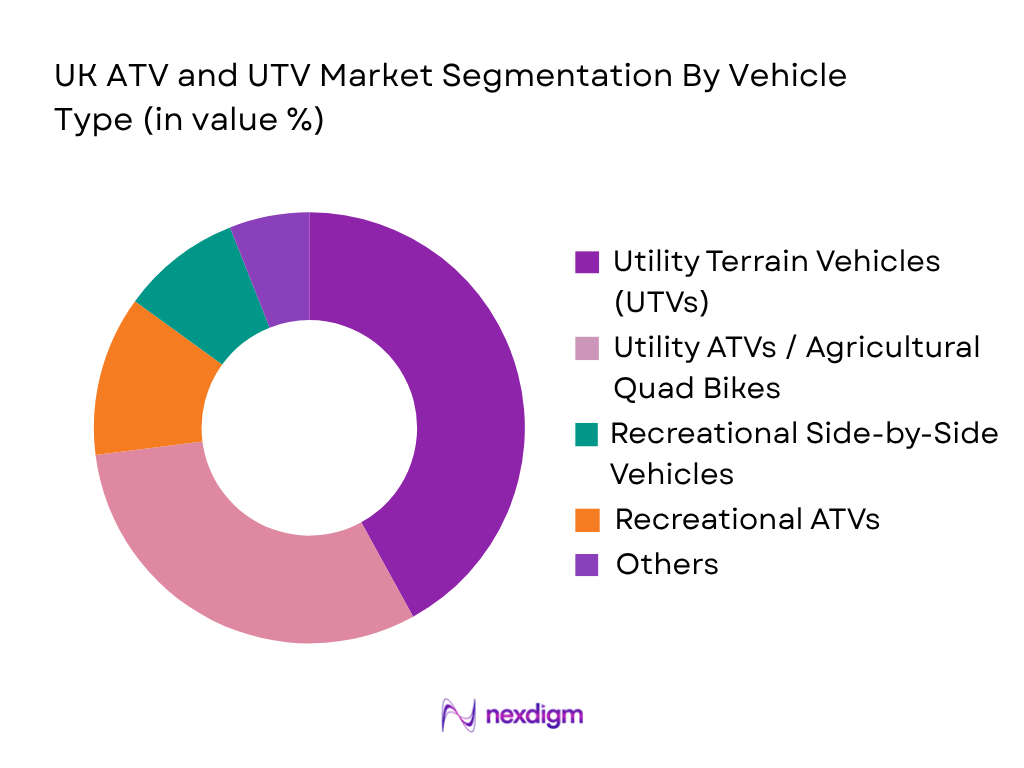
The UK ATV and UTV market is segmented into utility ATVs, recreational ATVs, sport ATVs, side-by-side utility vehicles, recreational UTVs, crew UTVs, and electric utility vehicles. Among these, utility terrain vehicles (UTVs) and side-by-side vehicles account for the leading market position in 2024, supported by increasing adoption among agricultural operators, estate managers, and commercial users requiring higher payload capacity, improved operator safety, and multi-purpose functionality. Unlike traditional quad bikes, UTVs provide enclosed cabins, passenger seating configurations, larger cargo beds, and improved towing capability, making them suitable for daily farm operations, forestry applications, and industrial maintenance. Major manufacturers including Polaris, Can-Am, Honda, Yamaha, and John Deere have expanded their UTV portfolios with utility-focused models targeting professional users. The shift from single-rider ATVs toward versatile side-by-side vehicles has accelerated due to productivity requirements and safety considerations.
By Application Type
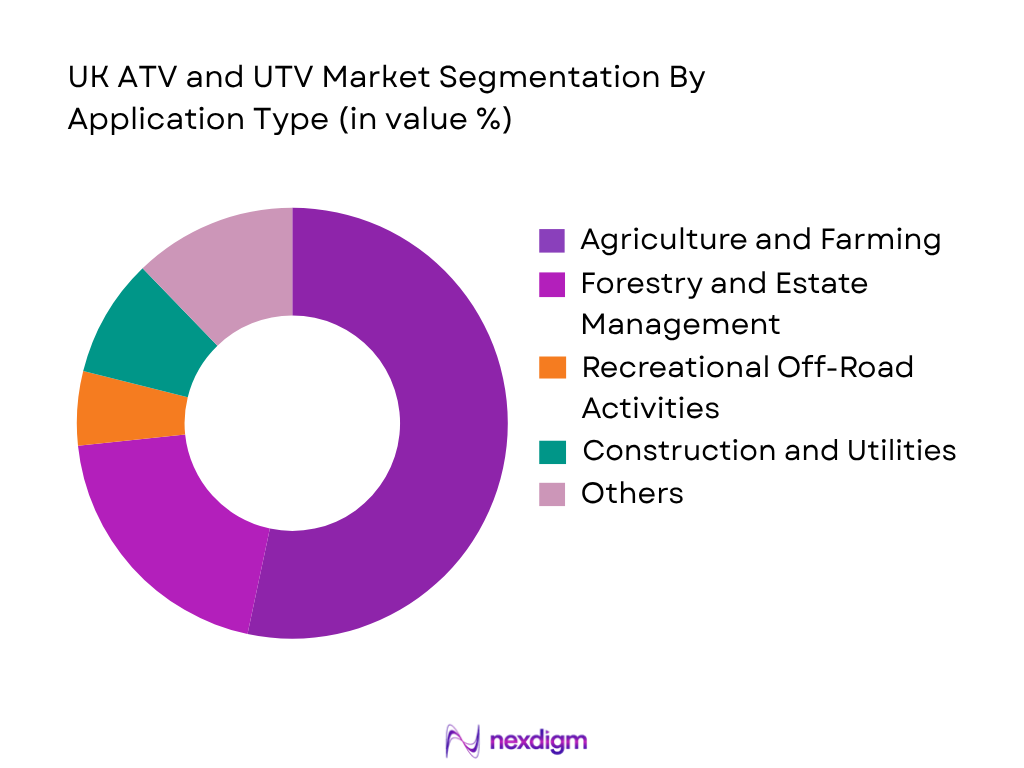
The UK ATV and UTV market is segmented into agriculture and farming, forestry and woodland management, estate management, construction and utilities, recreational activities, tourism, and government applications. The agriculture and farming segment dominates the market in 2024, driven by widespread use of ATVs and UTVs for livestock management, field inspection, material transportation, and remote land access. The UK’s fragmented agricultural landscape, extensive sheep farming operations, and demand for efficient farm mobility solutions support continued adoption. Farmers increasingly prefer UTVs due to their ability to transport equipment, feed, and tools while operating across uneven terrain. Forestry and estate management applications represent another important segment due to the requirement for reliable vehicles in remote environments. Recreational applications contribute through adventure tourism, off-road experiences, and private ownership, particularly in rural regions.
Competitive Landscape
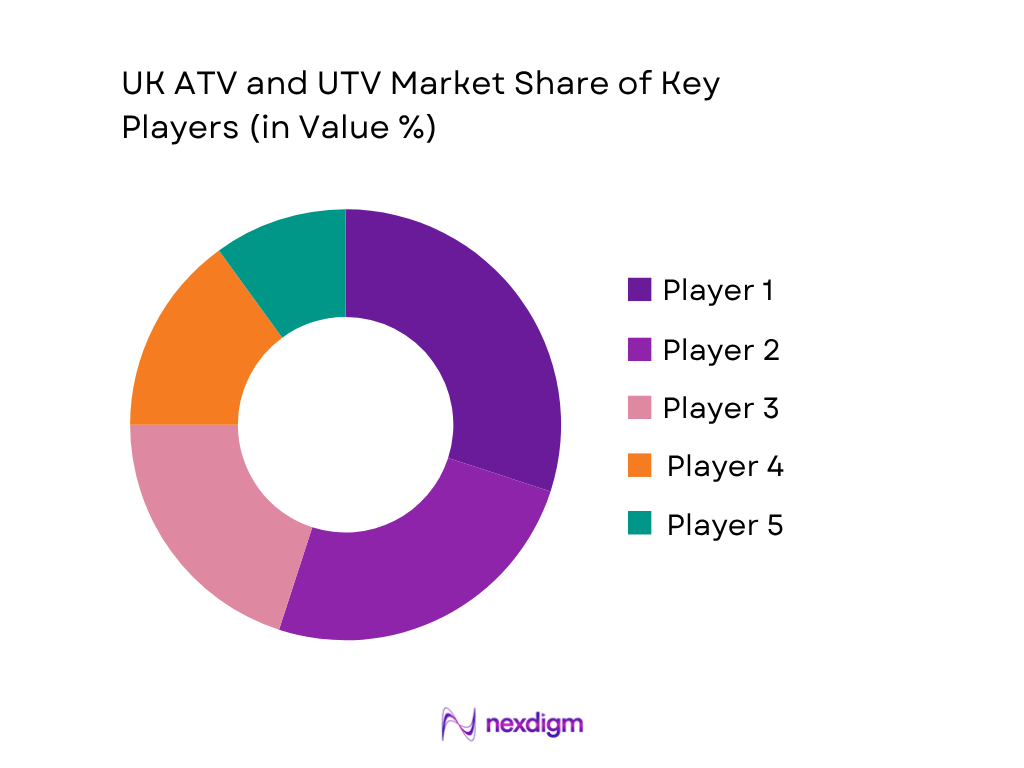
The UK ATV and UTV market is moderately consolidated, with leading global manufacturers controlling a significant portion of product availability through established dealer networks, agricultural equipment partnerships, and after-sales service infrastructure. Companies such as Honda, Yamaha, Polaris, Can-Am, and John Deere compete through broad product portfolios covering agricultural, recreational, and commercial applications. Competition is influenced by vehicle reliability, payload capability, dealership coverage, financing availability, and availability of spare parts.
| Company | Establishment Year | Headquarters | Major UK Products | Key Application Focus | Distribution Strength | Technology Focus | Competitive Position |
| Honda Motor Co., Ltd. | 1948 | Tokyo, Japan | ~ | ~ | ~ | ~ | ~ |
| Yamaha Motor Co., Ltd. | 1955 | Iwata, Japan | ~ | ~ | ~ | ~ | ~ |
| Polaris Inc. | 1954 | Minnesota, USA | ~ | ~ | ~ | ~ | ~ |
| Can-Am (BRP Inc.) | 1942 | Quebec, Canada | ~ | ~ | ~ | ~ | ~ |
| John Deere | 1837 | Illinois, USA | ~ | ~ | ~ | ~ | ~ |
UK ATV and UTV Market Analysis
Market Growth Drivers
Increasing Agricultural Mechanization and Demand for Efficient Off-Road Utility Vehicles
The UK ATV and UTV market is significantly supported by the requirement for efficient mobility solutions across agricultural operations, livestock management, forestry, and estate activities. The agriculture sector remains a key demand contributor, with the UK utilizing approximately 17.2 million hectares of agricultural land, according to the Department for Environment, Food & Rural Affairs (DEFRA). The UK recorded around 209,000 agricultural holdings, creating sustained requirements for compact utility vehicles capable of operating across uneven terrain, remote fields, and livestock areas. Livestock farming continues to support ATV adoption, with the UK maintaining approximately 32.2 million sheep and lambs and around 9.6 million cattle, according to DEFRA agricultural statistics. These applications require vehicles for feed transportation, animal monitoring, fencing operations, and field inspections. Additionally, the UK agricultural workforce faces productivity pressures, with approximately 1.0% of total UK employment engaged in agriculture, forestry, and fishing activities, according to World Bank labour data, increasing the need for mechanized solutions that improve operational efficiency. The growing requirement for multi-purpose vehicles with towing capability, cargo capacity, and four-wheel-drive functionality continues to support ATV and UTV adoption among professional agricultural users.
Expansion of Forestry, Estate Management, and Rural Commercial Applications
The UK ATV and UTV market benefits from increasing utilization across forestry, estate management, utilities, and rural commercial operations where conventional vehicles face terrain limitations. The UK has approximately 3.3 million hectares of woodland, representing around 13% of the country’s land area, according to the Forestry Commission, creating demand for compact off-road vehicles for woodland maintenance, inspection, transportation, and conservation activities. Scotland represents a major application region due to extensive forestry coverage, with Scottish woodlands accounting for approximately 1.4 million hectares, supporting demand for high-traction utility vehicles. Rural industries are also supported by the UK’s large land management ecosystem, with more than 70% of the UK land area used for agriculture or managed countryside activities, according to government land-use assessments. ATV and UTV solutions are increasingly used by estate owners, gamekeepers, equestrian operators, and utility maintenance teams because of their ability to access difficult terrain while carrying equipment and materials. Growth in rural tourism and outdoor recreation further supports demand, with the UK recording approximately 40 million domestic overnight trips annually, according to national tourism statistics, creating opportunities for off-road recreational vehicle applications.
Market Challenges
ATV Safety Regulations and Operator Risk Management Requirements
Safety concerns associated with quad bikes and off-road utility vehicles remain a major challenge for the UK ATV and UTV market. Agricultural ATVs are frequently used in challenging terrain conditions, increasing risks related to vehicle rollover, operator injury, and improper usage. According to the Health and Safety Executive (HSE), agriculture remains one of the UK’s most hazardous industries, with approximately 30 fatal workplace injuries recorded across agriculture, forestry, and fishing activities during recent reporting periods. Quad bike-related incidents continue to represent a significant proportion of agricultural vehicle safety concerns, particularly among operators working on slopes and uneven surfaces. The UK agricultural sector includes approximately 209,000 farm holdings, creating a highly distributed user base where consistent operator training and safety compliance remain difficult to implement. Regulatory requirements related to training, protective equipment, vehicle maintenance, and safe operating practices increase operational responsibilities for users. Manufacturers are required to focus on safety technologies including rollover protection systems, electronic stability assistance, improved suspension systems, and enhanced operator visibility. These safety requirements can influence purchasing decisions, particularly among small agricultural businesses where equipment investment decisions are highly dependent on operational requirements and compliance considerations.
Dependence on Imported Vehicles and Supply Chain Vulnerabilities
The UK ATV and UTV market faces challenges due to strong dependence on imported vehicles, components, and replacement parts from international manufacturing hubs. The country has limited domestic ATV and UTV manufacturing capacity, resulting in reliance on global supply chains across Japan, North America, Europe, and Asia. According to the UK Department for Business and Trade, the UK imported approximately £816 billion worth of goods and services in 2024, demonstrating the economy’s significant dependence on international trade networks. Automotive and machinery-related supply chains remain exposed to fluctuations in global logistics, currency movements, and component availability. The UK agricultural machinery sector also depends heavily on imported equipment, with manufacturers and distributors requiring international logistics networks to maintain product availability. Additional challenges arise from remote customer locations, as many ATV and UTV users operate in rural regions where dealer accessibility and servicing infrastructure can be limited. Spare parts availability, maintenance response times, and aftermarket support are critical factors influencing vehicle ownership decisions. Supply chain disruptions affecting batteries, electronic components, engines, and drivetrain systems can impact delivery schedules and increase operational complexity for dealers and fleet operators.
Market Opportunities
Increasing Adoption of Electric ATV and UTV Solutions for Sustainable Rural Mobility
The transition toward electric off-road utility vehicles represents a significant opportunity for the UK ATV and UTV market as agricultural and commercial operators increasingly evaluate low-emission alternatives. The opportunity is supported by broader UK decarbonization initiatives, including the government commitment to achieving net-zero greenhouse gas emissions by 2050. According to the Department for Energy Security and Net Zero, renewable energy accounted for approximately 50% of UK electricity generation during certain quarters of 2024, supporting improved environmental conditions for electric vehicle adoption. Electric ATV and UTV platforms can provide advantages including lower maintenance requirements, reduced operational emissions, quieter operation, and improved suitability for environmentally sensitive areas such as estates, parks, and conservation zones. The UK registered more than 480,000 battery electric cars in 2024, according to vehicle registration data from the Society of Motor Manufacturers and Traders (SMMT), demonstrating increasing consumer and business familiarity with electric mobility technologies. Similar technology adoption trends are creating opportunities for electric utility vehicle manufacturers to introduce agricultural, forestry, and commercial off-road solutions with advanced battery systems, connected monitoring capabilities, and improved operational efficiency.
Growth Potential from Precision Agriculture and Connected Utility Vehicle Technologies
The integration of digital technologies, telematics, and precision agriculture systems creates new opportunities for ATV and UTV manufacturers operating in the UK market. The UK agriculture sector is increasingly adopting digital farming technologies to improve productivity, resource management, and operational monitoring. According to DEFRA agricultural technology assessments, UK farms are progressively incorporating technologies such as GPS guidance systems, automated machinery controls, and digital farm management platforms. The UK has approximately 17.2 million hectares of agricultural land, creating significant potential for connected utility vehicles that support remote monitoring, route optimization, and fleet management. GPS-enabled ATVs and UTVs can assist farmers and estate operators in tracking vehicle usage, improving maintenance scheduling, and enhancing operational visibility across large properties. The growth of smart farming is further supported by the UK’s strong digital infrastructure, with approximately 98% of UK premises having access to superfast broadband coverage, according to Ofcom connectivity data. Connected vehicle technologies, remote diagnostics, and integrated farm management solutions provide manufacturers with opportunities to move beyond traditional vehicle sales toward technology-enabled mobility solutions for professional users.
Future Outlook
Over the next decade, the UK ATV and UTV market is expected to demonstrate steady expansion, supported by increasing agricultural mechanization, rising adoption of side-by-side utility vehicles, and growing demand for efficient mobility solutions across farms, estates, forestry operations, and commercial applications. The market is expected to witness stronger penetration of electric utility vehicles, connected off-road technologies, and advanced safety systems. Growth will also be supported by replacement demand for ageing quad fleets and increasing preference for higher-capacity UTV platforms.
The UK ATV and UTV market is projected to grow at a CAGR of ~4.8% during 2026-2035, reaching a market size of approximately USD ~1.25 billion by 2035 from an estimated USD ~0.78 billion in 2024. The future market expansion will primarily be driven by increasing adoption of UTVs in agriculture, forestry, and commercial applications where higher payload capacity, improved operator protection, and multi-person transportation capabilities are required.
Major Players
- Honda Motor Co., Ltd.
- Yamaha Motor Co., Ltd.
- Polaris Inc.
- Can-Am (BRP Inc.)
- CFMOTO UK
- Kawasaki Motors UK
- Suzuki Motor Corporation
- John Deere
- Kubota UK
- Segway Powersports
- KYMCO UK
- TGB
- Linhai
- Arctic Cat
- Corvus Off-Road Vehicles
Key Target Audience
- ATV and UTV Manufacturers
- Agricultural Equipment Manufacturers and Dealers
- Commercial Fleet Operators
- Investments and Venture Capitalist Firms
- Government and Regulatory Bodies
- Rental and Recreational Vehicle Operators
- Aftermarket Parts and Accessories Companies
- Insurance and Financial Service Providers
Research Methodology
Step 1: Identification of Key Variables
The initial research phase involves developing an ecosystem map covering all major stakeholders operating within the UK ATV and UTV market. This includes OEM manufacturers, importers, agricultural machinery dealers, recreational vehicle distributors, fleet operators, and aftermarket service providers.
Step 2: Market Analysis and Construction
This phase focuses on collecting and analysing historical market information related to ATV and UTV sales, fleet adoption, application penetration, and manufacturer performance within the UK market. The analysis evaluates new vehicle registrations, import trends, dealer activity, aftermarket demand, and replacement cycles.
Step 3: Hypothesis Validation and Expert Consultation
Market hypotheses are developed and validated through structured discussions with industry participants including ATV and UTV manufacturers, authorized dealers, agricultural equipment distributors, fleet operators, and aftermarket suppliers.
Step 4: Research Synthesis and Final Output
The final research stage involves consolidating findings from secondary research, primary interviews, competitive analysis, and market modelling. Direct engagement with manufacturers, distributors, and end-users provides additional validation of product portfolio trends, sales performance, customer preferences, and technology developments.

- Executive Summary
- Research Methodology (Market Definition and Scope, UK ATV and UTV Taxonomy, Sit-Astride ATV and Side-by-Side UTV Classification, Utility and Recreational Vehicle Classification, Agricultural Quad Bike Classification, ICE and Electric Powertrain Mapping, Engine Displacement and Power Output Mapping, Payload and Towing Capacity Assessment, Seating Capacity Assessment, 2WD and 4WD Drivetrain Assessment)

- Definition and Scope
- UK ATV and UTV Industry Evolution and Off-Road Utility Vehicle Development
- ATV, Quad Bike, Side-by-Side and Utility Terrain Vehicle Classification Framework
- ATV and UTV Manufacturing, Import and Assembly Process
- UK ATV and UTV Value Chain Analysis
- UK ATV and UTV Supply Chain Analysis
- Engine, Transmission, Drivetrain, Suspension, Tire, Battery, Cargo Bed and Accessory Ecosystem Analysis

- Growth Drivers (Agricultural Mechanization and Farm Productivity Requirements, Rising Agricultural Labour Costs, Demand for Compact Off-Road Mobility, Livestock and Remote Field Access Requirements, Expansion of Side-by-Side Utility Vehicle Adoption)
- Market Challenges (ATV Rollover and Operator Safety Risks, Agricultural Workplace Accident Concerns, Road-Use and Type-Approval Requirements, Vehicle Theft Risk, Insurance Costs, Imported Vehicle and Spare Parts Dependence, Dealer Coverage in Remote Rural Areas, Seasonal Agricultural Demand, Electric Vehicle Acquisition Cost)
- Market Opportunities (Electric UTV Adoption, Electric Agricultural Quad Development, Precision Agriculture Integration, GPS and Telematics-Enabled Utility Vehicles, Fleet Management Platforms, High-Payload Side-by-Side Vehicles, Lithium-Ion Utility Vehicles, Municipal and Public-Sector Fleet Applications, Rental Fleet Expansion, Used ATV and UTV Refurbishment)
- Market Trends (Shift from Sit-Astride ATVs Toward Side-by-Side UTVs for Selected Utility Applications, Increasing UTV Payload Capacity, Growing Electric Utility Vehicle Availability, EPS Adoption, CVT Powertrain Penetration, Selectable 4WD and Differential-Lock Adoption)
- Regulatory and Standards Landscape (DVLA Vehicle Registration Requirements, Agricultural Light Vehicle Registration, Road-Legal Quad Bike Requirements, Vehicle Type Approval, Third-Party Insurance Requirements, MOT Requirements for Applicable Road-Used Quad Bikes)
- SWOT Analysis
- Porter’s Five Forces Analysis
- PESTLE Analysis
- Stakeholder Ecosystem
- Competition Ecosystem

- By Market Value (2020-2025)
- By New ATV and UTV Unit Sales (2020-2025)
- By ATV Unit Sales (2020-2025)
- By UTV and Side-by-Side Unit Sales (2020-2025)
- By Average Selling Price (2020-2025)
- By New vs Used ATV and UTV Sales (2020-2025)

- By Vehicle Type (In Value %)
Utility ATVs
Agricultural Quad Bikes
Recreational ATVs
Sport ATVs
Youth ATVs
Utility Terrain Vehicles (UTVs)
Side-by-Side Utility Vehicles (SxS/SSVs)
Recreational Side-by-Side Vehicles
Crew UTVs
Compact Utility Vehicles
Heavy-Duty Utility Vehicles
Electric Utility Vehicles - By Engine Displacement and Power Class (In Value %)
Below 300cc
300cc–450cc
451cc–600cc
601cc–800cc
801cc–1,000cc
Above 1,000cc
Below 30 HP
30–50 HP
51–75 HP
Above 75 HP - By Powertrain Type (In Value %)
Petrol Internal Combustion Engine ATVs
Petrol Internal Combustion Engine UTVs
Diesel Utility Terrain Vehicles
Battery Electric ATVs
Battery Electric UTVs
Hybrid and Electrified Utility Vehicles
Alternative-Fuel Off-Road Utility Vehicles - By Application Type (In Value %)
Agriculture and Farming
Livestock Management
Sheep and Cattle Farming
Crop and Field Operations
Forestry and Woodland Management
Estate and Land Management
Gamekeeping and Fieldsports
Equestrian and Livery Operations
Construction and Infrastructure
Utilities and Maintenance
Security and Patrol Operations
Emergency and Rescue Services
Tourism and Adventure Activities
Recreational Off-Road Riding
Motorsport and Competitive Riding
Groundskeeping and Facilities Management - By Region (In Value %)
England
Scotland
Wales
Northern Ireland

- Market Share of Major Players (By Revenue, Unit Sales, ATV Sales, UTV Sales, Agricultural Application, Recreational Application, Engine Displacement, Powertrain Type, Sales Channel, Region)
- Cross Comparison Parameters (ATV and Side-by-Side UTV Product Portfolio Breadth, Engine Displacement and Power Output Coverage, Payload and Towing Capacity Capability, 2WD-4WD-Differential Lock and Terrain Capability, Agricultural-Forestry-Fieldsports-Commercial Application Coverage, ICE-Electric Powertrain and Battery Technology Capability)
- SWOT Analysis of Major Players
- Competitive Positioning Matrix
- ATV and UTV Product Portfolio Benchmarking
- Engine, Drivetrain and Performance Benchmarking
- Payload and Towing Capability Benchmarking
- Dealer and After-Sales Service Benchmarking
- Market Entry Strategy Assessment
- Detailed Profiles of Major Companies
Honda Motor Co., Ltd. – FourTrax ATV Range / Pioneer Side-by-Side Utility Vehicles / Agricultural and Land Management Applications
Yamaha Motor Co., Ltd. – Kodiak and Grizzly Utility ATVs / Viking and Wolverine Side-by-Side Platforms / Agricultural and Recreational Applications
Polaris Inc. – Sportsman ATV Range / Ranger Utility Side-by-Side Vehicles / General and RZR Recreational Platforms
Can-Am (BRP Inc.) – Outlander ATVs / Defender Utility Side-by-Side Vehicles / Maverick Recreational Side-by-Side Platforms
CFMOTO UK – CFORCE ATV Range / UFORCE UTV Range / ZFORCE Side-by-Side Vehicles / Agricultural and Commercial Applications
Segway Powersports UK – AT Series ATVs / Fugleman Utility Side-by-Side Vehicles / Connected Off-Road Vehicle Platforms
Kawasaki Motors UK – MULE Utility Vehicles / Agricultural, Estate and Commercial Utility Applications
Suzuki GB – KingQuad Utility ATVs / Agricultural, Forestry and Land Management Applications
John Deere – Gator Utility Vehicles / Agricultural, Turf, Estate and Commercial Applications
Kubota UK – RTV Utility Vehicle Range / Diesel Utility Platforms / Agricultural and Estate Applications
KYMCO UK – MXU Utility ATV Range / Agricultural and Recreational Applications
TGB – Blade Utility ATV Platforms / Agricultural, Utility and Recreational Applications
Linhai – Utility ATV and UTV Platforms / Entry and Mid-Range Off-Road Applications
Arctic Cat – Alterra ATV Platforms / Utility and Recreational Off-Road Applications
Corvus Off-Road Vehicles – Terrain Utility Vehicles / Diesel and Electric UTV Platforms / Agricultural, Industrial and Municipal Applications

- ATV and UTV Buyer Segmentation
- Agricultural Farmer and Landowner Procurement Behaviour
- Forestry, Estate and Gamekeeping Operator Procurement Behaviour
- Commercial Fleet Buyer Procurement Behaviour
- Recreational ATV and Side-by-Side Buyer Behaviour
- ATV vs UTV Purchase Preference Assessment
- New vs Used Vehicle Purchase Behaviour

- By Market Value (2026-2035)
- By New ATV and UTV Unit Sales (2026-2035)
- By ATV Unit Sales (2026-2035)
- By UTV and Side-by-Side Unit Sales (2026-2035)
- By ICE ATV and UTV Unit Sales (2026-2035)
- By Electric ATV and UTV Unit Sales (2026-2035)
- By Average Selling Price (2026-2035)
- By Installed ATV and UTV Fleet (2026-2035)


 Request a Sample
 Ask for Customization
 Get a Quote
 Enquire Now