

 Download PDF
Market Overview
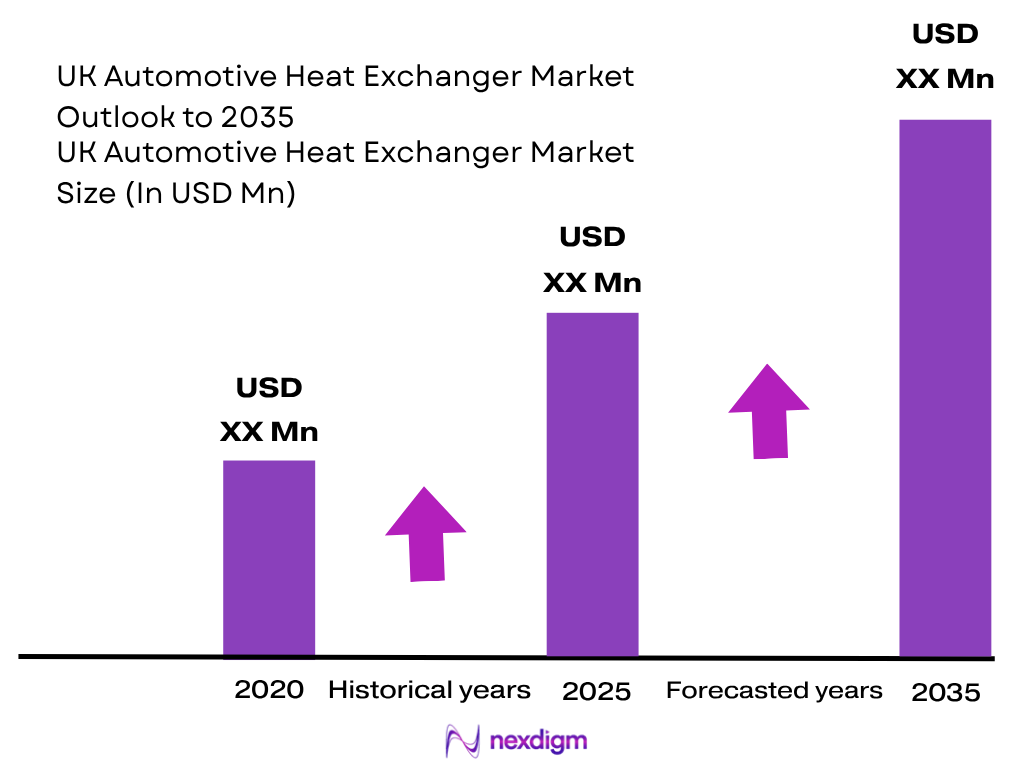
The UK automotive heat exchanger market is valued at USD ~ million in 2024, supported by increasing vehicle production, expansion of electric vehicle manufacturing, rising demand for advanced thermal management systems, and growing adoption of lightweight cooling technologies. Automotive heat exchangers are critical components used in radiators, condensers, intercoolers, battery cooling systems, oil coolers, and HVAC systems across passenger vehicles, commercial vehicles, hybrid vehicles, and battery electric vehicles. The UK automotive industry produced approximately 905,000 passenger cars and commercial vehicles in 2024, according to the Society of Motor Manufacturers and Traders (SMMT), creating consistent demand for thermal management components. The UK electric vehicle ecosystem is also expanding, with battery electric vehicles accounting for a significant portion of new vehicle registrations, increasing demand for battery cooling and power electronics thermal solutions. The market is further supported by the presence of automotive manufacturing clusters in the West Midlands, North East England, and South Wales, where OEMs and Tier-1 suppliers operate integrated production networks.
The UK automotive heat exchanger market is concentrated around major automotive manufacturing regions including the West Midlands, North East England, South East England, and Wales due to their established vehicle production ecosystems and supplier networks. The West Midlands remains a key automotive hub because of its concentration of vehicle manufacturers, engineering companies, and component suppliers. The North East region supports thermal management component demand through large-scale automotive manufacturing facilities and electrification-focused investments. According to SMMT, the UK automotive sector generated approximately £93 billion in turnover in 2023, highlighting the importance of automotive manufacturing and component supply chains. Areas surrounding Coventry, Birmingham, Sunderland, and Oxford maintain strong demand due to vehicle assembly plants and engineering capabilities. The presence of premium vehicle manufacturers, electric vehicle production facilities, and automotive research centres supports the development of advanced heat exchanger technologies including battery cooling systems, lightweight aluminium components, and integrated thermal management modules.
Market Segmentation
By Heat Exchanger Type
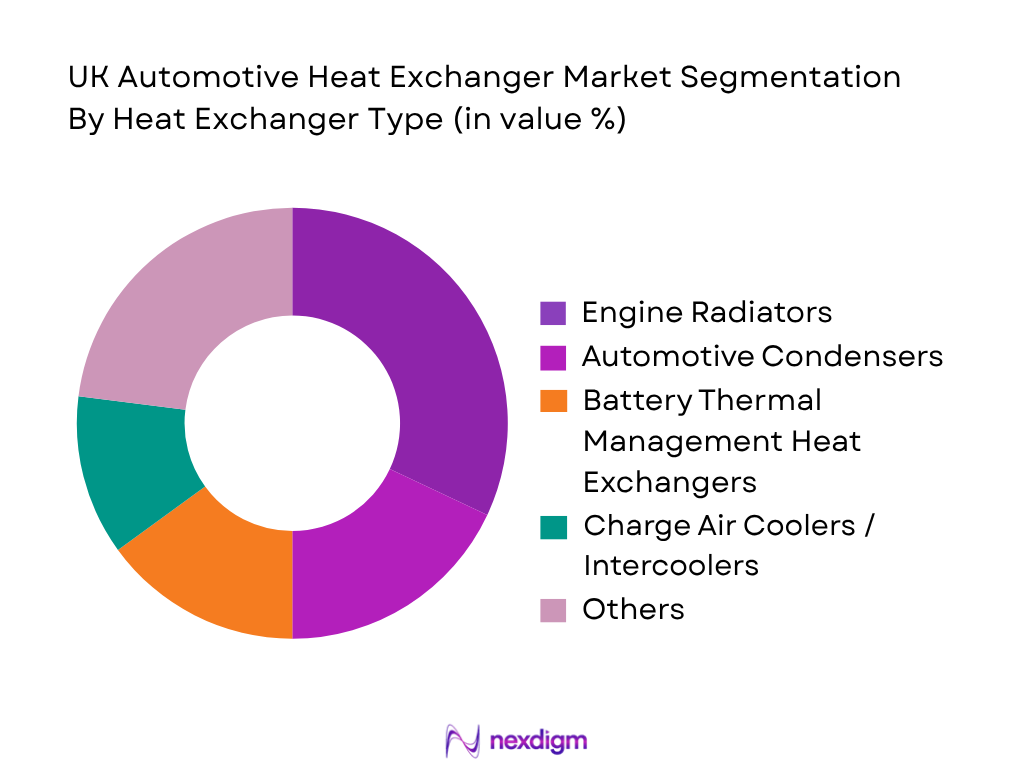
The UK automotive heat exchanger market is segmented by heat exchanger type into radiators, condensers, intercoolers, oil coolers, battery thermal management heat exchangers, EGR coolers, and HVAC heat exchangers. Engine radiators represent the dominant segment due to their widespread application across internal combustion engine vehicles and hybrid vehicles operating in the UK automotive fleet. Despite increasing vehicle electrification, a large installed base of ICE vehicles continues to generate demand for radiator manufacturing and aftermarket replacement. Battery thermal management heat exchangers are gaining importance due to increasing electric vehicle adoption and the requirement for efficient battery temperature control. However, radiators maintain higher demand because they serve passenger cars, commercial vehicles, and fleet applications. UK automotive manufacturers and suppliers are increasingly developing lightweight aluminium radiator systems to improve efficiency and reduce vehicle weight while meeting stricter emission and efficiency requirements.
By Vehicle Type
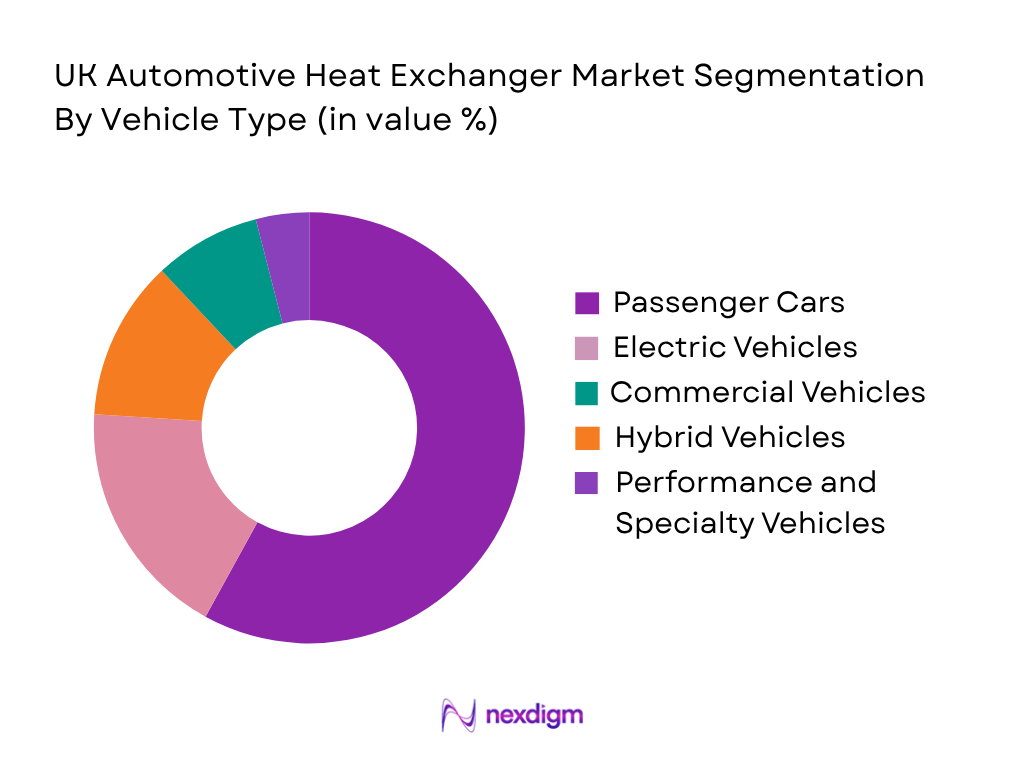
The UK automotive heat exchanger market is segmented by vehicle type into passenger cars, commercial vehicles, electric vehicles, hybrid vehicles, performance vehicles, and specialty vehicles. Passenger cars represent the dominant segment due to the large vehicle parc and continued production volumes in the UK. The UK had approximately 41.4 million licensed vehicles on the road in 2024, according to the Department for Transport, creating substantial demand for original equipment and aftermarket heat exchanger components. Passenger vehicles require multiple thermal management components including engine cooling systems, air conditioning condensers, transmission coolers, and EV battery cooling systems. Electric vehicles are becoming an increasingly important segment as manufacturers introduce advanced thermal systems to manage battery temperature, charging efficiency, and power electronics cooling. Premium vehicle manufacturers operating in the UK also contribute demand for advanced heat exchanger technologies due to higher performance requirements and complex thermal architectures.
Competitive Landscape
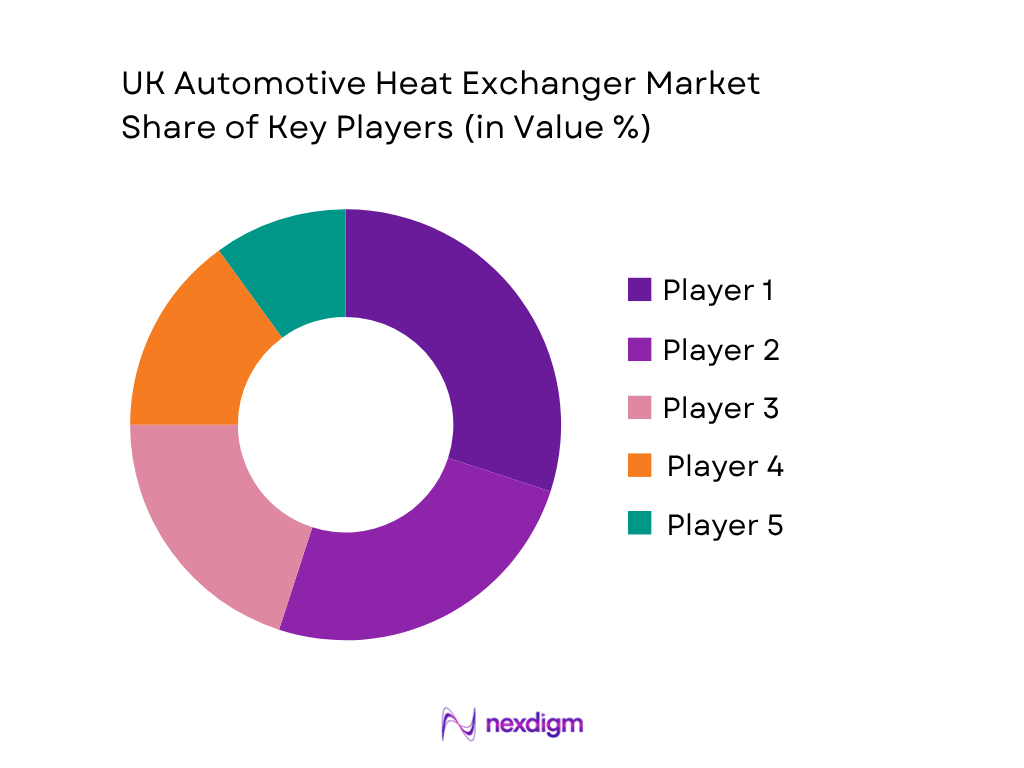
The UK automotive heat exchanger market is characterized by the presence of global thermal management suppliers, automotive component manufacturers, and OEM-linked Tier-1 suppliers. Major companies including MAHLE, Valeo, DENSO, Modine, and Hanon Systems compete through advanced cooling technologies, lightweight materials, EV thermal management capabilities, and strong relationships with vehicle manufacturers. The market is increasingly influenced by electrification trends, requiring suppliers to transition from conventional radiator systems toward integrated thermal management solutions for batteries, electric motors, and power electronics.
| Company | Establishment Year | Headquarters | Major Products | EV Thermal Management Capability | OEM Supply Presence | Manufacturing Capability | Key Technology Focus | Application Coverage |
| MAHLE GmbH | 1920 | Stuttgart, Germany | ~ | ~ | ~ | ~ | ~ | ~ |
| Valeo SE | 1923 | Paris, France | ~ | ~ | ~ | ~ | ~ | ~ |
| DENSO Corporation | 1949 | Kariya, Japan | ~ | ~ | ~ | ~ | ~ | ~ |
| Modine Manufacturing Company | 1916 | Wisconsin, USA | ~ | ~ | ~ | ~ | ~ | ~ |
| Hanon Systems | 1986 | Daejeon, South Korea | ~ | ~ | ~ | ~ | ~ | ~ |
UK Automotive Heat Exchanger Market Analysis
Growth Drivers
Increasing Electric Vehicle Production and Advanced Thermal Management Requirements
The UK automotive heat exchanger market is being supported by the rapid transition toward electric and hybrid vehicle technologies, which require advanced thermal management solutions beyond conventional engine cooling systems. The UK recorded 381,000 new battery electric vehicle registrations in 2024, according to the Society of Motor Manufacturers and Traders (SMMT), reflecting increasing demand for battery cooling plates, condensers, chillers, and integrated thermal modules. The UK automotive industry also produced approximately 779,584 vehicles in 2024, creating continuous demand for automotive component suppliers, including heat exchanger manufacturers. According to the International Energy Agency (IEA), global electric car sales exceeded 17 million units in 2024, accelerating technology development for efficient cooling systems. The increasing complexity of EV thermal architectures, including battery temperature regulation, power electronics cooling, and cabin climate control, is encouraging automotive suppliers in the UK to develop lightweight aluminium heat exchangers and compact thermal management assemblies. Additionally, the UK government’s Zero Emission Vehicle mandate is driving manufacturers toward electrified vehicle platforms, strengthening long-term demand for advanced automotive cooling components.
Expansion of UK Automotive Manufacturing and Component Supply Ecosystem
The presence of established automotive manufacturing clusters across regions such as the West Midlands, North East England, and the South West supports demand for automotive heat exchangers through OEM production and supplier networks. According to the UK Department for Business and Trade, the automotive sector contributes more than £90 billion annually to the UK economy and supports over 800,000 jobs, creating a strong industrial base for automotive component suppliers. The UK produced 779,584 vehicles in 2024, with passenger cars representing the majority of production activity, sustaining demand for radiators, charge air coolers, condensers, and oil coolers. The World Bank reported that the UK economy recorded a GDP of approximately USD 3.3 trillion in 2024, supporting continued industrial investment and automotive technology development. The availability of skilled engineering capabilities, established Tier-1 supplier networks, and automotive research facilities encourages innovation in thermal management systems. Growing investments in electrification, lightweight vehicle design, and vehicle efficiency improvement are increasing opportunities for heat exchanger manufacturers supplying both conventional and next-generation vehicle platforms.
Market Challenges
Declining Demand for Conventional Internal Combustion Engine Heat Exchanger Components
The UK automotive heat exchanger market faces structural challenges due to the transition from internal combustion engine vehicles toward electric vehicles, which reduces dependency on traditional engine cooling components. According to the Society of Motor Manufacturers and Traders (SMMT), new petrol and diesel vehicle registrations continue to decline as battery electric and hybrid vehicles gain adoption, with battery electric vehicles reaching 381,000 registrations in 2024. The UK government’s Zero Emission Vehicle mandate requires manufacturers to increase zero-emission vehicle sales, accelerating the shift away from conventional engine architectures. While EVs create demand for new thermal management systems, traditional radiators, engine oil coolers, and exhaust heat exchangers face reduced growth potential. The International Energy Agency reported that electric vehicles represented a rapidly expanding segment of global vehicle sales, with worldwide electric car sales exceeding 17 million units in 2024. Automotive heat exchanger suppliers must therefore redesign product portfolios, invest in EV-specific cooling technologies, and adapt manufacturing capabilities to remain competitive in a changing automotive landscape.
Complex Supply Chain Requirements and Dependence on Advanced Manufacturing Materials
The UK automotive heat exchanger market experiences challenges related to supply chain complexity, availability of specialised materials, and increasing requirements for precision manufacturing. Modern automotive heat exchangers require lightweight materials such as aluminium alloys, advanced brazing technologies, and highly efficient thermal designs to meet vehicle efficiency requirements. According to the UK Department for Business and Trade, the automotive industry involves more than 2,500 component suppliers, creating a highly interconnected supply chain that requires coordination between OEMs, Tier-1 suppliers, and raw material providers. The World Bank reported that the UK imported goods worth more than USD 800 billion in 2024, highlighting the country’s reliance on international supply networks for industrial inputs. Global disruptions affecting metals, semiconductor availability, and logistics can influence automotive component production timelines. Additionally, EV thermal systems require higher engineering complexity compared with traditional cooling systems, increasing research, development, and manufacturing requirements for suppliers operating in the UK automotive sector.
Market Opportunities
Growth of Electric Vehicle Thermal Management and Battery Cooling Technologies
The transition toward electric mobility creates significant opportunities for automotive heat exchanger manufacturers by increasing demand for specialised thermal management components. Battery electric vehicles require precise temperature control systems to maintain battery performance, safety, and charging efficiency, creating opportunities for battery cooling plates, refrigerant-based heat exchangers, and integrated thermal modules. The UK registered 381,000 battery electric vehicles in 2024, according to SMMT data, indicating continued expansion of electrified vehicle adoption. The UK also has established battery manufacturing initiatives, including large-scale battery production developments supporting future electric vehicle supply chains. According to the International Energy Agency, global electric vehicle sales exceeded 17 million units in 2024, increasing demand for advanced thermal solutions across automotive markets. Heat exchanger suppliers that develop compact designs, improved heat transfer efficiency, and lightweight aluminium systems can support OEM requirements for next-generation vehicles. Increasing focus on battery performance, fast charging capability, and energy efficiency creates opportunities for suppliers specialising in EV thermal management technologies.
Increasing Demand for Lightweight and High-Efficiency Automotive Thermal Systems
The automotive industry’s focus on reducing vehicle weight and improving efficiency is creating opportunities for manufacturers developing advanced heat exchanger technologies. Lightweight thermal components help improve vehicle efficiency, extend EV driving range, and reduce energy consumption across passenger and commercial vehicles. According to the European Automobile Manufacturers’ Association (ACEA), vehicle electrification continues to reshape automotive engineering requirements, with manufacturers increasing investments in efficient vehicle platforms. The UK automotive sector produced 779,584 vehicles in 2024, maintaining demand for advanced components supporting passenger cars, commercial vehicles, and electrified platforms. Aluminium-based heat exchangers, compact cooling modules, and integrated thermal management systems are gaining importance as manufacturers optimise vehicle architecture. The UK’s automotive engineering ecosystem, supported by skilled manufacturing capabilities and research infrastructure, provides opportunities for suppliers developing innovative thermal solutions. Growing demand from EV manufacturers, hybrid vehicle producers, and commercial vehicle operators is expected to encourage adoption of advanced heat exchanger designs with improved efficiency, durability, and reduced material usage.
Future Outlook
Over the next decade, the UK automotive heat exchanger market is expected to experience significant transformation driven by vehicle electrification, increasing demand for battery thermal management systems, and development of advanced lightweight cooling technologies. Automotive manufacturers are shifting from traditional engine cooling solutions toward integrated thermal management architectures capable of managing batteries, electric motors, power electronics, and cabin climate systems. Growth in electric vehicle production, expansion of battery manufacturing capacity, and stricter vehicle efficiency requirements will create opportunities for heat exchanger suppliers. Companies investing in aluminium-based designs, compact cooling modules, and intelligent thermal control systems are expected to gain competitive advantages.
Major Players
- MAHLE GmbH
- DENSO Corporation
- Valeo SE
- Modine Manufacturing Company
- T.RAD Co., Ltd.
- Dana Incorporated
- BorgWarner Inc.
- Nissens Automotive
- Hanon Systems
- Sanden Holdings Corporation
- AKG Group
- Gates Corporation
- JCB
- Cummins Inc.
- Valeo Thermal Systems UK
Key Target Audience
- Investments and Venture Capitalist Firms (Automotive component investment funds, mobility-focused private equity firms, EV technology investors, sustainable automotive technology venture funds)
- Government and Regulatory Bodies (Department for Transport, Advanced Propulsion Centre UK, UK Department for Business and Trade, Vehicle Certification Agency, Office for Zero Emission Vehicles)
- Automotive Original Equipment Manufacturers (OEMs)
- Automotive Tier-1 and Tier-2 Component Suppliers
- Electric Vehicle Battery and Powertrain Manufacturers
- Automotive Thermal Management System Manufacturers
- Commercial Vehicle and Fleet Operators
- Automotive Aftermarket Distributors and Repair Networks
Research Methodology
Step 1: Identification of Key Variables
The initial phase involves developing an automotive thermal management ecosystem map covering heat exchanger manufacturers, vehicle OEMs, Tier-1 suppliers, aftermarket distributors, EV technology providers, and regulatory bodies operating within the UK automotive sector. This stage incorporates extensive secondary research using automotive production databases, government transportation statistics, industry publications, import-export information, and supplier information to identify key market variables. Major variables assessed include heat exchanger type, vehicle application, propulsion technology, material composition, manufacturing process, supplier relationships, and regional production concentration.
Step 2: Market Analysis and Construction
In this phase, historical and current data related to the UK automotive heat exchanger market is compiled and analyzed across passenger vehicles, commercial vehicles, hybrid vehicles, and electric vehicles. The assessment includes evaluation of vehicle production volumes, thermal management system adoption, OEM sourcing patterns, aftermarket replacement demand, and supplier capabilities. Supply-side analysis examines radiator manufacturers, thermal management suppliers, Tier-1 component companies, and manufacturing facilities, while demand-side analysis evaluates requirements from automotive manufacturers and vehicle operators.
Step 3: Hypothesis Validation and Expert Consultation
Market hypotheses are developed and validated through consultations with automotive component manufacturers, thermal management specialists, OEM supply chain professionals, distributors, and industry stakeholders. These discussions provide operational insights regarding heat exchanger technology adoption, EV thermal system requirements, manufacturing challenges, material trends, and supplier strategies. Expert validation helps refine market segmentation, competitive positioning, technology assessment, and future industry development analysis.
Step 4: Research Synthesis and Final Output
The final phase involves consolidating secondary research findings, expert inputs, and automotive industry analysis into a comprehensive UK automotive heat exchanger market assessment. Data triangulation is performed by comparing vehicle production statistics, supplier information, technology developments, and market trends to ensure accuracy. The final report provides strategic insights for manufacturers, investors, OEMs, suppliers, and government stakeholders involved in the automotive thermal management ecosystem.

- Executive Summary
- Research Methodology (Market Definition and Scope, UK Automotive Heat Exchanger Classification, Automotive Thermal Management System Assessment, Engine Cooling System Mapping, Battery Thermal Management Classification, Electric Vehicle Heat Exchanger Application Mapping, Internal Combustion Engine Vehicle Cooling Architecture Assessment, Hybrid Vehicle Thermal Management Evaluation, Heat Exchanger Component Taxonomy, Cooling Circuit Analysis, Material and Manufacturing Process Assessment, OEM and Tier Supplier Ecosystem Mapping)

- Definition and Scope
- UK Automotive Heat Exchanger Industry Evolution and Development of Vehicle Thermal Management Ecosystem
- Automotive Heat Exchanger Architecture, Manufacturing Process and Supply Chain Structure
- UK Automotive Heat Exchanger Value Chain Analysis
- UK Automotive Heat Exchanger Supply Chain Analysis
- Radiator, Condenser, Intercooler, Oil Cooler, Battery Cooler, EGR Cooler and HVAC Heat Exchanger Component Ecosystem Analysis
- Thermal Management System Integration Assessment Across ICE, Hybrid and Electric Vehicles

- Growth Drivers (Increasing Electric Vehicle Production and Battery Thermal Management Requirements, Expansion of UK Automotive Manufacturing Ecosystem, Rising Demand for Lightweight Vehicle Components, Growth of Hybrid Vehicle Adoption, Increasing Automotive Thermal Efficiency Requirements, Expansion of Premium and Performance Vehicle Manufacturing)
- Market Challenges (High Manufacturing Cost of Advanced Heat Exchanger Systems, Supply Chain Disruptions for Automotive Components, Increasing Complexity of EV Thermal Management Systems, Dependence on Imported Raw Materials and Components, Pressure on Automotive Suppliers from Vehicle Electrification Transition)
- Market Opportunities (Expansion of Electric Vehicle Battery Cooling Systems, Development of Lightweight Aluminium Heat Exchanger Technologies, Growth of UK EV Battery Manufacturing Ecosystem, Increasing Demand for Integrated Thermal Management Systems, Expansion of Aftermarket Heat Exchanger Replacement Market, Development of High-Efficiency Cooling Solutions for Premium Vehicles)
- Market Trends (Adoption of Integrated Thermal Management Modules, Increasing Battery Cooling System Innovation, Growth of Compact Lightweight Heat Exchanger Designs, Development of Liquid Cooling Technologies, Increasing Use of Advanced Aluminium Alloys, Growth of EV-Specific Thermal Management Solutions, Increasing Digital Monitoring of Cooling Systems)
- Regulatory and Standards Landscape (UK Vehicle Type Approval Regulations, Vehicle Emission Standards Framework, Zero Emission Vehicle Mandate Requirements, Automotive Component Quality Standards, European Union Automotive Thermal Management Standards Alignment, Environmental Regulations for Automotive Manufacturing and Recycling)
- SWOT Analysis
- Porter’s Five Forces Analysis
- PESTLE Analysis
- Stakeholder Ecosystem
- Competition Ecosystem

- By Market Value (2020-2025)
- By Heat Exchanger Unit Production Volume (2020-2025)
- By Passenger Vehicle Heat Exchanger Demand Volume (2020-2025)
- By Commercial Vehicle Heat Exchanger Demand Volume (2020-2025)
- By Electric Vehicle Thermal Management Heat Exchanger Deployment Volume (2020-2025)
- By Hybrid Vehicle Cooling System Heat Exchanger Deployment Volume (2020-2025)
- By Aftermarket Automotive Heat Exchanger Replacement Volume (2020-2025)

- By Heat Exchanger Type (In Value %)
Engine Radiators
Automotive Condensers
Charge Air Coolers / Intercoolers
Engine Oil Coolers
Transmission Oil Coolers
Battery Thermal Management Heat Exchangers
EGR Coolers
HVAC Heat Exchangers
Fuel Cooling Heat Exchangers
Power Electronics Cooling Heat Exchangers - By Vehicle Type (In Value %)
Passenger Cars
Premium Passenger Vehicles
Commercial Vehicles
Light Commercial Vehicles
Heavy Commercial Vehicles
Buses and Coaches
Performance and Sports Vehicles
Off-Highway and Specialty Vehicles - By Application Type (In Value %)
Engine Cooling Systems
Battery Thermal Management Systems
Powertrain Cooling Applications
Turbocharger and Charge Air Cooling Systems
Transmission Cooling Systems
Cabin HVAC Thermal Management
Fuel System Cooling Applications
Electric Motor Cooling Systems
Motorsport and High-Performance Vehicle Applications - By Sales Channel (In Value %)
Automotive OEM Supply
Tier-1 Automotive Supplier Network
Automotive Component Distributors
Independent Aftermarket Suppliers
Vehicle Repair and Service Networks
Online Automotive Component Platforms - By Region (In Value %)
London
West Midlands
East Midlands
North West England
South East England
Scotland
Wales
Northern Ireland
North East England

- Market Share of Major Players (By Revenue, Heat Exchanger Type, Vehicle Segment, Propulsion Type, OEM Supply Contracts, Aftermarket Presence, Manufacturing Location, Customer Base Distribution)
- Cross Comparison Parameters (Automotive Heat Exchanger Product Portfolio Breadth Across ICE, Hybrid and EV Applications, Battery Thermal Management Technology Capability, Heat Transfer Efficiency and Cooling Performance, Lightweight Material and Aluminium Manufacturing Expertise, OEM and Tier-1 Supply Network Coverage, Manufacturing Capacity and Production Automation Capability, Aftermarket Distribution and Replacement Product Availability, Innovation Capability in Integrated Thermal Management Systems)
- SWOT Analysis of Major Players
- Competitive Positioning Matrix
- Product and Technology Portfolio Benchmarking
- Pricing and Product Category Benchmarking
- Manufacturing Capacity and Production Technology Assessment
- OEM Partnership and Supply Agreement Assessment
- Detailed Profiles of Major Companies
MAHLE GmbH
DENSO Corporation
Valeo SE
Modine Manufacturing Company
T.RAD Co., Ltd.
Dana Incorporated
BorgWarner Inc.
Nissens Automotive
Hanon Systems
Sanden Holdings Corporation
AKG Group
Valeo Thermal Systems UK
JCB
Cummins Inc.
Gates Corporation

- End User Segmentation Assessment
- Passenger Vehicle Manufacturers Analysis
- Electric Vehicle Manufacturers Analysis
- Commercial Vehicle Manufacturers Analysis
- Automotive Tier-1 Supplier Analysis
- Automotive Aftermarket Distributor Analysis
- Fleet Operators and Commercial Vehicle User Analysis
- Motorsport and Performance Vehicle Manufacturer Analysis
- Automotive Repair and Maintenance Network Analysis

- By Market Value (2026-2035)
- By Heat Exchanger Unit Production Volume (2026-2035)
- By Passenger Vehicle Heat Exchanger Demand Volume (2026-2035)
- By Commercial Vehicle Heat Exchanger Demand Volume (2026-2035)
- By Electric Vehicle Thermal Management Heat Exchanger Deployment Volume (2026-2035)
- By Hybrid Vehicle Cooling System Heat Exchanger Deployment Volume (2026-2035)
- By Battery Electric Vehicle Heat Exchanger Deployment Volume (2026-2035)
- By Aftermarket Automotive Heat Exchanger Replacement Volume (2026-2035)


 Request a Sample
 Ask for Customization
 Get a Quote
 Enquire Now