

 Download PDF
Market Overview
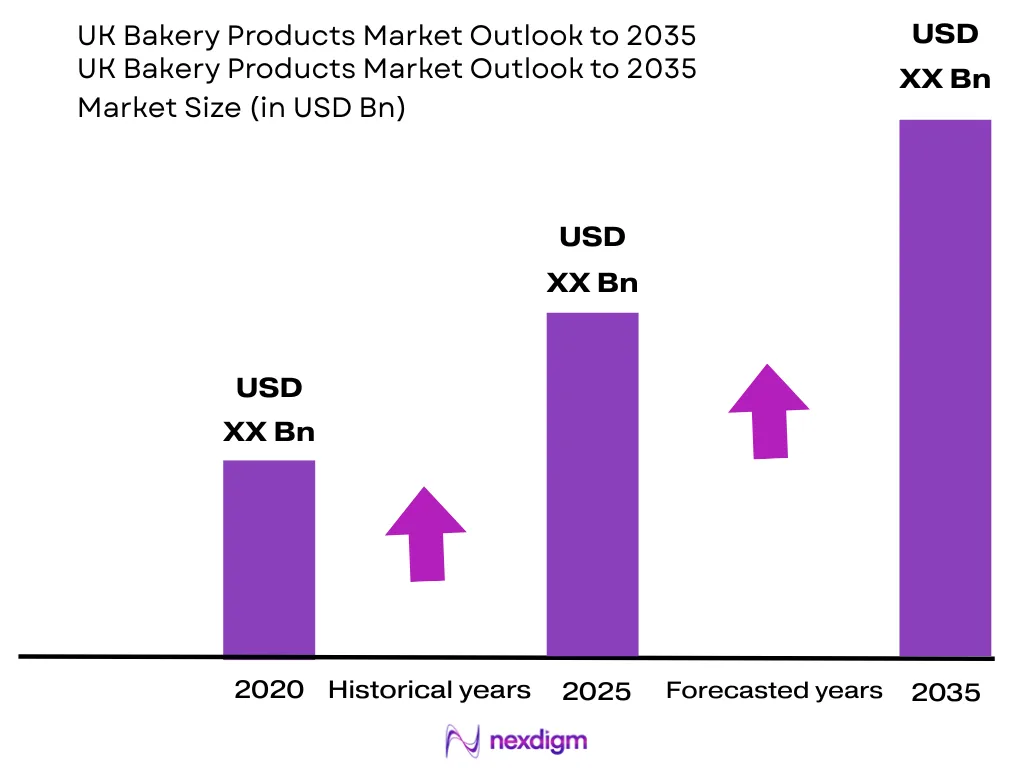
The UK Bakery Products Market is valued at approximately USD ~ billion in 2024, supported by strong consumer demand for bread, cakes, pastries, biscuits, morning goods, and frozen bakery products. According to the UK Office for National Statistics, household expenditure on food and non-alcoholic beverages exceeded GBP 140 billion in recent reporting periods, while bakery products remain among the most frequently purchased packaged food categories. The market is driven by high bread consumption, growth in convenience foods, premium bakery innovations, and increasing demand for health-oriented products such as wholegrain, gluten-free, vegan, and reduced-sugar baked goods. Strong retail penetration and the expansion of food-to-go channels continue to support category growth.
Market Segmentation
By Product Type
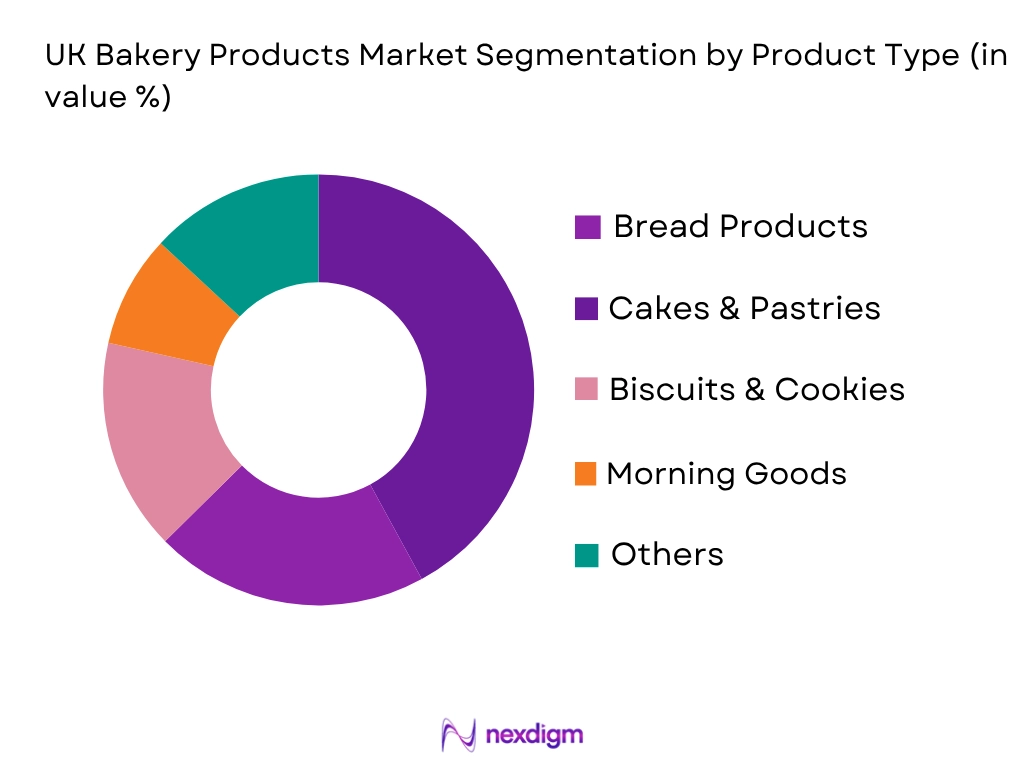
The UK Bakery Products Market is segmented by product type into bread products, cakes & pastries, biscuits & cookies, morning goods, frozen bakery products, artisan bakery products, and tortillas & flatbreads. Recently, bread products have maintained the dominant market share within this segmentation due to their status as a staple food item consumed across nearly all demographic groups. Bread remains a daily purchase for many households and benefits from extensive distribution through supermarkets, convenience stores, bakery chains, and foodservice outlets. The segment has also adapted successfully to changing consumer preferences through the introduction of seeded bread, sourdough, wholegrain variants, high-protein options, and gluten-free alternatives. Additionally, private-label bread products offered by major retailers continue to strengthen category volume. Bread’s affordability, versatility, and role in breakfast, lunch, and snack occasions further reinforce its dominant position within the UK bakery market.
By Distribution Channel
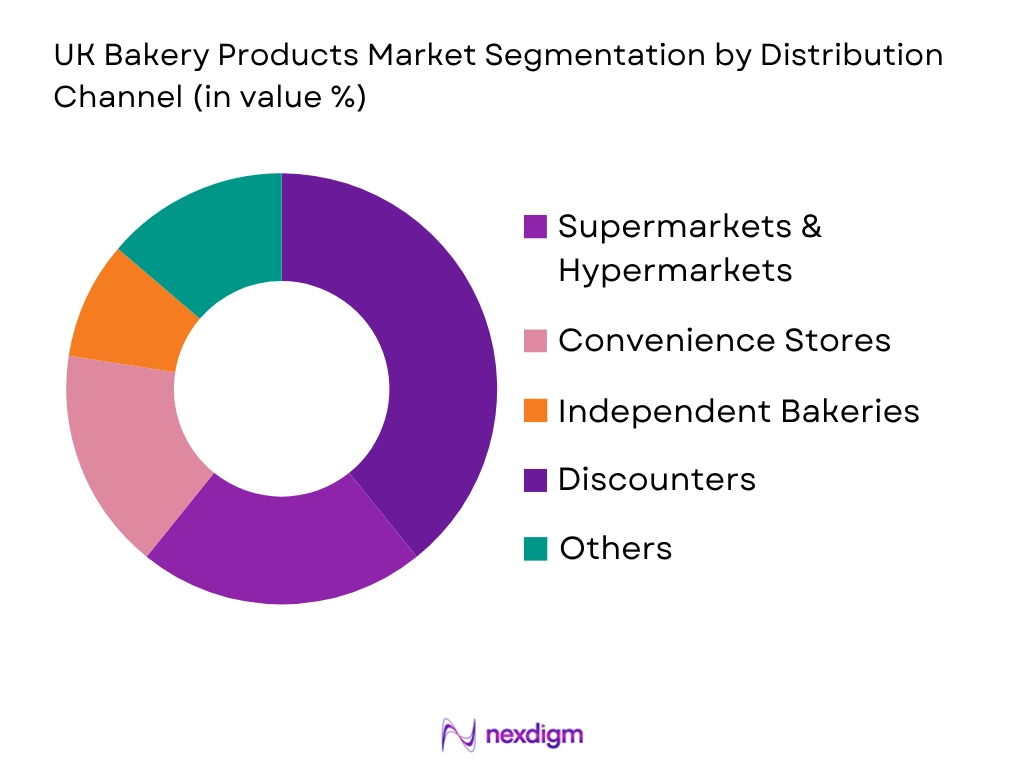
The UK Bakery Products Market is segmented by distribution channel into supermarkets & hypermarkets, convenience stores, discounters, independent bakeries, bakery café chains, foodservice sales, and online retail channels. Supermarkets and hypermarkets dominate this segmentation due to their extensive national reach, broad product assortment, and strong private-label offerings. Leading grocery retailers operate dedicated in-store bakeries that provide fresh bread, pastries, cakes, and specialty bakery products daily, increasing consumer convenience and purchase frequency. These outlets benefit from high footfall, integrated loyalty programs, and efficient supply chain management. Additionally, supermarkets serve as key launch platforms for premium, health-focused, and seasonal bakery products. The ability to combine value pricing with fresh bakery experiences allows supermarkets to maintain a leading position in bakery product distribution throughout the United Kingdom.
Competitive Landscape
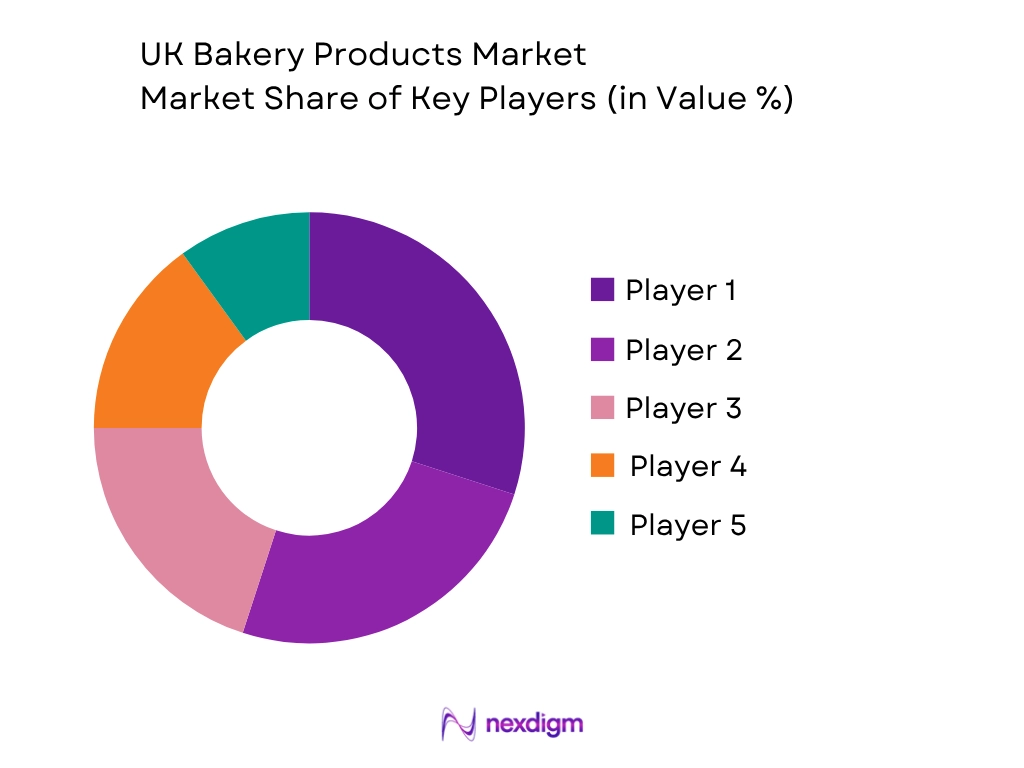
The UK Bakery Products Market is characterized by a combination of large industrial bakery manufacturers, national bakery chains, and regional artisan producers. Competition is driven by product innovation, premiumization, retail partnerships, health-oriented product development, and distribution efficiency. Major players leverage extensive manufacturing capacity and strong brand recognition, while emerging bakery brands focus on specialty and premium product niches.
| Company | Establishment Year | Headquarters | Key Brands | Product Portfolio | Distribution Reach | Manufacturing Presence | Retail Penetration | Innovative Focus |
| Warburtons | 1876 | ~ | ~ | ~ | ~ | ~ | ~ | ~ |
| Allied Bakeries | 1935 | ~ | ~ | ~ | ~ | ~ | ~ | ~ |
| Greggs plc | 1939 | ~ | ~ | ~ | ~ | ~ | ~ | ~ |
| Finsbury Food Group | 1925 | ~ | ~ | ~ | ~ | ~ | ~ | ~ |
| Hovis Ltd | 1886 | ~ | ~ | ~ | ~ | ~ | ~ | ~ |
UK Bakery Products Market Analysis
Growth Drivers
Rising Household Food Consumption and Strong Bakery Penetration
The UK bakery products market is strongly supported by sustained household spending on food and beverages, which continues to make bakery products one of the most frequently purchased packaged food categories. According to UK government food statistics, the food and drink sector remains one of the country’s largest consumer industries, while the broader food and drink supply chain contributes approximately £153 billion to the UK economy and supports extensive downstream retail and foodservice activity. The UK food and drink industry remains the country’s largest manufacturing sector with turnover of approximately £152 billion and gross value added of £42 billion, demonstrating the scale of demand supporting bakery manufacturing, bread production, cakes, pastries, biscuits, and morning goods. Furthermore, the UK food and drink manufacturing ecosystem includes more than 12,500 manufacturers, creating a highly developed supply chain for flour, bakery ingredients, packaging materials, and finished baked goods. The country’s population concentration across major urban centers such as London, Birmingham, Manchester, Leeds, and Glasgow supports high retail penetration for bakery products. Growing demand for convenience foods, meal solutions, premium bakery offerings, and food-to-go consumption continues to strengthen bakery sales through supermarkets, bakery chains, and foodservice operators. The presence of sophisticated logistics infrastructure and nationwide retail networks further supports consistent bakery product consumption throughout the United Kingdom.
Expansion of Foodservice, Retail Bakery Networks, and Food Manufacturing Activity
The growth of the UK bakery products market is also driven by the expansion of foodservice channels, retail bakery networks, and a highly developed food manufacturing sector. The food and drink industry accounts for approximately 11,600 new food and drink product introductions and generates annual domestic sales of around £133 billion, reflecting continuous innovation and strong consumer demand for packaged and fresh bakery products. Food and drink manufacturing remains the UK’s largest manufacturing industry by turnover, valued at approximately £104.4 billion, creating substantial demand for bakery ingredients, flour processing, packaging solutions, and distribution services. The sector is supported by thousands of supermarkets, convenience stores, bakery cafés, and quick-service restaurants that rely heavily on bread, buns, pastries, sandwiches, and bakery snacks. The broader food and drink sector employed approximately 3.7 million people across Great Britain, highlighting the scale of food production, retailing, distribution, and foodservice operations that support bakery product demand. Additionally, manufacturing remains a significant contributor to the UK economy, accounting for approximately 8.6% of national economic output, supporting investment in automation, bakery production capacity, and distribution infrastructure. These factors collectively create a strong operating environment for bakery manufacturers and retailers across the country.
Market Challenges
Rising Manufacturing Costs and Energy-Related Operational Pressures
The UK bakery products market faces significant challenges from rising operational expenses and manufacturing-related cost pressures. Commercial bakeries are energy-intensive operations due to the continuous use of industrial ovens, refrigeration systems, proofing equipment, and distribution logistics. Manufacturing businesses across the UK have faced ongoing cost challenges associated with energy markets and operating expenses. Manufacturing remains a major component of the UK economy, accounting for approximately 8.6% of national economic output, making the sector highly exposed to fluctuations in utility costs and industrial operating conditions. According to UK business reports, domestic energy costs experienced increases during recent reporting periods, affecting food manufacturers and bakery operators throughout the country. The food and drink manufacturing industry generates approximately £42 billion in gross value added, making cost management increasingly important for maintaining profitability. Bakery manufacturers must simultaneously manage expenses associated with flour, oils, sugar, dairy ingredients, transportation, packaging materials, and labor. The challenge is amplified by the need to maintain product affordability while complying with food safety regulations and sustainability requirements. These operational pressures can impact investment decisions, production planning, and overall supply chain efficiency across the bakery sector.
Labor Availability Constraints and Workforce Management Challenges
The bakery industry depends heavily on skilled workers across manufacturing, packaging, logistics, engineering, food safety, and retail operations. However, labor availability remains a significant challenge for bakery producers and food manufacturers throughout the UK. Food manufacturing facilities require trained personnel capable of operating automated production systems, maintaining quality standards, and managing increasingly sophisticated manufacturing processes. The UK food and drink sector employs approximately 3.7 million people, making workforce management a critical issue across the supply chain. In addition, food and drink manufacturing consists of approximately 24,880 small and medium-sized enterprises, many of which compete for skilled labor within regional manufacturing hubs. Recent labor market conditions have contributed to wage growth across manufacturing industries. UK earnings growth reached approximately 5.2, with particularly strong wage increases observed among skilled manufacturing workers. For bakery companies, higher labor costs combined with recruitment challenges can affect production efficiency and profitability. The increasing complexity of bakery operations, including frozen bakery products, specialty formulations, and health-focused product development, further increases the demand for skilled technical workers. As a result, workforce availability remains a major operational challenge for bakery manufacturers across the UK.
Market Opportunities
Growing Demand for Premium, Health-Oriented, and Innovative Bakery Products
A major opportunity within the UK bakery products market stems from increasing consumer demand for premium and health-focused bakery offerings. Consumers are showing greater interest in wholegrain bread, sourdough products, gluten-free options, vegan bakery products, high-protein baked goods, and reduced-sugar formulations. This trend is encouraging manufacturers to diversify portfolios and invest in product innovation. The UK food and drink industry introduces approximately 11,600 new products into the market, reflecting a strong culture of innovation and product development. Furthermore, food and drink manufacturing accounts for over 15% of UK manufacturing turnover and employment, indicating the sector’s capability to support continuous product innovation and category expansion. The UK’s strong retail infrastructure, premium grocery segment, and advanced consumer packaged goods market create favorable conditions for value-added bakery products. Manufacturers increasingly utilize clean-label ingredients, functional nutrition claims, and sustainable sourcing practices to meet evolving consumer expectations. The growing popularity of artisan bakery products and premium indulgence categories further expands opportunities for differentiation and margin enhancement across bakery product portfolios.
Expansion of Frozen Bakery, Convenience Food, and Omnichannel Retail Distribution
Another significant opportunity for the UK bakery products market lies in the expansion of frozen bakery products and omnichannel retail distribution. Consumers increasingly seek convenience-oriented food solutions that offer longer shelf life, ease of preparation, and reduced food waste. Frozen bakery products, ready-to-bake items, and packaged bakery snacks align closely with these preferences. The UK’s food and drink supply chain contributes approximately £153 billion to the national economy and includes more than 12,500 food and drink manufacturers, creating a strong infrastructure for product distribution and innovation. The industry also generates approximately £152 billion in turnover, demonstrating the scale of commercial opportunities available through modern retail and foodservice channels. Growth in online grocery shopping, direct-to-consumer food delivery platforms, convenience retailing, and food-to-go formats has expanded market access for bakery manufacturers. Frozen bakery categories particularly benefit from advances in cold-chain logistics and inventory management systems. Additionally, retailers continue expanding private-label bakery offerings, creating opportunities for contract manufacturers and bakery suppliers. These developments support broader distribution reach and increased category penetration throughout the United Kingdom.
Future Outlook
The UK Bakery Products Market is expected to witness sustained expansion over the forecast period, driven by changing dietary preferences, innovation in premium bakery products, and growing demand for convenience foods. Health-conscious consumers are increasingly seeking bakery products with cleaner labels, higher nutritional value, and reduced sugar content, encouraging manufacturers to diversify product portfolios. Growth opportunities are expected to emerge from frozen bakery products, artisan bakery offerings, plant-based baked goods, and functional nutrition products. Retailers are likely to expand premium private-label bakery ranges, while online grocery platforms continue to improve accessibility. Investments in automation, sustainability initiatives, and advanced packaging technologies are anticipated to improve operational efficiency and product shelf life, supporting long-term industry development.
Major Players
- Warburtons
- Allied Bakeries
- Hovis Ltd
- Greggs plc
- Finsbury Food Group
- Aryzta UK
- Jacksons Bakery
- Roberts Bakery
- St Pierre Groupe
- Fine Lady Bakeries
- Geary’s Bakery
- Frank Roberts & Sons
- Signature Flatbreads
- Lotus Bakeries UK
- Premier Foods (Mr Kipling)
Key Target Audience
- Commercial Bakery Manufacturers
- Bread and Bakery Product Brands
- Supermarket and Grocery Retail Chains
- Bakery Café and Foodservice Operators
- Frozen Bakery Product Manufacturers
- Wheat Flour Millers and Ingredient Suppliers
- Investments and Venture Capitalist Firms
- Government and Regulatory Bodies (Food Standards Agency, Department for Environment Food & Rural Affairs, Competition and Markets Authority)
Research Methodology
Step 1: Identification of Key Variables
The initial phase involves developing a comprehensive ecosystem map covering bakery manufacturers, ingredient suppliers, flour millers, retailers, foodservice operators, distributors, and consumers. Extensive secondary research is conducted using industry databases, company reports, trade publications, and government resources to identify critical market variables and demand drivers.
Step 2: Market Analysis and Construction
Historical market data related to bakery product consumption, production, pricing, retail sales, trade flows, and distribution channels are compiled and analyzed. Market penetration, product category performance, and consumer spending patterns are evaluated to establish robust market estimates and industry benchmarks.
Step 3: Hypothesis Validation and Expert Consultation
Market assumptions are validated through structured interviews with bakery manufacturers, retail procurement managers, ingredient suppliers, distributors, and industry specialists. These consultations provide operational insights, category-specific intelligence, and competitive perspectives necessary to refine market findings.
Step 4: Research Synthesis and Final Output
The final stage integrates insights obtained from primary and secondary research sources. Data triangulation techniques are utilized to verify market estimates, segmentation analysis, and future projections. The result is a comprehensive assessment of the UK Bakery Products Market covering demand trends, competitive dynamics, consumer behavior, and growth opportunities.

- Executive Summary
- Research Methodology (Market Definitions and Assumptions, Abbreviations, Market Sizing Approach, Top-Down Analysis, Bottom-Up Analysis, Demand-Side Assessment, Supply-Side Assessment, Retail Audit Analysis, Trade Flow Assessment, Primary Industry Interviews, Consumer Purchase Behavior Analysis, Data Triangulation, Forecasting Framework, Limitations and Future Conclusions)

- Definition and Scope
- Market Evolution and Industry Genesis
- Timeline of Major Industry Developments
- Bakery Industry Business Cycle Analysis
- Value Chain Analysis

- Growth Drivers (High Bread Consumption Frequency, Expansion of Premium Bakery Categories, Growth of Food-to-Go Culture, Rising Demand for Convenience Foods, Increasing Household Food Expenditure, Growth in Supermarket Bakery Sections, Expansion of Foodservice Sector, Product Innovation in Health-Oriented Bakery Products)
- Market Challenges (Wheat Price Volatility, Energy Cost Inflation, Labor Availability Constraints, Shelf-Life Management Issues, Supply Chain Disruptions, Regulatory Compliance Costs, Ingredient Cost Pressures, Food Waste Management Challenges)
- Market Opportunities (Functional Bakery Product Development, Gluten-Free and Free-From Product Expansion, Premium Artisan Bakery Growth, Frozen Bakery Category Expansion, Plant-Based Bakery Innovation, Sustainable Packaging Adoption, E-Commerce Bakery Sales Growth, Private Label Premiumization)
- Market Trends (Clean Label Reformulation, Whole Grain Product Adoption, High-Protein Bakery Launches, Sourdough Popularity, Premium Indulgence Products, Frozen Ready-to-Bake Products, Health and Wellness Positioning, Sustainable Ingredient Sourcing)
- Government Regulations (UK Food Standards Agency Compliance, Food Safety Act Requirements, Nutritional Labeling Regulations, HFSS Product Regulations, Allergen Disclosure Standards, Packaging Waste Regulations, Sustainability Compliance Frameworks, Food Fortification Standards)
- SWOT Analysis
- Porter’s Five Forces Analysis
- PESTLE Analysis
- Stakeholder Ecosystem
- Competition Ecosystem
- ESG and Sustainability Assessment

- By Market Value (2020-2025)
- By Volume Consumption (2020-2025)
- By Average Selling Price (2020-2025)

- By Product Type (In Value %)
Bread Products
Cakes
Pastries
Biscuits and Cookies
Morning Goods (Croissants, Muffins, Doughnuts, Danish Pastries)
Artisan Bakery Products
Frozen Bakery Products
Tortillas and Flatbreads
Sweet Bakery Snacks
Savory Bakery Products - By Ingredient Type (In Value %)
Conventional Bakery Products
Whole Grain Bakery Products
Gluten-Free Bakery Products
Organic Bakery Products
High-Protein Bakery Products
Reduced Sugar Bakery Products
Vegan Bakery Products
Clean Label Bakery Products - By Distribution Channel (In Value %)
Supermarkets and Hypermarkets
Convenience Stores
Discounters
Independent Bakeries
Bakery Café Chains
Online Grocery Platforms
Direct-to-Consumer Channels
Foodservice and Institutional Sales - By Region (In Value %)
England
Scotland
Wales
Northern Ireland
Greater London
South East England
North West England
Midlands - By Packaging Type (In Value %)
Flexible Plastic Packaging
Paper-Based Packaging
Cartons and Boxes
Resealable Packaging
Sustainable and Recyclable Packaging
Modified Atmosphere Packaging

- Market Share of Major Players (By Value, Volume, Product Category, Distribution Channel, Retail Presence)
- Cross Comparison Parameters (Product Portfolio Breadth, Bakery SKU Count, Production Capacity, Distribution Network Reach, Fresh Bakery Presence, Frozen Bakery Capability, Private Label Manufacturing Strength, Health-Oriented Product Portfolio)
- SWOT Analysis of Major Players
- Pricing Analysis by SKU and Product Category
- Detailed Profiles of Major Companies
Associated British Foods (Allied Bakeries)
Warburtons
Hovis
Greggs plc
Premier Foods (Mr Kipling)
Finsbury Food Group
Aryzta UK
Jacksons Bakery
Roberts Bakery
St Pierre Groupe
Fine Lady Bakeries
Geary’s Bakery
Frank Roberts & Sons
Lotus Bakeries UK
Signature Flatbreads

- Consumption Behavior Assessment (Purchase Frequency, Consumption Occasions, Product Preferences, Household Penetration, Fresh vs Packaged Bakery Consumption)
- Demographic Consumption Trends (Age Group, Income Group, Household Size, Lifestyle Preferences, Regional Consumption Differences)
- Household Bakery Spending Analysis
- Premium vs Mass Market Consumption Analysis
- Health and Wellness Impact on Purchasing Decisions
- Free-From and Special Diet Demand Analysis
- Consumer Pain Point Analysis
- Product Attribute Preference Assessment (Freshness, Taste, Texture, Nutritional Value, Shelf Life, Ingredients, Packaging, Brand Reputation)
- Brand Loyalty Assessment
- Online vs Offline Purchase Behavior
- Purchase Decision-Making Process

- By Market Value (2026-2035)
- By Volume Consumption (2026-2035)
- By Average Selling Price (2026-2035


 Request a Sample
 Ask for Customization
 Get a Quote
 Enquire Now