
 Download PDF
 Download PDF
Market Overview
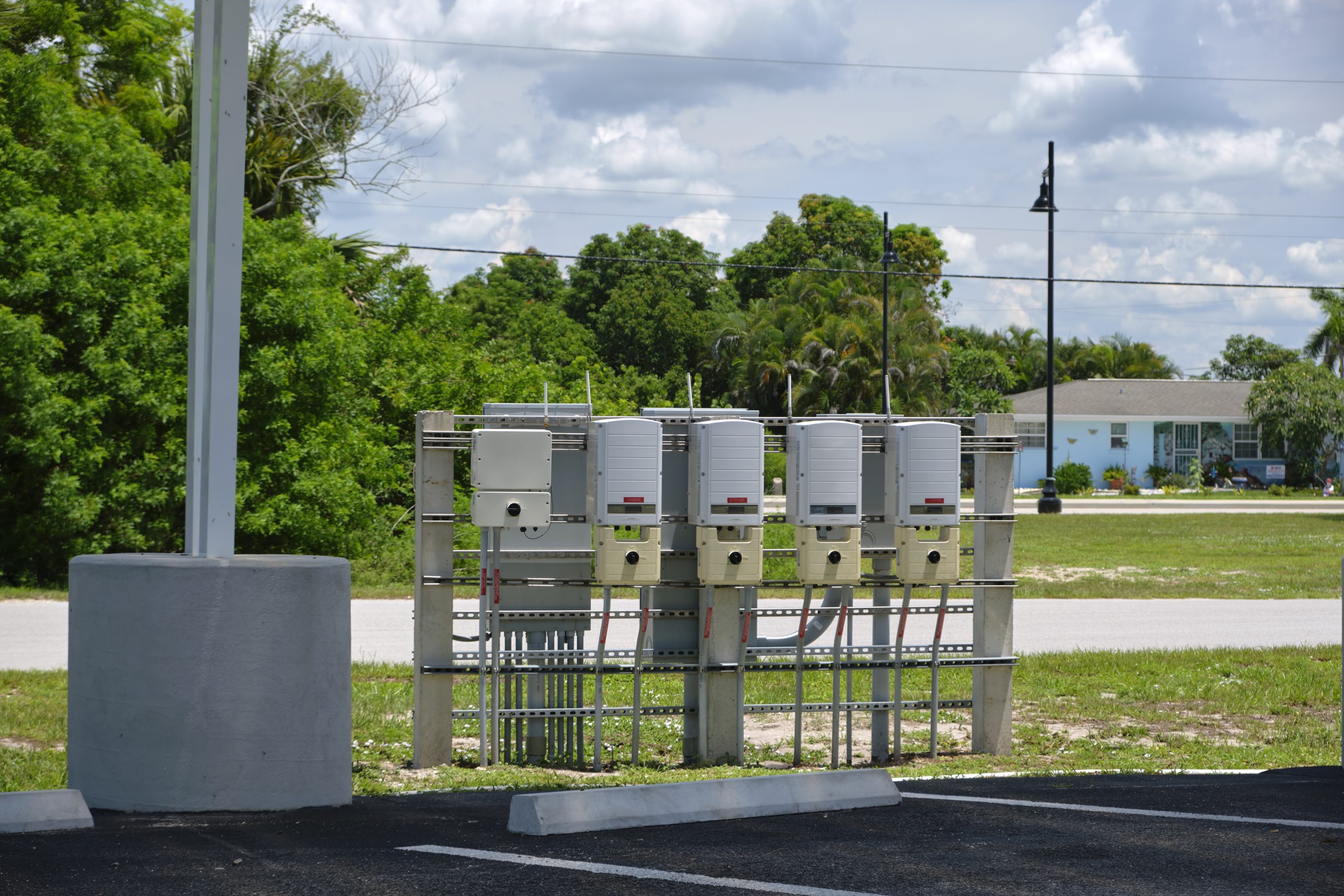
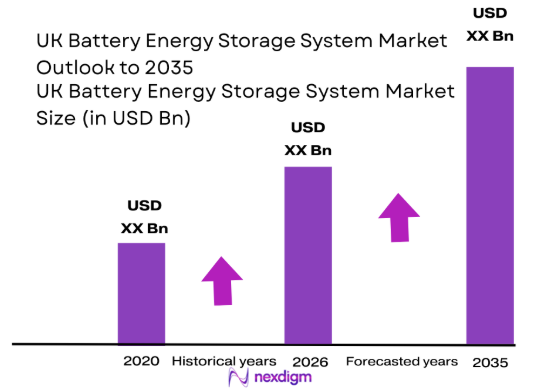
Based on a recent historical assessment, the UK Battery Energy Storage System market recorded an approximate valuation of USD ~ billion, supported by rapid deployment of grid-scale storage infrastructure and increasing integration of renewable electricity sources. Data published by the UK Department for Energy Security and Net Zero and the National Grid Electricity System Operator indicates accelerating battery installations supporting frequency response, peak load balancing, and renewable intermittency management across the national electricity network.
Major operational deployments are concentrated around energy infrastructure hubs including London, the Midlands, Yorkshire, and Scotland due to strong transmission connectivity and renewable generation capacity. Scotland hosts large wind power projects requiring grid stabilization storage, while the Midlands and Northern England contain key grid substations and industrial demand centers. London remains influential due to electricity consumption density and proximity to financial institutions funding energy infrastructure, while coastal regions benefit from offshore wind integration projects that require battery storage for grid balancing.
Market Segmentation
By Product Type
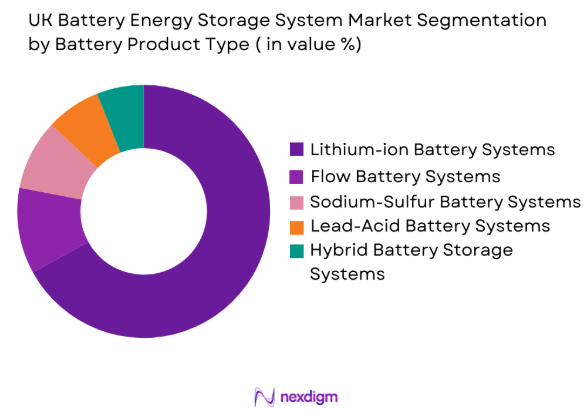
UK Battery Energy Storage System market is segmented by product type into lithium-ion battery systems, flow battery systems, sodium-sulfur battery systems, lead-acid battery systems, and hybrid battery storage systems. Recently, lithium-ion battery systems have a dominant market share due to factors such as high energy density, declining manufacturing costs, mature supply chains, and strong deployment compatibility with grid-scale and commercial storage projects. Utility operators prioritize lithium-ion systems because they deliver rapid response times for grid stabilization and frequency regulation services. Major renewable developers integrate lithium-ion storage alongside solar and wind projects to smooth generation variability. Additionally, technological advancements in battery management systems improve lifecycle performance and safety reliability. Global manufacturers supplying lithium-ion battery packs benefit from established production ecosystems and scalable manufacturing capacity, which supports rapid infrastructure deployment across the United Kingdom energy storage sector.
By Application Type
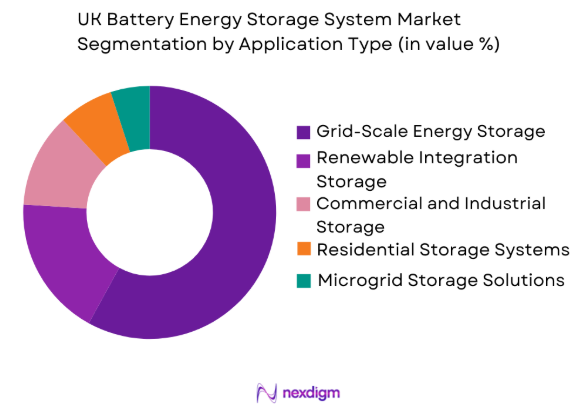
UK Battery Energy Storage System market is segmented by application type into grid-scale energy storage, commercial and industrial storage, residential storage systems, renewable integration storage, and microgrid storage solutions. Recently, grid-scale energy storage has a dominant market share due to factors such as expanding renewable generation capacity, increasing electricity demand volatility, and national grid requirements for frequency response and reserve power. Large-scale battery facilities connected directly to transmission infrastructure support grid reliability by balancing supply fluctuations caused by wind and solar generation variability. Electricity network operators deploy grid-scale storage to reduce congestion, stabilize voltage conditions, and optimize electricity market participation. Government energy transition policies supporting renewable integration further accelerate investment in utility-scale battery projects across the country.
Competitive Landscape
The UK Battery Energy Storage System market demonstrates moderate consolidation with several global battery manufacturers and energy technology providers competing for utility-scale projects. Leading companies leverage strong engineering capabilities, battery manufacturing scale, and grid integration expertise to secure large infrastructure contracts. Strategic partnerships between battery suppliers, renewable developers, and energy utilities are increasingly shaping project deployment across the national electricity network.
| Company Name | Establishment Year | Headquarters | Technology Focus | Market Reach | Key Products | Revenue | Storage Capacity Projects |
| Tesla Energy | 2003 | United States | ~ | ~ | ~ | ~ | ~ |
| Fluence Energy | 2018 | United States | ~ | ~ | ~ | ~ | ~ |
| LG Energy Solution | 2020 | South Korea | ~ | ~ | ~ | ~ | ~ |
| Wärtsilä Energy | 1834 | Finland | ~ | ~ | ~ | ~ | ~ |
| BYD Energy Storage | 1995 | China | ~ | ~ | ~ | ~ | ~ |
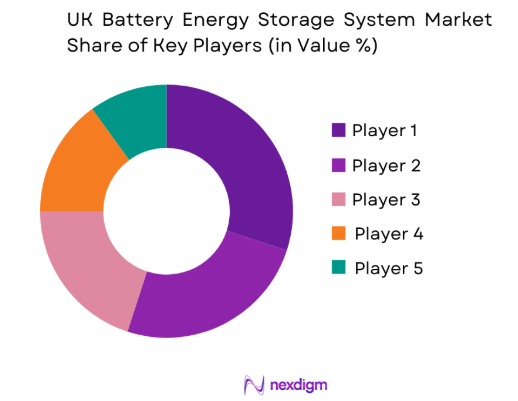
UK Battery Energy Storage System Market Analysis
Growth Drivers
Rapid Expansion of Renewable Energy Integration into the National Grid
The United Kingdom electricity generation system has shifted significantly as renewable sources supply a larger share of national power production. Wind farms in Scotland and offshore wind projects along the North Sea generate variable electricity that creates balancing challenges for the national grid. Battery energy storage systems provide rapid response capabilities that stabilize grid frequency and manage short term fluctuations in renewable output. Grid scale storage facilities absorb excess electricity during high generation periods and release power when supply declines or demand increases. Energy developers integrate battery storage with wind and solar projects to improve reliability. These systems are becoming essential infrastructure supporting stable electricity delivery across transmission networks.
Increasing Grid Stability Requirements and Electricity Market Flexibility Needs
Modern electricity systems require flexible infrastructure to balance fluctuations in supply and demand across transmission networks. Increasing electrification of transportation and industrial processes is raising electricity consumption variability in urban and industrial regions. Battery energy storage systems provide rapid response capacity that helps grid operators maintain frequency stability and prevent voltage deviations. These systems allow electricity to be stored during low demand periods and used when demand or prices rise. Commercial and industrial facilities also deploy battery storage to reduce peak demand costs and maintain operational continuity. Improvements in battery management technologies enhance reliability and lifecycle performance, encouraging financial institutions to support large scale energy storage investments.
Market Challenges
High Capital Costs and Long Payback Periods for Large Scale Storage Projects
Battery energy storage systems require significant upfront investment for battery manufacturing, system integration, grid connection infrastructure, and engineering services. Utility scale projects involve advanced power electronics, energy management software, and cooling technologies that increase development costs. Developers must secure long term revenue contracts or participate in electricity markets to justify large capital expenditures. Financial institutions carefully assess project viability due to uncertainties in electricity pricing and regulatory frameworks. Raw material costs for lithium, nickel, and cobalt also influence project budgets. Grid connection approvals and coordination with transmission operators can extend timelines. These financial and regulatory factors can slow deployment of large battery storage projects.
Supply Chain Constraints for Battery Materials and Manufacturing Capacity
Global demand for battery materials such as lithium, cobalt, nickel, and graphite has increased due to rapid expansion of electric vehicle production and energy storage deployments. Limited mining capacity and concentration of raw material supply create vulnerabilities that influence battery pricing and manufacturing output. Battery manufacturers rely on complex international supply chains involving mineral extraction, chemical processing, cell production, and battery pack assembly. Disruptions at any stage can delay project timelines and increase procurement costs for energy storage developers. Transportation constraints and geopolitical trade barriers also affect supply stability. These challenges create uncertainty for developers planning large scale battery energy storage installations across electricity networks.
Opportunities
Expansion of Long Duration Energy Storage Technologies for Grid Reliability
Long duration energy storage technologies represent a key opportunity for improving electricity system resilience across the United Kingdom energy infrastructure. Conventional lithium ion batteries generally provide storage for a few hours, supporting frequency response and short term grid balancing but not extended renewable variability. Emerging technologies including flow batteries, sodium ion batteries, and hybrid storage systems enable electricity storage for longer durations, ranging from several hours to multiple days. These systems allow renewable energy generated during high wind or solar periods to be stored and used later when generation declines. Government research programs and pilot projects are supporting development of long duration storage to strengthen grid flexibility and renewable integration.
Growth of Distributed Energy Storage in Commercial and Industrial Energy Systems
Distributed battery energy storage installations across commercial and industrial facilities are creating new opportunities for expanding the energy storage market beyond large utility scale projects. Industrial plants, logistics centers, and commercial infrastructure operators deploy battery systems to manage electricity costs linked to peak demand charges and time based electricity pricing. These systems allow businesses to store electricity during lower cost periods and use stored power during peak consumption hours. Integration with rooftop solar systems further increases renewable energy utilization and reduces dependence on grid electricity. Energy management software helps monitor usage patterns and optimize battery charging cycles. Rising electricity prices and sustainability commitments continue encouraging adoption of distributed storage solutions.
Future Outlook
The UK Battery Energy Storage System market is expected to expand steadily as electricity networks increasingly rely on flexible storage infrastructure to support renewable energy integration. Technological innovation in battery chemistry, improvements in grid management software, and government policies supporting decarbonization will continue stimulating investment in large storage projects. Energy storage deployment will expand alongside offshore wind developments and smart grid modernization initiatives. Increasing electrification of transportation and industry will also strengthen long-term demand for reliable battery storage capacity.
Major Players
- Tesla Energy
- Fluence Energy
- LG Energy Solution
- BYD Energy Storage
- WärtsiläEnergy
- Panasonic Energy
- Samsung SDI
- Hitachi Energy
- ABB Energy Storage Solutions
- Siemens Energy
- Envision Energy
- GEVernova
- SungrowPower Supply
- PowinEnergy
- Saft Groupe
Key Target Audience
- Electric utilities and grid operators
- Renewable energy project developers
- Battery manufacturing companies
- Energy infrastructure investment firms
- Commercial and industrial energy consumers
- Investments and venture capitalist firms
- Government and regulatory bodies
- Electricity transmission system operators
Research Methodology
Step 1: Identification of Key Variables
The research process begins by identifying essential market variables including energy storage capacity deployment, battery technology adoption, renewable energy integration levels, and electricity grid infrastructure developments across the United Kingdom energy sector.
Step 2: Market Analysis and Construction
Primary industry interviews, government energy reports, and electricity market databases are analyzed to construct a structured understanding of battery storage demand patterns, technology deployment trends, and regulatory developments shaping the market.
Step 3: Hypothesis Validation and Expert Consultation
Energy sector specialists, battery technology engineers, and infrastructure investors validate analytical assumptions regarding energy storage deployment, investment patterns, and operational requirements across national electricity networks.
Step 4: Research Synthesis and Final Output
All validated datasets and expert insights are synthesized to produce structured market intelligence outlining industry dynamics, competitive developments, technology adoption trends, and future infrastructure opportunities.

- Executive Summary
- Research Methodology (Definitions, Scope, Industry Assumptions, Market Sizing Approach, Primary & Secondary Research Framework, Data Collection & Verification Protocol, Analytic Models & Forecast Methodology, Limitations & Research Validity Checks)

- Market Definition and Scope
- Value Chain & Stakeholder Ecosystem
- Regulatory / Certification Landscape
- Sector Dynamics Affecting Demand
- Strategic Initiatives & Infrastructure Growth

- Growth Drivers
Expansion of Renewable Energy Integration Across the National Electricity Grid
Increasing Grid Stability Requirements and Peak Demand Management
Government Incentives Supporting Energy Storage Deployment - Market Challenges
High Capital Costs of Large-Scale Battery Storage Systems
Supply Chain Constraints for Battery Materials and Components
Grid Interconnection and Regulatory Approval Delays - Market Opportunities
Expansion of Utility Scale Storage Supporting Renewable Energy Projects
Development of Long Duration Energy Storage Technologies
Growth of Distributed Energy Storage in Commercial and Industrial Facilities - Trends
Deployment of Large Grid Scale Lithium Ion Battery Projects
Integration of Energy Storage with Offshore Wind Developments
Increasing Adoption of Modular Containerized Battery Systems - Government Regulations
- SWOT Analysis of Key Competitors
- Porter’s Five Forces

- By Market Value, 2020-2025
- By Installed Units, 2020-2025
- By Average System Price, 2020-2025
- By System Complexity Tier, 2020-2025

- By System Type (In Value%)
Lithium-ion Battery Energy Storage Systems
Sodium-ion Battery Energy Storage Systems
Lead-acid Battery Energy Storage Systems
Flow Battery Energy Storage Systems
Hybrid Battery Storage Systems - By Platform Type (In Value%)
Grid-scale Utility Storage Systems
Commercial and Industrial Energy Storage Systems
Residential Energy Storage Systems
Renewable Energy Integrated Storage Systems
Microgrid Energy Storage Platforms - By Fitment Type (In Value%)
Standalone Battery Storage Systems
Solar Plus Storage Systems
Wind Integrated Storage Systems
Hybrid Renewable Storage Installations
Containerized Modular Storage Systems - By End User Segment (In Value%)
Electric Utilities and Grid Operators
Renewable Energy Developers
Commercial and Industrial Facilities
Residential Consumers
Government Energy Infrastructure Projects - By Procurement Channel (In Value%)
Direct Utility Procurement
Government Energy Tenders
Engineering Procurement and Construction Contracts
Private Energy Developers Procurement
Independent Power Producer Agreements

- Market Share Analysis
- Cross Comparison Parameters (Technology Type, System Capacity Range, Application Sector, Deployment Model, Pricing Strategy, Energy Storage Duration, Grid Integration Capability, System Efficiency, Lifecycle Performance, Installation Configuration, Project Financing Model, After Sales Service Network)
- SWOT Analysis of Key Competitors
- Pricing & Procurement Analysis
- Key Players
Fluence Energy
Tesla Energy
BYD Energy Storage
LG Energy Solution
Samsung SDI
Panasonic Energy
Saft Groupe
Hitachi Energy
Wärtsilä Energy Storage
Powin Energy
ABB Energy Storage Solutions
Siemens Energy
Envision Energy
GE Vernova
Sungrow Power Supply

- Utilities Increasing Deployment of Grid Scale Storage to Stabilize Electricity Networks
- Renewable Energy Developers Integrating Storage with Solar and Wind Projects
- Commercial and Industrial Facilities Deploying Storage for Energy Cost Optimization
- Government Energy Agencies Supporting National Grid Flexibility Programs

- Forecast Market Value, 2026-2035
- Forecast Installed Units, 2026-2035
- Price Forecast by System Tier, 2026-2035
- Future Demand by Platform, 2026-2035


 Request a Sample
 Ask for Customization
 Get a Quote
 Enquire Now